
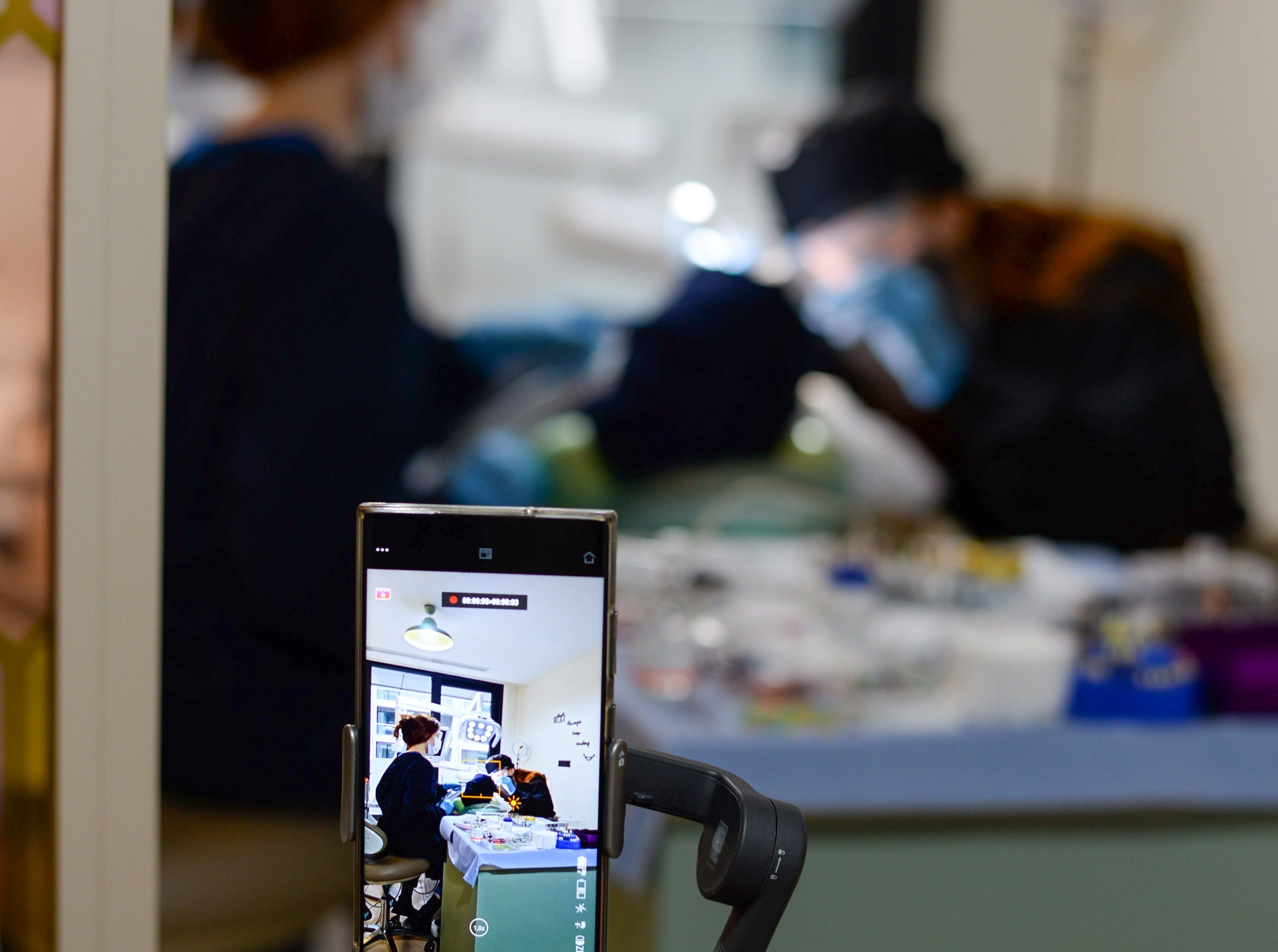
Most of us have watched a three-minute operative clip explain a maneuver more clearly than 20 minutes of slides ever could.
Surgeons appear to agree, with 91 percent in one survey saying video would improve their educational conferences, yet recording remains the exception rather than the routine. The disconnect is not hard to understand once you look at the barriers: too much setup, too much editing and too little clarity about what happens to the footage once the case is over.
Everyone likes the idea
In 2022, Mazer and colleagues put numbers to a contradiction many surgical educators already recognized. Their Surgical Endoscopy study surveyed 642 surgeons, and 91 percent said incorporating video would improve their educational conferences. Actually recording cases was another matter.
Video has an obvious advantage when the subject is technique. A trainee can see the angle of dissection, how exposure was obtained or exactly where a difficult step went wrong. Those details are harder to recover from an operative note or a surgeon describing the case afterward. What surgeons had not solved was how to make recording fit into the workday.
Then the case ends
Someone has to start the recording, store the file, review the footage and find the portion worth showing. A long operation may yield only a few minutes that belong in conference. Getting from one to the other takes time, and editing is not part of most surgeons’ training.
There are less visible complications too. Patient consent has to be obtained. Identifying information has to stay out of the final product. Hospital policies differ, and concern about how an operative recording could be used later can make surgeons reluctant to create one in the first place.
For most surgeons, recording is a deliberate exception rather than a habit. Sreeshyla Basavaraj, MD, an ENT surgeon who later published a keratosis obturans technique on CSurgeries, is candid that his first recording happened almost by accident: “Because I was doing it for the first time, for medico-legal purposes, and no one had done this, I thought I’d record it. That’s the only reason I recorded the video. Normally, I don’t record every surgery I do.”
Even surgeons who get past those hurdles face a basic question: where does the video go? For years the answer might have been a resident conference or a file shared among colleagues. Useful, but different from producing scholarship that can be cited, found later and credited to its authors. Anupama Srikanth, MD, an anesthesiologist who published a novel airway technique for medialization thyroplasty, describes why the traditional route felt like a dead end: “Publishing would mean I have to write down the technique. I would have very few people who would make an effort to read it.”
Give the video somewhere to go
That is the piece platforms such as CSurgeries are trying to address. CSurgeries publishes peer-reviewed surgical videos and assigns a DOI to accepted work, so the video becomes a citable publication rather than a teaching file sitting on a laptop.
Its submission requirements also deal directly with some of the concerns that can stop a case before submission. Authors are given standards for informed consent, patient de-identification, conflict disclosure and video format. Local institutional rules still apply, but the publication side is no longer undefined.
The videos are meant to be brief, ideally under three minutes, and CSurgeries says peer review typically takes about two weeks, a relatively short route from raw footage to a published teaching resource. Basavaraj, who now also serves as a peer reviewer, put the appeal plainly: “It’s an easy platform for people to access, and it’s free to view the videos, so they can learn. We can learn from other people as well.”
It does not solve every reason surgeons fail to record. Someone still has to capture the case and decide what is worth showing. But several of the steps that once made the exercise feel open-ended now have a defined endpoint.
Three minutes worth saving
Four years after Mazer and colleagues described a profession that wanted more operative video but had not made recording routine, the interesting question is less whether surgeons should be using video to teach. It is how much useful technique is still being lost because nobody pressed record, or because the recording never made it off the hard drive.
Have a technique worth teaching? Submit it at csurgeries.com.
Sources: Mazer L, Varban O, Montgomery JR, Awad MM, Schulman AR. Video is better: why aren’t we using it? A mixed-methods study of the barriers to routine procedural video recording and case review. Surgical Endoscopy 2022;36(2):1090-1097, PubMed 33616730. Submission process, peer review, DOI and guidelines: CSurgeries Content Creator Hub. Contributor quotes: CSurgeries Surgeon Spotlight interviews with Dr. Sreeshyla Basavaraj and Dr. Anupama Srikanth.
No posts
Comments
Nothing yet. Say the first thing.
Sign in to join the conversation.