
There is a kind of ruin that arrives not by accident but by invitation. A man is not robbed of his savings so much as he is talked out of them, and talked out of them in his own voice, repeating back a thing he was told until he cannot tell the sermon from his own good sense. The plains taught this lesson once, in full, and the wind still carries the receipt.
Before the pamphlet, the plains were neither empty nor worthless. They were grass country — built for herds, fire, drought, and distances larger than an eastern farm. In the wetter belts, or with enough acreage and water, a man who matched his crop to the climate could make a life. What the land would not tolerate was a man mistaking a run of wet years for a new law of nature.
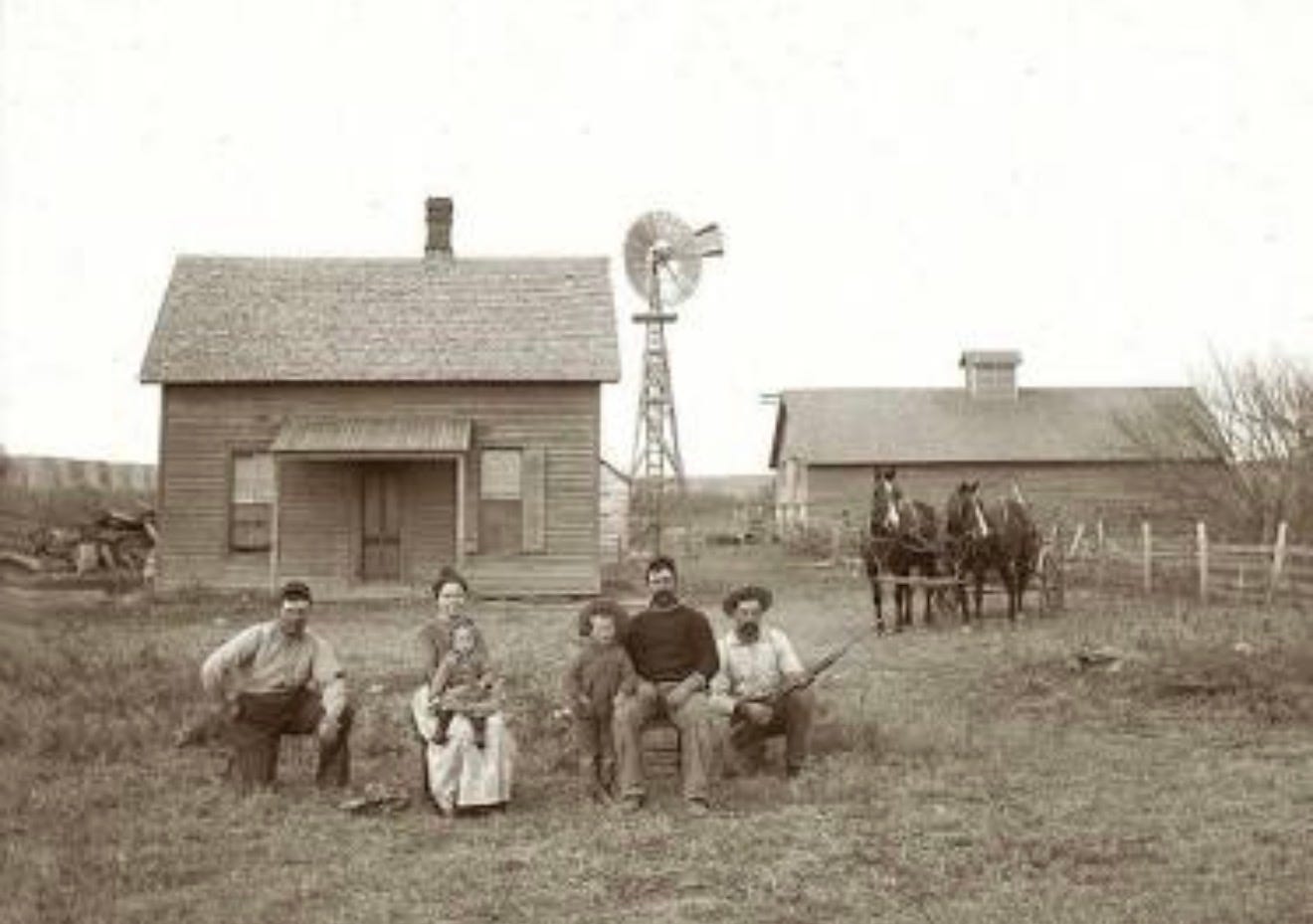
The government’s price for the ground was near to nothing. The cost of making a farm upon it was not. A homestead claim ran about eighteen dollars in fees, or a man could commute the five-year residence requirement and buy his quarter-section at a dollar and a quarter the acre after six months. Hold that figure — not as the land’s intrinsic value, but as Washington’s posted price. It is the anchor against which the promotional premium can be measured.
But note the deeper trap already set in the ground. The eastern model gave a man a hundred and sixty acres, and in grass country a hundred and sixty acres was often too little to survive on. Congress would later stretch the claim to three hundred and twenty acres, and then to six hundred and forty, precisely because the small holding that fed a family in Ohio could starve one in the short-grass country. The gift itself was calibrated to a rainfall that was not there.
The dream did not rise up out of the soil. It was set in type.
“Rain follows the plow” — four words that filled the plains, and helped empty them — was given its scripture in 1881 by Charles Dana Wilber, and it is worth knowing exactly who he was, because the easy version of this story is that a liar lied, and the true version is worse. Wilber was a land speculator and a town founder. He wrote the phrase not as a hypothesis but as a psalm: the plow was the instrument that turned desert into garden, and break the sod and the heavens would answer. A professor at the University of Nebraska, Samuel Aughey, supplied the science — and Aughey, so far as one can tell, was not simply inventing. He had examined real evidence, drawn from an unusually wet stretch of years, and reasoned from it that cultivated ground released its moisture upward and seeded the clouds. And the doctrine did not stop at the plow. Some of its bolder preachers were said to hold that even the iron of the railroad and the copper of the telegraph wire disturbed the electrical currents of the atmosphere and drew down rain — a notion that, whether or not any settler truly banked on it, captures how far the reasoning would stretch to make the wish look like a law: the railroad recast not merely as the carrier of the gospel but as the engine of the miracle itself. Sincere inference, ordinary self-interest, and an institution ready to amplify — that is how a certainty is manufactured, and it is far more dangerous than a con, because half the men making it believe it too.
And the institution was ready. The Burlington and Missouri River Railroad kept a stenographer near Aughey’s speeches, took down his assurances, and printed them for prospective immigrants as far away as Europe. The gospel did not spread on its own wings. It was transcribed, typeset, and mailed by an interested party to every man who could read.
Here is the first thing to carry home. Every author of the story had a reason to tell it, and the reasons were not all cynical, which is what made the whole edifice sturdy. The railroad wanted freight and buyers for its granted land. The speculator wanted his lots sold. The professor wanted his theory to be true, and had numbers that let him think it was. A confident man, a credentialed man, a man with a professorship and a printing press behind him — and behind all three, an interest rewarded before the claim could be tested. The certainty was not a lie exactly. It was a hope that several men were paid to publish before the sky could weigh in.
The gospel would not have spread on the strength of its authors alone. What carried it was the sight of the next wagon.
For once a hundred families had packed and gone west on the promise, their going became the proof. No man wishes to be the fool who stayed home while his neighbors grew rich. The belief fed on itself: the more who believed it, the truer it looked, and the truer it looked, the more who believed. Not one bushel of evidence was added in the whole process. Only company. And company, in a mania, is mistaken for confirmation every time.
You may measure the fever exactly, for it left its arithmetic behind.
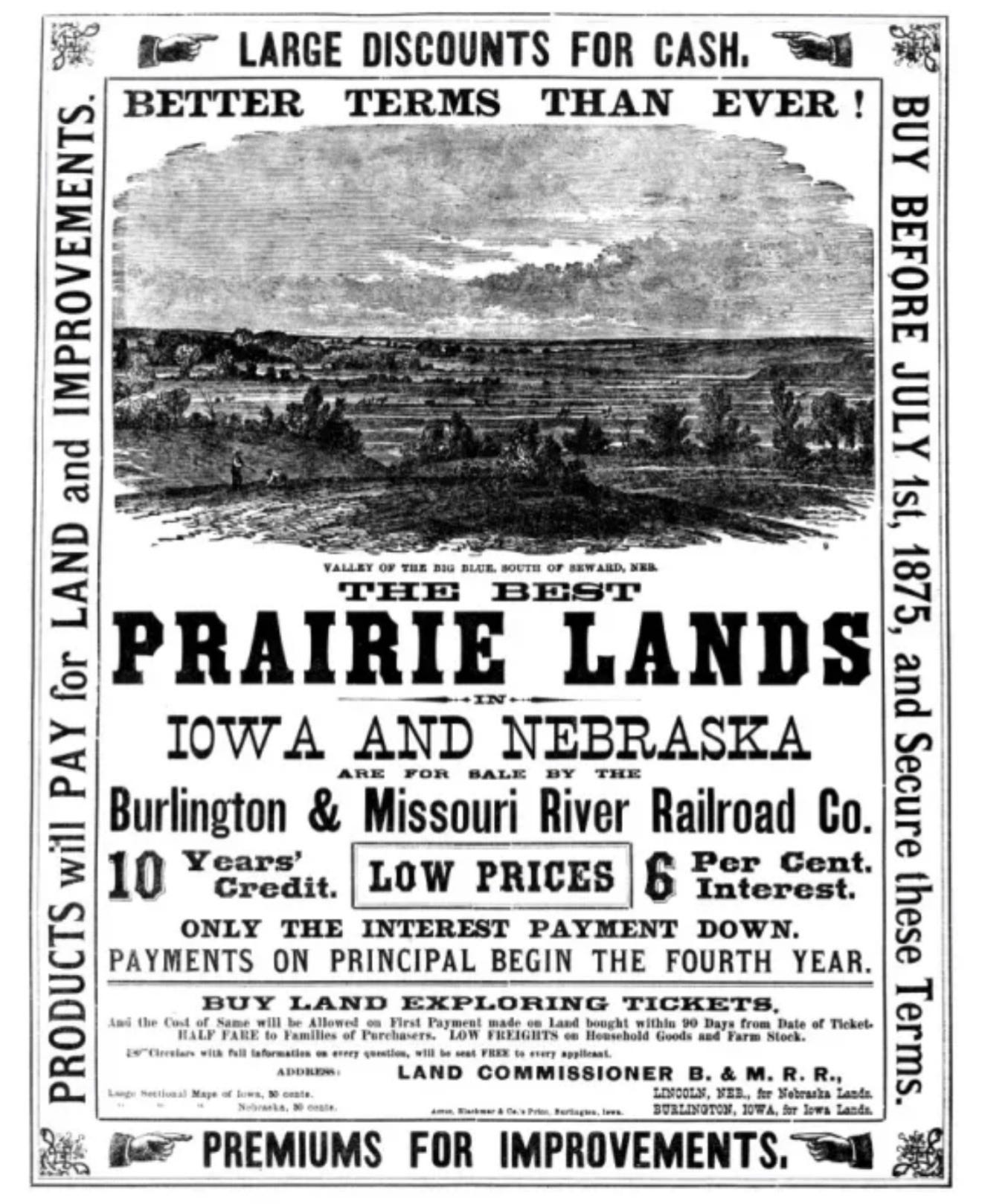
The railroads had received vast acreage through federal land grants and sold portions of it for two dollars, five, sometimes ten dollars an acre. Not all that premium was fiction. A railroad made distant ground reachable and its crops marketable. But the pamphlet sold more than access. It capitalized rain that had not yet fallen and harvests that had not yet grown. The rail was real. The climate was a story. The trick was to price them together.
And the mania did not stop in the central belt, where at least the rain sometimes came. It bled south into the drier, harsher panhandle country, where the land was thinner and the story had to be thicker to sell it — and where the trick of pricing the climate into the ground was carried to its literal, fraudulent extreme. In Boise City, out on the Oklahoma panhandle, promoters sold three thousand town lots off brochures that showed bustling streets and green shade trees; distant buyers arrived to find no streets and no trees. The men were convicted of fraud. And yet, out of the fraud, a town eventually took shape — the promise proving easier to prosecute than to unwind.
Now count the plates at the table, for a fable is not finished until you have named who ate.
The railroad booked its freight and its land sales. The speculator flipped his parcels and was gone before the dry years came. The town booster got his tax base. And here is the thing to engrave above the door: none of them stood where the settler stood. Do not tell yourself the storytellers had no stake — they did, and we will see it cost some of them dearly. Tell yourself the truer thing instead.
The railroad was paid first. The settler discovered last whether the forecast was true. The settler concentrated his life’s savings in one patch of ground and waited on the sky to render its verdict; the railroad had spread its wager across thousands of buyers and collected on the sale before the climate ever ruled. Both had hope on the ledger. Only one had timing, and only one had diversification, and those two things are the whole difference between the man who speaks and the man who pays.
So learn to ask, of any man selling you a certainty: not merely what does he claim, but who is paid before the truth is known, and who has spread his bet while you concentrate yours. A forecast whose author collects before it can be tested is not evidence — it is a sales pitch wearing the coat of one. That gap, between the man who speaks and the man who pays, is the truest thing on the whole prairie, and the one thing the pamphlets never printed.
The first droughts broke the phrase in the 1890s, but they did not break the appetite that had made it useful. The next gospel was called dry farming. Rain need not follow the plow, its teachers now said; the proper method could store enough moisture in the soil to master its absence. Then came wartime wheat prices, larger claims, better machines, and another run of generous rain. The sermon changed its words. The promise remained.
The words that fool a generation are almost never the words that fooled the last one. The last set of words got broken, publicly, by drought — everyone could see the phrase had failed. So the appetite simply found new language. Same country, same wishful arithmetic, same interested amplifiers, a fresh vocabulary that had not yet been discredited. A man who had learned only to distrust the phrase“rain follows the plow” was perfectly defenseless against “dry farming,” which promised the identical thing in the identical grass country and rode in on the identical run of wet years.
The bill came due, as it always does, and it did not check first who had believed.
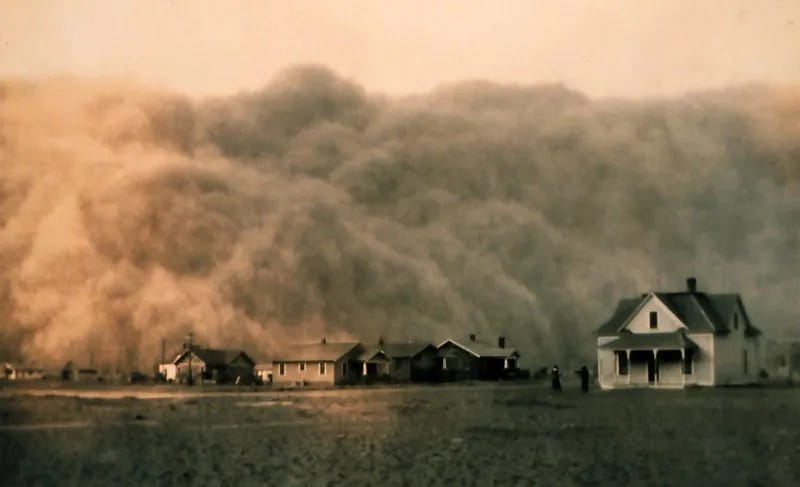
The native grasses had held that soil in place for ten thousand years. On the strength of the second sermon as much as the first, they were torn up, and the ground was opened to the sky. So long as the wet years lasted, the gospel looked like prophecy. Then the dry years returned — as they had always returned, as any man who had asked the land instead of the pamphlet might have known — and the plains rose up and left.
By 1934, federal officials estimated that thirty-five million acres had been destroyed for crop production, a hundred million had lost all or most of their topsoil, and a hundred and twenty-five million were rapidly losing it. In the single year of 1935, eight hundred and fifty million tons of it blew off the southern plains, and the dust reached the eastern seaboard and dimmed the sun over cities that had never heard of Boise City. The believer and the skeptic choked on the same air. No man outran that.
The railroads learned their own version of the lesson in 1893. They had laid track ahead of traffic and financed anticipated settlement as though it were demand already earned — as though the wagons the pamphlets summoned were freight already booked. When the crash came, by the middle of 1894 roughly one-quarter of all American railroad mileage was in receivership.
Read that correctly, for it is not divine justice and I do not want you to take comfort in it as though it were. The railroad’s risk was not the settler’s risk, and it did not arrive first, and some men cashed out whole. But hope had entered both balance sheets. The interested party who manufactures a certainty is not always cynical enough to stay clear of it — often he comes to half-believe his own transcription, and books the imagined future as though it were the earned one. There is no perfectly safe seat at a table built on a hope. Not even the one nearest the head.
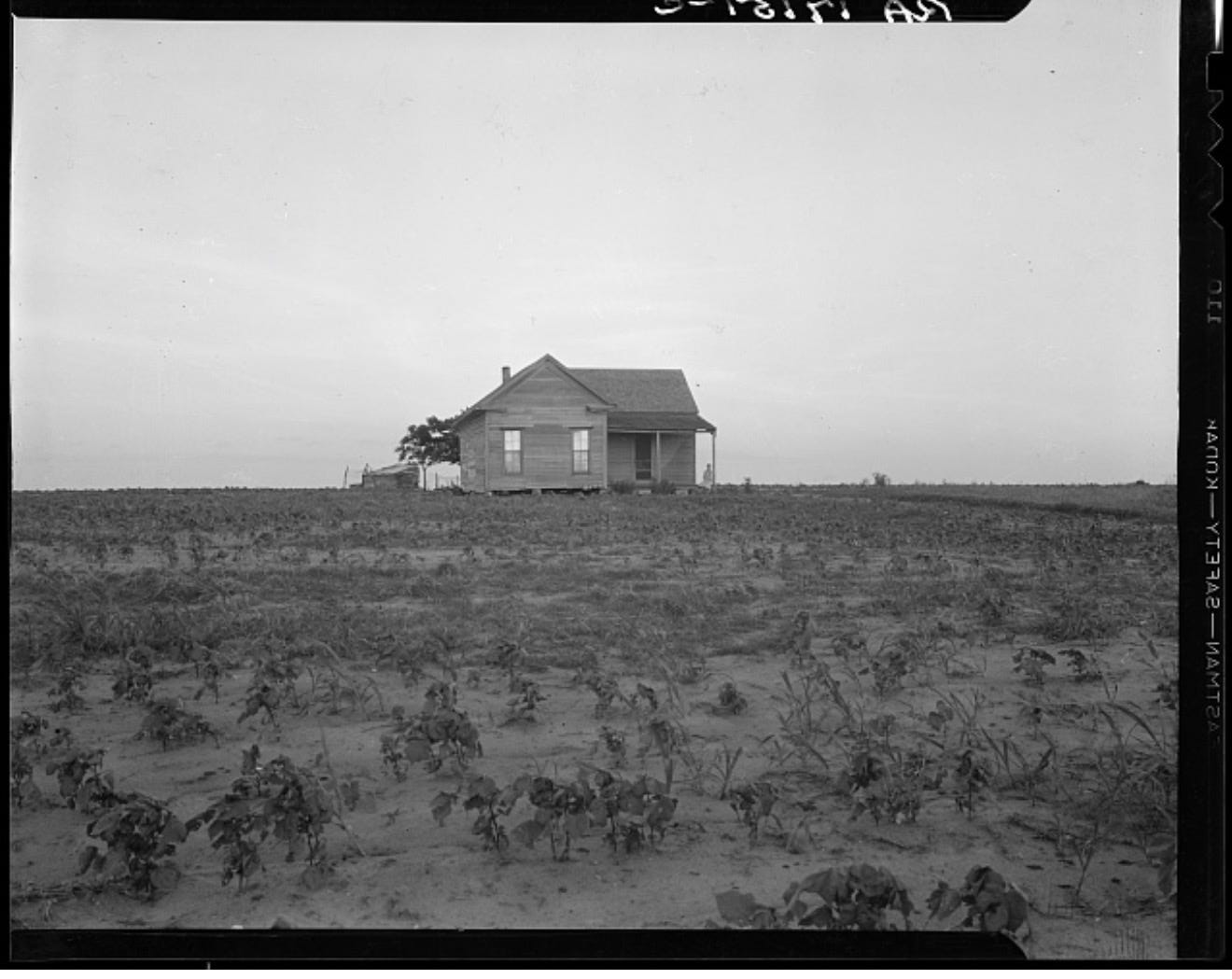
But the engine breaking is not the end of the story, only its accounting. The receivers reorganized the railroads and the bondholders took their haircut in a boardroom, and the ledgers, ruined as they were, closed. It was the homesteader, out in the actual dust, who was left holding the one question a balance sheet cannot settle: having bet his life on a story and lost, would he ever again dare to bet on anything at all?
Do not draw from this the coward’s lesson.
The moral is not to fear risk, for the man who first crossed those plains at all took a risk, and so did the honest homesteader who bet a hard, sober wager on ground he had walked with his own feet, in a belt wet enough and on acreage wide enough to bear it. That man was brave, and bravery is right, and a life spent refusing every risk is its own slow ruin.
The sin was never the risk. The sin was the bad risk — the one built not on the ground beneath your boots but on a story sold to you by men who would be paid before the sky ever ruled, and who had spread across a thousand buyers the wager you had concentrated in one field. It is the difference between courage anchored to a truth you have seen and courage anchored to a certainty someone else had every reason to manufacture and none to test. The first builds a country. The second buries one under its own topsoil.
And the last of it is this. The frontier is renamed in every generation. It is called by a new word each time, and each time the word is spoken with the same certainty, transcribed by the same interested hands, repeated down the same lengthening line of wagons. The old word gets broken by drought and everyone congratulates himself on no longer believing it — and the appetite it served puts on the new word and rides out again. The particulars change and the mania rhymes. The only defense was never cleverness, for the cleverest men in Nebraska believed the professor, and the professor half-believed himself. The only defense was the plainest and the hardest: the refusal to lie to yourself about what you had actually seen with your own eyes on your own ground.
Ask the land, not the pamphlet. And when a man tells you the rain will follow — ask him first who pays if it does not.
No posts
Comments
Nothing yet. Say the first thing.
Sign in to join the conversation.