
This week's post is a deeper dive into my Current Obsession series - a place for the art I can't stop thinking about. Today's edition is dedicated to a particular category of obsession: art that feel like magic throughout art history✨✨✨Plus, guest edits from some people with excellent taste.
A few weeks ago, I came across the work of Korean artist Jiyoung Park and her work stopped me mid-scroll. I posted it to Notes & it got over 48k likes.
The reaction got me thinking. Much of the art posted in my Current Obsession series has one thing in common. It's not that it’s the most famous, the most expensive, or the most technically impressive work. It’s just the work that feels extraordinary. Magic even!
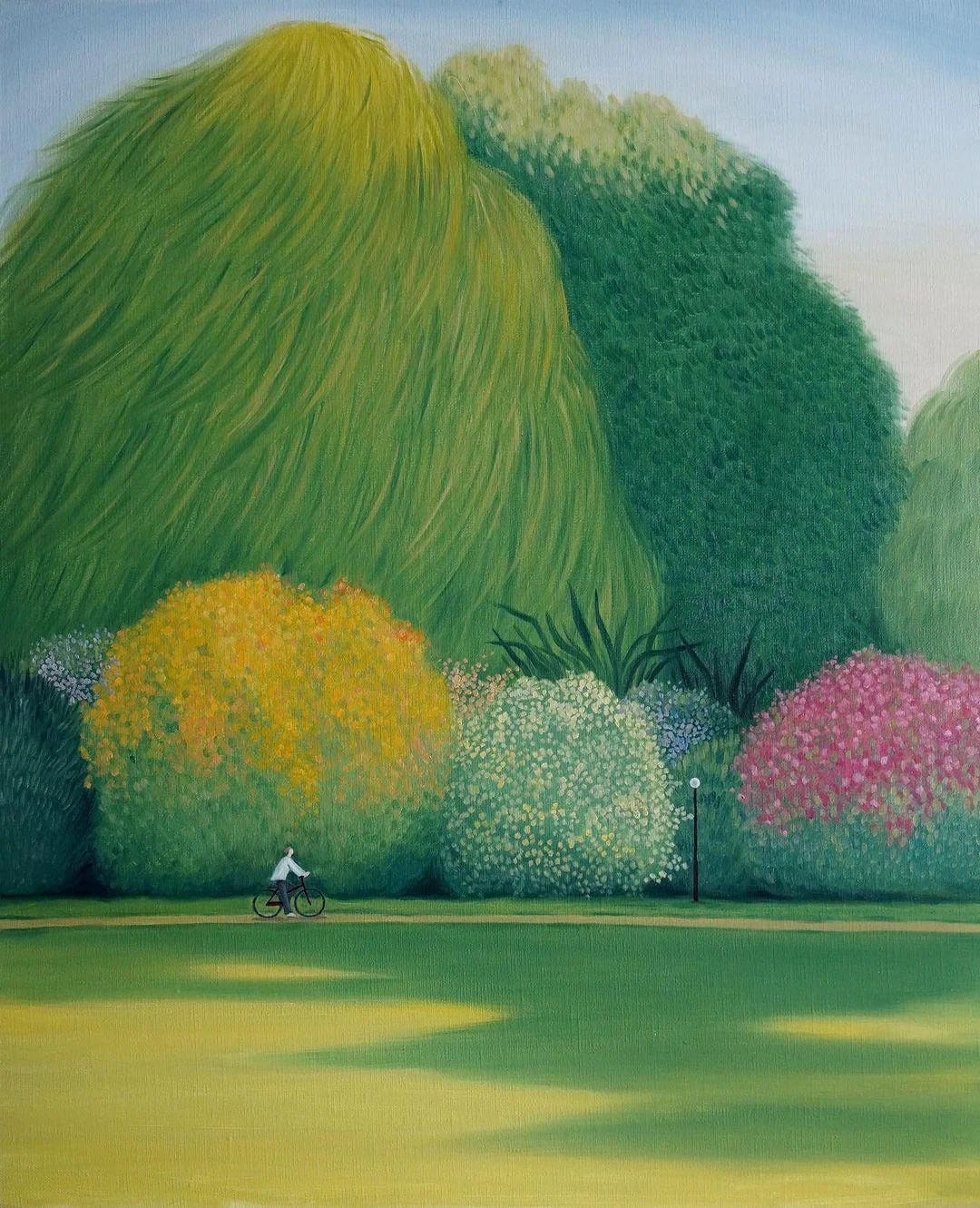
Maybe it is the light, the color, a composition so dreamy you’re screenshotting it before you know what you’re doing. It’s the art that you’re omg still thinking days later for reasons you can’t really explain.
So I decided to take it one more step. Let’s make a master list of current obsessions that feel like magic throughout all of art history. Because don't we all need a little more wonder in our lives?
P.S. We’re listing the work chronologically so we can (duh) have a history lesson along the way.
Stay til the end for everything I’m loving this month (a lot has happened since we last talked!)🌹
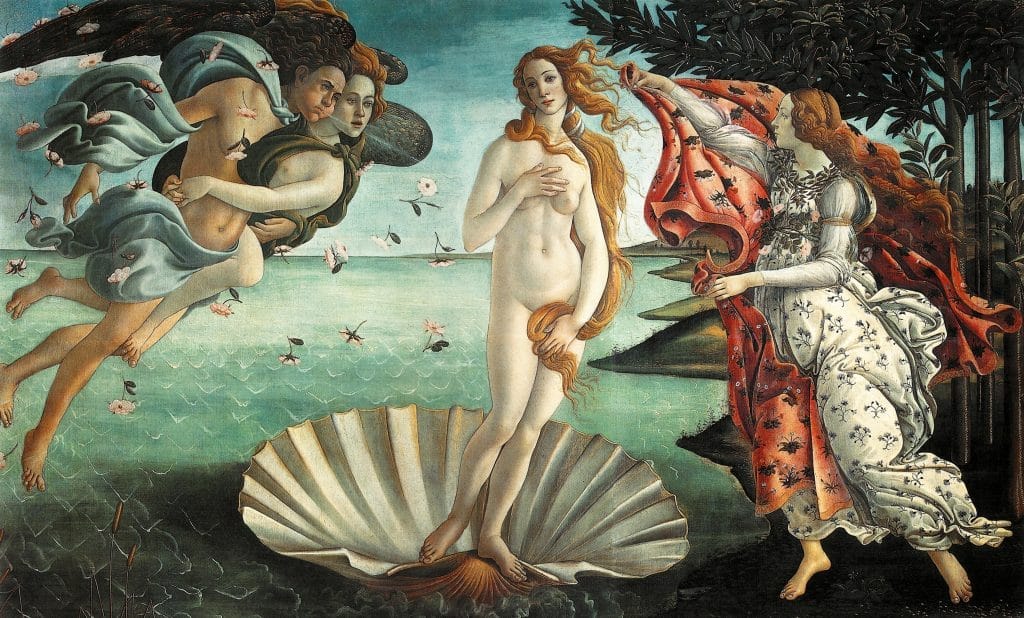
Meet the magician: say hi to our OG magical painter Botticelli! He was the golden boy of Medici Florence. And even though he was crazy famous in his lifetime, he died pretty much forgotten (stayed that way for 350 YEARS!). Thank g for the Victorians, who rediscovered him and crowned him king again.
Why we’re obsessed: Botticelli painted like a dream. Just look - his figures don’t stand - they float! Hair moves like water, and everything feels touched by a little bit of magic.
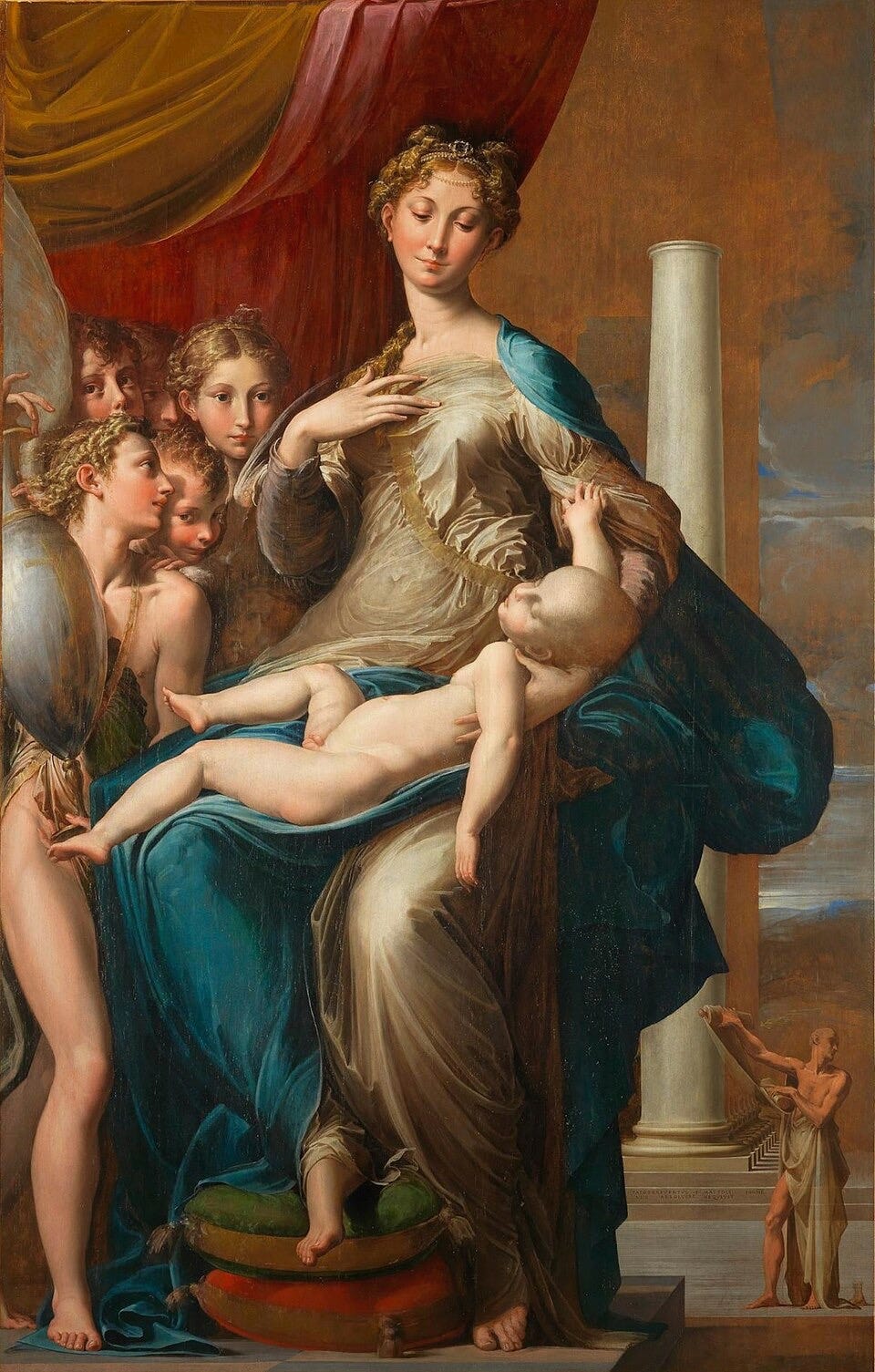
Meet the magician: say it with your hands🤌 - Parmigianino! Aka “the little one from Parma.” A child prodigy - and got famous at 21 by painting his reflection & giving it to the pope.
He spent the rest of his short life (he died at 37) bending reality: stretching necks, warping proportions, making the sacred feel just a little off.
Why we’re obsessed: leave it to my #1 mentor boss/bestie somsack sikhounmuong to choose a painting I never would have thought of. Here’s why he’s obsessed:
“I love Parmigianino’s Madonna with the Long Neck. Although painted during the Mannerist period - in hindsight it feels very Surrealist - think asymmetry, distorted perspectives and elongated proportions- you quickly see and feel how otherworldly this painting is. Forces are working here to further elevate an already heavenly subjects.
I love all the drapery in this painting, especially the Madonna’s blue gown. Like Houdini’s cape, she pulls aside her cape to reveal her/the worlds most famous act of disbelief - the Virgin birth.”
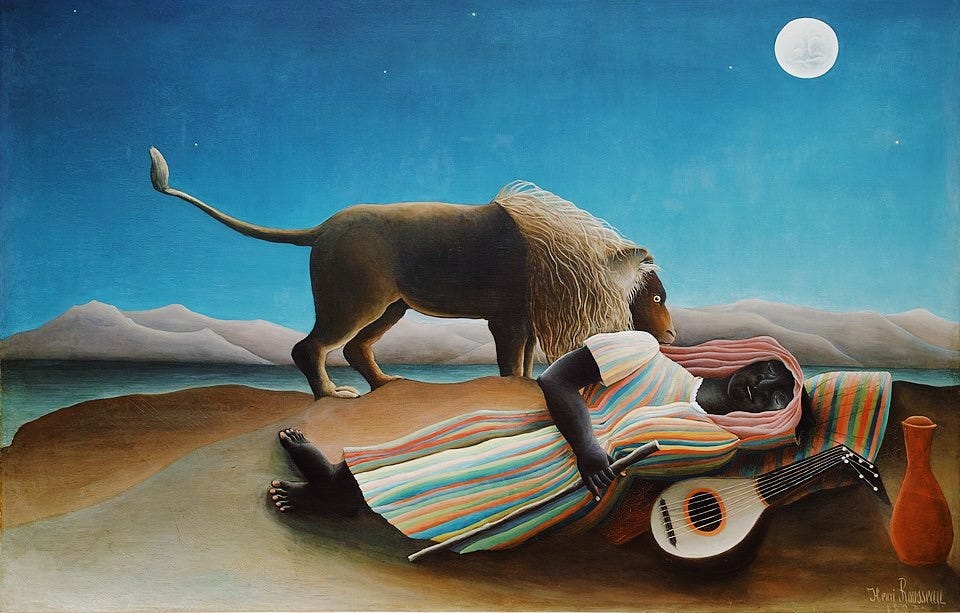
Meet the magician: Rousseau wasn't a trained artist - he worked as a customs officer in Paris and taught himself to paint on the side. Critics laughed at his work when he was alive. Laugh all you want - because today he's considered one of the greats of modern art.
Why we’re obsessed: the next time you go to the MoMA, beeline to this painting - the colors are even more transportive in person. My fave fact though: Rousseau built this entire painting without ever leaving France - he studied the animals at Paris's Jardin des Plantes, reconstructed "colonial villages" at the 1889 World's Fair, and invented the rest.
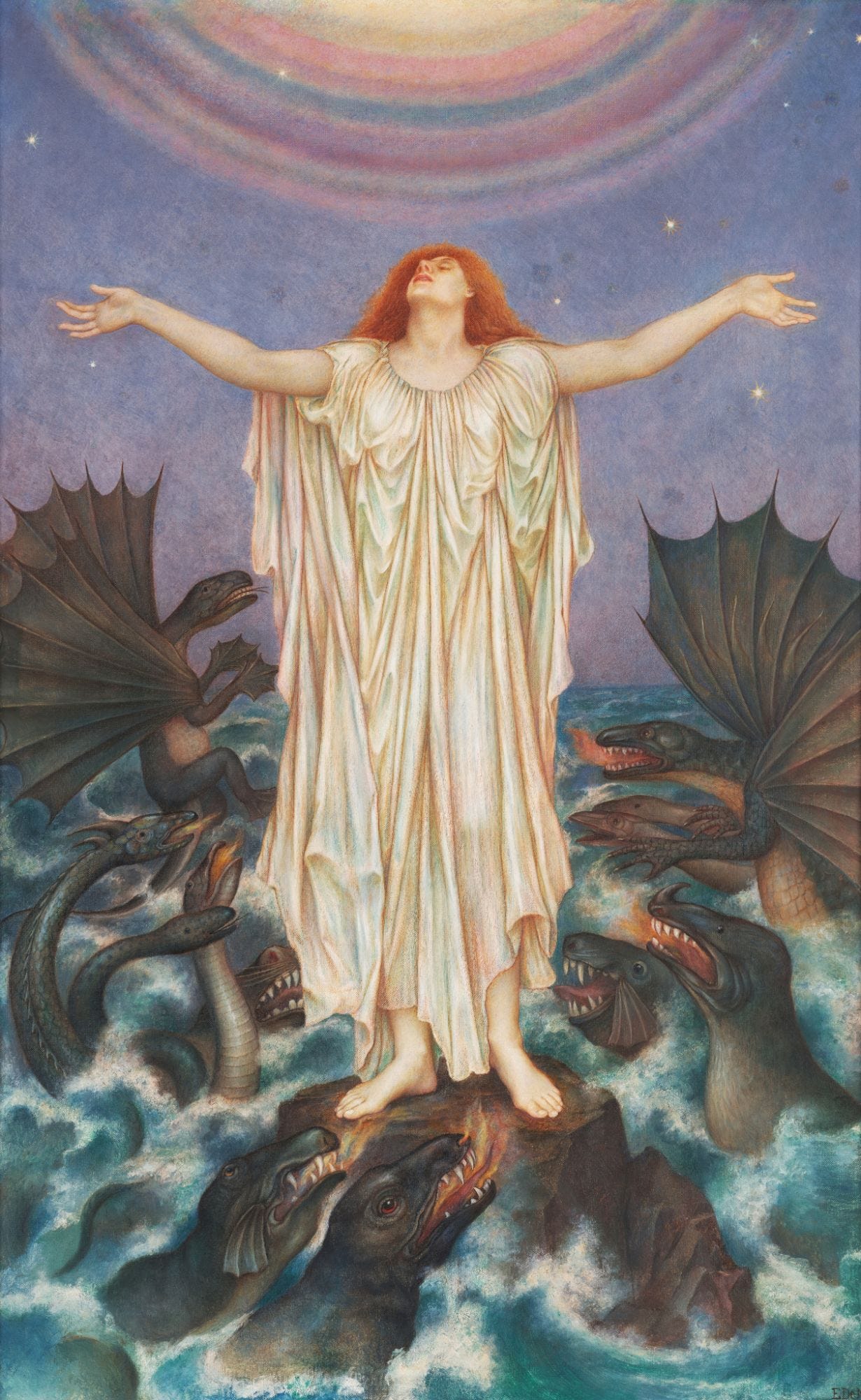
Meet the magician: our Pre-Raphaelite sister you've probably never heard of. Evelyn Pickering was born into a proper Victorian family who found her artist ambitions embarrassing - so she painted in secret as a teenager. Joke is ON THEM!!! She went on to build a legit career as an artist (something unheard of at the time).
Why we’re obsessed: Victorian paintings aren't usually my taste BUT we must acknowledge how ahead of her time De Morgan was. Spiritual visions, sea monsters, female heroines - at a moment when women could barely be artists, let alone paint whatever they wanted!
De Morgan was a pacifist and painted the above during WWI: the monsters are the war, the rainbow is the peace she believed came after. Part of the magic = she isn’t scared, she knows it will work out in the end.
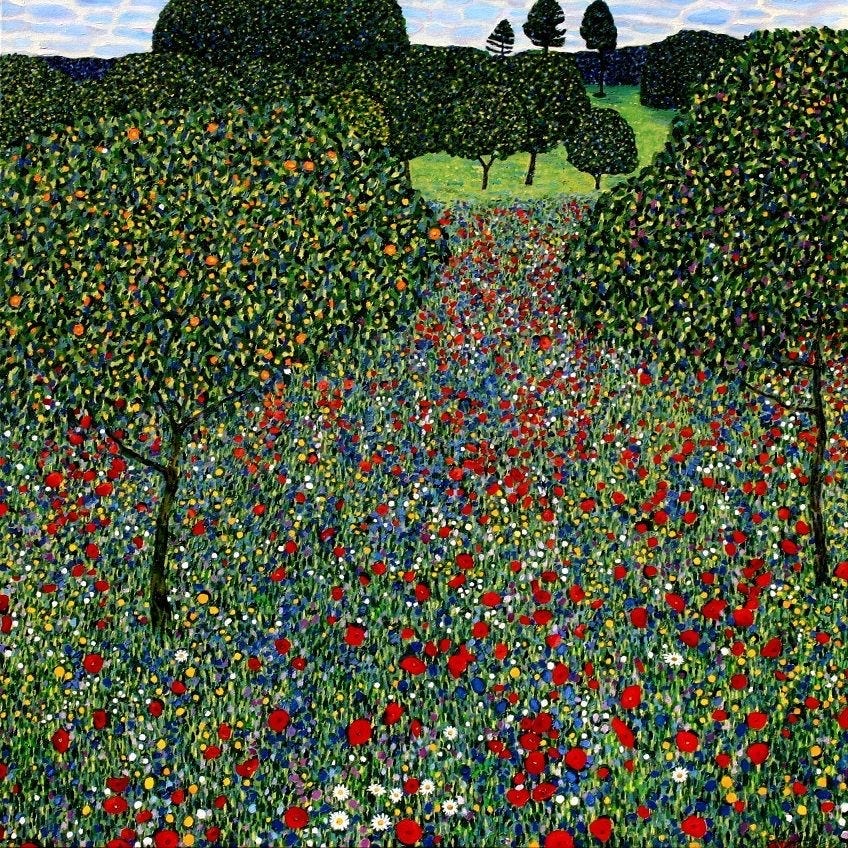
Meet the magician: Gustav Klimt (yes! The gold-leaf, The Kiss, tote-bag-in-every-museum-shop Klimt!) was born outside Vienna in 1862 and cofounded the Vienna Secession. But every summer, he'd head out to the Attersee, a lake in the Salzkammergut, and paint the thing almost no one associates with him: landscapes.
Why we’re obsessed: This one's Poppy Field - painted the summer of 1907 after he stumbled onto a poppy-filled meadow at Litzlberg. Stand back and it's a hillside of red poppies, blue cornflowers, white daisies and little gold buttons. Step closer and the whole thing dissolves into dots (Klimt was flirting with the same pointillism as Seurat). Magic trick alert!!
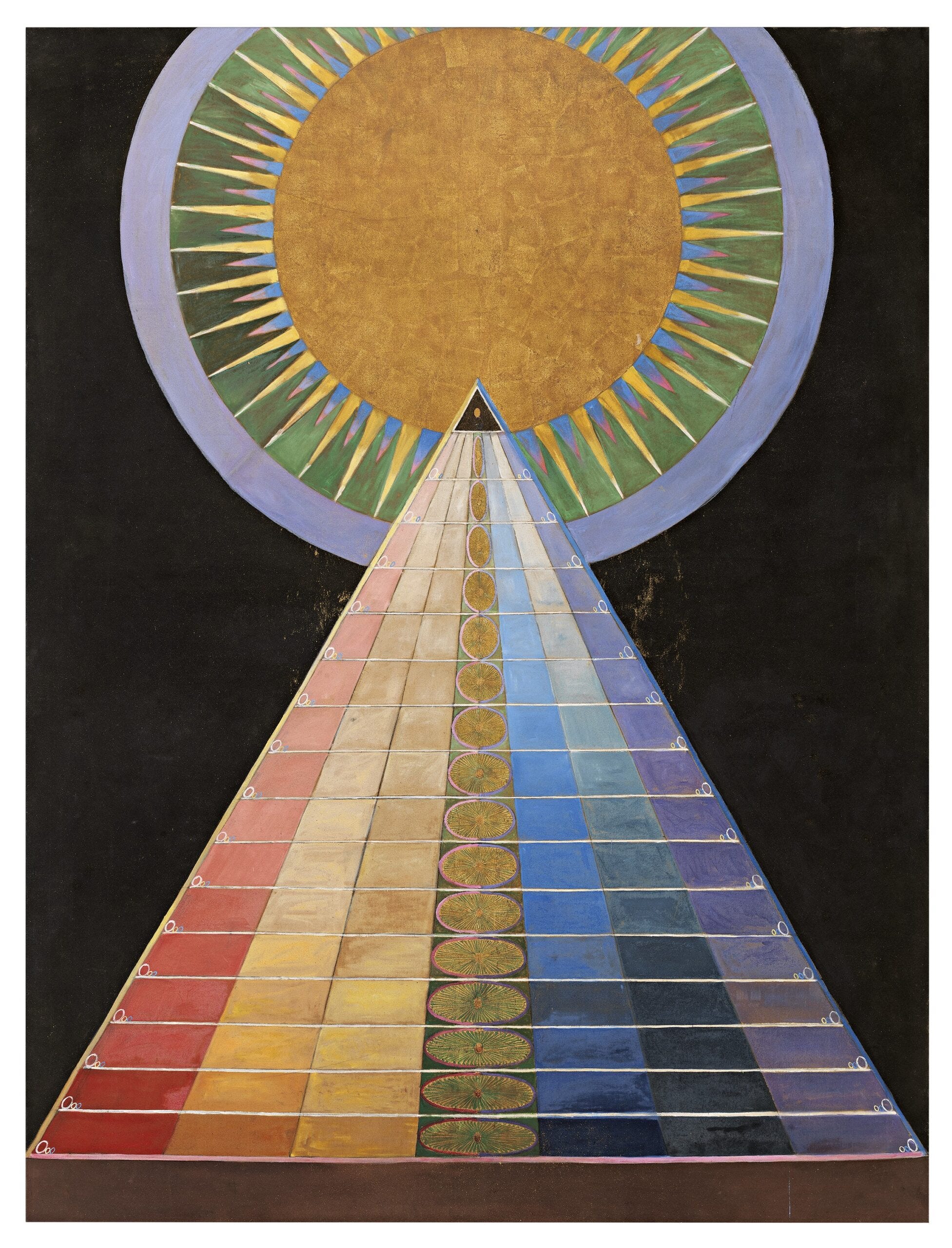
Meet the magician: the modern mystic Hilma painted some of the very first abstract works in Western art history - years before the men that got the credit. Read everything you need to know about her in my piece here:
Why we’re obsessed: how this painting came to be = magic itself. In 1906, Hilma was mid séance when her High Master spirit guides gave her an assignment: a series of paintings for a temple. Our girl Hilma said yes pls.
Altarpiece No. 1 is the grand finale - one of three altarpieces meant for that imagined spiral temple. Decades later, her breakout show would happen at the Guggenheim… basically a spiral temple IRL. OK MAGIC!!!
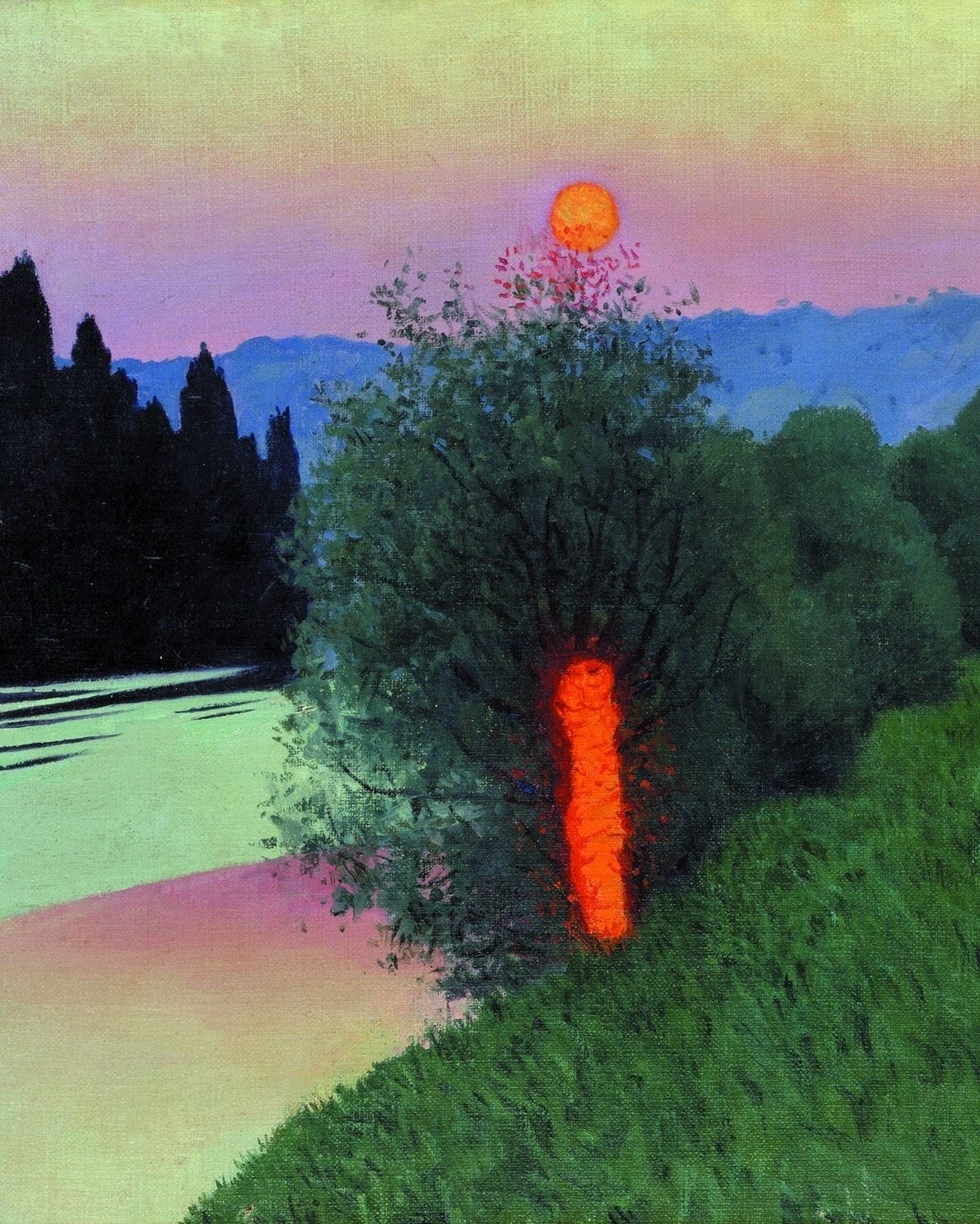
Meet the magician: Swiss artist Vallotton moved to Paris at 16 and went on to become one of the leading painters of The Nabis ("the prophets"), a group of rebel painters going beyond impressionism - flat shapes, bold color, decorative patterns.
Why we’re obsessed: the Nabis were onto something. They believed art shouldn't just represent reality - it should transform it. Vallotton takes this ordinary landscape and turns it into something DREAMY. If you'd told me this was painted in 2026, I wouldn't blink!
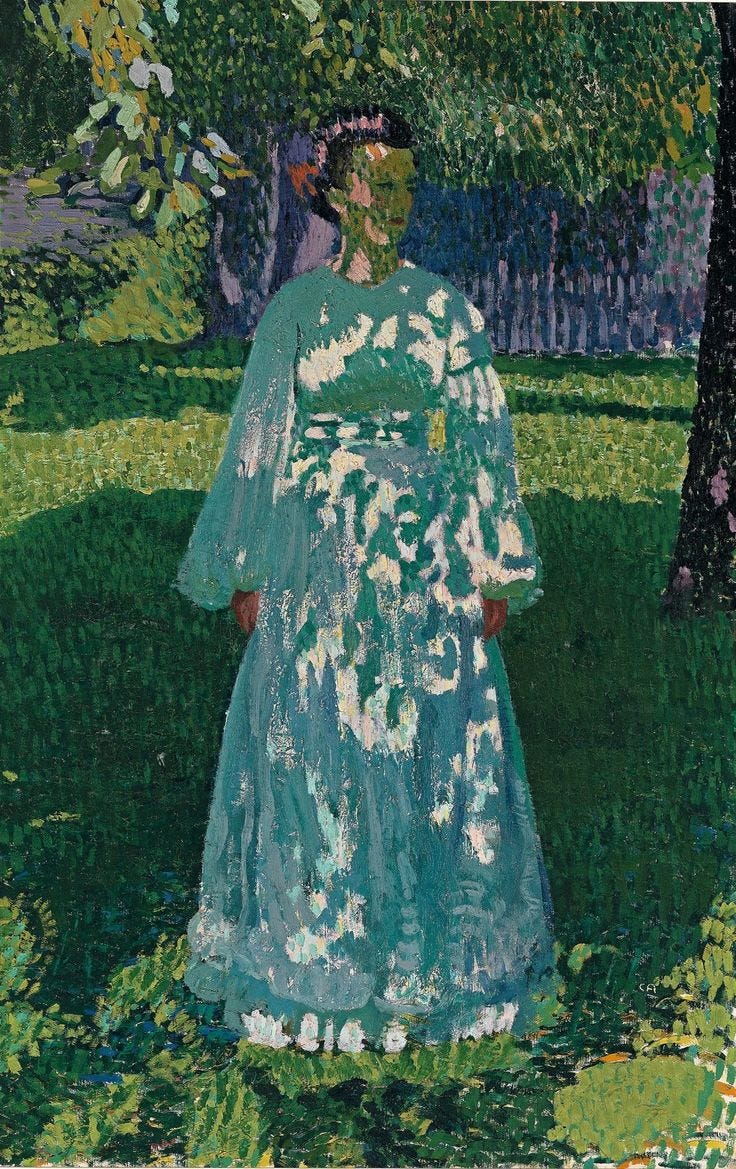
Meet the magician: Amiet was the og pioneer of Swiss Modernism - he dragged it out of polite realism and into pure color. Cuno wasn’t afraid to experiment - his portraits and landscapes are known for his innovative use of hues (take a look at some of my favorite work here).
Why we’re obsessed: this is “Sunspots” and truly, could there ever be a better name?! Cuno paints his wife Anna here but his real subject is the dappled light. White patches sparkle across her dress - her other half dissolves into the trees. Enchanting!
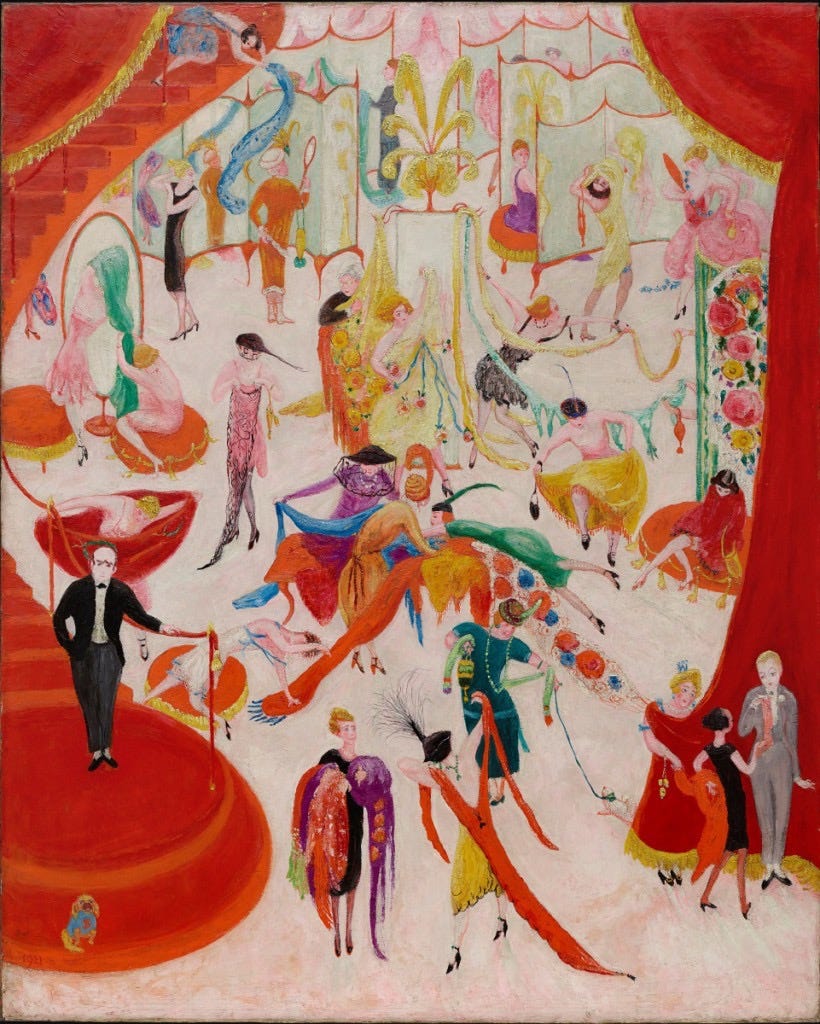
Meet the magician: Florine Stettheimer was old money New York - and her sisters ran one of the great salons of the age (Duchamp, O'Keeffe, and Man Ray all turned up to the parties),
She refused to sell her work. Money?! She didn’t need it! The magic part: after she died, Duchamp organized her retrospective at MoMA - the museum's first ever for a woman.
Why we’re obsessed: Oh, to live in the New York of a Florine Stettheimer painting! Step right into one, and you feel like you’ve crashed the golden age of parties in NYC - fizzy, gilded, and a little unreal.
The fact that she mostly kept her paintings private only adds to the magic - they feel like sneaking into the best party in town.
Comments
Nothing yet. Say the first thing.
Sign in to join the conversation.