
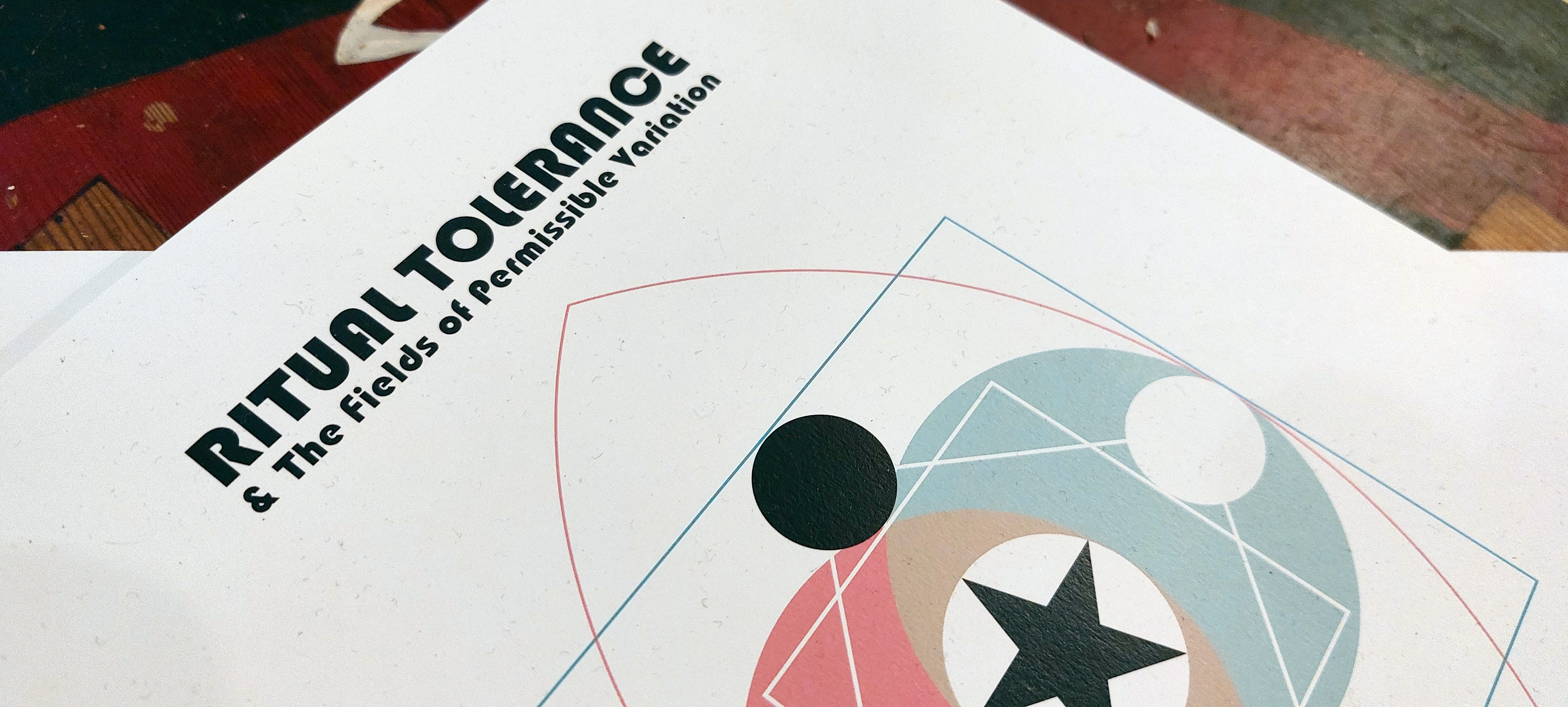
[This article update has the fixed link for the PDF that the whole thing is about… sorry for any confusion caused]
This article might not be to everyone’s taste. If not, just skip it without guilt, and hold tight for my more usual article types. It is primarily intended to benefit those ritualists and ritual students keen to ‘look under the hood’ of ritual for the purpose of strong ritual development.
It involves a free PDF and is not part of inducement scheme, I am just putting it out there for people to see!
TLDR: I developed a set of 98 questions that can be applied to any individual component in a ritual, in an attempt to develop a more nuanced understanding of how any given ritual element might be functioning, and where the boundaries of its acceptable - permissible variation - can be found.
The analysis is intended to help us determine what the breadth of variation might be within a whole individual ritual element, as a result of numerous different qualities influencing it.
This was a part of an two-year project in developing a working taxonomy of ritual practice that can exist outside specific academic disciplines (and their own verbiage), and can be applied to any ritual whatsoever.
Limited printed copies available.
Have you ever stood in your ritual space and asked yourself a question about the performance of your ritual? Like ‘how high do I raise my hand in this gesture?’ or found yourself thinking, ‘the book says I should use a wand, but I don’t have one, maybe I can use this ruler?’
Maybe your sorting out a birthday cake for your 18year old son, but you only have 17 candles (the ones from last year), and you check with yourself, ‘can I just use 17 and hope he doesn’t notice? maybe I can use a runner bean in place of one? Maybe I should use just one candle to signify all of the years? He’s a grown up now’.
Maybe you are performing an elaborate occult ceremony in which you have to speak some Hebrew words - names of God - and you have wrangled with the pronunciation… but you are aware that you’ll still be using your thick Glaswegian accent? Will ‘God’ understand what I am saying, most English people don’t. Will God likewise just nod along in agreement with my words not wanting to draw attention to my accent?
Through these types of surface level questions we come to some really foundational questions about ritual:
Do ritual stipulations have to be strictly adhered to because, like the parts of a car engine, they just don’t function if they are broken or out of sequence? Is this a matter of actual functionality or only justified by its ‘ritual rationale’?
Are rituals actually mechanisms for harnessing intent, so really the content does not matter so long as it serves to help us direct that intent? The potential for variation here might be really broad but also very personal. This would mean there is no definitive one-and-only way, and success is determined solely by the degree of focused intention, or faith in such.
Are rituals just elaborate methods of communication? As long as the recipient can understand what we are saying, it is not important that we have the ‘correct’ accent (sorry Glaswegians out there, love you. I actually knew a Glaswegian who would affect a ‘vampire accent’ so that the English could understand what he said. I think the rest of the time he was just mocking us, but I couldn’t tell.)
Are rituals about their observance, where the most important thing is that your dedication and devotion is tested by your trying to adhere as closely as possible to its stipulations in? The door for variation is here, but again it will be very contextual.
Where is the ‘that’ll do’, and where is the ‘perfect or nothing!’ in our rituals? And, how exactly has that specific precision been determined?
Over the last two years I have taken my decades of research into ritual and its practice, and been sifting through it all trying to develop a functional taxonomy for ritual practice. (This is a way of classifying the vast and different aspects that can be present in rituals: objects, spaces, gestures, words, sensations, ideas, contexts… it goes on).
The reason for doing this is ultimately to help me create a solid foundation for the organisation of my research, and to hopefully help develop not exactly a model of ritual but a framework through which practitioners can develop their own models of ritual for whatever ritual tradition or alignment they hold.
The ritual unit I used for the case example is the ‘Pentagram of Earth’ from a ritual called the Lesser Banishing Ritual of the Pentagram, but the idea is that this could be applied to literally any ritual activity.
So, the PDF attached to this article was part of my initial foray into this taxonomical task, because I am deeply interested in not only how does ritual work, but what the variabilities are within any ritual that help us determine if the ritual ‘worked’ or not.
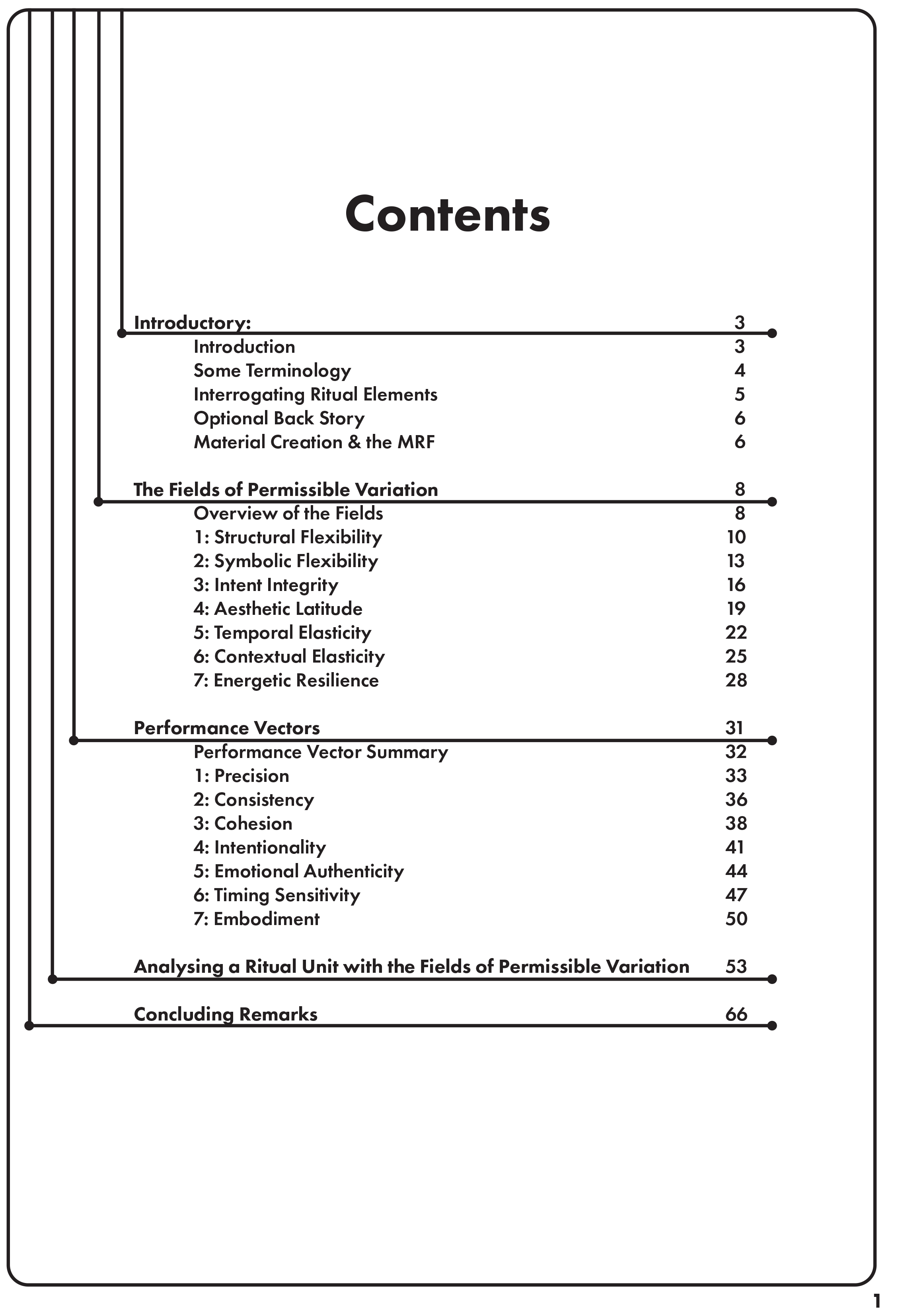
It is part of a work in progress, and was used to develop the wider taxonomy - a subject for another article, which though finished, will not be seeing the light of day for a good while yet.
What I hope for this document - which is without doubt way too in-depth - is that it might at its best help people interrogate their rituals or at the least be simply of passing interest and be thought provoking. Somewhere in the middle I’d hope for some feedback and the potential for discussion and even critique if you have something to say on the subject.
I couldn’t figure out how to attached a downloadable PDF to substack so I made a page on my website where it can be downloaded HERE.
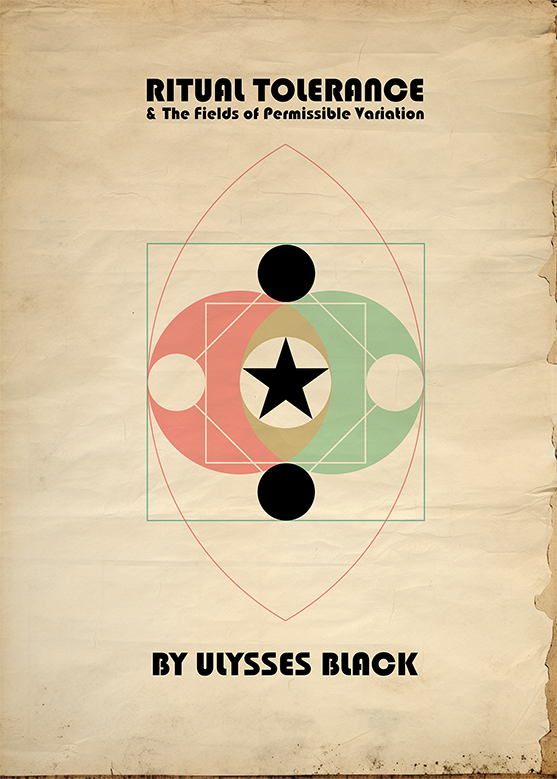
Because I like books, and because screens ‘do my head in’ I got a very limited number of copies of the PDF printed and PUR bound. Its not a pitch for exclusive content - they are essentially the same as the downloadable PDF (maybe some other secondary pages, like title page I think) and they are signed and dated.
Please be aware that, like most of my books, despite heavy editing and proofing there will be characteristic typos. If you find all the typos, they form an elaborate anagram. That would be amazing wouldn’t it.
Thanks for reading,
Ulysses
Thanks for reading The Ritualist! This post is public so feel free to share it.
Comments
Nothing yet. Say the first thing.
Sign in to join the conversation.