
I came to Substack in 2022 with a few assumptions about how people find an audience for their work.
I thought discovery ran on one of two systems. Either you had an embedded network built on luck — the publishing house, the agent, the house on Martha’s Vineyard, the people who already knew your name — or you had an exceptionally large advertising budget that drew people to a website, where you nurtured and extracted from them for as long as you both shall live.
My work had never existed inside either system. So I made a quiet and paralyzing assumption many years ago: building an audience was something that happened to other people’s work, and there was nothing I could do about it.
You may have made some version of this assumption, too.
Maybe you believe you arrived too late. You don’t have enough followers, the right connections, an existing platform or the temperament required to constantly attract attention. Maybe you’ve concluded that promoting your work demands becoming a louder, smoother or more transactional version of yourself.
And if that is what promotion requires, perhaps some part of you has quietly decided not to participate.
Almost four years, 4,000 readers and 12,000 followers later on The Publishing Spectrum, I don’t think I was factually wrong about those two systems. I was wrong to believe they were the only systems available.
Once I began working on my relationship to promotion, I realized there might be a third — or, really, an endless number of — ways someone can help an audience find their work.
That is what I want us to explore this month: what it means to promote, grow and gently nudge your work into the world without abandoning yourself in the process.
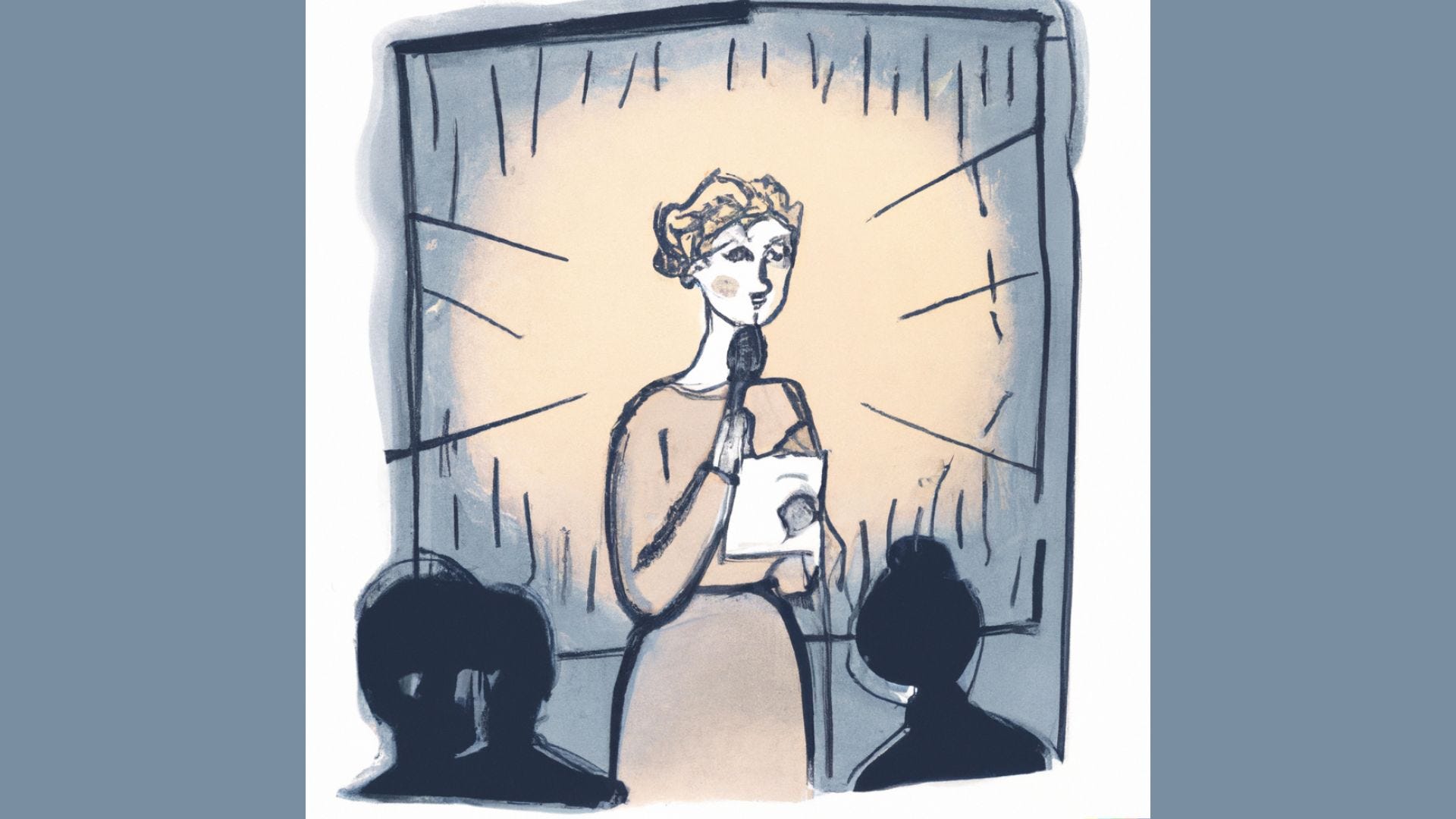
For years, I struggled to promote my work and assumed I was simply bad at it — which was a strange thing to believe, given that I had spent most of my professional career doing editorial and audience work for other people.
But publishing my own work on Substack helped me see something more innate about creativity: much of the promotional advice available to us runs counter to the reasons many of us make things in the first place.
The conversation can sound something like this:
Do you want to grow an audience?
Yes, of course I do.
Then the one and only answer is to trick people through this nifty gimmick.
If you got the ick just reading that, you are in good company.
You may have no interest in manufacturing urgency, exploiting insecurity or stealing someone else’s agency to produce a good outcome for yourself. You may not want to treat every human interaction as the beginning of a sales funnel. You may want your work to grow without becoming someone you do not particularly like.
Another promotions-adjacent conversation often sounds like this:
We know you want a lot of attention from lots of strangers, right?
Well, I would like people to read my work or buy my book one day. But also: strangers, attention—please leave me alone.
Traditional promotional advice can ask us to engage in behaviors that cancel each other out. We are told to be visible, but visibility can feel exposing. We are told to be consistent, but the prescribed system may be incompatible with our bodies, responsibilities or neurological wiring. We are told to connect authentically while treating every connection as a possible conversion.
No wonder so many thoughtful people become avoidant around promotion.
The problem may not be that you lack discipline or ambition. The problem may be that the available definition of promotion gives too many parts of you a good reason to say no.
These days, I no longer think of my writing, advisory work or thought partnerships primarily as goods to commoditize and scale to Amazonian heights.
I treat them as medicine.
This does not mean I believe my work is miraculous, universally necessary or appropriate for everyone. Medicine is specific. It is made for a particular condition, question, ache or moment. It helps the people it is meant to help, and other people are free to leave it on the shelf.
But if I believe what I have made is genuinely useful — nourishing, clarifying, enlivening or even simply entertaining — then keeping quiet about it is not necessarily an exercise in humility. I may be withholding something good from someone who could use it.
This posture changes the central question.
Instead of asking:
How do I get more attention?
I can ask:
Am I doing the work required to help this medicine reach the person who needs it?
You do not have to convince anyone that they need what you make. You do not have to overpower their judgment or remove their agency.
Your responsibility is to bring the work close enough that they can encounter it, understand what it offers and decide for themselves.
That is a much higher calling than extracting attention. It is also, for many of us, a far more sustainable reason to show up.
So consider the work you are trying to grow.
What does it help someone name? What becomes possible after they encounter it? What need, delight, tension or curiosity does it meet?
And what changes about promotion when your job is not to make people want something, but to help the right people recognize what is already here?
The second thing I changed was the medium through which I engaged promotion.
I stopped categorizing every activity as pitching, networking, selling or social-media schlepping. I began treating those spaces as opportunities to practice storytelling.
That distinction matters.
You may not want attention from strangers that drags you into small talk, performance or constant self-disclosure. But perhaps you know how to tell the story of the question that would not leave you alone. Perhaps you can describe the moment you realized something had to change. Perhaps you can show us the strange detail, contradiction, conversation or piece of data that led you to make the work in the first place.
Promotion does not have to be a repeated declaration that your work exists and people should buy it.
It can be another expression of the work itself.
You can tell the story behind an idea.
You can pull one useful observation from a larger piece.
You can show us what you are noticing as you make it.
You can explain why a familiar problem deserves a different interpretation.
You can offer someone a doorway into your body of work without trying to drag them through it.
When you approach promotion this way, you are not leaving your creative practice to become a marketer. You are using the skills you already possess — attention, interpretation, curiosity and storytelling — to help the work travel.
With medicine and storytelling in your pockets, what remains except to begin showing up again and again — a practice, if you will?
The good news is that you are allowed to practice lopsidedly.
Inside a practice, you have unlimited opportunities to try again.
Inside many traditional promotional systems, the assumption is that you either execute correctly and receive the expected outcome, or you have failed.
But a practice invites you to return to your genuine intentions in the same way you return to the page.
Some weeks, you may publish several Notes and have rich conversations in the comments.
Some weeks, you may manage one Note and a thoughtful reply.
Some weeks, you may have an organized, data-grounded system in which LinkedIn and Substack Notes appear to be playing tennis with one another.
The practice is not invalidated by the unevenness. The return is the practice.
Thinking this way also creates room to build promotional systems around your actual needs, whether they are neurological, sensory, physical, financial or logistical.
I know now that live streams on Substack ask me to flex a muscle inside a system that works for me. In-person networking events with loud sounds, bright lights and mix-and-mingle requirements can cost me several days of productivity.
Your equation may be entirely different.
You may come alive in a room and freeze in front of a blank Notes composer. You may love podcast conversations and despise short-form video. You may be able to write one generous essay a month but have no interest in posting seven disposable things every day.
The question is not whether you can force yourself to comply with a standardized promotional system.
The question is: What forms of showing up allow you to remain in relationship with your work, your audience and yourself?
Thinking of promotion as a practice is, I believe, one reason I still have The Publishing Spectrum four years in — and why it has been built through friendships, curiosity and storytelling rather than an advertising budget.
It has given me enough flexibility to remain.
And remaining gives the work time to find people.
Of course, there is still a practical question inside the discussion: What do I actually say?
I think this is where a lot of good intentions around promotion fall apart. We assume that every time we want to bring a piece back into circulation, we need to invent an entirely new way to talk about it. But one piece of work already contains many possible ways in: the question that started it, the assumption it challenges, the story behind it, the useful idea someone can take from it, the conversation it might open.
That is the thinking behind the Substack Promo Generator I built for The Publishing Spectrum. Give it a post you have already written, and it helps you find those different entry points and turn them into a 14-day Substack-native plan using Notes, Chat, Live and email.
The point is not to spend two weeks repeating the same pitch. It is to practice helping people encounter the work from different directions — using the storytelling instincts you already have.
Comments
Nothing yet. Say the first thing.
Sign in to join the conversation.