
In 1881, Friedrich Nietzsche wrote, in Daybreak, what he called the good four virtues, and the first of them goes like this: “honest towards ourselves, and whoever else is a friend.”
Towards ourselves, and whoever else is a friend.
And everyone else?
Nietzsche declines to say. His honesty is a virtue that comes with fine print, and the fine print is a magnificent scandal: you owe the truth to yourself and to your friends, and to no one else on earth.
Now, run the dinner party test from our first issue of this series. Stand up at a party and announce, “I am trying to be more honest.” You’d likely get applause with warm murmurs, and someone calling you enormously brave. Now stand up and say the whole thing: “I am trying to be more honest to myself and to my friends. The rest of you can look after yourselves.”
You’d definitely get silence with a few uncomfortable coughs and someone remembering they need to call their babysitter.
The first version is Franklin’s honesty: a virtue for display. The second is a virtue you’d only ever say to yourself. Which, as this series insists, is exactly what makes it commercially real. Because to yourself is where all the justifying of doing things and buying things happens.
So how does a human being use this kind of Nietzschean honesty to permit a purchase?
Dig underneath anyone of these:
It’s my one guilty pleasure…
I know I shouldn’t, but...
I never normally do this…
And you'll hear the same tell: a person paying for an indulgence with a confession.
And to Nietzsche, this candour is a virtue.
Notice what the phrase guilty pleasure actually accomplishes. While it sounds like an admission of guilt it does quite the opposite by settling the guilt before you have time to feel it for real. Saying I know I shouldn’t but… is the payment, made moments before consumption, in the currency of self-awareness. Once made, you can unapologetically dive into that cheesecake. Or Love Island. Or TikTok. Whatever you’ve decided is on today’s ‘research’ menu.
This is why nobody who admits a guilty pleasure ever feels the slightest bit of guilt. The confession has served its role as a cover charge for permission. And it’s the cheapest one ever invented, because you pay it to yourself.
You already know these ads. You can probably quote a few.
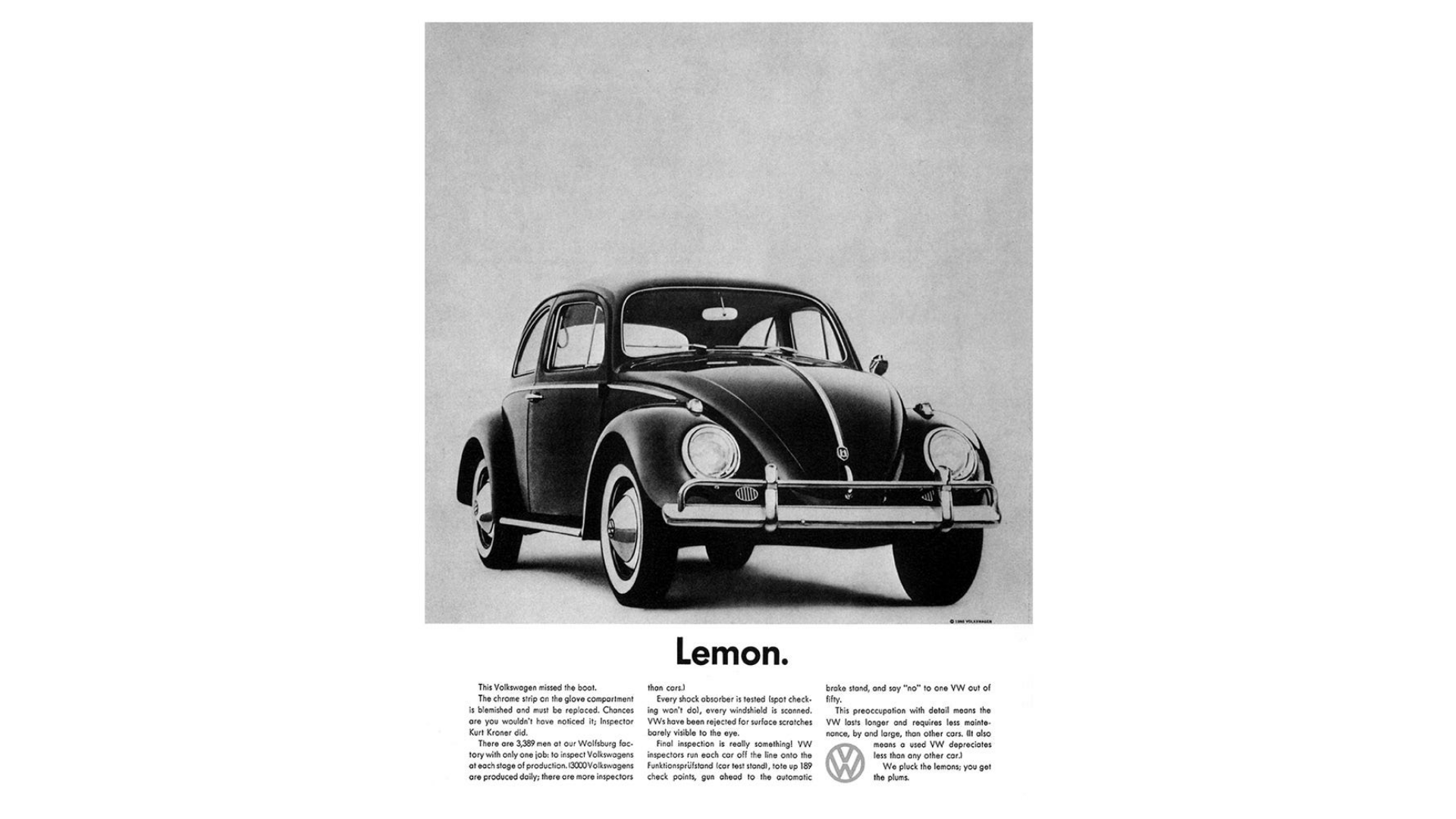
Volkswagen, in the Think Small campaign, photographs its own Beetle and prints one word beneath it: Lemon.
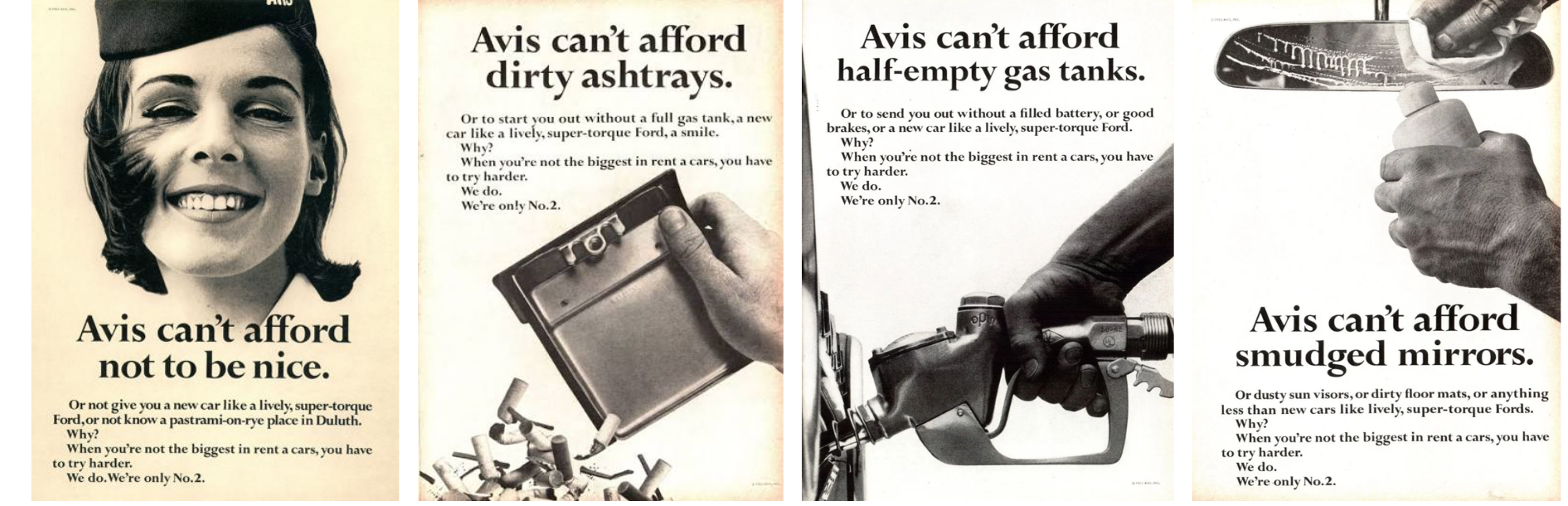
Avis admits their inferiority with “We’re No. 2. We try harder.”
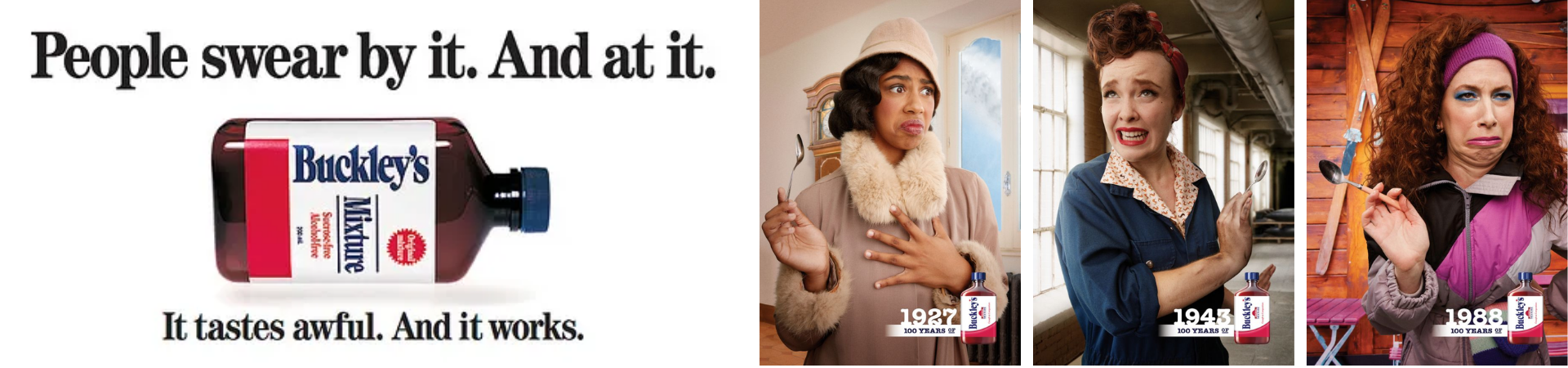
Buckley’s cough syrup promises “It tastes awful. And it works.”
And Domino’s, in more recent living memory, bought national airtime to confess that its own pizza had, by common consensus, become terrible.
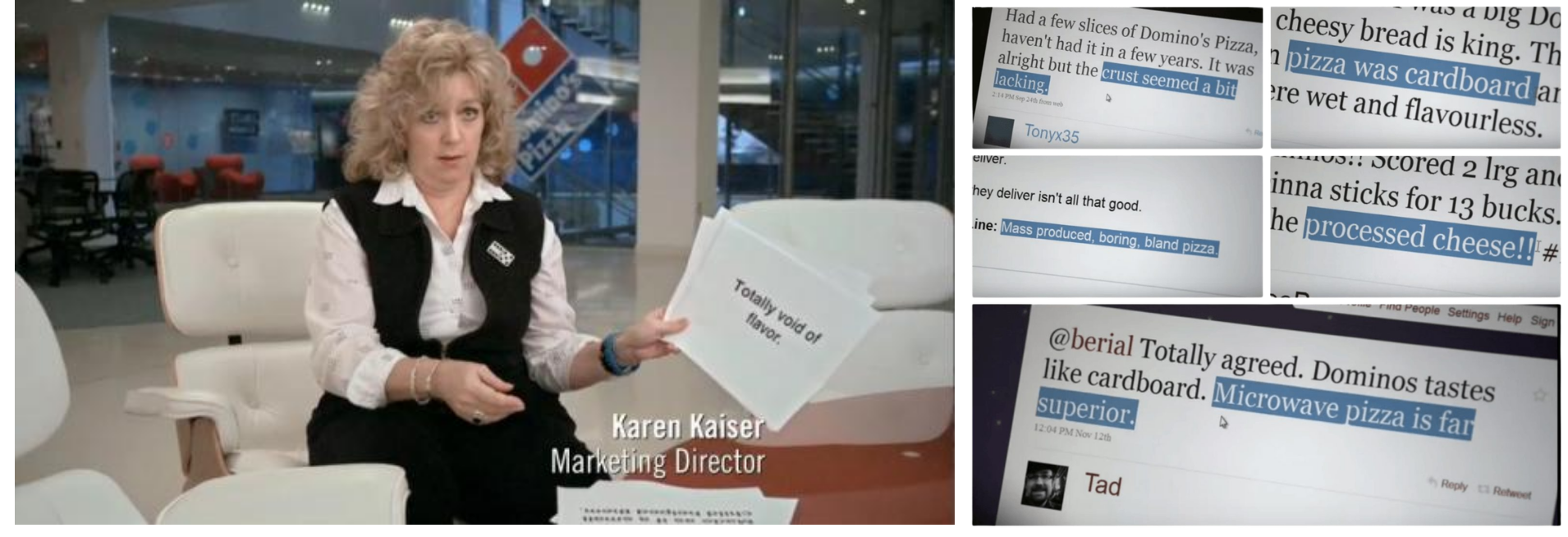
Every one is a confession addressed, in Nietzsche’s sense, to friends: the company owning up to its own kind, which is to say its buyers.
The standard reason we tell ourselves is that they worked because honesty built trust.
The brand admitted a flaw and the consumer believed the rest.
OK sure, that’s fine and true.
But it’s also insufficient. Because trust explains why the customer believed the ads. But it doesn’t explain why they love these ads. There’s an unmistakable pleasure in the way people respond to these campaigns and quote them for decades after they run. Nobody feels pleasure at merely finding a vendor credible.
Here’s what I think was actually sold.
The Avis ad hands its reader a very particular sentence to say to themself: I buy from the people who tell the truth. Sit with that sentence a moment. Who is its subject? Not Avis. The sentence is about the buyer. It says:
I’m the sort of person who values honesty.
I reward candour.
I can’t be flattered, but I can be levelled with.
The ad confesses so that the consumer can feel honest by association. The company performs the virtue. The buyer pockets it.
And note the distinction from Insight, because Honesty and Insight run close together and the difference matters.
Insight says: I saw what others missed and the Mac buyer congratulates herself on thinking differently.
Honesty says: I admit what others won’t and the Avis renter congratulates himself on his candour.
Every one of those campaigns obeys the rule we established in the first issue: the virtue appears at the bottom of the funnel, in what are, when you strip away the craft, direct-response arguments.
Lemon is a quality-control proof point. We try harder is a service promise. It tastes awful, and it works is an efficacy promise with gags that would kill on an open mic night at the Comedy Store.
I know people consider these brand-building campaigns, but they’re not. And that’s what makes them genius because they sold a lot of cars while building the brand at the same time. The virtue of honesty shows up in the closing argument, where its job is to hand the customer their alibi, and then get out of the way.
Which is fine as long as the honesty never becomes the brand because the moment ‘radical transparency’ turns into positioning, or the moment honesty appears in the tagline, or the manifesto, or the About page with the founder gazing candidly into the middle distance, something seriously curdles. The confession stops being a confession and becomes a performance of confessing, and the consumer, who can smell this the way one smells milk gone slightly off, withdraws because a performed virtue is worse than no virtue at all.
The least the hypocrite can do is be graceful about it, and the honesty brand, by definition, cannot be graceful, because it has put the confession on a billboard, and a confession on a billboard is a boast.
But there is a second reason honesty-as-branding fails, and it lives in Nietzsche’s fine print.
Honesty is owed to ourselves and to our friends. It’s an in-group virtue. The confession only works between friends. Between strangers, it’s oversharing. And from a corporation? Well, that’s a sales technique dressed in a power suit. Which is why the honesty campaigns that work always construct the friendship. First with the wit (the shared joke, the wink) and only then confess. Buckley’s is a friend making you laugh. A terrible tasting friend, but a friend nonetheless. The transparency-honesty manifesto, by contrast, is a stranger telling you about his therapy.
I’ve been handing you the Virtue of Honesty from the inception of The Pleasure Codes.
What I hope brings you back each week is the pleasure of looking behind the curtain and into the human machinery beneath marketing. Your consumers’ drives called by their oldest and least flattering names. The sins and their itches. The desires and their scratches. The refusal to dress those timeless motivations up in Maslow’s good manners or Jung’s Instagrammable archetypes.
I wonder what reading along has let you tell yourself.
… … …
Whatever sentence just surfaced, that is the Virtue of Honesty and I’d be careful with it.
The Virtue of Honesty has a peculiar habit of disguising itself as the absence of self-deception. Which is usually the moment the self-deception begins.
Honest towards ourselves, and whoever else is a friend.
— Angelique
Next up: the Virtue of Sympathy
Comments
Nothing yet. Say the first thing.
Sign in to join the conversation.