
A colleague of mine in Los Angeles recently bought a Land Rover Defender.
If you haven’t seen a Defender lately, it’s a car styled to look like it has somewhere serious to be with its spare tyre bolted to the back and its boxy silhouette that looks like something the Ministry might issue before an expedition. It’s even got a drive mode with a little stick you can slap sideways, like a proper bush vehicle, even though the transmission is automatic and knows it.
When you step into that car in Los Angeles, you step into, psychologically speaking, somewhere in the Outback. Readers of this newsletter will recognise the Code immediately: WonderWorlds, the pleasure of being transported into another world entirely. My colleague bought a portal, with cupholders.

But if you ask him why he bought it, he’ll tell you (as he told me), without a flicker of hesitation: it’s an incredible tax write-off. In the US, commercial vehicles over 6,000 pounds for business use (he bought the car through his company) are subject to accelerated depreciation.
But here’s what I need you to understand: he’s not lying. The write-off is real. But the write-off would have been equally satisfied by a pickup truck or any number of large, deductible, charmless machines. The tax code got him through the door, but the idea of conquering the Outback while sitting in Los Angeles traffic got him to the desk where you sign things. The write-off wasn’t the actual reason for the purchase or why he thought of a Land Rover to begin with. But it is the reason, or virtuous alibi, that justified the purchase in his mind.
Welcome to the Virtue of Insight: the first stop on our tour of the eight virtues introduced last week and one of the most flattering things a human being can believe about themselves.
As I mentioned last week, the eight virtues are the alibis we tell ourselves about why we buy what we buy, and I borrowed them from Nietzsche because, unlike Franklin’s virtues, they are intensely private and less about appearing virtuous to others and more about the stories we tell ourselves.
Insight appears in Nietzsche’s later list of virtues in Beyond Good and Evil, where he says these virtues should be kept under strict self-control lest they master us rather than the other way around.
For Nietzsche, Insight was the rare ability to see through the comforting illusions of the herd.
Once you know to look for it, you’ll notice this virtue everywhere.
Translated out of nineteenth-century Europe and into the boardroom, the virtue sounds like this:
I see what others miss.
I am not following a trend. I understood something first. While everyone else pays the sticker price of reality, I found the loophole. The herd buys the badge. I bought the depreciation schedule.
It’s the preferred justification of choice for the modern educated consumer, who’s been raised on documentaries about advertising and considers themself, therefore, unadvertisable. Everyone believes they are the exception. Watch how people talk about AI on social media right now: every single person using it will tell you that other people’s use of it is detectable slop, while their own use is discerning and precise.
Very few people take pride in considering themselves part of a herd. Which is exactly why the herd is composed entirely of people who are not in it.
There’s a legend in marketing, and like the better class of legend, it’s somewhat true, that ten percent of the population is immune to advertising. This 10% are purely rational buyers. The people who read Consumer Reports for pleasure. And for decades, the industry’s advice about these people was simple: don’t waste your money on them.
Toyota Camry owners are famously this tribe. Back when Toyota was in trouble, getting out-Camry-ed by the Honda Accord, researchers set out to do some interviews1, presumably expecting to find the emotional life of a filing cabinet. What they found instead is one of the most useful discoveries in the history of consumer research:
These people do get emotional. And what they get emotional about is their own rationality.
At one point during an interview, a male Camry owner leaned forward, and the researchers noted the lean (the lean is everything). He dropped his voice to a whisper, though nothing about the moment asked for one, and said:
“Do you know what my neighbour pays every year to maintain that Jaguar? Thousands of dollars. Do you know what I paid? One oil change.”
He landed that last line like it was the punchline to his go-to dinner party joke in the hushed voice that’s the surest tell-tale sign of a man who’d found his one true love: self-wisdom.
Because Look how smart I am is a feeling and the Camry delivered it more reliably than the Jaguar delivered whatever it was the Jaguar promised.
Which is why the Camry fan is such a useful creature. Most buyers take the pleasure first and go looking for a reason afterwards. He works the other way round. The receipts are where his pleasure lives, and he drove off the lot knowing the figure to the penny.
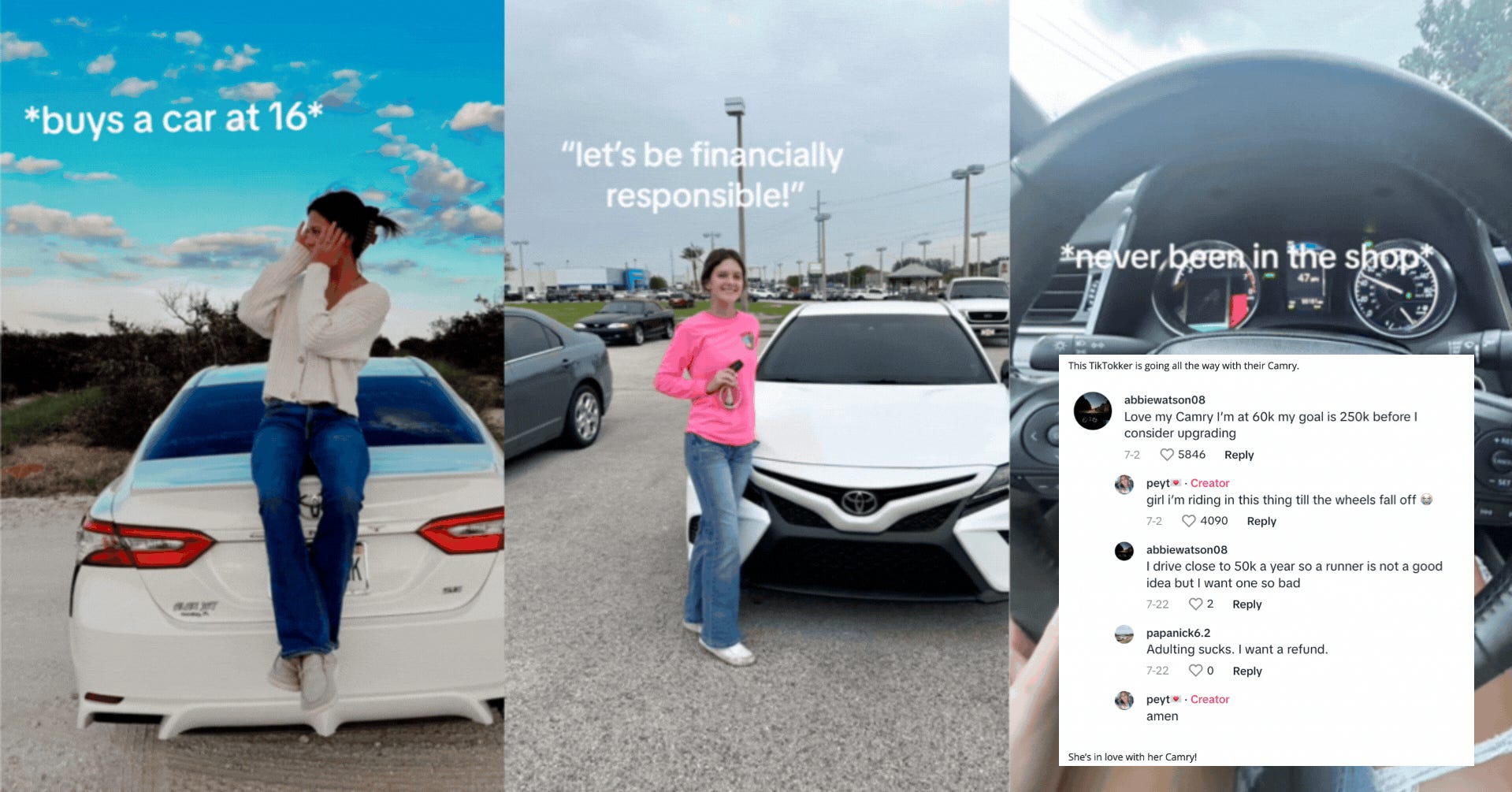
So if they’re your buyer, sell them the feeling of being clever and let the car come along for the ride.
Every big brand’s segmentation deck has these people in it, by the way. They’re usually called some variation of “the Savvies,” and the deck usually recommends ignoring them because “they just want the deal.” But I think this is a mistake. They want the pleasure of being the person who “found the deal”, which is a different thing entirely, and one you can absolutely sell them, just never from the centre of your brand.
Now watch how the most studied brand of our time handled all of this, because Apple ran the whole playbook, in order.
Think Different was a WonderWorlds campaign. It sold no computers, and I will go further than the campaign’s pundits usually dare. It wasn’t supposed to.
It was a category-defining piece of world-building, saying: Here’s our universe, populated by Einstein and Dylan and Picasso, and buying our machine is the visa.
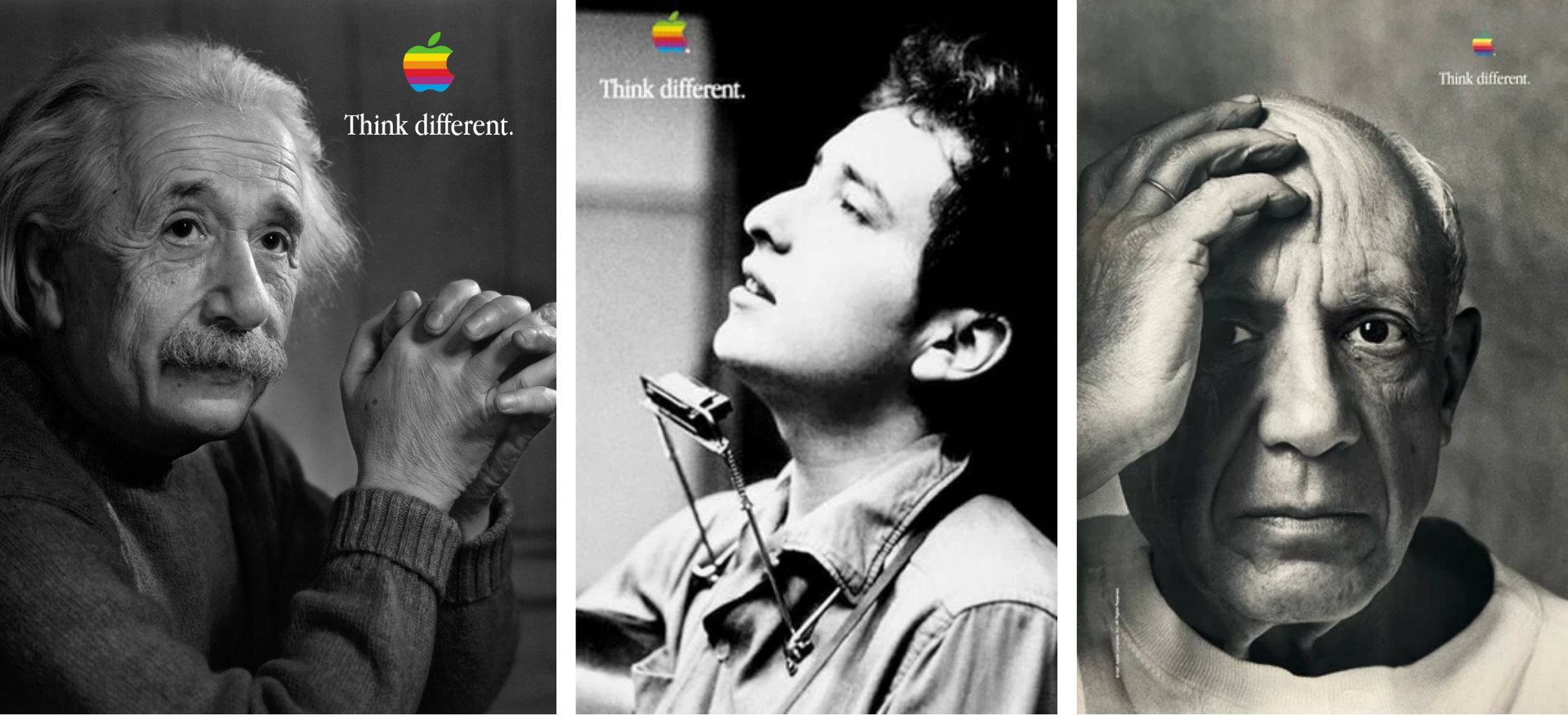
It also did something at least as important inside the building when it told a demoralised company, mid-turnaround, that it was still permitted to think of itself as significant. A surprising amount of great advertising is written for an audience of employees, but that’s a subject for another newsletter.
Then, years later, came the Apple Get a Mac campaign. “I’m a Mac. I’m a PC.” And this, despite the awards and the charm, was not really a brand campaign at all. It was a direct-response campaign wearing a very good cardigan. Feature, comparison, objection, rebuttal. Episode after episode after episode. It was the bottom of the funnel, produced beautifully.
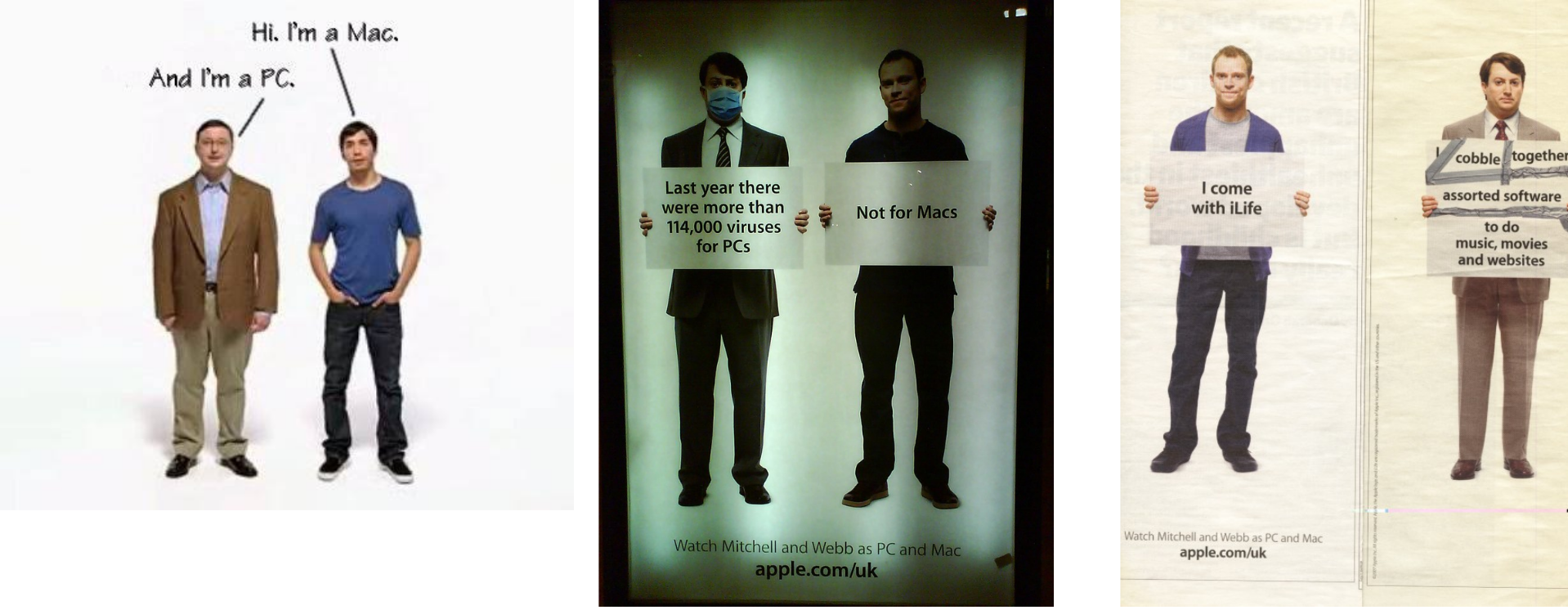
And what was it selling, down there at the bottom of the funnel? What virtue did it want everyone to feel to justify buying a Mac?
Insight.
The Mac fellow is relaxed, unimpressed by convention, visibly not of the herd. The PC fellow is the herd, in a beige suit. The ads handed every wavering buyer the exact sentence he would need later: I’m not paying more for a logo. I just see what most people don’t.
To understand how the Virtues work in the Pleasure Codes, the sequence is an important lesson to notice here.
WonderWorlds, in this particular era of Apple, scratches the itch of consumer pride with Think Different to create the desire of being a genius like Einstein, Dylan or Picasso. Insight is the alibi that arrives after the sentence Get a Mac gave every wavering buyer to repeat on the drive home.
But it shouldn’t ever directly appear in the brand. Apple never once put “for people smart enough to see through the PC” on a billboard, and yet millions of customers walked out of those stores privately congratulating themselves on their clarity.
Their competitor, incidentally, could have counterattacked with the very same virtue “if you really knew what you were doing, you’d buy the PC; here is the price-performance table” and never did, except years later with a half-assed “I’m a PC” campaign. Instead, they answered a Virtue campaign with a feature list.
Which is like answering a compliment with a receipt.
Here’s where I must complicate the story, because there is a version of this newsletter that lets you believe the Virtue of Insight is only for tax write-offs and maintenance costs and that the alibi is always a practical alibi.
It’s not. And the Apple case plays this out it.
Ask the creative professional why she bought the Mac, and she will tell you: it makes me more creative. Now, does it? From a placebo effect, perhaps it does. But you can edit film on both machines equally well. So the evidence isn’t really there. What I want you to focus on here is that “It will make me more creative” is not a rational claim. It’s an emotional hope wearing the grammar of reason.
And this is the thing Franklin’s virtues could never accommodate, and the reason we built this framework on Nietzsche instead: a justification doesn’t have to be rational in order to function as reason. The act of reasoning is the virtue, the ceremony of explaining yourself to yourself, regardless of what the reasoning contains. The Camry man reasons with maintenance costs. The film editor reasons with her own future creativity. My colleague reasons with the tax code. That’s three alibis based on one virtue, but not one of the three purchases was decided by the contents of the alibi.
The decision doesn't need to be rational, it simply needs to be explained. And the explanation is the product's final feature the consumer installs themselves.
I did promise last week that I'd implicate myself along the way.
So here’s one of my own alibis.
I wear a tracker and monitor my sleep, my recovery, my heart-rate variability. For years I've told myself this makes me unusually insightful about my own body. I see what others miss. Others merely feel tired, whereas I know my HRV.
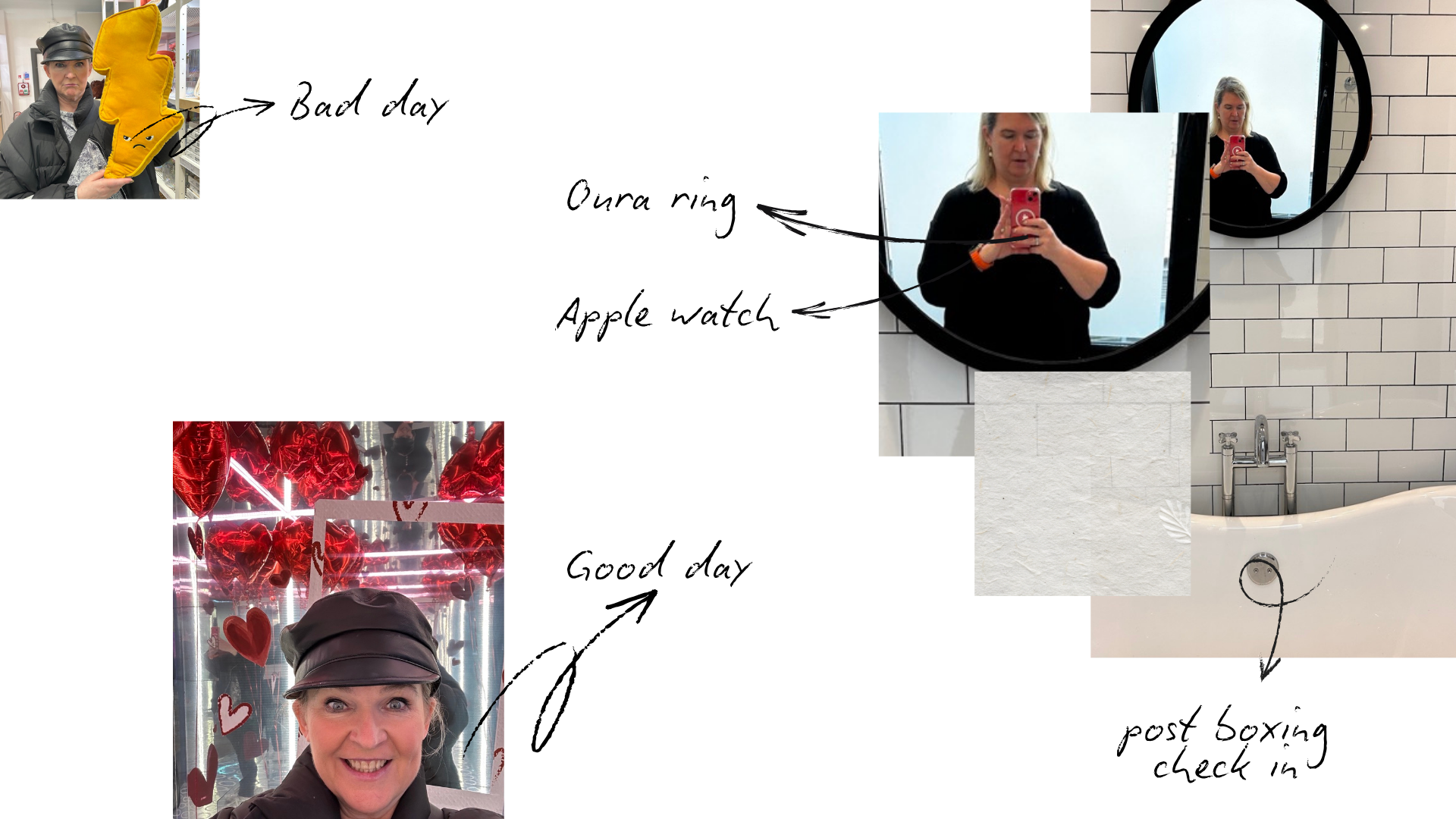
Lately, I’ve begun to suspect that what I’ve actually made a part of my biology isn’t insight at all. It’s more of an anxiety dashboard that’s never once told me anything my tiredness wasn’t already telling me for free. I also notice that I haven’t cancelled my subscription, but have explained it instead.
You see how this works.
Now you won’t be able to unsee it.
That’s the virtue.
— Angelique
Next up: The Virtue of Honesty
Who are you being honest with?
·
Jul 28
In 1881, Friedrich Nietzsche wrote, in Daybreak, what he called the good four virtues, and the first of them goes like this: “honest towards ourselves, and whoever else is a friend.”
Detailed in the book Loveworks by Brian Sheehan (a case-study sequel to the infamous Lovemarks by Kevin Roberts).
Comments
Nothing yet. Say the first thing.
Sign in to join the conversation.