
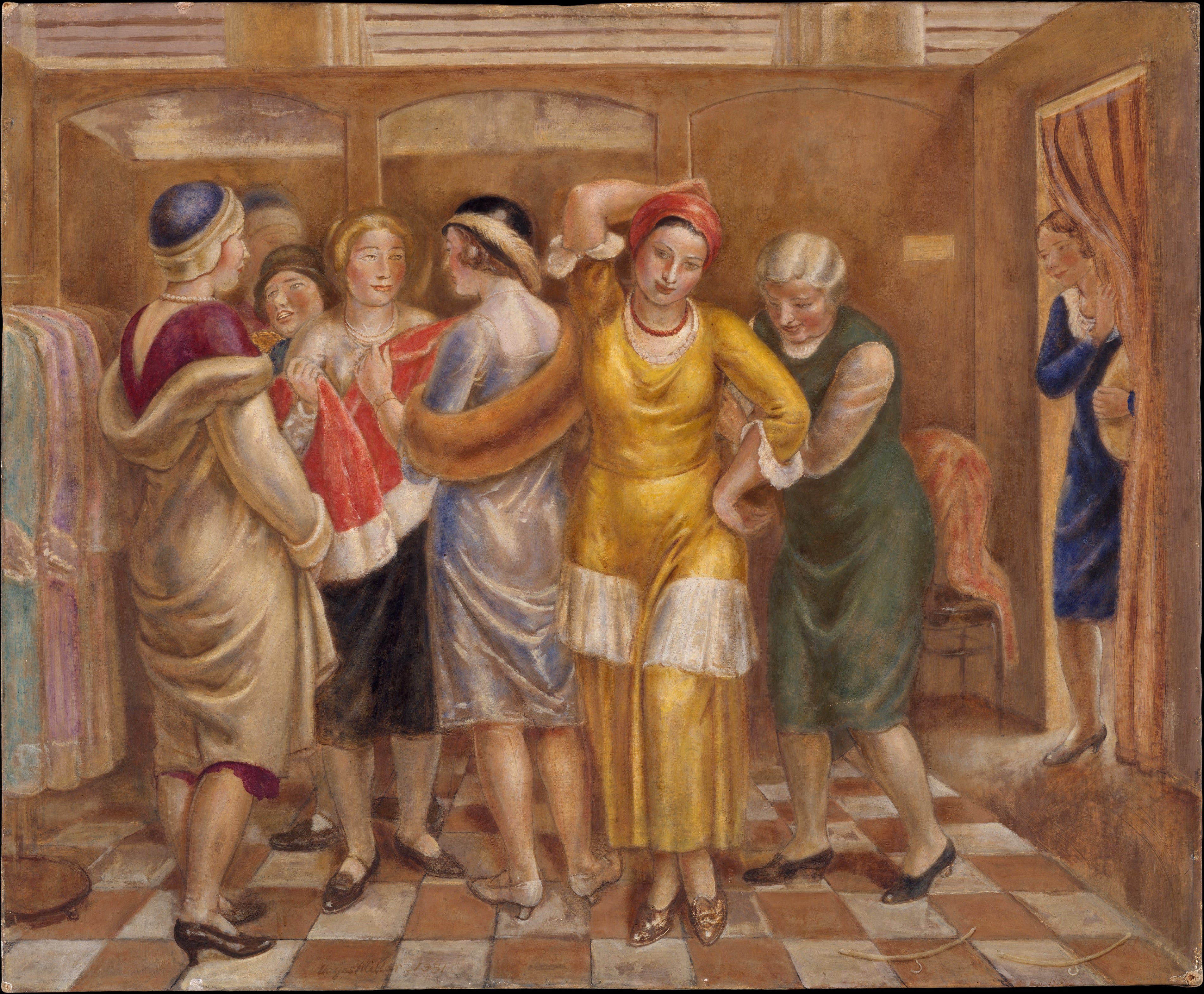
Sometimes I feel subtly (or unsubtly) negged walking into certain stores. In 2018 that was Everlane’s outpost on Valencia St. in San Francisco, because the inside was clinically neat and the workers looked mean, but now that Everlane has basically been the subject of an SNL send-up (I think it’s the real inspo for “Forever 31”) and belongs to Shein, I don’t think I would feel that way. Everlane got worse, though I’m not sure I got cooler. When I went to Paloma Wool in NYC last year with my sister (importantly, for context: taller and skinnier), I waited in the corner kicking my Chaco sandal-clad feet as she tried on a bikini and androgynous model types entered the store clavicles-first. Places like that need to have warning stickers on the front, like cigarette packs. Five minutes within is associated with diminished self-worth and perceiving yourself as a rotund hobbit. Maybe also cancer.
I was thinking of clothes because of reading the sociologist Taylor Laemmli’s article on “class experience mobility” or CEM; she theorizes that CEM is when “people temporarily access a class lifestyle that does not correspond to their class position, tasting another life before returning to their own.” One of the mechanisms she describes for upward CEM is the “class deal,” like someone wearing designer clothes they purchased secondhand. This week I’ve been scrolling furiously through a resale app, trying to sell off clothes that no longer fit me, and I see “class deals” everywhere, on brands like Baserange, Maryam Nassir Zadeh, and Lauren Manoogian. I have been offloading mostly Uniqlo and unisex Big Bud Press products (if you’re not familiar with BBP, picture robust heavy cotton and denim basics in primary colors) to people with the word “sapphic” in their usernames who live in Philly and Somerville. Unfortunately, not one soul in the USA wants my Everlane supima cotton square-neck bodysuit. Maybe they, too, have decided adults shouldn’t wear onesies with snap buttons. Or maybe Everlane as a brand doesn’t work as a class experience escalator.
Laemmli’s writing on CEM highlights how class isn’t just a fixed identity category but processual and experiential: you can dip your toes in the pool, even swim there. The things we seek out say something not only about the quality of certain goods but about the life we see as desirable and how much we’re willing to pay to get there. We live in this insane time when, if you are brave enough to deal with the negging-by-store, you can go try on stuff that costs so much money at a place like Paloma Wool or Evan Kinori or Rising Star Laundry and then find it online for cheap and basically new because some dude in Connecticut bought a size too big for him and his mom wants him to get his shit out of her house. Then someone in the know will see you on the street and think, Damn, that jacket costs $1,070. And they’d be right in one sense but also totally wrong. When else in history have symbols of class been so erratically tethered to capital?
Image: The Fitting Room, Kenneth Hayes Miller (1931)
Comments
Nothing yet. Say the first thing.
Sign in to join the conversation.