

Day 43 is where the experiment changes its question. By then, a participant in the multiple-dose portion of the AVALON trial will have received three intramuscular injections, each two weeks apart. The injections contain VTP-1000, an investigational particle roughly 20 nanometers across, carrying 12 gluten-derived peptide antigens and the immune-modulating drug rapamycin. The participant has celiac disease. They have spent years avoiding the food the trial is about to deliberately put back in front of their immune system.
The first 42 days ask whether the treatment can enter a human body without causing unacceptable harm and whether immune cells notice what it carries. The controlled gluten challenge asks the question that matters: did those immune cells learn a different response?
The injections can prove the particle arrived. Only gluten can test what it taught.
In December 2025, the company developing VTP-1000 announced the first results from 18 participants in the single-ascending-dose portion of AVALON. It reported no treatment-related serious adverse events, a dose-dependent pharmacological effect, and an interleukin-2 response at every dose. Its chief medical officer described the combination as evidence of “immune recognition without serious inflammation.” Those are encouraging Phase 1 signals, accurately stated.
They are not evidence that a person with celiac disease can eat bread without symptoms. They are not evidence that the small intestine remains intact after gluten. They are not yet evidence of tolerance.
Immune recognition is not immune tolerance.
The gap between those two phrases is where peptide medicine gets interesting. It is also where peptide medicine gets oversold.
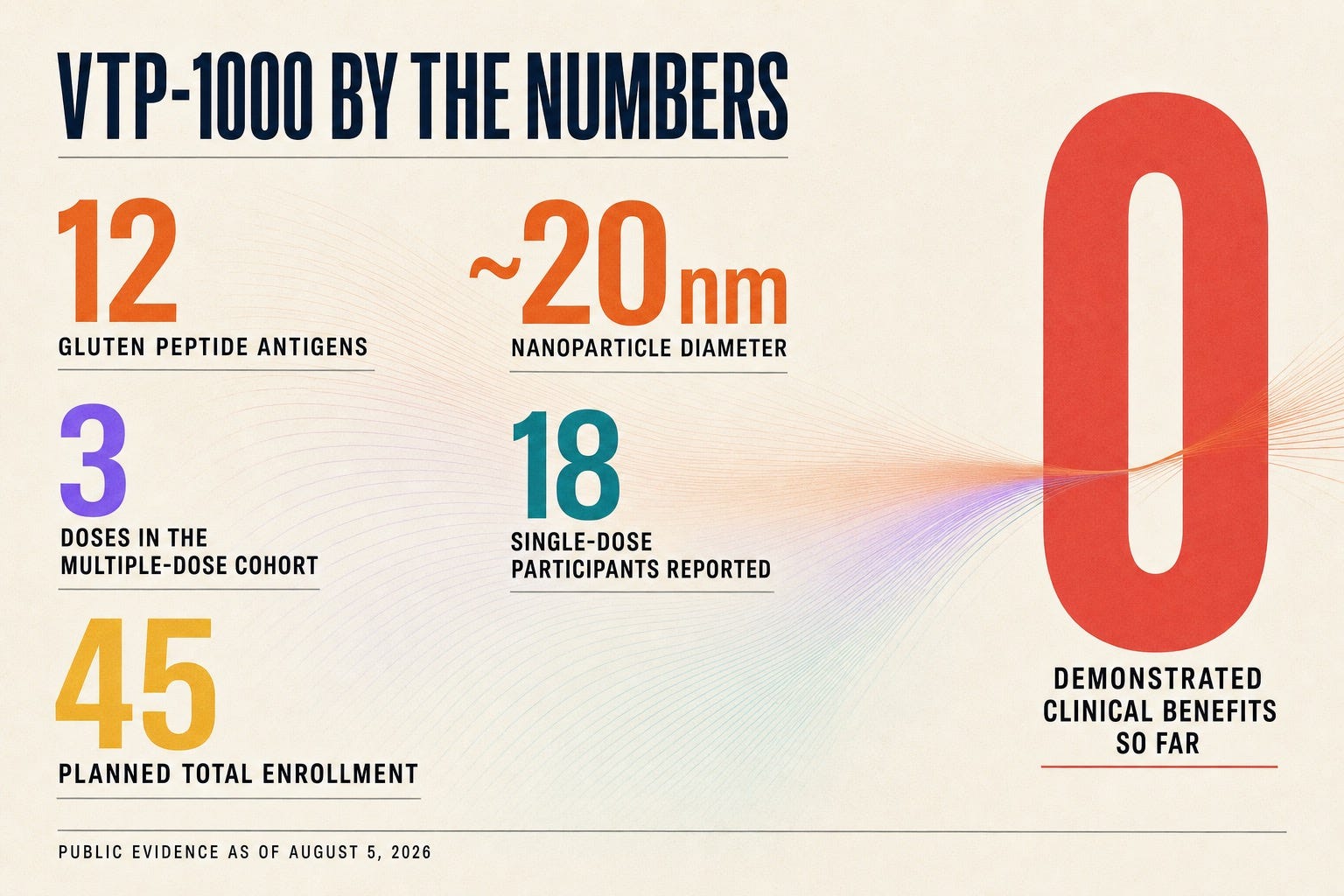
The public evidence ledger as of August 5, 2026: 12 peptide antigens and rapamycin assembled into an approximately 20-nanometer particle; three doses in the multiple-dose cohorts; 18 participants through the completed single-dose portion; 45 participants planned across the full study; and zero demonstrated clinical benefits so far. The last number keeps every earlier signal honest.
Nothing here changes today’s care: a clinician-directed gluten-free diet remains the standard. VTP-1000 is not available to buy or self-administer, and no reported result permits deliberate gluten exposure outside a controlled study. The next result worth watching is whether the multiple-dose cohorts respond differently from placebo after challenge.
Peptide coverage often collapses six different claims into one word: “works.” VTP-1000 shows why that word is useless without an endpoint.
A treatment can work at delivery. The payload reaches the intended cells.
It can work at recognition. T cells respond to the included antigens.
It can work at immune modulation. After gluten returns, the measured response changes in the intended direction rather than merely confirming that T cells noticed the payload.
It can work at symptoms. People feel less ill after gluten.
It can work at tissue protection. Biopsies show preserved villi and less inflammation.
It can work in ordinary life. Accidental exposures stop ruling restaurants, travel, school, work, and family kitchens.
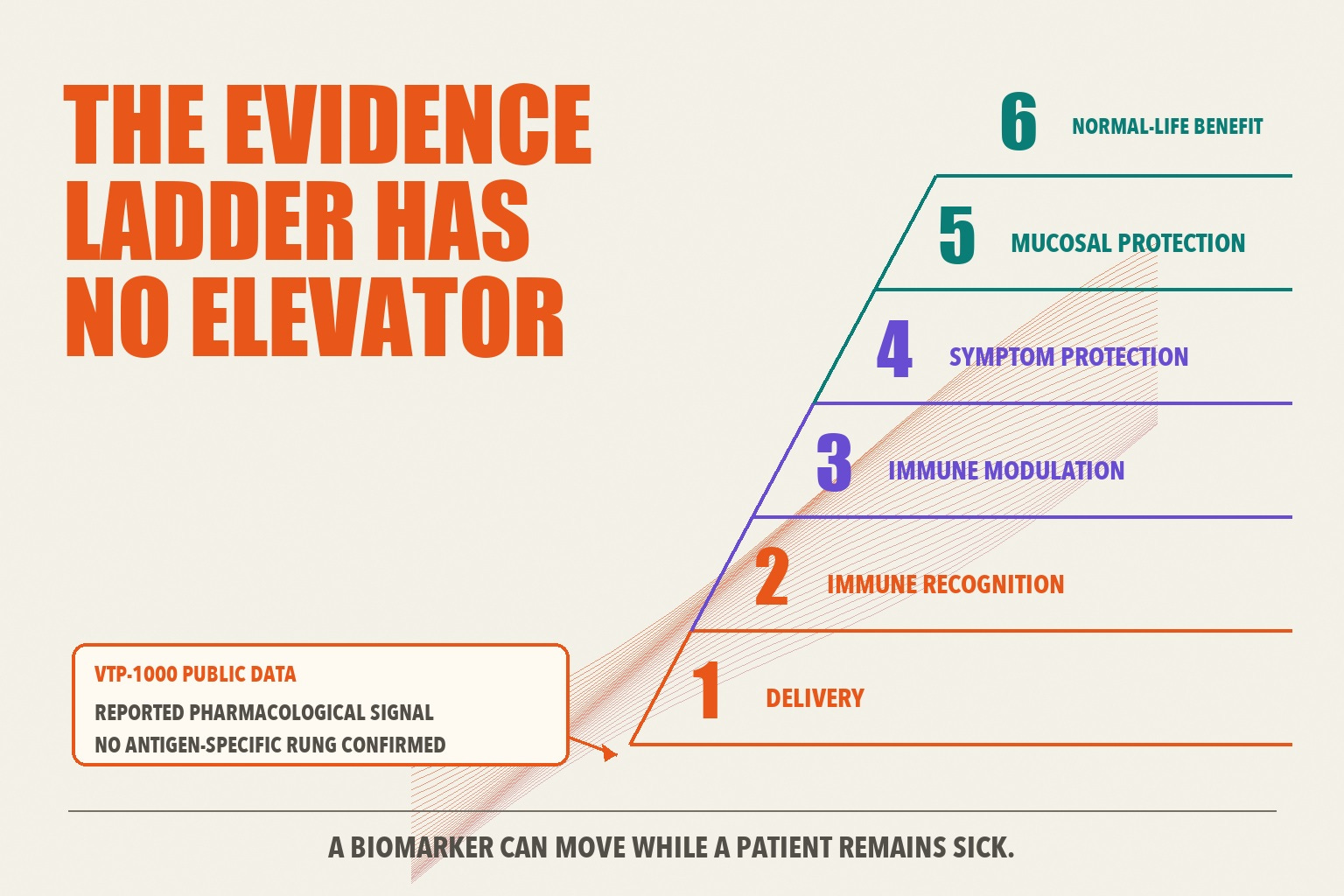
The first VTP-1000 update sits below confirmed antigen-specific recognition. The sponsor reported IL-2 responses and a dose-dependent pharmacological effect after a single dose, but without the underlying values, placebo comparisons, or antigen-specificity data, the public evidence cannot show that T cells responded to the included gluten antigens. A positive multiple-dose result could move the program upward. It would not leap over symptoms and histology.
Most autoimmune diseases arrive as a crime scene without a clean suspect. The immune system is attacking the body’s own tissue, but the external trigger may be uncertain, the relevant antigens may be numerous, and the chain between inherited risk and tissue damage may be difficult to reconstruct.
Celiac disease is different. The trigger is known: gluten proteins in wheat, barley, and rye. The genetic presentation machinery is unusually well characterized. The disease-specific antibodies can be measured in blood. The damage can be seen in biopsies of the small intestine. Remove gluten, and most patients improve. Put it back, and the disease machinery can restart.
That does not make celiac simple. It makes celiac legible.
The American College of Gastroenterology’s current guideline defines celiac disease as a permanent immune-mediated response to gluten, characterized by small-bowel injury and specific antibodies. The symptoms can look gastrointestinal, including diarrhea, pain, bloating, vomiting, and weight loss. They can also show up far from the gut as anemia, nutrient deficiencies, neurologic problems, skin disease, fatigue, or bone loss. Some people have substantial intestinal damage with few obvious symptoms. Others remain symptomatic even while trying to avoid gluten.
The current treatment is a strict gluten-free diet with lifelong follow-up. No trial result described here changes that standard or establishes a replacement for the diet. A diet can be biologically effective and still be an imperfect technology. Gluten is not only in bread and pasta. It can appear through shared fryers, sauces, some medications, restaurant surfaces, and cross-contaminated production lines. The treatment depends on every ingredient label, every kitchen, and every stranger preparing a meal.
For many patients, vigilance works. For some, microscopic exposure continues. For everyone, the burden is continuous.
That is why the celiac drug-development field is not merely searching for another anti-inflammatory. It is trying to answer a more ambitious question: can an immune response that has been trained in the wrong direction be retrained without suppressing the rest of the immune system?
A broad immunosuppressant can turn down immune activity. It can also turn down defenses a patient needs. Antigen-specific tolerance aims for something narrower. The immune system should remain fully capable of fighting influenza, responding to a vaccine, and surveilling abnormal cells. It should simply stop treating particular gluten fragments as an emergency.
The attraction is obvious. The difficulty is hidden inside the word “simply.”
Digestion breaks gluten proteins into fragments. Some of those fragments, especially from gliadin, resist complete breakdown. Tissue transglutaminase 2, usually shortened to TGM2 or tTG, can chemically modify particular glutamine residues in those fragments into glutamic acid. That process, called deamidation, makes certain gluten peptides fit more tightly into disease-associated HLA-DQ molecules.
HLA molecules are display hardware. They hold fragments of proteins at the surface of a cell so T cells can inspect them. In celiac disease, the most important versions are HLA-DQ2.5 and HLA-DQ8. Possessing one of these HLA types does not mean a person has celiac disease, and genetics alone cannot diagnose it. The variants are common enough that many carriers never become ill. But celiac disease is exceptionally rare without compatible HLA, which is why the genetics matter so much to the mechanism and to trial eligibility.
When a disease-relevant gluten peptide is displayed by HLA-DQ2.5 or HLA-DQ8 to a matching CD4 T cell, the fragment becomes a message. The T cell does not see “food.” It sees a target. It produces inflammatory signals, recruits other immune cells, helps activate B cells that produce characteristic antibodies, and contributes to a local environment in which cytotoxic lymphocytes damage the intestinal epithelium.
The villi, fingerlike structures that expand the small intestine’s absorptive surface, flatten. The crypts deepen. Immune cells accumulate between epithelial cells. A meal becomes malabsorption.
This is the chain in plain English:
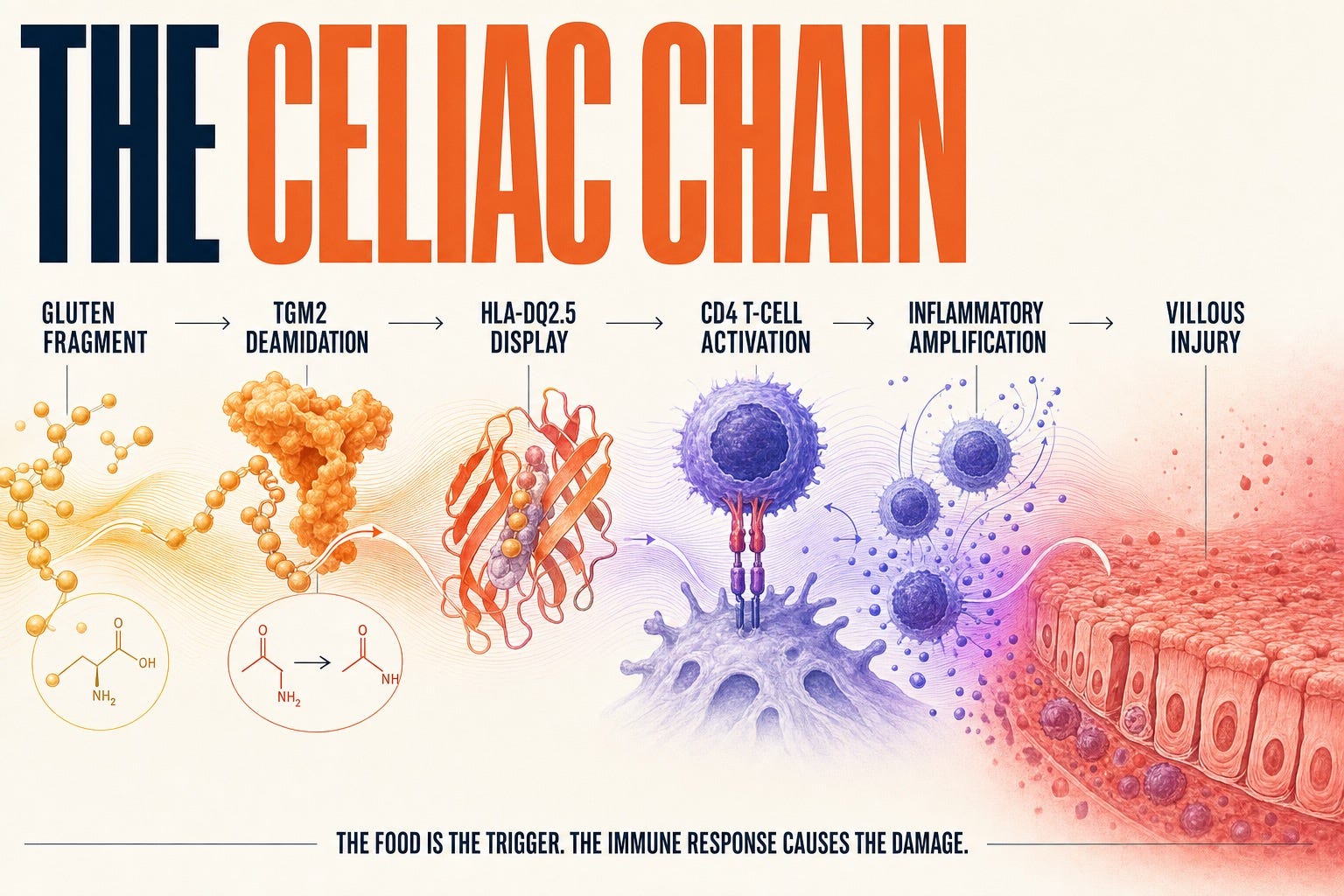
Celiac disease is not caused by one molecule touching one receptor. It is a sequence of recognition, presentation, amplification, and damage. That is why a tolerizing therapy has more than one possible intervention point, and why changing one blood signal does not prove that the intestine is protected.
The chain also explains why celiac disease has become a proving ground for precision immunology. Researchers know the trigger. They know several immunodominant peptide sequences. They know the HLA grooves that present them. They can collect gluten-reactive T cells and measure their responses. They can administer a controlled gluten challenge and watch the system react.
Few autoimmune diseases offer a target this explicit.
The field has paid for that clarity with a graveyard of clean ideas that did not become useful treatments.
For decades, the standard diagram of the intestinal immune system gave microfold cells, or M cells, a supporting role. These rare epithelial cells sit over Peyer’s patches, specialized immune structures in the gut. They sample material from the intestinal lumen and ferry it across the epithelial barrier to immune cells waiting below. They were couriers, not teachers.
A paper in Nature changed that picture.
The relevance to VTP-1000 is context, not target discovery: the cell that displays an antigen helps determine whether the lesson becomes attack or tolerance.
Daisong Wang, Sangho Lim, Hans Clevers, and colleagues built organoids from human intestinal tissue and reconstructed the development of human M cells. The cells did not merely transport antigens. They expressed a gene program resembling dendritic cells, the professional antigen-presenting cells that teach T cells what to attack or ignore.
More than 97 percent of primary ICAM2-positive and GP2-positive M cells in the researchers’ analyses expressed MHC class II protein, the family of display molecules that includes HLA-DQ.
The team then used celiac disease as a functional test. They created M-cell organoids from two HLA-DQ2.5 donors, exposed the apical surface to a 33-amino-acid gliadin fragment, and detected the peptide loaded into HLA-DQ2.5 complexes. The organoids activated gluten-specific reporter T cells. Intestinal organoids without M cells did not. In a second experiment, HLA-DQ2.5 M-cell organoids presented the gluten peptide to primary CD4 T cells isolated from people with celiac disease, again producing HLA-restricted, antigen-dependent activation.
Then came the detail that made the finding more than an update to a cell-biology textbook. The M cells expressed TGM2 at levels more than 18-fold higher than enterocytes in the organoid dataset. They appeared capable not only of collecting gliadin, but of helping convert it into the deamidated form that fits HLA-DQ2.5 and activates pathogenic T cells. Blocking TGM2 with an inhibitor or deleting the TGM2 gene disrupted that activation in the model.
A cell thought to deliver the mail may also be editing the letter, displaying it, and teaching the recipient how to respond.

The M cell has moved from courier to possible teacher, not yet to therapeutic target.
The Nature experiments used organoids and co-cultures, including reporter T-cell lines and primary cells. The authors call the platform reductionist and state directly that the contribution of M cells to gluten-specific activation in living people still awaits in-vivo validation. They also could not definitively show that peptide deamidation occurs inside M cells rather than in the surrounding culture environment. The finding identifies a plausible human teaching cell. It does not prove that blocking, bypassing, or reprogramming that cell will treat celiac disease.
The paper helps explain why a tolerance therapy has to control context, not just content. A gluten peptide shown by an activated antigen-presenting cell beside inflammatory cues can reinforce attack. The same antigen delivered into a tolerogenic environment may promote regulatory T cells, deletion, or functional silencing of the pathogenic cells. The molecular sentence is the same. The lesson changes with the teacher, the timing, and the classroom.
This is the inversion at the center of VTP-1000. Its developers are not hiding gluten from the immune system. They are deliberately showing the immune system selected fragments of gluten and trying to control what the presentation means.
Vaccines are usually designed to make an antigen memorable. They present a piece of a pathogen beside signals that say danger, build effector cells and antibodies, and prepare the immune system to respond faster next time.
Antigen-specific tolerance uses similar components for the opposite instruction. Present the relevant antigen without the danger program, or present it beside a signal that favors regulation, and the immune system may learn non-response.
That is why these products are sometimes described as inverse vaccines or tolerogenic vaccines. The metaphor is useful if its boundary is kept intact. VTP-1000 is not a preventive celiac vaccine. It is an investigational antigen-specific immunotherapy intended for adults who already have celiac disease.
The peptide fragments do not function like semaglutide, where a designed peptide binds a receptor and directly changes physiology. Here, the peptides are addresses. They identify the immune-cell populations the treatment is trying to retrain. Rapamycin helps specify the desired instruction.
Rapamycin is better known as an immunosuppressive drug and an mTOR inhibitor. In tolerance research, the relevant idea is not simply “turn immunity off.” Regulatory T cells and effector T cells respond differently to mTOR signaling. Delivering antigen in a rapamycin-conditioned context can favor antigen-specific regulatory responses over destructive effector expansion.
Preclinical work supports that mechanism, but it must be labeled correctly. In a 2018 mouse study, biodegradable nanoparticles containing rapamycin, administered with target antigen, expanded antigen-specific regulatory T cells and suppressed experimental autoimmune encephalomyelitis, a mouse model used in multiple-sclerosis research. Tolerance could even be transferred with cells to untreated animals. This is compelling animal evidence for the principle. It is not human celiac evidence, and it is not the same particle as VTP-1000.
The goal is selectivity: to change the fate of immune cells responding to the included antigens without broadly suppressing immunity. VTP-1000 has not yet shown in humans that its effects are confined to those antigens or that responses to unrelated threats remain intact.
That is the sales pitch. The clinical burden is to prove all three parts:
The response is truly antigen-specific.
The response persists when the antigen returns.
The intestinal disease improves without unacceptable systemic immune effects.
A cytokine signal can help with the first question. Only controlled exposure, patient outcomes, and tissue measures can answer the other two.
The cleanest reason to remain skeptical of VTP-1000 is not theoretical. Celiac researchers already built an antigen-specific peptide immunotherapy, advanced it into a large randomized trial, and watched it fail.
Nexvax2 contained three immunodominant gluten peptides recognized by HLA-DQ2.5-restricted CD4 T cells. The treatment used escalating subcutaneous doses to desensitize the response, conceptually closer to allergy immunotherapy than to a nanoparticle that carries an immune-modulating cargo. In the Phase 2 RESET CeD trial, participants received injections twice a week, escalating over five weeks and then continuing maintenance treatment. At week 14, they received a masked 10-gram gluten challenge.
The study enrolled 179 randomized participants across 41 sites in the United States, Australia, and New Zealand. The primary endpoint asked whether Nexvax2 reduced gastrointestinal symptoms caused by the gluten challenge in the non-homozygous HLA-DQ2.5 population.
It did not.
At the planned interim analysis, the symptom curves were not moving in the necessary direction. The study was terminated. In the later peer-reviewed report, the mean change in gastrointestinal score was 2.86 in the Nexvax2 group and 2.63 with placebo, a difference that was not significant (p=0.43). Adverse events were broadly similar, although nausea was more common with Nexvax2. The investigators’ conclusion was blunt: Nexvax2 did not reduce acute gluten-induced symptoms.
That failure matters because the target logic looked unusually strong. The relevant HLA type was known. The peptides were known. The responding T cells were known. The doses reached the body. None of that guaranteed a useful immune lesson.
Knowing the antigen is necessary. It is not sufficient.
One possible reason is delivery context. Repeatedly injecting naked antigenic peptides may expose the immune system without supplying a strong enough tolerogenic instruction. The treatment may induce partial desensitization in some cells, induce competing inflammatory responses in others, or simply fail to reach the cells and compartments that control durable tolerance. Another possibility is coverage: three peptides may not represent enough of the pathogenic repertoire for a heterogeneous human population, even within one HLA-defined group. A third is that symptom protection after a large bolus challenge may demand more tolerance than the regimen could create.
Those are hypotheses, not postmortem proof. The trial tells us what failed, not exactly why.
Its deeper lesson is methodological. Symptoms are not an embarrassing endpoint to be replaced with a cleaner biomarker. Symptoms are part of the disease. A therapy that creates an elegant immunology figure but leaves a patient just as sick after gluten has not solved the clinical problem.
TAK-101 was the next major attempt to change the lesson by changing the delivery.
Instead of injecting a small selection of naked peptides, TAK-101 encapsulated gliadin protein inside negatively charged particles made from PLGA, a biodegradable polymer used in drug delivery. Preclinical work suggested that these particles would be taken up by tolerogenic antigen-presenting cells in the spleen and liver. The aim was to present gliadin in a context that silences pathogenic effector cells and expands regulatory cells.
In a randomized, double-blind Phase 2a proof-of-concept study, 34 adults with biopsy-confirmed celiac disease were assigned to two intravenous infusions of TAK-101 or placebo, one week apart. Beginning seven days after the second infusion, participants underwent a 14-day gluten challenge: 12 grams per day for the first three days, then 6 grams per day for 11 days. Thirty-three participants completed it.
The primary immune endpoint moved sharply. In the peer-reviewed Gastroenterology paper, TAK-101 reduced the increase in gluten-specific interferon-gamma-producing T cells by 88 percent relative to placebo. The measured change was 2.01 spot-forming units in the treatment group versus 17.58 with placebo (p=0.006). Several populations of circulating gut-homing effector-memory T cells also rose less in the treated group.
This was not a press-release adjective. It was a randomized human signal with a prespecified immunologic endpoint.
The intestine was less conclusive.
The ratio of villus height to crypt depth deteriorated significantly from baseline in the placebo group and did not significantly deteriorate within the TAK-101 group. But the between-group difference, the comparison that matters for proving a treatment effect, missed statistical significance (p=0.08). Intraepithelial lymphocyte counts remained equal. The study was small, short, and built primarily around immune activation, not patient-centered clinical efficacy.
So what did TAK-101 show? In this small trial, packaging gliadin in a nanoparticle designed to induce tolerance reduced a prespecified measure of gluten-specific immune activation. The histology result remained inconclusive because the treatment-versus-placebo comparison missed statistical significance. It did not establish symptom protection, mucosal protection, or normal-life benefit.
A larger Takeda-sponsored Phase 2 study enrolled 102 participants and completed on January 8, 2026. The ClinicalTrials.gov record lists the study as completed, with an actual enrollment of 102, but as of August 5, 2026 it posts no results. That absence is a major current fact. The next piece of evidence may already have been collected. The public cannot yet inspect it.
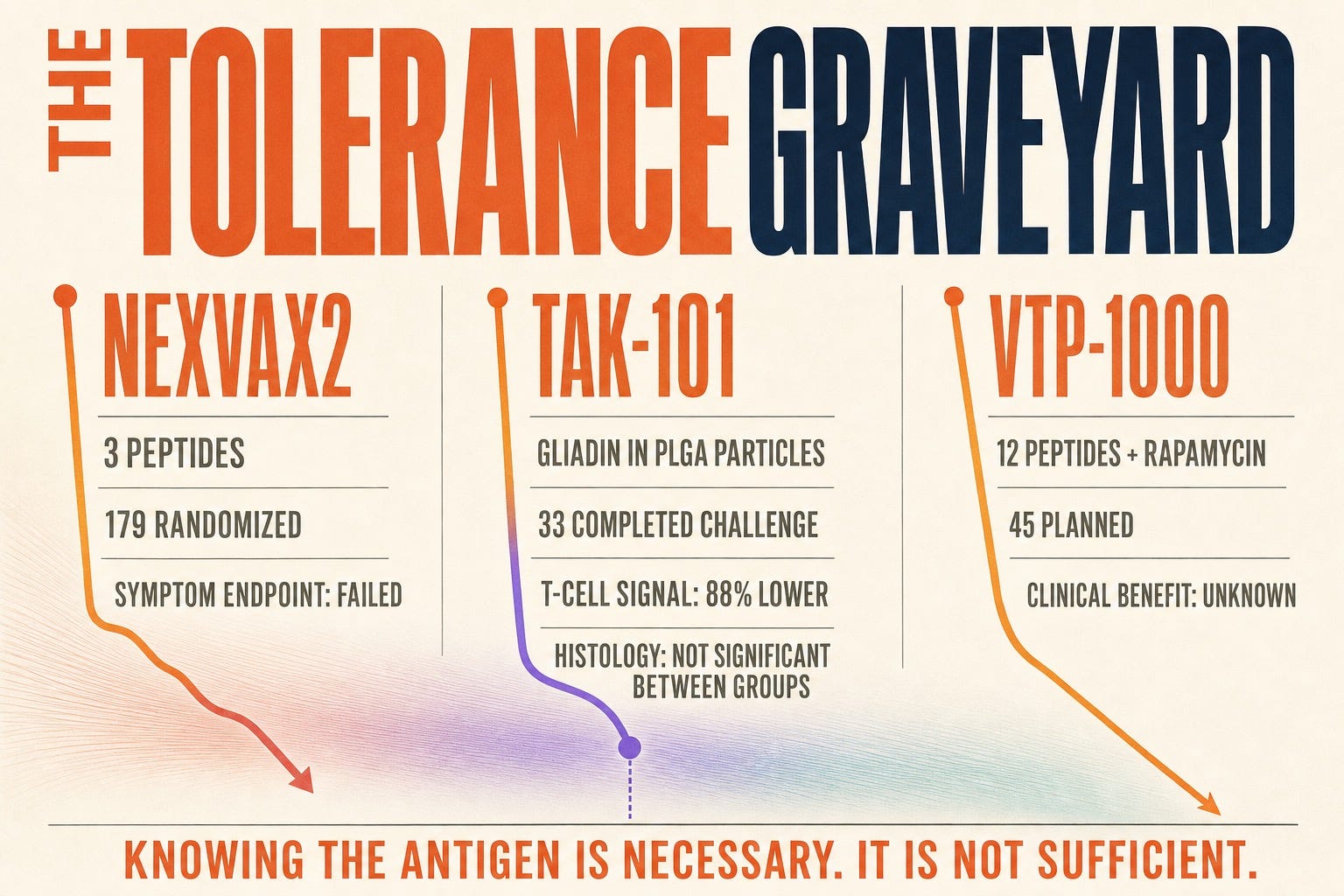
Nexvax2 supplied a clear negative result. TAK-101 supplied a strong immune signal and an unresolved clinical verdict. VTP-1000 is now testing a different particle, a larger selected peptide set than Nexvax2, and rapamycin as an added immune-modulating cargo. Progress here is not a straight line of success. It is a sequence of increasingly specific failures.
VTP-1000 combines three ideas that previously lived in separate experiments.
The first is antigen breadth. The current trial registry describes 12 gluten-derived peptide antigens, drawn from wheat, barley, and rye proteins. That is four times the peptide count in Nexvax2, although count alone does not establish better immune coverage. The relevant question is whether the selected peptides represent the pathogenic T-cell repertoire of the enrolled HLA-DQ2.5 population.
The second is self-assembly. The SNAP-TI platform uses amphiphilic peptide components, molecules with water-loving and water-avoiding regions, to form nanoparticles roughly 20 nanometers in diameter. At that scale, the construct is much smaller than a cell and closer to the size range of biological cargo that antigen-presenting cells routinely handle. The particle is not a tiny hollow syringe. Its material properties, surface, and disassembly influence where the payload goes and which cells encounter it.
The third is co-delivery. The same particle packages the gluten peptide antigens with rapamycin. That “same” is the bet. If antigen reaches one antigen-presenting cell while rapamycin conditions another, the immune system may receive two weak, disconnected messages. Co-delivery increases the chance that the cell processing the gluten address also receives the instruction to present it tolerogenically.
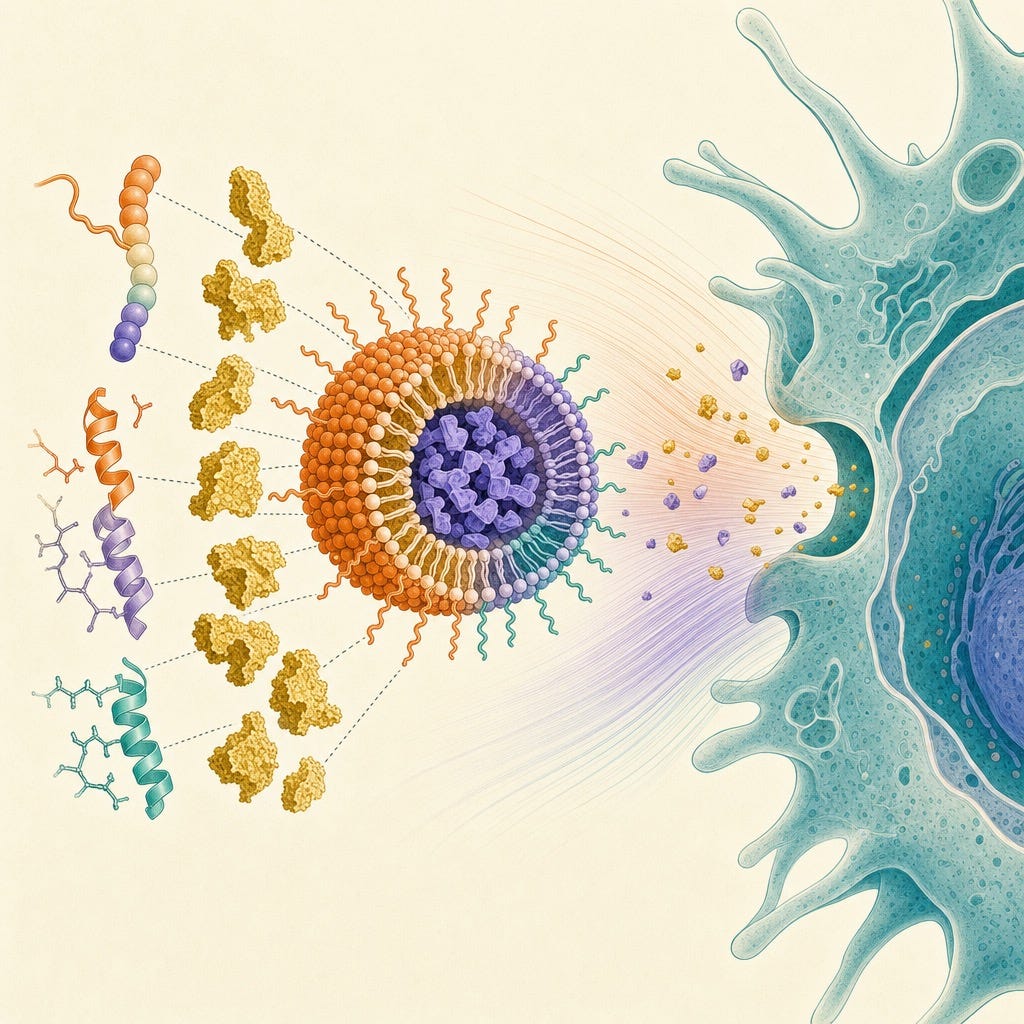
The proposed mechanism, according to the registry, is to increase antigen-specific regulatory T cells while reducing pre-existing pathogenic antigen-specific effector T cells. In shorthand: grow the immune cells that say “stand down,” shrink the population that says “attack.”
That is a proposed human mechanism, supported by preclinical platform work. It is not yet a demonstrated clinical outcome.
Tolerance also runs on two clocks.
The first is the pharmacological clock. Rapamycin can alter immune behavior while the drug is present. A durable tolerance claim asks something harder: after the immediate drug effect recedes, do gluten-specific cells respond differently when the antigen returns? A short-lived effect could still be biologically important. It would not, by itself, show that the immune system learned a lasting lesson.
The second is the clonal clock. Gluten-reactive T cells are populations, not a single switch. Some expand, some contract, some become functionally quiet, and regulatory cells may change the response around them. That is why AVALON includes both gluten-specific ELISpot assays and T-cell receptor sequencing around the challenge. ELISpot can measure the antigen-specific response. Receptor sequencing can track repertoire and clonal frequency, but it cannot by itself label a clone gluten-specific or pathogenic.
Even that is not the same as permanence. The registry follows participants in the multiple-dose portion for 57 days after the first dose. That window can test an acute post-treatment challenge and the immediate immune response. It cannot establish that tolerance survives for months, protects against repeated accidental exposures, or permits an ordinary diet. The word “tolerance” describes the destination. This Phase 1 study measures early road signs.
The single-dose AVALON result needs to be read with that hierarchy in mind. The sponsor completed three placebo-controlled cohorts, six participants per dose level, for 18 total. Four participants in each cohort received VTP-1000 and two received placebo. The December update reported no treatment-related serious adverse events at any dose and a dose-dependent pharmacological effect. It also reported IL-2 responses at all doses.
IL-2 is consistent with T-cell engagement. A transient rise after administration suggests that the immune system noticed the intervention and responded in a measurable way, but the sponsor has not published the underlying values or antigen-specificity data. Depending on dose, timing, cell type, and context, IL-2 can participate in effector activity or support regulatory T cells. A brief serum signal does not, by itself, reveal which long-term population won.
The company chose careful language in one place and ambitious language in another. Chief medical officer Leon Hooftman called the finding “immune recognition without serious inflammation,” which is a defensible description of the reported signal and safety observation. Chief executive Bill Enright said the data demonstrated a targeted immune response that “may minimize” adverse effects from gluten exposure. The word “may” carries the distance between a pharmacological observation and a patient benefit.
The release left the most important quantitative questions unanswered. It did not publish the IL-2 values, dose-by-dose effect sizes, variability, placebo comparisons, or statistical analyses. It promised details of the pharmacological responses at a scientific conference in 2026. Until those data appear, “dose-dependent” describes a pattern reported by the sponsor, not a magnitude readers can independently evaluate.
That distinction matters especially in an 18-person dose-escalation study. Each cohort contained four VTP-1000 recipients and two placebo recipients. A small cohort can reveal a clear pharmacological signal, but it can also make individual responses disproportionately visible. The missing plots and participant-level distributions are not academic decoration. They are what would show whether the pattern was consistent, separated cleanly from placebo, and grew in a way that supports the sponsor’s description.
Neither the current trial registry nor the sponsor’s December 2025 release linked a peer-reviewed paper or conference dataset containing the underlying values. The public evidence is therefore limited to a sponsor summary and an active trial registry. That does not make the reported result false. It determines how much weight it can bear.
The most honest verdict is narrow: the particle reached human testing; the sponsor reported no treatment-related serious adverse events after single doses in 18 participants, a dose-dependent pharmacological effect, and IL-2 responses at every dose; and everything about antigen specificity, durable tolerance, and clinical benefit remains open.
The multiple-ascending-dose portion is where VTP-1000 stops being a delivery experiment and begins to test its biological thesis.
The registry describes up to three dose levels, with eight participants at each level. Six receive VTP-1000 and two receive placebo. Participants receive three injections, on Days 1, 15, and 29, then undergo a controlled gluten challenge after the third dose. Blood is collected before and after challenge for gluten-specific T-cell responses, T-cell receptor sequencing, cytokines, and related pharmacodynamic measurements. The registry’s estimated total enrollment is 45, although the listed cohort sizes total 42: 18 in Part A and up to 24 in Part B. The public record does not explain the three-participant difference.
The trial is recruiting, with estimated primary completion in November 2026. The registry was last updated in June 2026 and currently posts no results.
The challenge creates a clean experimental confrontation. Before treatment, gluten is a known trigger. After treatment, investigators expose the system again and ask whether the same antigen produces the same immune response. Unlike a broad anti-inflammatory study, the perturbation is specific. Unlike a survey of accidental exposure, the timing is known. Unlike a mouse model, the immune system belongs to a person with biopsy-confirmed disease.
A controlled challenge gains interpretability by sacrificing realism. Investigators know when the trigger arrives, how much is given, and which samples were collected before and after it. That makes an immune change easier to attribute than a symptom diary built around accidental restaurant exposures. It also compresses a chronic disease into a scheduled provocation. The result can answer whether the treated and placebo groups respond differently under those conditions. It cannot reproduce years of cross-contamination, variable meals, infections, stress, or the accumulated consequences of intestinal injury.
How to read the next AVALON update: Do not ask only whether immune markers moved. Ask whether the prespecified gluten-specific response separates from placebo, whether related assays point in the same direction, and whether the full dose and placebo distributions are disclosed. A broad fall in stimulated cytokines may reflect general immune suppression; a concentrated change in the gluten-reactive response would fit the antigen-specific thesis more closely. In cohorts this small, convergence can justify larger tests. It cannot prove tolerance.
But the public registry also shows the study’s ceiling.
The listed primary outcomes focus on safety: adverse events, laboratory values, electrocardiograms, vital signs, physical examinations, and changes in anti-tTG IgA. The exploratory or “other” outcomes include gluten-specific T-cell ELISpot responses, T-cell receptor sequencing, serum IL-2, and stimulated cytokine assays. The public outcome list does not include a patient-reported symptom endpoint or a before-and-after intestinal-biopsy efficacy endpoint.
That is appropriate for an early Phase 1 study designed first to establish safety and pharmacology. It also means a positive AVALON readout may still stop below the outcomes patients care about most.
This is where the FDA’s own standard becomes useful. The agency’s 2022 draft guidance for celiac drug development, which is nonbinding and not final, recommends that Phase 3 programs intended to support approval evaluate both clinically important signs and symptoms and underlying mucosal inflammation. The draft calls for co-primary endpoints: a reliable clinical outcome assessment and histology using an accepted scale. It says both endpoints should reach statistical significance.
The logic is hard to argue with. Symptoms alone can be noisy and overlap with other gastrointestinal conditions. Histology alone can improve while a person still feels sick. A useful celiac treatment has to protect the patient and the tissue.
The controlled challenge is therefore not the finish line. It is an early filter. A convincing placebo-separated pattern would justify harder and more expensive questions about symptoms, villi, durability, and everyday exposure. A null or ambiguous result in these small exploratory cohorts would weaken the platform’s thesis without proving that the mechanism cannot work.
This ladder is not unique to celiac disease. It is the central discipline missing from much of the peptide market.
A receptor moves. A cytokine changes. A biomarker improves. Then a headline silently upgrades the result into healing, recovery, longevity, or disease modification. We built an entire evidence tier list because that upgrade happens so often.
Celiac tolerance offers the cleanest possible demonstration of why it is wrong. TAK-101 reduced a gluten-specific T-cell response by 88 percent. The between-group histology result still missed significance. Nexvax2 presented precisely selected peptides to precisely selected HLA-DQ2.5 patients. The symptom result still failed. Mechanistic precision can make a trial smarter. It cannot make the outcome unnecessary.
The phrase “disease modification” deserves special caution. Suppressing the immune response during a brief controlled challenge may be an early sign of modification. Durable tolerance after treatment ends would be stronger. Persistent protection of the mucosa across repeated real-world exposures would be stronger still. Normal eating without injury would be transformative. These are not synonyms.
A biomarker is evidence that biology moved. A clinical outcome is evidence that the movement mattered.
If antigen-specific tolerance works in celiac disease, the implications could reach far beyond a single gastrointestinal disorder.
Many autoimmune diseases are currently treated downstream. The immune system attacks, tissue becomes inflamed, and medicine suppresses a cytokine, blocks a migrating cell, depletes a lymphocyte population, or broadly dampens immune activation. These therapies can be life-changing. They can also require chronic dosing and carry infection, malignancy, or organ-specific risks because the intervention is not limited to the original mistaken target.
A successful tolerance platform would move upstream. Identify the antigen driving the pathogenic response, attach it to a delivery system that teaches regulation, and selectively retrain the relevant clones. The rest of immunity remains available.
That is the vision behind the broader effort to induce antigen-specific immune tolerance, including work in type 1 diabetes, multiple sclerosis, autoimmune liver disease, rheumatoid arthritis, allergy, and anti-drug antibodies. It is a branch of the larger peptide-therapy frontier: peptides used not as hormones or repair signals, but as exact pieces of biological identity.
Celiac disease is the best case for that vision precisely because its antigen map is unusually clean. Gluten is external and controllable. Several immunodominant fragments are known. HLA-DQ2.5 gives the trial a genetically defined presentation system. A controlled challenge can reproduce the trigger on schedule.
Those advantages are also the reason a celiac success might not generalize.
In type 1 diabetes, the relevant immune targets may spread across insulin and other beta-cell proteins as disease progresses. In multiple sclerosis, the initiating antigens and their relative importance are less settled. In rheumatoid arthritis, post-translationally modified proteins and changing immune repertoires complicate the map. A platform cannot teach tolerance to an address nobody can confidently write down.
Even within celiac disease, HLA restriction creates a boundary. The current VTP-1000 trial requires HLA-DQ2.5 and excludes HLA-DQ8-positive participants. That is good trial design for a mechanism tied to one presentation system. It is not a universal celiac therapy. A future product may need different antigen sets, different evidence, or separate development for other HLA-defined groups.
This is where genetics becomes a tool rather than a slogan. Genotype determines whether a person’s HLA molecules can present the selected peptides in the intended way. The trial uses that fact as an eligibility gate. But an HLA result alone neither diagnoses celiac disease nor predicts that VTP-1000 will work. The diagnosis still rests on clinical evaluation, serology, and usually intestinal biopsy. The treatment response still has to be measured in trials.
Our work on peptide response and genetics starts from the same principle: biology changes the context in which a molecule acts. It also carries the same limitation. Genetic insight is not a clinical outcome, and a genomic association is not permission to prescribe.
Celiac diagnosis and treatment decisions belong with a qualified clinician. NIDDK’s testing guidance says HLA-DQ2.5 and HLA-DQ8 testing can help rule celiac disease out in specific diagnostic situations, but these variants are not diagnostic on their own. Do not start a gluten-free diet before completing a clinician-directed diagnostic evaluation, because removing gluten can change serology and biopsy findings and make the diagnosis harder to establish.
The Peptide List’s genetics analysis is designed to explain response biology and pathway context. It does not diagnose celiac disease, determine AVALON eligibility, predict VTP-1000 response, or replace serology, endoscopy, biopsy, and clinical judgment. Those limits are not fine print. They are the line between biological insight and a medical claim.
Celiac is a model system for personalized immune medicine. It is not proof that every autoimmune disease is waiting for its own 12-peptide particle.
Standard care has not changed. A medically supervised gluten-free diet remains the treatment for celiac disease. VTP-1000 is investigational. TAK-101 is investigational. Nexvax2 failed its Phase 2 symptom endpoint. No result described here is permission to deliberately consume gluten outside a clinical study.
There is nothing to buy or self-administer. VTP-1000 is an investigational therapy being studied under a registered protocol with HLA-based eligibility, controlled dosing, safety monitoring, and a deliberate challenge. It should not be offered as a wellness injection, commercial peptide product, or clinical service.
The early safety language is narrow. “No treatment-related serious adverse events” in 18 single-dose participants does not establish safety across repeated dosing or longer follow-up.
The first meaningful milestone comes after gluten challenge. The multiple-dose cohorts need to show a smaller or qualitatively different gluten-specific immune response than placebo without unacceptable harm.
Even success would not mean normal bread. Later studies would still need to measure symptoms, mucosal injury, and durability. The FDA’s draft framework points toward the standard patients should demand: the person feels better and the intestine is protected.
VTP-1000 is worth following for one answer: can antigen breadth plus co-delivered immune context change the post-challenge immune response in people with celiac disease? A convincing positive pattern would justify larger testing. A null or ambiguous result would narrow the questions the next trial has to answer.
No supplement stack can answer that question. A controlled trial can.
Return to the participant who has received three injections.
The trial does not ask them to trust a mechanism diagram. It exposes the mechanism to its adversary. Gluten returns. Blood samples capture cytokines and gluten-specific T-cell activity before and after the challenge. T-cell receptor sequencing asks whether the frequencies of tracked T-cell clones change before and after challenge; sequencing alone cannot label a clone gluten-specific or pathogenic unless the trial independently links that receptor to antigen reactivity. Safety monitoring watches for the cost of the intervention.
The strongest version of the VTP-1000 thesis says those 12 gluten fragments have been shown to the immune system in a context that changes their meaning. The gluten is familiar. The alarm is quieter. Regulatory cells outlast effector cells. The body has not forgotten gluten. It has learned not to turn recognition into injury.
The strongest skeptical response is equally clear: none of this matters unless a patient can encounter gluten with fewer symptoms and less intestinal damage. A beautifully redirected T-cell assay is not lunch.
The skeptic is right.
That concession does not empty the trial of meaning. It defines the proof. The field already knows the molecular sentence that causes celiac disease unusually well. It has spent years learning that identifying the sentence is not enough, selecting three peptides is not enough, and moving one immune biomarker is not enough. VTP-1000 adds a larger selected peptide set than Nexvax2, a self-assembling carrier, and rapamycin in the same particle. The multiple-dose challenge can provide an early test of whether that combination changes the immune response.
A convincing placebo-separated pattern would justify larger testing. A null or ambiguous result in these small exploratory cohorts would weaken the thesis without proving that the mechanism cannot work.
Celiac disease may be the cleanest human test of antigen-specific tolerance because the trigger can be named, removed, and returned. The experiment is not whether scientists can identify the words that make the immune system attack. They already can.
The experiment is whether they can teach the immune system to read those words without declaring war.
Here, peptides are not hormones or repair signals. They are addresses for the immune system. Subscribe for the AVALON challenge readout and the evidence needed to tell recognition from tolerance.
This article is for educational and informational purposes only and does not constitute medical advice. VTP-1000 and TAK-101 remain investigational treatments for celiac disease. Nexvax2 was investigational and failed to reduce acute gluten-induced symptoms in its Phase 2 study. No therapy discussed here permits a person with celiac disease to consume gluten outside a controlled clinical trial. Current celiac care requires a clinician-directed gluten-free diet and appropriate medical follow-up. Do not change your diet, pursue HLA testing, join a clinical trial, or use rapamycin or any peptide product based on this article. Discuss diagnosis, treatment, testing, and trial participation with a qualified gastroenterologist or other licensed clinician.
VTP-1000 is an investigational antigen-specific immunotherapy for adults with celiac disease. It packages 12 gluten-derived peptide antigens and rapamycin into self-assembling nanoparticles roughly 20 nanometers in diameter. The proposed mechanism is to increase gluten-specific regulatory T cells and reduce pathogenic effector T cells, teaching a narrower immune response rather than broadly suppressing immunity.
Not in the ordinary preventive sense. It is sometimes useful to think of antigen-specific tolerance therapy as an inverse vaccine: a conventional vaccine teaches the immune system to attack an antigen, while a tolerogenic therapy tries to teach non-response. VTP-1000 is being tested in people who already have celiac disease. It is investigational and injectable.
No. In December 2025, the sponsor reported that 18 single-dose participants had no treatment-related serious adverse events, a dose-dependent pharmacological effect, and IL-2 responses at all doses. Those findings are preliminary tolerability and pharmacodynamic observations in a small early cohort. They do not establish safety across repeated dosing or longer follow-up, and they do not demonstrate fewer symptoms, protected intestinal villi, or the ability to eat gluten. The multiple-dose gluten-challenge portion is designed to test the mechanism more directly and is still recruiting.
Nexvax2 used three selected gluten peptides in repeated subcutaneous injections and failed to reduce symptoms after a gluten challenge in a 179-participant Phase 2 trial. TAK-101encapsulated gliadin in PLGA nanoparticles and reduced gluten-specific interferon-gamma T-cell activation by 88 percent among 33 Phase 2a challenge completers, but its between-group histology result was not significant. VTP-1000 uses 12 gluten-derived peptides and co-delivers rapamycin in a self-assembling particle. Whether that design produces a better clinical result is unknown.
There is no evidence that they can. The current AVALON study uses a controlled gluten challenge inside a monitored research protocol. The public evidence does not show symptom protection, mucosal protection, or normal dietary freedom. People with celiac disease should continue clinician-directed gluten avoidance unless participating in a registered study with explicit instructions from the research team.
The included gluten peptides are meant to be presented through a specific genetic antigen-display system. HLA-DQ2.5 is strongly associated with celiac disease and presents important deamidated gluten peptides to CD4 T cells. Restricting the early study to HLA-DQ2.5-positive participants makes the mechanism more testable. It also means the current study does not establish that the therapy would work for HLA-DQ8-positive patients or every person with celiac disease.
No. NIDDK’s diagnostic guidance says roughly 30 percent of the general population carries HLA-DQ2.5 or HLA-DQ8, while only about 3 percent of people with those variants develop celiac disease. A negative result can help rule the disease out in some circumstances; a positive result does not diagnose it. Serologic testing and, when indicated, intestinal biopsy remain the diagnostic path, and accurate serology generally requires ongoing gluten exposure. Do not begin a gluten-free diet or resume gluten exposure for testing without discussing the diagnostic sequence with a qualified clinician.
No. The platform’s hypothesis depends on co-delivery of rapamycin and the selected antigens in the same nanoparticle so that antigen presentation occurs in a tolerogenic context. Taking rapamycin on its own does not reproduce the particle, dose distribution, cell targeting, or trial conditions. Rapamycin has real pharmacologic and immune effects and should not be used for celiac disease outside qualified medical care or an authorized clinical study.
The current ClinicalTrials.gov record estimates primary completion in November 2026, but an estimated date is not a promised readout. The sponsor previously said multiple-dose data were expected in the second half of 2026. As of August 5, 2026, the registry lists the study as recruiting and posts no results. Any future claim should be checked against the actual dataset, not the projected calendar.
No posts
Comments
Nothing yet. Say the first thing.
Sign in to join the conversation.