
To Hear her whisper women’s lore so well,
And every note she spake entic’d him on
Keats, Lamia, 325-326
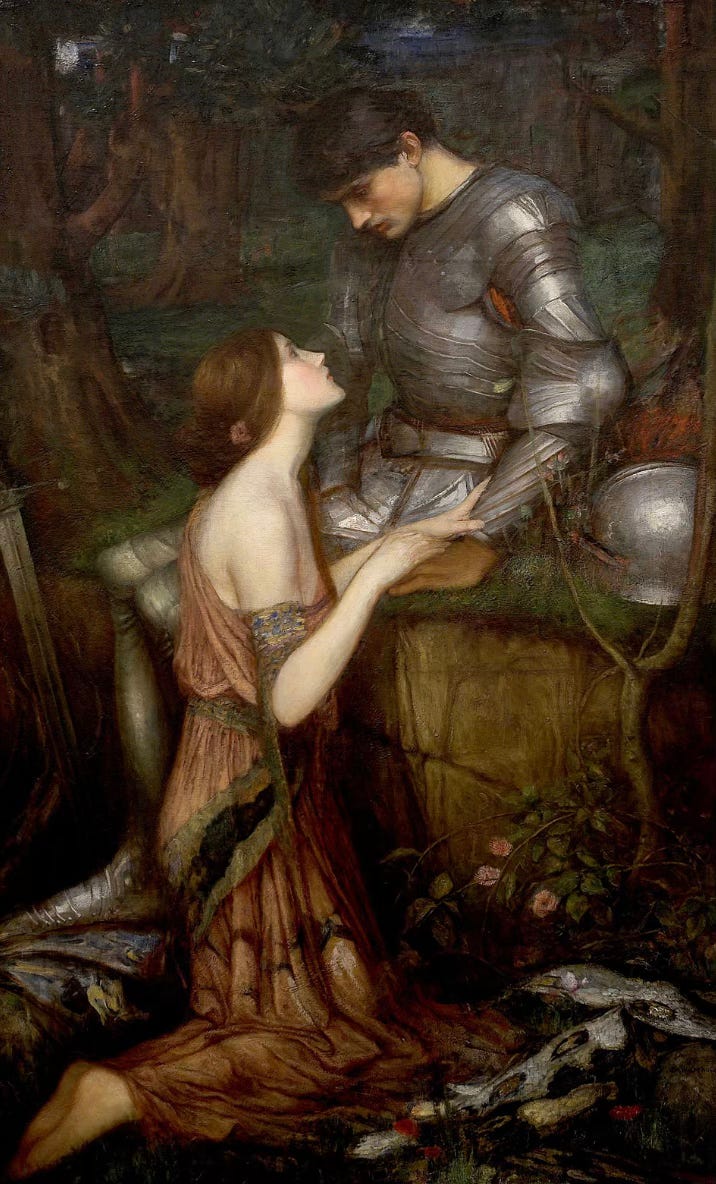
Lamia by John Waterhouse
If I say a woman is a black widow, I have no doubt that an image will be conjured up in your mind’s eye. For some, it will be a shiny black spider with a red marked abdomen. For others it will be a type of woman, one who kills her mate after seducing him.
Although not an especially common occurrence outside of the animal kingdom, the fear persists. From the Sirens to Lamia, to the more human figures of Jezebel and Delilah, we encounter the same story repeated: the woman who attracts, then destroys. The deadly female, the beauty that lures, has become an archetype. This archetype- the lure- is based on the fear of women’s beauty and sexuality.
The stories of her all carry the same warning: beautiful women can destroy you. While one does not often encounter snake-women in the real world (unfortunately), a pretty teenage girl is frequently treated as being just as dangerous. Her existence framed as both invitation and threat.
As with all of our fears, the fear of the lure is frequently explored through the Horror genre. She shape shifts, she isn’t always exactly the same but one thing connects her various iterations.
She is young and she is beautiful.
A few of my favourite versions of the modern lure appear in Audition (1999), Jennifer’s Body (2009), The Autopsy of Jane Doe (2016) and Under The Skin (2013).
The lure operates as both myth and tool. She is an archetype that functions as accusation, casting women into a role defined almost entirely by male perception.
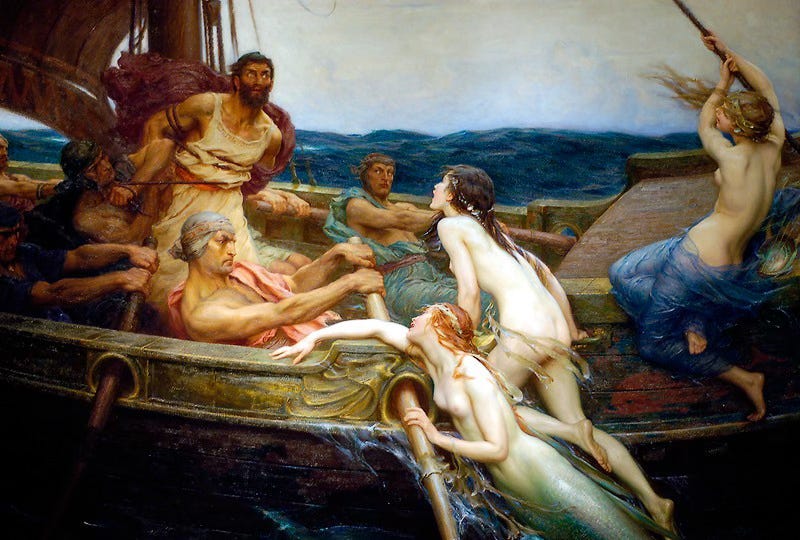
Ulysses and the Sirens, Herbert James Draper
The concept of the lure is inherently gendered. The lure does not quite work as a concept if we switch the sexes.
Take Under the Skin. How many women would get into a van with a strange man, no matter how attractive he was? Or, consider the premise of Audition- how many women would stage a fake audition to select a partner from a pool of younger men? I’m not saying it’s impossible, but it is far less likely. These scenarios rely on something real: a gendered imbalance in how safety and desire operate.
Since the beginning of time women have been tempting men to forget themselves, Eve was only the beginning.
We are sinful.
Even now moral scrutiny falls unevenly across the sexes. The discussions around Only Fans always focus largely on the women involved. It is less often about the thousands of men subscribing.
So you say we are dangerous? Morally corrupt? What exactly would that look like if we were to lean into it fully?
If women were truly as dangerous as we are so often made out to be, I think we would be doing far more damage than we are.
On watching these lures in action, there is something soothing- corrective, even in the actions of these women, girls and human-hybrid beasts. Some lures understand exactly what they are doing. Some don’t.
What links all of these women is not simply that they are dangerous, but that they understand (consciously or not) how they are perceived. They use that perception as a means to an end.
I like this theme. I like seeing it in horror.
And I like it especially when it’s complicated.
I’ve gone light on the spoilers here but I do recommend watching the films mentioned if you can.
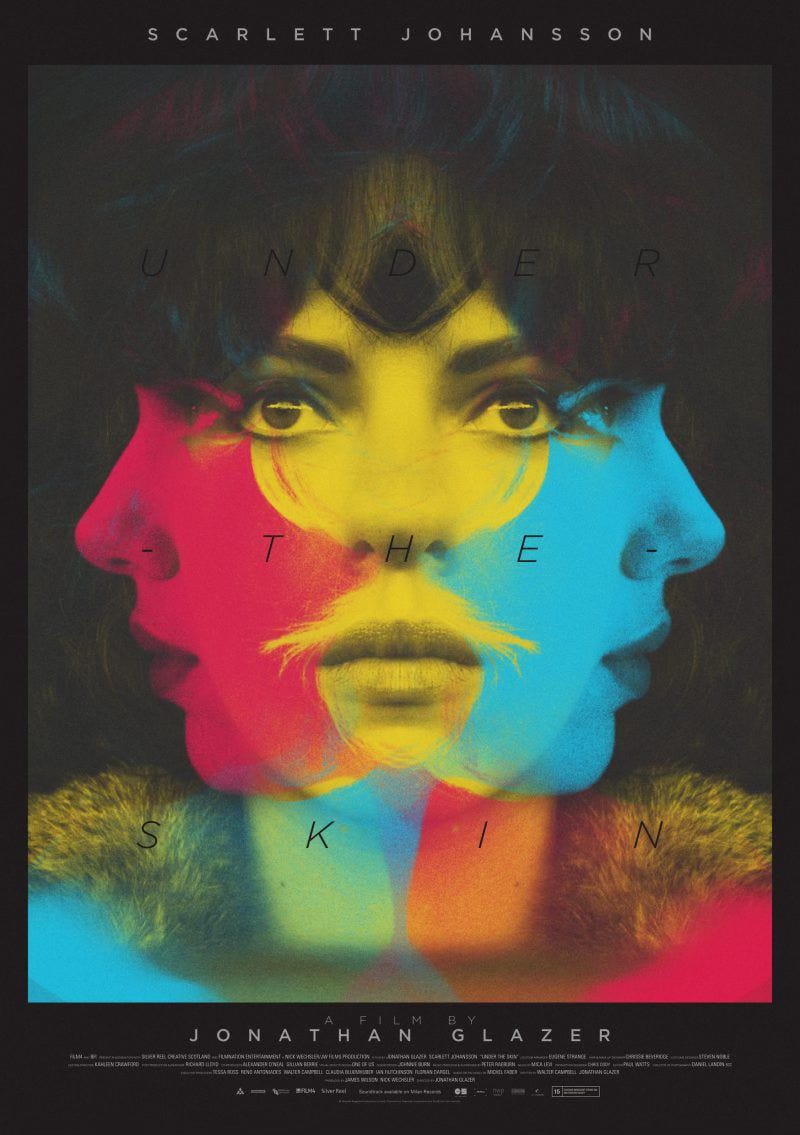
Under the Skin is a horror science fiction banger that does not get spoken about nearly enough. For me it’s a very tough watch- remembering a certain beach scene makes me cry. Despite that, it’s undeniably a glorious and beautiful work of art. In the film, the lure is simple; a woman driving through Glasgow, asking for directions and offering lifts. An interesting note on this film is that many of the scenes were not performed by actors, but are the real reactions of ordinary men being invited into a van by a strange, albeit very attractive woman.
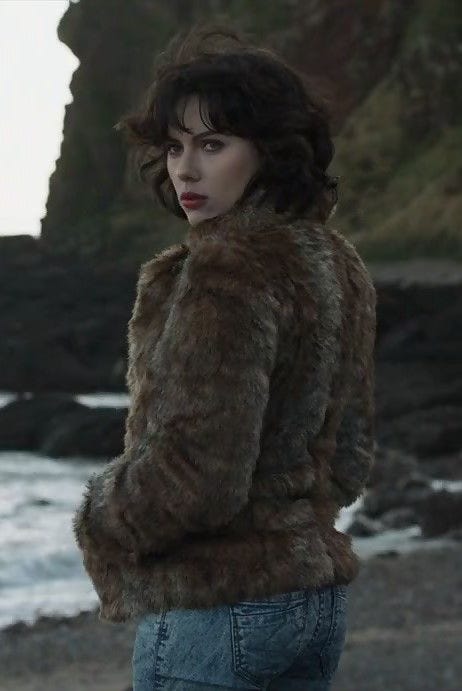
The interactions are ordinary, even dull. There is no overt seduction here; only attentiveness. She creates just enough connection for the men to feel safe. The men follow her into a space that is not quite real, and once inside, they are…well I don’t quite know….emptied and unmade. What is striking is our lures detachment throughout. Our lure takes no pleasure from the process, she is mechanical and ritualistic. Inhuman. And yet, when she encounters a man with a facial difference, something shifts within her and she begins to question her actions.
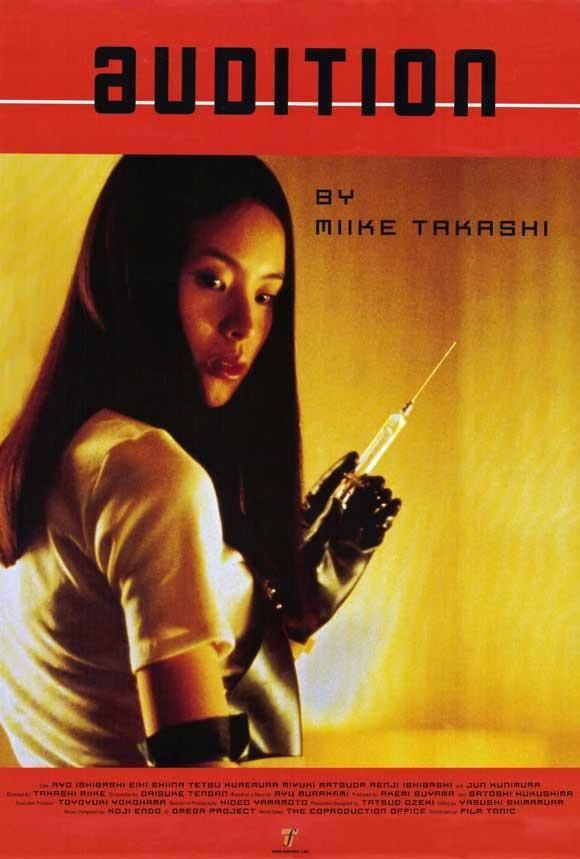
The lure often entices men by being exactly what they want her to be. In Audition, the performance begins long before the violence. A man, Shigeharu, stages a fake audition to find a wife. He has a list of desired qualities, a script, really, against which each woman is measured. Women, in the first half of the film are blatantly objectified. Reduced to submissions (files, faces, voices) evaluated and discarded within a system designed entirely for male desire. After careful consideration (or maybe not) Shigeharu chooses Asami.
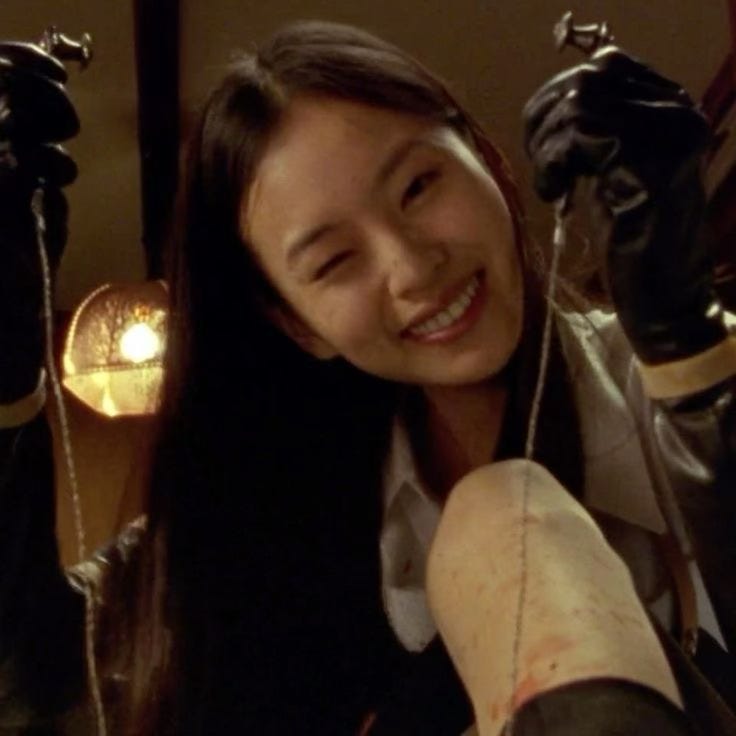
She is quiet, deferential, composed. She reflects back exactly what is expected of her. That is the lure in its purest form. She allows him to construct the version of her he wants to see. Like the lure in Under the Skin, she is cool and calm and collected. As the film unfolds, we are given some framework for a motive for her violence. Here we had a man with a list, Shigeharu never considered the parts of a woman that may exist outside those traits that ultimately, is his undoing. He never saw beyond what he wanted to see.

In Jennifer’s Body, the lure is overt, exaggerated, almost cartoonish. Jennifer is hyper-visible, fully aware of how she is seen- or moreso- what is projected onto her. Jennifer is the victim of male violence. A band sacrifices her in an occult ritual, believing her to be a virgin In their eyes, she is a tool - a means to an end. Their ritual fails because Jennifer is not a virgin. Again, in a similar way to Audition, she is a person that acts outside the bounds of what men and boys expect of her.
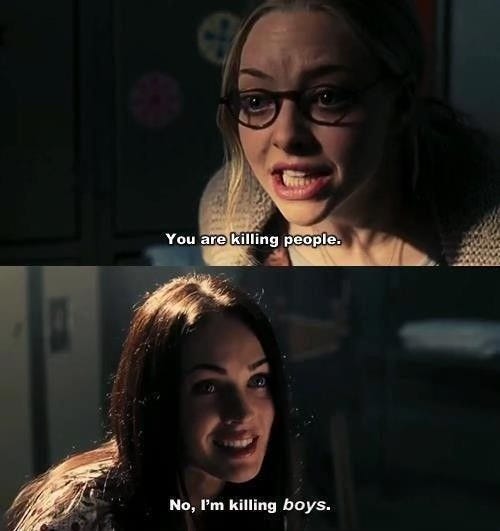
Throughout the film, desire moves toward her. She does not interrupt it. There is something satisfying in that, even if it’s brutal.
Jennifers Body, very misunderstood upon its release, has morphed into a cult classic which neatly fits into the “Good for Her genre.”
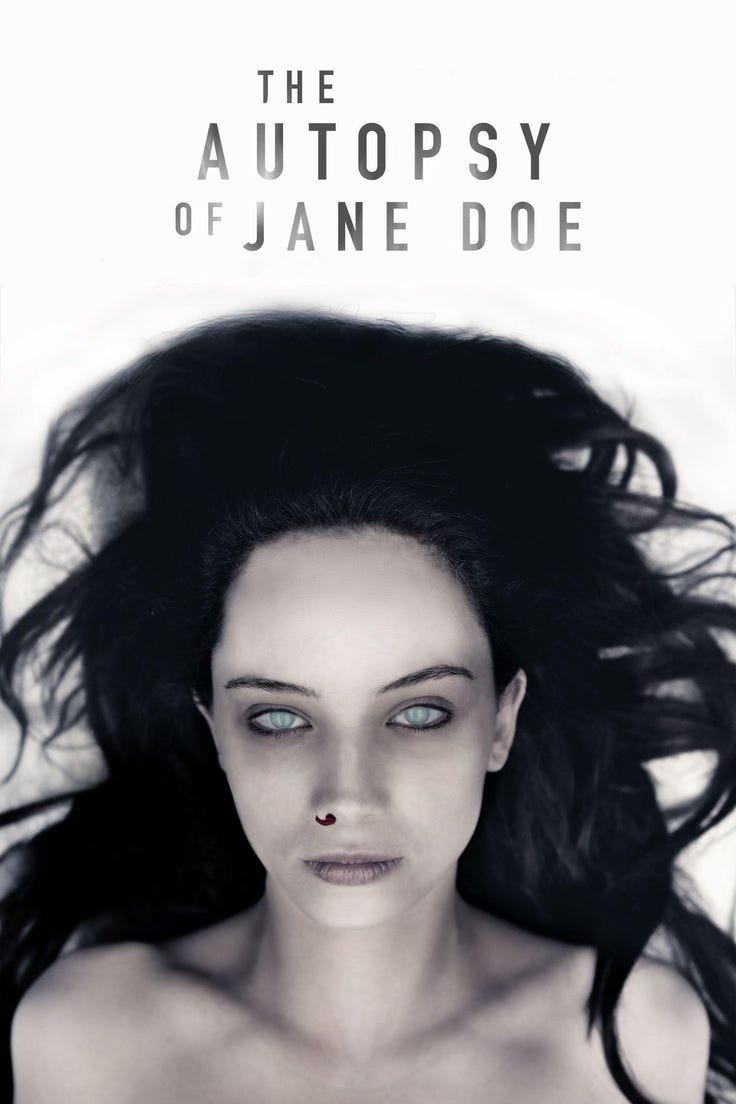
Is a Lure always a Lure on purpose? No, not necessarily. A film that explores the idea of a slightly unintentional lure (perhaps up for debate) is The Autopsy of Jane Doe. Here, the lure is a corpse.
She does not move, does not speak, does not seduce in any conventional sense and yet everything is drawn toward her. One can say that she is not a sexual lure in any straightforward sense. It’s clear that the men in the film are not sexualising her. They are, however, dissecting her- reducing her to parts that can be understood and explained.
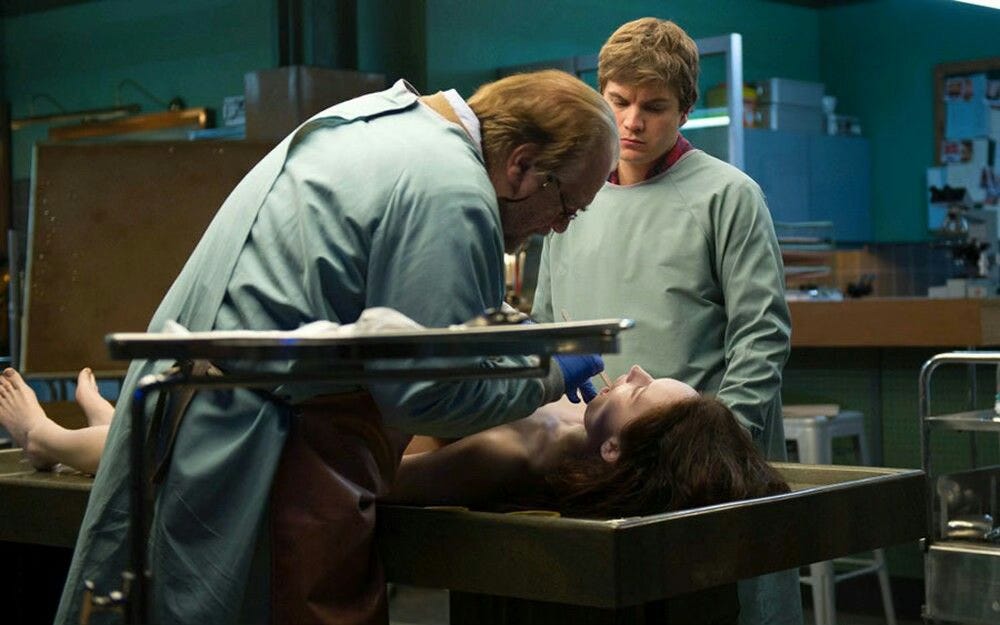
Jane Doe lies on the table, perfect, untouched, impossibly still. With each cut, the mystery becomes more complicated and violent. The deeper they go, the less stable things become. As they cut her open, she reveals herself. Externally, she is a pretty girl, a victim. Internally, she contains violence, history and rupture. The lure here is not sexuality but mystery. The need to know her becomes the trap.
In the end, the lure is a mirror, reflecting back the fears, desires and contradictions projected onto her. Across myth, history, and horror, she absorbs blame for impulses that were never hers alone.
What these films and stories reveal is not simply that femininity can be weaponised, but that it is already constructed as a kind of weapon. The lure knows this, whether consciously or not, and in horror she wields it fully. She becomes not just the object of desire and horror, but the architect of her own objectification.

Comments
Nothing yet. Say the first thing.
Sign in to join the conversation.