
From Viyen💌
Human beings are capable of extraordinary self-deception when the stakes are high enough. Not out of weakness. Perhaps because the mind is remarkably good at protecting us from what we are not yet ready to know. It files certain truths away quietly, until the days we are finally strong enough, or honest enough, or simply too tired to keep looking away.
I’ve come to realise that I kept looking away for a long time, and I was very good at it.
You felt it in a way a conversation ends too quickly. In the silence after a question that deserved a real answer but received a short one. In the way you laugh a little too easily at something that wasn’t that funny, just to keep the air in the room feeling breathable. In the way gestures and routines quietly replace words, the sleepy goodnight is said from the doorway, just far enough away that no real conversation can start. You feel it. And then you go make a cup of coffee, or scroll through your phone, or put something on Netflix, because knowing is one thing. And admitting you know is something else entirely.
I spent the final months of a seven-year relationship in those circumstances. Knowing something wasn’t right yet doing nothing about it. Because I told myself this was probably what a long relationship felt like. The distance was normal, the silence was maturity. Our grandparents didn’t question every emotional gap, they simply stayed and built lives anyway. And called it commitment.
It is remarkable, looking back, how much distance we are willing to call normal when the alternative is admitting that something we love is no longer working.
We had known each other since high school, and had been together since my mid-twenties. The years when you are still assembling yourself, still deciding what kind of person you are going to be, still mistaking intensity for depth and consistency for commitment. He was confident in a way I wasn’t sure of yet. Sure of himself in rooms where I was still learning how to take up space. I admired that about him. And without fully realising it, I borrowed it. I stood a little closer to his certainty because I hadn’t yet found enough of my own.
In the early years, the future felt like something we were building together. I see now that I was mostly building it alone in my head, with great attention to detail.
Marriage. A family. A home that was ours. A life that had finally arrived at the place I had been quietly pointing toward since the beginning. I had furnished that future so completely, down to the feeling of it. The texture of ordinary mornings, the version of myself who lived inside it, that it had stopped feeling like a hope and started feeling like a plan.
After my first ectopic pregnancy, I stopped holding the future lightly. The future I had been practicing started to feel like a hope and more like something I needed to protect. Because somewhere underneath the hoping, a quiet fear had taken root: that if this relationship didn’t become what I had planned, then everything my body had been through would have led nowhere. The pain had no destination. That the story had no ending, I recognised.
And so I stopped questioning the relationship. I held on.
I tried to plan harder, hope louder. At least on the inside. I told myself that after the second ectopic, after the methotrexate, after the blood tests and the appointments I attended — surely now. Surely, after all of this, the life I had been building in my mind would finally arrive.
What I didn’t ask, what I was too afraid to ask was whether he was building it too.
I was not easy to love in those years. I want to say that clearly and without making it smaller than it was.
I was insecure in the way that people are insecure when they have never learned to feel safe inside themselves, reaching outward for what they haven’t yet found inward. I needed reassurance and validation to make me feel valued. I looked at him to confirm things about myself that I should have been confirming quietly on my way. And when the reassurance didn’t come in the shape I was looking for, I reached for control instead because control at least felt like something I could hold onto.
I am not proud of that version of myself. But I understand her now in a way I couldn’t then. She was not trying to be difficult. She was trying to feel safe in the only ways she knew how. And the ways she knew were limited and clumsy and sometimes unkind to him, and to herself too.
There were arguments, the kind that follow a pattern so familiar you could write the script in advance. He would say things that landed somewhere deep. Words delivered at the height of conflict, when neither of us was at our best. He told me I lived in delusion. That I sought security from him because I didn’t know how to find it in myself. That my emotions were something I managed by trying to manipulate him and everything around me.
Some of those things were true.
In the quiet after it ended, I stopped defending myself, even to myself. I had been looking for security in someone else because I hadn’t learned to find it in myself. I had confused love with certainty. And when love stopped feeling certain, I reached for control instead. These are not comfortable things to write. But they are true. And the truth, however unflattering, is always more useful than the version of events that makes us look innocent.
But some of those words were further from the truth.
They crossed from honest observation into something sharper, the kind of thing said not to help someone see themselves more clearly, but to make them smaller. To make them easier to dismiss. There is a difference between being told a truth and being told a truth as a weapon. I finally know the differences now. It took me longer than it should have.
The final months were the quietest. We still had ordinary evenings. We still laughed sometimes. We still existed in the same room in ways that looked, from the outside, like a relationship continuing.
But I knew that the future I had spent years building in my mind was not something we had ever genuinely agreed to build together. I knew that what I had mistaken for shared direction was just my direction, my timeline, my plan, my expectation, my countdown to a life he had perhaps never fully signed up for. I just didn’t know how to find it.
Understanding, when it finally comes, is rarely loud. It arrives silently. In the moment between one ordinary thing and the next. In the specific tired moments of carrying something you have been pretending isn’t heavy.
Towards the end of the final months, I was very tired.
The relationship ended with no closure. There was no final reckoning, no moment of mutual agreement, no clean and honest goodbye. It ended with coffee.
A few drops were spilled in the car on the way home. Some conflicts are so small it wouldn’t normally deserves a second thought. But there was already friction in the air that morning, obviously, it had been building quietly for longer than either of us had admitted. He was certain I did it deliberately. I was certain I hadn’t. He asked me to apologize and admit it, but I refused. I wouldn’t say sorry for something I hadn’t done felt like one small dishonesty too many. Like the last thread of something I had been unravelling for months. So he told me to leave.
And finally, I stopped looking away. I left. Not just the house, not just the argument. But the version of myself who had been willing to make herself smaller, again and again, just to keep the room feeling okay and breathable.
The relationship wasn’t a mistake. Seven years cannot be reduced to a mistake. There was love in it — imperfect, sometimes clumsy, occasionally unkind in the way that love between two unfinished people often is. But real.
What the relationship was, more than anything else, was a mirror. It showed me exactly where I still needed to grow. The insecurity that needed tending. The control that needed releasing. The version of myself that was looking outward for things that could only ever be found inward. It showed me the difference between loving someone and needing them. Between building a life together and building a life inside your head make a big difference.
Alain de Botton writes that we choose our partners not randomly, but with an almost frightening accuracy, drawn to people who will recreate familiar dynamics, familiar feelings, familiar unfinished business from long before we met them. We think we are choosing love. We are also, without knowing it, choosing the lessons we most need to learn.
I read that long after the relationship ended. The moment I read it, something clicked.
The life that I thought this relationship was leading me toward existed. It just wasn’t on the other side of him. It was on the other side of me. The version of me that finally stopped outsourcing her sense of safety. That stopped measuring her worth by whether someone was choosing her clearly and completely. That stopped holding so tightly to a future she had imagined that she couldn’t see the present she was actually standing in. That version of me was coming, I just didn’t know it yet.
And sometimes the relationships that shape us most are rarely the ones that go the way we hoped.They are the ones that quietly dismantle the version of ourselves we had outgrown and leave us standing in the rubble, finally able to see what was underneath all along.
What was underneath, I discovered, was someone worth knowing. It just took her seven years to spill the coffee to realise that losing the future she had planned was the only way to finally find her.
And she was worth finding.
About the Author:
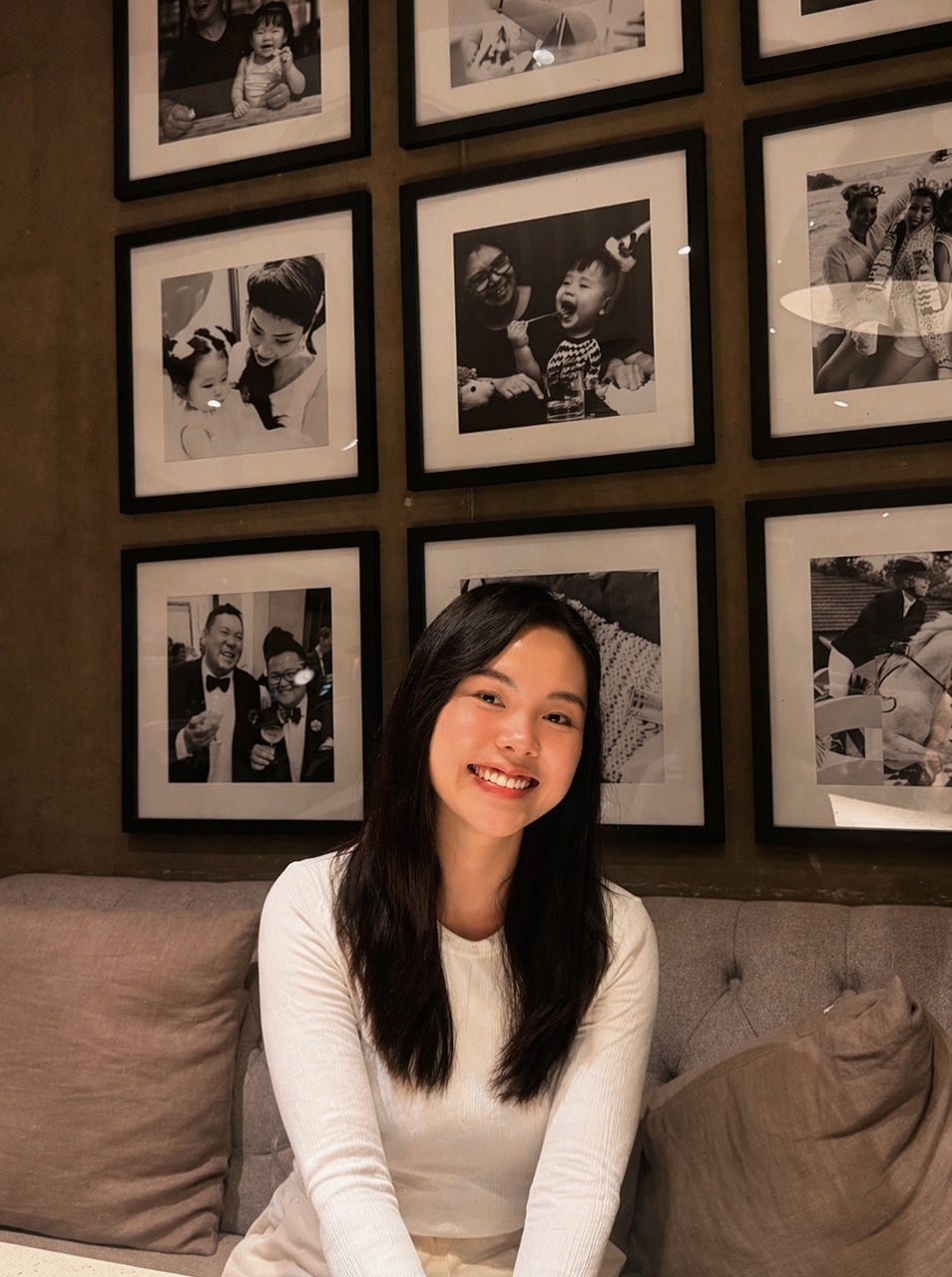
Viyen is the writer behind Snails Club, a space devoted to the quieter side of being human. Through reflective essays, she explores grief, identity, solitude, and the slow, often untidy process of understanding yourself. In her early thirties and living an ordinary 9-to-5 life, Viyen came to writing not through formal training, but through a desire to make sense of her own experiences and find her way back to herself. Her work doesn’t offer easy answers it lingers with life’s unresolved moments, searching for the humanity within them. Outside of writing, she enjoys running, volunteering with stray animals, and finding peace in good coffee and journaling. She believes the ordinary holds everything worth writing about, and Snails Club is her invitation to look more closely at the life most of us are already living.
Substack ID: Viyen
Have something to share? Submit your own reflections or stories to be featured in The Open Letters. Send your work to hasifnewsletter@gmail.com. For more details, check out this post: Submit your Essays and get Featured.
Hasif,
Editor-in-Chief, The Open Letters
No posts
Comments
Nothing yet. Say the first thing.
Sign in to join the conversation.