
The signing of the MoU was merely the confirmation of what we had already been seeing for several weeks, and ultimately the only thing we care about: oil is moving.
While the exact number of barrels circulating is still debatable, one thing is not, and that is price, the only visible piece… so we have to abide
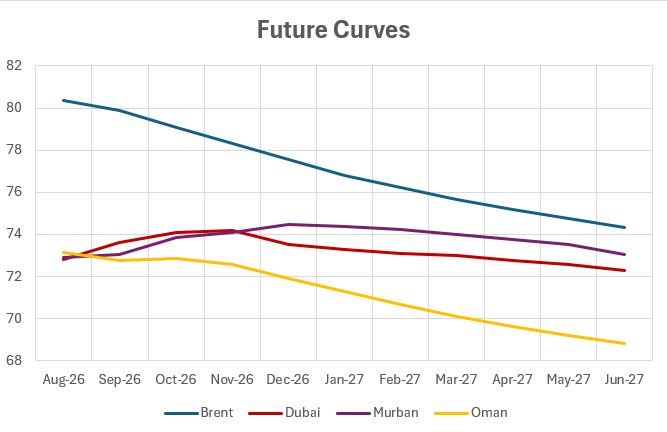
Even with all its flaws, price remains the only real indicator we have, and what it is telling us is that perhaps far more barrels were moving through dark channels than any of us imagined. I was talking about 3Mnbpd, but with the new information that has come to light, I am starting to think the real number may be closer to 5Mnbpd.
Either way, today we find ourselves in a supply pocket largely explained by India. No, this time it is not China, which continues with its own program. India is the complete opposite of China right now, they are drowning in oil, literally.
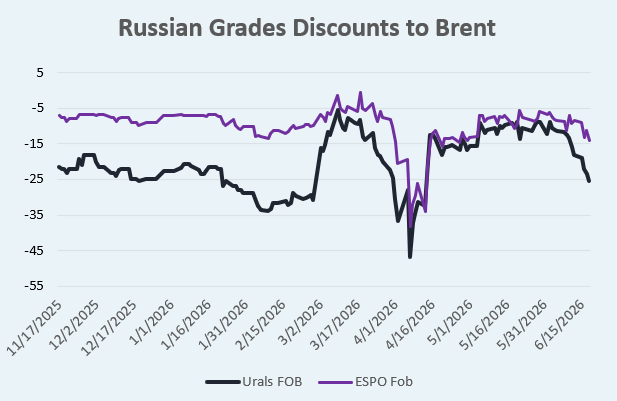
Preliminary June import data points to 5.5Mnbpd, roughly 400kbd ABOVE PRE WAR levels!. If there is someone to blame, it is Russia, with crude exports running at record highs above 4Mnbpd, particularly the incremental Urals volumes out of the Baltic and Black Sea. Those barrels only have one destination: India.
The next 60 days
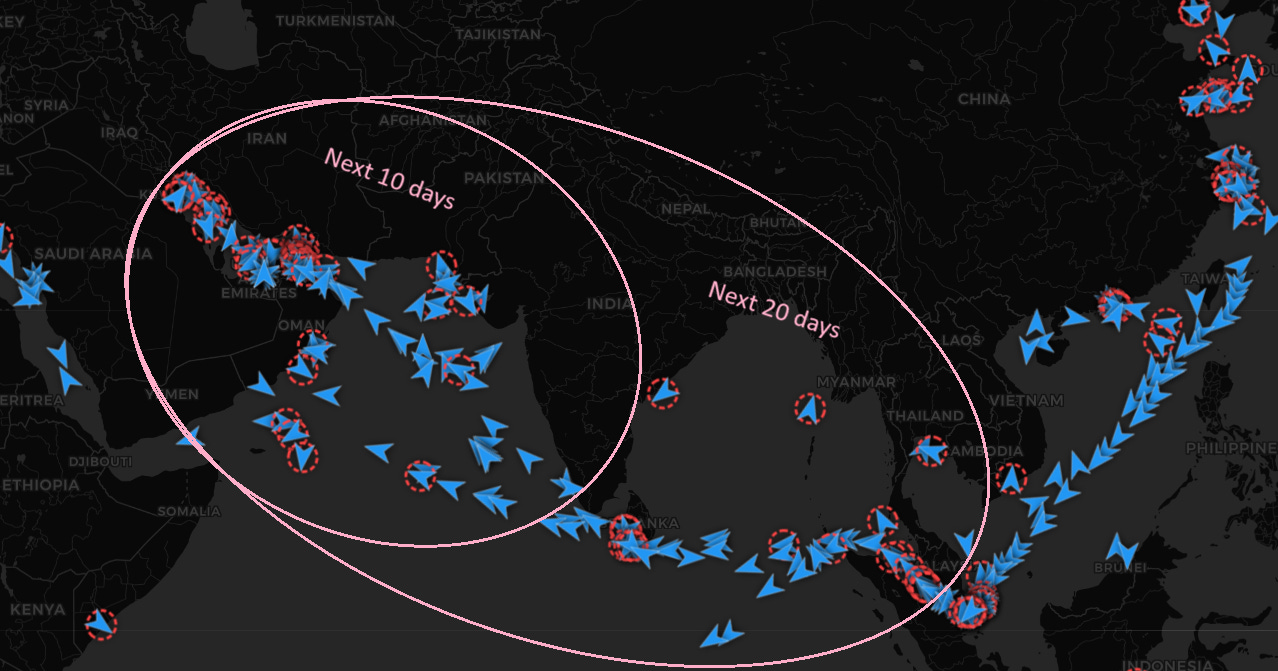
Remember how all of this started? It was a wave of missing barrels moving from West to East. The solution is going to follow the exact same route, except we can skip India because that problem is already sorted. China? They solved it domestically.
That leaves Singapore, Vietnam, Korea and Japan as the main focus, where there is still a deficit of at least 2Mnbpd combined.
However, we need to talk about timing, because that deficit exists today, but based on the buying activity we have seen recently, Korea, Taiwan and Japan are pretty much covered for July and August with a mix of Atlantic Basin barrels and the specially barrels that “got away”. That explains the weakness in flat price and especially the shape of the curve in Middle Eastern grades.
The industry’s explanation is that there is a wall of trapped barrels pushing all these cargoes into the same pricing window as spot barrels, pressuring the front month and giving us contango but as always, I have a problem with overly simplified explanations.
Those trapped barrels were mostly Mitsui cargoes, SK cargoes and some Basrah cargoes destined for Europe, barrels that had already been sold and paid for. There are far fewer than we initially thought, roughly 10 VLCCs. At best, they influence purchasing decisions for the next cycle, not this one. In fact, all the spreads started showing weakness weeks earlier, signaling that there was something else happening beneath the surface.
Back in February we had a 104Mnbpd market that suddenly had to adapt to functioning at 95Mnbpd, while the system itself was still running at 97Mnbpd and at the same time was quietly being fed another 3Mnbpd through the back door. Mentally, however, buyers still think they are operating in a 95Mnbpd system.
And that is what we need to discuss, the market mindset.
Leaving China aside for a moment, what we saw from the very beginning was an overreaction, understandable because this was an anomalous event with very low odds of happening, too big to fail. But every action is followed by a reaction, and Asia’s response ended up being excessive.
The buffers worked, and I would even argue they were activated too early, to the point where today, despite the situation being far from resolved, those buffers are no longer needed. No one needs SPR anymore.
It was actually a very good read by policymakers to both release and restrict barrels even thirty days before a single barrel was physically missing, perhaps believing this conflict would end quickly. When it became clear the conflict was going to drag on, they did something that was also completely out of the playbook: they went to negotiate with Iran.
For much of Asia, the crisis was effectively over weeks ago.
Of course, I say all this with the benefit of knowing that China gifted the market 4Mnbpd. What would have happened if China had been importing 10Mnbpd instead? Most likely they would have flooded the Asian market with diesel and gasoline, because Chinese fuel consumption is collapsing, down 7% year-on-year. The more I look at this, the more convinced I become that this is economic rather than strategic.
Yes, refiners are losing money because of the price cap, but wholesale gasoline prices in China are already around $140/bbl, or 340cpg, which is almost what the rest of the world is paying, so there is more to it.. maybe trying to shut down the teapots permanently??
But all of that is now water under the bridge. The oil trade is over, We have one trade left in this entire saga: Tankers.
Comments
Nothing yet. Say the first thing.
Sign in to join the conversation.