
We have reached the halfway point of the year, and the second half already looks very different. We are still digesting this “opening” of the Strait, which caught many by surprise, although we already started seeing some signs of normalization back in June.
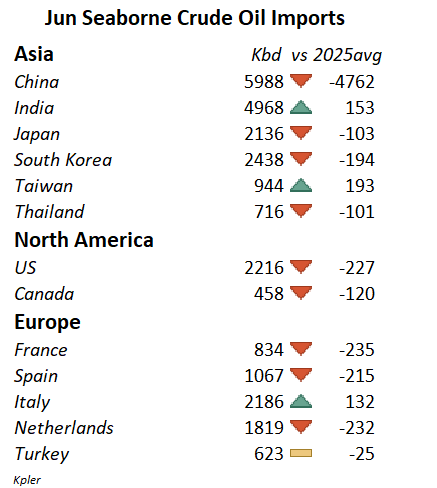
Of course, normalization excluding China, which at this point the market sees as the only remaining variable to solve, and one that is proving extremely difficult to understand, let alone predict.
In the immediate term, July import numbers should come in more or less unchanged, with the rest of Asia already back at pre-war levels, if not above.
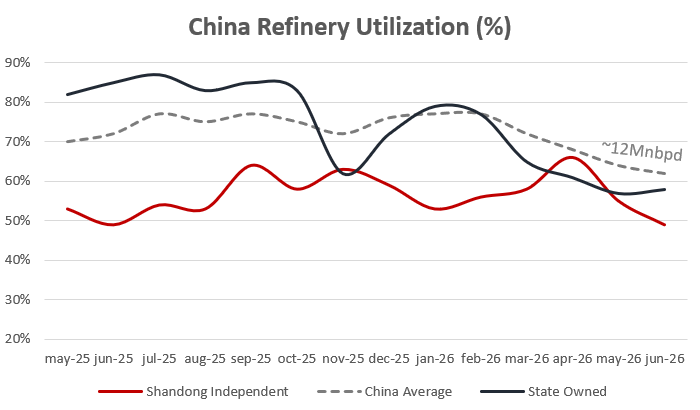
We have reasons to believe the worst of Chinese demand might be behind us, with refinery utilization suggesting they may have already bottomed out, helped by more refineries in Shandong, aka the teapots, returning from maintenance during July, (~600kbd) and improving trading conditions. Granted, it isn’t much, but at least it stops falling.
Also, this week we got a few signals (don’t get your hopes high though) with some of these teapots buying from Middle Eastern tenders for Aug/Sept delivery, so apparently we have finally reached the magic number: $70. Not flat price, delivered price.
Most of these deals were done around “Dubai minus 8 STS Fujairah”... = 67 - 8 + 9 of freight = $68/bbl landed in China. At those levels refiners barely make any money, something like a $1.70 gross refining margin per barrel, considerably better than losing money like previous weeks, but it also tells us something about China’s domestic GPV (Gross Product Value), especially when contrasted with what is happening in the West, where refiners are enjoying their best year since 2022. The petchem products keep dragging the margins down in China.
This week China relaxed the price cap slightly, giving refiners more flexibility in setting prices. Asian naphtha cracks jumped 38% this week, Aramco is aggressively pushing barrels into China, and we may even start seeing more appetite for “sanctioned” barrels again. Hengli cancelled six cargo purchases, supposedly to return to ESPO, which surprisingly sold out its entire Aug program, and which also happens to have a landed value below $70 (Brent -3).
If China’s preferred number is truly $70 delivered, then we still have a lot of work to do. During China’s great accumulation phase, delivered values ranged between $75 and $80, but that was driven more by a strategic mandate to accumulate barrels than by any economic equation, if from now on they are simply going to follow supply and demand economics, then perhaps we should consider $70-75 as the new equilibrium range required for China to import 9/10Mnbpd.. if we ever get there..
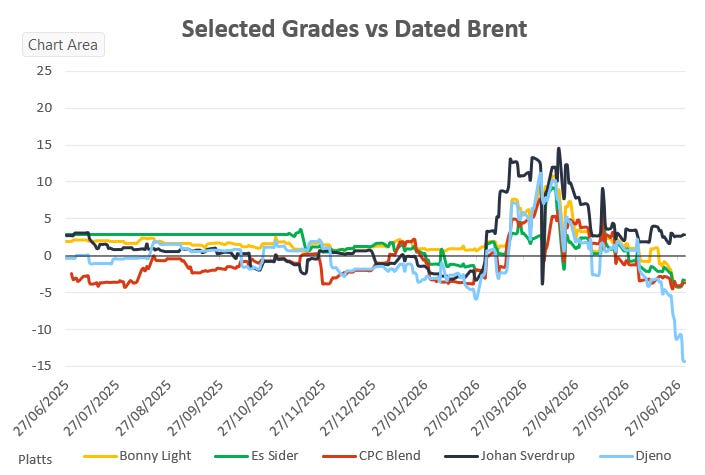
Today we reached these depressed price levels mainly thanks to FOB differentials, which in many cases are sitting at historical records, so how much lower can they really go?
When a refinery buys crude, there are several components involved: the benchmark or flat price, the FOB differential which usually reflects quality not quantity, freight, financing costs, plus insurance and transit losses, which together barely add up to 0.25%. But the three variables that actually matter are:
Flat price. Can crude really fall much further below $70?
There are not many people willing to short the market at these levels, especially considering we were trading at $120 just weeks ago. Even producers themselves have little incentive to hedge at these prices, so flat price cannot realistically remain the adjustment variable.
FOB diffs currently reflect a massive mismatch between production and demand, and by production I mean the huge wave of incremental output we saw in the Middle East over the last few weeks, roughly 3Mnbpd of ramp up in barely 10 days, that ain’t free…But these extreme discounts should not, and realistically cannot, last very long. At this point these prices incentivize producers to simply pull export barrels off the market and place them into storage, forget the curve structure, a $10 spot discount already offsets monthly storage costs of roughly $0.75 to $1/bbl.
On top of that, contrary to what we saw when FOB diffs were trading at +10 and producers were increasing well pressure to squeeze out another 5% of productivity, now the incentive is exactly the opposite, they would rather reduce pressure and leave those barrels underground until prices normalize again. Most FOB diffs are now trading roughly 2 standard deviations below.
This leave us with tankers as the final, which despite pulling back from the theoretical levels from last months, still remains elevated and is unlikely to normalize any time soon.
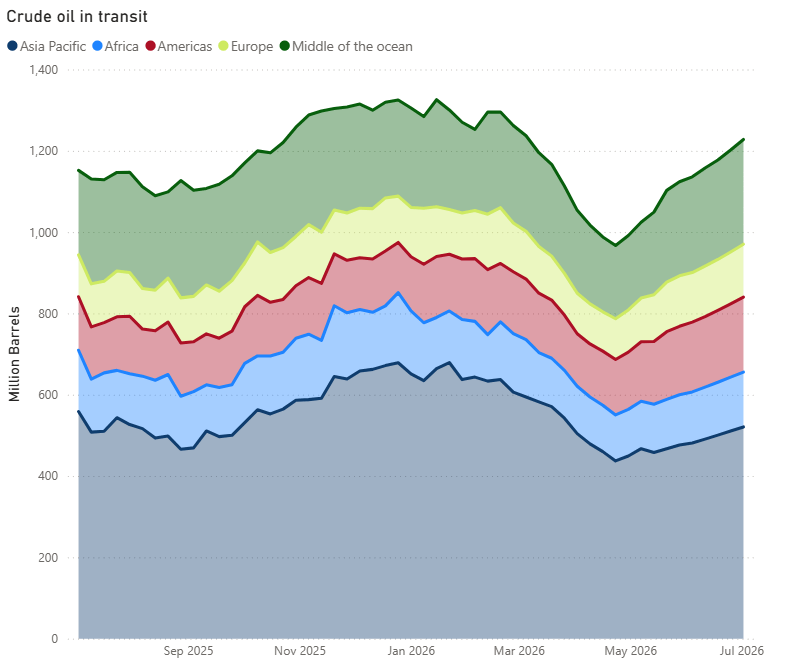
Our favorite utilization metric, barrels in transit, is already approaching the highs seen from late 2025 and that creates a structural floor under freight, and then when we add the inefficiencies of this new MEG crude marketing system, where two ships are required, one vessel entering the Gulf and delivering via STS (ship to ship transfer) in the Gulf of Oman, a process that adds 20 extra hours and $300k in costs, so as long as some level of risk remains and price discovery continues to be at the very least opaque we will have these insane freight levels.
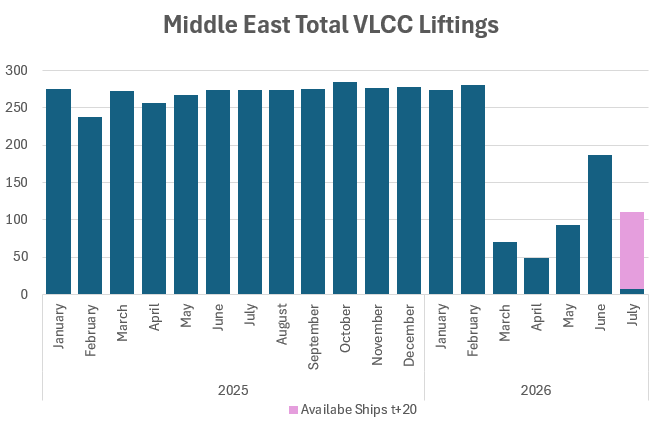
At the beginning of the week we were complaining there were too many ships, one cargo reportedly received 10 vessel offers, but by midweek rumors started circulating that two NOC shipping arms were looking for more than ten VLCCs for next week. It looks like Ras Tanura is returning in full force. Now the question becomes whether they will maintain the loading pace in Yanbu, which so far appears to be the case, but with just one VLCC per day loading at Ras Tanura, we are already back to the 6Mnbpd levels seen in February.
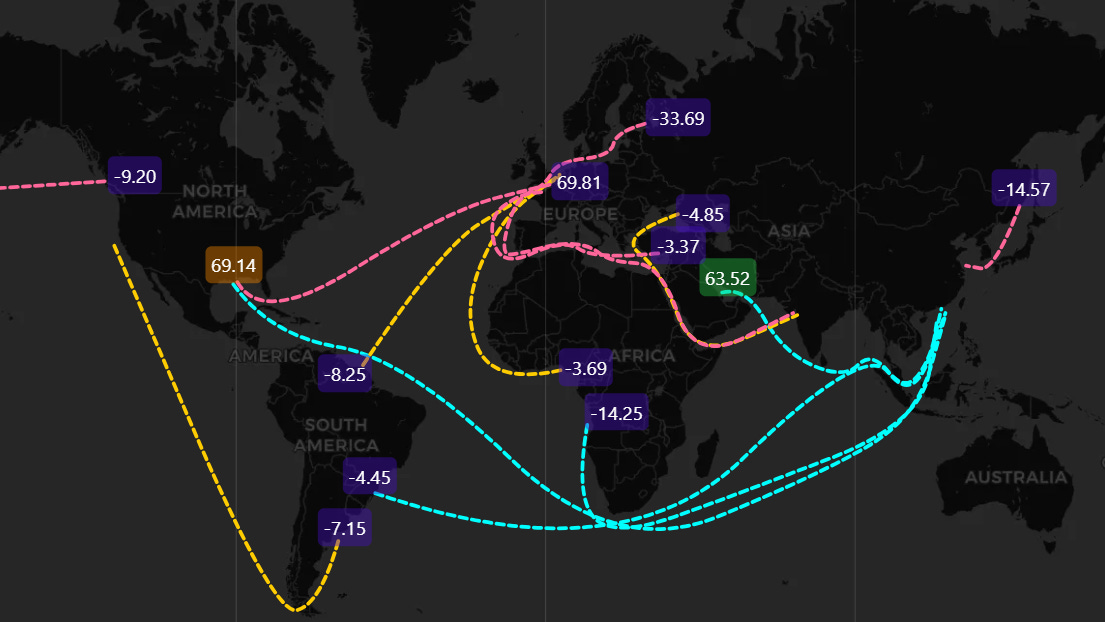
So, so far we have an overshoot in FOB diffs, not much in freight and the paper market really quiet and oversold… the first to spring back will be the physical diffs, that would drag flat price and the curve structure, but only if freight levels cool of over the next days, and that will depend on Middle East producers, because so far we have seen an uncoordinated rush to put barrels in the water, if that changes, maybe they can tame shipowners.
Comments
Nothing yet. Say the first thing.
Sign in to join the conversation.