
This week's newsletter is answering the question I get asked most: how did you become an exhibition designer at the Guggenheim? It starts with burning out of architecture and ends in a hotel room in Austria. Here is everything in between and what I wish someone had told me earlier.
Most people have never heard of exhibition design. Until few years ago, neither had I.
I didn’t know exhibition design existed until I was already deep into an architecture career I thought I would have forever. Now, I’m an exhibition designer for the Guggenheim Museum in NYC. The path between those two things was not straight.
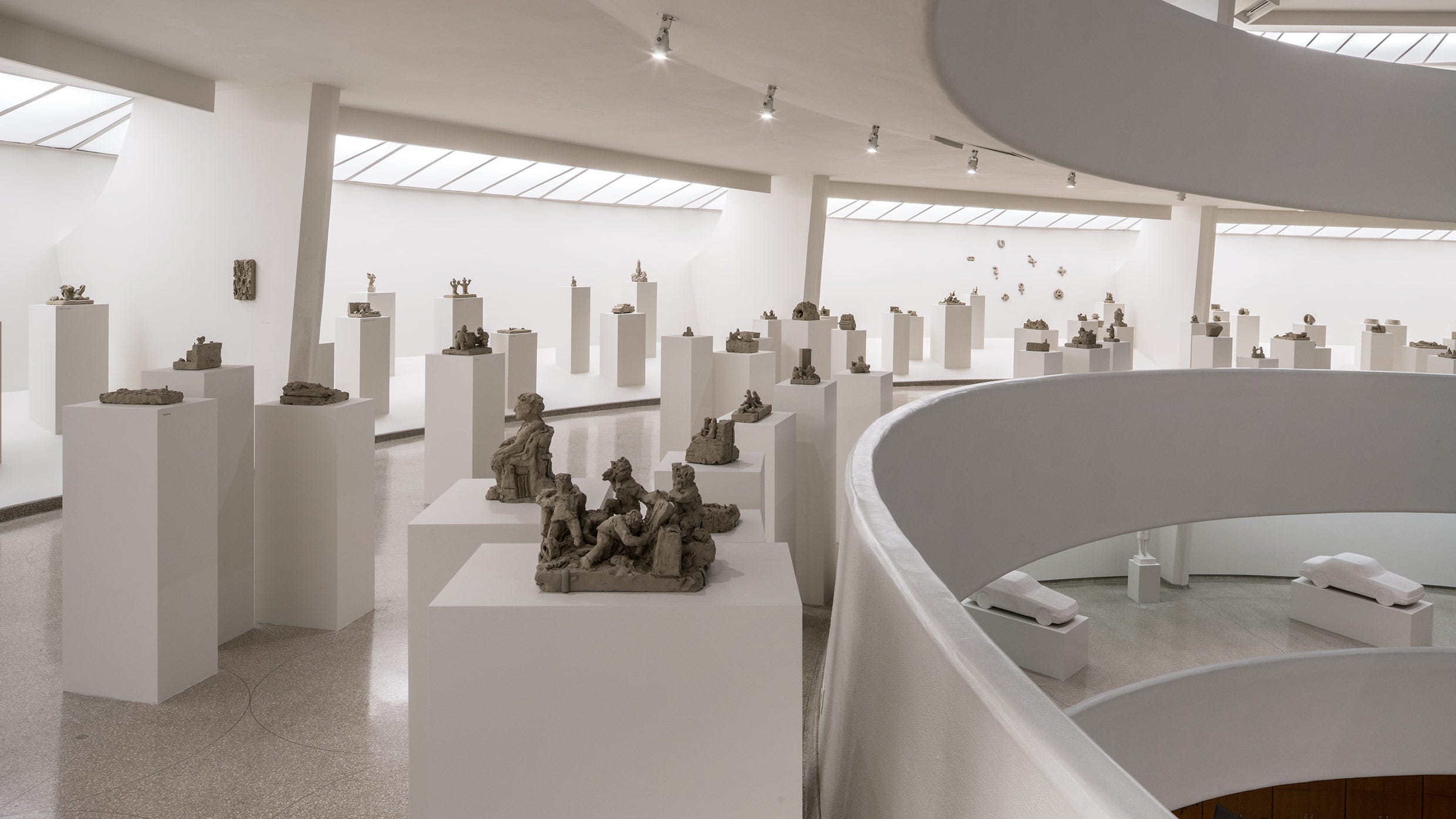
For those who are new here and don’t know what exhibition designers do: we are responsible for how a show physically exists in space. Exhibition designers don’t decide what’s in a show (that’s the curator), and we certainly don’t make the art (that’s the artist), but we design nearly everything in between. The walls, the pacing, the path, and the feeling you get before you've even looked at a piece (I’ve written an entire piece about exhibition design here).
The question I get more than any other is: “how did you get your job at the Guggenheim?”
Here’s my answer.
Before anything else, I couldn’t write this essay without crediting my parents. My mom and dad made me believe that I could do or become anything. And, they weren’t just saying it. My dad grew up in a town of less than 500 people to become a U.S. Senator, and my mom, a Syrian immigrant, opened her restaurant at 46 years old and is now a two-time James Beard Semi-Finalist. To them, nothing is unachievable if you work hard enough. I would be nowhere without that same stubbornness and belief.

That being said, I grew up in the midwest mostly around doctors and lawyers. I didn’t know many career paths outside of those two fields. I'm a born hypochondriac, so medicine was out. I also do not enjoy confrontation, so law was equally unappealing. What I did love, were the arts and mathematics. So at a pretty young age, my parents steered me toward architecture. I was immediately obsessed.
The more I learned, the more certain I became that architecture was the field for me. I pursued my architecture degree at Northeastern University and my major quickly became both my identity and my religion. I spent my first Friday night of college in the architecture studio, not because I had to, but because I was genuinely so excited (nerd alert!). Zaha Hadid became my idol and I cried when she passed away during my second year. My ultimate goal was to design a skyscraper and add it to the Boston skyline. (Yes, this was directly inspired by Ted Mosby).
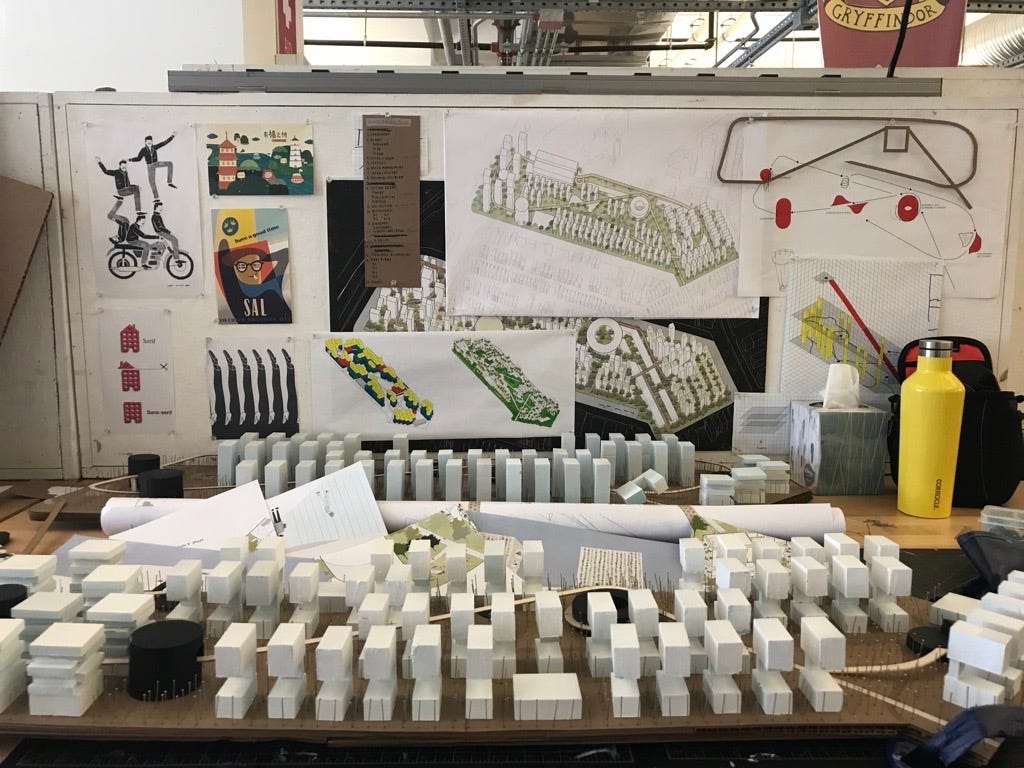
After graduation, I went straight to grad school at Columbia University for my masters in architecture. For reference, to become a licensed architect in the U.S., you need a professional degree, +3,700 working hours under a registered architect, and to pass six intensive exams. And oh man, I was in it. I was ready.
Despite going to grad school during covid, my years at Columbia were among my favorite. I met some of my best friends, fell in love with New York City, and my education reframed how I thought about architecture. It stopped being purely a design practice and became something bigger, a tool for community impact. My ambitions shifted from building ivory towers to something that felt more urgent and more meaningful. Specifically, I wanted to find architectural solutions for humanitarian response in emergent disaster situations.
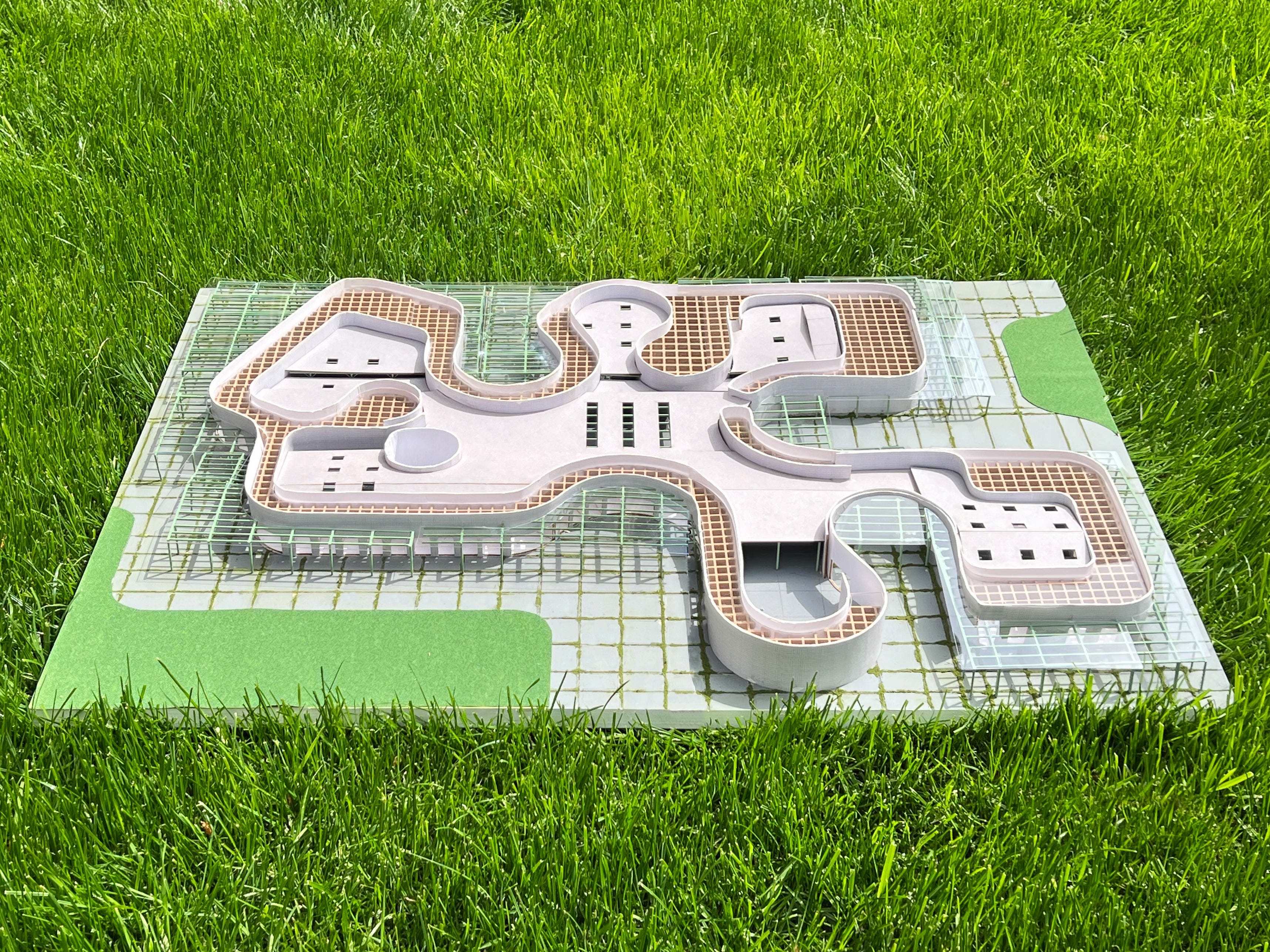

And then, like so many people with meaningful ambitions, I went corporate.
I had interned at the firm the summer before graduation and liked it enough to go back. It felt like a safe place to start my career. I worked on a mixed-use high-rise residential building, and was learning a lot. I liked my colleagues. The hours were long but not the horror-story-kind-of-long that is frightengly common in NYC architecture firms. By most measures, it was a good job. The plan was to complete my licensing hours, pass my exams, and eventually do something that actually aligned with my humanitarian ambitions.
Then, about eight months in, my personal life fell apart.
I won't get into the details, but between navigating that, intense working days, long work hours, studying for my architecture exams, and an hour commute each way to the office, I was hollowing out. Finally one night, a close friend looked me dead in the eyes and said, “I don’t think you are enjoying your job.”
*cue the identity crisis
He was right, and it was terrifying. I was burned out - but I wasn’t even passionate about the thing burning me out. I had wanted to be an architect my whole life! I didn’t know a world outside of it! What the h*ll was I doing?!
So, I started looking for a new job. Still in architecture, but something smaller and calmer. During the job search, a different friend sent me a job posting for a junior designer position at Standard Issue Design, a small full-service design firm specializing in pop-ups and retail exhibitions for heritage furniture brands. She pitched it as a low-key detour, something fun while I got my footing back before eventually returning to architecture.
Even if it was only temporary move, I was so nervous to even consider leaving architecture. I applied for the job, but interrogated each one of my interviewers just as much as they interrogated me. I had to give myself any semblance of clarity that this was a good idea.
Something must have clicked because I took the job.
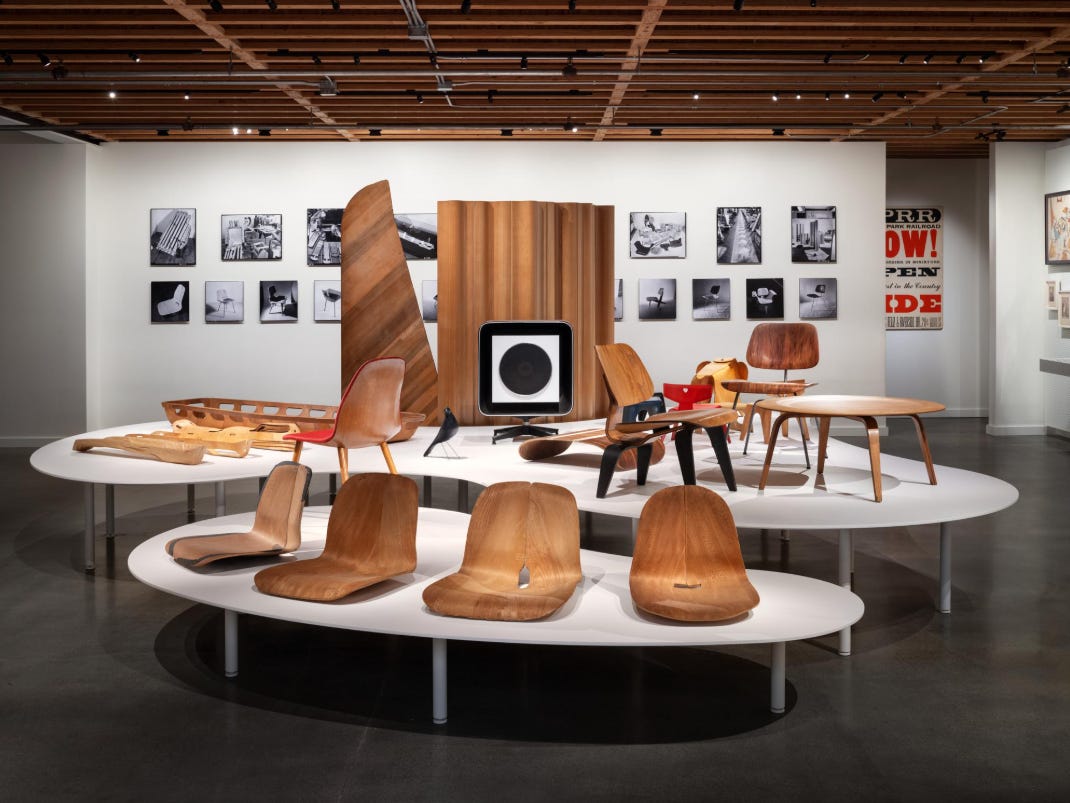
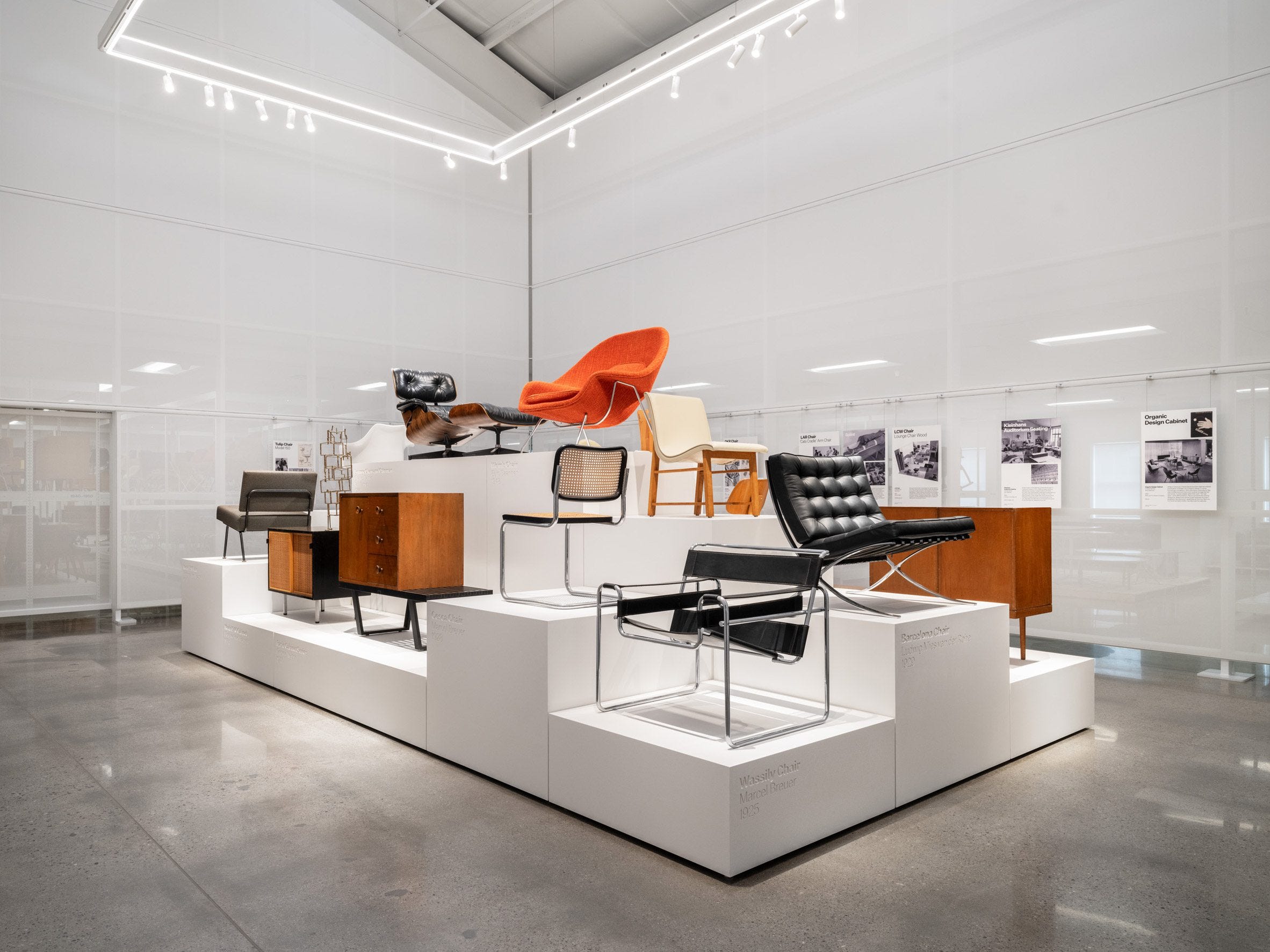
My first project at Standard Issue was the opening exhibition for the Eames Institute of Infinite Curiosity in Richmond, CA - a dream project! I had learned about Charles and Ray Eames in school, but never thought I would encounter their work again - let alone this closely. I remember sitting in meetings and and absolutely buzzing: learning about the objects we were working with, brainstorming with my coworkers, and developing narratives and journeys within a space. It was the first time since school that I felt genuinely inspired by work.
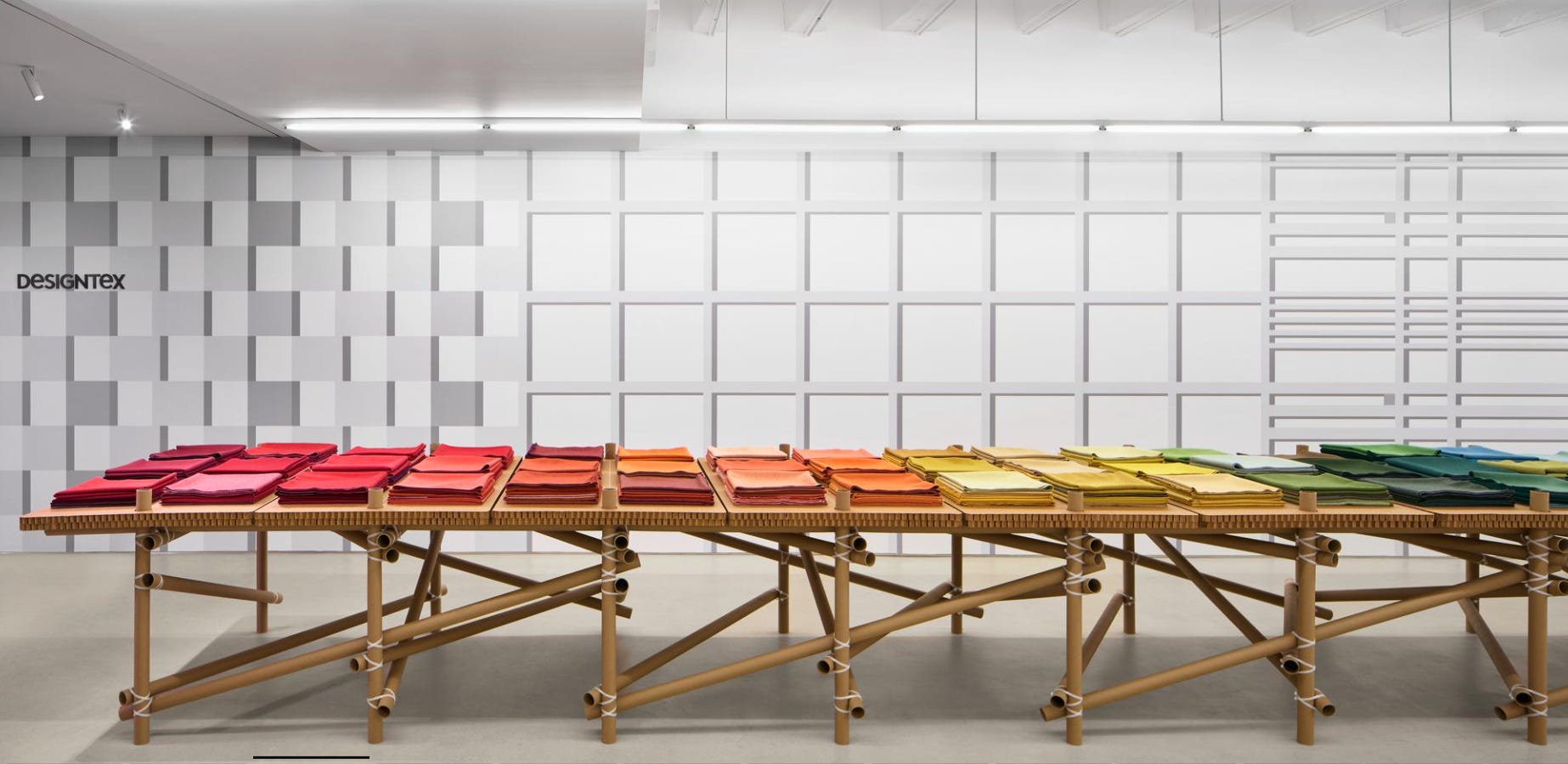
During my time at Standard Issue, I also designed a table out of fabric tubes and cardboard for Designtex during Chicago Design Days, and led the spatial design for the MillerKnoll’s archive and exhibition in their Design Yard after the historic merger between the two major furniture companies Herman Miller and Knoll. I was good at my job, I was learning, and I was happy.
Eventually though, I started to feel like I was outgrowing the role. I continued to really enjoy my job, but was ready for a new challenge. At that point, architecture was out of the question, but I wasn’t sure what was next.
When I started reflecting and trying to figure out what I wanted next, one thing kept coming up: the part of the job I loved most wasn’t the designing, it was learning about the objects. At my time at Standard Issue, I had absorbed more about mid-century furniture and the designers of the 1940s–70s than I had in years of school. I loved every moment of it. Museums had been in the back of my mind for a while - a classmate from both undergrad and grad school had been working as an exhibition designer at the Met. So the field was on my radar, but I still knew almost nothing about it. But I loved art, and loved learning about art, so my curiousity was piqued.
Coincidentally, one of my coworkers at Standard Issue was also a Met alum who had worked there for over a decade. We had a great working relationship and I trusted her enough to be honest: I might want to leave my job and make a move toward museum exhibition design. But, I didn’t know if I was qualified for or even what the job really entailed.
She didn't hesitate. That same day, she connected me with exhibition designers at almost every major museum in New York City. Within the next two weeks, I scheduled coffee or zoom dates with all of them, and similar to my interviews at Standard Issue, I interrogated them relentlessly. What's it like to work directly with artists? What’s it like to work with curators? What other departments do exhibition designers interface with? What does the bureaucracy of a museum look like from the inside? What problems catch you off guard? And, my ultimate curiosity, how did they get that massive sculpture into the museum?
By the end of it, it was decided. I wanted to be an exhibition designer.
Lucky for me, the Guggenheim was hiring.
The first response to my application for the Guggenheim came while I was home in South Dakota for Thanksgiving, eating lunch at my mom’s restaurant. I got an email that the hiring director had a window to talk within an hour, so I called an uber and immediately went home. During the drive, I had a friendly driver and so I began chatting with her about the situation. She was more excited about it than I was. Before I got out of the car, she asked me to write about the potential job offer in her prayer journal which she carries with her everwhere.
“Midwest Nice” is absolutely a real thing.
Three more rounds of interviews followed. One with my current boss, one with the larger exhibition design team, and one with an exhibition manager and a curator. Every time I got an email about the next round, I was so eager and excited that I would reply immediately with some version of I’m free right now, should we just do it now? Unhinged behavior.
Because I had no museum experience, I also studied obsessively for each round: the institution’s history, major past exhibitions, tight narratives around every project in my portfolio. At my final round, the very first question was: “Why do you want to work at the Guggenheim?”
I froze.
That was the one question I had not prepared for. But then I remembered, it’s literally the Guggenheim, and everything fell into place.
My job offer came the day after Christmas while I was standing in a Christmas market in Salzburg, Austria with my mom. The hiring director emailed me asking for my availabilty for her to call to officially give me the offer. Again, I replied with some version of I’m free NOW, and my mom and I booked it back to the hotel. She called and I got the job. After physically restraining myself from screaming, my mom and I walked back to the market and got mulled wine to celebrate. My mom also bought me an authentic Austrian hat.

And, that’s my story.
I want to emphasize, this was my path to becoming an exhibition designer. I wouldn’t exactly call it efficient and I definitely wouldn’t call it replicable. I also don’t think it was accidental. Every step gave me something I needed for the next one. I never would have gotten to the Guggenheim without Standard Issue, and I never would have gotten Standard Issue without architecture. Even my time in the corporate world left me with skills I still use.
So instead of (wrongly!) telling you to copy my route, here’s what I think actually matters.
At the core of exhibition design is the ability to skillfully and intuitively think in 3D. Most of my friends are architects or designers, so I sometimes forget that not everyone automatically pictures a room when they read a floor plan.
As I’ve described before, curators and artists determine what goes where and why. Exhibition designers figure out how it will exist in physical space: how people will move through it, what they’ll see first, where the pacing slows down or opens up. We also design the circulation itself: the path a visitor takes through a show is a design decision, and it shapes everything about how the work is experienced. Because of all of this, the ability to think in 3D is critical and it is the skill that sets exhibition designers apart and makes them invaluable in the exhibition process. It also comes in handy in early design conversations to quickly gauge how many paintings will fit comfortably on a wall or if a 7-foot sculpture will feel overpowering in a 10-foot room.
The other essential skill is creative problem-solving. In practice, this means being comfortable with constraints. Nothing ever goes perfectly. There is no perfect building, no perfect exhibition, and no moment where all the conditions align perfectly with a piece of art. A large part of our job is finding intelligent solutions when things don’t go as planned. Designing around problems has become such second-nature to me that I think I’d struggle in a world where the sky was the limit. Give me a messy problem over a blank slate any day.
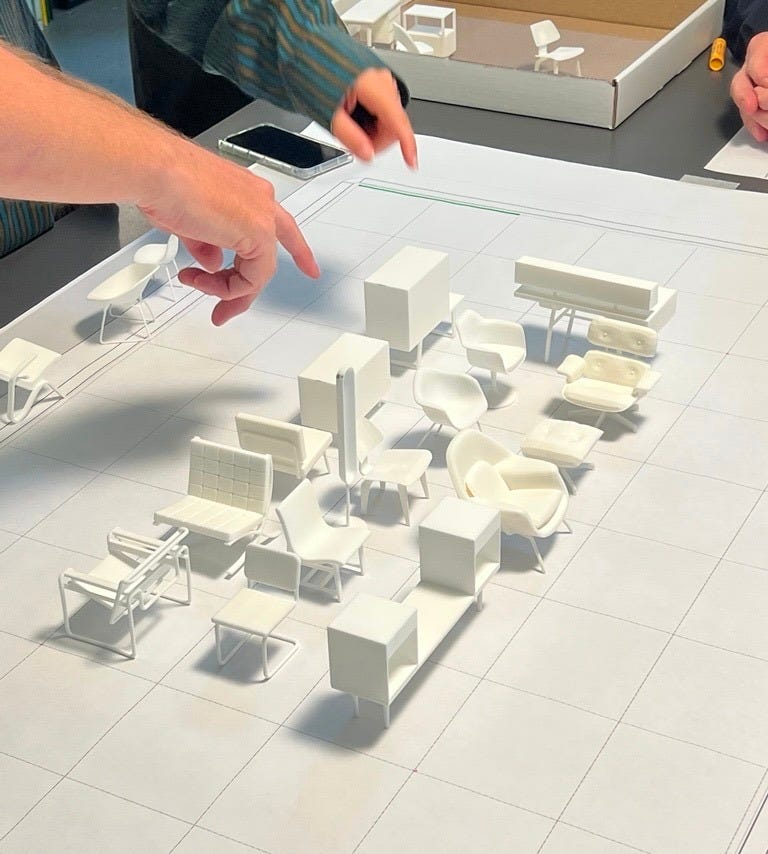
Practically: it is important to be fluent in 3D modeling software (I use Rhino) and a rendering output (I use both Enscape & V-Ray). You should also be comfortable drafting traditional 2D drawings like plans, sections, and elevations and as well as more detailed fabrication drawings. Additionally, we keep physical models to quickly work through ideas internally, so physical modeling and 3D printing skills are also useful. Finally, and I know it’s cliche, but none of these technical skills matter without strong communication and organizational habits. Exhibition designers sit at the intersection of many departments and the details are very important.
Invest in your working relationships - not strategically, just genuinely. The people who have opened the most doors for me weren’t contacts I made for networking purposes, they were coworkers I liked and trusted. Those were the people who knew me well enough to advocate for me or connect me to the right person at the right time. You never know how a boss or coworker can change your career. I never would have become an exhibition designer if I hadn’t first felt comfortable enough to tell my coworker I was thinking about leaving.
In a similar note, reach out to people, even if it’s been years. Traditional networking events kind of freak me out, so instead I like to reach out to existing connections I have, no matter how long it has been. Former professors, old classmates, past coworkers, friends of friends - it’s all fair game. I have always found that people are happy to reconnect, and in my opinion, a one-on-one coffee is far less intimidating than entering a room full of strangers. Even if they can’t help directly, you never know who someone might know.
Finally, don’t let an early job feel like a permanent identity. I remember during my last semester of grad school, so many of my classmates (myself included) spent so long trying to find a job that was “the perfect fit,” somewhere we could see ourselves for the long haul. When I left my architecture firm after less than a year, I agonized over what it would look like on paper. Turns out, nobody cared. To clarify, I’m not suggesting that you change jobs every eight months, but if something isn’t working, you don’t have to stay. Especially early in your career, I personally think trying things and moving on should not be considered a failure, it’s how you figure out what you actually want.
At any job, you should be doing at least one of three things: learning, earning, or enjoying. My first two jobs were heavy on learning. Now I’m heavy on enjoying (but am also still learning!). Not every job has to be the destination. Some of them just get you closer.
It feels so embarrassing to say but I really feel like exhibition design chose me as much as I chose it. I didn’t find this field by being strategic, but rather found it by listening to what lit me up and following it. The Guggenheim wasn’t the goal, but it was the result. Now, I feel so lucky to work at a job that I genuinely love. It truly is my dream job.
One of my favorite parts about starting my substack has been all of the students discovering exhibition design for the first time. I hope something in here was useful to you, whether you want to be an exhibition designer or you’re just trying to figure out your own next move. And of course, if you have questions I didn’t answer, my DMs are open.
As always, thank you so much for reading and supporting this newsletter. It means more than I can say.
-Alya
No posts
Comments
Nothing yet. Say the first thing.
Sign in to join the conversation.