
I have walked through Carol Bove’s show at the Guggenheim more times than I can count. Even before the show was installed, I knew where every piece was going to live and where every screw was going to go. I spent over a year working on the exhibition design.
This also means I know what went into the decisions most people walk right past.
Let me just say that nothing in this show was an accident. Every decision: the color of the walls, the height of a platform, the seating placements came from a lot of deep thinking, long conversations, and countless, countless studies. Most of that work disappears into the background, some of it becomes treasures hidden in plain sight.
I’m going to show you where to look.
If you've already seen the show, I guarantee that you missed some things. If you haven't been (or can’t make it), I promise these are still fun insider secrets to know. This is another long post - so grab a drink and settle in!
A few disclaimers: (1) All opinions and thoughts are my own and not affiliated with the Guggenheim Foundation! (2) I am an exhibition designer and NOT a curator - I will be talking about design moves only. (3) While I’m happy to offer a glimpse behind the museum curtain, I will never share anything artists have chosen to keep private. I deeply value the relationships and trust artists place in me, and I never want to compromise that! Besides, a little mystery is part of what keeps the magic of art alive ;)
Before we get started, a quick word about Carol:
Carol is genuinely one of the most lovely people I have ever met. Her résumé is both long and googleable (I won’t go into it in this essay, but you can read more about her here). But what you can't google is how, despite her accolades, she is anything but pretentious. She is warm and generous but also speaks with such intelligence you wonder if there is an encyclopedia in her brain. I highly recommend checking out her interview with Frieze to catch a glimpse of her brilliance.
When people ask me to describe Carol, I often say “If Carol was your hero and you met her in person, you would leave that conversation more in love and in awe of her.”
Her show at the Guggenheim is the culmination of a 25-year career, and it is absolutely packed with things most visitors will walk right past.
Let’s remedy that.
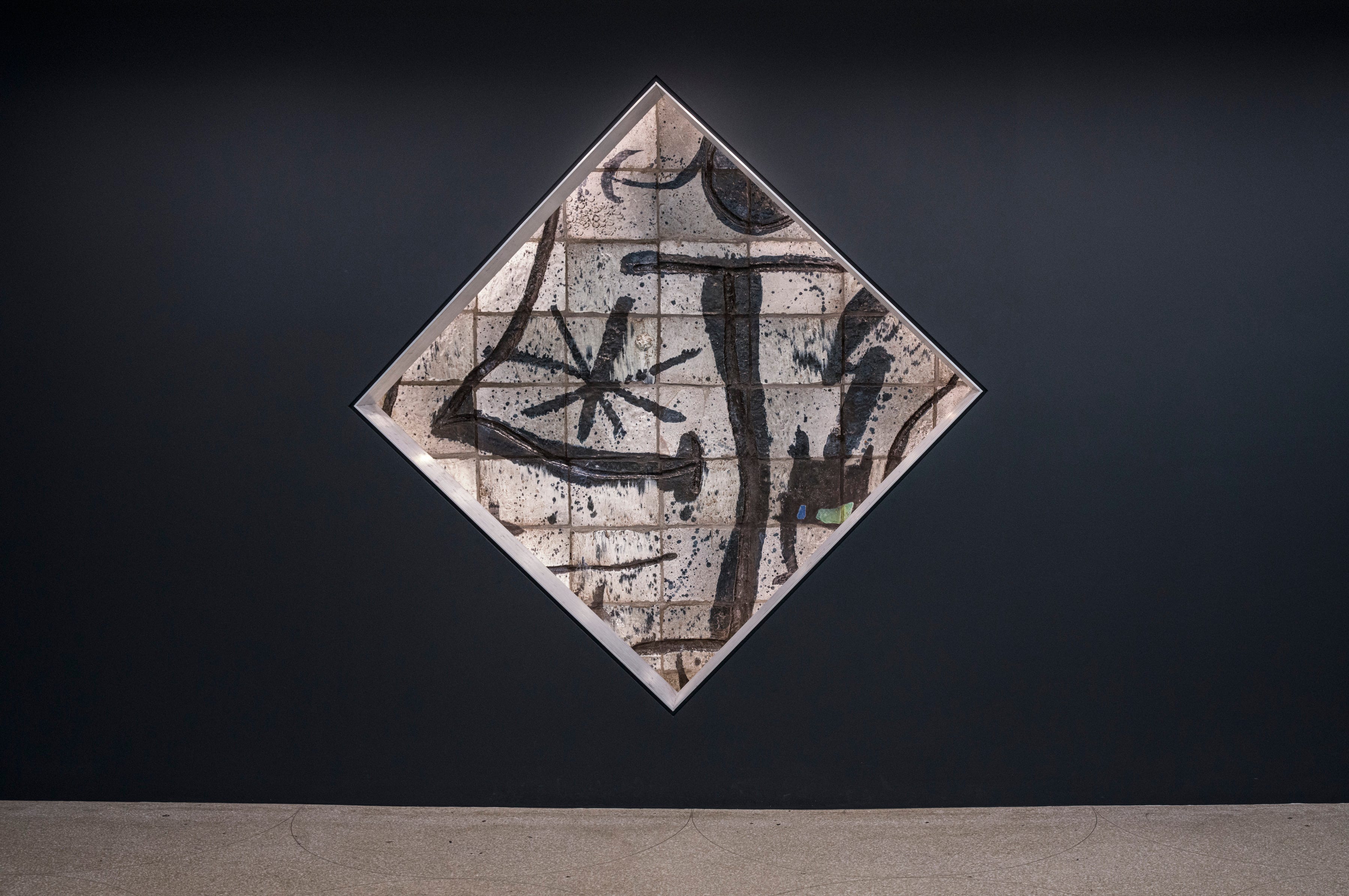
In the 1960s, Joan Miró and his collaborator Josep Llorens Artigas were commissioned to create a ceramic mural to be permanently installed in the walls of the guggenheim. Then, for various logistical reasons, a false wall went up in front of it. And it stayed, and stayed.. and stayed… until almost everyone forgot about the hidden Miró.
Carol brought it back, for the first time in decades. When you step on to the ramps, the first thing you see is a dark wall with a diamond-shaped cutout revealing the mural behind it. Through it: the mural is on public view for the first time in years. That opening is Carol’s. She wanted visitors to have access to this little-known piece of the building’s history, and so she built it into the show.
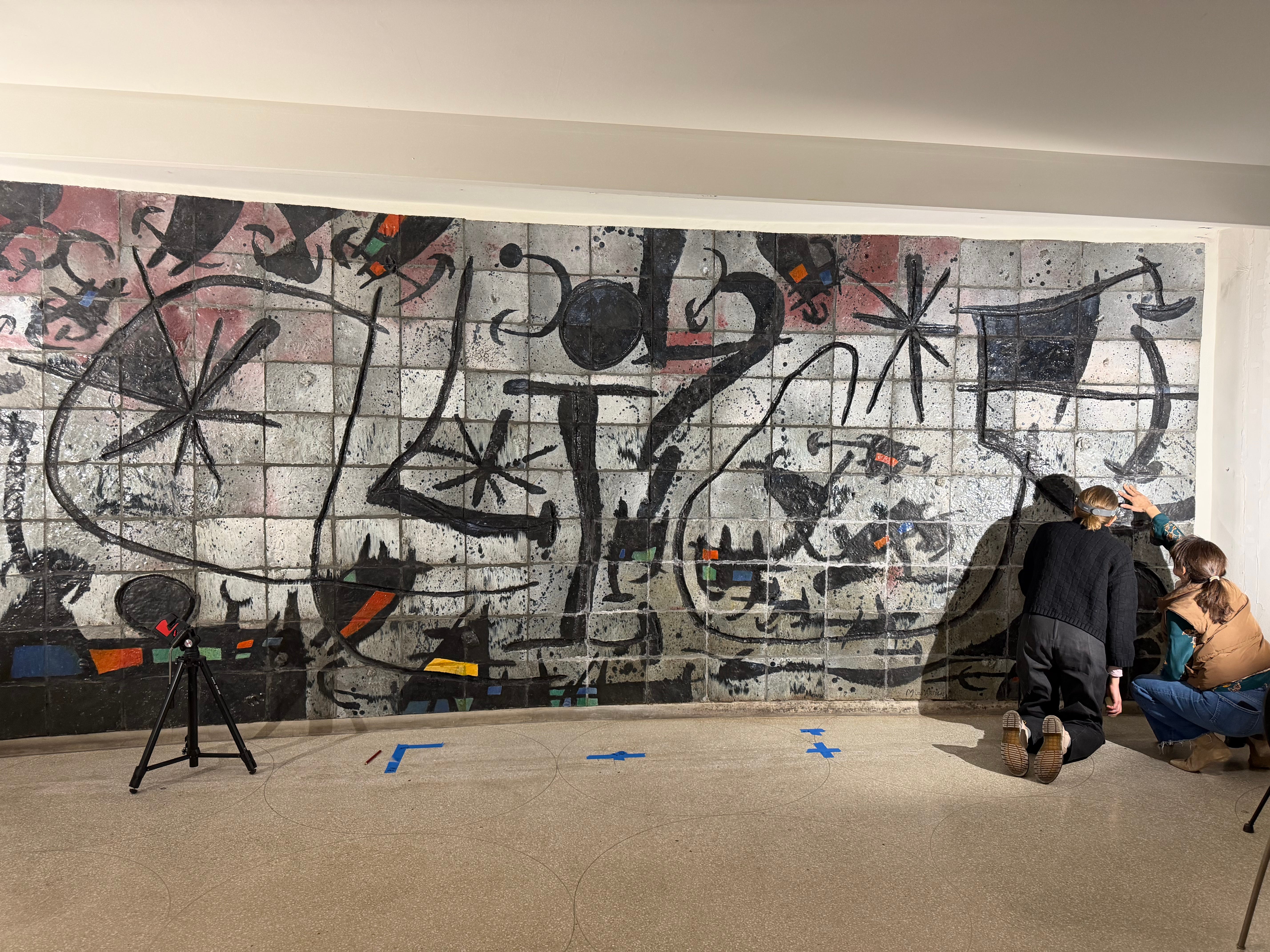
Behind the scenes, the decision to remove the wall came with a real uncertainty. After being sealed off for so many years, no one knew what we would find when the mural would be finally exposed. We all held our breath as the wall came down and our first glimpse emerged. Thankfully, it held up remarkably well. I’m almost certain you could hear the sighs and laughs of relief from several blocks away.
Even so, a team of conservators spent a full week meticulously cleaning and restoring it for its big debut.
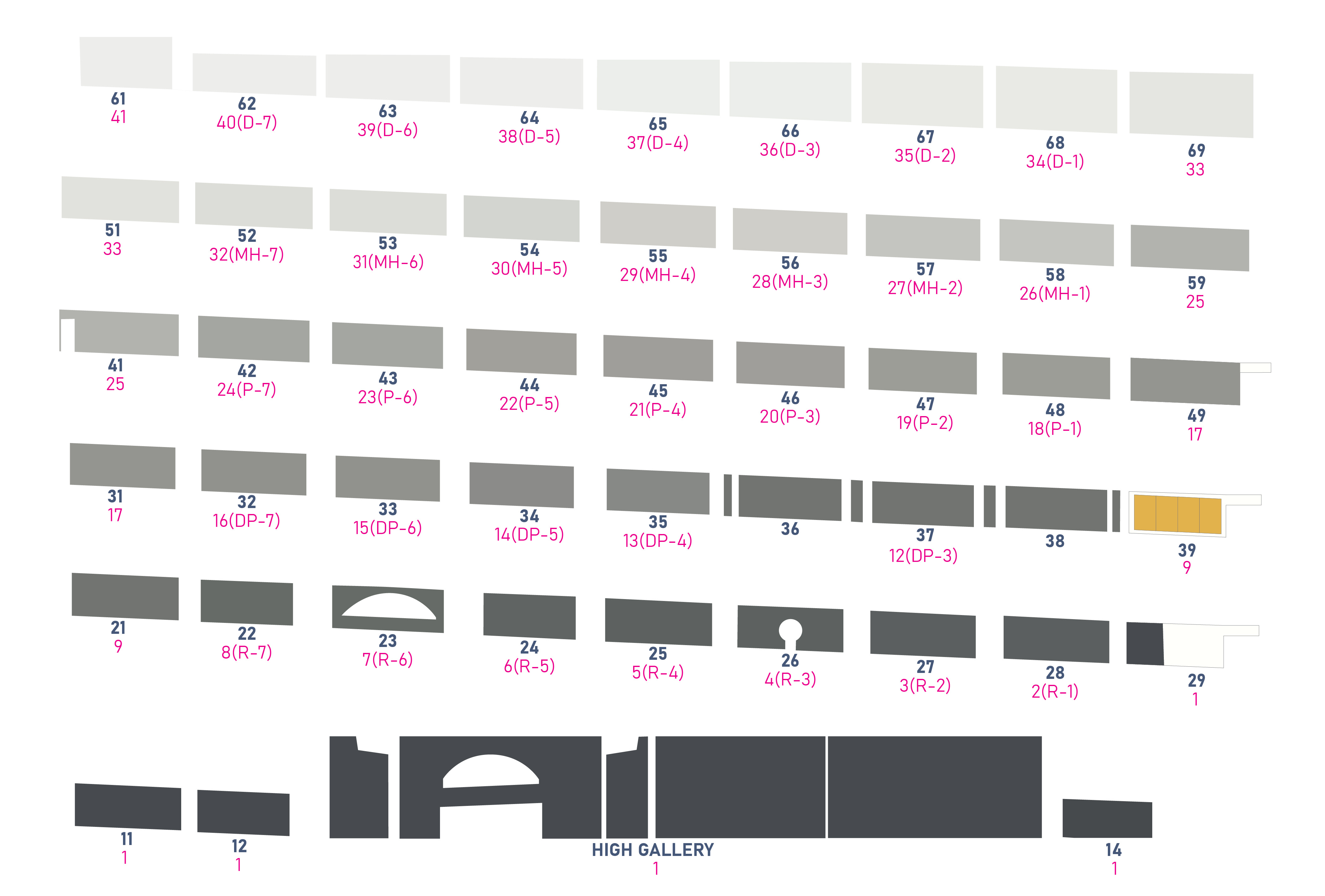
Most retrospectives start at the beginning and walk you through an artist’s career in chronological order. Carol did the opposite. The show opens with her most recent work and takes you back in time as you ascend. By the time you reach the top of the ramps, you’re standing at the beginning of her career.
The paint tells you exactly what’s happening. But only if you catch it, of course.
We worked closely with the paint company Farrow & Ball to develop over 40 unique shades of grey to coat the back walls of the Guggenheim, shifting gradually from dark to light as you climb. Deep, moody charcoals at the bottom subtly transition to bright, barely-there greys at the top. The dark charcoals at the bottom compliment the vibrant colors of her more-recent steel works, while the lighter shades are in perfect harmony with the minimalist shelf works and assemblages in her early career.
No single step feels dramatic - most people don’t even notice it happening!
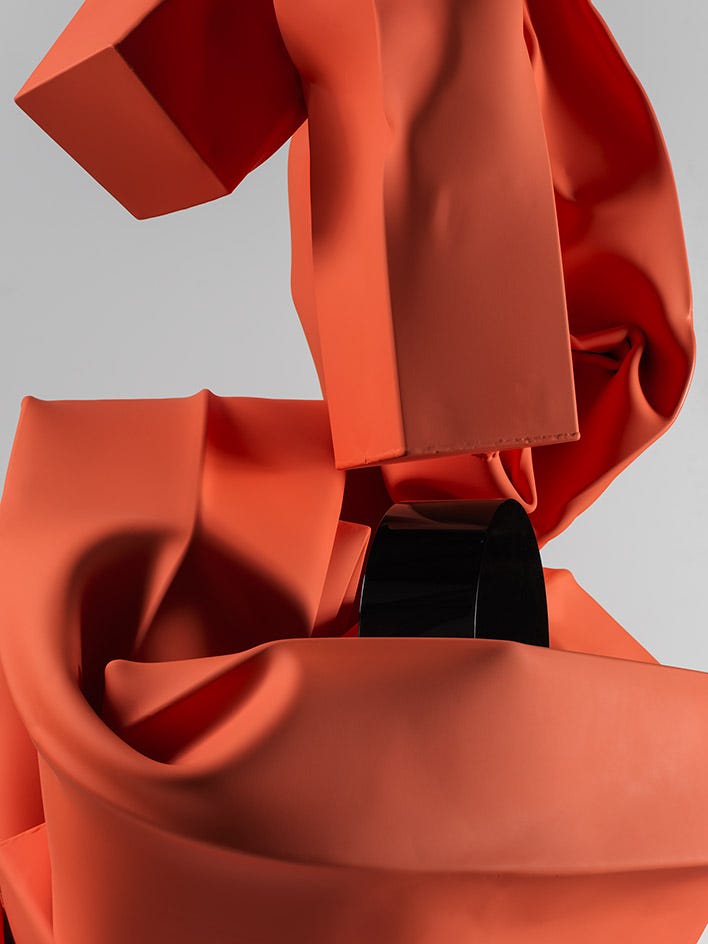
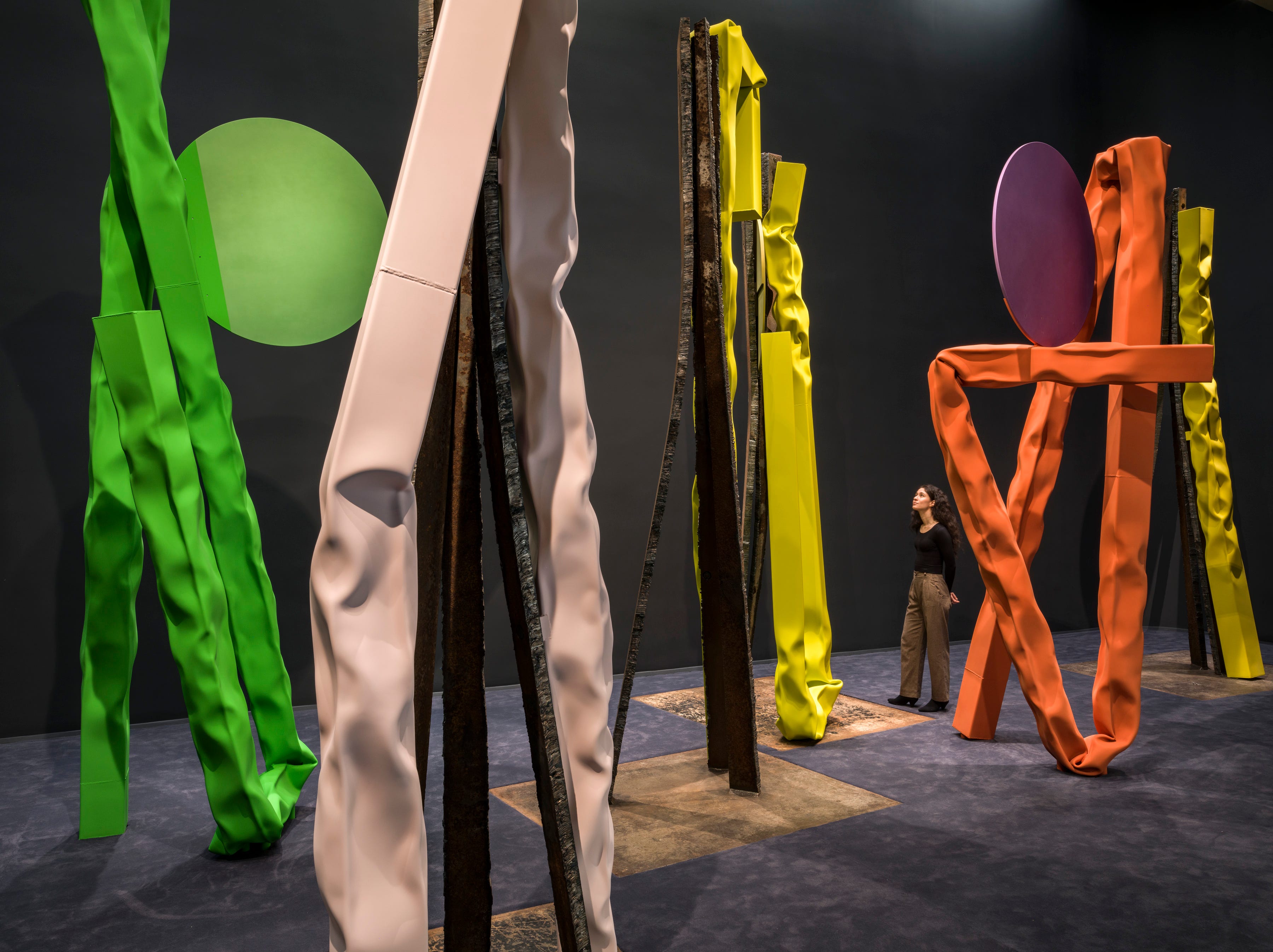
The High Gallery is a smaller gallery off of the ramps, and the only space in the Guggenheim rotunda that can accommodate taller works (hence the aptly name *High* gallery). Carol filled the space with a suite of brand-new sculptures called Sweet Charity I–VI (yes, named after the musical). These tall, stilt-like artworks put her signature style on full display: a mix of raw steel, her polished steel “polka-dots,” and my personal favorite, her bent and crinkled steel tubes molded and painted in a way that feels like fabric.
I am digressing, but here’s a quick word on how Carol fabricates these sculptures simply because I find it capitivating. The beautiful crinkly and colorful elements originate from industrial steel tubes. She uses large-scale hydraulic presses to generate her signature folds, and then uses a specific matte paint to give them that super satisfying lux-and-plush feeling. Despite using such intense and heavy processes, the end result makes you believe it was fluid and graceful.
“The artist rejects the masculine-coded heroics associated with steel sculpture in favor of a fracture that appears contingent and improvisatory, as she cajoles her intractable material to behave in different ways. ‘Machismo needs you to know how difficult it was,’ she explains. ‘I want you to think it was effortless.’” (Rapture Circuit: Carol Bove’s Settings by Katherine Brinson, the curator of the show)
How cool is she?! I should also mention that she does all of this in her studio in Brooklyn. What a bad*ss!
Anywaysssssss, back to the High Gallery. The space itself is painted a deep charcoal grey with dark carpet which transports you into a different environment when you enter in from the ramps. Not only is it dark, but also it is hushed - the carpet serves another role to dampen any sounds echoing from the rotunda. Whenever I enter into the High Gallery, I feel like stepping into a forest where each sculpture reads like a towering tree trunk. Mmmm! I love it.
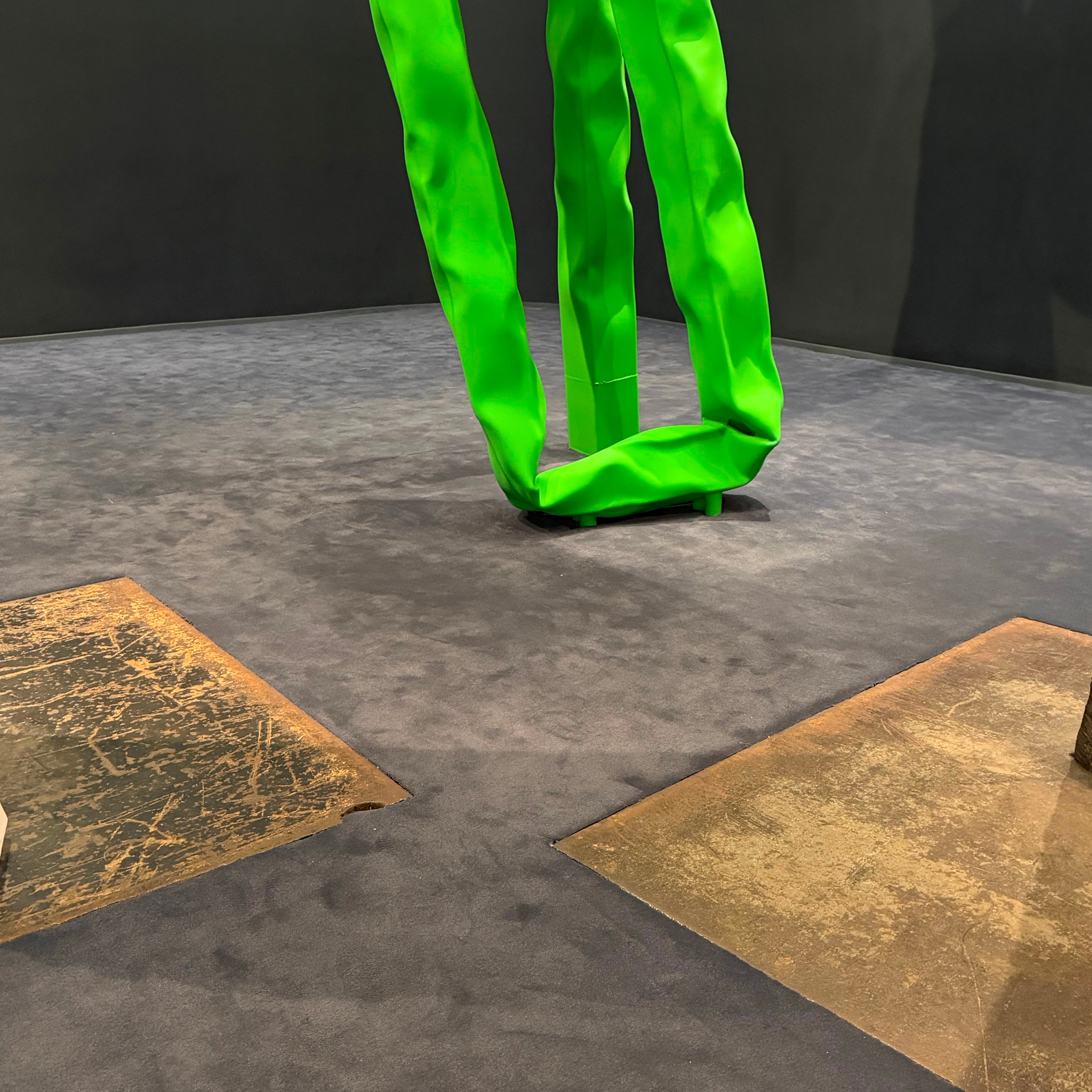
But here’s a small detail that you probably didn’t notice: the steel bases of those sculptures sit perfectly flush with the carpet. Seamlessly.
That’s not magic. That’s a brand new wood subfloor with carpet on top, built specifically for this show. During install, a subfloor was constructed with precise cutouts so each steel base drops in exactly level with the surface around it. It’s one of those fun exhibition design details that is best when no one notices it, which means we did our job.
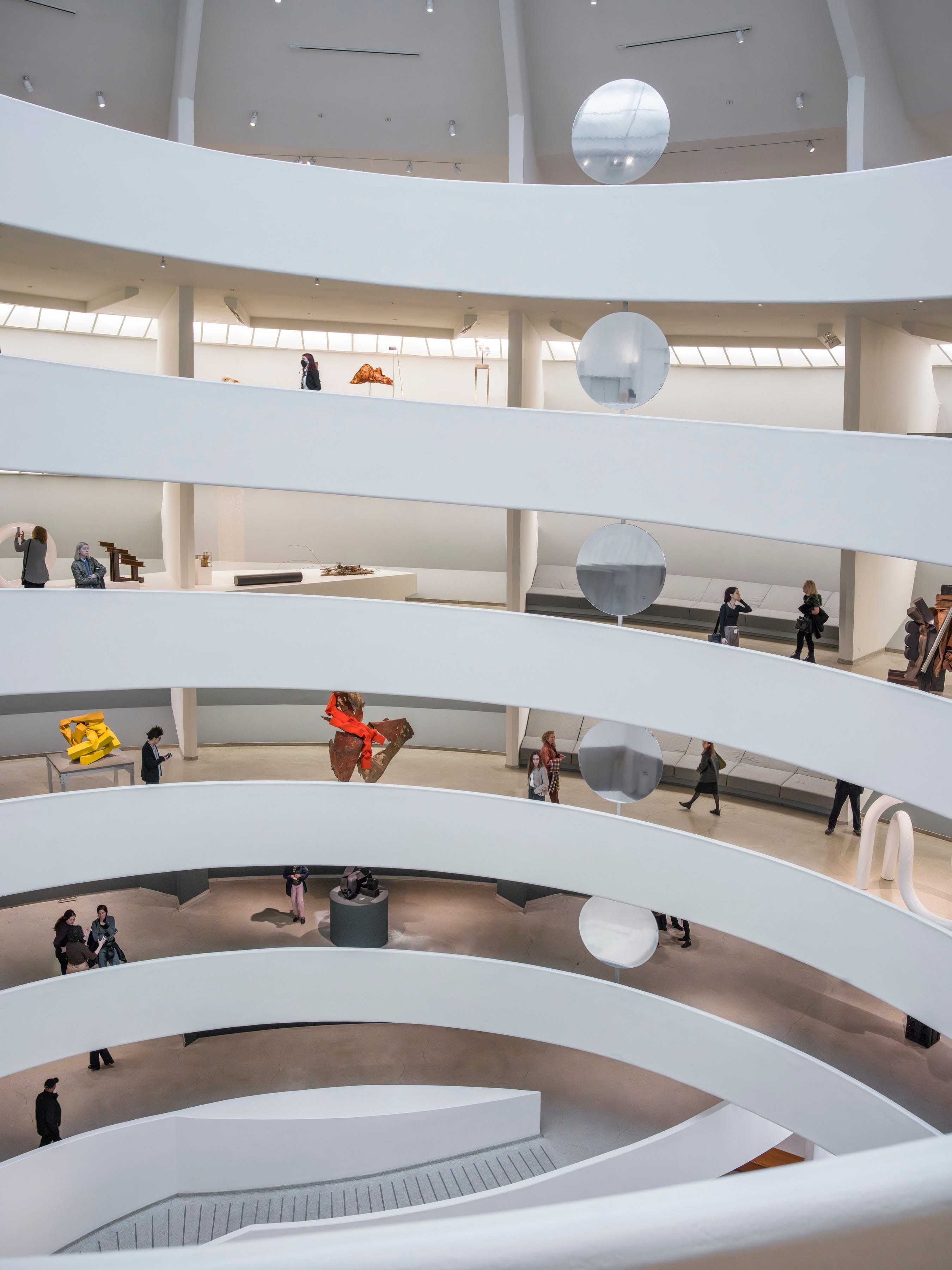
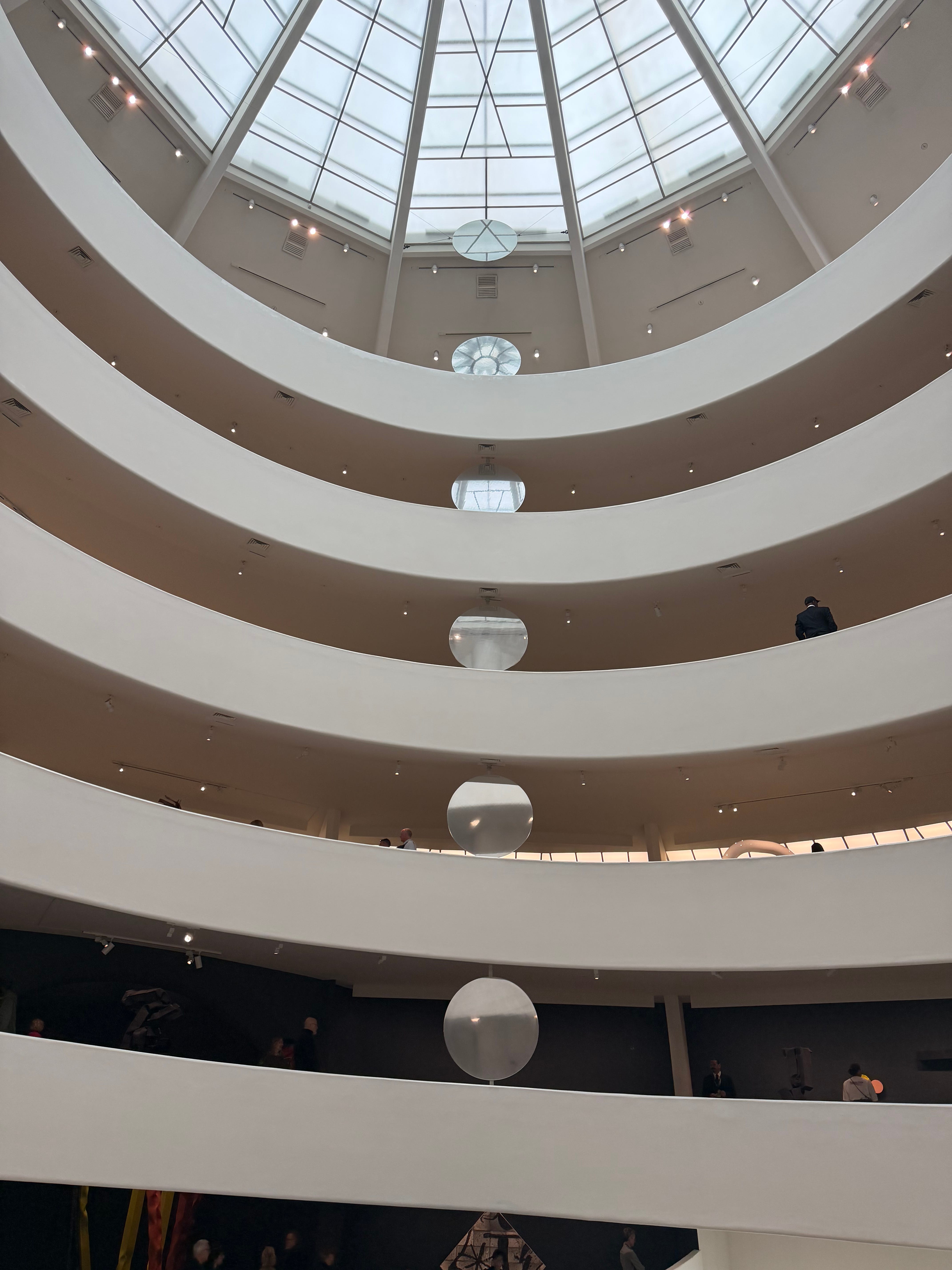
You can’t miss it. From wherever you are in the rotunda, you can see the shimmering spine of six large discs running down the ramps.
These discs are repurposed from Carol’s Met Facade commission, The séances aren’t helping (2021). In her artist’s statement for the Met, Carol describes the discs:
“They register periodic alignments in the cyclical interaction of the sun and earth, a reminder that scale—in space and in time—is always relative.” (Met Museum)
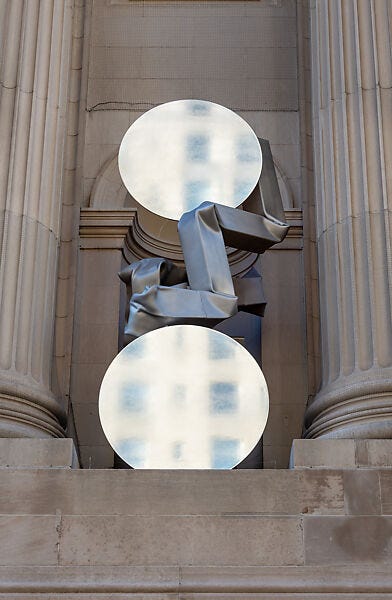
Whether on the streets of 5th avenue, or inside the Guggenheim spiral, the discs mess with your sense of space. As you look at them, you see reflections of spaces you can’t quite place. They feel like portalas. One of my favorite things to do whenever I’m on site is to look through the mirrors and try and pin-point where the reflection is coming from. It’s harder than you think!
My favorite reflections come from the first overlook on the ramps. From this specific spot, the discs reflect the frames of the skylight above so that you see a perfect triangle, a circle, and another triangle. Also, if you look up at the ceiling at the same place, you can see the water from the fountain below reflected back through a sculpture with another disc (glass this time!) placed in the fountain on the rotunda floor (unfortunately it’s nearly impossible to capture this in photograph - I guess you’ll have to come and see it yourself!).
You can’t make this sh*t up.
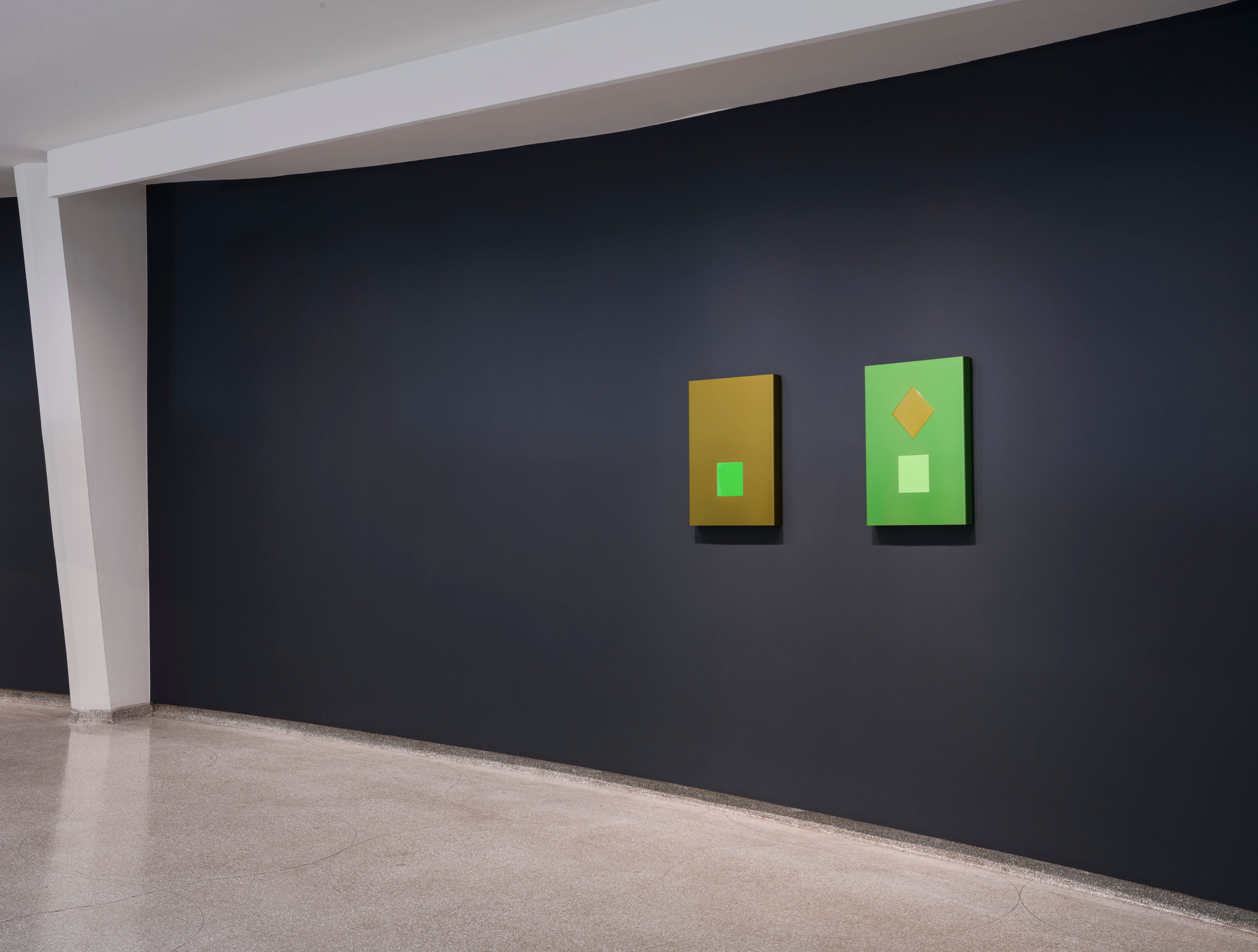
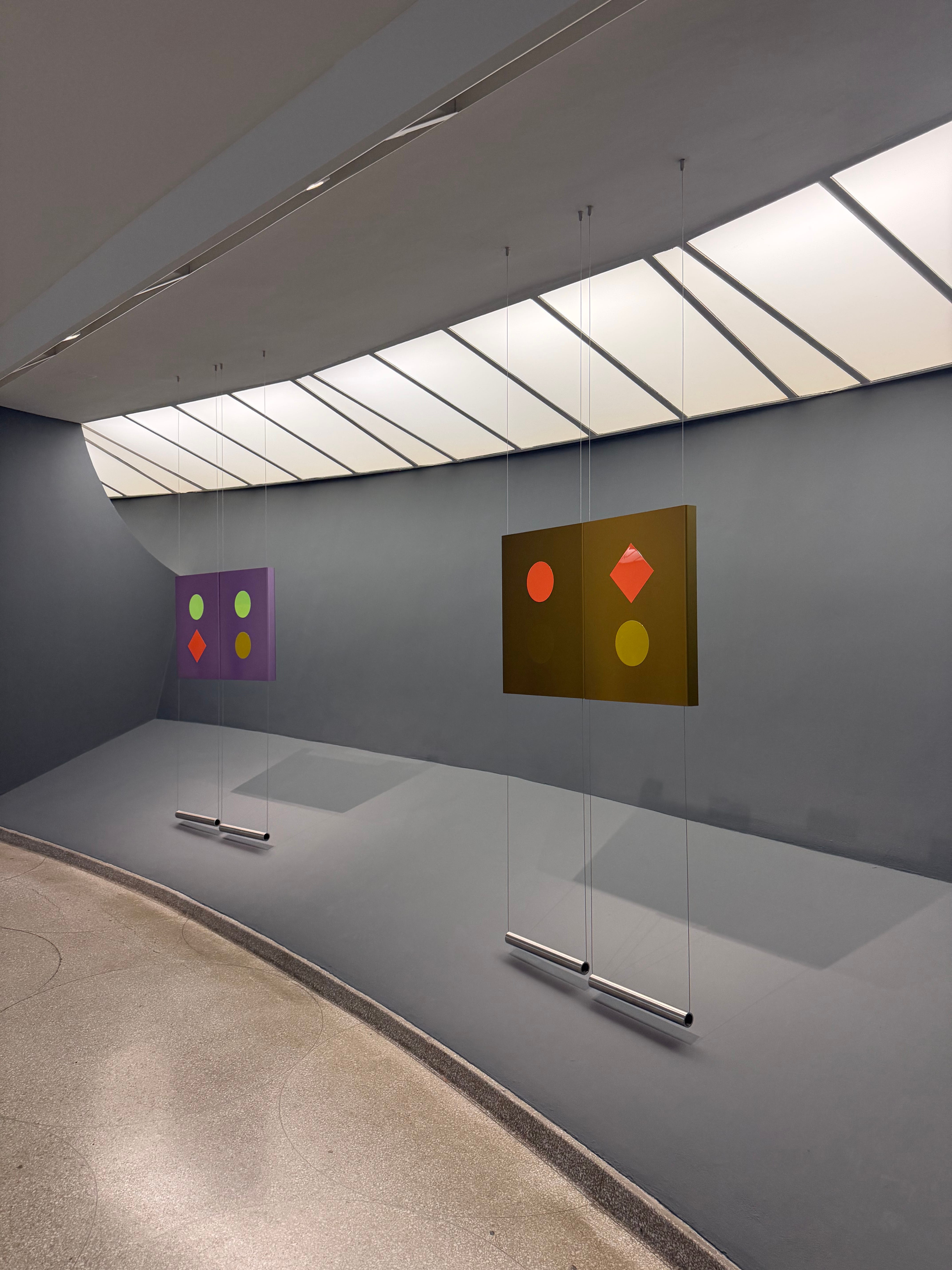
As you exit the High Gallery, you’re greeted by the first of Carol’s aluminum panels. At first glance these panels may not seem like much. But to me, it’s in the color pairings where these artworks shine. In a recent interview, Carol has said that if she weren’t an artist, she would have been a color scientist. I think these panels are proof she might already be one. The color pairings feel effortless but I know they were anything but.
The aluminum panels become a motif and seemingly dance across the building. But, what looks like a casual, almost random arrangement is actually governed by precise mathematical placement. As part of the installation process, Carol gave us equations for us to calculate each panel’s left-to-right and front-to-back position in space.
The panels are also hung in such a way that are directly vertical from one another. If you have ever sat down and studied a cross-section of the Guggenheim’s ramps (which is probably only like 5% of you lol), you may be able to recognize how deliberate of a choice this was. The ramps get progressively deeper as you ascend, meaning that the walls get further and further back.
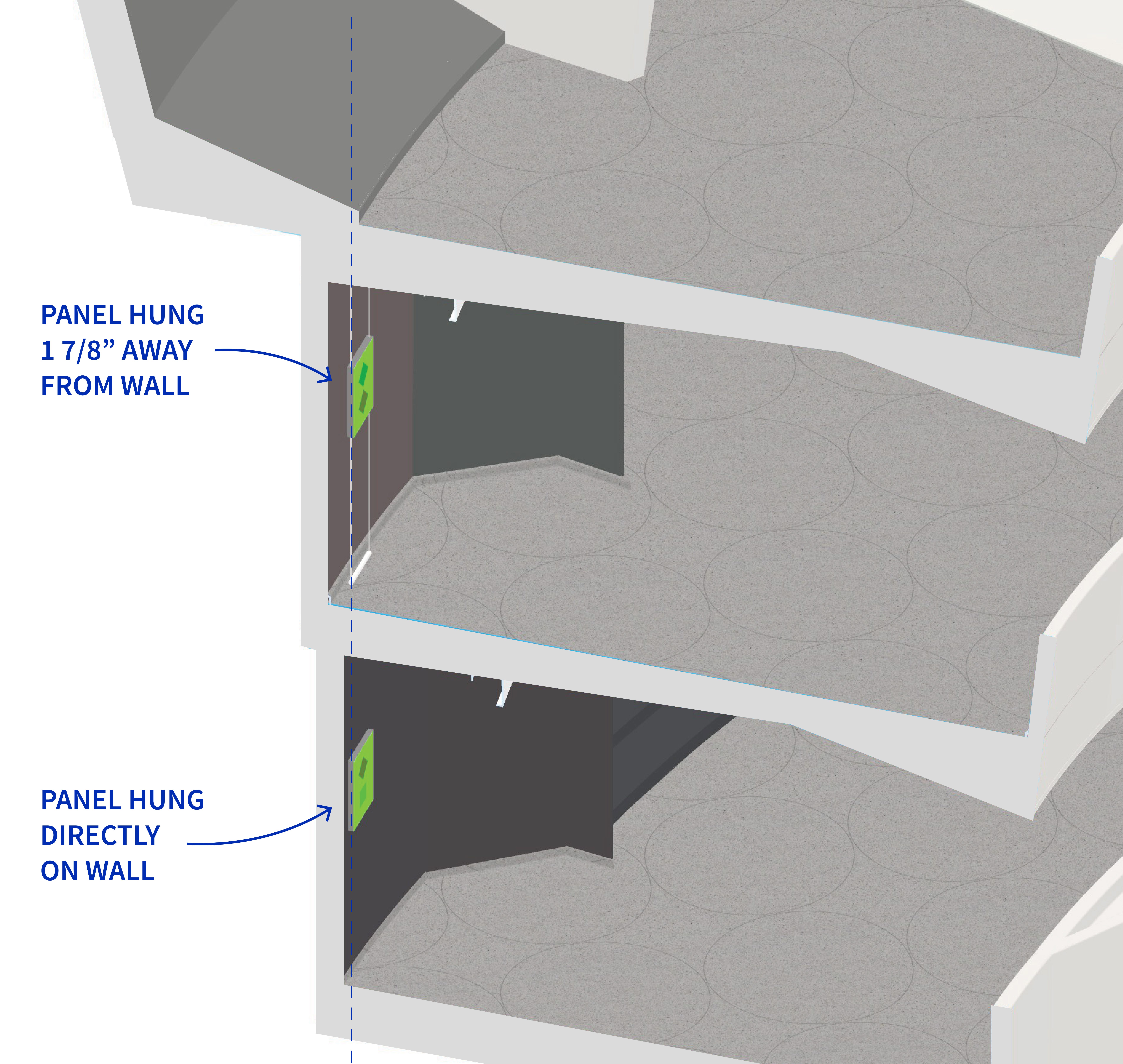
Carol uses the panels to subtly, almost invisibly, call attention to that architectural quirk. The panels on the upper ramps don’t hang flat against the back wall but instead hover in front of it. Easy to miss. Completely intentional.
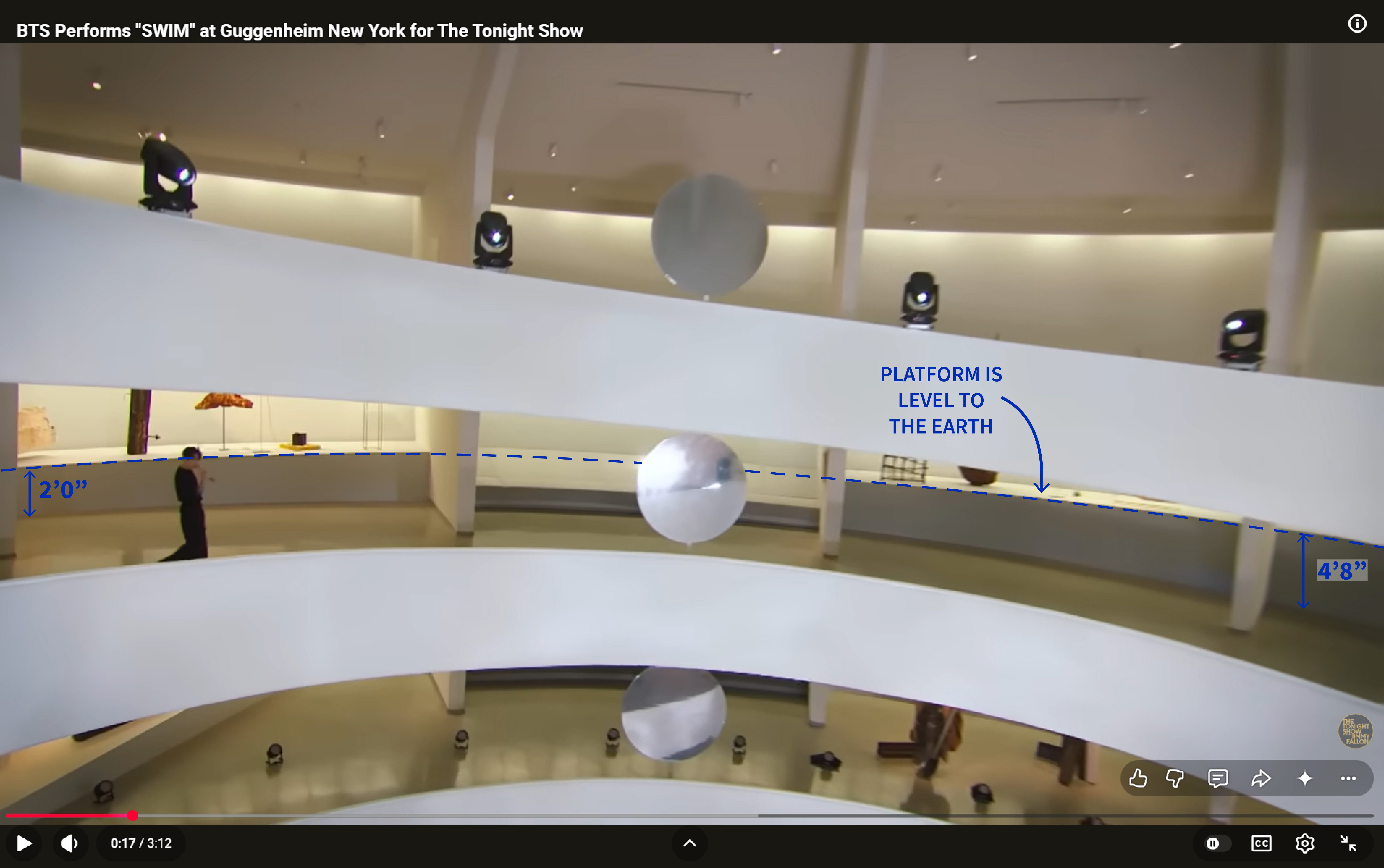
Here’s something almost everyone at the Guggenheim knows: you rarely hang things level.
The ramps slope at 3 degrees, which sounds minor until you’re standing on them. If you hang a work perfectly level with the earth (like you would in your home, or literally any other museum in the world), it looks like it’s tipping over. So, to counter that we hang everything at an angle either 3 degrees (to match the ramps) or something very close to it to make it read straight to the eye. It’s practically muscle-memory.
Carol did the opposite.
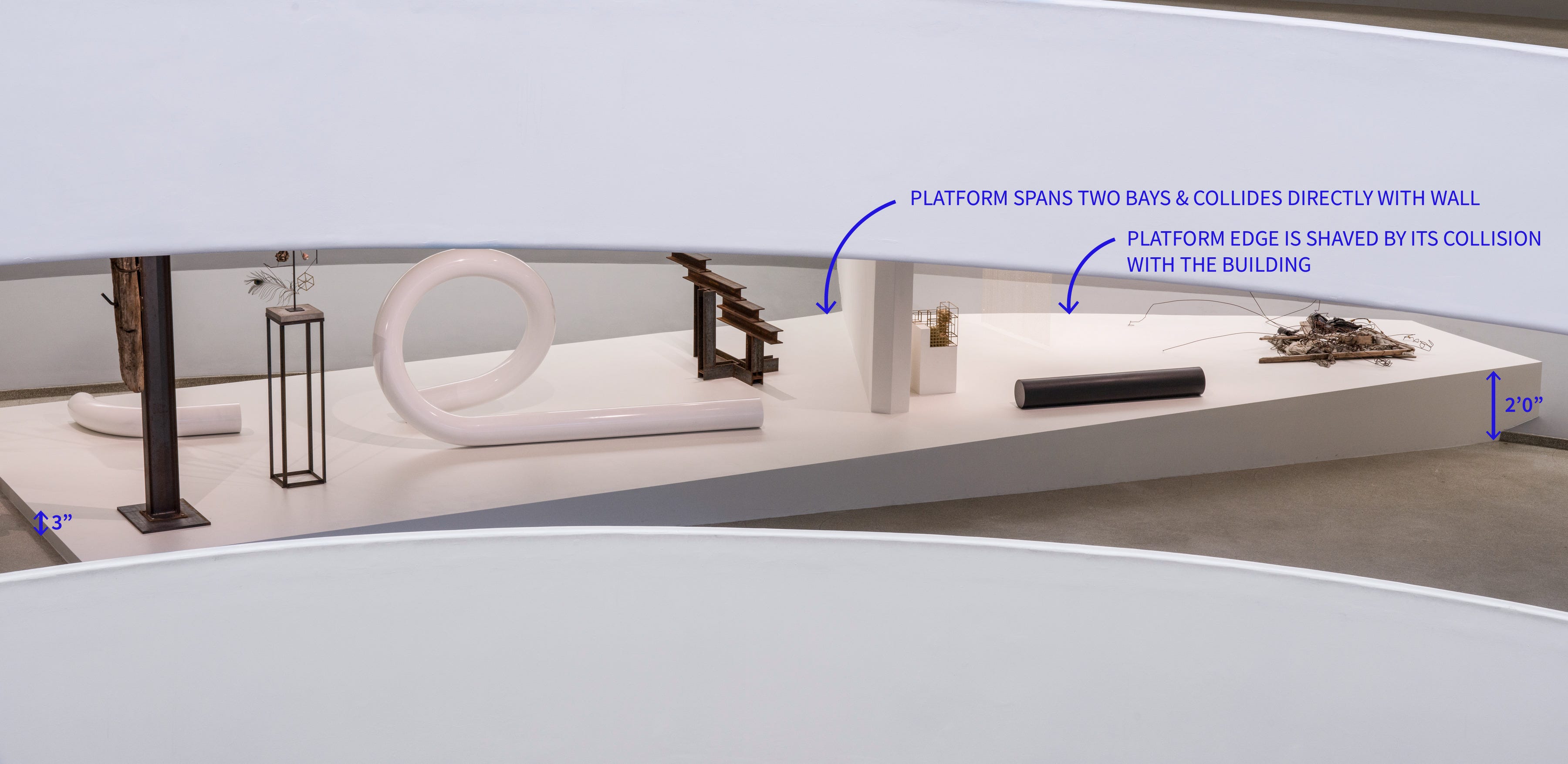
Instead of compensating for the slope, she exaggerates it. The platforms in her show are built dead level to the earth, which means the depth changes with the ramp underneath them and the Guggenheim tilt becomes impossible to ignore. Once you see it, you can’t unsee it.
The best place to experience this is Foamy Saliva of a Horse (2011) (yes, you read that name correctly) which is a single work that spans across three bays. Carol insisted on keeping a perfectly level surface throughout - that is unheard of! The result is that when you meet the platform, it towers over people at a whopping 5 feet! But, by the time you reach the other end bays later, the height is only 2 feet. The work stays flat. The building does not.
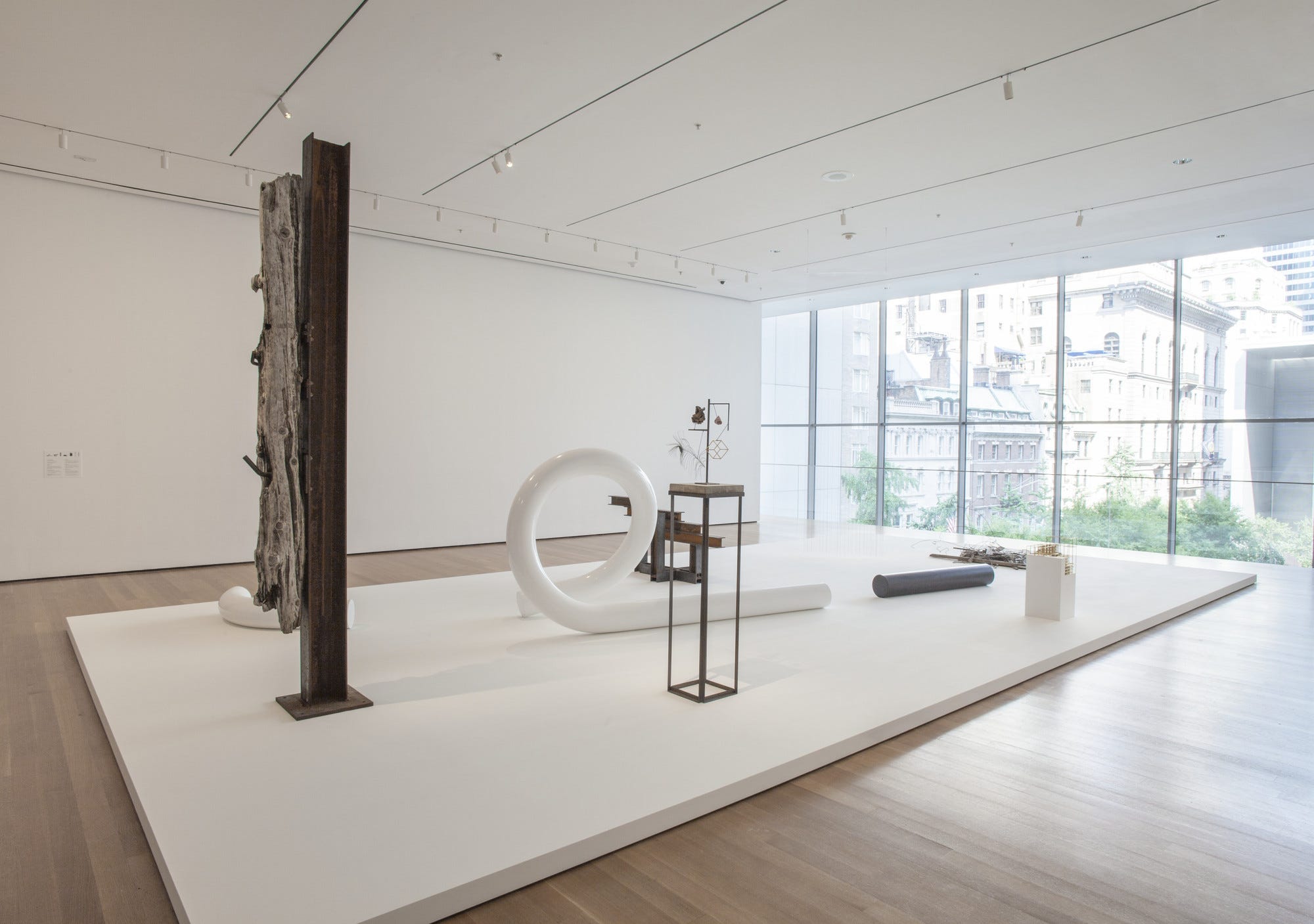
Equinox (2012) is another example, and it comes with its own backstory. When this piece was shown at MoMA, it sat on a low white platform: clean, simple, straightforward. You can’t do that at the Guggenheim. To start, the dimensions of the platform don’t fit. To follow, a level platform on a sloped floor would look like it’s sliding off the building. Instead of designing an entirely new platform, Carol created one that is level and collides into the architecture in an assertive way. Most artists fight the Guggenheim. Carol made it part of the work.
As part of the show is a 3D-printed reproduction of an ancient soldier. Kind of random, right?
This piece was part of her 2025 project Carte blanche à Carol Bove at the Musée d’art et d’histoire in Geneva, where she selected artifacts from the museum’s historical collection and then made 3D printed replicas so visitors could freely touch and feel them to gain a full understand of each object. Isn’t she an absolute genius?
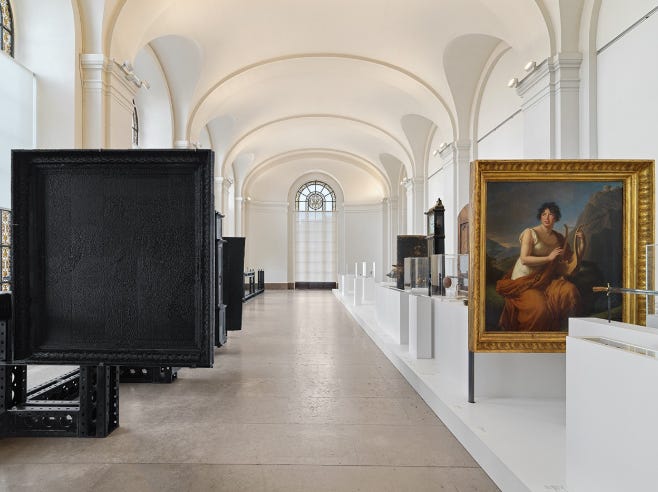
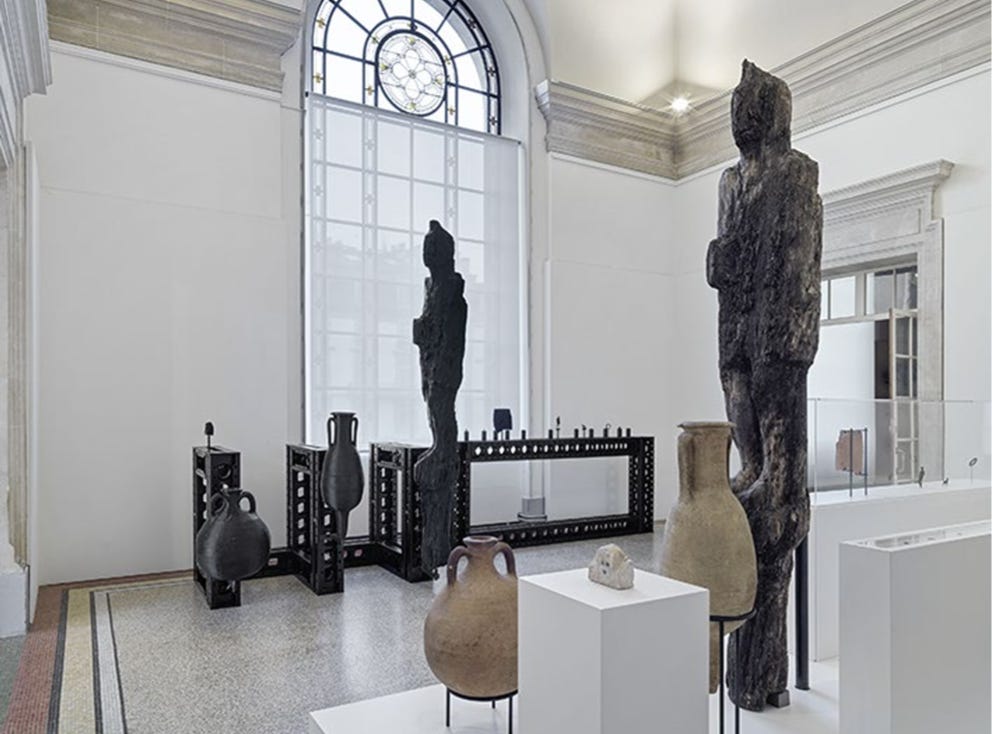
Again, I digress but, for those who cannot make it to the show, I need to tell you about her “tactile library” in the Simon Reading Room. Carol’s work is exceptionally tactile in nature, and the tactile library is Carol’s opportunity to bring materials from throughout her show that you can (safely) be touched and played with to your heart’s desire! Her painted, molded steel looks so soft and satisfying you just want to rub your cheek against it. There are also peacock feathers, seashells, chains that feature in her earlier work - all items that scratch an itch in your brain when you play with them. And she drops new items off every week!
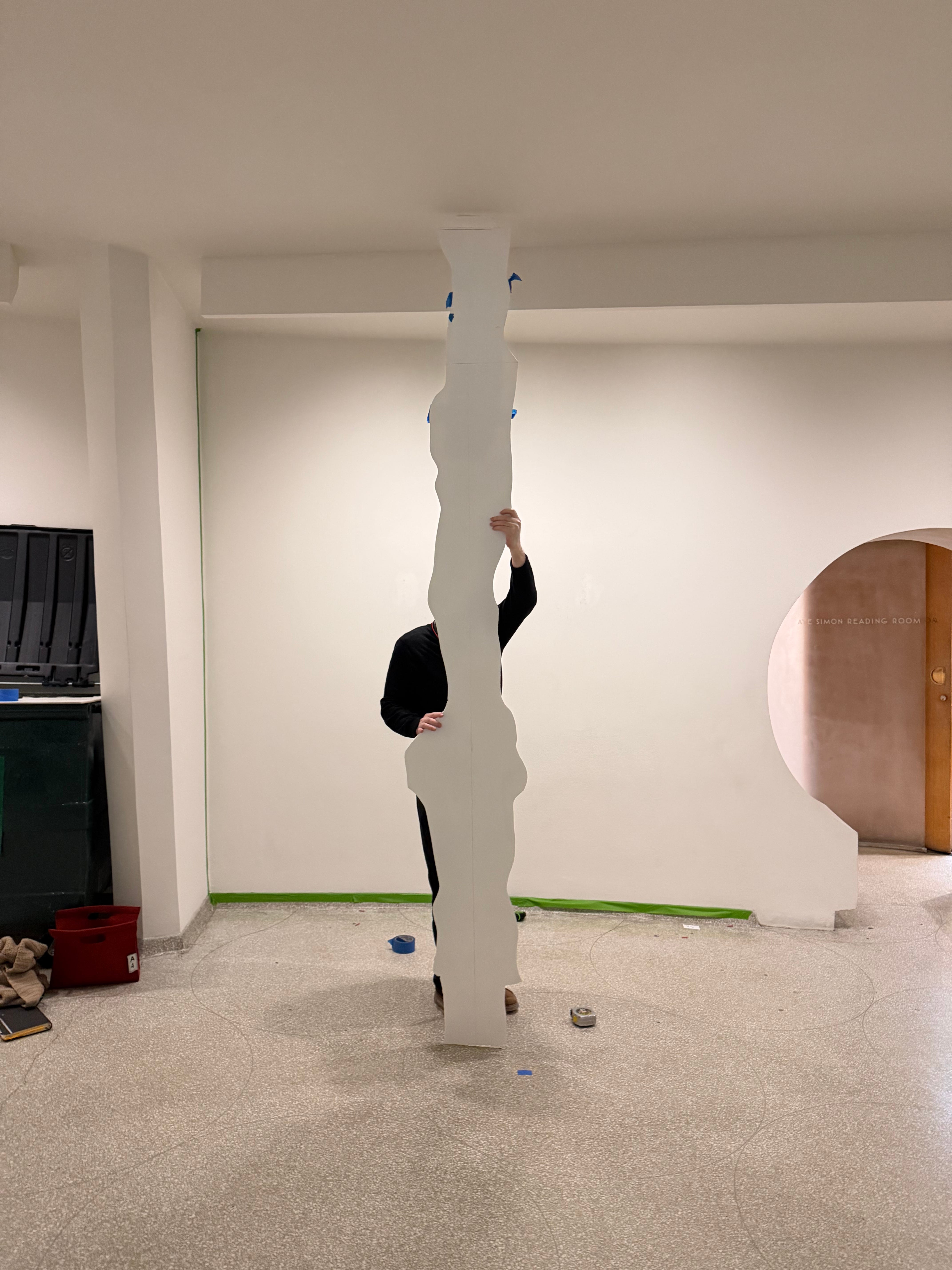
Back to the soldier: loook closely at its head. The top of it is cleanly cut off, perfectly parallel to the ceiling above it. It looks like it was almost made for the museum?
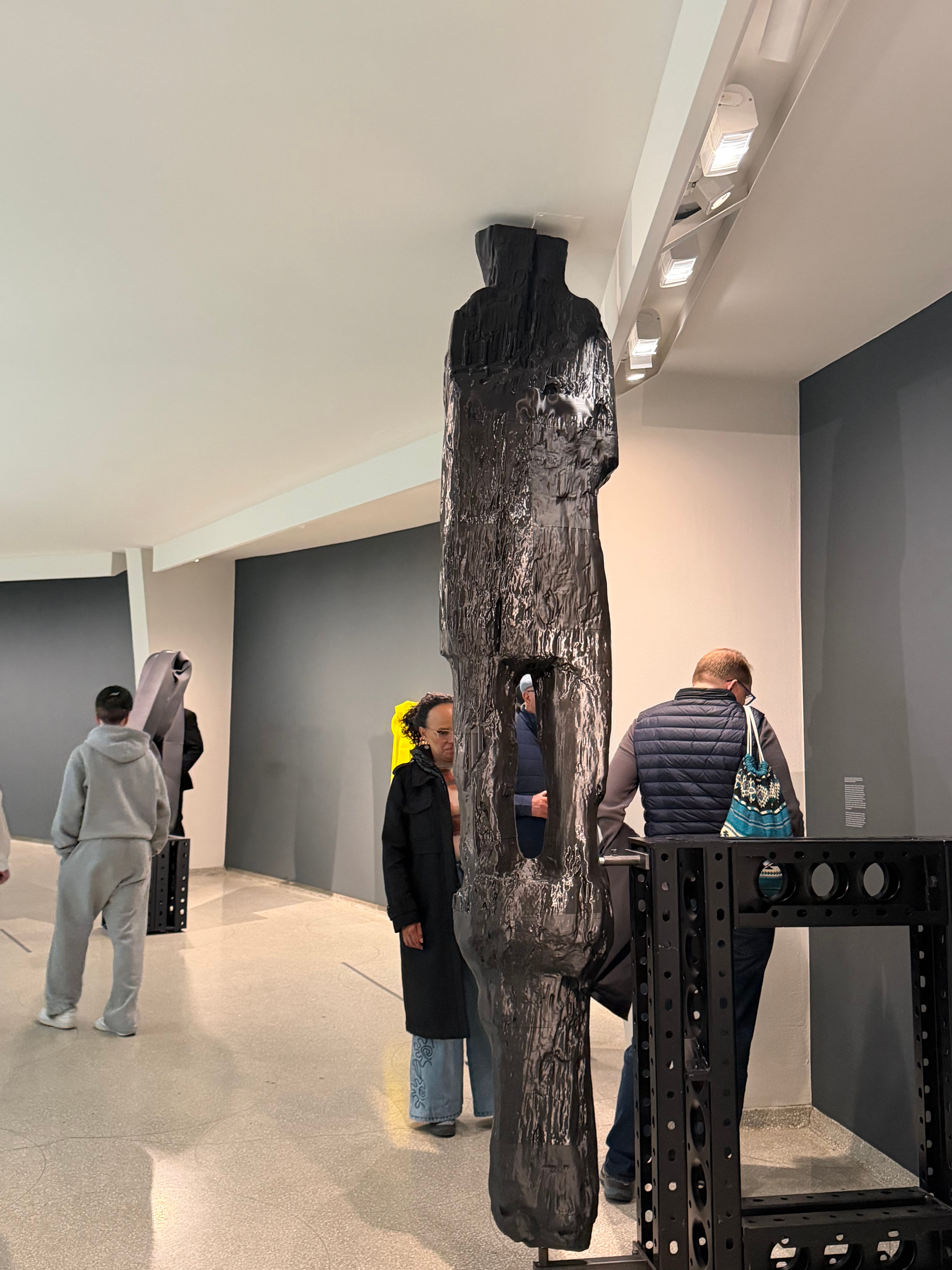
You’re not imagining it. The original sculpture was too tall for the space. During the design process, I made a quick render to illustrate exactly how much the sculpture was going to collide with the ceiling. I sent it over mostly as a practical heads-up, with a series of other solutions of how we could accommodate it.
Carol loved the original render, so she took a hot knife to the top of the soldier’s head. Poor guy.
As you turn onto the first overlook of the ramps, not only do you see the spine of discs across the rotunda but there is also a random couch that feels like it fell out of a 1960s living room?
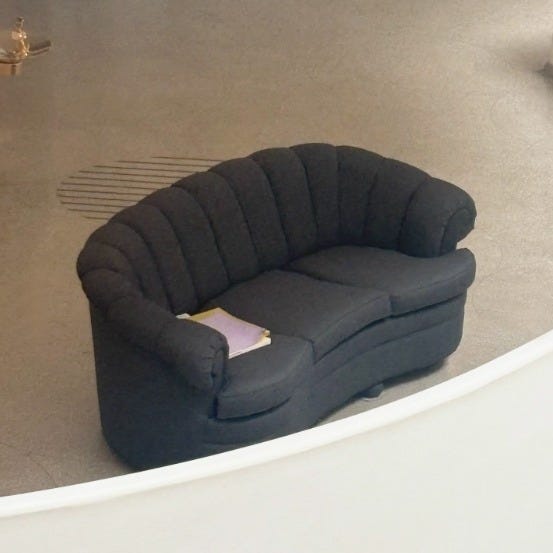
Sit in it. Seriously. My god, it is comfy. But also file it away because it’s going to mean something very different by the time you reach the top.
The last piece in the entire show is Richard Berger’s My Couch. An inverted couch suspended in fishing wire, its elements hypnotically swaying in the air.
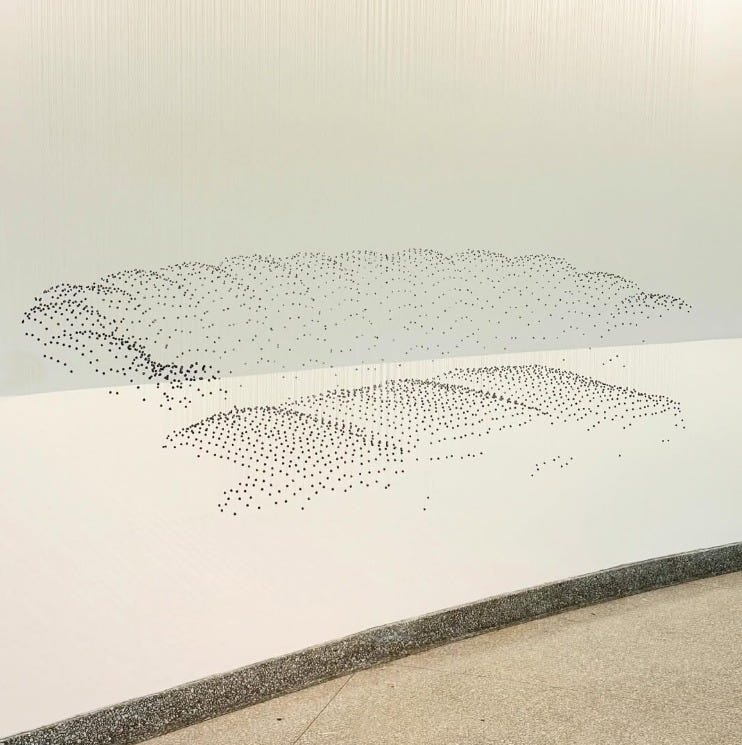
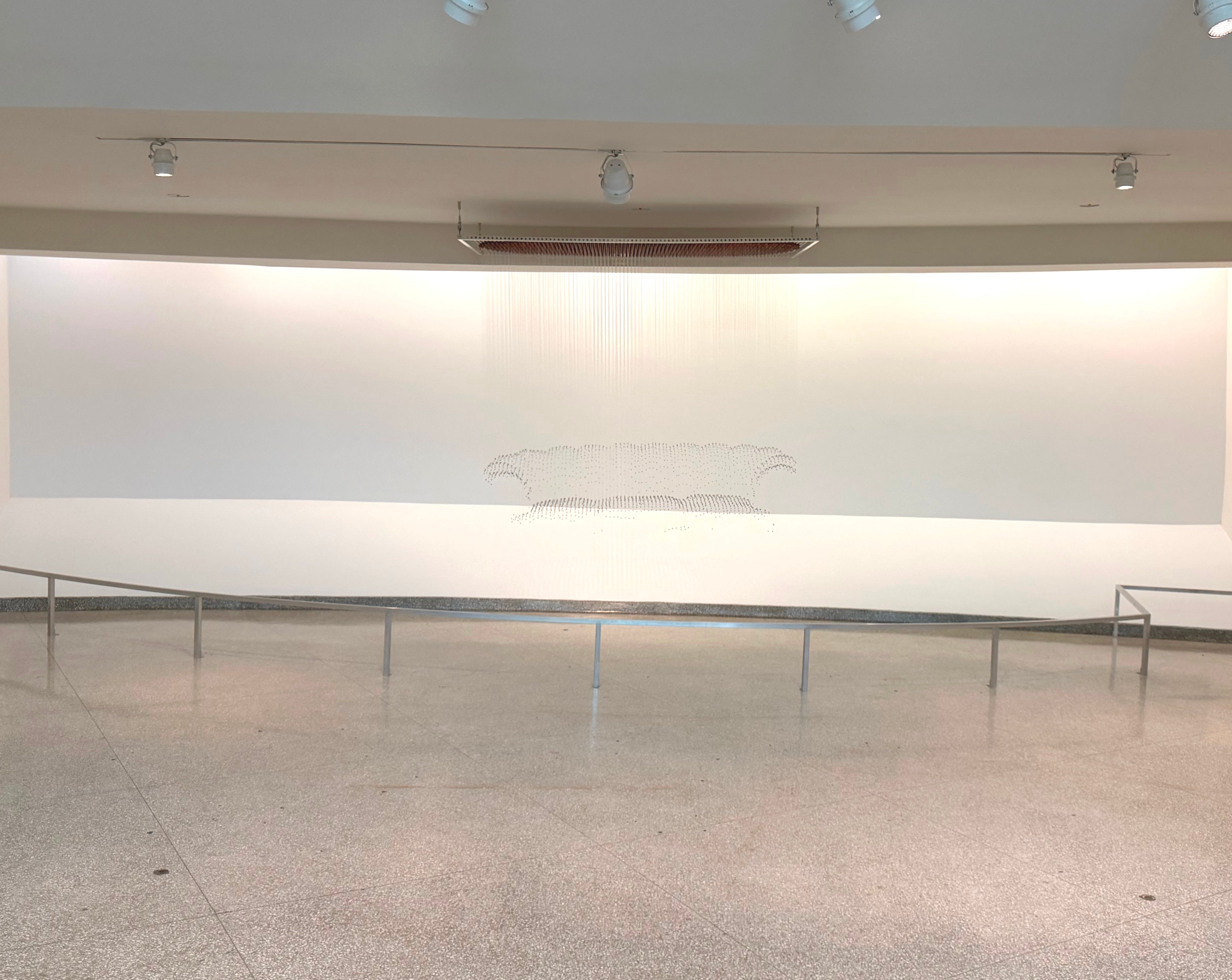
Carol first saw this piece when she was 8 years old in Berkeley, California. It sparked something in her, and it was one of the first works of art that she felt a connection to. Decades later, when she became a successful artist, she hunted down and bought it (now, that’s wealth).
Remember the reverse chronology that I mentioned earlier? The show ends where Carol began. The last thing you see is the first thing that made her an artist. *chills*
Another inside scoop: there is a curved stanchion is placed in front of it. This is not only to prevent people from touching the work, but also because the wind created by people walking by causes the wires to tangle! And, apparently it’s an absolute b*tch to undo.
Technically speaking, tickets are only checked when you step onto the ramps. So, technically speaking, the rotunda floor is open to the public at no charge.
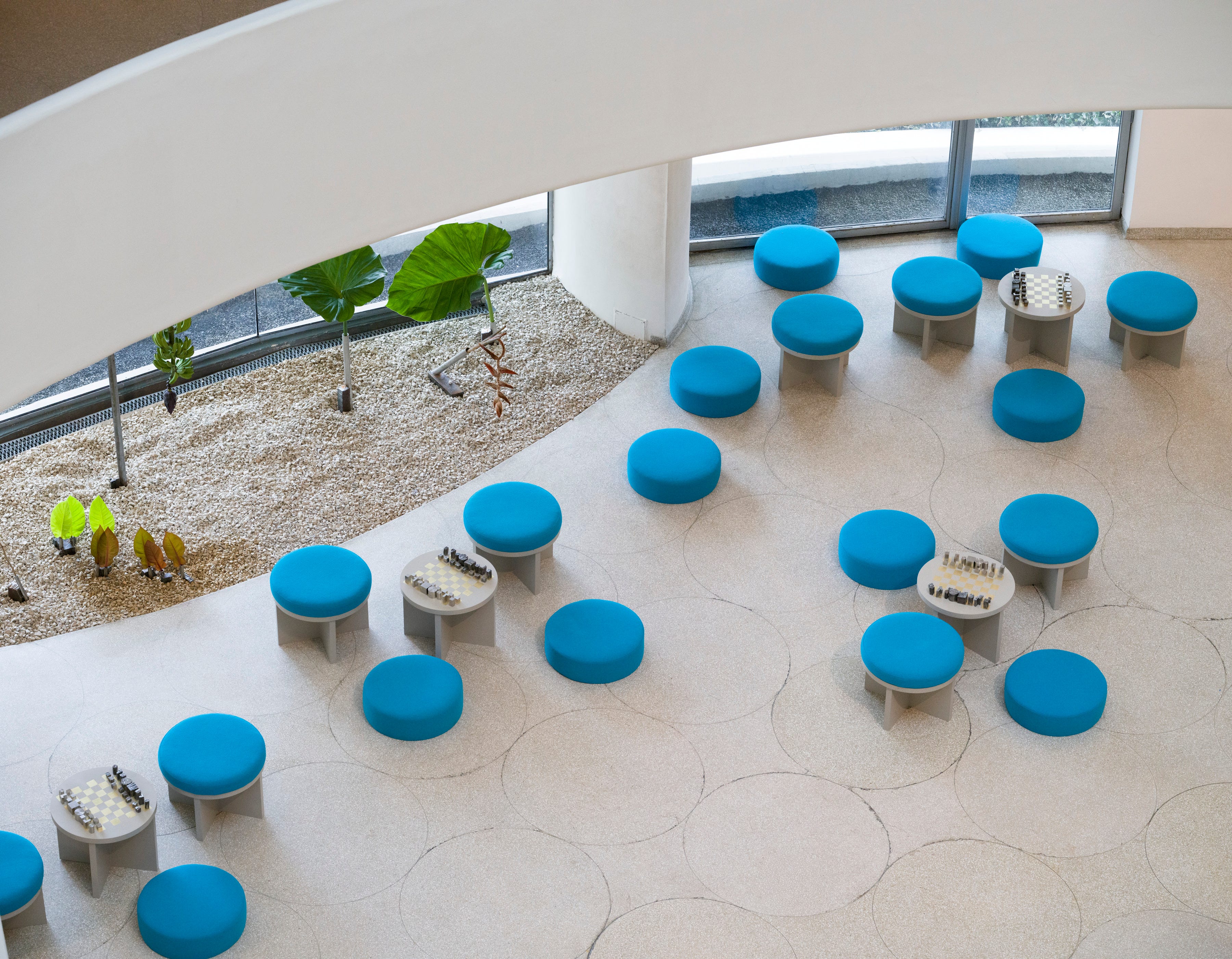
Carol was quick to point this out, and then take full advantage of it. She designed and fabricated chess tables and sets. Inspired by the pickup chess games you find across New York City, she wants to encourage people to come and play a game (or two!) before either seeing the show or just going on with their day.
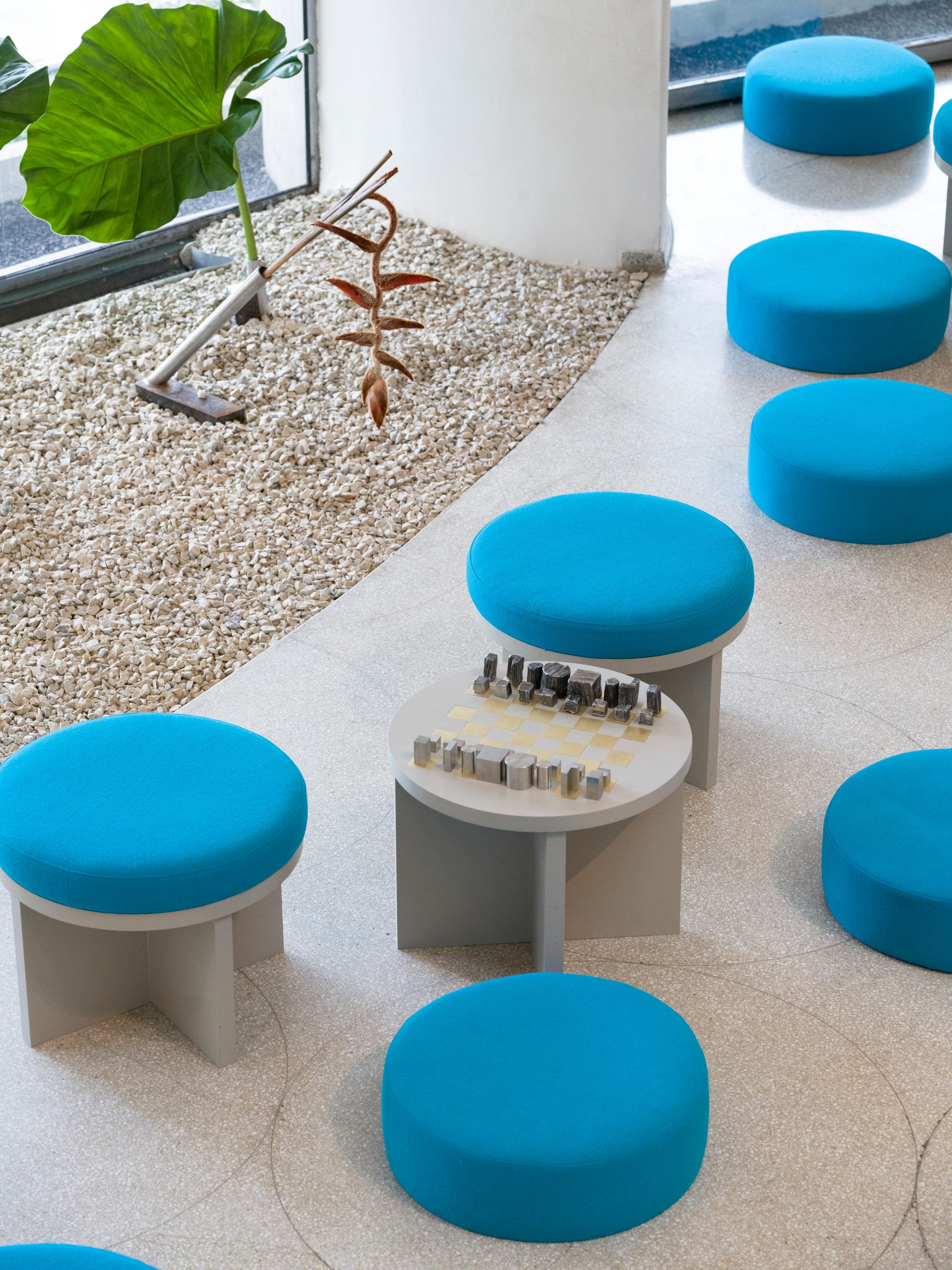
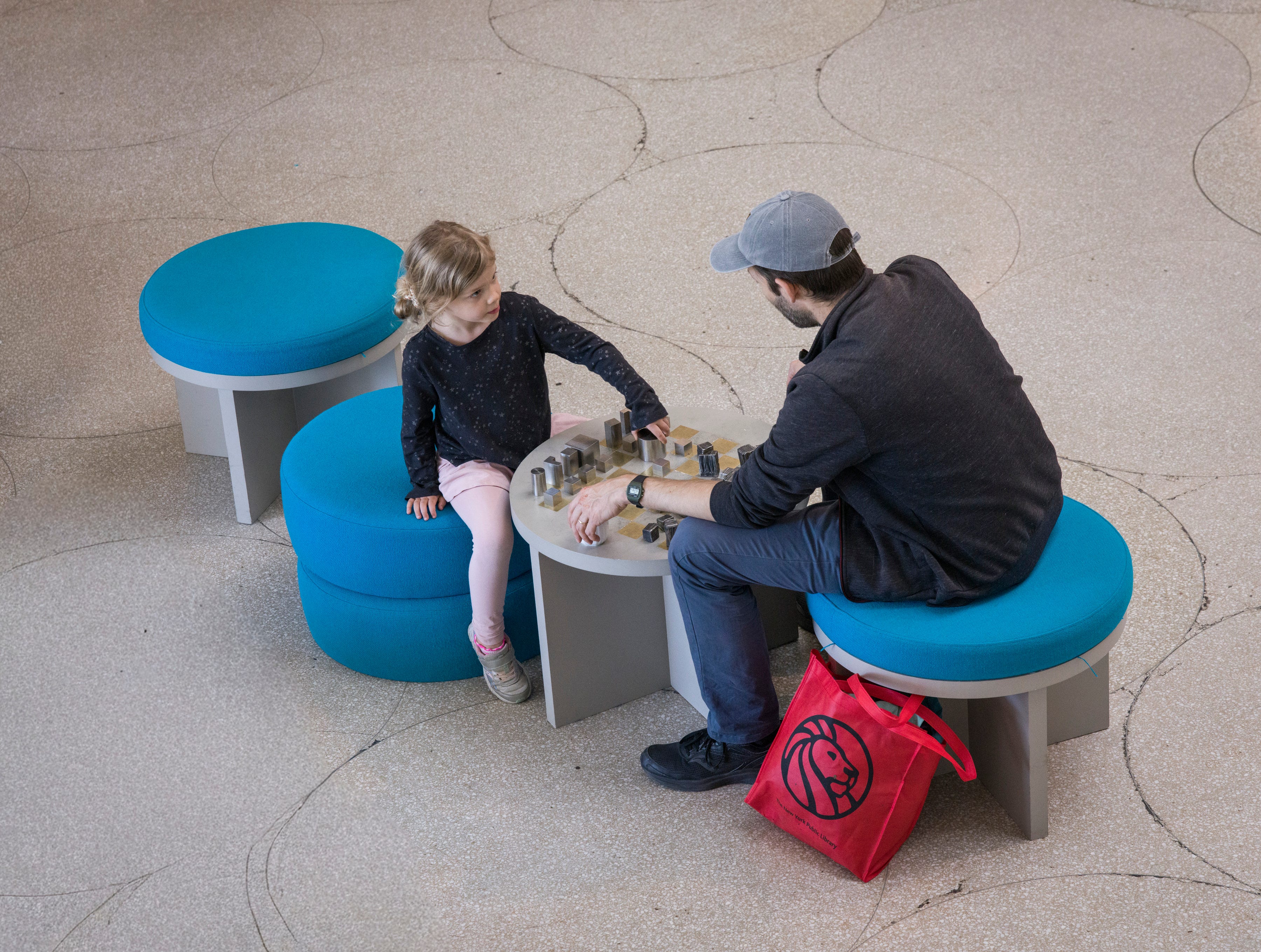
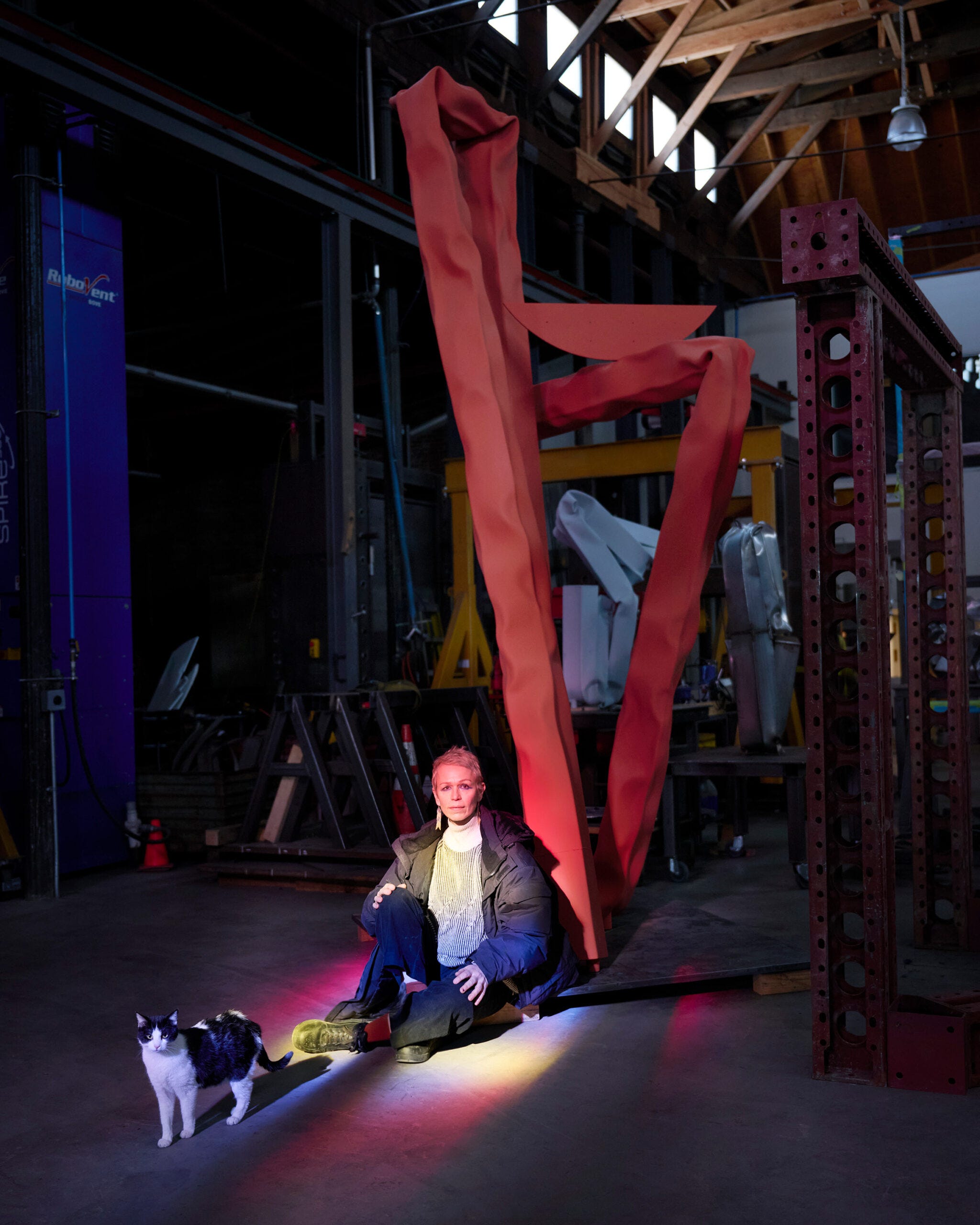
Near the chess tables, there also a minimalist arrangement of plants near the window. Here, Carol takes cues from the Japanese practice of floral arrangements (ikebana) to create the same gesture, but at the scale of a building. Each Friday before the museum opens, Carol comes with a new selection of plants, puts her headphones on, enters into her flow state and arranges her plants. It’s a beautiful thing to watch.
Carol often speaks about how museums should nourish the body just as much as the soul. Whether you are playing chess, or enjoying the view, this perfectly curated third-space is a perfect example of that. Oh and on weekdays, if you’re lucky, a member of her studio may offer you tea.
This gesture is a perfect example of Carol’s generous personality. She took the part of the museum that belongs to everyone and actually treated it that way.
Have I mentioned how much I love this show? Or how much I think Carol is a genius?Because I love it and she absolutely is.
As always, thank you to each and every one of you who has subscribed and supported this newsletter. Seeing you react so positively means everything and reading each one of your comments puts the silliest, widest smile on my face.
You have until August 2 to visit Carol’s show at the Guggenheim - go! go! go! And when you go, please tell me and let me know what you think! And please, feel free to ask any more questions. My comment section and subscriber chat are open. :)
Best,
Alya
No posts
Comments
Nothing yet. Say the first thing.
Sign in to join the conversation.