
Dear reader
Saga with a 93% load factor made £319m revenue from cruises last year so about $400m. Its cruise segment is distinct from its holiday segment (confusingly, since nearly all cruises would be for a holiday wouldn’t they?).
Norwegian Cruise Lines (NYSE:NCLH) with a 102.5% load factor* sold about $10bn so about 25X the revenue of Saga’s segment. But NCLH has 32 ships and 75,000 berths. Each berth made $133k revenue. Each passenger paid $2,857 per cruise.
*- how is it over 100%? A load is based on two berths to a room. But a family can add a roll out bed for kiddie winkles making a room over 100% full (based on 2 people). Saga offer single or double rooms only and if you bring a child then that child must be at least 40 years of age. That child ain’t sleepin’ ‘n no rolled up bed.

Saga’s two cruise ships have 1,000 berths each and three river cruise add just over 500 berths. Each berth made $160k per annum revenue. Each passenger paid $6,500 per cruise.
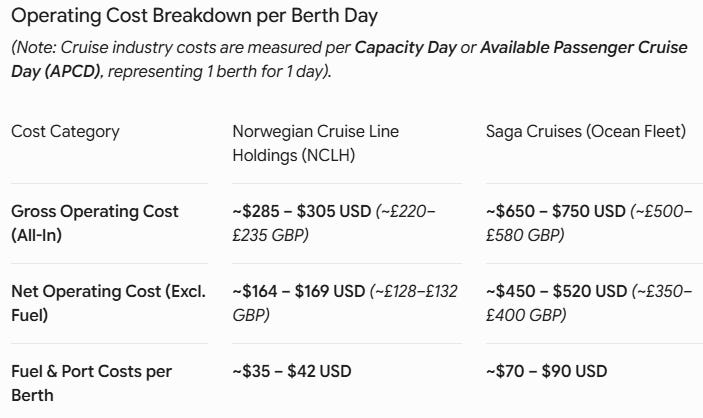
Both made a 33%-34% EBITDA margin in 2025. But the difference is in costs. NCLH costs are far lower than Saga’s but for a much lower service level. Saga is an all-inclusive and boutique with driver pick up from their home. Ooh la la.
NCLH has bumped along at two thirds down without a full recovery post Covid. So is it a bargain?
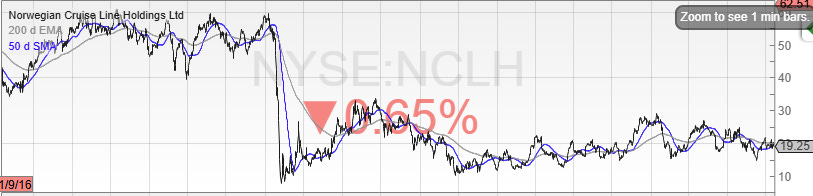
Its fall is partly due to share dilution of 114% due to a rights issue rescue during Covid.
It’s also partly to do with debt. Debt was $6.8bn pre-Covid and $15bn today. That also means that interest expense grew from $228m per year pre-Covid to a staggering $950m today.
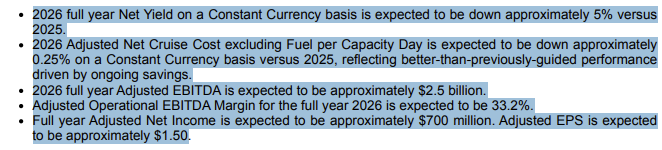
Debt is not falling any time soon.
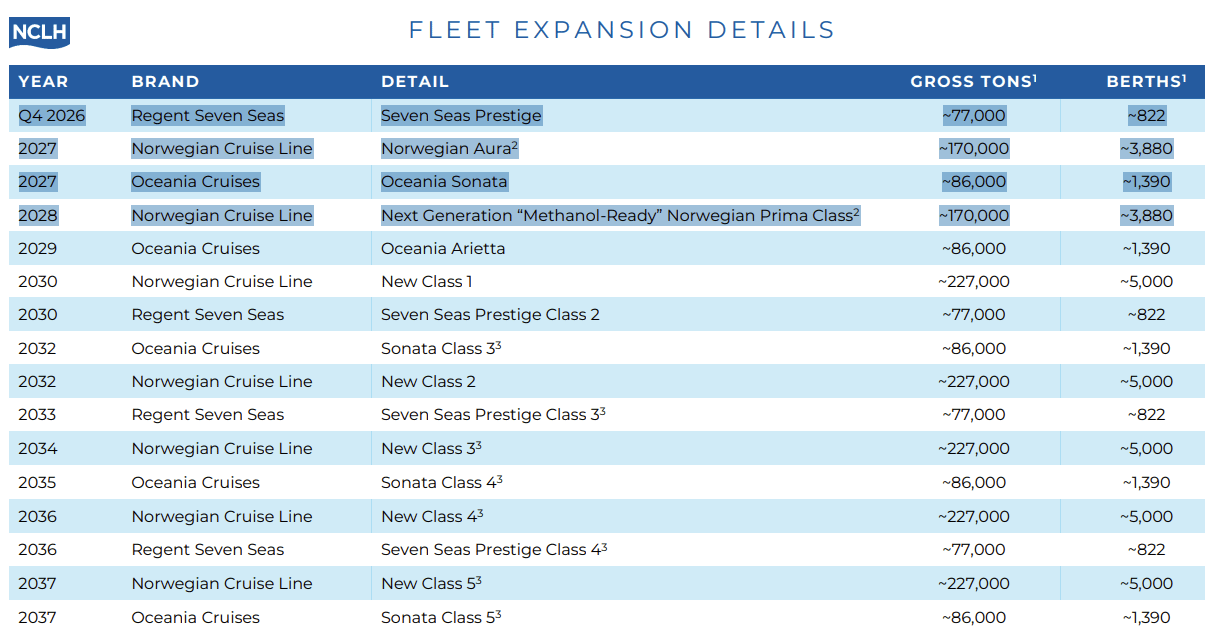
NCLH has a $2.9bn capex programme in 2026 and 2027. This is to add three vessels to take the 32 ships to 35 and 8,321 berths, but four vessels retire reducing -5114 berths.
So 31 Ships and 78,100 berths. The new ships consume 15%-25% less fuel per available berth day (APCD) so will save about $150m-$200m opex per year. If the four are leased out then they should deliver around $50m income per year too (with no opex cost borne by NCLH).
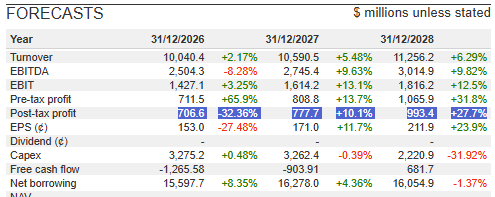
That’s presumably the 31.8% increase to PBT in 2028 in the broker forecasts below.
That threat of a Black Swan. It hisses at the edge of my consciousness. Do I want to buy into the NCLH story for the medium term benefit of a stronger business? I can see the attraction of NCLH but the Saga story of deleveraging feels the safer one to me. If you’re a Saga holder you now know that while Saga’s Cruise performance is akin to one of the “big boys” in terms of operational efficiency. That’s satisfying to know.
Higher operating costs at Saga vs NCLH with vast debt and a large capex programme that means deleveraging is not in the plan soon. Despite being remarkably cheap among the Cruise lines it’s cheap due to its weaker position.
Meanwhile feeling happy about one bit of Saga doesn’t make me rush out and buy Saga. But it passed its first test. And Chief Rebel’s idea deserves a deeper look another time.
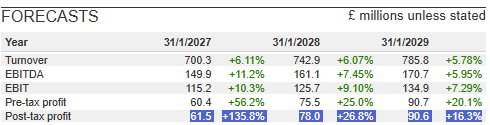
Although paying £1.07bn for a forecast £61.5m profit puts SAGA at about 17X earnings. It’s not super cheap any more. Can you but help look back and rue not buying this at 100p?
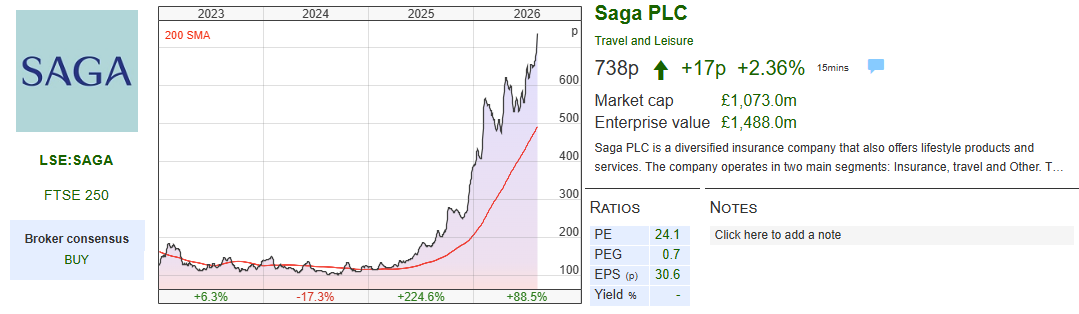
The 100p Saga share price of early 2025 vs 738p today is the multi bag people crave.
If only there were a substack where such multi-bag ideas like Hardide, Easyjet, Pinewood and Eco Buildings were freely available.
PS look out for the honesty box there too (Trees for Life or Aspire)
Regards
The Oak Bloke
Disclaimers:
This content is for educational and informational purposes only. It does not consider your personal circumstances and is not financial, investment, tax, legal, or professional advice. Nothing here is a recommendation, offer, or solicitation to buy, sell, or hold any investment. Investing involves risk, including the loss of capital. You are solely responsible for your own decisions
Micro cap and Nano cap holdings might have a higher risk and higher volatility than companies that are traditionally defined as “blue chip”
Comments
Nothing yet. Say the first thing.
Sign in to join the conversation.