
Hey readers,
I’m excited to announce the next Book Club. We’ve chosen Living, Together by Samantha Paige Rosen. The book features 21 writers and organizers on chosen family, hacking adulthood, and other lessons communal living can teach us about the future of housing in America.
Save the Date for the Book Club chat — September 14 at 6pm -- and join us for a conversation about the book and issues surrounding communal living more broadly. In addition to Rosen and me, we’ll have Gillian Morris of the Substack, Supernuclear, an amazing resource for people who want to live with or near friends. It should be a great conversation!
Buy the book or get it from your library, and get ready to join us on September 14 at 6pm ET.
I’m back with more of a recap of last week’s trip to Pittsburgh – thank you to the subscribers who attended and all the tour hosts who made this trip so special!
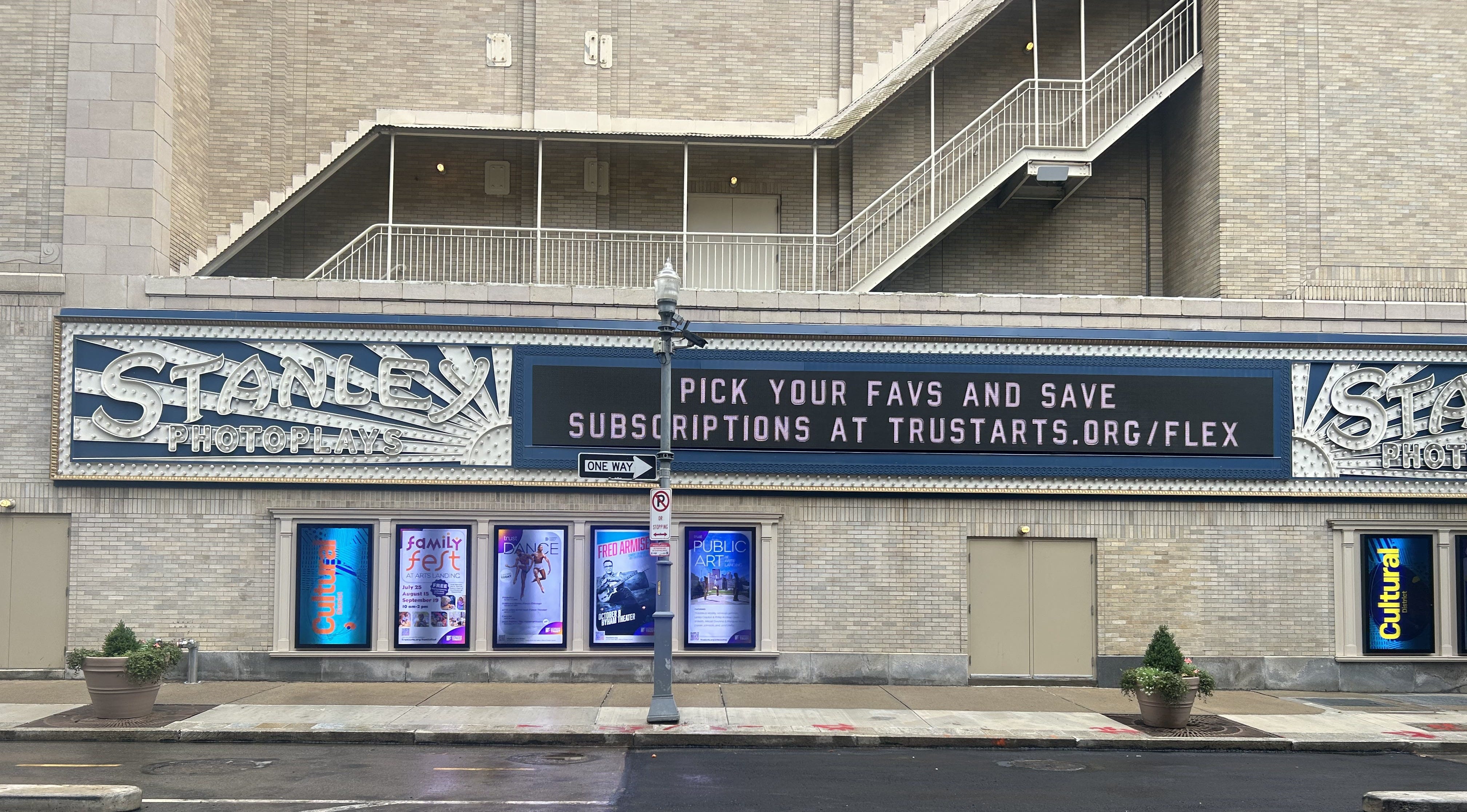
Day Two of our trip in Pittsburgh began with a walking tour of downtown with Aaron Sukenik, Vice President of District Development at the Partnership for Downtown Pittsburgh. Downtown Pittsburgh has been fundamentally changed by the pandemic, with daily in-office presence holding steady at only about 55 percent of 2019 numbers. Meanwhile, residential occupancy is as strong as it ever was. These stats offer clear evidence that over time downtown will need to become more of a residential neighborhood, but as we learned on the tour, developing housing in downtown is slow-going.
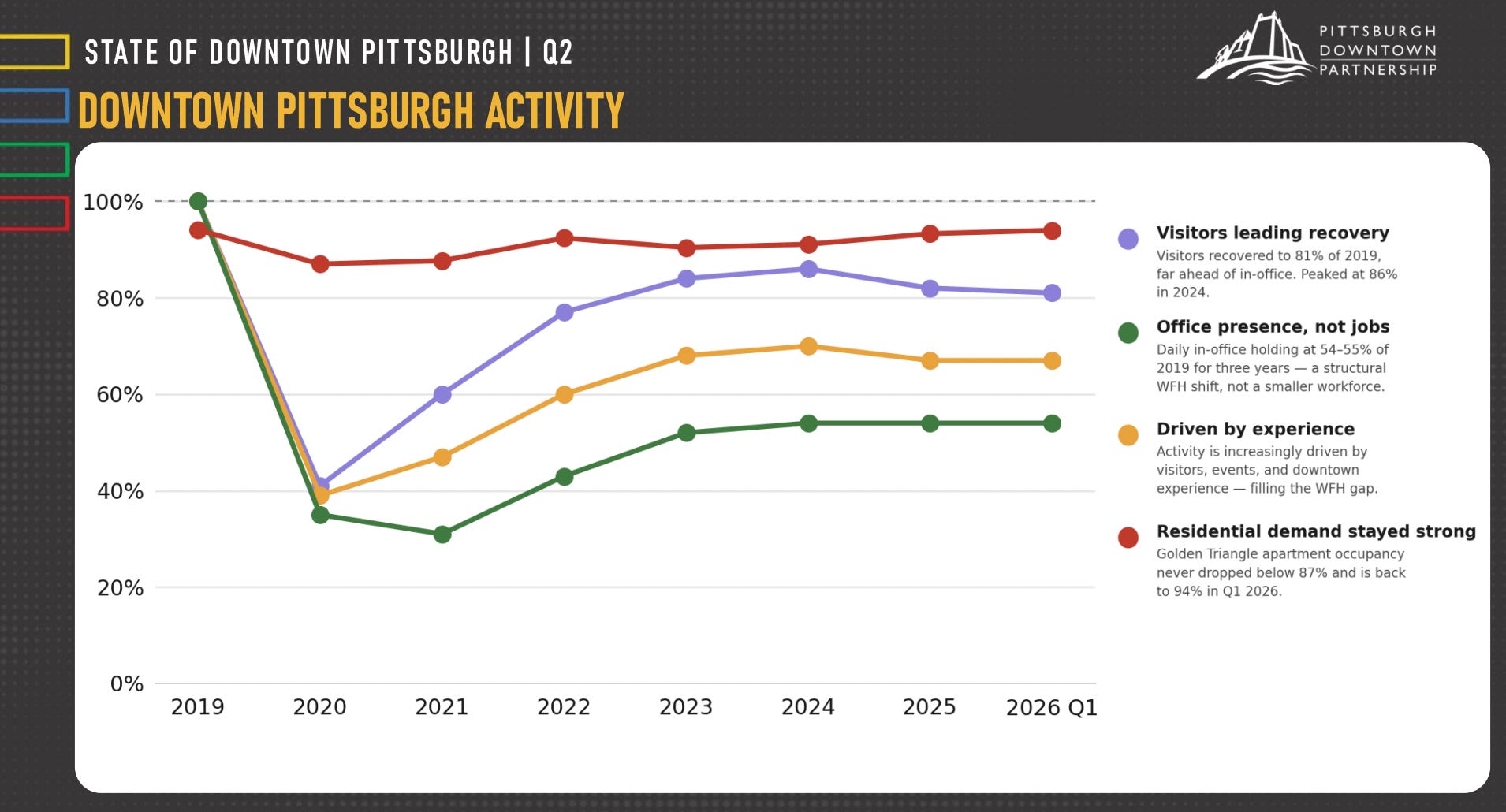
So the amenities are coming first. Build the reasons to live downtown before you've built the housing, on the theory that quality of life sells the housing that will eventually follow.
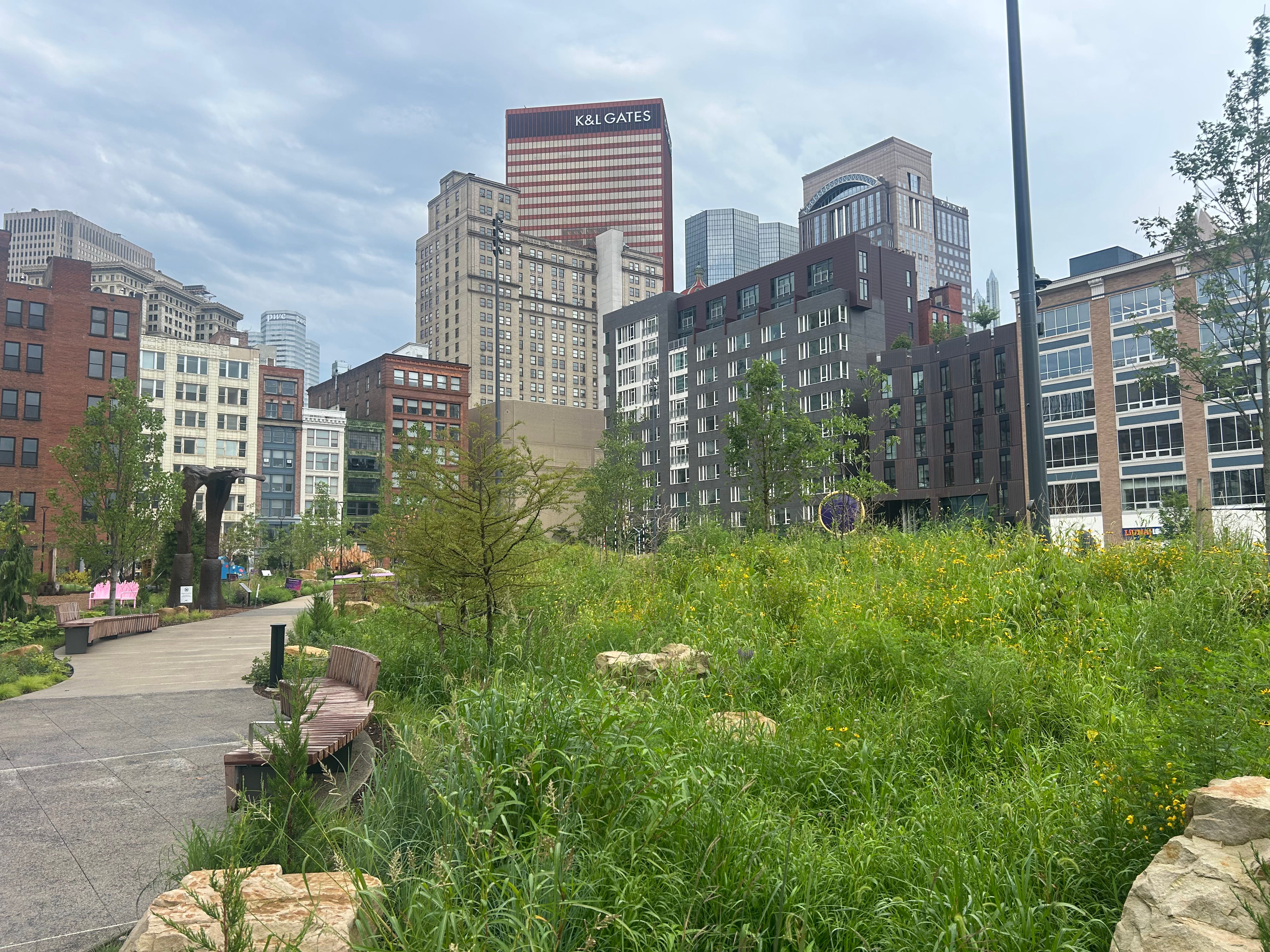
We began our tour at Arts Landing, a $30 million park that came together in less than two years to meet the deadline of hosting the NFL Draft in April 2026. What was once a tire-strewn parking lot and auto body shop was transformed by Pittsburgh Cultural Trust and the landscape firm, Field Operations, into a lush new environment – part park, part playground, part performing arts venue with a band shell. While cities have leaned on mega-events as forcing functions for stalled infrastructure for decades — the Olympics and World Cup are the classic cases — Pittsburgh's version put the money into parks, plazas, and streetscape instead, the kind of investment that should still be earning its keep long after the NFL Draft is a memory.
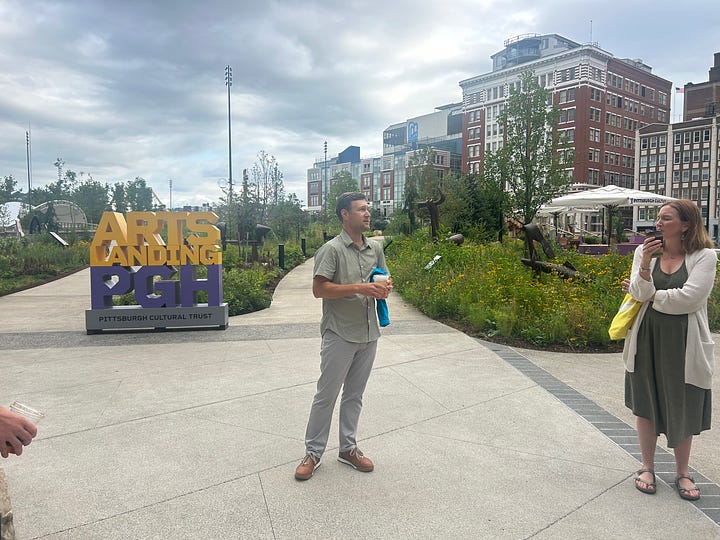
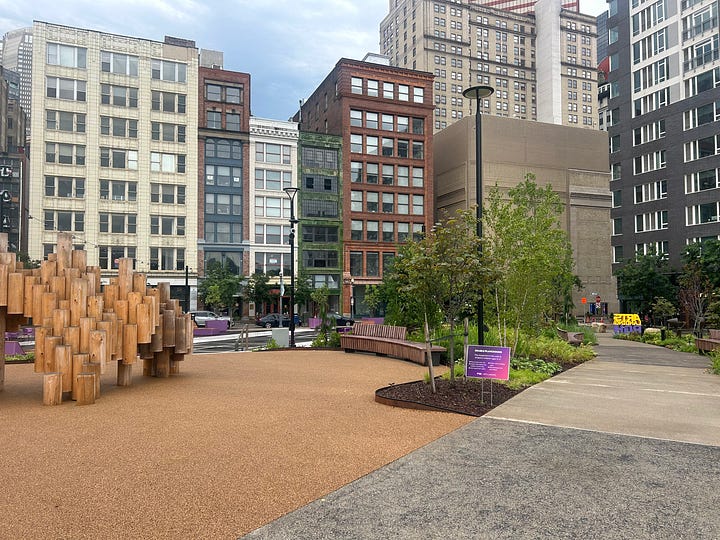
The park provides one of the few green spaces downtown and is a boon not only to residents, but to the schools and daycares that are located nearby. Moreover, Three Rivers Arts Festival, an annual weeklong event that draws in tens of thousands of people for outdoor music and dance, now has a permanent home there. Arts Landing was a real highlight of the trip for me.
We then made our way to Market Square where placemaking serves a slightly different role. If Arts Landing has the feeling of a shared backyard for downtown residents, meant to make living downtown more feasible, Market Square feels more like the tourist and office worker’s dining room, or even its front parlor. The city also renovated Market Square in time for the Draft, restricting automobile access and adding more outdoor seating, to make it more pedestrian oriented.
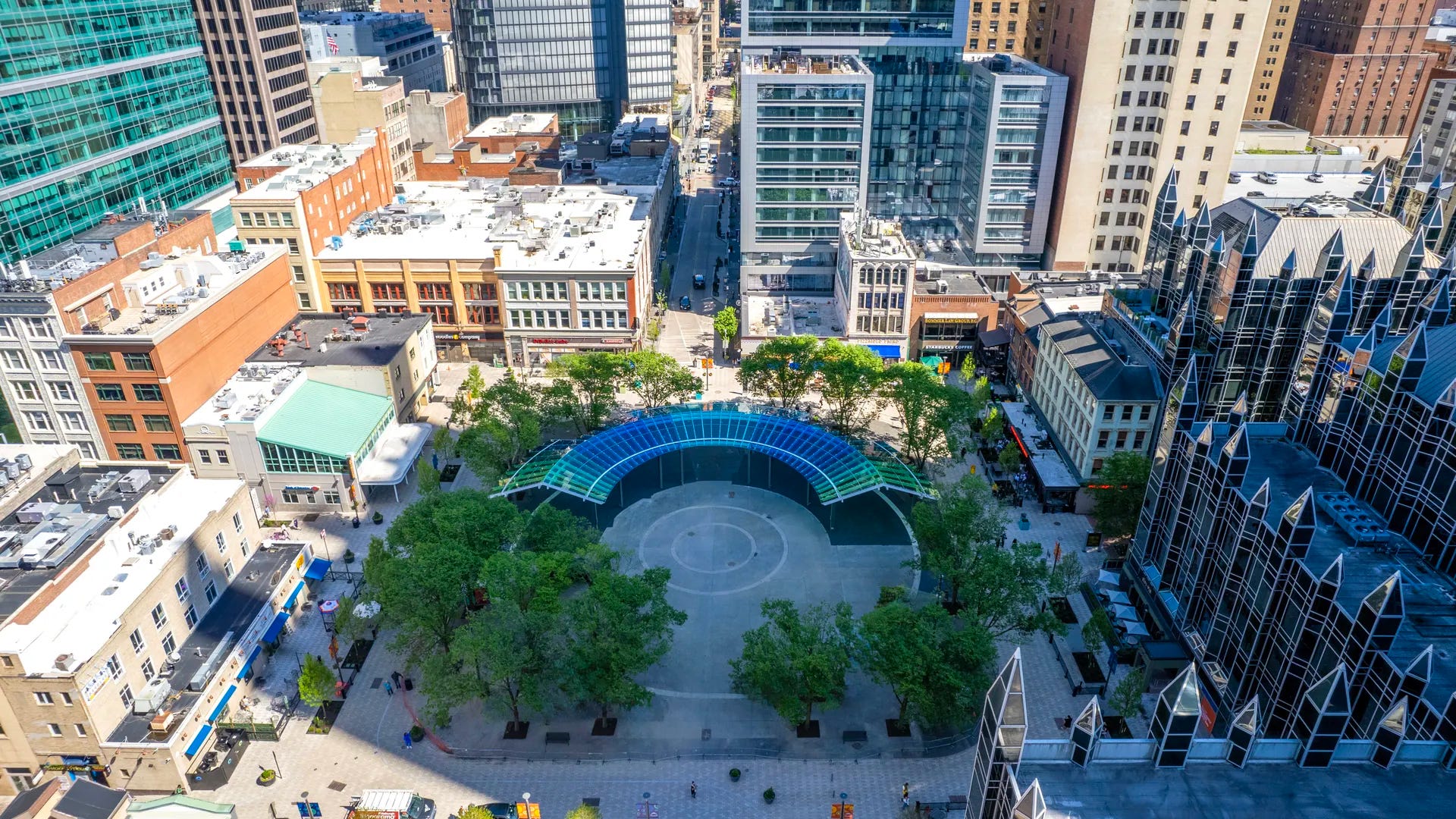
The $15 million renovation resulted in a blue and green crescent-shaped glass pavilion, where music and programming, like a weekly farmers' market, enliven the space. But Market Square, more firmly in the middle of downtown, didn’t feel like the oasis that Arts Landing did for me.
We discussed how Market Square and various locales around downtown have been the sites of teen takeovers that have escalated into violence, leaving local leaders searching for ways to engage young people and keep everyone safe. This challenge speaks to the general conundrum that so many downtowns are facing: How do you keep public space truly accessible to everyone and with manageable maintenance costs — not bourgeois fantasy lands with private security — while preventing bad actors from taking advantage of that openness?
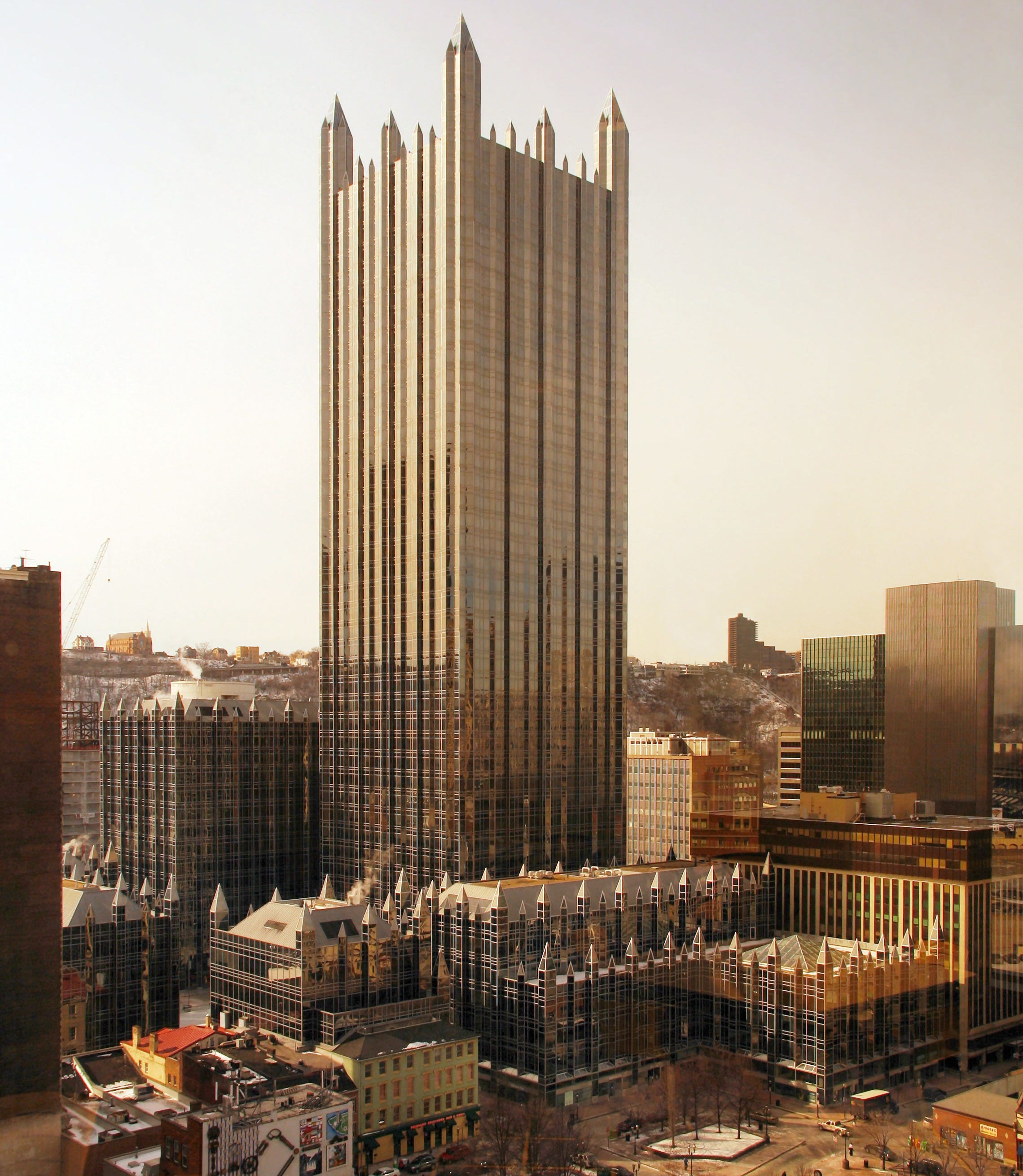
(Side note: I’m completely in love with the PPG complex designed by Phillip Johnson that sits on Market Square. As the aesthetics debates rage, I have to say that 1980s neo-gothic feels very ripe these days.)
Housing, though, is the piece of the downtown puzzle that isn't moving at deadline speed. As we walked around downtown, we learned about some of the challenges to office conversions that could otherwise bring much desired housing downtown. Many deals have been threatened or slowed down by the high cost of renovation, relatively low rents, and distant owners. While philanthropy has stepped up to support the arts and public space, I couldn’t help wonder if it’s needed to subsidize the timeline of housing — even market rate housing — downtown. (As you’ll see, local philanthropies supported the creation of Hazelwood Green, a new development outside downtown.) The demand is clearly there: Sukenik noted an urban-format Target surpassed its sales goals, showing that basic amenities like grocery stores could thrive downtown if more residents lived there.
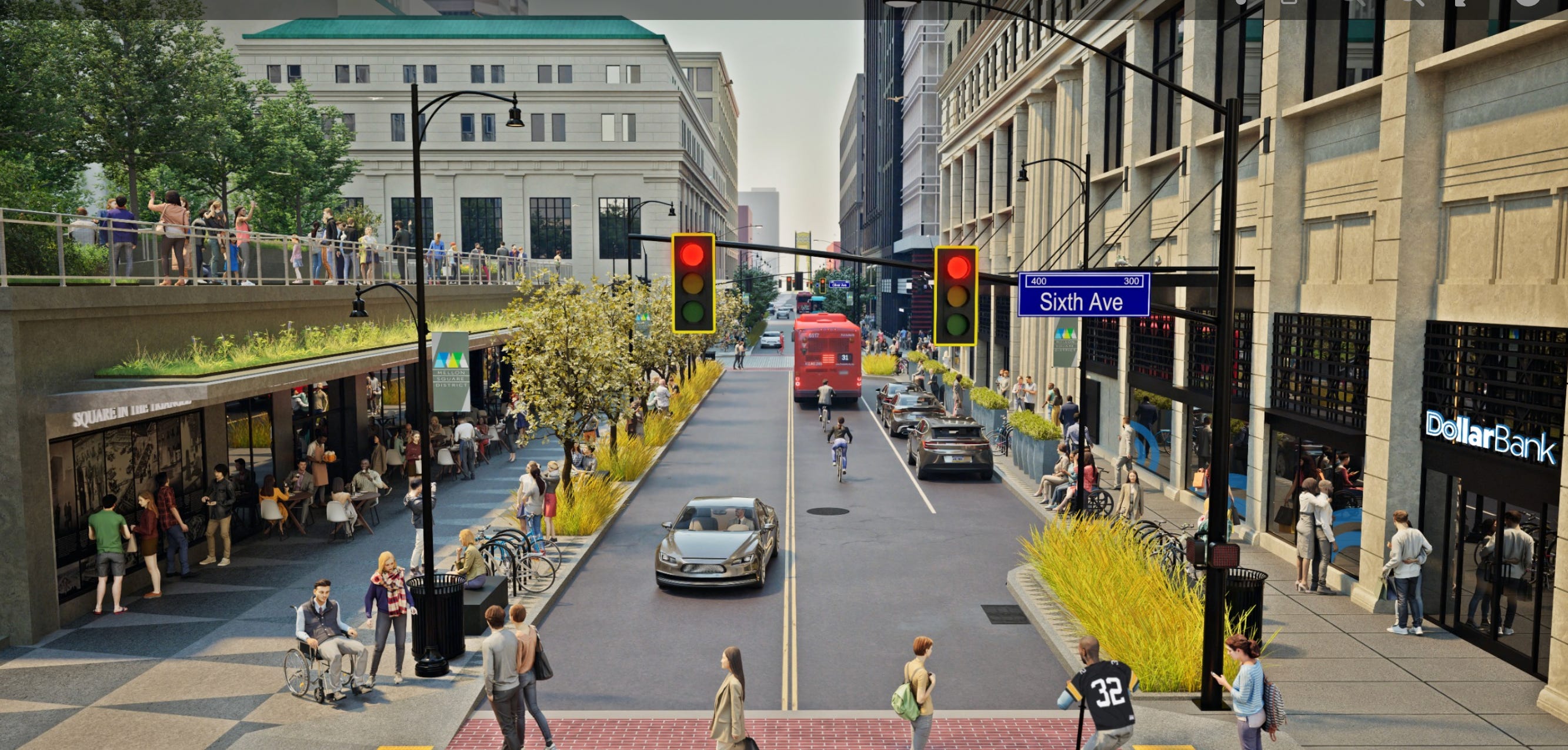
Finally, we learned about the redesign of Smithfield Street, where expanded sidewalks and streetscape improvements are intended to beautify a heavily used stretch of downtown. It’s a great example of how public investment in the streetscape could help bring an added sense of vibrancy that might entice more retailers in currently vacant storefronts, jumpstarting a virtuous cycle.
Will these various efforts be enough to keep residents, attract tourists, and appeal to office workers downtown? I do think so, as long as the housing piece comes together in the near future.
With that question trailing us, we then headed to Oakland, a meds-and-eds neighborhood and innovation district that serves as the cradle of Pittsburgh’s innovation economy. There, we met with Mike Madden and Sean Luther of InnovatePGH, a public-private partnership to support the startup ecosystem in Pittsburgh and its innovation district. We met at one of InnovatePGH’s co-working spaces where early stage companies can build in community, a symbol of how the organization works with start ups.
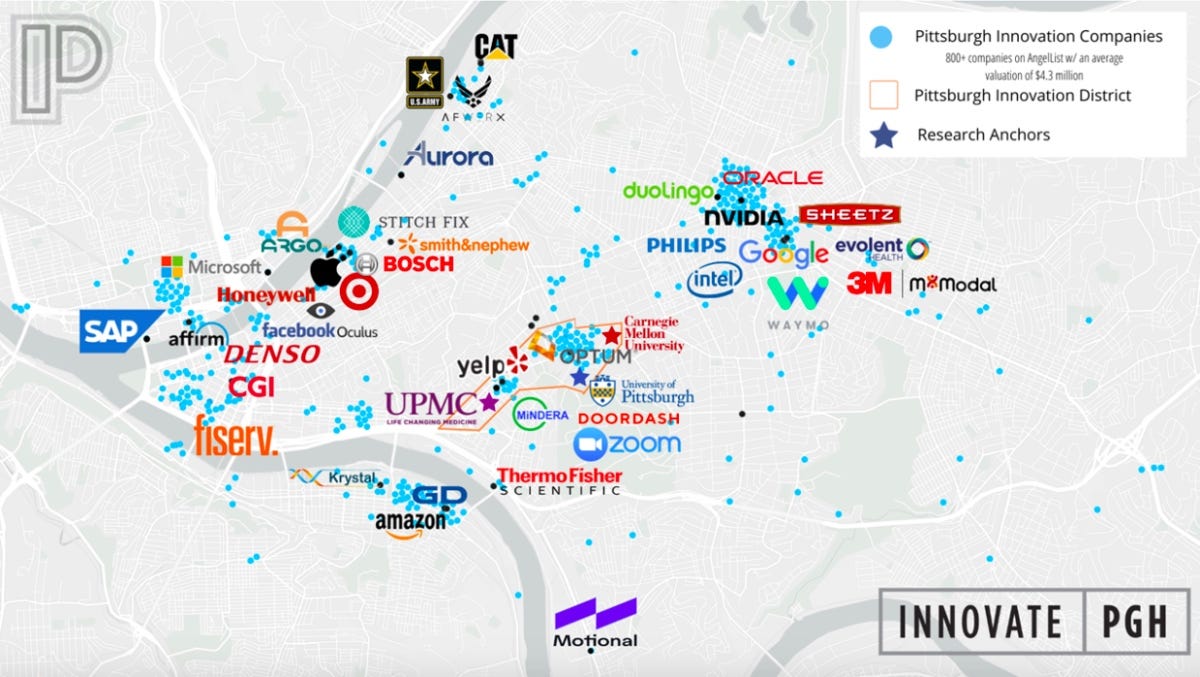
Beyond co-working, Innovate PGH helps to make the innovation ecosystem legible through programs such as ASTRI, which Technical.ly Philly describes as
a new online portal meant to provide access to startups, tech, research and investment (hence the acronym) in the Pittsburgh area. Accessible through a free public website, the portal brings together data across startups and research institutions in the region to make it easier for outside parties to assess the local tech and innovation economy for potential investment, business growth and the like.
And they manage the physical placemaking of the innovation district that links together Carnegie Mellon, University of Pittsburgh, and University of Pittsburgh Medical Center. As we walked and talked, we learned about a new $291 million Bus Rapid Transit (BRT) line, which will connect Oakland and downtown in 8 minutes, with 10 minute headways. According to Pittsburgh Regional Transit:
The project includes 23 new bus stations with glass shelters, upgraded amenities like next-bus arrival screens, fare vending machines, seating, lighting, trash receptacles, emergency phones, and security cameras. The entire community will benefit from significant investments in pedestrian and bicycle infrastructure including new sidewalks, accessible ramps, protected bike lanes, traffic signals, and landscaping.
At a time when so many cities are seeing their transportation systems slowly decline (I hate to say I count Philly among them), this kind of investment in infrastructure for a pretty small city was impressive.
Our time in Oakland was far too brief, ending in Schenley Plaza, another former parking lot turned public space.
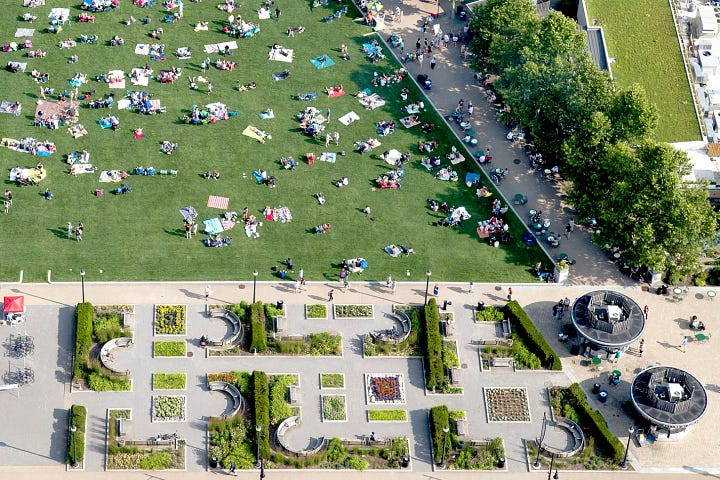
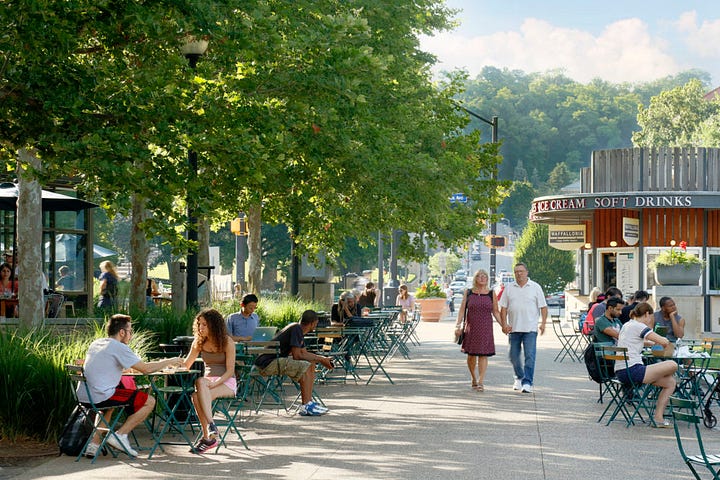
Designed by the firm Sasaki, the 3.5 acre plaza features not just a multi-purpose lawn that can serve both large gatherings and impromptu play space for kids, but a restaurant and dining kiosks. While I admired the undeniable beauty and design of Arts Landing, I really appreciated that Schenley Plaza offers a complete public space, including food and bathrooms.
Finally, we made our way to Hazelwood Green, a 178-acre mixed-use redevelopment sited on the Monongahela River in Pittsburgh’s Hazelwood neighborhood. More than any other stop on our trip, this project served as a metaphor for Pittsburgh’s transformation from an industrial powerhouse to a tech one, buttressed by robust philanthropic investment.

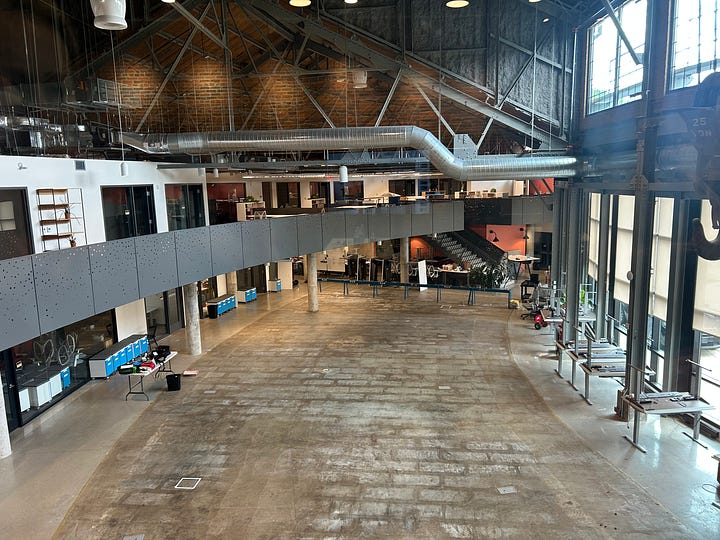
Austin Gelbard, a managing director at Tishman Speyer, gave us an overview of the project and tour. A former steel mill site that had experienced decades of disinvestment following the mill’s closure, Hazelwood Green is now the largest brownfield redevelopment site in Pittsburgh’s history, featuring housing, biotech commercial buildings, placemaking, and nature. It’s the kind of complex project that Tishman Speyer specializes in leading. If this sounds at all kind of familiar, I visited another Tishman Speyer project as part of my San Francisco tour 18 months ago (and no, they’re not a sponsor!).
In 2002, the Richard King Mellon Foundation, The Heinz Endowments, and the Claude Worthington Benedum Foundation formed an entity known as Almono LP to purchase the site for $10 million. More than two decades of environmental remediation, planning, and civic engagement later, the site is being reborn with biotech and robotics commercial buildings, new housing, retail, and a community field that is on the verge of opening.
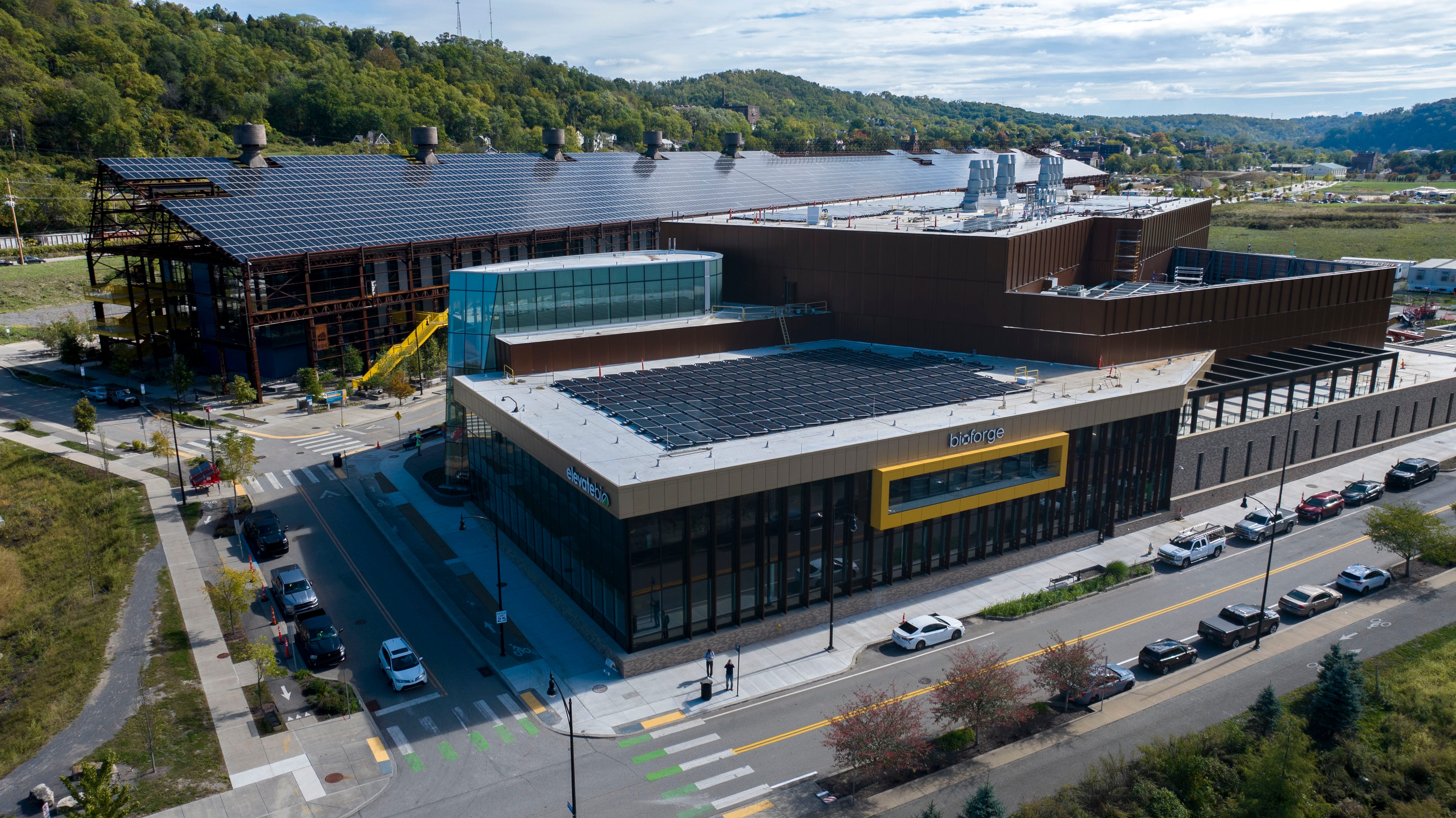
The site includes a historic mill building that has been compellingly transformed into space for Carnegie Mellon’s Manufacturing Futures Institute, the Advanced Robotics for Manufacturing Institute, and Catalyst Connection, among other tenants. Bioforge, a manufacturer of precision medicines, is located in a newly constructed adjacent building. There's something nice in the continuity here — the robots and precision medicines coming out of the campus feel like the mill's actual descendants, still making things.
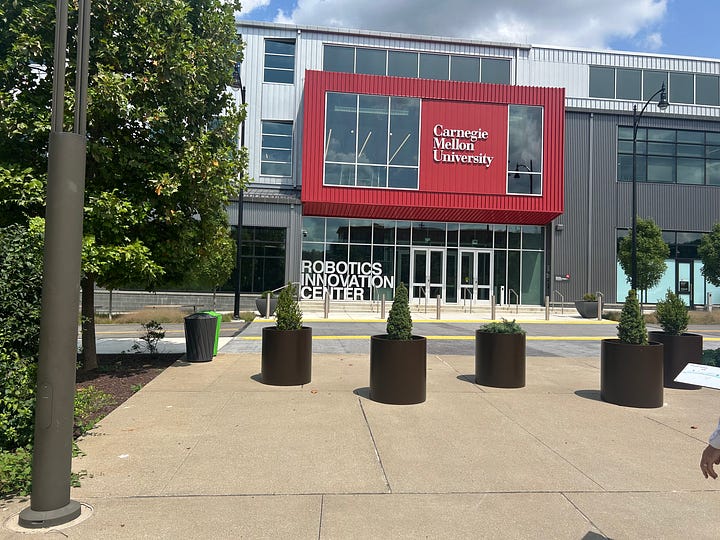
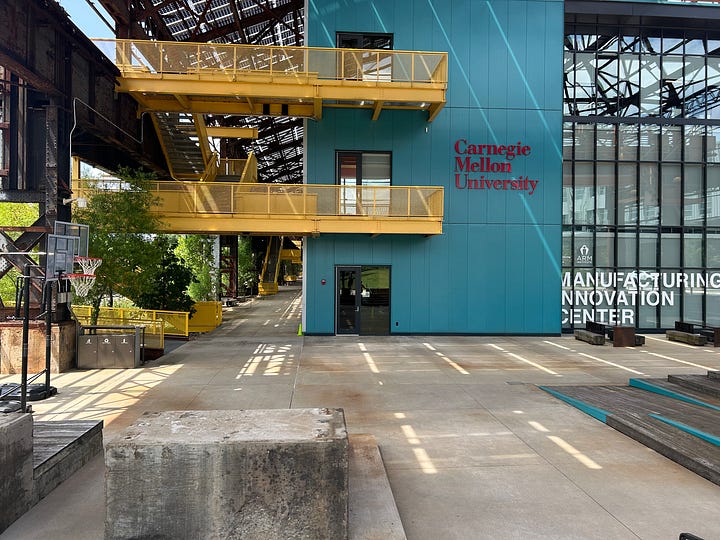
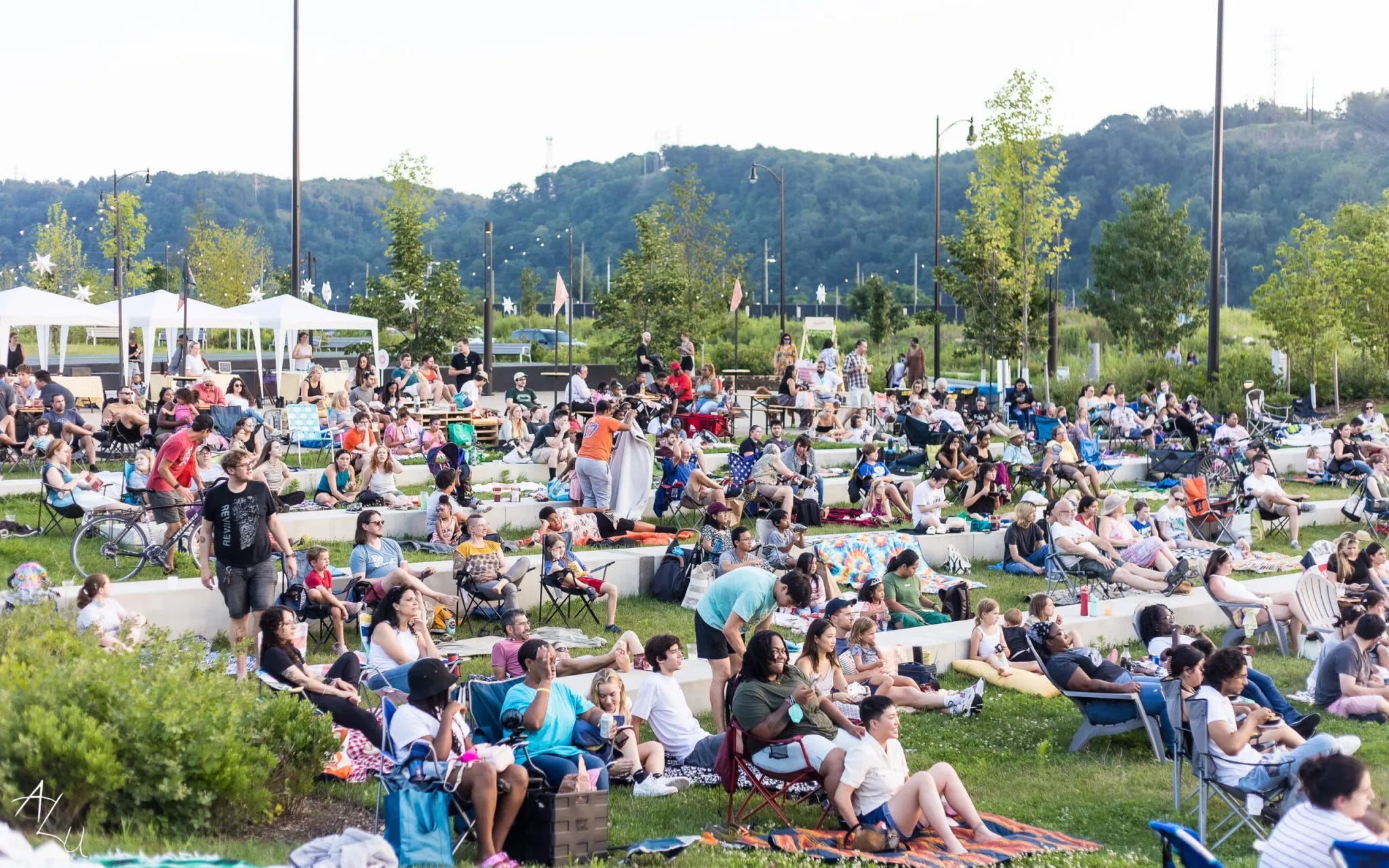
Sustainability has been a major goal of the development, and Hazelwood Green received a Platinum Neighborhood rating — the solar array atop Mill 19 has got to be the largest I’ve ever seen. Despite being so close to downtown and other developed neighborhoods, Hazelwood Green has the kind of wild nature that so many urban ruins have. I frankly love that vibe. But there’s also a more manicured green lawn area where the firm Street Plans has helped to engage the public in a variety of programming, including movie nights, dance parties, and more, bringing in hundreds of people to the neighborhood.
As we continued down the site’s main street, we got to the first residential development — 125 units that will open in 2027, with approximately two-thirds allocated to affordable housing, including units for Scholar House, a program supporting single parents raising children while pursuing higher education. I love that this is mixed-income housing, prioritizing families, and that the project stands to knit together biotech workers and lower-income residents alike. Eventually, Hazelwood Green will have hundreds more units of housing, attracting residents who want a waterfront location with proximity to both Oakland and downtown.
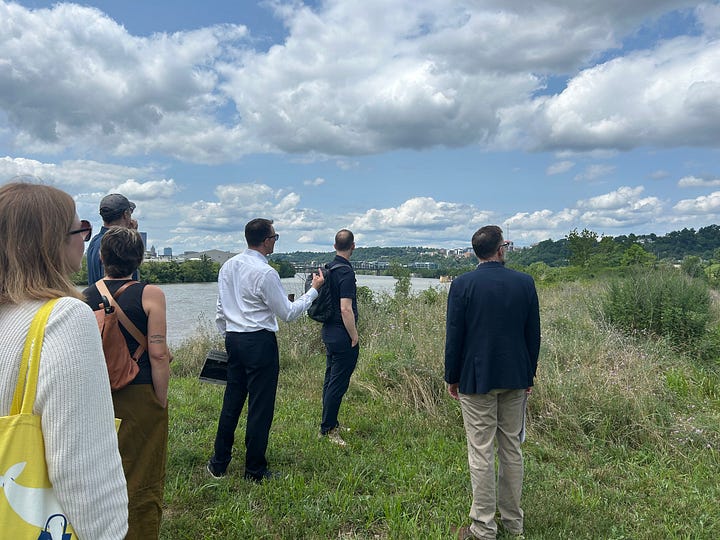
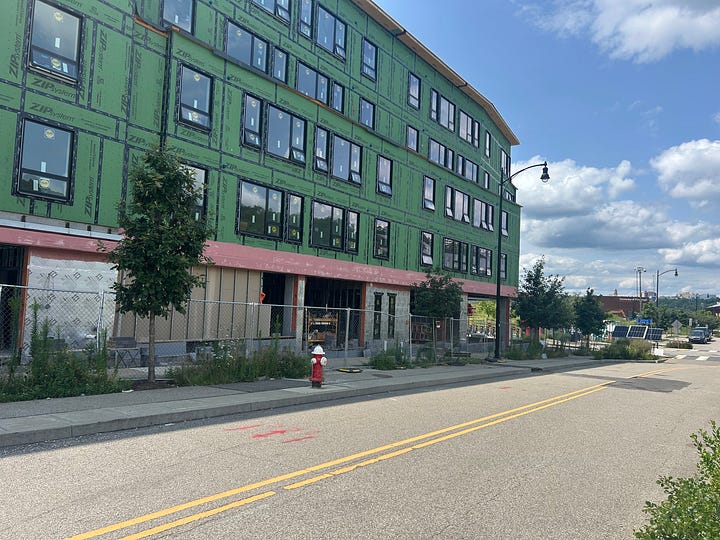
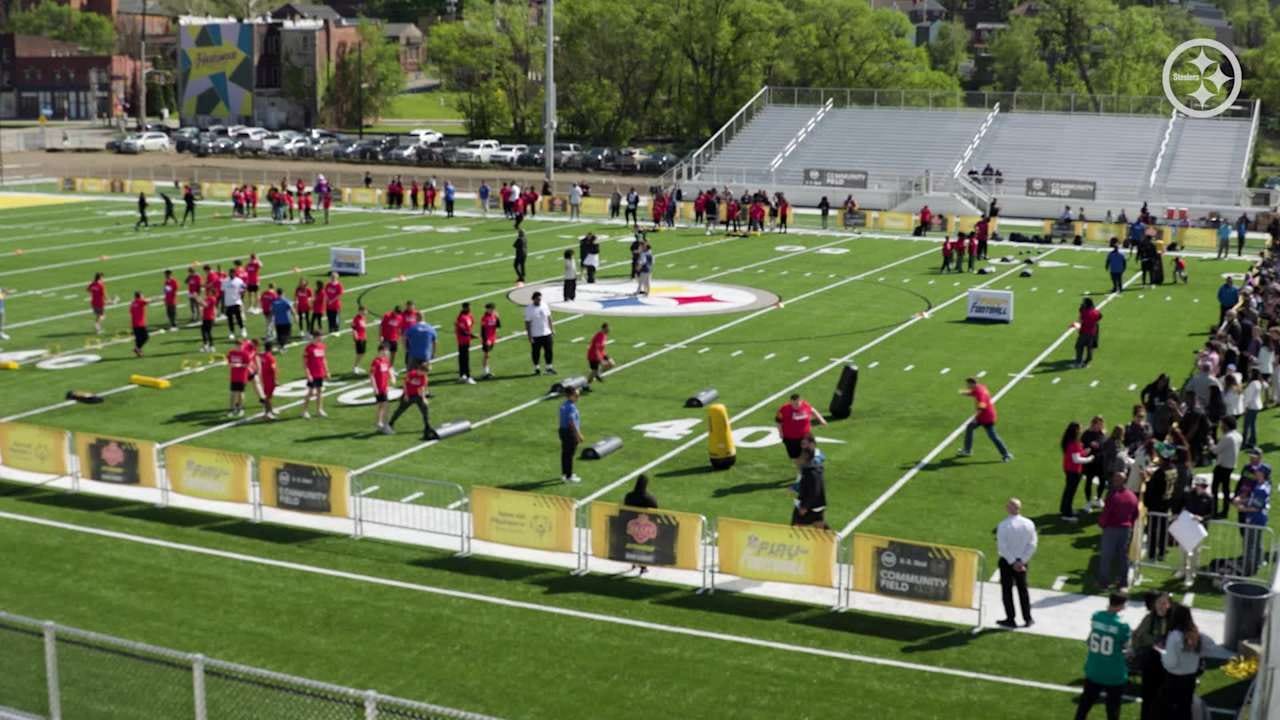
Our tour ended at the US Steel Community Field where a large new sporting facility will face out to the Hazelwood neighborhood. The field is perhaps the most easily visible element of the project, right near a busy roadway and main street. The field will be a resource for community youth and for occasional events. For all the importance of the innovation economy in Pittsburgh and in Hazelwood Green, it seemed so obvious how the field is likely to be the key connector to the rest of the city. The orientation feels intentional, too: the biotech and robotics buildings face inward, toward the river and each other, while the field faces outward, toward the neighborhood. If Hazelwood Green has a front door, this is it.
After leaving Pittsburgh, I thought about the two speeds of evolution in the city. On the one hand, it was invigorating to hear about the relatively fast-moving interventions like Arts District and Shore Thing (see my last piece on Pittsburgh for that). These projects have provided a steady drumbeat of momentum. They feel kind of Abundance-y with their evidence that we can build things quickly.
On the other, it was also impressive to see sustained vision and support — funders investing for decades to turn around the local economy and culture. That kind of patience is going to be critical to see downtown’s transformation through, and the eventual shift from commercial to residential space in many buildings. Pittsburgh demonstrates how we need both speeds of development to truly change a city.
If you enjoyed reading this, please hit the like button and subscribe!
Comments
Nothing yet. Say the first thing.
Sign in to join the conversation.