
In the first two installments of this lecture, I wrote about how the younger generation is being harmed by constant supervision, and a life on screens. Of particular interest is the concept of anti-fragility — that children NEED stress and problems to grow strong and confident, and that overprotection makes them fearful and weak. The Threat of Kidnapping
So now, let’s look at the other side. Of course, so many people say, I want kids to be able to roam, to work, to play unsupervised. But it’s JUST NOT SAFE. And what they mean – the great majority of them – is some kind of violent crime towards children. Abductions and creeps.
Let me give you a couple of sweeping, generalized statistics. We know that statistics can be used to deceive, and I’m attentive to that problem. But our gut prejudices can also be deceiving. Let this be a counterweight.
1) There are about 100 reported cases of abductions by children of STRANGERS in the United States each year. There are about 73 million children in the United States. So, assuming random factors, that makes a likelihood of about 1 in 700,000.
2) In the 1980s, the risk was higher, closer to 1 in 200,000 or 300,000. Kids were unsupervised A LOT MORE, and yet the risk was not proportionally higher.
3) Right now, the risk of any child DYING as a passenger in a car accident is about 1 in 70,000 – higher than ALL the other numbers.
What does this mean? FIRST, it means that the 1 in 700,000 number is not significantly related to the extreme overprotection we have now. If it were, then when kids were allowed out unsupervised in the 1980s, you would see a lot more.
SECOND, it means that we DAILY accept a HIGHER and GRAVER risk – that is, death in a vehicle – without batting an eye. Think about it. You’re going to take your kid for an hour-long trip. You may worry about gas prices, or his good mood, or bathroom breaks. You don’t worry – oh, but maybe we’ll get in an accident and he’ll die. But if you send your child to walk with a friend to the nearby park, unsupervised. We feel the worry then, but not when we get into a car.
To be honest, I think the data about car accidents is a sufficiently strong bit of data to warrant a change in habits. We could stop there.
However, because life is not only about safety, but also about the good of our souls, and the building of a lively and happy society, I won’t stop there.
This modern overprotectiveness is borne of an attitude of universal mistrust. An attitude of fear. Such an attitude PRODUCES some of the dangers its intended to prevent, and more. Here are some of the problems: Keeping kids protected at home leaves neighbors isolated.
Keeping kids protected from strangers keeps lonely people lonely. How many lonely people could use a smile from a child? How much more likely would be all be to speak to our neighbors and strangers if we acted on the possible good more than the possible evil?
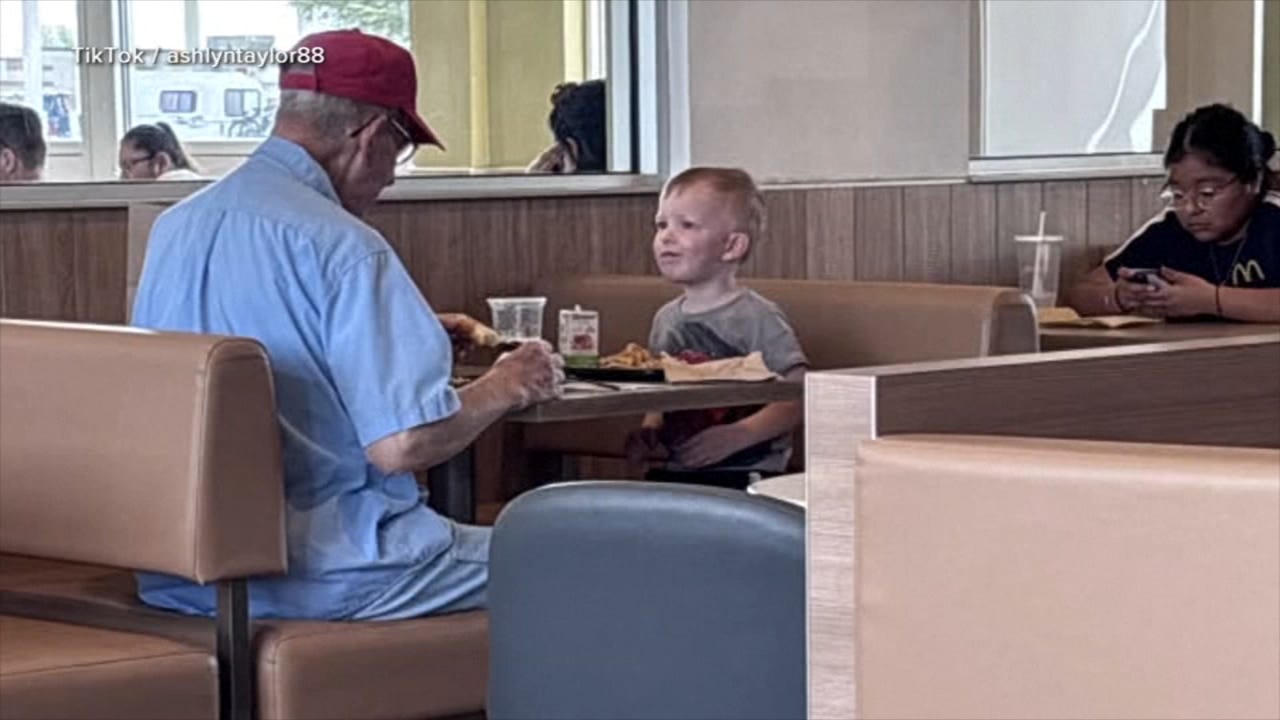
Teaching kids to act as though anyone they meet is likely wicked and perverse inclines them to think of all mankind that way – including themselves.
This next one is most acutely painful, because it’s so very twisted. There are boys and young man whose hearts warm with delight at toddlers and young children – who like them enough to just want to play with them. Often, these men are gruff or awkward, and tend to be isolated – but the children, in their salutary innocence, don’t mind. This is a man who may be made for children. Maybe made to be a good father. Maybe he needs children to be integrated into society.
And then, what if that boy, as a child, is told “if a stranger wants to play with you, there’s something wrong with him. Stay away from him.” What will this boy conclude about himself?
Yes, that’s right. This very attitude that teaches we must always be actively on our guard for creeps will twist the very desire for fatherhood into an image perverse and wrong. Not just the image. It will call good evil, equate the innocent love of children with a perversion of the sexual desire – and train our boys to either throw out the baby – or to adopt the filth.
Do you want to make creeps? Then see the world through creep-colored glasses. The attitude of universal mistrust can’t but poison the heart. BALANCE SHEET OF RISKS
So these are three points of risk.
1) Immersion in the virtual world is bad for children, but overprotection in the real world will drive them to it.
2) Overprotection also produces fragility, weakness, incompetence, stunted maturity.
3) The risk of abduction by strangers is far less than the risk of death in a car accident.On the balance sheet of risk, we are accepting the strong risk of all the harms that Jonathan Haidt describes in the beginning of his book – depression, mental illness, loneliness, fragility, immaturity. And what do we weigh against it? Protection from an extreme unlikelihood.
BUT THE GOODS! What is the point?
All that talk about dangers and comparison of risks, though a real point, is not the ultimate point. Because our work in this life – the good that children have to do and to enjoy – is NOT simply avoidance of danger. It’s joy. It’s glory for God. It’s adventure. It’s life, and life more abundantly. It’s the thrill of discovering something new. It’s the friendship and companionship of peers, and of family, and of neighbors. It’s competition. It’s leisure and love.
The point is life, and life more abundantly. And while we must take prudent precautions against grave dangers – we also must really take the prudent path towards doing what we were created to do – to live a whole life and to glorify God.
There is a quote from Jordan Peterson – “Do those who love their children want them to be protected from all danger? Or do they rather want them to become contenders -- veritable slayers of dragons?”
There is another quote from Nassim Taleb, the author of Antifragile – “Wind extinguishes a candle and energizes fire. Likewise with randomness, uncertainty, chaos: you want to use them, not hide from them. You want to be the fire and wish for the wind.”
Society judges that it’s too risky to leave children unsupervised, to allow them those adventures, and freedom in society. But society is wrong. And it’s stealing real childhood.
No posts
Comments
Nothing yet. Say the first thing.
Sign in to join the conversation.