
Listen to the latest episode of the News Block below.👇
Is This Bear Market Almost Over?Bitcoin is still about 50% below its all-time high. And at this point in the bear market, the damage isn’t just showing up in the price. It’s showing up in the businesses.
Last week, BitMEX — one of the original crypto exchanges that literally invented the perpetual swap — announced it’s shutting down after 11 years. BitMart is also winding down. And Poolin, once the largest Bitcoin mining pool in the world, filed for bankruptcy with $173 million in obligations.
Other companies are making quieter but equally telling moves. The Smarter Web Company sold Bitcoin to repay debt. Satsuma shareholders voted to sell the company’s remaining Bitcoin, return capital to investors, and delist from the London Stock Exchange. Adam Back’s Bitcoin Standard Treasury Company saw its SPAC merger with Cantor scrapped, and the shareholder vote for a revised deal was postponed indefinitely. And Jack Mallers stepped down as CEO of Twenty One Capital to go back to Strike.
This is what bear markets do. They force hard decisions. Weak balance sheets that looked fine when Bitcoin was at $126,000 start breaking when it’s at $60,000.
And nowhere is that pressure more visible than in mining.
MARA sold $1.5 billion worth of Bitcoin earlier this year to repurchase its convertible notes at a discount — cutting its convertible debt by 30%. Bitdeer sold over 1,500 Bitcoin as it pivoted toward AI and data-center infrastructure.
The math is simple. Bitcoin’s price has fallen, but the cost of mining hasn’t. Electricity, infrastructure, equipment — all still expensive. This is observed in Bitcoin’s hash price, which is the amount of revenue a Bitcoin miner earns for providing a unit of computing power to the network. It is currently sitting near historic lows.
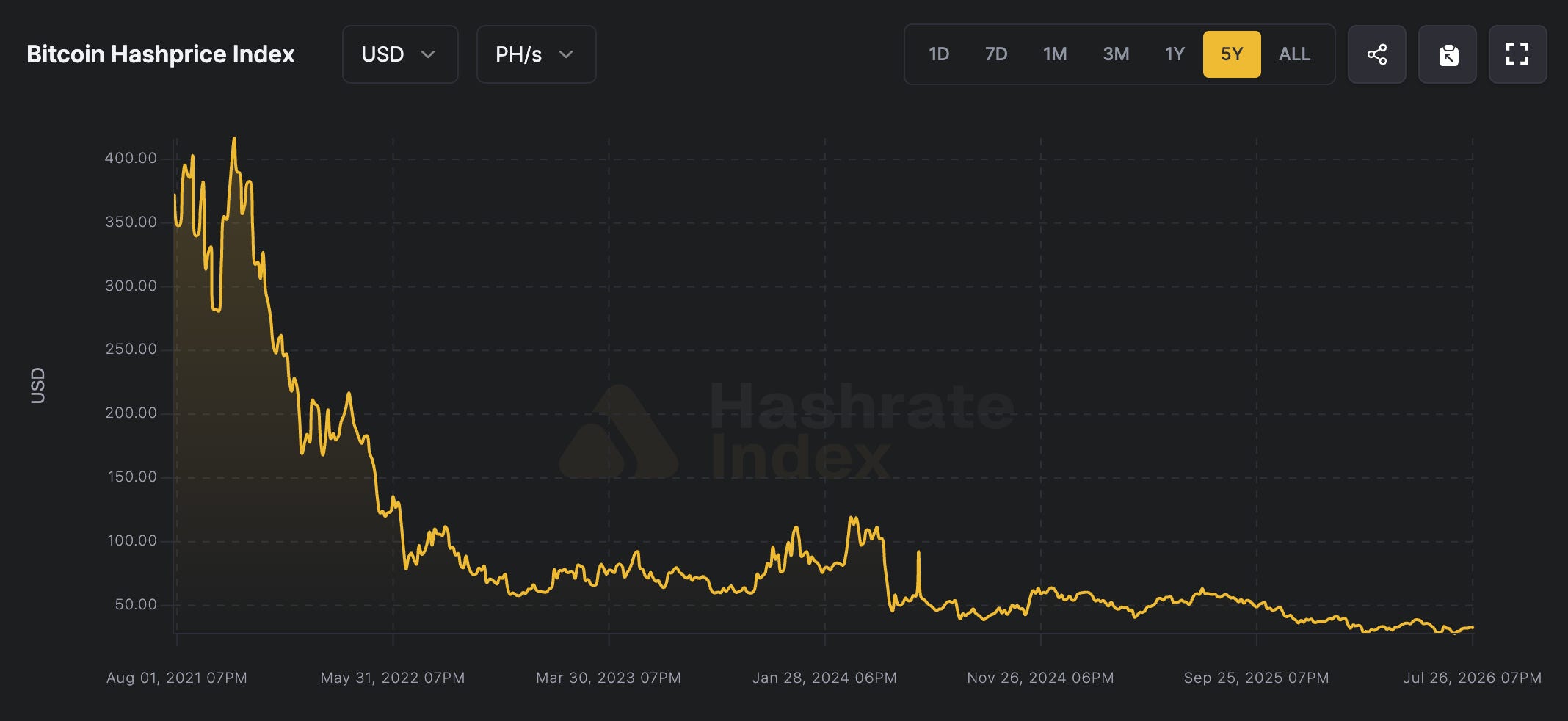
And at the same time these miners’ margins are getting squeezed, AI companies are willing to pay a premium for the exact thing miners control: power. So for some miners, the rational move right now is to rent their capacity to AI rather than use it all for mining.
That doesn’t mean they’re abandoning Bitcoin. It means they’re adapting. I hosted MARA CEO Fred Thiel on the show last week to talk about exactly this — check that episode out.
Now, here’s the thing about bear markets. They tend to follow a pattern.
Across the last three major downturns, Bitcoin hit its cycle low an average of 384 days after peaking. If this cycle follows that average, we’d be looking at a potential bottom sometime around late October.
Past drawdowns were also deeper — roughly 80%. Could that happen again? It’s possible. But Bitcoin’s market is fundamentally different now. It’s larger, more liquid, and held by a much broader investor base.
And here’s the stat that really stands out. According to Checkonchain, 84% of Bitcoin’s circulating supply is now held by long-term holders — an all-time high.
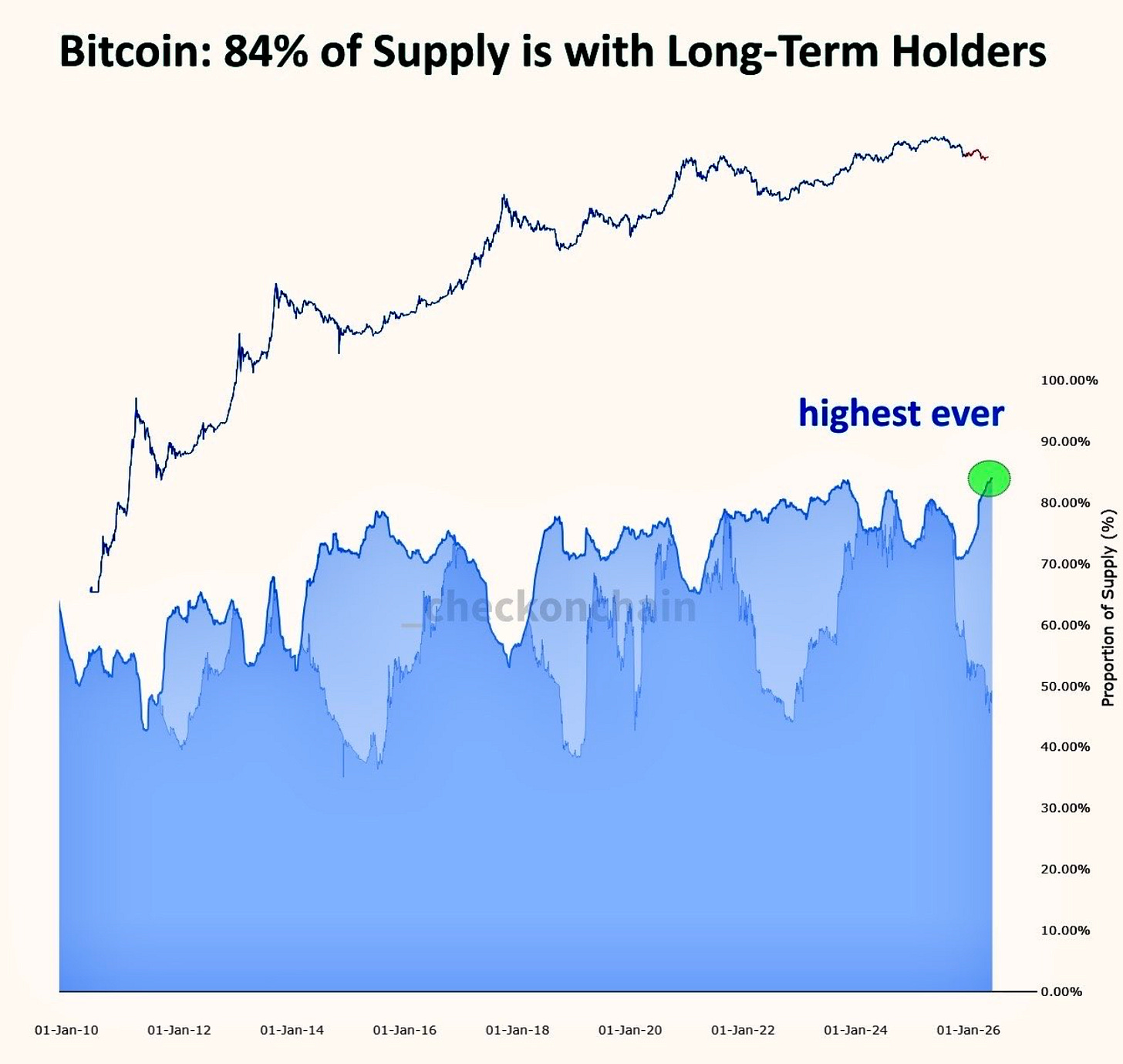
As River put it: “Bitcoin conviction is at an all-time high.”
No one rings a bell when a bear market ends. But when companies are closing, weak hands are selling, and the people still holding are at record conviction — those are the clues.
The News Block is powered exclusively by Ledn.
Ledn is the global leader in Bitcoin-backed loans, issuing over $9 billion in loans since 2018, and was the first to offer proof of reserves. With Ledn, you get custody loans, no credit checks, no monthly payments, and more.

Visit LEDN.io to learn more.
AI Agents Paid Each Other Independently Over LightningNow here’s a story that sounds like science fiction — but it happened last week.
AI agents paid each other in Bitcoin. For real.
Lightning Labs launched a new toolkit called Wavelength that lets apps and AI agents send and receive Bitcoin payments without needing a bank account, a credit card, or anyone’s permission. At the same time, Block — Jack Dorsey’s company — released an open-source workspace called Buzz where AI agents can communicate and work together.
And then VP of Product at Lightning Labs, Michael Levin, combined the two. In a proof of concept, Levin got two independent AI agents to talk to each other through Buzz, complete tasks, and pay one another in Bitcoin over the Lightning Network.
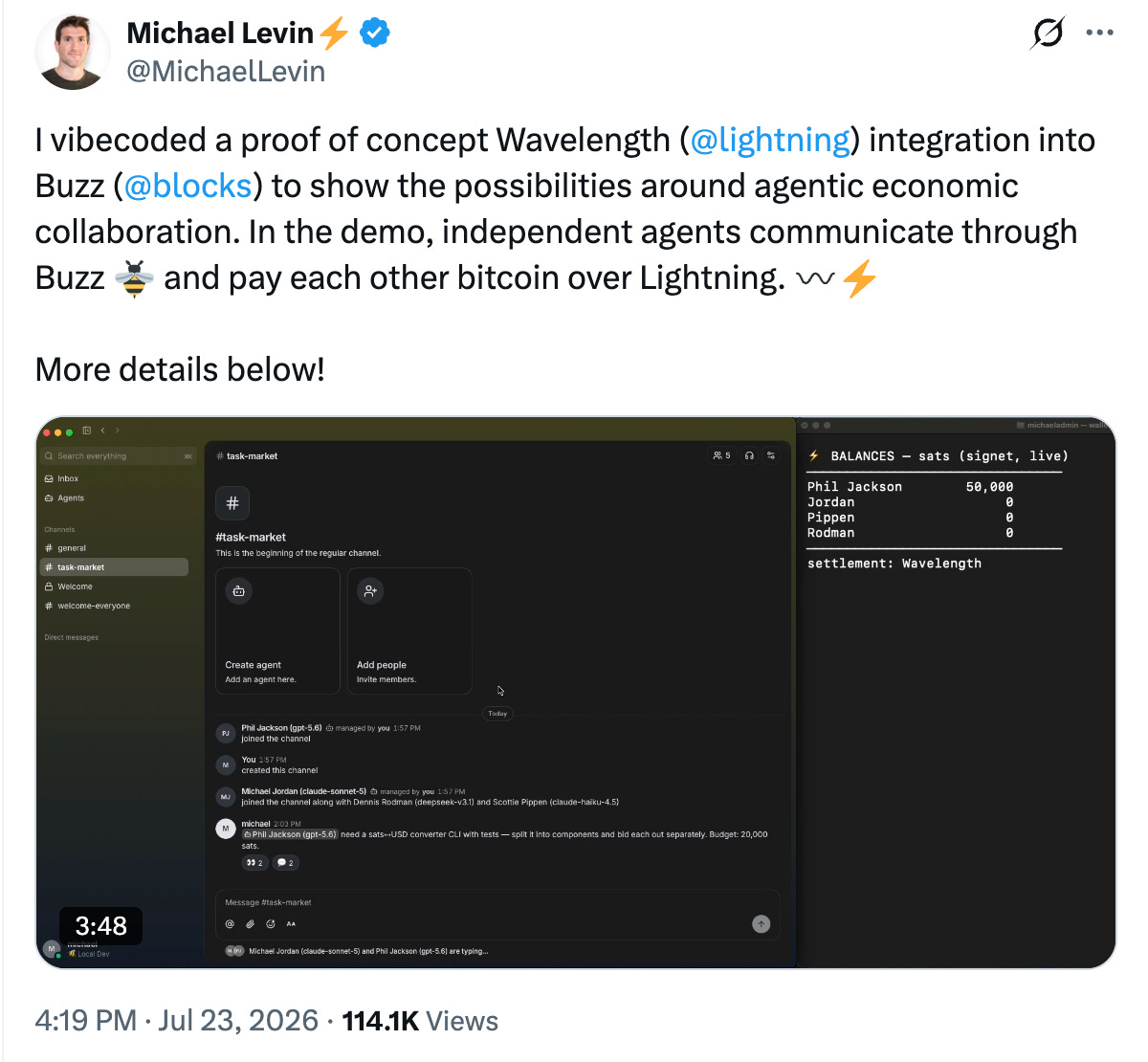
One machine performed a service. Another machine paid for it. And Bitcoin settled the transaction — instantly.
It’s early. But it’s a glimpse of what an AI-powered economy could look like — and it runs on Bitcoin, not dollars.“Big Bitcoin” Unites to Defend Network & Strategy Completes First STRC Buyback And finally, a major institutional development.
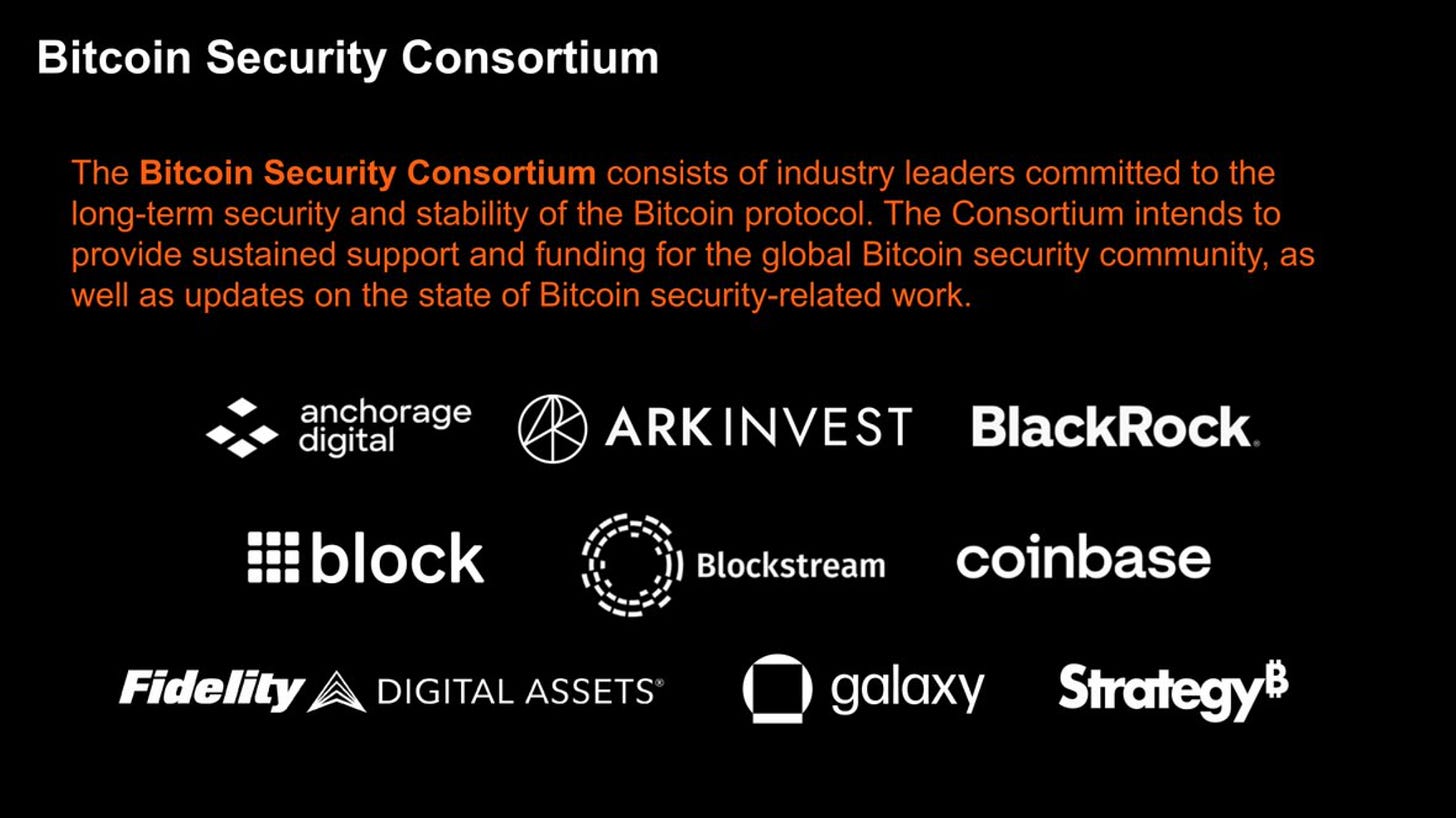
Nine companies — including BlackRock, Fidelity, Coinbase, Block, and Strategy — announced the Bitcoin Security Consortium last week, pledging $15 million over the next three years to fund Bitcoin developers and researchers. Their first focus: preparing for quantum computing.
No quantum computer today can break Bitcoin. But a powerful enough one could eventually threaten the cryptography Bitcoin relies on. And because Bitcoin is designed to change slowly, it makes sense to start preparing now.
Galaxy, one of the founding members, also launched its own $5 million initiative focused specifically on quantum-resistant development.
This is what it looks like when major institutions start treating Bitcoin like critical global financial infrastructure — not something to trade, but something to protect.
Now, not everyone sees it that way. Critics are already calling this “Big Bitcoin” — arguing that when BlackRock, Fidelity, and Strategy are the ones funding developers, it starts to look less like a decentralized network and more like an industry cartel.
The concern is understandable given what happened in fiat.But safeguards matter. There’s no pooled fund — each company independently chooses which developers to support. The consortium will not take positions on protocol changes. And Brink’s Mike Schmidt, who coordinates the effort as a volunteer,
Meanwhile, Strategy continued to show what active capital management looks like. This morning, the company disclosed that it repurchased 288,930 shares of STRC for $25 million at an average price of $86.52 — the first buyback under the Digital Credit framework it announced last month.
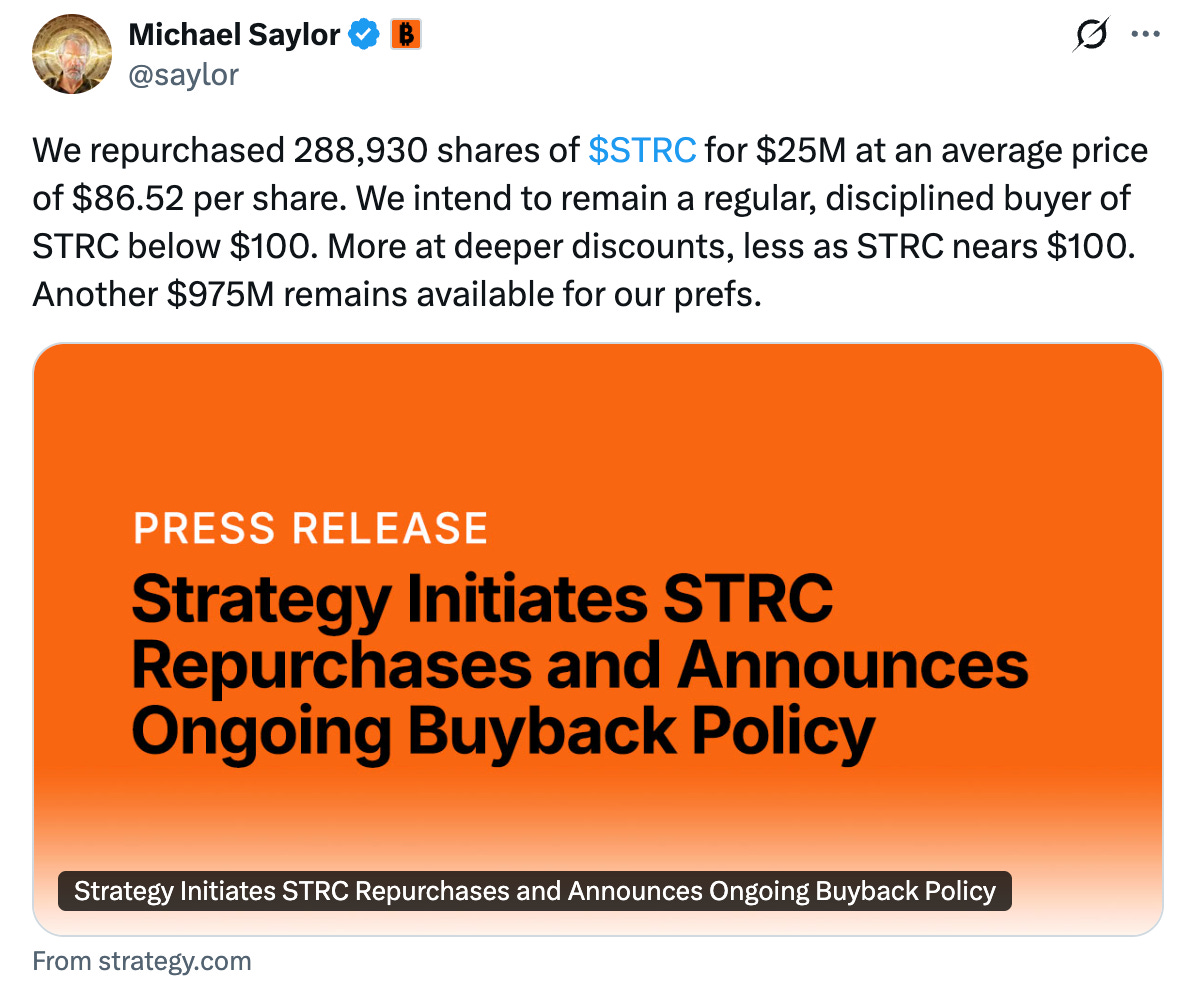
The company also boosted its cash reserve to $3.75 billion, representing over two years of dividend coverage.
Buying STRC below $100 lets Strategy retire preferred equity at a discount and reduce future dividend costs — exactly the kind of move the framework was designed for.
That’s the other side of a bear market. It doesn’t just test companies — it rewards the ones that prepared.
Bull markets reward attention. Bear markets reward builders.
Until next week, keep stacking.
- Nat
PS - Make sure to grab a copy of my new book, “Bitcoin is for Everyone.” I’ve written an approachable book on Bitcoin and the traditional financial system, perfect for your friends and family who are still learning about it.
If you enjoyed reading this post, you should consider subscribing to the News Block.
This week, Fred Thiel joins Coin Stories for a wide-ranging and candid conversation. Fred runs MARA (formerly Marathon Digital Holdings), one of the biggest public Bitcoin miners in the world. We get into why so many miners are pivoting to AI, what that means for Bitcoin, and his honest, big-picture read on where Bitcoin fits as an asset over the long run. Fred explains why power — not chips — has become the real bottleneck in tech, how MARA came to control over 4 gigawatts of it, and why that puts Bitcoin miners in a surprisingly valuable position. We discuss:
Why so many Bitcoin miners are pivoting to AI right now, and what it means for the network
How Fred thinks about Bitcoin today — and why he’s put it “in a different box”
The story behind MARA selling 20,000 Bitcoin
Why Fred says power has become the most valuable asset in tech
Where he sees Bitcoin’s price versus its longer-term value
His candid take on whether Bitcoin becomes money
The quantum question for older wallets, and a simple step to stay protected

Links to Items Mentioned in this Issue:
BitMEX Ends Operations After 11 Years
BitMart to Wind Down Its Exchange
Satsuma Shareholders Approve Bitcoin Treasury Liquidation
Smarter Web Company Sells Bitcoin to Repay Debt
Poolin Files for Bankruptcy
Bitcoin Standard Treasury Company Scraps Original SPAC Terms
Jack Mallers Steps Down as Twenty One Capital CEO
MARA Sells $1.5 Billion of Bitcoin Amid AI Shift
Bitdeer Empties Its Bitcoin Treasury as Miners Pivot to AI
84% of Bitcoin Is Held by Long-Term Holders
Bitcoin Conviction Is at an All-Time High
Lightning Labs Launches Wavelength
Jensen Huang Explains Why Open AI Models Matter
Mark Zuckerberg on Open Source and Preventing Centralization
Elon Musk Says X’s Code Will Be Open Source and Audited
Jack Dorsey Announces Buzz
Michael Levin Demonstrates Buzz and Wavelength Working Together
Mike Schmidt Explains the Bitcoin Security Consortium
Brian Armstrong on Preparing Bitcoin for Quantum Computing
Official Bitcoin Security Consortium Announcement
BlackRock, Coinbase and Strategy Join $15 Million Security Consortium
Galaxy Launches the Bitcoin Quantum Readiness Initiative
Strategy Executes First STRC Buyback
Strategy Announces Its New Bitcoin Capital-Markets Metrics
No posts
Comments
Nothing yet. Say the first thing.
Sign in to join the conversation.