
A few years back I wrote about our civilization’s obsession with counting things, to the point where we like to draw big conclusions from small things.
Our counting obsession is back, in the form of how we’re counting things in questionable ways. Specifically, in the metrics people count up to arrive at the eye-popping financial valuations for many AI companies.
What are the key metrics, and which are mistaken? Is it the size of a Large Language Model? The fantastic growth in revenue? The complexity and power of semiconductors? The number of subscribers to a service? We’ll only find out in hindsight, but just looking at what we’re counting says much about what’s going on.
To be sure, AI is very important and very new, so no one knows how to value it properly. This is par for the course with any important new technology. Greedy markets ascribe “infinite” to the economic impact it will have, and stocks in the new thing go to the Moon, propelled by bad metrics. Later, fearful markets ascribe “trash” to all kinds of associated companies,1 and the press writes “what were we thinking?” stories. Then the technology begins to fit sensibly and profoundly inside the larger world economy.2

Historically, we have many examples of mistaken metrics. Before the epic crash of 1873, people figured that huge parts of the vast American continent would be more valuable with a railroad, and counted miles of track, even though no one wanted to live in a desert (pre-air conditioning and slot machines.)
For a modern claim that everything will be changed, look to the many pundits who say a new super intelligence will affect every part of the world’s $125 trillion economy.
Before the crash of 1929, the sale of radios had risen five-fold over a few years, and the number of radio stations had risen a hundredfold, but that metric of growth never justified the exorbitant stock price of Radio Corporation of America, the paradigm bubble stock of the time. Similarly, stocks in electric utilities turned out to have been financially bundled in bad ways, much like the funny paper supposedly supporting bad housing loans in the lead up to the 2008 financial debacle.
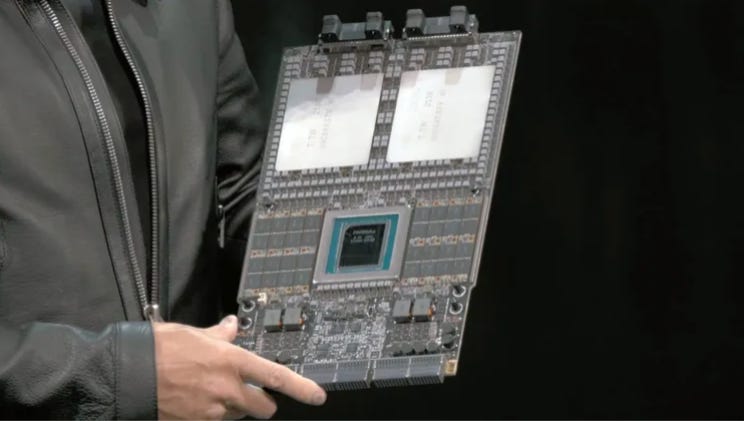
Today, there are similar issues with the way AI companies keep investing in one another, at ever higher rates. Henry Blodget had an excellent piece on this phenomenon a few days ago, with a noteworthy look at how Nvidia, the star chip company in the AI boom, is financing other AI companies.3
With telecoms and Internet, Wall Street came up with metrics like EBITDA, or Earnings Before Interest, Taxes, Depreciation, and Amortization – in other words, how much profit we’d make if we didn’t have all these pesky business costs. The problem with that idea was, we always have those pesky business costs. Switches need to be replaced and new cell phone towers installed. Today, companies like OpenAI and Anthropic face ever-larger costs, as they chase ever more powerful LLMs.
Analysts also adopted the metric of “homes passed,” which was the number of potential customers you get when you sink a cable in a road, across the sidewalk from homes and apartment buildings. The problem was, it was also necessary to then dig across the sidewalk and wire the building, which turned out to be harder and more costly than just sinking the cable.
That’s a little like OpenAI’s much-touted “million customers” claims, first as consumers, then as business customers. There’s no saying whether those customers are profitable, whether they are getting any value, or whether they will encounter any issues with dropping OpenAI for another company when something better comes along. Renowned AI bubble skeptic Gary Marcus recently published a piece raising similar issues with Anthropic’s customer revenue claims.
That’s a lot of parallels with the metrics of the AI bubble and past tech bubbles. But in almost every case, there’s one thing that causes bubble metrics to fail: Human ingenuity.
At first, a few people produce an exciting new breakthrough. Then thousands more people engineer things around the breakthrough that make the new technology cheaper to produce, more practical to apply, and easier to use. Along the way, the original metrics make less sense, because now we’re in a new world.

AI is already getting cheaper to run, and as a lot of smart people work on the problem, it will probably get considerably cheaper. That will blow apart the current metrics. Gary Marcus, who somehow manages to hold down a day job while publishing his skeptical takes, wrote this week on how such changes are happening in the big models.
Full disclosure: I consult for a couple of different startups that are involved in building out the new infrastructure of AI. One of them is attacking problems in data center efficiency, while the other is working on the reliability of software in the enterprise side. These are entirely different parts of the problem, and there are hundreds of other good startups hard at work elsewhere to produce this new ecosystem.
Will my clients succeed? I have no idea, but I’m confident that many such companies will, and their innovations will destroy the existing ways of building and the current metrics of success.
When they do, there will be many new values (and valuations.) You can count on that.

By 2001 lots of people thought Amazon was as doomed as Pets.com.
Where it didn’t happen was the Japan bubble of 1990, and the housing bubble of 2008. In both of those cases the bubble was driven by false assumptions in the financial system itself. The Japan one was dishonest corporate cross-shareholding and real estate values, while the American one was new financial products that raised market risk without disclosing the rise. This is different stuff from tech-driven bubbles, though there’s definitely some overlap, in particular with greed driving ruinous financial leverage. We saw this mix of AI and bad leverage last month, in both South Korea and the U.S., together burning up over $50 billion in notional value.
All perfectly legal on Nvidia’s part, to be sure. And perhaps not even the biggest means to Nvidia’s long-term success. Besides making powerful chips, the company has spent about 15 years building out software methodologies for AI, which thousands of engineers now use. Never knock the power of habit.
No posts
Comments
Nothing yet. Say the first thing.
Sign in to join the conversation.