
“Students are winning”, declare the stickers on lampposts, fuse boxes, street signs and other random places throughout Belgrade.
“Serbia is winning”, announce banners posted in response on prominent buildings.
That is the back-and-forth between President Aleksandar Vučić and the “Red Hand” movement, the would-be Student Soviets that attempted to take power in the streets last year but failed. Whether because they lost their nerve, or the USAID money suddenly ran out, it’s hard to say. They’ve since been juiced by infusions from the UK and Germany (via “civil society” NGOs, of course), not quite enough to make them a threat again, but more than enough to be an annoyance.
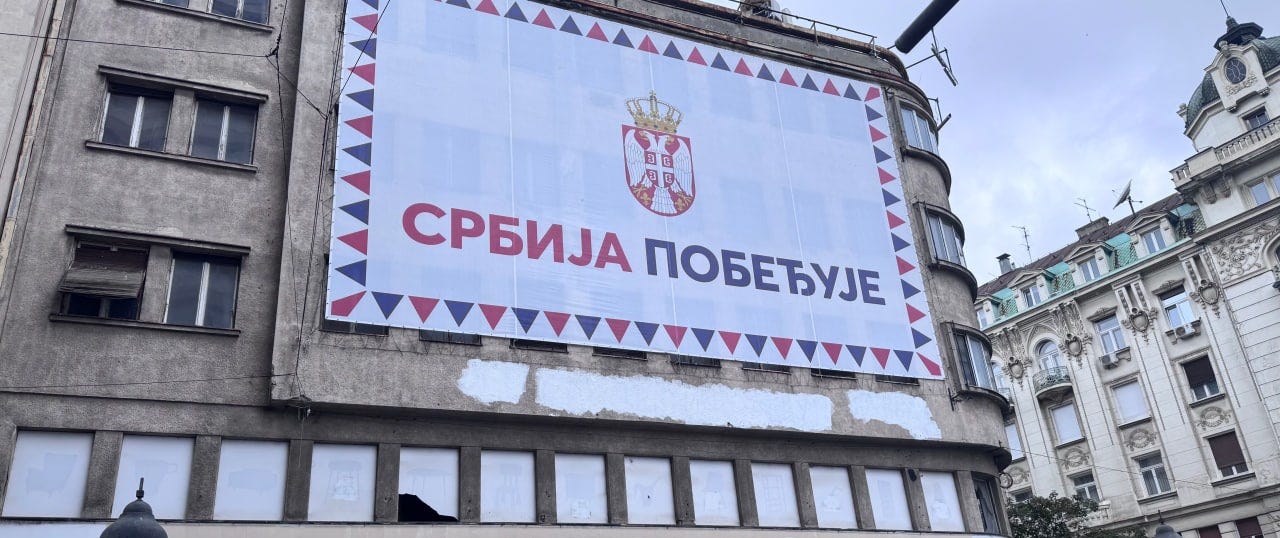
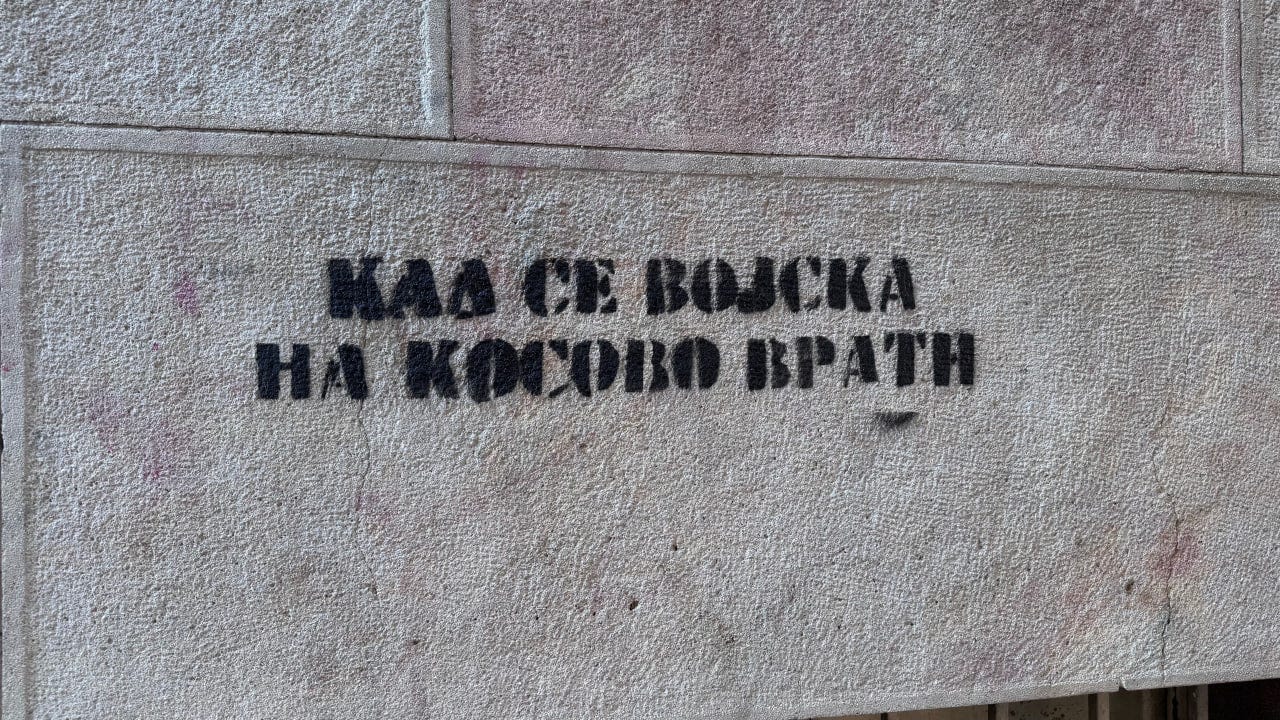
The stickers were their latest trick, along with a graffiti campaign. Belgrade has always struggled with graffiti, but the fastest way to get them painted over these days is to spray-paint or stencil something against the government. Sometimes the pendulum swings too far in the other direction, and the pristine walls end up with pro-government messages.
It’s childish, this bickering, but it’s far better than violence. The only people really advocating for civil war are LARPing as Communists in the “Red Hand” movement, but even their NGO handlers are loath to actually thrown down. Perhaps because they know they would likely lose, or because they fear whoever actually wins might be far less tolerant of their tantrums.
A big bit of wind in Vučić’s sails was last month’s discovery that one of the Student Soviets put in writing that they planned to stage a “sound cannon” incident at a major rally in March 2025. The document was discovered in the trove seized at one of the colleges, after a student was mysteriously found dead underneath a fifth-floor window. After catching the “Red Hands” red-handed, the president had the document shown to the public, and apparently decided now was the time to call early parliamentary elections. Soon.
Walking through Belgrade on a summer evening in July, in between heatwaves, you can see the streets filled with people. The outdoor tables at every cafe are full. Tourists and locals mingle on Republic Square and down Knez Mihajlova, the main street that goes all the way to the old fortress that for centuries guarded the place where the Sava meets the Danube.
You can spot the Serbs by how tall they are, the Russians by their dress and speech, the Turkish tourists seeking a reprieve from inflation. Sometimes there are East Asian tourists too, while more than a few South Asian delivery drivers weave their bicycles around cars and pedestrians alike, as if they are back in Calcutta or Lahore.
Nobody will say Serbia is “diverse”, though. Welcoming of people from all over, yes, but it’s a Serbian nation-state, for all the talk of “citizen this, citizen that”. There’s no debate about this, no “what does it mean to be a Serb?” People just know. The American mind has no response to this.
I wait at the awkwardly timed traffic light across from Hotel Moscow, the iconic building on Belgrade’s main drag, Terazije. The Temple of St. Sava, until recently the largest Orthodox cathedral in the Balkans (the Romanians decided to one-up us, bless them) looms in the distance. Out in front of the hotel, by the fountain built in 1860 for Prince Miloš Obrenović, there’s a throng of people. It’s a traditional location for a collectibles swap meet. Since it’s World Cup season, card trade is good. Yet there is no haggling or yelling, everything is calm and quiet and imbued with some kind of spontaneous order, for there is no sign of actual organization anywhere.
Couples cuddle on benches at the park across the way. Down Balkanska Street, there are bars and cafes every few meters. Next door to a Serbian grill is a Russian pilav place, and further down there’s an Uyghur restaurant, serving a mix of Chinese and central Asian dishes. All seem busy.
Traffic is less dreadful than usual, must be because many Belgraders have gone to the beach for a week or two, mostly in Greece. Cars and vacations aren’t a luxury here. Parking is a bother, so many people take buses and trams. They are free for some reason; the city decided to get rid of 50-cent fares sometime last year. If it was a ploy to buy peace, it worked – but now they can’t backtrack. Honestly, enforcement probably ate up the fare revenue anyway.
Moments of Transition
·
May 31
Since the “40-day war” between USA/Israel and Iran awkwardly halted in early April, the world has waited for the other shoe to drop: renewed fighting or a peace deal? So far, it’s been neither; aside from a couple flare-ups, and an Israeli offensive in Lebanon threatening to derail the talks, both Tehran and Washington have been playing the waiting game.
Down by the old railway station, now designated a museum, there is construction everywhere. The Belgrade Waterfront, a strange city-within-a-city, is going up at dazzling speeds. Despite the rising supply, real estate prices are going up like a rocket ship, as a certain US builder likes to say.
Karađorđeva Street goes from the old railway station almost all the way to the fortress, along the Sava. It’s all dug up now, with new streetcar rails being put in place. A new bridge, to replace the one built by the Wehrmacht in 1942 and only recently dismantled, is slowly taking shape on the far shore.
Karađorđe, or Black George, led the first successful revolt against the Ottomans, in 1804. There had been others since 1459, when Serbia first went under the Turkish tide, but all had been snuffed out in blood. This one, too, faltered in 1812, while Russia was a little too busy dealing with a French problem – only to roar back a couple years later under Miloš Obrenović, this time to stay.
Serbia’s wars of independence weren’t fought by gentry, but by peasants. Miloš was illiterate, so he did not write a Constitution. He understood power, though, and used it. The first Constitution, proclaimed in 1830, never went into effect; it was strangled in the crib by European powers and the Turks, because it was too “progressive”. It abolished slavery, for one thing.
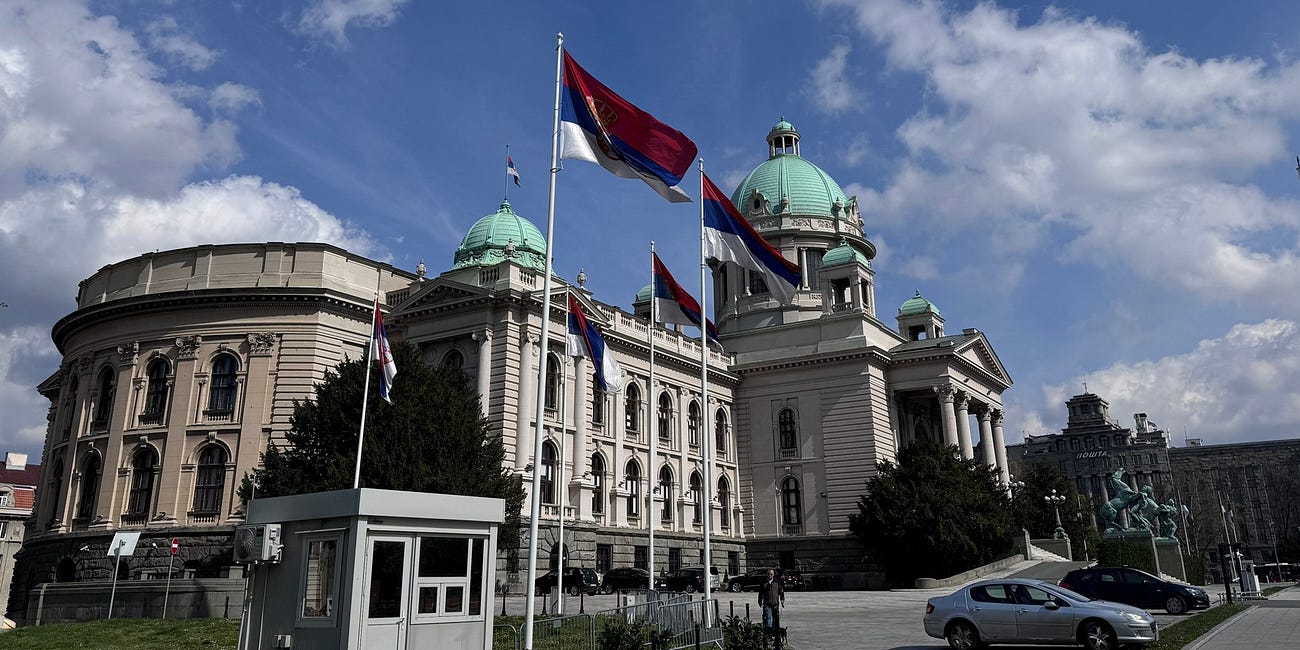
Since then, Serbia has had 13 more constitutions, each longer than the next. It also went from a principality to a kingdom, got mixed up with Catholic and Muslim subjects of the Hapsburgs after WW1, got carved up by Communists in WW2 and emerged from the 1990s Succession Wars crippled but alive. The Globalist American Empire believed it conquered, but the Serbs are known to defy expectations.
This helps explain why the Serbs don’t put much faith in written laws. They know they’re useless against men with swords (or guns, or bombs). They understand power and where it comes from. They struggle to understand why Donald Trump – or even Vladimir Putin – don’t just do things that need doing, and find legal rationalizations later.
The government here claims it wants to join the EU, but no one is crazy enough to ban AC, as they do in Brussels. They don’t have hand-wringing debates about Net Zero, or saving the planet, or how suffering stoically is the Serbian Way. There’s a problem, they solve it, on to the next thing.
Most of Europe is a museum, with dwindling native populations swamped by aggressive settlers from the Third World, in thrall to unaccountable bureaucrats and suicidal ideologies. America is tearing itself apart instead of celebrating 250 years of existence, no small feat in today’s world.
Blissfully unaware of this, Serbs also tend to whine and complain how things are actually terrible, and how grass is always greener on the other side of the border somewhere. Having spent more than half my life on the other side of the world, I just smile and nod.
Serbia seems like an island of sanity in a sea of madness. And that’s a victory — even if not quite what the opposition stickers and government banners have in mind.
Thanks for reading! This post is public so feel free to share it.
All my posts are free, but if you would like to buy me a coffee, it won’t go unappreciated!
Comments
Nothing yet. Say the first thing.
Sign in to join the conversation.