

Many moons ago when I was a swingin’ single in NYC, I dated a developer. I remember hanging out late one night in my office with him, building some cool naming software, and he said something I adore and think of often: “Code should be written like a love letter to a future developer.”
I learned in that moment that there are many ways to write code. You can do it well or you can do it shittily, and still make a website basically functional either way. He explained that in order to code something useful that will last, you have to think of it expansively in the long term - to think of it as if you won’t be the only one interacting with it. You must leave it in a good and usable place for others who will interact with it and build upon it in the future, even when you’re no longer there.
Naming architecture is no different.
It is the underlying code for your business.
Before we go any further, because there are many different ways of thinking about it, I’m setting the terms for the discussion here. What is naming architecture?
My colleague who often teams up with us at The Naming Group, Rob Meyerson, uses the term naming system but in this instance, architecture and system are interchangeable and I really like the simplicity of his definition:
“A naming system is a set of related names for related items.”
My other colleague at The Naming Group, John Elliott, recently defined good naming architecture as
“A system that manages how customers interact with the products and perceive the brand overall.”
Yep. Nailed it.
And for those of you that prefer a list of examples, naming architecture is how a customer understands:
What belongs together
What’s good, better, best (or just different)
Where the brand wants you to pay attention (or not)
How to navigate choices and purchase decisions
It’s darn pivotal.
The mantra “The medium is the message” really applies here. Whether or not they can directly attribute it to naming architecture, customers can sense when there’s disorder and when there’s coherence, and it leaves a brand impression on them.
The cumulative impact of naming decisions (whether they were intentional or not) routinely outlives teams, strategies, org charts, even whole categories.
And yet, those naming decisions are often one-offs, ad hoc, and done as products are on their way out the door.
Just like the little code fixes that developers implement as bandaids, teams often push through individual names, looking at them in isolation as a box to check on their incredibly long brand development agenda. I get it. It’s SO tempting to look at names individually (“It’s one product name, let’s just get it done!”). It’s scarier to look at a name as a public, highly consequential node on the larger mycelial network that is your naming architecture.
But when those individual names calcify, a larger architecture ossifies. Whether you want it to or not.
One of the greatest paradoxes of naming (there are many, actually, but this is a big one) is that:
Despite being the brand decision with the longest half-life, naming is often treated as one of the most rushed, short-term creative tasks.
I can’t tell you how rewarding it is when you work with a client who fully, truly gets this.
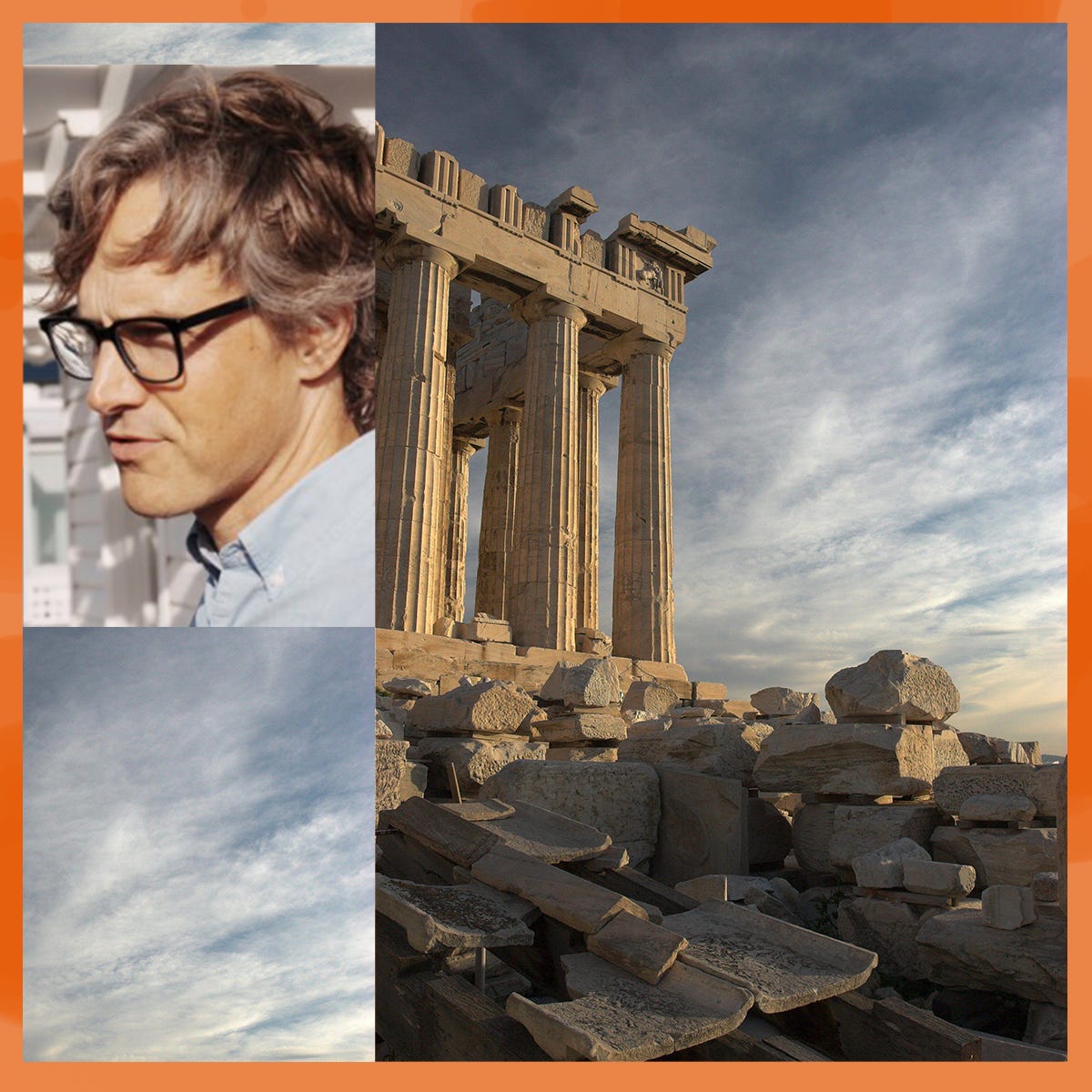
One of the clients on that list is Ladd Martin, who I’ve had the pleasure of working with in his former role as VP of Global Marketing at HP when The Naming Group was HP’s lead naming agency, and also on a handful of projects in his new role Fractional CMO and leader of startup creative agency Alt B Partners.
The work we did over a number of years in the trenches at HP was absolutely formative for both of us. There’s no better place to observe naming at scale than at one of the fastest-paced tech behemoths on the Fortune 500 list. In working with Ladd and a number of other brilliant people across HP, we were constantly trying to make these future-minded decisions in a bureaucratic environment and thus, didn’t always have the ultimate authority to push them through to the marketplace—but damn did we try.
And even when politics got in the way of optimal decisions, it was so gratifying that we both truly believed in best practices. In a recent chat reflecting on what naming at scale was like at HP, Ladd shared one of those cornerstone thoughts that, as you’re hearing it, you know will shape your work for a while:
“Naming architecture is the external articulation of a business strategy.”
So simple, so true. 🤌.
It isn’t a set of clever words that speak to what products are. It’s the path you lay down for consumers. It’s for that reason that naming architecture must support where the portfolio is going, arguably even more so than supporting what exists today. Ladd would often inject this thinking into our work, asking:
“How does this naming architecture support the direction that we want to go from a portfolio perspective to get to a place that’s going to drive us to higher margin sectors and greater credibility within specific spaces?”
If naming architecture is business strategy made visible, then what does messy, haphazard architecture reflect?
While sometimes it is a lack of business strategy, more often, sadly, it’s reflective of the sub-optimal organizational conditions for expressing it.

What I mean when I say “naming systems” is two things: the content and the process. The names and the practice of creating them. The naming architecture and the organizational systems in place that companies have to develop them.
As I will continue to write about tirelessly in this Substack, most companies underestimate how challenging naming is, get exasperated, and launch with a “sure-just-do-it” name that leaves a trail of minor grievances across the organization.
As I will continue to pitch joyfully under The Naming Group, what brands need and what many brands are finally starting to invest in (yay!) is a carefully constructed naming practice managed by brand and sensitive to the needs of all who touch naming (often across many departments beyond brand). This helps to create powerful naming architecture that is intentional and strong enough to survive market and leadership changes.
Messy/lacking systems don’t come from bad taste, they come from organizational design failures.
Simply put: Naming becomes negotiated instead of governed.
This theme of architecture as x-ray vision ran through my entire chat with Ladd:
“The silos of the organization and the power that exists within them is showcased through the names of brands. And you can kind of tell when an organization does not have singular power in a function like brand, marketing or naming.”

As a practitioner of naming at scale, one of the prevailing themes is: naming is started too late in the product development process, and thus is rushed and compromised. Ladd said it simply:
“In a big organization naming in a hurry is a really bad idea.”
Ladd and I combated this together in our work at HP:
“The number of executives that made the wrong decisions, that went against recommendations, or that decided that [a name] was good enough because... we ran out of time [was significant].”
Time pressure is the silent killer.
Sometimes that’s one of the most valuable things we can bring to a client - a bullhorn to amplify the voice of the VP or brand manager who has been saying for months/years “We need to start naming earlier.” As consultants, we are able to apply more direct force to teams to start naming earlier because that pressure is wrapped in the unignorable ($) packaging of “external naming agency expertise.”

Something I’ve been thinking about a lot is what I call “the christening impulse” - the desire to bequeath a new product with a cool name. And how hard it is for people to not want to leave this mark on their work, even when strategically, it might not be the best choice.
Being a proper steward of evergreen naming architecture means being comfortable with something that a) might be incredibly unsexy and b) might not make sense outwardly right off the bat.
In other words, sometimes it means keeping naming line logic incredibly descriptive or launching a product name that feels out of place for a while until it’s similarly named siblings join them in the coming years.
As such, a naming steward needs to possess equal parts vision, patience and restraint (see my prior post about Joel Ewanick, former GM CMO, who also embodied these qualities). In Ladd’s words:
“When you see the way in which names come across that aren’t very well harmonized, I think that the driver of that [...] is that marketing/branding creative pursuits require a level of strategic purity and guts and fortitude that [does] not exist in everyone...”
You have probably heard of the famous test where children were offered either a single marshmallow now, or two if they waited fifteen minutes, illustrating the power of delayed gratification. I would bet that the best naming architects end up eating more marshmallows over longer periods of time.
And! While there can be so much forethought and care put into great naming architectures, it isn’t always possible to future proof it completely. Sometimes the pace of business accelerates or a global pandemic happens. Sometimes the human race gets side-swiped by AI. As in life, even the most careful cannot prepare for every single outcome.
After cathartically dishing about all the obstacles to good naming architecture, we talked turkey about the impacts—aka the recurring challenges Ladd faced as HP’s VP of Global Marketing:
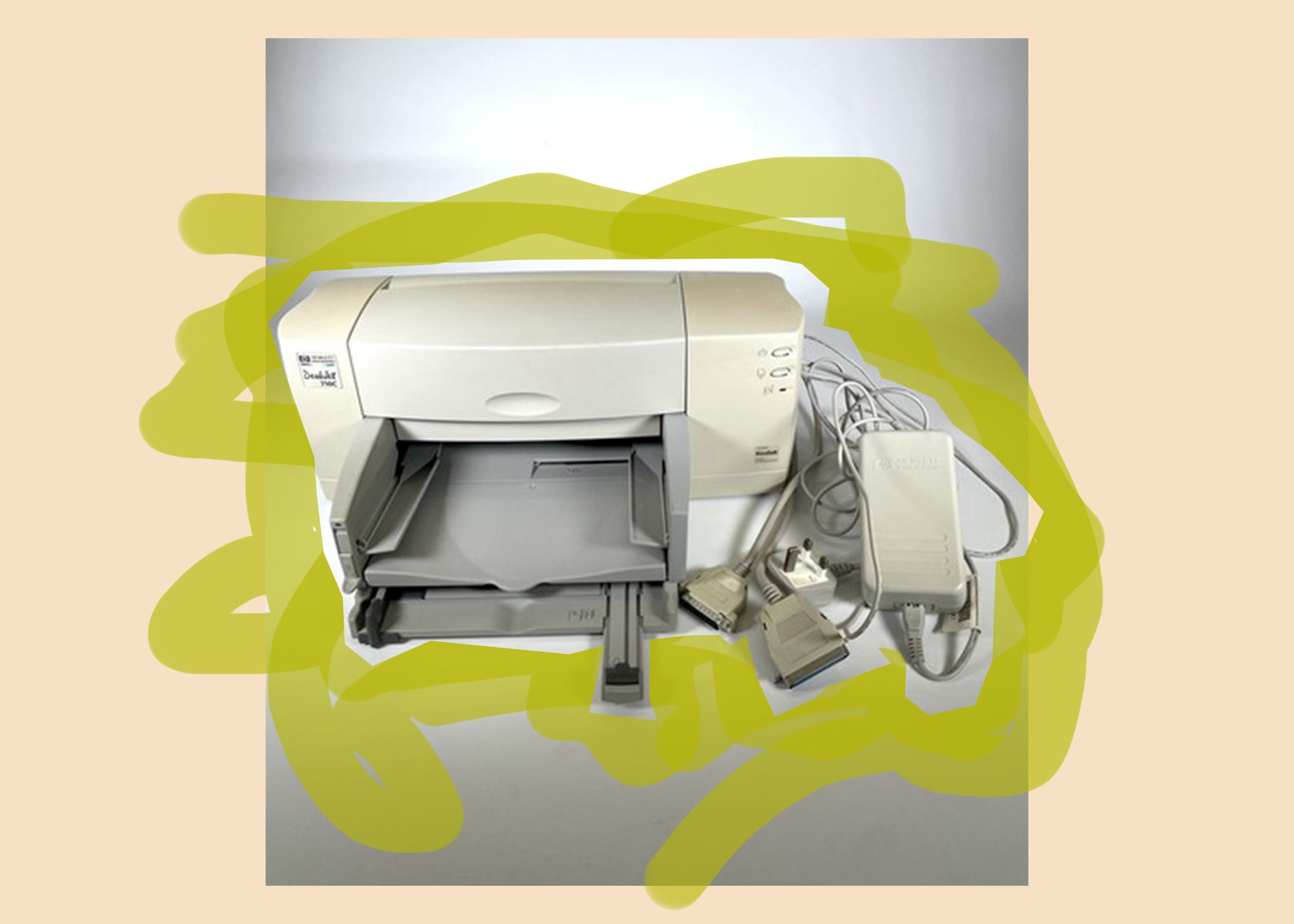
“Brands last the test of time. And when you make a decision to create the LaserJet brand in 1983 or whatever it was, that then becomes the driver of an entire category. You are committing yourself in that age to a brand that has a product technology in it that has camel case [in the name], that creates a codified way to think about a category. And when you change that, you change that at your peril.”
Again, names don’t just label products—they commit a company to a way of seeing the world. When HP introduced LaserJet, it wasn’t simply naming a printer; it was elevating a specific technology into the primary lens through which customers understood the category.
Over time, “laser” stopped being an implementation detail and became a mental shortcut: LaserJet versus Inkjet. The name trained the market to think about printers in new technical terms, shaping how options were compared and decisions were made.
This is the hidden power of naming architecture. Syntax, structure, and repetition don’t just organize a portfolio—they encode mental models. Customers learn what belongs together, what matters, and how value is defined, often without realizing it. And once a naming system teaches the market (even competitors!) how to think, it becomes remarkably durable. Changing it, therefore, isn’t just a rebrand, rather it’s an attempt to rewrite a model of the world that may have been reinforced for decades.
To help prove the point of impact, I’ll spell out an alternative reality. Had HP emphasized use cases, outcomes, or customer roles instead of technology, the category might have evolved around what printers enabled rather than how they worked—reshaping everything from comparison logic to product roadmaps.
Brands like Fitbit, Ring, and Nest organized their categories around human outcomes—health, safety, comfort—rather than the technologies that delivered them. As a result, they gained freedom to evolve. By contrast, technology-forward names like LaserJet locked an implementation detail into the mental model, shaping not just perception but the future paths available to the brand.

So, having clarified the stakes of naming architecture and what gets in the way of a good one, we have to ask: What is your role in all of this?
CMOs rotate. Strategies refresh. But naming architecture remains. It is one of the few brand assets that compounds over time. Ladd summed this up perfectly:
CMOs that have a vision for the long-term viability of a brand should see [naming decisions] as really core essential building blocks because in reality, no matter what you do, you could do corporate advertising campaigns, you can do messaging, whatever all those things are, the biggest impact of your brand in a product company like that is going to be the naming.
Frankly, I think this is no small part of why I have a job doing what I do. In addition to naming requiring deep expertise in disparate areas, it is just SO CONSEQUENTIAL.
Naming architecture is one of the most durable forms of brand governance. The real risk of bad naming is not getting an individual name wrong. It’s an organization locking itself into a system that can’t evolve.
At the risk of introducing a 47th metaphor within a single Substack, I will end by saying: The decisions you make today will haunt your business long after you’re gone.
So, in considering your legacy, what kind of ghost do you want to be? Are you one of those terrifying ones who shakes the walls of your descendant’s cubicle and leaves a trail of chaos? Or a benevolent apparition who occasionally illuminates the path towards brand clarity? The choice is yours.
No posts
Comments
Nothing yet. Say the first thing.
Sign in to join the conversation.