
Naming your baby? Intuitive.
Naming a multimillion dollar nameplate for a major automaker? Not intuitive.
And yet, even some of the world’s consummate brand practitioners still conflate these two things. The two are compared to each other all the time.
Stop, people. We have to stop.
There are a few general psychological principles of human behavior that apply to both situations, yes, but the fundamental process for each is not the same. There will be no legal defense strategy for your baby’s name, it will not require the agreement of a diverse team of specialists and stakeholders, and it will not be slapped on hundreds of thousands of units per year across the globe.
Unfortunately, because they both get called “naming”, we are inclined to act like they are more similar than they really are. This is a major disservice to people who have to name at scale, because they go in thinking ‘this should be easy’, ‘this should be creative’, ‘this shouldn’t cost much’.
Hear that? That’s the sound of me beating a dead horse.
I have said it before—and I will continue saying it until the tides of naming perception have turned—that creating a brand name is harder than is generally assumed, and that deeply rooted, implicit assumptions about how the process should go only make it harder.
One of the problematic assumptions we see most often at The Naming Group is a belief, usually implicit, that naming problems are a creative shortcoming.
In reality, especially at enterprise scale, that “naming isn’t working” feeling usually isn’t really about the names available for consideration. It’s about the process of naming.
Structural. Not creative.
This post is an attempt to distill why so many organizations insist on focusing on creative problems and not structural solutions—why they don’t see their own naming process pain points, and why they often don’t want to see them.
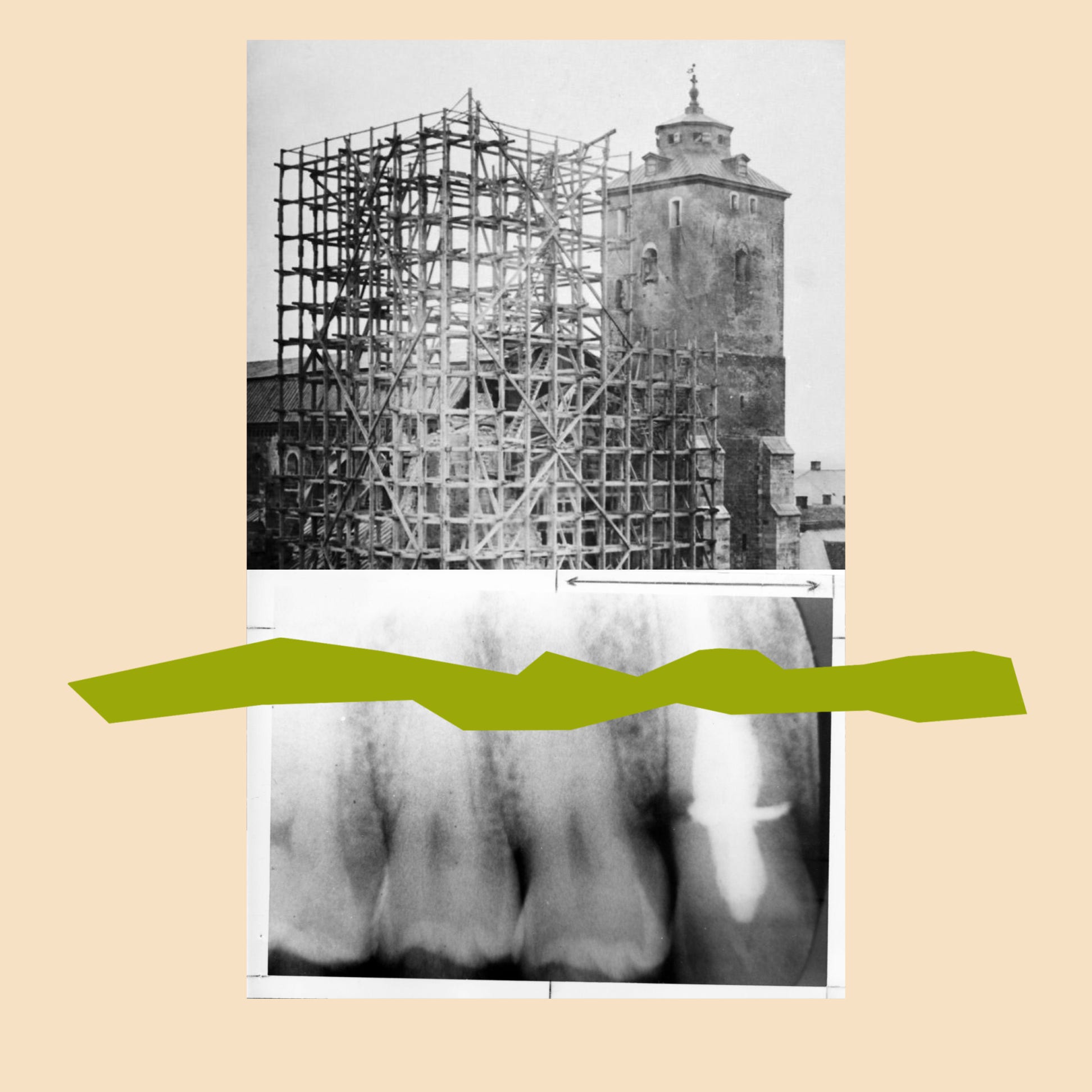
Because the courage to tackle the real problems plaguing naming starts with the wisdom to recognize them.
You go to the dentist because a filling feels loose.
Maybe there’s a sharp zing when you chew. It’s annoying, but it seems straightforward. You say, “I think this filling just needs to be redone.”
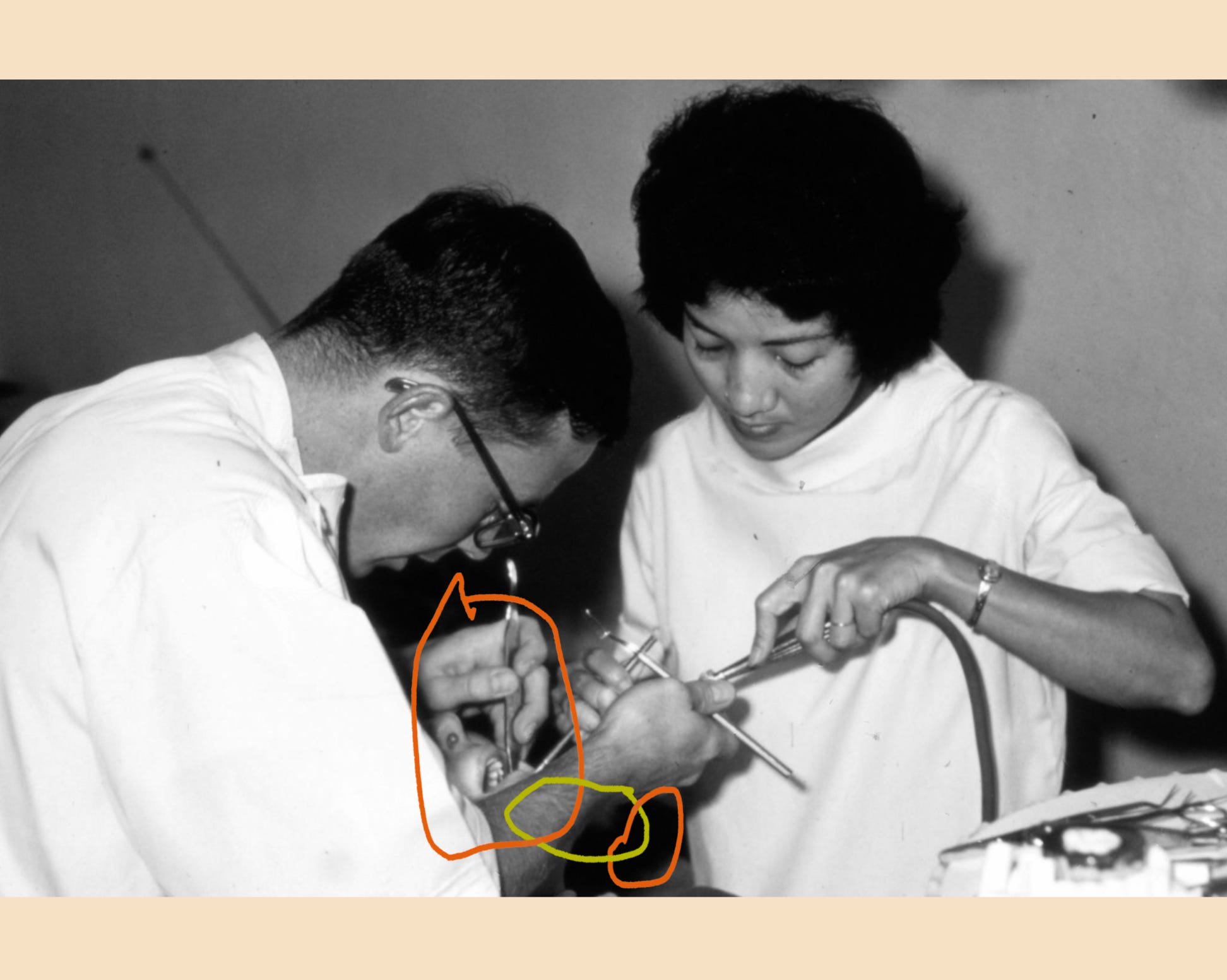
The dentist takes an X-ray.
It turns out the filling didn’t simply “wear out.” There’s decay underneath it. The tooth is cracked from years of grinding. Your bite is slightly misaligned, so that one tooth has been absorbing more pressure than it should. You’ve likely been grinding at night, weakening not just this tooth but several others. If they simply replace the filling, it will fail again—or worse, you’ll be back in six months needing a crown or even a root canal.
What felt like a small, isolated repair is actually a structural issue: bite alignment, bruxism, compromised enamel, maybe even early gum inflammation. The loose filling is obviously bad, yes, but it’s downstream of a more serious set of failures. Structural weak points that were invisible to you, even though it was your own mouth.
And you know how this story goes. If you insist on only fixing the symptom and not its root cause—“just redo the filling, please”—you guarantee you’ll be back in the chair in a few months.
Wanting to just fix the filling is wanting to “find a better name.” At The Naming Group, we often start out engaging with a client on a name development level, in pursuit of better names, but we find underneath:
No governance model
Internal political fragmentation
No category architecture
No portfolio logic
If you just “redo the filling” (i.e. deliver a clever name), the structural weak points remain. It cracks again. Or gets renamed in 18 months.
Although we have started to see a shift over the last 5-7 years, still, more often than not, inquiries and RFPs come into The Naming Group with an ask that sounds like:
We need a name
We are never able to find the right name
We need to add some muscle to our creative bench
We only have budget for name generation
We have lots of names already for this project and we just haven’t gotten there yet, so we need some more
These clients are entering through the door that never jams, and that money and approval flows through most easily: the creative door.
But why? Why don’t you notice your nocturnal bruxism and maxillary malocclusion until your filling gets jiggly? Why are you reticent to address the bigger issues—even when you know it will make the smaller ones easier to manage?
Let’s break it down.
On the surface, I get it.
You ask for a solution to address where you are feeling the most immediate pain.
In a corporate environment, the people tasked with naming are often incentivized to ask for the solution that is easier to ask for, or to not question their boss who asked for a creative solution. It’s easier to ask for “better creative” than to confront deep-seated assumptions and unchecked corporate power distribution—the inherent perils of dancing with ego and reprogramming human nature.
It is much easier to ask for:
More names, another round of creative
Another agency to give it a shot
A tweak to the word
A different vibe
These are the palliative fixes to a dumpster fire naming culture.
This is taking ibuprofen while you’re saving up enough money to pay for the root canal.
To think about going slow to go fast? To stop the machine to assess how it’s actually working? That appears to be too much of a cost—not just in money, but in time. We can’t afford to invest in that type of consultative assessment, we have too many products to launch this year.
And yes, while it is fundamentally true that addressing deep-seated structural issues requires more effort, foresight, and organizational alignment than tweaking creative elements, it does result in needing significantly less of those things overall over time.
For the past year, we at The Naming Group have been working with one of the nation’s leading QSRs. To their credit, they knew they had some structural issues when they approached us. However, they didn’t know quite how deep they went. What started off as a perceived 75% naming guidelines/25% naming process initiative, became, over the course of 9 months, flipped. The vast majority of the work we’ve been doing with them is reshaping naming culture within the org to move beyond superficial preferences and subjective “vibes”—confronting the underlying systems, ineffective research methodology, unclear roles, and processes that govern how names are generated, evaluated, and ultimately adopted.
That project has been many months in the making, but it’s not like the client’s product rollout machine stopped working at any point during that time. While we worked on the long term project of envisioning the ideal process for name development—generation, testing, screening, and approvals—we were also there to shape name development for products already making their way through the pipeline.
In several moments, a big picture question we were tackling in our long-term planning discussions had immediate relevance to a live name development question. Rather than being a distraction or suck of people’s limited bandwidth, the long term process planning helped lubricate the wheels of day-to-day operations in real time.
Especially when naming in an org is already kind of mushy or chaotic, the commitment to thinking big picture isn’t just a “long term investment”.
It can start paying off in the here and now.
In the short term, it often appears more cost-effective to engage in creative problem-solving rather than investing in structural changes. A quick name generation exercise is a more palatable budget item than a comprehensive overhaul of an organization’s naming governance structure or decision-making processes.

This happens at startups and mid size companies as well as major corporations. Talking with Dominique Gagnon recently, a venture architect who has spent two decades scaling consumer brands and founder-led startups, she mentioned a common founder misconception: naming as “final polish.” That naming is perceived as quick, cheap, and thus gets relegated to the same category as logo tweaks or tagline polish.
Founders often think: “We’ve figured out the hard stuff (product, market, funding), now we just need someone to make it pretty with a name.” Treating naming as a “final polish” that can be tucked into a big general branding proposal as a tiny line item makes it feel as though it should be cheaper. But is it cheaper when no one—founders, advisors, board members—likes any of the names and asks you to hire another agency to “develop more names”?
This economic rationale, however, is often a false economy. While creative fixes offer immediate gratification, they fail to address the root causes of naming inefficiencies, leading to recurring issues, and ultimately, higher long-term costs. The initial extra monetary investment in structural solutions—processes for criteria and strategy alignment, decision-making facilitation methods, effective leveraging of dormant name-development skills—this yields significant returns by reducing future external agency costs and streamlining internal operations.
As my friend and brilliant designer Meryl Vedros always says, “Buy once, cry once.”
This question, often unspoken, lies at the heart of many organizational resistances to strategic naming. In environments with high employee turnover or short-term performance incentives, individuals may be disinclined to invest time and effort in systemic improvements whose benefits will only materialize long after they’ve moved on.
The perceived lack of personal reward for long-term structural fixes can create a powerful disincentive. This mindset prioritizes immediate, visible wins over foundational changes, perpetuating a cycle where naming remains a tactical, rather than strategic, concern. It highlights the need for leadership to foster a culture that values long-term stewardship and recognizes the cumulative impact of naming decisions on a brand’s enduring success.
It’s pretty hard to get around this one. I really get it. I’m at the point in my career where, despite actually really enjoying my job, I also really enjoy my life outside of work and know which things I don’t want to break my back trying to fix at work. If I were in a corporate environment where I had 1% of the agency I do as a business owner, I think this would be exponentially magnified.
So when I sense resistance from a client who is clearly burnt-out by the bureaucratic morass of corporate America, sometimes I have to just recognize that reality. The best thing we, The Naming Group, as an agency can do at that moment is work with them enough to frame naming issues correctly—as true costs to the business, and help sell that idea properly to leadership. To help them become the most efficient squeaky wheel, while expending the least effort and political capital possible.
In naming a brand, there is an inverse relationship to the size of output (~10 characters) and the amount of power it holds. It’s hard to admit that the choice of a single word can have so much power.
And when I say power, I mean the depth of impact—the length of tendrils woven through every department of an organization.
A name is a legal asset that requires trademark clearance across jurisdictions. It’s a 7-figure domain acquisition. It’s design systems, typography, signage, packaging, motion, UI labels, sales decks, investor narratives, recruiting materials, press releases, product SKUs, internal documentation, procurement systems, CRM fields, ERP entries, and email signatures. It shows up in contracts, in compliance filings, in app stores, in ad auctions, in warehouse inventory codes.
Changing a name isn’t swapping a word. It’s triggering a domino.
That ~10-character decision mobilizes executive attention, cross-functional alignment, budget approvals, agency time, legal hours, engineering tickets, brand training, and market re-education. It consumes political capital. It resets search equity. It reframes category positioning. It can unlock growth, or quietly tax it for years.
Tiny output. Massive surface area.
That’s the power: a compact linguistic object with organizational consequences that ripple for a decade or more.
All of that said, when a new product name underperforms or faces internal resistance, it’s often simpler and less confrontational to attribute the failure to the name itself—its sound, its meaning, its perceived lack of creativity. This deflects attention from the more complex and potentially uncomfortable truth: that the naming process itself was flawed. It’s easier to critique a tangible output than to scrutinize the intangible political dynamics of how that output came to be.
This tendency to externalize blame prevents organizations from identifying and rectifying systemic weaknesses in their naming strategy, reinforcing the idea that naming is a subjective, hit-or-miss creative endeavor rather than a disciplined, strategic discipline rooted in a larger architecture. It allows underlying organizational dysfunctions to persist, masked by the convenient culprit of a poorly chosen name.
In some ways, stakeholders in an organization often know on some level that they are doing this—scapegoating a name in order to not have to critique how the organization names is an intentional choice, meant to deflect blame and scrutiny.
But, of course, the implicit assumption in that approach is that the process actually can’t be fixed, which is a belief you can’t disprove if you don’t try.
At The Naming Group we talk a lot about the psychological profile of brand managers (I use that term generally to refer to those tasked with stewarding a brand in house or agency-side, at any level of the org, excluding C-suite). Generally speaking, they are highly conscientious folks. They are meticulous, careful, and attentive. Which is crucial when naming has no structural integrity within the org. We say that they run naming on “vibes and conscientiousness”—the default engine when the org refuses to look more deeply at the naming machine.
And for that poor brand manager… This. Is. Exhausting.
Completely unsustainable, a poor use of resources and bad for business. And yet we see it all the time.
The cumulative, accretive impact of lack of naming structure is real:
The internal churn cycle. Without structural alignment and an objective name development process, operational efficiency degrades and quietly slurps budget. Leadership preferences shift with the wind, stakeholders never fully agree, and brand teams are repeatedly asked to “bring three more options.” Each restart burns weeks of time, drains political capital, compresses timelines, exhausts internal teams, and cycles through external agencies. The cost isn’t just the name — it’s the accumulated hours, morale erosion, partner turnover, and opportunity delay created by an organization that never aligned on how naming decisions get made.
Operational drag multiplies. Every new, unmanaged name triggers legal clearance, domains, design systems, sales enablement, internal education, and long-term maintenance. Creating a name creates permanent overhead.
Strategic signal dilution. A messy portfolio confuses customers, analysts, and internal teams. Cross-sell weakens, ecosystem value is obscured, and valuation multiples quietly suffer.
Going back to our core metaphor, you can live without fixing the bite issue, the grinding, the decay, but your quality of life plummets. You can still eat great food, but it’s often painful and unrewarding.
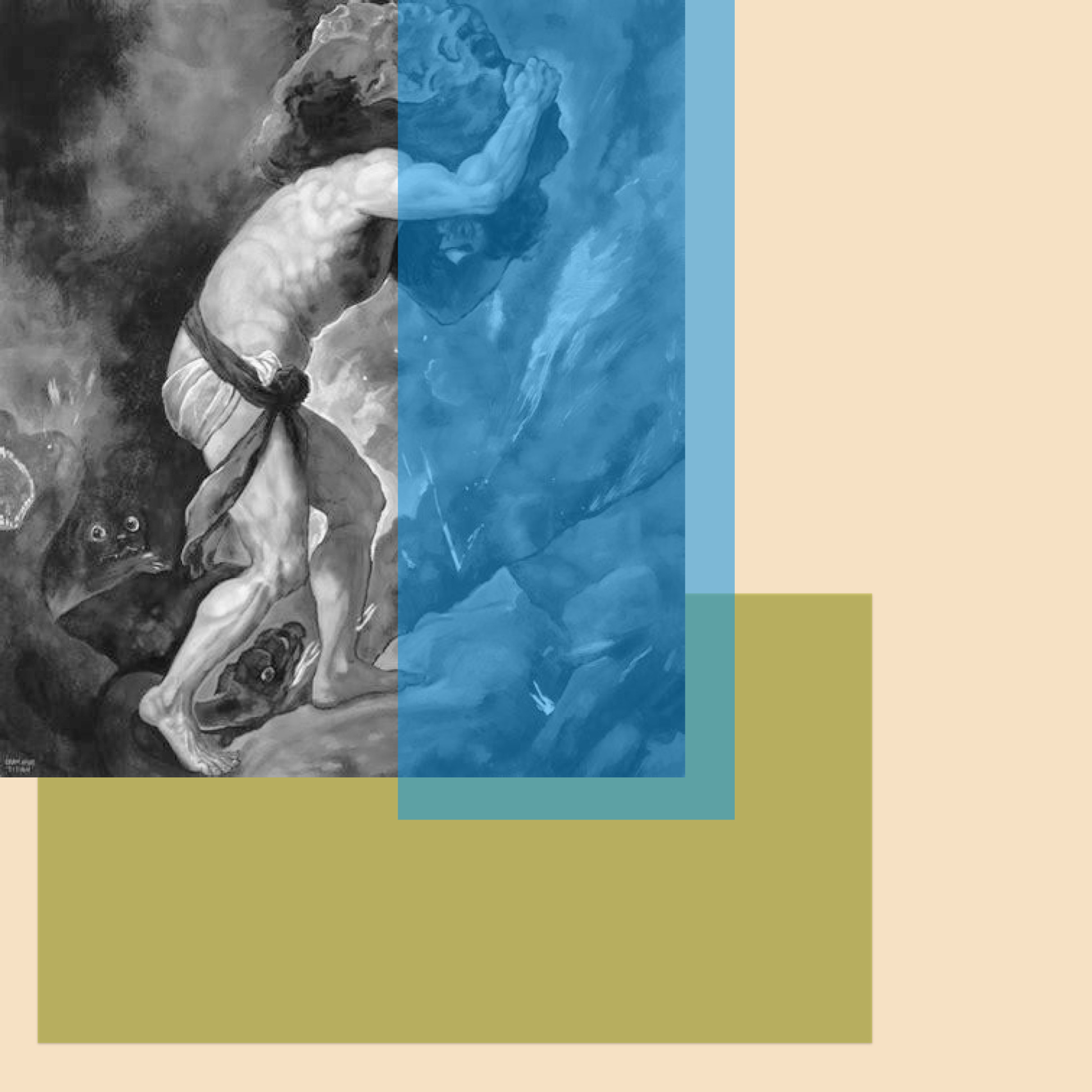
***If you are weary and have been on a long, Sisyphean naming journey, let this piece of writing be the thing you send to convince someone that your naming process and culture needs to change.***
If dentists only did what we asked, we wouldn’t trust them.
If we walked in requesting a quick filling repair and they never took an X-ray, never mentioned the grinding, never addressed the bite—we’d probably question their competence.
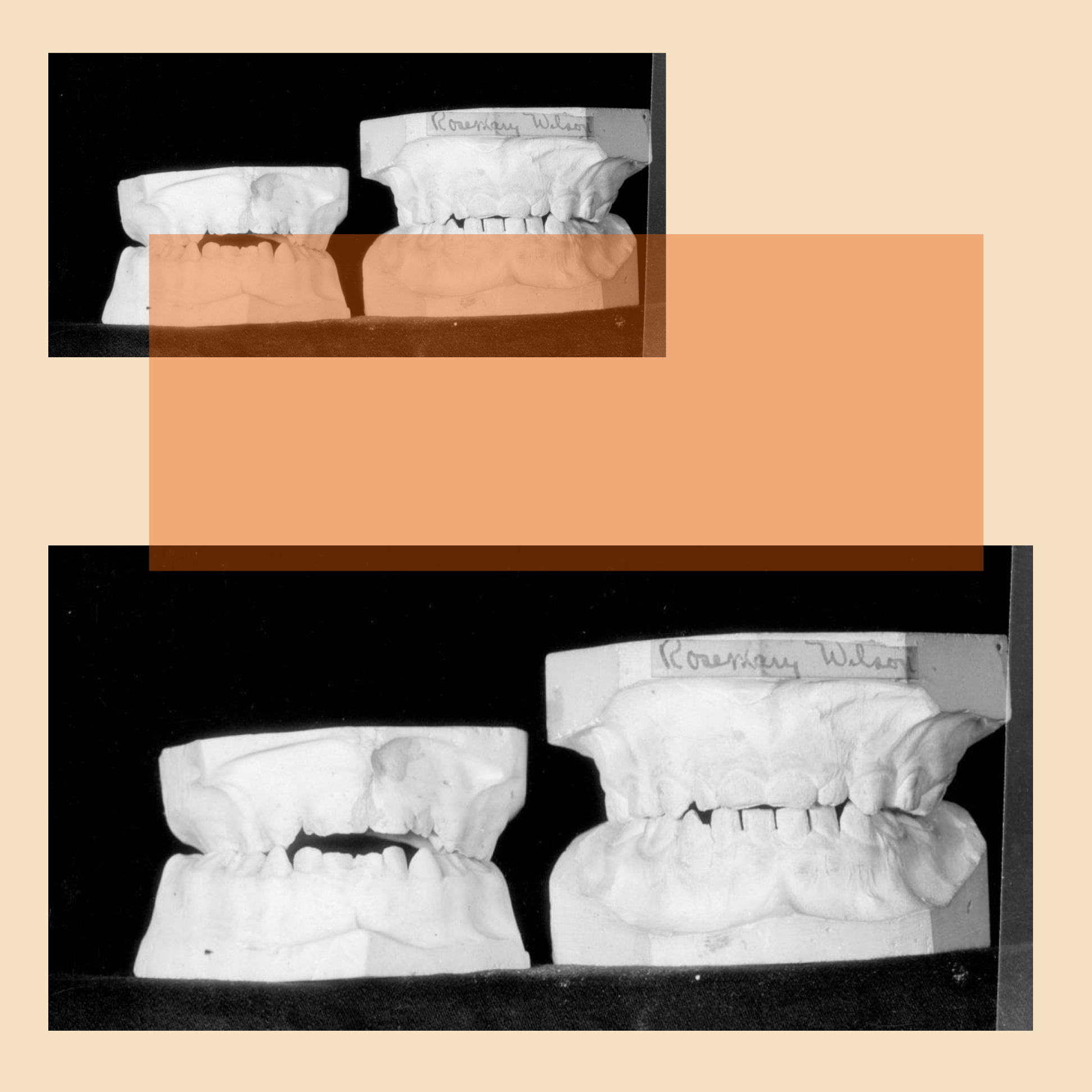
Expertise earns its authority by diagnosing beyond the symptom.
Naming at scale demands the same discipline.
As consultants and practitioners of naming at scale—be it agency side or for those of you charged with wrangling naming in-house—we must, very skillfully, earn the trust of our clients and teams enough to point out the root cause of the pain, the underlying structural fixes, the shift needed in ongoing systems thinking within a glacially-paced, bureaucratic corporate
machine.
Entering through the creative door is easier.
Entering through the strategy door requires courage.
Courage to surface uncomfortable truths about how decisions actually get made.
Wisdom to see that process and architecture are not overhead—they’re badly needed infrastructure.
Elevating naming from a tactical afterthought to a strategic system is not about winning arguments over words. It’s about earning enough trust to diagnose properly—and fixing the bite, not just the filling.
No posts
Comments
Nothing yet. Say the first thing.
Sign in to join the conversation.