
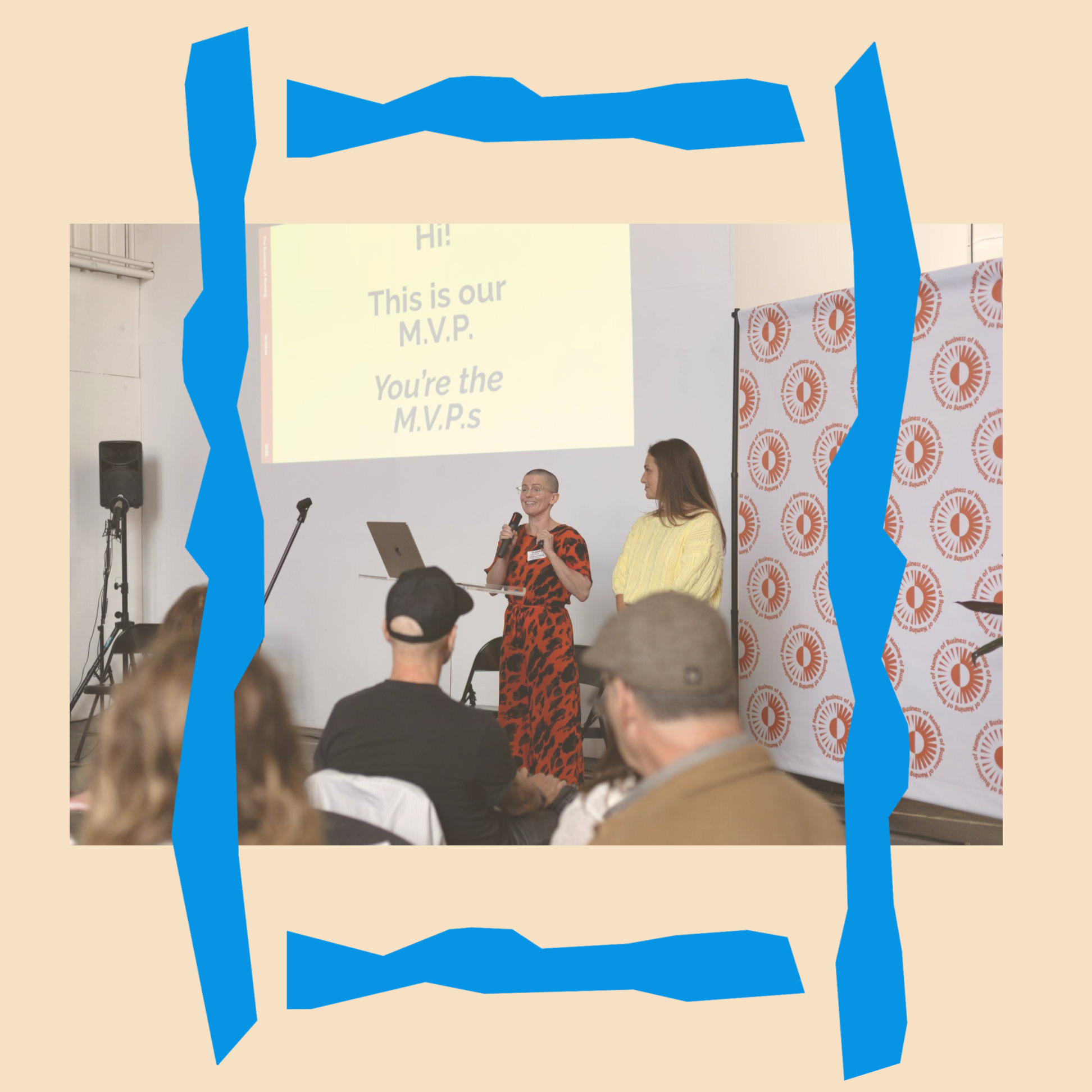
I have been dreaming of creating a naming conference for well over a decade. Probably dreaming out loud about it for about 8 years. But it wasn’t until sharing that desire with Early Barrett (Wild Geese Studio, Naming for Everyone), after they interviewed me for their Big Names in Naming podcast in 2024, that I realized someone else shared it and was ready to let it rip.
Last year we co-hosted the inaugural year of The Business of Naming, the first ever global naming conference. We held it in October in Berkeley, CA, which felt fitting given so much of the naming industry was born out of the Bay Area.
Somewhere between the first person who got paid to name things and October 5th, 2025, naming turned into a discipline. This post is about that macro turn- about naming growing up - and on a more micro level, about what changed between the first Business of Naming and the second which will be in Brooklyn on September 25th.
Last year was the MVP. This year, the room is packed with even more MVPs (thank you, Early, for that double entendre).
On September 25 at BRIC in Brooklyn roughly 150 people are flying in from all over the world to spend a full day in one room learning how to manage, master, and shape naming.
Those folks are coming from places like…
Ford And countless naming and branding
Anthropic
SAP
Salesforce
Amazon
CVS Health
Chick-fil-A
McKinsey
Campaign Magazine
AW powered by Syneos Health
Novartis
Ipsos

I want this to really settle in not just for namers who read these posts, but especially for
I’m saying it to the CMO who is expected to weigh in on a flagship product name with zero context.
I’m saying it to the newly minted naming directors scrambling to build their teams’ capacity or even corral more budget to hire a naming associate or agency to support them.
I’m saying it especially to the brand managers who’ve had naming snuck into their role, with no recognition and no training to go with it.
Naming is expanding in complexity and in importance. AI is turbocharging the pace of business in ways we couldn’t have imagined a few years ago, and more business means more things to name, label, and organize. More to trademark and linguistically screen. More decisions for more stakeholders to align on.
Naming at Scale means recognizing that naming is a discipline unto itself — one that takes enough specialized knowledge, expertise, and sheer effort that it now has its own globally attended conference.
Naming has been a discipline for a long time. What’s changing is that it’s finally being treated like one.
Naming is becoming more known and more valued.
The number of times I say “I run a naming agency” and people say “What’s a naming agency?” is actually starting to lessen.
The first naming agencies cropped up in the late 70’s, early 80’s. Late 90’s, early 2000’s brought us the widespread use of the term “verbal identity.” Big branding firms had distinct naming practices. The number of naming agencies and individual naming practitioners steadily grew. Around 2010, companies with sprawling product portfolios began hiring in-house naming specialists rather than relying solely on outside agencies. By the mid-2010s, titles like Naming Manager and Senior Naming Strategist started to exist in Big Tech and major consumer brands, reflecting naming’s emergence as a recognized professional discipline.
Now today, there’s a global gathering for these folks. So, it took us about 50 years but we got here.
None of this is unique to us. It’s the same move other crafts made when they graduated from being part of someone’s job to standing on their own. Information architecture didn’t feel like a field until the first ASIS&T IA Summit in 2000 gave the “let’s define this thing” crowd a room to actually do it in. DevOps is another example. Patrick Debois convened the first DevOpsDays in Ghent, Belgium, in 2009 to force developers and operations people into the same room. The event’s hashtag is where the word “DevOps” stuck for the entire movement and found its way into people’s job titles.
Content strategy is another small verbal craft that had to fight for its status. It became a profession you could say out loud without much question when Kristina Halvorson launched Confab in Minneapolis in 2011.
The pattern isn’t that these practices weren’t real until someone rented a ballroom. They were real before that. People were doing the work. But just like naming has been handled for quite some time: these things were done inside other people’s roles, under other titles, out of other departments’ budgets.
What the conferences did was pull the work into the spotlight. That’s exactly the move naming is making now. It’s not becoming a discipline because it already is and has been one. Now naming is just refusing to be continually tucked into a marketing job role or be denied public attribution-rights.
Last year at the conference I gave a talk called “The Fine Print of Naming: Negotiating Naming Contracts.” It was centered around pushing back on the undue secrecy namers are sworn to with regard to sharing names they’ve created for clients. The fancy contract term for this is “attribution rights” and clients deny it all the time.
There is precedent for ad agencies and design shops taking credit publicly for their work but not so much for naming. I call this “name shame” and my talk encouraged namers to start to negotiate contracts so that attribution rights were non-negotiable or at least tied to value (no talky bout names = u pay me more money).
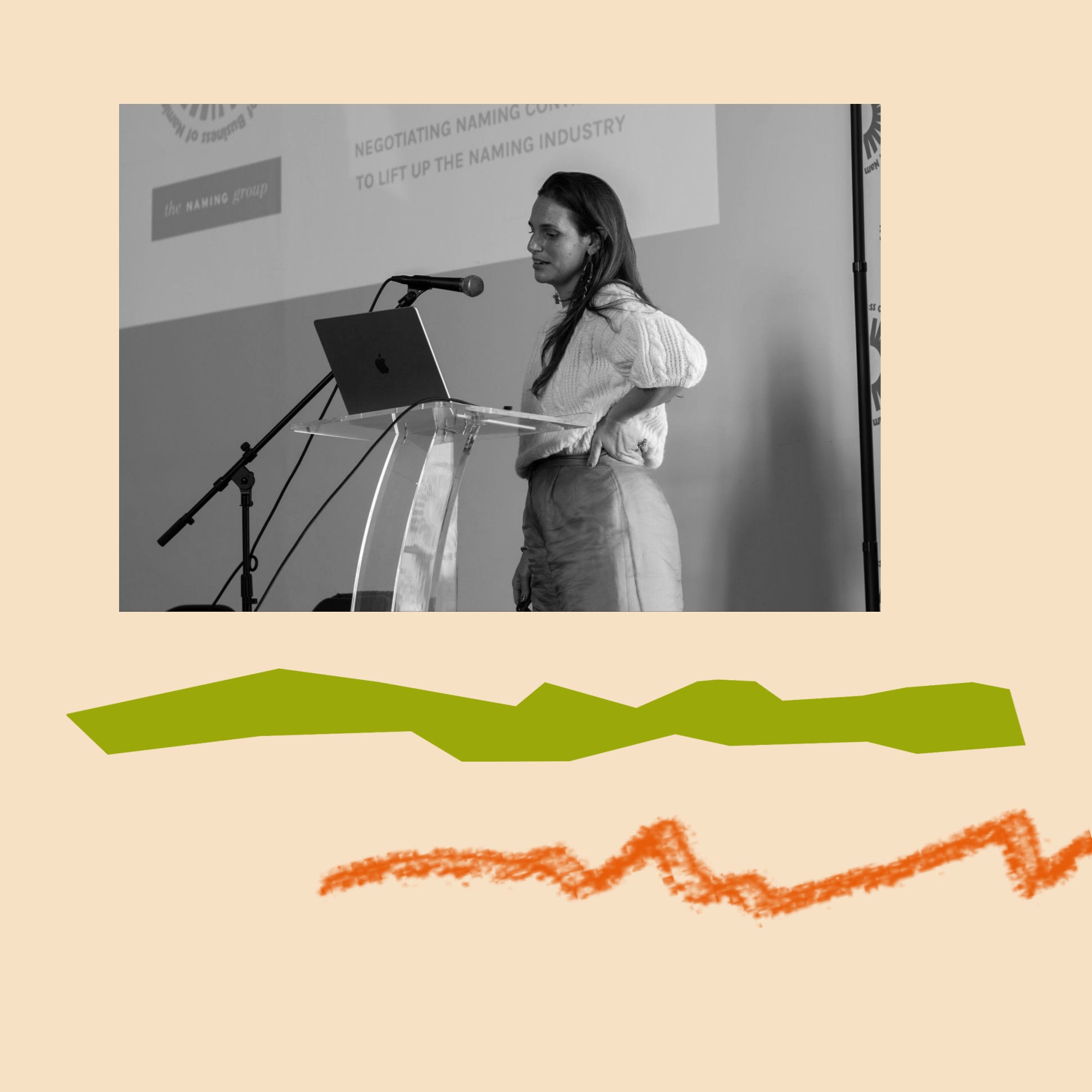
On the individual level, the inability to talk about the work represents potentially thousands or millions of dollars in lost business for that naming practitioner or agency. On the societal level, it keeps name shame alive and the profile of our industry in the dark.
I encourage namers to instead push for “name fame” - the ability for individual namers to talk about their work makes naming as a discipline more known and respected overall.
A great deal of my success in becoming a global leader in naming is rooted my unwavering commitment to being able to talk about the work I have done.
Simply put, clients hire my agency, The Naming Group, because they see who our clients are. I build the right to talk about the work into how I engage from the very start. If you want to know how, reach out; I’m always happy to walk a client or a fellow namer through it.
If you’re a namer, ask for the rights to promote your work, and ask early and without apology.
If you’re a client, talking about your naming work publicly and naming those who support you in doing it isn’t a liability — it proves you’re taking your brand assets seriously.
Not to toot my own horn about horn-tooting, but I think this was a message that a lot of people in the naming industry needed to hear because people have taken it and run with it.
Just this week, a dear pal and colleague of mine told me while negotiating a contract that the client was going to withhold attribution rights but when we said it would cost more for them to do that, they acquiesced.
This is it, people.
This is the work that needs to be done in the name of naming.
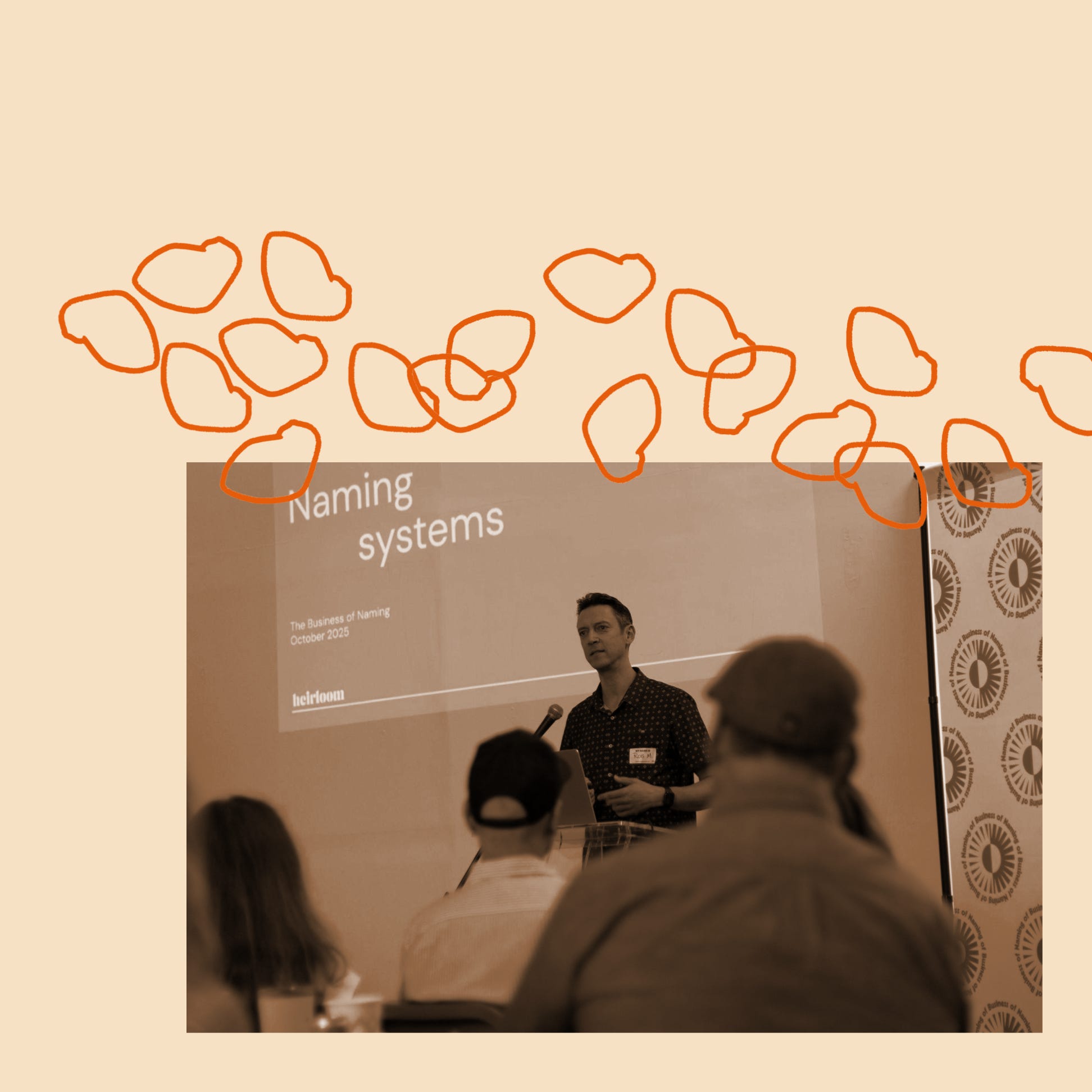
The Brand Names Report 2026, released a few months ago from my friends Rob Meyerson (Heirloom) and The Naming Group’s Head of Strategy John Elliott (Elliott Verbal), makes the case directly in a section titled “A case for naming out loud”:
Naming is one of the last areas of brand work that happens almost entirely behind closed doors. Agency partnerships, processes, outcomes — none of it gets talked about the way, say, advertising AOR relationships do. Keeping naming in a black box is bad for namers and forces clients to fly blind.
The Business of Naming is naming out loud — a room full of people discussing publicly exactly the thing we’ve spent years doing behind mostly closed doors. It is yet a further move towards name fame.
In gathering, we are all making naming more defined, more respected, and more visible.
Last year was the milestone of showing up at all. A first conference makes a simple, almost radical statement: We’re here.
This year the statement is different. The room is bigger and the attendees have expanded to include many more in-house and enterprise naming leaders, and they’re not just in the audience, they’re on the stage. Two of this year’s panels are about how naming actually works at enterprise scale:
Better Naming Research, Better Naming Decisions
This panel will explore the realities of naming research: what it is actually good for, where it so often goes wrong, and how teams and agencies can use it more effectively to support stronger naming decisions. The conversation will consider how researchers and namers can work together to make naming research more actionable, more credible, and better aligned with the real decisions organizations are trying to make. The panelists bring experience across qualitative and quantitative research, agency and in-house contexts, and work spanning organizations including Interbrand, Ipsos, Anthropic, Adobe, LinkedIn, and Novartis.
Insider Naming: Decisions, Dynamics, and Systems Inside the Enterprise
This panel will explore the realities of in-house naming: how naming teams build authority inside organizations, navigate decision-making and stakeholder dynamics and politics, and create systems that work across complex product portfolios. The panelists bring in-house naming experience from major organizations including Ford, SAP, CVS, Amazon, and Salesforce.
The honest answer to why bother getting on a plane is, as my conference co-founder Early Barrett said so eloquently on our recent episode of Big Names in Naming hyping the conference: “You can only grow so much in a vacuum.”

Mixing with peers hones your work. Agencies learn from clients; clients learn from agencies. You come back with new tools, frameworks, ways of thinking (especially now, with AI reshaping the workflow every few months) and new people to actually work with.
Jed Rendelman and Rachel Metter met at last year’s conference and this year they’ll be on the stage together giving a talk.
I firmly believe that sharing of yourself, your skills, your technique with your closest competitors doesn’t jeopardize your position. It does the opposite. When you can see the whole field at once in high definition, you understand where you fit. You leave with a sharper sense of your own value, not a blurrier one.
The Business of Naming is an inch wide and a mile deep. It’s for people who work in naming but within that, it’s for a range of people.
It’s for brand managers who inherited naming without a manual.
Naming directors scaling a team.
Naming agency folks sharpening their craft.
In-house leads building systems that have to survive contact with a thousand stakeholders.
The second annual Business of Naming conference is September 25, 2026, at BRIC in Brooklyn from 8:30am - 6pm. Tickets are on Eventbrite.
No posts
Comments
Nothing yet. Say the first thing.
Sign in to join the conversation.