
“Poor Mexico, so far from God, so close to the United States.” – attributed to Porfirio Díaz
On the morning of March 18, 1938, Mexican President Lázaro Cárdenas went on the radio and announced that his government was seizing the assets of every foreign oil company operating on Mexican soil — American, British, Dutch, the lot. It was an extraordinary act of economic defiance for a country that depended on those same foreign firms for the majority of its export revenue, and Cárdenas knew it. The companies had ignored a Mexican Supreme Court labor ruling once too often, and the president gambled that national pride would outrun the fiscal consequences. He was right. Within days, Mexicans across the social spectrum were lining up outside the Palacio de Bellas Artes to donate jewelry, livestock, and pocket change to help the government cover the compensation bill. Pemex — Petróleos Mexicanos — was born that spring, and with it, a national mythology in which state control of the subsoil is not merely policy but identity.
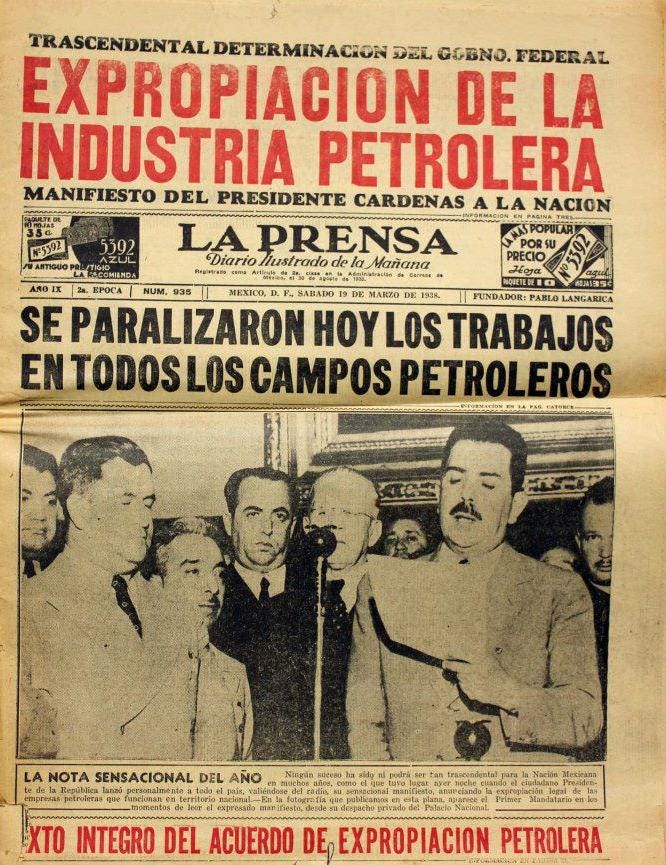
Eighty-eight years later, that mythology is still load-bearing in Mexican constitutional law, and it is about to collide, in slow motion and in plain sight, with a global diesel shortage that doesn’t much care about anyone’s founding myths.
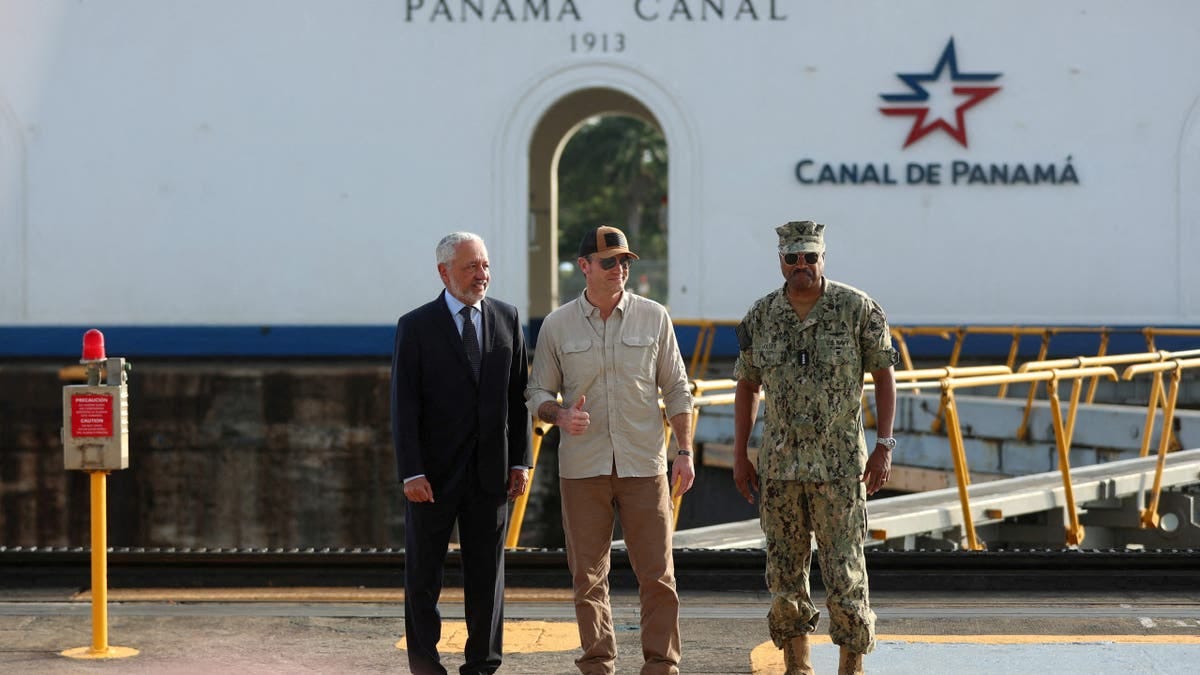
The other anniversary worth noting arrived this month, in Panama, a few miles from where the old U.S. Army School of the Americas once stood at Fort Gulick before political pressure pushed it to Fort Benning, Georgia. On August 12, Secretary of War Pete Hegseth stood in front of the newly expanded, nineteen-nation Americas Counter Cartel Coalition and framed the moment as a wholesale reorientation of U.S. Southern Command — a command he said had spent the prior eighteen months insufficiently focused on the hemisphere it was named for:
“This is a different Southcom; this is a different mission,” he said. “We are focused on military capabilities against real threats who need to be deterred and defeated, and we're going to give them everything they need to do it, on behalf of the American people.”
He told American troops training at the region’s Jungle Operations Training Center the following day, standing a short drive from ground the old School once occupied. The coalition’s new motto, unveiled at the same event:
“That's the mentality I want to have inside this room. Now we're good people that do good things. But ultimately, we're dealing with bad people that have done a lot of bad things to a lot of good people for a very long time.”
We have written before about the pattern-matching between the old Banana Wars and today’s hydrocarbon diplomacy — Marines then, coast guard cutters and drone squadrons now, fruit companies then, refineries now. What’s changed since the Cárdenas era is the mechanism. Washington no longer needs a garrison at the customs house to secure a flow of barrels. It needs a signature on a trade annex. Mexico and the United States, as it happens, are already at the table — and the clock on the product shortage is doing the rest of the negotiating for them.
The USMCA’s Article 34.7 requires a joint review by July 1, 2026, at which point the three parties decide whether to extend the agreement sixteen years or fall into a cycle of annual renegotiation. On paper, the review is about automotive rules of origin, labor standards, and Chinese-linked investment — the topics that dominate the trade press. Energy doesn’t even get its own chapter; NAFTA’s provisions were folded elsewhere, alongside language that simply acknowledges Mexico’s constitutional bar on foreign ownership of hydrocarbons.
That acknowledgment is now the fault line. Mexico’s October 2024 and March 2025 constitutional amendments reclassified Pemex and the Federal Electricity Commission as “public enterprises” — a status change that sounds cosmetic and isn’t. The reforms guarantee CFE priority grid dispatch and mandate a minimum 54% state stake in any mixed electricity project. The Office of the U.S. Trade Representative has flagged the entire framework as a likely breach of USMCA’s non-discrimination and state-owned-enterprise commitments, and both Washington and Ottawa have opened formal consultations. CSIS analysts tracking the review call the most probable outcome a “painful extension” — the treaty survives, but energy, autos, and China policy get renegotiated on a rolling basis, with investment uncertainty as the toll; Mexican inbound investment is already tracking roughly 10% below last year’s pace.
Here’s the detail that’s gone largely unremarked outside specialist trade press: the U.S.-Mexico negotiating track has moved with unusual speed relative to Canada’s comparatively frozen file. The tidy explanation is nearshoring — Mexican manufacturing FDI is running above $40 billion a year, and neither capital wants that momentum disrupted. That’s true, but incomplete. The real accelerant is Mexican refined product, and Washington’s urgency traces back not to Mexico City but to the Strait of Hormuz.
Comments
Nothing yet. Say the first thing.
Sign in to join the conversation.