
“For a successful technology, reality must take precedence over public relations.” – Richard Feynman
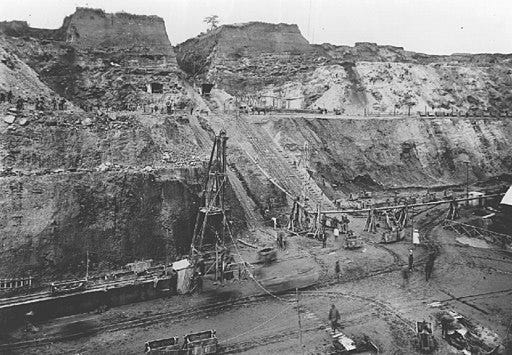
On December 2, 1942, under the west stands of a squash court at the University of Chicago, Enrico Fermi's team coaxed the first self-sustaining nuclear chain reaction out of a pile of graphite blocks and uranium oxide. Most of that uranium came from a single mine in the Belgian Congo: Shinkolobwe, in the copper-rich hills of Katanga, then the richest uranium deposit ever discovered. Belgian mining engineers had spent two decades trying to figure out what to do with the "worthless" radioactive byproduct clogging their copper concentrate before Washington bought the entire above-ground stockpile in 1942, without telling Congress what it was for. Within three years, that ore had leveled two cities.
Eighty-four years later, Katanga is exporting uranium to a nuclear power again. Nobody bought it this time. Nobody declared it. And by the time anyone noticed, it had been moving for two decades, hidden inside the world’s most celebrated green supply chain. Let’s build the case.
Rank the worst uranium and radiological mining incidents of the modern era and a pattern emerges. Wismut, in East Germany, gave rise to the highest recorded rates of occupational lung cancer in mining history. Church Rock, New Mexico, 1979: a tailings dam failure sent more radioactivity into the Puerco River than Three Mile Island released into the air that same year. Elliot Lake, in Ontario. Jáchymov, in Czechoslovakia, worked partly by political prisoners. Every one of these is a story about a state that knew exactly what it was extracting, regulated it badly, and paid for the failure in cancer registries decades later.
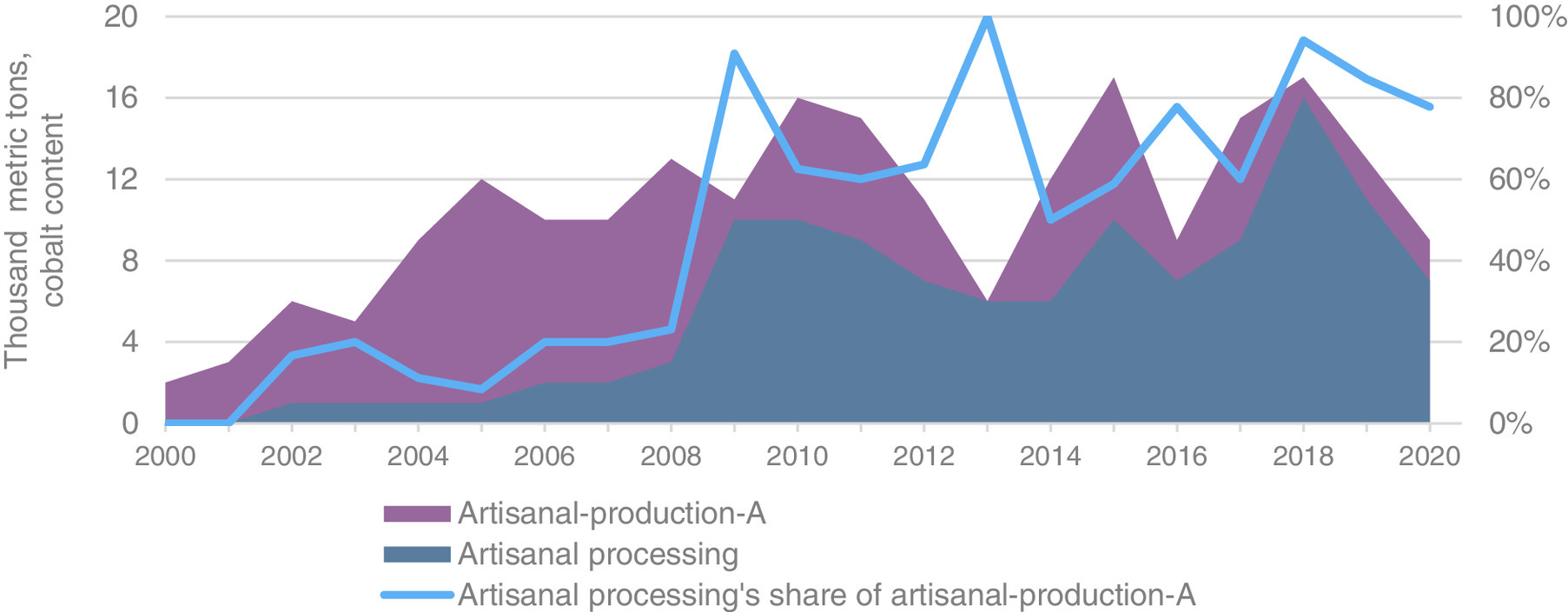
Katanga’s artisanal and small-scale cobalt sector belongs in that conversation, but it’s a stranger case, because for the first time the state in question doesn’t appear to know — or claims not to know — that it’s extracting a strategic radiological material at all. Somewhere between 150,000 and 200,000 artisanal miners work the Copperbelt’s cobalt seams by hand, digging with rebar, sorting ore with bare fingers, sleeping in tunnels that periodically collapse and kill dozens at a time. None of them carry dosimeters. None of the concentrate they produce is screened for uranium before it enters the formal supply chain. It just rides along, tonne after tonne, embedded in the same cobalt hydroxide that ends up in the cathode of an EV battery.
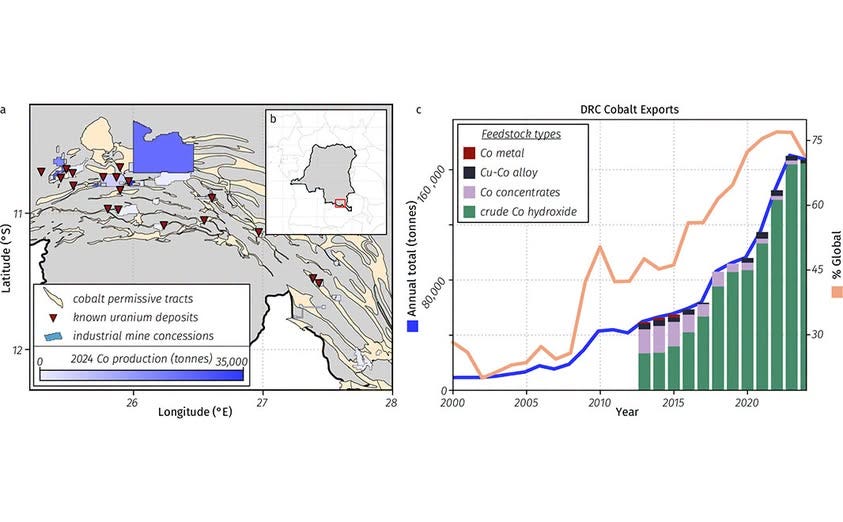
Why does that happen here and nowhere else? Geology, not policy. In most of the world’s uranium provinces — the unconformity deposits of Saskatchewan’s Athabasca Basin, the sandstone rolls of Wyoming, the granite veins of the Erzgebirge — uranium occurs mostly on its own, in ore bodies distinct from base metals. Katanga doesn’t work that way. The Copperbelt’s stratiform ore system deposited copper, cobalt, and uranium together, in the same rock, roughly 600 to 650 million years ago. Uranium there isn’t a contaminant sitting next to the target mineral. It’s a structural constituent of the ore itself, which is precisely what made Shinkolobwe so valuable to the Manhattan Project — and precisely why the modern cobalt boom can’t avoid dragging uranium along with it. Shinkolobwe itself has been under a presidential exclusion order since 2004, its uranium legally classified as a “reserved mineral substance” that cannot leave the country. But Shinkolobwe was never the only uranium-bearing deposit in Katanga, just the richest one. Congolese customs monitors weigh, assay, and tax the copper and cobalt content of every shipment leaving the country. Uranium is the one constituent nobody checks.
Comments
Nothing yet. Say the first thing.
Sign in to join the conversation.