
"...to provide abundant electrical energy in the power-starved areas of the world."
— Dwight D. Eisenhower, "Atoms for Peace," United Nations General Assembly, December 8, 1953
Pevek is not a place most people could find on a map, and until recently, there was little reason to try. It sits on the East Siberian Sea, above the Arctic Circle, home to a few thousand people, a decommissioned gulag-era port, and — since 2019 — the only floating nuclear power plant currently operating anywhere on Earth.
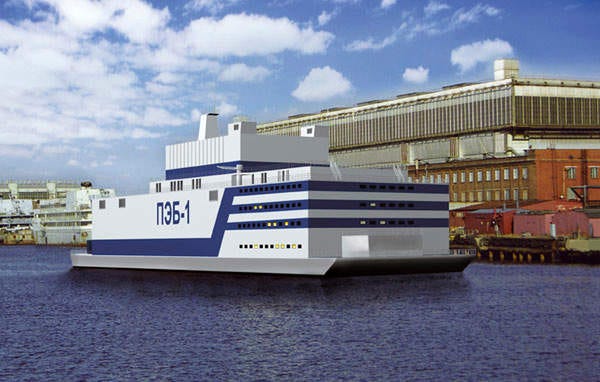
The vessel is called the Akademik Lomonosov. It is, in essence, a 21,000-tonne barge with two small marine reactors bolted where a cargo hold used to be, towed 5,000 kilometers from a St. Petersburg shipyard and moored permanently against a purpose-built breakwater. It generates a modest 70 megawatts, enough to retire an aging coal plant and a Soviet-era reactor that was overdue for its own funeral. It also supplies district heat and feeds a regional grid that serves industrial load across western Chukotka — and Rosatom isn't stopping at one unit. It has since signed on to power the nearby Baimskaya copper-gold deposit, one of the largest untapped mineral concessions in the Russian Arctic, not with the original Lomonosov itself but with a dedicated follow-on fleet: four new RITM-200-class floating units, currently under construction, purpose-built for exactly this kind of industrial anchor tenant.
Rosatom did not build the Lomonosov because Pevek was clamoring for nuclear power. It built it as a demonstrator — a proof of concept for a class of vessel the Russian state nuclear monopoly intends to mass-produce and lease abroad, to any coastal state with a remote grid, a mining concession, or a desalination problem it would rather not solve with someone else’s reactor. The pitch write-up itself in Rosatom’s own literature is explicit that follow-on, “optimized” units are being designed from the outset for export. Nuclear power, in other words, as a portable geopolitical asset — something you can float to a client state, connect to shore power, and leave there for forty years, with all the entanglement that implies.
The demonstrator, notably, just graduated. A thirteen-member team from the Moscow Center of the World Association of Nuclear Operators finished a two-week audit of the Lomonosov on July 29th, examining everything from maintenance protocols to emergency preparedness, and came back with fewer flagged deficiencies than the previous review in 2022. The plant’s director wasted no time framing the result: the facility, he said, now ranks alongside Russia’s flagship land-based stations, Balakovo and Kalinin. Whatever one makes of a state nuclear monopoly grading its own homework favorably, an independent industry body signing off on operational parity with established terrestrial plants is exactly the credibility marker Rosatom needs if it intends to sell this thing to a third country rather than merely operate it for one. The prototype phase, in other words, is over. The sales phase is beginning — and Washington’s Outer Continental Shelf memorandum, signed eigth days earlier, now reads less like proactive planning and more like a catch-up move.
It is tempting to treat this as a novel Russian innovation, a clever bit of statecraft cooked up in the Rosatom boardroom sometime in the 2010s. It isn’t. The United States built one first, used it for eight years, and then apparently decided the whole idea wasn’t worth remembering.
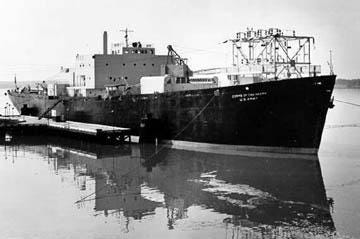
In 1963, the U.S. Army pulled a rusting World War II Liberty ship out of the Mobile Reserve Fleet — the SS Charles H. Cugle, a bulk cargo hauler with no particular distinction beyond having survived the Pacific theater — and sent it to a shipyard in Mobile, Alabama, to have its engines torn out. In their place went a pressurized water reactor, 10 megawatts, designated MH-1A: Mobile, High-power, first of its kind. The renamed vessel, the Sturgis, went critical at Fort Belvoir in January 1967, becoming the world’s first floating nuclear power station roughly fifty-two years before the Russians managed the same trick.
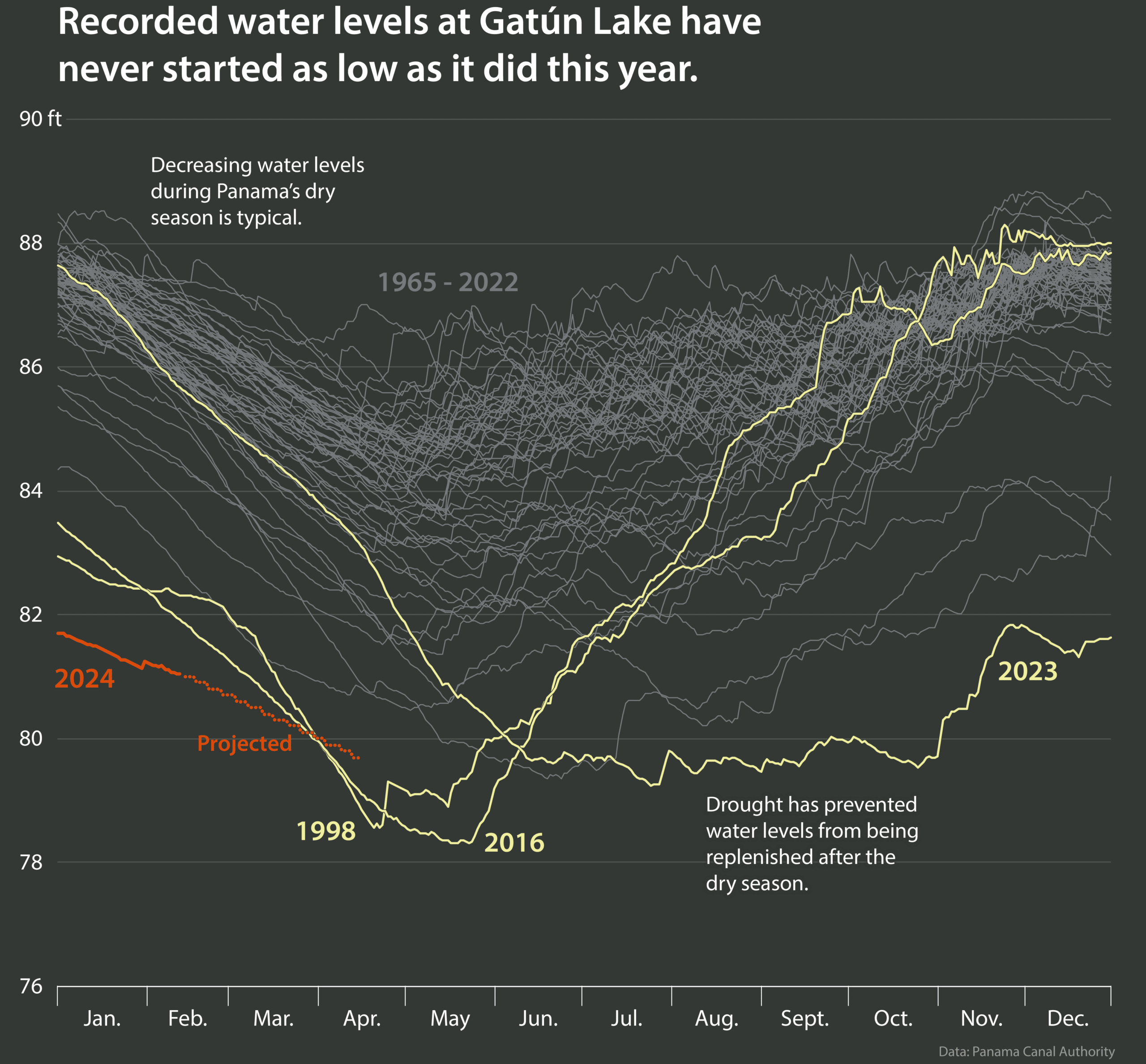
Its assignment came almost by accident. A drought—a.k.a “climate change”— in 1968 had drained Gatun Lake, the reservoir that both fills the Panama Canal’s locks and spins the hydroelectric turbines that power the Canal Zone. The Army towed the Sturgis down to Gatun Lake and plugged it into the grid, freeing up lake water for lock transits instead of electricity generation — a nakedly practical arrangement, dressed up afterward in official Army retrospectives as a triumph of atomic-age ingenuity. For eight years, an American nuclear reactor quietly kept the busiest canal on the planet open, moving materiel toward a war in Southeast Asia that needed every lock cycle it could get.
Then, in 1976, the Army decided the juice wasn’t worth the squeeze. A decade of upkeep on a specialized reactor, a seventy-person crew, and — this detail deserves more attention than it usually gets — a tightening regulatory environment as the newly created NRC began applying civilian-grade compliance standards to a vessel designed under wartime urgency, made a 10-megawatt novelty item look expensive next to a diesel generator. The Sturgis was towed home, defueled, and left to rust in the James River Reserve Fleet for the next thirty-seven years, a nuclear ghost ship nobody quite knew what to do with, until it was finally hauled to Galveston for scrapping in 2015 and fully dismantled by 2018.
That is the entire arc of America’s first experiment with floating nuclear power: born of drought, killed by cost accounting, forgotten for two generations. It is, in hindsight, a strange thing to have walked away from. And in 2026, Washington is walking back.
Comments
Nothing yet. Say the first thing.
Sign in to join the conversation.