
Biographies are your cheat code to greatness. You can identify your role models and learn everything about them. How they became the best, what challenges they faced, what strategies they used. Adopt their teachings. But at the same time avoid their mistakes. That's how you become a Great Man.
Because biographies carry such a hidden power, today I decided to go deeper into why You should read them. Why and how other great men like Washington or Napoleon read biographies, what were their primary inspirations, and how to use these books to make an actual impact on your life.
So let’s get started.
Reminder: Our publication is readers-supported. This article is free but if you’d like to support our work and get access to more articles consider becoming a paid subscriber. You will get:
2 new and deep articles each week based on ancient sources
Access to our Roman battle series, where we have broken down 9 important Roman battles that teach us strategy
Full archive of content
Eternal gratitude
Become a part of fastest growing Roman publication on this platform. For only $50 a year. $4 a month. 13 cents per day.
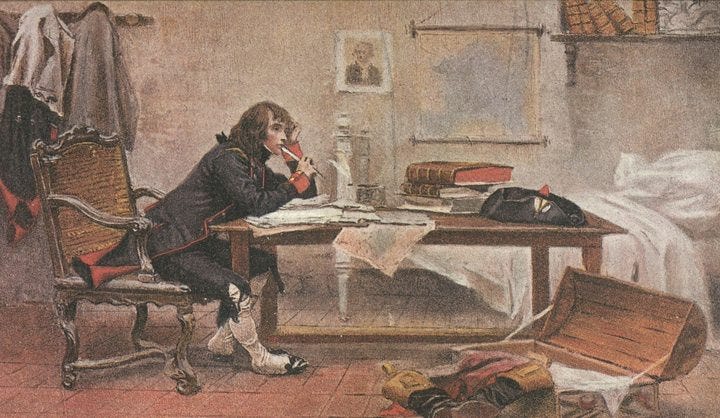
If you study the history of great men, you find one thing in common. Many of them were serious readers, and biographies were their favorite genre.
Napoleon spent much of his youth, especially at military academy, reading Plutarch’s Lives. For those unfamiliar, it is a set of biographies of the illustrious men of ancient Rome and Greece. Napoleon read about Alexander and Caesar, searching for inspiration.
His classmate Louis Antoine Fauvelet de Bourrienne remembered the intensity of this habit:
[Napoleon] would run to the library, where he read with great eagerness books of history, particularly Polybius and Plutarch.
The Corsican patriot Pasquale Paoli went further, telling Napoleon plainly that Plutarch had made him who he was:
“There is nothing modern in you; you are entirely out of Plutarch.”
Napoleon read constantly, and most of what he read were biographies of the greatest men of the ancient world. He used them for inspiration. He also used them as manuals on power, strategy, and leadership.
The traits he absorbed from these books surfaced later in his career. Like Alexander, Napoleon insisted on fighting alongside his soldiers in nearly every battle. Like Caesar, he chose a humbler attire, his plain grey coat, and spent his time among the common ranks instead of standing apart from them.
George Washington was another passionate reader of biographies.
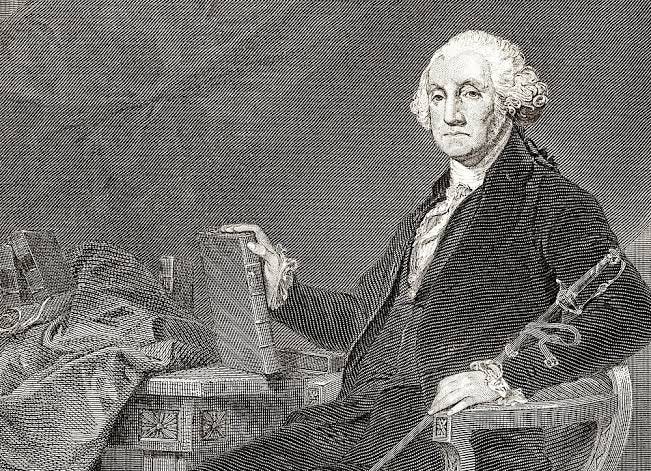
He never received a formal classical education. Washington was self-taught, and he spent his free time reading. Plutarch appears on his list too.
But Washington emulated a different set of heroes than Napoleon: Cincinnatus, Cicero, Fabius Maximus. Calm, reasonable, patriotic men who embodied civic virtue rather than personal glory.
The clearest proof of this influence came when Washington resigned his command after the Revolution. He walked away from ultimate power voluntarily.
The decision was modeled directly on Cincinnatus.
Even Alexander was known to sleep with a copy of the Iliad under his pillow. He drew military lessons from it, and searched for something else too: the model of Achilles.
Each of these men read biographies and used them to shape not only their own character but the course of history.
So how do we use biographies to get the same benefits?
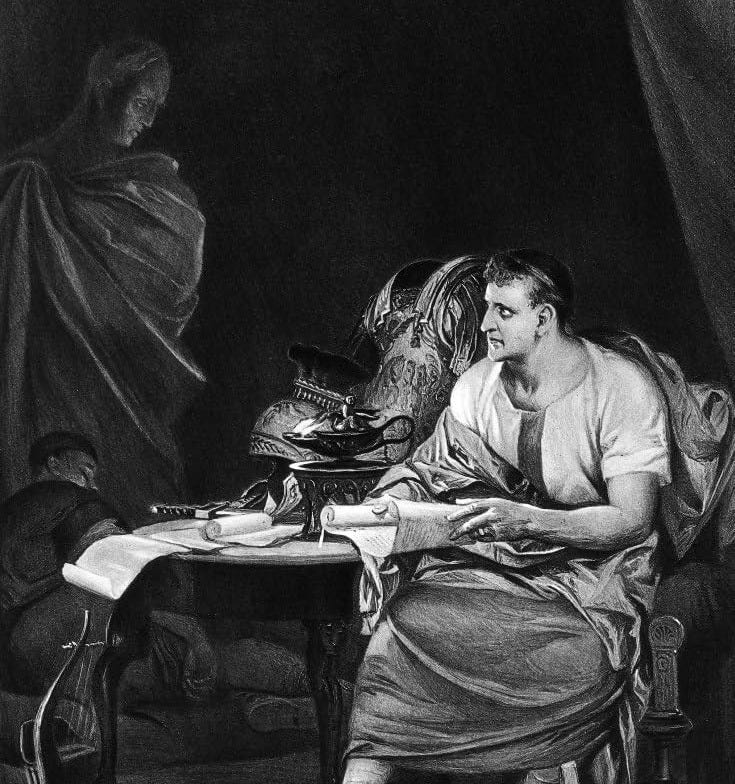
Reading a biography for entertainment and reading one for growth are two different exercises. And what we want is to read for later. So here’s how you should approach them:
Find your role model.
Choose someone whose achievements you actually want to replicate, not someone who is simply famous. Napoleon chose Alexander and Caesar because he wanted their command over men and battlefields. Washington chose Cincinnatus because he wanted the discipline to walk away from power. To become a savior of his nation. Pick a man whose specific strengths match the specific life you are trying to build.
It does not have to be only politicians or generals. It can be engineers, writers, philosophers, gym coaches, anyone who you desire to be. The only requirement is that they be great in their fields.
Read everything about him.
One biography gives you one angle. Read multiple sources, written by different authors, from different periods. Napoleon did not stop at Plutarch. He read Polybius too. The more angles you gather, the more accurate your picture becomes, and the harder it is to mistake myth for method.
In the middle of different sources lies the truth. And it’s important to distinguish it, because the more accurate the painting of your role model is, the higher the chances their methods will work in real life.
Adapt and use what worked for him.
A biography is only useful once you extract the actual behavior behind the reputation. Napoleon did not just admire Caesar’s popularity with his soldiers. He copied the specific habit that produced it: living among the men instead of above them. Look for the repeatable action, not the vague virtue.
Avoid his mistakes.
Every great man had failures, and biographies record them in detail. Napoleon’s ambition built an empire and later destroyed it. Study the exact point where a role model failed. That failure is a warning built into the same book that gave you the inspiration.
Biographies are not passive entertainment. They are compressed lifetimes, written down so you do not have to make every mistake yourself.
Napoleon read them to build an empire. Washington read them to know when to let one go. Alexander kept his under his pillow because it never stopped shaping him.
Pick a man worth learning from. Then read until you understand him better than his enemies did.
No posts
Comments
Nothing yet. Say the first thing.
Sign in to join the conversation.