
For many people an evening drink marks the end of the workday. It may be wine with dinner, a cocktail after a stressful afternoon or a drink ordered before a social event. The ritual itself can be calming as alcohol produces real effects in the brain and body.
That immediate effect doesn’t always mean alcohol is helping the body recover from stress though. Alcohol still has to be metabolized. It can affect sleep, digestion, mood, and next-day concentration.
This doesn’t mean everyone who enjoys wine needs to stop drinking but for those who would like to switch to something non-alcoholic or reduce their intake, it’s important to know what to replace it with so that it’s still satisfying.
In this article I’m debunking the red wine myth, discussing herbal recipes and their properties, building alternative drinks and trying Pique’s non-alcoholic Adaptogenic Aperitif: Vesper. Pique sponsored this article and sent Vesper.

Now before making major changes to alcohol intake, you should know: if you drink heavily every day, have had alcohol withdrawal symptoms before, or have a history of withdrawal seizures, hallucinations, or delirium tremens, don’t stop abruptly without medical guidance. Alcohol withdrawal can become dangerous.1
For everyone else, the question is simple:
What do you want your evening drink to do for you?
A little bit of myth debunking first. For years, red wine has been associated with heart health, longevity, and the Mediterranean diet.
Wee’ve been told that moderate red-wine drinking might help protect the heart. Wine is often included when discussing the French paradox, Mediterranean eating, dark chocolate, olive oil, and long meals with family or friends but the science has always been more complicated than that.
Red wine contains plant compounds that have been studied for possible health effects. These include polyphenols such as flavonoids, anthocyanins, catechins, tannins, and resveratrol. Many come from grape skins and seeds. Researchers have studied them for antioxidant activity, vascular effects, inflammation-related pathways, and possible metabolic effects.2
But those compounds aren’t the same thing as alcohol.
The alcohol in wine is ethanol. Ethanol isn’t a grape skin, olive oil, tea, cacao or the broader eating pattern associated with Mediterranean-style diets.
Earlier observational studies often found that moderate drinkers had better cardiovascular outcomes or longer lifespans than people who didn’t drink. But those comparisons can be misleading.
People who drink moderately may differ from nondrinkers in many ways. They may have different diets, activity levels, incomes, healthcare access, smoking histories, social networks or existing health conditions. Some groups labeled “nondrinkers” also include former heavy drinkers who stopped because of health problems.3
Once researchers account more carefully for those issues, the claim that low-volume alcohol use protects against early death becomes much less convincing.
A large systematic review and meta-analysis found no significant reduction in all-cause mortality among low-volume drinkers after accounting for major study-quality concerns and abstainer bias.4
Research has also tried to separate the effects of red wine’s polyphenols from ethanol. In one randomized crossover trial involving people at high cardiovascular risk, dealcoholized red wine lowered blood pressure and increased plasma nitric oxide. The wine containing alcohol didn’t produce the same blood-pressure effect.5
The takeaway is straightforward: the most crucial health-related compounds in red wine come from the plants, not ethanol.
Those compounds can also be found in other foods and drinks:
Grapes and dark berries provide anthocyanins and other polyphenols.
Tea brings in flavonoids and tannins.
Cacao adds flavanols and bitterness.
Pomegranate, tart cherries, and hibiscus have acidity, color, and polyphenols.
Olive oil, legumes, herbs, spices, and vegetables contribute to broader dietary patterns linked with health outcomes.
You don’t need alcohol as the delivery system for those foods and compounds.

Alcohol often make people feel calmer for understandable biological reasons.
Ethanol affects multiple neurotransmitter systems, including GABA-A receptors. GABA is one of the brain’s primary inhibitory neurotransmitters. When inhibitory signaling increases, certain kinds of neural activity are reduced. This can make someone feel less tense, less self-conscious, more sedated, or more comfortable in social settings.6
Alcohol’s effects aren’t limited to GABA. It has broad, dose-dependent effects throughout the central nervous system. Still, its effects on inhibitory signaling help explain why the first drink may be calming.
Many people aren’t drinking only because they enjoy the taste.
They may be using alcohol to:
Mark the end of the workday.
Feel less tense before socializing.
Reduce self-consciousness.
Create a clear separation between work and personal time.
Give themselves permission to sit down and stop doing things.
Make dinner or conversation
Those don’t all require alcohol.
Someone who wants a social drink may need something to hold, sip, and order without explanation. A person who wants a nightcap might enjoy a relaxing routine before bed. Someone who drinks red wine regularly may like bitterness, acidity and slowing down more than the alcohol itself.
Those preferences can be recreated.
The goal isn’t to mimic intoxication with herbs or supplements though, but to identify what alcohol has been adding to your routine and decide whether another drink, habit, or setting could do the same job with fewer downsides.

Alcohol is also an established modifiable risk factor for breast cancer.
Any possible benefit from grape polyphenols doesn’t cancel out the effects of ethanol.
Research has consistently found that breast cancer risk increases as alcohol intake increases. The relationship isn’t limited to heavy drinking. Even lower levels of regular alcohol use have been associated with a higher risk compared with not drinking, although individual risk also depends on age, family history, reproductive history, hormone exposure, body weight, and other factors.7
This is not to say one drink causes breast cancer or that anyone should blame themselves for a cancer diagnosis. Cancer risk is never that simple however the old message that people should drink wine for health doesn’t hold up as well as it once did.
Alcohol affects more than mood and coordination. It can also affect the gut.
The intestinal lining helps regulate what passes from the digestive tract into circulation. It allows nutrients and water to move through while helping limit the passage of unwanted material. Tight junction proteins, including ZO-1 and occludin, help maintain that barrier.
Alcohol and acetaldehyde, one of alcohol’s metabolites, have been studied for their effects on intestinal tight-junction integrity.
In a three-dimensional intestinal epithelial model, researchers exposed Caco-2 spheroids to ethanol and acetaldehyde. They found altered localization of ZO-1 and occludin, along with changes in protein acetylation associated with microtubule structure.8
Occasional bloating after wine isn’t the same as a serious gut disorder but this does show that alcohol can affect processes involved in intestinal barrier function.
Other research using intestinal cell models and animal work has examined how alcohol-related oxidative stress and circadian-gene changes may contribute to increased intestinal permeability.9
“Leaky gut” has become a vague online term, but intestinal permeability is a real research concept.
Alcohol can affect the gut, and the gut can affect how you feel the next day.
After drinking, someone may notice puffiness, digestive discomfort, poor appetite, restlessness, brain fog or a general feeling of physical discomfort. Those symptoms can have many causes, including sleep disruption, dehydration, alcohol dose, food choices, medications, stress, meal timing, and individual sensitivity.
There isn’t one explanation for everyone. But alcohol isn’t biologically neutral.
Again, you don’t need to avoid it entirely if you don’t want to but you can make decisions with a clearer understanding of what it may affect.
Many people use alcohol at night because it makes them sleepy.
Indeed alcohol may reduce sleep-onset latency, which means some people fall asleep more quickly after drinking however, falling asleep faster isn’t the same as getting better sleep.
Research on alcohol and sleep shows a consistent pattern. Alcohol may make early sleep feel deeper or more consolidated. As the body metabolizes alcohol later in the night, sleep often becomes more fragmented. REM sleep may be disrupted.10
This is why someone can fall asleep easily after a drink and still wake up during the night, wake too early, wake thirsty, or sleep for eight hours and feel unrefreshed.
Alcohol’s effects on sleep vary by dose, timing, sex, age, body composition, medication use, stress level, genetics and sleep disorders.
Still, alcohol isn’t a reliable strategy for improving sleep quality.
The other issue is habit formation.
If someone repeatedly uses alcohol to fall asleep, they may start to believe they can’t settle without it. The drink becomes part of the bedtime routine. Over time, it can become harder to separate the expectation of alcohol from the ability to relax at night.
If you feel guilty for drinking wine with your dinner, don’t! Let’s look at the best alcohol alternative instead.
Many nonalcoholic drinks are disappointing because they rely mostly on sweetness.
A juice spritzer can be refreshing but it doesn’t automatically replace the experience of wine or a cocktail before dinner.
Alcohol contributes more than intoxication.
In wine and spirits, alcohol can influence body, viscosity, aroma release, warmth, and flavor perception.
Tannins create dryness and astringency.
Acidity gives brightness.
Bitter compounds add contrast.
Aromatics create complexity.
A satisfying nonalcoholic drink needs some of those same elements.
This is sometimes called a wine matrix. The wine matrix includes the relationship between acidity, tannins, aroma, sweetness, body, color, temperature, and finish. A drink with those elements is more likely to feel complete and suitable for slow sipping.
It doesn’t need to taste exactly like wine but it needs to hold its own on the tongue.
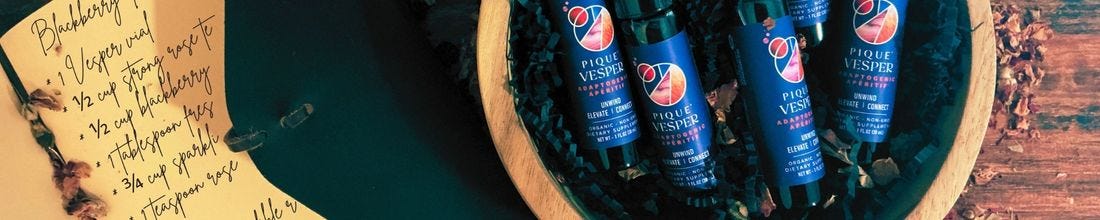
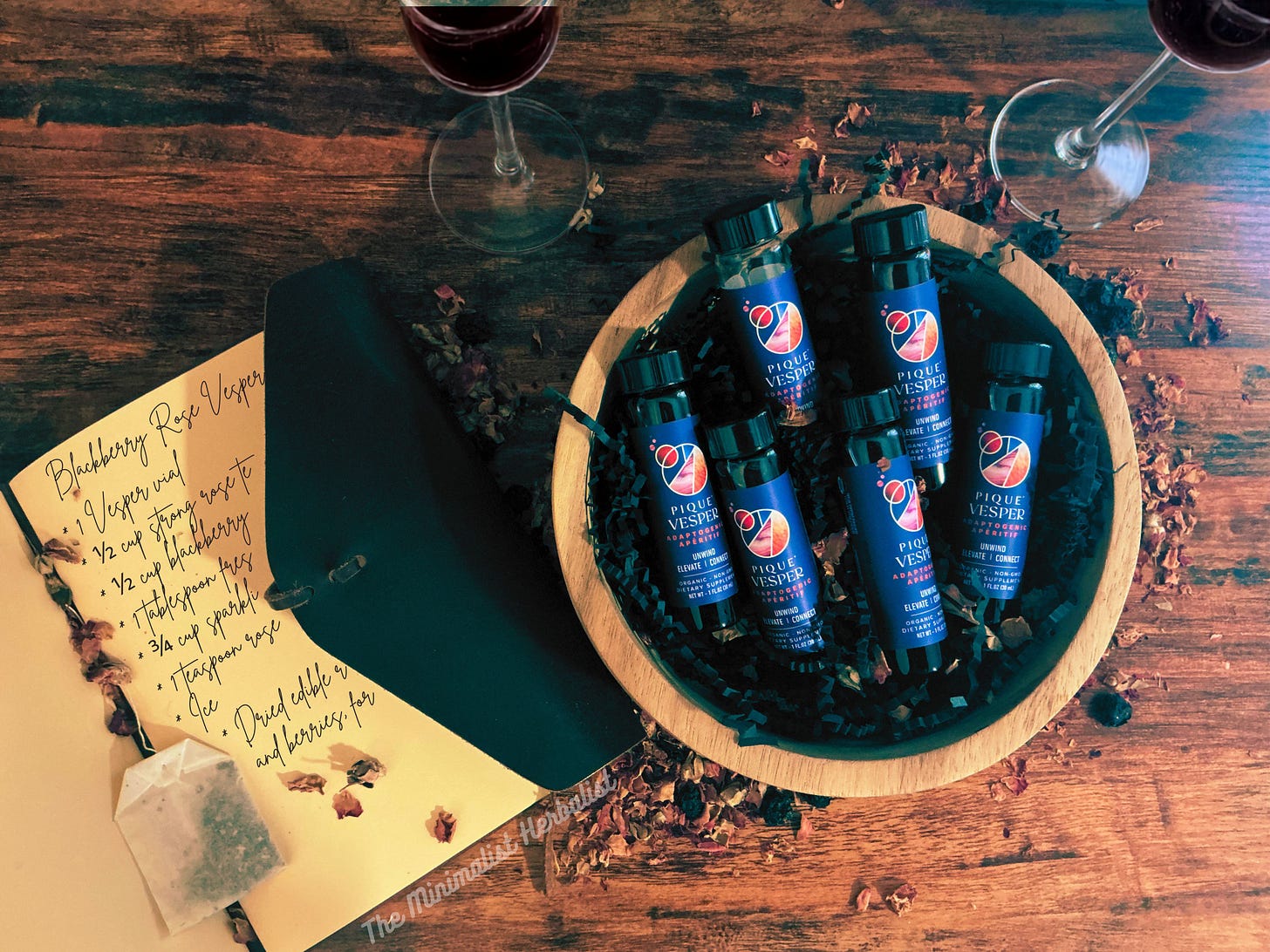
Pique’s Vesper is a great example of a nonalcoholic drink built around more than sweetness.
Tart cherry and magic acid give it a sharp, mouthwatering acidity. Grapefruit, gentian root, and rhubarb add bitterness and contrast. Ginger, rosemary, elderflower, lemon balm, and damiana create layers of botanical aroma, while the glycerine-based concentrate gives the finished drink a rich texture. (As in it has actual body, it’s not thin and watery like a typical juice spritzer.)
It opens tart and bright, becomes more herbal as you sip and ends with a clean finish of just the right sweetness. I don’t say this often because I like to build my own herbal drinks but this one is now a stapler in my house.
You should know that Vesper doesn’t taste exactly like wine, nor should it. What it does borrow is the structure: acidity, bitterness, aromatics, body, and a finish that lingers long enough to encourage slow sipping. Served cold with sparkling water, it feels like an actual aperitif.
If you do want to build your own wine alternative here’s how:
Tannins are part of what makes red wine feel dry and astringent.
Astringency isn’t just a flavor, it’s a mouthfeel caused in part by interactions between plant polyphenols and proteins in saliva.11
Tea is one of the easiest ways to add tannin to a nonalcoholic drink.
Pu’er brings earthiness and mineral notes. Lapsang Souchong can bring smoke. Strong black tea can provide bitterness, dryness, and a finish that works well in a wine-style drink. To make the tea more structured, steep it longer than you would for a casual cup. A ten-minute steep pulls more tannin and bitterness (make sure you use quality tea so you don’t extract more toxins). It can also pull more caffeine, so use decaffeinated black tea for a later evening drink when possible.
Acidity is one of the reasons wine feels balanced.
Without enough acid, a drink can taste flat, overly sweet or heavy. Acid make fruit taste clearer and help prevent a drink from tasting like straight juice.
Verjus is the tart juice pressed from unripe grapes. It ads grape-based acidity without alcohol. Tart cherry juice, pomegranate juice, hibiscus tea, and a small amount of shrub can also add acidity.
The goal here is to balance sweetness and create a clean finish.
Bitterness helps make a drink feel less sweet and more complex.
It can make citrus taste brighter, fruit taste less overpowering, and spice taste more noticeable. It can also slow the pace of drinking because bitter flavors usually encourage smaller sips.
This is why aperitifs, amari, bitter sodas, tonic water, hops, espresso, dark chocolate and strongly brewed tea all have their own appeal.
Gentian root is one of the traditional bitter ingredients in European aperitif and bitter traditions.
Gentiana lutea contains secoiridoid glycosides, including gentiopicroside and amarogentin. These compounds are responsible for much of gentian’s intense bitterness.12
Gentian can give a nonalcoholic drink a clear bitter note. It works especially well with orange, grapefruit, rosemary, pomegranate, hibiscus, tart cherry, black tea, and black pepper.
What about bitter taste receptors?
Bitter taste receptors are found in the mouth and gastrointestinal tract. Experimental research suggests that bitter-receptor activation may influence gut motility, satiation, and hormone signaling. 13 14
Alcohol carries volatile aroma compounds well, which is part of why wine and cocktails can smell so complex.
Nonalcoholic drinks benefit from aromatic ingredients that provide similar variety.
Useful options include:
Black pepper for heat and a dry finish.
Rosemary for herbaceous flavor.
Orange peel for citrus aroma.
Vanilla for roundness.
Cinnamon or clove for warmth.
Hibiscus for tartness and color.
Tart cherry for depth.
Cacao nibs for bitterness.
Nonalcoholic aromatic bitters for spice and finish.
You don’t need all of these ingredients in one drink. Choose a few that work together.
A drink with tannin, acidity, bitterness, aroma and a little fruit doesn’t need to be very sweet. It already has enough flavor contrast.
That is why a structured drink often works better than juice as an alcohol alternative.
Juice usually has fruit, sweetness and acid. It can be enjoyable, but it often doesn’t have tannin or bitterness.
A more structured drink can be served with dinner, ordered at a bar or used as an evening ritual without feeling like a substitute for something else.

I understand this is easier said than done. Even when you know the elements you’re looking for, it can still feel daunting to figure out where to start, which flavors belong together or what a well-constructed alternative is actually supposed to taste like.
Pique’s Vesper offers a useful reference point. It’s unmistakably a botanical drink. It has the tartness, bitterness and herbal complexity that make a drink intentional rather than simply alcohol-free. It’s bright enough to wake up the palate, layered enough to sip slowly and structured enough to serve before dinner without feeling like a substitute you settled for.
Its plant-based blend includes rosemary leaf, lemon balm leaf, elderflower, ginger root, rhubarb root, grapefruit, tart cherry, and L-theanine derived from green tea leaves. Carrot and black currant extracts are also used for color.
But here’s the less known plants Vesper also contains:
Gentian is the root of a flowering plant with an exceptionally strong, earthy bitterness. It has long been used in bitters and aperitifs. Even a small amount can cut through sweetness, create a drier impression, and leave a longer finish. In practical terms, gentian gives a nonalcoholic drink the bitter backbone that ingredients such as juice, sparkling water and citrus often lack.
Aperitifs are often served before dinner. They tend to be bitter, citrusy, dry, and aromatic. They can create a clear transition into a meal without being sweet or heavy.
Gentian provides the bitter component.
It works well with:
Orange peel.
Grapefruit.
Rosemary.
Juniper-like flavors.
Hibiscus.
Tart cherry.
Pomegranate.
Black tea.
Black pepper.
A simple gentian-style aperitif could include:
Strong decaffeinated black tea or rooibos.
A small amount of verjus.
Sparkling water.
Gentian-containing nonalcoholic bitters.
Orange peel.
Rosemary or black pepper.
Alcohol can make social situations feel easier.
People may drink before a party, date, dinner, or event because they want to feel less anxious or less self-conscious.
That is why telling someone to “just drink sparkling water” may not address what they actually want.
They may want a drink that feels social, complex and appropriate in the setting.
Damiana, Turnera diffusa, has a long traditional history in Mexico and Central America. It’s often discussed in herbal culture as a nervine, mood-supporting plant, and aphrodisiac. It contains flavonoids and other plant compounds. 15
Apigenin is a flavonoid. Researchers have studied whether it can affect GABA, a chemical messenger that helps calm activity in the brain. In lab and animal studies, apigenin appears able to interact with some of the same receptor areas targeted by benzodiazepine medications, such as anti-anxiety drugs. 16
Now let’s talk recipes!
If you’re ready to try a few recipes, here you go:
This isn’t a copycat of a specific bottle of red wine. It contains tea, acid, bitters, and fruit to create a dry, complex drink that works well with dinner.
Serve it cold in a wine glass.
3½ ounces strongly brewed black tea, chilled
Use pu’er for earthiness, Lapsang Souchong for smoke, or decaffeinated black tea for an evening version.1½ ounces red verjus or tart cherry juice
Verjus is sharper and more grape-like. Tart cherry is fruitier.¾ ounce berry-vinegar shrub
5 to 7 dashes nonalcoholic aromatic bitters
Check the label. “Nonalcoholic” and “alcohol-free” aren’t always used the same way.Optional: orange peel or rosemary
Add the chilled tea, verjus or tart cherry juice, shrub, and bitters to a mixing glass with ice.
Stir until cold.
Strain into a wine glass over one large cube or serve it in a chilled stemmed glass without ice.
Add orange peel or rosemary if you’d like.
The tea provides tannin and dryness, verjus or tart cherry provides the acidity. Shrub adds fruit, vinegar, pepper and herbal notes. The bitters add spice and a longer finish.
The drink doesn’t need to be very sweet because it has enough structure without extra sugar.

Makes 2 glasses
½ cup strong rose tea, chilled
½ cup blackberry or blueberry juice
1 tablespoon fresh lemon juice
¾ cup sparkling water
1 teaspoon rose water
Ice
Dried edible rose petals and berries, for garnish
Shake the Vesper, rose tea, berry juice, lemon juice and rose water with ice. Divide between two glasses, top with sparkling water, and garnish with a few edible rose petals and berries.
1 cup berries, fresh or frozen
⅓ to ½ cup coconut sugar, honey or another sweetener
2 small rosemary sprigs, lightly bruised
1 to 2 teaspoons cracked black pepper
1 cup apple cider vinegar
2 tablespoons balsamic vinegar
Muddle the berries with the sweetener until they begin releasing their juices.
Add the rosemary, black pepper and vinegars. Stir well, cover and refrigerate for 24 hours.
Taste the shrub. For a stronger herbal or peppery flavor, let it infuse more before straining it through a fine-mesh sieve.
Transfer to a clean bottle and keep refrigerated. Use 1 to 2 tablespoons in a glass of sparkling water, adjusting to taste.
The finished shrub should taste fruity, acidic and gently spiced. It should have enough sweetness to soften the vinegar without tasting like syrup.
For a darker, richer version, use blackberries or cherries and increase the balsamic vinegar to ¼ cup. For a brighter variation, switch to raspberries with two strips of orange peel. And a warmer drink, add one small piece of cinnamon stick or my favorite: two whole cloves.
Once you understand the basic structure, you can make different versions without needing a complicated recipe every time.
Use tea for tannin, add acid for balance. Integrate bitters for contrast and use aroma for complexity. Oh, and easy on the fruit!
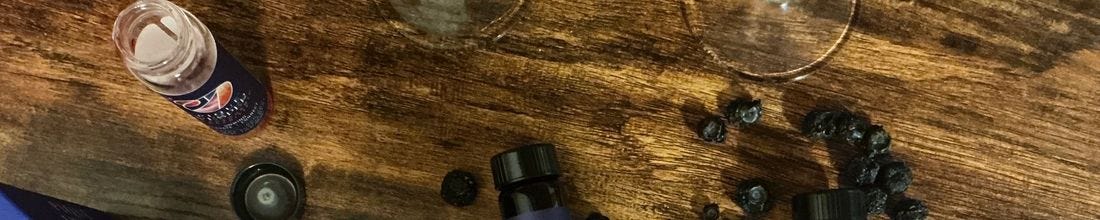
Makes 1 glass
2 ounces tart cherry juice
4 ounces sparkling water
Small handful of blueberries
Ice
Fill a glass with ice. Add the Vesper and tart cherry juice, then top with sparkling water. Stir gently and finish with blueberries.
Alcohol often works socially because it lowers self-monitoring. People stop editing every sentence, worrying whether they sound awkward,and waiting for the perfect moment to join a conversation. But the real goal isn’t intoxication. It’s feeling comfortable enough to participate.
Choose a drink with a slower pace. Something dry, bitter, sparkling, or tea-based gives you something to do with your hands and a natural pause between conversations.
Arrive with one easy question ready. Something simple: “How do you know the host?” “What have you been into lately?” “Have you tried the food yet?”
Give yourself one job at the event. Help the host, ask someone about their work, compliment something specific or make sure one person isn’t standing alone. It shifts attention away from how you’re coming across.
Don’t aim to be the most interesting person there. Aim to make one person feel easy talking to you.
Use a drink that feels socially appropriate. The point isn’t to hide that you’re not drinking. It’s to have something that feels satisfying enough that you aren’t thinking about what everyone else has in their glass.
More people are also cutting back because alcohol simply doesn’t agree with them anymore. They feel sick after drinking, not just hungover. They may notice headaches, nausea, flushing, disrupted sleep, anxiety, digestive symptoms or fatigue that no longer feels worth a night out. Some people have also reported new alcohol sensitivity, although the published evidence is still limited and includes a small case series.17
At the same time, there’s a growing market of “before-you-drink” capsules, patches, powders, and probiotic products that promise an easier next day. Those products may be marketed as support, but they don’t make alcohol harmless. They can’t remove ethanol’s effects on sleep, cancer risk, the gut or the nervous system.
A 2025 review of products sold in the United States found that none had demonstrated efficacy for preventing or reducing alcohol hangover in high-quality double-blind, placebo-controlled human trials.18
For people who are drinking less because alcohol makes them feel bad, the answer may not be another supplement designed to help them keep drinking. It may be taking that response seriously and choosing a ritual that doesn’t leave them feeling sick.
Drinking less doesn’t have to mean pretending alcohol never had a role in your life.
You may enjoy wine, a good cocktail, the feeling of ordering something special at dinner or the first drink at a party.
You can still decide that alcohol doesn’t need to be your default response to stress, fatigue, social discomfort or boredom. You can also choose different approaches depending on the situation.
You might have one alcoholic drink with dinner, then switch to something nonalcoholic that still has tannin, bitterness or acidity.
You might alternate alcoholic and nonalcoholic drinks at an event. That approach can help some people reduce total alcohol intake, spend less and feel better the next day.
The best alcohol alternative depends on the purpose of the drink.
For dinner: use tannin and acid.
For an aperitif: use bitterness and citrus.
For a social event: use pretty glassware and a drink with actual flavor.
For a late-night routine: avoid caffeine and choose something warm, calm and simple to make.
If you miss beer: consider hops, carbonation, tea, citrus peel and bitterness.
If you miss red wine: consider tea, verjus, berry, vinegar and aromatic bitters.
If you miss cocktails: use a base, an acid, a bitter ingredient, a small amount of sweetener and one aromatic ingredient.
You need a drink that tastes good enough to become part of your routine.
An evening drink can be meaningful. It may be one of the few consistent parts of the day when you stop working, sit down, choose something to drink and give yourself time to pause.
That part doesn’t need to disappear.
You may not need alcohol as much as you need:
A clear end to the workday.
A sensory routine.
A drink with complexity.
A social option.
A reason to slow down.
A transition into dinner, rest, or conversation.
A good nonalcoholic drink doesn’t have to imitate every part of alcohol. It needs to meet the needs that made alcohol appealing in the first place.
The next time you reach for wine, beer or a cocktail, ask yourself what you want from it.
Do you want a dry, tannic drink?
Do you want something bitter before dinner?
Do you want a social drink that doesn’t leave you tired tomorrow?
Do you want a clear end to the workday?
Do you want a familiar ritual?
Once you know what you want, you can decide whether alcohol is the best option for that moment. And if not, now you know what to drink instead!
The information provided in this newsletter is for informational purposes only and is not intended as medical advice, diagnosis, or treatment. Herbal practices and uses discussed are not a substitute for professional healthcare.
While herbs are natural, they are also bioactive substances, and proper dosage, preparation, and use are important. Always follow reputable dosing guidelines for each herb and consult with a qualified healthcare provider before using any herbs, especially if you are pregnant, nursing, taking medications, have known allergies, or have existing medical conditions.
Anyone experiencing severe symptoms or managing chronic health issues should seek professional guidance before using herbs.
Individual responses to herbs may vary, and no outcomes are guaranteed. The author makes no claims regarding the effectiveness, safety, or suitability of any herb for any particular person.
Readers assume all responsibility for their personal health decisions based on the information presented. The author disclaims all liability for any loss, injury, or damage allegedly arising from the use or application of the information in this newsletter.
Camille Charles is the voice behind The Minimalist Herbalist. Herbal researcher. Best-selling author. Food nerd. Professional over-doer of tinctures. Consumer advocate. Curator of coping skills and good sense. Currently earning a doctorate in curriculum design, on a mission to make herbal education less confusing and more honest.
She believes learning about herbs should feel empowering, not overwhelming. You’ll find her distilling rose water in an Instant Pot, repurposing olive jars for cacao butter, and making overnight nettle infusions like it’s a sacred ritual. She talks way too much about nettle and why your juicer is probably lying to you.
If there’s an herb for it, she’s tried it, and probably turned it into a teachable moment.
Tea’s brewing. Grab a cup.
Chiva-Blanch, G., Arranz, S., Lamuela-Raventos, R. M., & Estruch, R. (2013). Effects of wine, alcohol and polyphenols on cardiovascular disease risk factors: evidences from human studies. Alcohol and alcoholism (Oxford, Oxfordshire), 48(3), 270–277. https://doi.org/10.1093/alcalc/agt007
Stockwell, T., Zhao, J., Panwar, S., Roemer, A., Naimi, T., & Chikritzhs, T. (2016). Do “Moderate” Drinkers Have Reduced Mortality Risk? A Systematic Review and Meta-Analysis of Alcohol Consumption and All-Cause Mortality. Journal of studies on alcohol and drugs, 77(2), 185–198. https://doi.org/10.15288/jsad.2016.77.185
Zhao, J., Stockwell, T., Naimi, T., Churchill, S., Clay, J., & Sherk, A. (2023). Association Between Daily Alcohol Intake and Risk of All-Cause Mortality: A Systematic Review and Meta-analyses. JAMA network open, 6(3), e236185. https://doi.org/10.1001/jamanetworkopen.2023.6185
Chiva-Blanch, G., Urpi-Sarda, M., Ros, E., Arranz, S., Valderas-Martínez, P., Casas, R., Sacanella, E., Llorach, R., Lamuela-Raventos, R. M., Andres-Lacueva, C., & Estruch, R. (2012). Dealcoholized red wine decreases systolic and diastolic blood pressure and increases plasma nitric oxide: short communication. Circulation research, 111(8), 1065–1068. https://doi.org/10.1161/CIRCRESAHA.112.275636
Bagnardi, V., Rota, M., Botteri, E., Tramacere, I., Islami, F., Fedirko, V., Scotti, L., Jenab, M., Turati, F., Pasquali, E., Pelucchi, C., Galeone, C., Bellocco, R., Negri, E., Corrao, G., Boffetta, P., & La Vecchia, C. (2015). Alcohol consumption and site-specific cancer risk: a comprehensive dose-response meta-analysis. British journal of cancer, 112(3), 580–593. https://doi.org/10.1038/bjc.2014.579
Elamin, E., Jonkers, D., Juuti-Uusitalo, K., van Ijzendoorn, S., Troost, F., Duimel, H., Broers, J., Verheyen, F., Dekker, J., & Masclee, A. (2012). Effects of ethanol and acetaldehyde on tight junction integrity: in vitro study in a three dimensional intestinal epithelial cell culture model. PloS one, 7(4), e35008. https://doi.org/10.1371/journal.pone.0035008
Swanson, G., Forsyth, C. B., Tang, Y., Shaikh, M., Zhang, L., Turek, F. W., & Keshavarzian, A. (2011). Role of intestinal circadian genes in alcohol-induced gut leakiness. Alcoholism, clinical and experimental research, 35(7), 1305–1314. https://doi.org/10.1111/j.1530-0277.2011.01466.x
Ebrahim, I. O., Shapiro, C. M., Williams, A. J., & Fenwick, P. B. (2013). Alcohol and sleep I: effects on normal sleep. Alcoholism, clinical and experimental research, 37(4), 539–549. https://doi.org/10.1111/acer.12006
Lesschaeve, I., & Noble, A. C. (2005). Polyphenols: factors influencing their sensory properties and their effects on food and beverage preferences. The American journal of clinical nutrition, 81(1 Suppl), 330S–335S. https://doi.org/10.1093/ajcn/81.1.330S
Wölfle, U., Haarhaus, B., Seiwerth, J., Cawelius, A., Schwabe, K., Quirin, K. W., & Schempp, C. M. (2017). The Herbal Bitter Drug Gentiana lutea Modulates Lipid Synthesis in Human Keratinocytes In Vitro and In Vivo. International journal of molecular sciences, 18(8), 1814. https://doi.org/10.3390/ijms18081814
Avau, B., Rotondo, A., Thijs, T. et al. Targeting extra-oral bitter taste receptors modulates gastrointestinal motility with effects on satiation. Sci Rep 5, 15985 (2015). https://doi.org/10.1038/srep15985
Kok, B. P., Galmozzi, A., Littlejohn, N. K., Albert, V., Godio, C., Kim, W., Kim, S. M., Bland, J. S., Grayson, N., Fang, M., Meyerhof, W., Siuzdak, G., Srinivasan, S., Behrens, M., & Saez, E. (2018). Intestinal bitter taste receptor activation alters hormone secretion and imparts metabolic benefits. Molecular metabolism, 16, 76–87. https://doi.org/10.1016/j.molmet.2018.07.013
Szewczyk, K., & Zidorn, C. (2014). Ethnobotany, phytochemistry, and bioactivity of the genus Turnera (Passifloraceae) with a focus on damiana--Turnera diffusa. Journal of ethnopharmacology, 152(3), 424–443. https://doi.org/10.1016/j.jep.2014.01.019
Wasowski, C., & Marder, M. (2012). Flavonoids as GABAA receptor ligands: the whole story?. Journal of experimental pharmacology, 4, 9–24. https://doi.org/10.2147/JEP.S23105
Eastin, E. F., Tiwari, A., Quach, T. C., Bonilla, H. F., Miglis, M. G., Yang, P. C., & Geng, L. N. (2023). New Alcohol Sensitivity in Patients With Post-acute Sequelae of SARS-CoV-2 (PASC): A Case Series. Cureus, 15(12), e51286. https://doi.org/10.7759/cureus.51286
erster, J. C., Scholey, A., van de Loo, A. J. A. E., Benson, S., & Stock, A.-K. (2021). Unknown safety and efficacy of alcohol hangover treatments puts consumers at risk. Addictive Behaviors, 122, Article 107029. https://doi.org/10.1016/j.addbeh.2021.107029
Comments
Nothing yet. Say the first thing.
Sign in to join the conversation.