
If You’re Going to Drink It Every Morning, It Should Be the Absolute Best
I mean, really.
If you’re going to consume something every single morning, sometimes before you’ve spoken to another human being, it should be excellent.
Is the coffee from the giant chain coffee shop actually top shelf?
Is a plastic-lined cup the ideal place to pour steaming-hot espresso?
Is barista milk filled with gums, oils, stabilizers and other additives really the gold standard?
Can you even count on getting the same quality, flavor, and consistency from one day to the next?
We already know the answer. That’s part of why coffee alternatives are suddenly everywhere. The other reason is the jitters, the crash and the inconvenient realization that the drink tastes so good that we keep going back for another one. And another one.
We may not need more caffeine but we want to repeat the experience. It’s the warmth, the smell, holding the mug between both hands, stirring in something creamy. Taking a few quiet minutes before the day starts demanding things from us.
If you’ve been reading my posts for a long time you know I go through seasons with my drinks. Seasons of having coffee every morning, sometimes in the afternoon after a long working day if there’s more left to do and seasons of making tea several times throughout the day.
And for this reason I wanted to talk about what 30 days without coffee actually require. It’s like eating bread or rice every day and suddenly stopping. You can’t simply replace it with lettuce. You have to replace it with something that has a similar weight and density in the mouth (like sweet potatoes) or you’ll go back to bread on day five.
Can we stop drinking coffee without losing the sensory ritual that made us want it every morning?
Let’s find out how.
Pique sponsored this deep dive into what makes a coffee alternative genuinely useful and sent Nandaka, their coffee alternative. As always, I looked at the product against the research.
I’ve said it before, coffee isn’t necessarily the problem.
Caffeine can improve alertness and performance but it can also increase anxiety in some people. A 2024 meta-analysis found that caffeine intake was associated with increased anxiety, with a larger effect at higher doses.1
An umbrella review examining more than 200 meta-analyses however, found that usual amounts of coffee consumption was generally associated with more beneficial than harmful health outcomes. 2
The FDA currently cites 400 milligrams of caffeine per day as the safe amount, as it’s generally not associated with negative effects for most healthy adults. Of course sensitivity and caffeine metabolism vary widely between individuals.3
It also illustrates just how quickly serving size adds up: 400 milligrams is approximately two to three 12-ounce cups of coffee.
So this isn’t an article about why everyone needs to quit coffee. It’s about whether your particular coffee routine is working for you.
There’s a difference between enjoying a double espresso and buying a jumbo size whipped caramel macchiato that will require nearly 300 mg of caffeine in a single serving to offset the 65 grams of sugar that come with it. And that’s also not the same as consuming coffee in the morning because we didn’t sleep enough in the first replace, buying another after lunch and then wondering why we always have a headache by 4:00 p.m
Sometimes the problem isn’t coffee, sometimes it’s the amount. Other times it’s the timing and sometimes it’s what we add to it.
And sometimes we don’t know which part is causing the problem because we consume all of it together every morning. That’s where a 30-day experiment comes in.
Thirty days without coffee can mean several different things.
You can eliminate coffee but continue consuming caffeine from tea or cacao.
You can reduce your coffee substantially without eliminating it.
Or you can remove coffee and all other sources of caffeine.
When I go without coffee for a season, I still drink black and green tea, which contain caffeine.
This time around I’m also including Pique’s Nandaka which is a coffee alternative. Each serving contains 82 milligrams of caffeine derived from fermented black and green Pu’er teas.
This amount of caffeine may be a major reduction for someone accustomed to several coffees or one large beverage. For someone who normally drinks one small cup, it’s fairly similar to their usual caffeine intake.
Nandaka’s 82 milligrams equate roughly to a blonde espresso (85mg of caffeine) except it’s slow-release caffeine because it comes from tea and therefore also has L-theanine naturally present in tea.
Step one is figuring out how much caffeine you currently consume.
Coffee varies considerably depending on the beans, brewing method, serving size and preparation. Caffeine can also appear in tea, chocolate, energy drinks, pre-workout supplements and some medications.
Before changing anything, write down what you drink for three ordinary days.
(As in, don’t lie to yourself, don’t pick the amount you drink on the day when all perfect conditions line up and you’re being super disciplined. Pick the amount you’re having most often. A usual day.)

If you abruptly reduce your caffeine intake, the first few days may feel terrible.
But hang in there, it doesn’t mean your body was thriving on coffee and has now lost its only source of energy. You might be experiencing caffeine withdrawal.
Withdrawal symptoms generally begin 12 to 24 hours after stopping caffeine, peak around 20 to 51 hours and may continue for 2 to 9 days. Headache is common, but people may also experience fatigue, irritability, reduced alertness, difficulty concentrating and a find they can’t stand anyone anymore.[4]
Withdrawal has been documented in people consuming as little as approximately 100 milligrams per day, although the severity tends to increase with higher habitual intake.4
In my opinion, this is why abruptly replacing several coffees with a completely caffeine-free herbal drink often fails. I personally wouldn’t do it. (It’s that rice and bread comparison again)
We might blame whatever replacement we use for not “working,” when we’re actually comparing our normal stimulated state with acute withdrawal.
A gradual decrease is usually more manageable. Clinical guidance commonly recommends reducing caffeine by approximately 25% to 50% every few days, particularly for people consuming larger amounts.5
During the first few days, replace one of your usual coffees rather than all of them. Next, reduce the size or strength of the remaining coffee. Then move toward one consistent morning source of caffeine before deciding whether you want to reduce it further.
For someone drinking several coffees, one Nandaka sachet containing 82 milligrams may work as a controlled step down.
For someone already consuming around 80 milligrams, it functions less as a caffeine reduction and more as a way to test whether coffee itself, or the way coffee is consumed, was the issue.
The goal isn’t to suffer through it to prove to yourself you’re strong enough to do it but to create conditions you can sustain long term.

Once the worst of any withdrawal begins to pass, another problem arises.
You might not miss coffee only because of the caffeine. You might miss making it.
We often discuss coffee as though it’s just a beverage but coffee is an experience more than anything else. That experience turns into an habit and that habit includes steam, smell, bitterness, texture, color, sound and repetition.
Research on espresso has found that crema changes aroma release and the way roasted notes are perceived while drinking.6
Small experimental studies have also found that simply smelling coffee may influence alertness or performance, although aroma alone doesn’t replicate all of caffeine’s physiological effects.7
There’s even evidence that expectation and familiar coffee cues can affect withdrawal symptoms. In controlled studies, decaffeinated coffee reduced some reported caffeine-withdrawal symptoms when participants believed they had consumed caffeine. More recent research suggests that decaf may reduce symptoms to some extent even when people know it contains no caffeine.8
I don’t personally drink decaf because removing caffeine adds another industrial process to something I’d be consuming every morning. Before the beans are roasted, they’re softened with water or steam and repeatedly processed to extract the caffeine.
Depending on the manufacturer, that may involve methylene chloride or ethyl acetate solvents, a water-filtration method or highly pressurized carbon dioxide. Solvent residues are regulated, the FDA permits no more than 10 parts per million of methylene chloride in decaffeinated coffee, so I’m not saying that decaf is secretly full of uncontrolled chemicals. But the issue for me is that the label doesn’t tell me which method was used and the additional extraction can also remove or alter some of the compounds that contribute to coffee’s original flavor.
Decaf is coffee that has undergone extra steps to become something it wasn’t naturally.
Personally, I’d rather choose a drink formulated to taste complete as it is than take coffee apart and try to rebuild the experience afterward.

Removing the entire ritual at once makes the whole not drinking coffee thing unnecessarily difficult. We’ve established that the real question isn’t just whether we can replace coffee but if we can replicate the sensory experience well enough that we don’t feel like we’ve settled.
Keep the morning habit. Keep the act of stirring or frothing.
Make it foam. If you used to add milk, make sure your new drink is rich and creamy, that it smell roasted, earthy, or complex.
And most importantly: does it taste good enough that you’ll genuinely want to make it again tomorrow?
Plain hot water with a faint lemon flavor in it is technically a beverage, but it‘s never going to be an experience. No one’s pulling you into a store for a a free lemon water demo.
The aroma should be noticeable before the first sip. Roasted, earthy, fruity, spicy and bitter notes can all help create the complexity we associate with coffee.
Coffee alternatives often fail because they have no density.
Something can contain twelve interesting ingredients and still feel like flavored water. Density is crucial because it affects the texture on the tongue as well as whether milk adds into it or simply dilutes it.
You can add density with milk and/or foam.
Coffee isn’t satisfying because it’s sweet.
Even if you like it sweet, that slight bitterness still remains underneath the milk and syrup. It’s that contrast that makes a drink we can’t wait to come back to.
A replacement that relies entirely on sweetness might be good but won’t satisfy the same craving.
You shouldn’t need seventeen ingredients, three strainers and a complete emotional reset to make your morning drink.
Your replacement drink has to be easy enough to prepare on a Monday morning when you wake up late hating everything. This can make or break your new habit.
It should also taste substantially the same from one day to the next. Consistency is one of the reasons we may continue buying chain coffee even when we know it isn’t the best coffee available. And even when it’s off and we have to request for it to be remade or drive to another location. We love it so much we’re putting in the extra effort time and potential uncomfortable conversation. Why not put half that half effort and towards a better option?
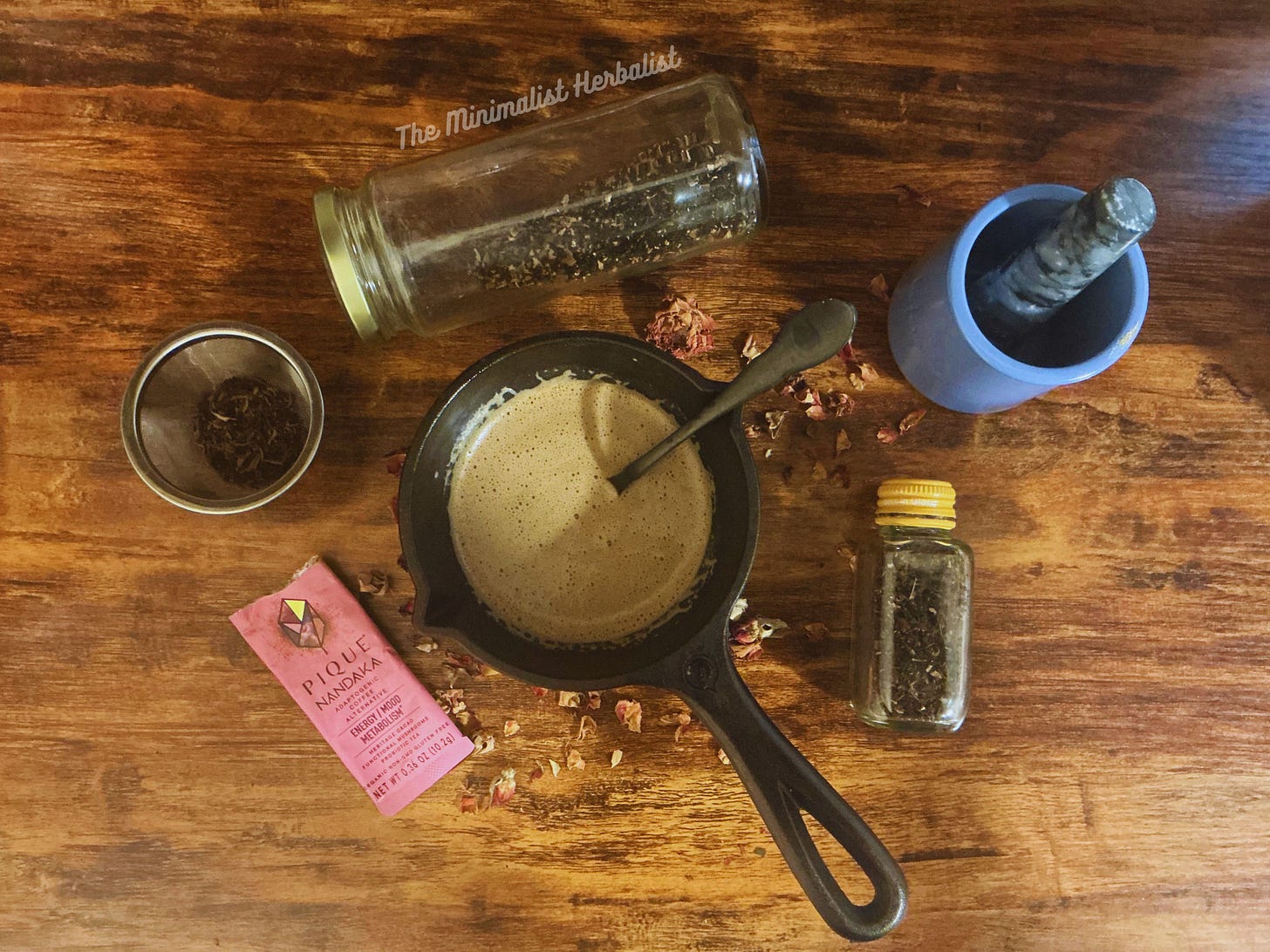
Nandaka’s full ingredient list includes:
Organic ceremonial cacao for earthiness, bitterness and fat.
Organic lucuma for a mild, naturally sweet, caramel-like roundness.
Organic mushrooms: Lion’s mane, Cordyceps, Chaga and Reishi
Organic fermented black Pu’er tea and organic fermented green Pu’er tea for depth, tannin and the developed flavors associated with fermentation.
All organic spices: ginger, cardamom, cinnamon, nutmeg, cloves, licorice root.
All vegan and non-GMO, with no added sugar, preservatives or artificial ingredients. It also uses Full Spectrum Isolate Synthesis (F-SIS™) and Eastern Medicinal Architecture (EMA™).

Functional mushrooms are increasingly included in coffee alternatives.9
One small randomized pilot trial in healthy adults examined 1.8 grams pf Lion’s mane per day for 28 days and found a faster response on one cognitive task after an acute dose, along with a trend toward reduced subjective stress after four weeks.10
Cacao contains flavanols and methylxanthines, including theobromine and some caffeine. Human studies have examined possible effects of on blood flow, mood and cognitive performance. 11 12
The “findings suggest that dark chocolate consumption contributes to the maintenance of performance and concentration in continuous and demanding cognitive tasks.” 13
As for tea, research suggests that caffeine and L-theanine may work together to support certain aspects of attention and alertness.14
During the third week, track four things:
Your energy in the morning.
Your energy in the afternoon.
How quickly you fall asleep.
How you feel when you wake up.
Ask yourself:
Do I feel alert without feeling agitated?
Am I still using caffeine to compensate for inadequate sleep?
Do I enjoy the morning experience?
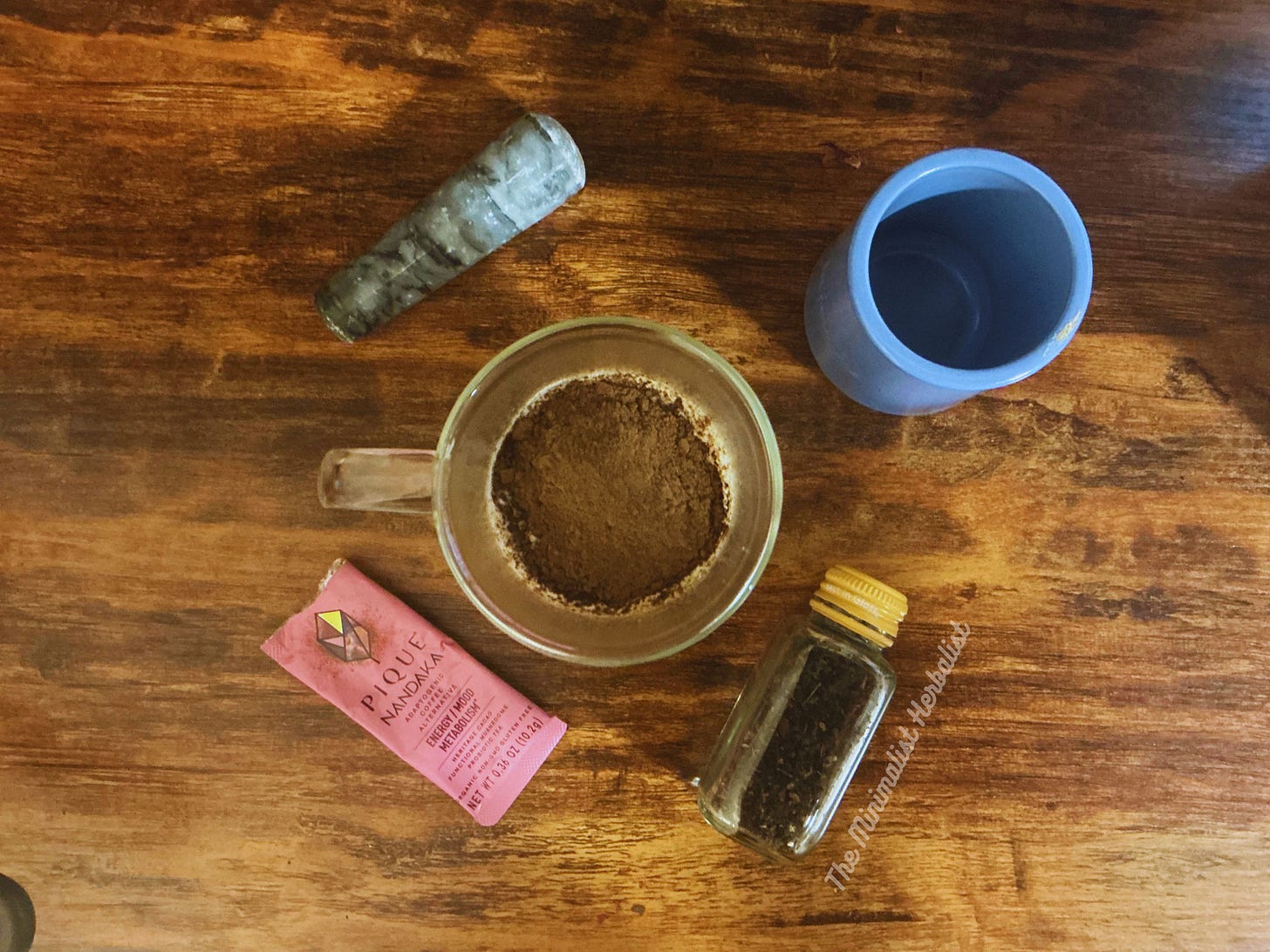
Pique recommends adding one Nandaka sachet to 10 to 12 ounces of water heated to approximately 180°F to 200°F before stirring or frothing it. Because it contains whole ground ingredients, some sediment may settle at the bottom of the cup.
Now the instructions on the box tell you to use water, but I never do, not with any chocolate, cacao or cocoa. Always milk.
For the most coffee-like sensory experience, heat the milk up first and pour in a wide mug so you can stir generously and smell the cocoa.
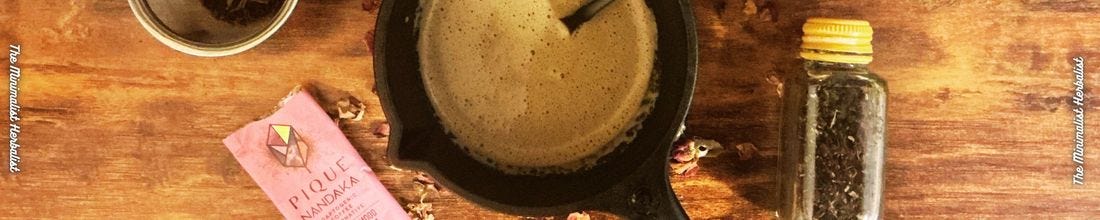
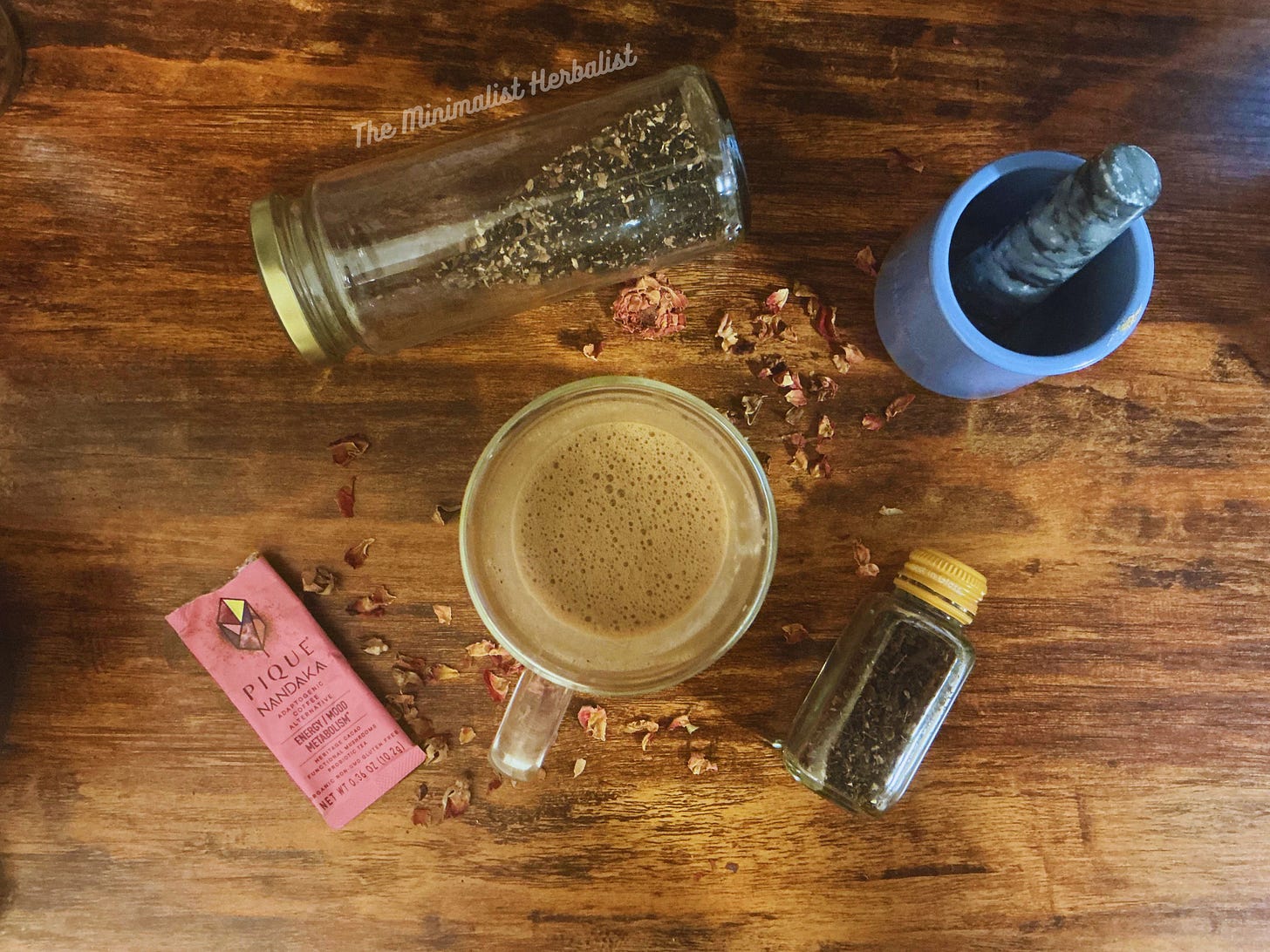
I added the milk before the powder, as seen in the picture, but you should follow instructions here and add the powder before the liquid to help it dissolve.
If you use waster, try not to repeatedly boil and cool the same kettle while scrolling. Stay present. (Another reason to use milk, you have to watch it so it doesn’t burn!)
Nandaka tastes like a creamy and full-bodied spiced cocoa on its own but if you steep chai with it, it takes it to a whole new level! Same with as a sprinkle of culinary rose. If you’ve watched my Ginger cocoa rose latte video from last year, I remade the recipe with Nandaka instead of the cocoa powder and oh my God, even better!
It’s grounding, floral, and just barely sweet.
What you’ll need:
1 tsp dried rose petals (culinary grade)
1 Nandaka sachet
¾ cup milk of choice
Optional Himalayan pinch of salt (it wakes everything up)
How to make it:
Steep the culinary dried rose for a few minutes in the heated milk. Try it as you steep to adjust to your preferred flavor.
Add Nandaka.
Froth. Sip. Adjust. Repeat tomorrow.
Why I chose these ingredients:
Rose softens the whole thing. It rounds out the sharpness of ginger and the earthiness of cocoa. Rose petals are considered cooling, soothing, and emotional tonics in many herbal traditions. They’re used for emotional balance, to soften grief or tension, and to calm the nervous system. Rose is also thought to be a gentle heartache support, esoterically.
Rose petals contain polyphenols, flavonoids, and aromatic compounds that have been studied for their antioxidant and relaxation-supportive properties.Cocoa (in Nandaka) adds richness and a little grounding. It deepens the flavor without overpowering the florals. Herbalists often use it to help deepen blends, especially where there’s mental fatigue or emotional depletion.
The ginger isn’t necessary here because Nandaka is already formulated with it.
By the final week, the novelty has passed. You can evaluate the experiment honestly.
A 30-day coffee break isn’t a controlled clinical trial. Sleep, workload, hormones, food, stress and dozens of other variables can change over a month.
You’re trying to answer a practical question:
Is my morning better with this routine?
Recap at the entire month.
Did you reduce your total caffeine?
Did your sleep improve?
Did you experience fewer jitters?
Did you miss coffee itself?
Was the alternative easy to prepare?
Did you enjoy it without excessive sweetener?
What works is:
deciding whether you’re eliminating coffee, reducing caffeine or eliminating caffeine completely.
tapering when your current intake is high enough to produce withdrawal.
choosing a drink with bitterness, aroma and body rather than relying entirely on sweetness.
using one defined serving rather than letting caffeine portions get out of hands throughout the day.
consuming it early enough that it doesn’t interfere with the sleep you’ll need tomorrow.
evaluating the entire day rather than the first hour post-caffeine.
What works is choosing something you genuinely enjoy.
Nandaka works best for someone who wants to stop drinking coffee without eliminating caffeine.
It works for someone replacing several coffees with one morning beverage.
It’s for people who crave an earthier and more substantial experience than a standard herbal tea.
Nandaka is for those who want the convenience of a sachet without a long list of added sugars, artificial flavors or preservatives.
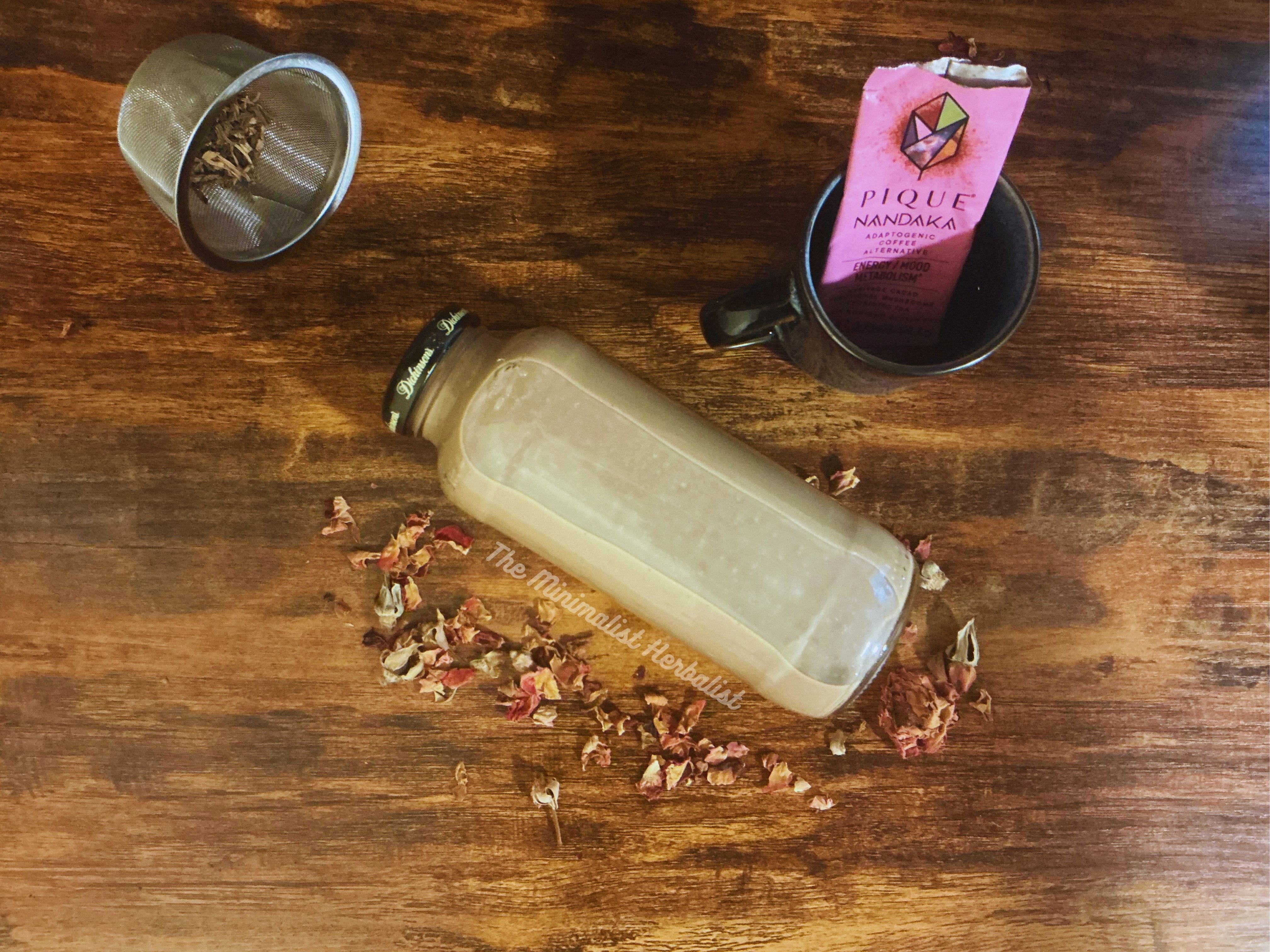
If you’re going to consume something every single morning, it should be the absolute best version available to you.
That is what a 30-day experiment is really for. Not proving that coffee is bad but finding out whether something else works better.
Consistency looks like nothing is happening, until suddenly, everything changes.
That’s true when you work out regularly. For weeks, you may not see much difference. Then one day, you realize you’re stronger, your clothes fit differently and the routine that once felt difficult has become normal.
The same thing happens in the opposite direction.
One sugary drink doesn’t determine your health. One oversized coffee loaded with flavored creamer doesn’t either. What matters is the repeated exposure: what you drink every morning, what you reach for every afternoon and what your body receives day after day without much thought.
We talk constantly about how food shapes our health but beverages are often treated as though they barely count.
They do. We are what we drink repeatedly.
Start your 30 days without coffee! Right now, you can get 20% off for life when you subscribe through this link. Plus, every order is backed by Pique’s 90-day money-back guarantee, so you can experience the difference completely risk-free

The information provided in this newsletter is for informational purposes only and is not intended as medical advice, diagnosis, or treatment. Herbal practices and uses discussed are not a substitute for professional healthcare.
While herbs are natural, they are also bioactive substances, and proper dosage, preparation, and use are important. Always follow reputable dosing guidelines for each herb and consult with a qualified healthcare provider before using any herbs, especially if you are pregnant, nursing, taking medications, have known allergies, or have existing medical conditions.
Anyone experiencing severe symptoms or managing chronic health issues should seek professional guidance before using herbs.
Individual responses to herbs may vary, and no outcomes are guaranteed. The author makes no claims regarding the effectiveness, safety, or suitability of any herb for any particular person.
Readers assume all responsibility for their personal health decisions based on the information presented. The author disclaims all liability for any loss, injury, or damage allegedly arising from the use or application of the information in this newsletter.
Camille Charles is the voice behind The Minimalist Herbalist. Herbal researcher. Best-selling author. Food nerd. Professional over-doer of tinctures. Consumer advocate. Curator of coping skills and good sense. Currently earning a doctorate in curriculum design, on a mission to make herbal education less confusing and more honest.
She believes learning about herbs should feel empowering, not overwhelming. You’ll find her distilling rose water in an Instant Pot, repurposing olive jars for cacao butter, and making overnight nettle infusions like it’s a sacred ritual. She talks way too much about nettle and why your juicer is probably lying to you.
If there’s an herb for it, she’s tried it, and probably turned it into a teachable moment.
Tea’s brewing. Grab a cup.
Liu, C., Wang, L., Zhang, C., Hu, Z., Tang, J., Xue, J., & Lu, W. (2024). Caffeine intake and anxiety: a meta-analysis. Frontiers in psychologyu, 15, 1270246. https://doi.org/10.3389/fpsyg.2024.1270246
Poole, R., Kennedy, O. J., Roderick, P., Fallowfield, J. A., Hayes, P. C., & Parkes, J. (2017). Coffee consumption and health: umbrella review of meta-analyses of multiple health outcomes. BMJ (Clinical research ed.), 359, j5024. https://doi.org/10.1136/bmj.j5024
Juliano, L. M., & Griffiths, R. R. (2004). A critical review of caffeine withdrawal: empirical validation of symptoms and signs, incidence, severity, and associated features. Psychopharmacology, 176(1), 1–29. https://doi.org/10.1007/s00213-004-2000-x
D. Barron, N. Pineau, W. Matthey-Doret, S. Ali, J. Sudre, J. C. Germain, E. Kolodziejczyk, P. Pollien, D. Labbe, C. Jarisch, V. Dugas, C. Hartmann, B. Folmer; Impact of crema on the aroma release and the in-mouth sensory perception of espresso coffee. Food Funct. 2012; 3 (9): 923–930. https://doi.org/10.1039/c2fo30046j
Hawiset T. (2019). Effect of one time coffee fragrance inhalation on working memory, mood, and salivary cortisol level in healthy young volunteers: a randomized placebo controlled trial. Integrative medicine research, 8(4), 273–278. https://doi.org/10.1016/j.imr.2019.11.007
Mills, L., Boakes, R. A., & Colagiuri, B. (2016). Placebo caffeine reduces withdrawal in abstinent coffee drinkers. Journal of Psychopharmacology, 30(4), 388–394.https://doi.org/10.1177/0269881116632374
Venturella, G., Ferraro, V., Cirlincione, F., & Gargano, M. L. (2021). Medicinal Mushrooms: Bioactive Compounds, Use, and Clinical Trials. International journal of molecular sciences, 22(2), 634. https://doi.org/10.3390/ijms22020634
Docherty, S., Doughty, F. L., & Smith, E. F. (2023). The Acute and Chronic Effects of Lion’s Mane Mushroom Supplementation on Cognitive Function, Stress and Mood in Young Adults: A Double-Blind, Parallel Groups, Pilot Study. Nutrients, 15(22), 4842. https://doi.org/10.3390/nu15224842
Smit, H. J., Gaffan, E. A., & Rogers, P. J. (2004). Methylxanthines are the psycho-pharmacologically active constituents of chocolate. Psychopharmacology, 176(3-4), 412–419. https://doi.org/10.1007/s00213-004-1898-
Scholey, A. B., French, S. J., Morris, P. J., Kennedy, D. O., Milne, A. L., & Haskell, C. F. (2010). Consumption of cocoa flavanols results in acute improvements in mood and cognitive performance during sustained mental effort. Journal of psychopharmacology (Oxford, England), 24(10), 1505–1514. https://doi.org/10.1177/0269881109106923
Sasaki, A., Mizuno, K., Morito, Y., Oba, C., Nakamura, K., Natsume, M., Watanabe, K., Yamano, E., & Watanabe, Y. (2024). The effects of dark chocolate on cognitive performance during cognitively demanding tasks: A randomized, single-blinded, crossover, dose-comparison study. Heliyon, 10(2), e24430. https://doi.org/10.1016/j.heliyon.2024.e24430
Camfield, D. A., Stough, C., Farrimond, J., & Scholey, A. B. (2014). Acute effects of tea constituents L-theanine, caffeine, and epigallocatechin gallate on cognitive function and mood: a systematic review and meta-analysis. Nutrition reviews, 72(8), 507–522. https://doi.org/10.1111/nure.12120
Comments
Nothing yet. Say the first thing.
Sign in to join the conversation.