
Having had such an overwhelming positive response to my article on the 5 Greatest Fantasy RPGs of all time, I thought it was high time I write a gaming list about my second beloved: horror!
This list is, of course, arbitrary and highly subjective, but hopefully you will find a smattering of logic in the reasons for my choices. I’m also very curious to hear which games you would regard as the greatest works of horror, so please feel free to let me know in the comments.
Now, without further ado:
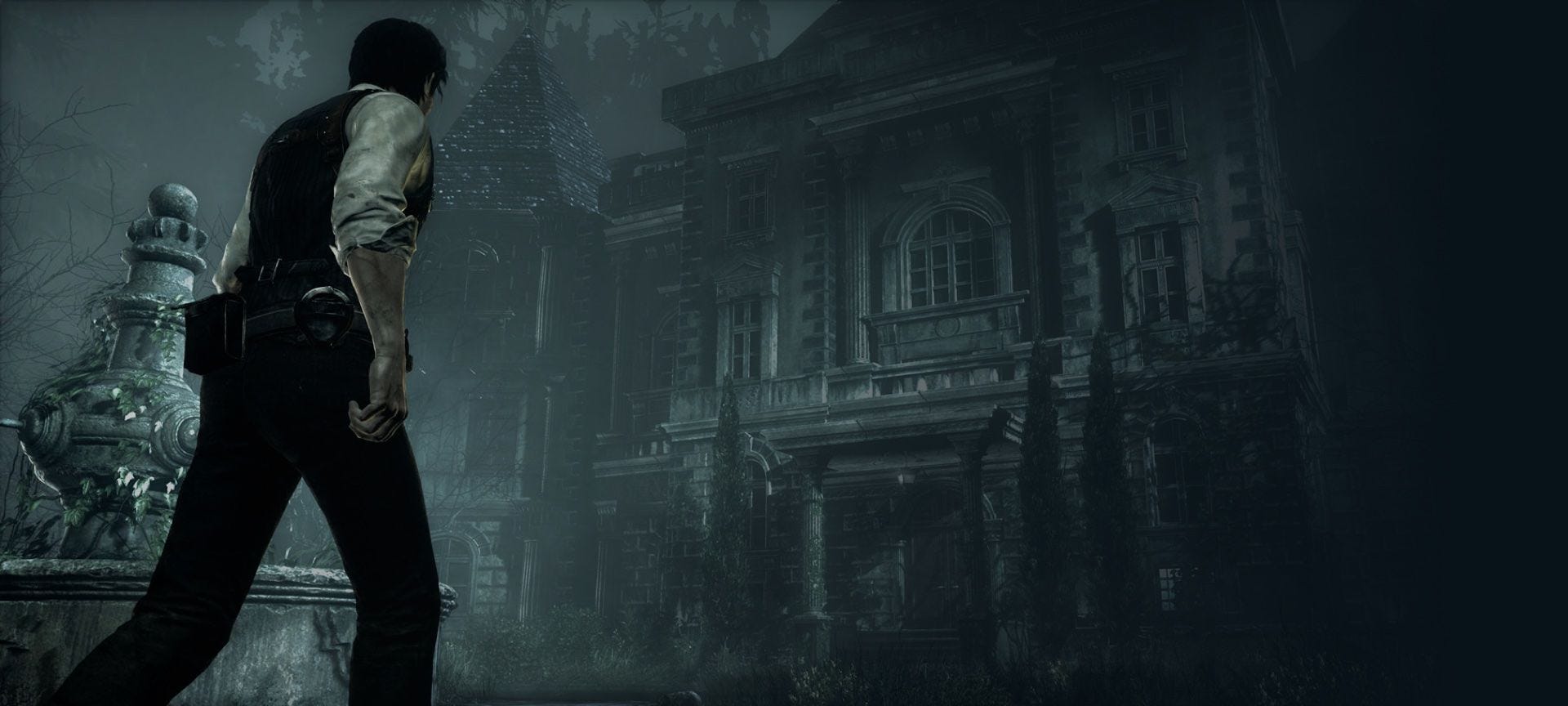
A lot of people are probably going to be confused by me putting The Evil Within on my top five. Firstly, because the game received incredibly mixed reception on release. And secondly, because the sequel is generally regarded as a superior game. But contrary old me thinks differently.
The first Evil Within may have had issues with its design philosophy but none of these were large enough to take away from the unbelievable atmosphere and immersion. Legendary horror author Dean Koontz once said, “I can forgive a writer a lot if they can weave a warp and weft of mood.” My memories of playing The Evil Within are of total absorption in the game world. There are certain audio-visual cues still indelibly imprinted on my brain runnels; every time I hear Debussy's music, for example, I am taken back to deep dark woods and the desperate hunt for a safe room.
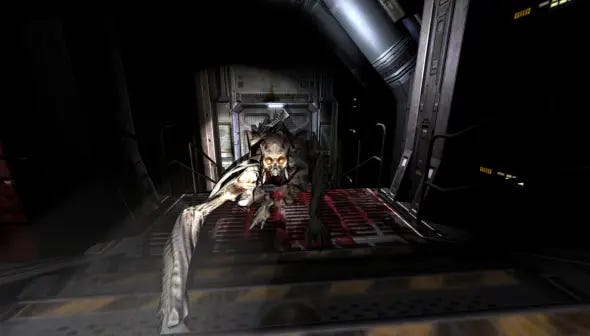
Another potentially controversial choice. Doom 3 took a radical side-step from the frenetic action of its predecessors, swapping relentless bloodthirsty gun-combat (resurrected in the recent Id Software titles such as Doom Eternal) for a claustrophobic, nerve-shredding horror experience. For many, this was too much of a genre switch-up, and it was critically panned. However, the game in isolation was one of the most immersive horror experiences of my life. Descending through the many, Dantean levels of the Martian facility, discovering more and more about what happened through PDA entries and other environmental storytelling, obsessively absorbed me. Few horror games can balance a feeling of total vulnerability with satisfying action. Many horror games eschew combat elements altogether, making you a powerless “watcher” whose only option is to run. But Doom 3 managed, in my view, to have the best of both worlds. You could not, as with its sequels and prequels, “rip and tear” through demons like they were made of paper. But on the other hand, slowly accruing more and more weaponry and knowledge eventually made you into a powerhouse who could take on even the most fearsome dwellers of the underworld, but only with intelligence and planning. Victories felt all the more satisfying as a result.
Doom 3 is not a perfect game by any means, but it is an iconic game, partly because it dared to be different. Decades after its release, a friend of mine still talks about hosting a Doom 3 party, with the intent of playing the game with lights out and headsets to maximise the horror experience. Yes, one may eventually learn the location of every jump-scare, but that does not take away from the story, which every time manages to drag me into its hypnotic undertow. If Doom 3 has a literary parallel, it is The Rime of the Ancient Mariner. A tale of madness and descent and visions that somehow is all the more powerful for its archaisms.
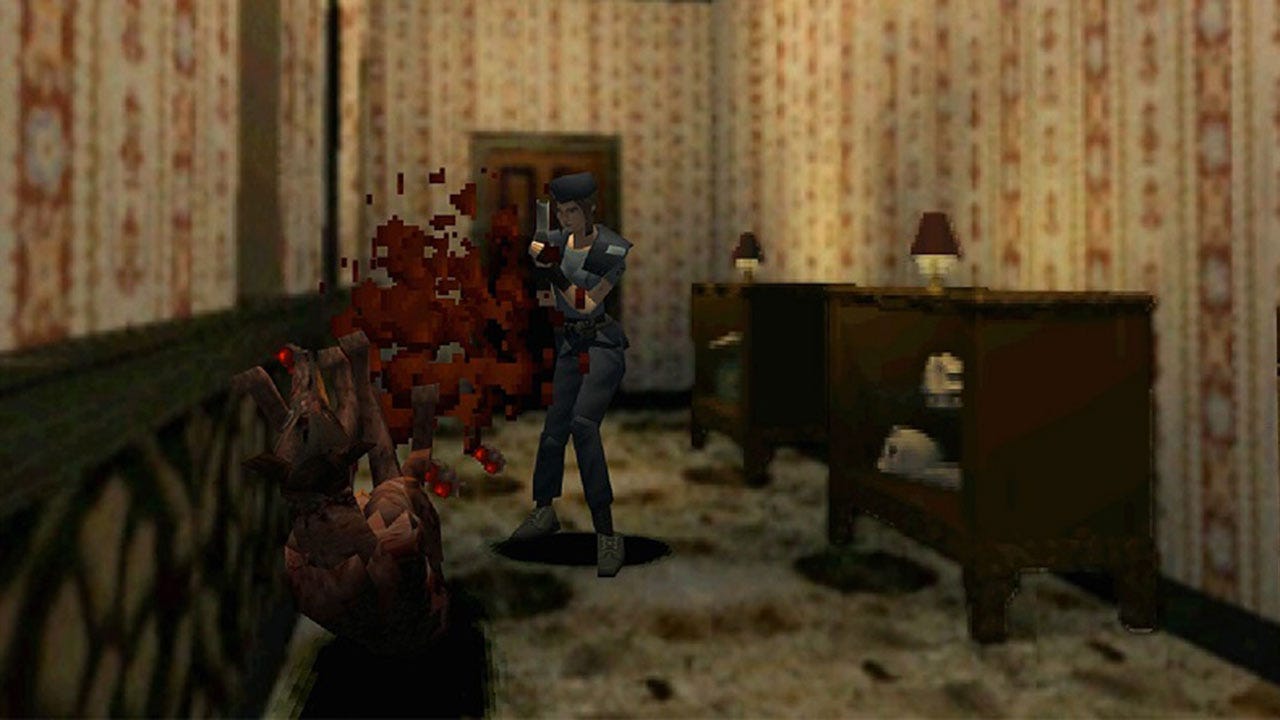
I may be accused of nostalgia with this entry, but it is hard for me to think of any horror game that has been imitated more frequently than the original PS1 Resident Evil. Yes, all games and works of art have their sources, and this is good and healthy, but Resident Evil set such a precedent it is still the foundational stone for horror games 30 years on.
So much has been written about this game and the series, it is hard to say much that is new, so I want to talk about two aspects of Resident Evil that I think are less well-trodden.
Firstly, one unusual aspect of Resident Evil is the way it blends so many contrasting horror ideas. We have the gothic mansion, a staple of horror literature since its earliest roots, dripping with antiquity and mystery. Yet, we also have a modern twist: the mansion is built upon a laboratory, and is therefore hiding technological secrets and terrors. This combination isn’t groundbreaking in and of itself, but it serves to show that we take for granted what Resident Evil is. Zombies. Gothic mansion. Evil laboratory. Survival story of a stranded team of soldiers. It’s all the horror tropes in one basket, and somehow, it all comes together coherently.
Secondly, Resident Evil is often lovingly made fun of for its terrible voice-acting and stilted dialogue. I’m not about to defend either, but I will say that rough edges can sometimes amplify the uncanniness, and I think that is the case here. The awkward dialogue, with its jarring pauses and inflections, might make some people laugh, but it is that same kind of nervous laughter deployed to diffuse tension. The same phenomenon is true of film. Modern films may be more polished and seamless visually and in terms of their sound, but this can never quite conjure unease in the same way a film like Hellraiser, with its overdubbed Atlantic accents, does. Resident Evil used primitive technology to its absolute fullest, and created a horror masterpiece that still calls us back to the mansion to this day.
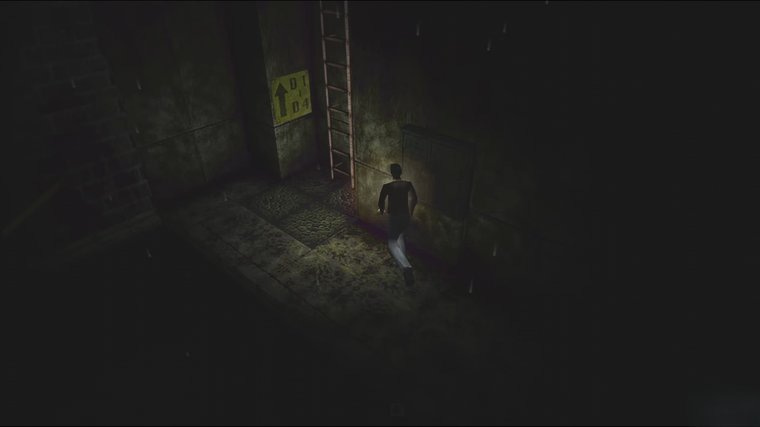
And speaking of PS1-era horror games, we cannot overlook Silent Hill. While there is much to be said about Silent Hill 2 and 3, which are both phenomenal games in their own right, there is something mesmerically haunting about the first game. How the developers permeated the humble PS1 disc with such palpable dread is a mystery for the ages. Even now, playing the game, I get a prickle across my skin of some origin-less fear. Yes, the combat has hugely dated—more so than Resident Evil. Yes, some of the early puzzles in the town are tiresomely elongated. But I will never forget the first time I stepped through the triple-locked door into the garden and night suddenly fell. It was a moment of pure nightmare. My stomach lurched with palpable anxiety. Then there are the more subtle moments, too, such as the time I found a child’s drawing by the side of the road, and stared at it for a good thirty minutes, knowing there was something wrong with it, but not quite able to say what.
The game is frankly cursed in my view. Every aspect of it exudes malice and malignant intent. It is a direct one-on-one confrontation with evil. The previous games I’ve listed in this article are masterpieces because they immersed me so deeply, and I could not put them down. But Silent Hill is a game I could only tolerate in short bursts, and that is a sign that it evoked a deeper level of horror.
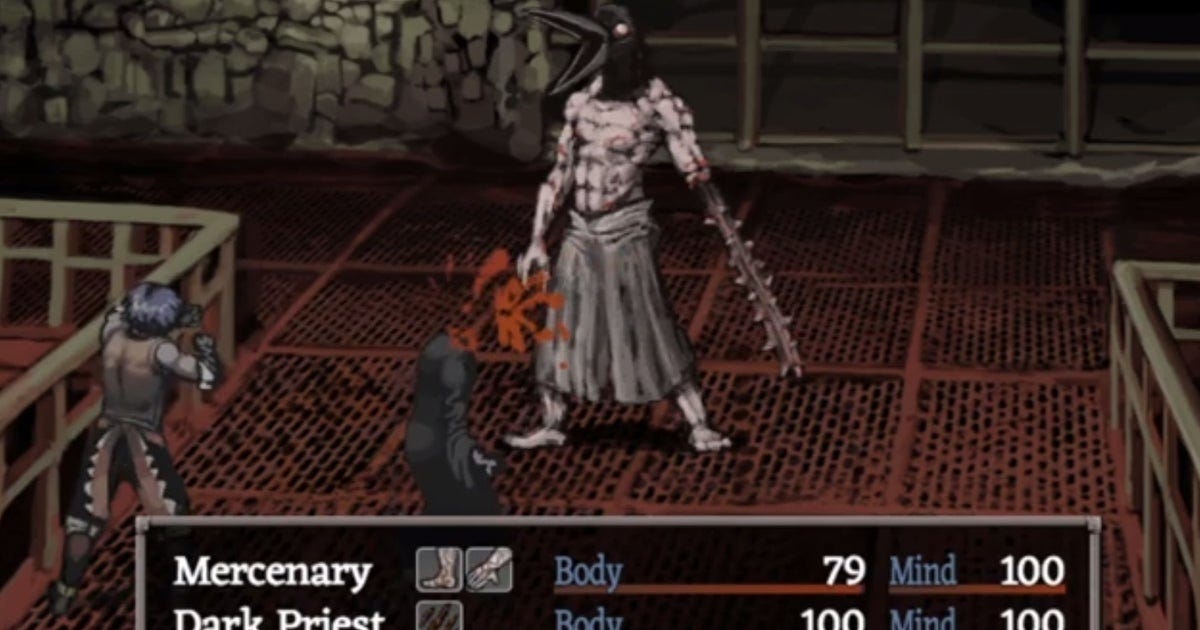
I’ve been wanting to write about Fear & Hunger for a long time. It is one of those games that is difficult to categorise, and that is precisely its brilliance. It is an RPG, a rogue-like, and a horror game, and so much more. It is vile. It is decadently sadistic. It is also strangely beautiful, both in terms of its visual aesthetic and in terms of how each piece of it, from gameplay to narrative to level design, is fitted together. Like so many of the entries on this list, it has re-drawn the map on what is possible for multiple genres, and produced an aesthetic so iconic that it has spawned countless imitators.
There is so much that has been said, and that I want to say about Fear & Hunger, but for the sake of sanity, space, and not repeating what better writers have explained, I’m going to focus on one element only: how the game plays with your mind.
While the title of the game is Fear & Hunger, I feel like the true theme of the game is madness.
Horrible things happen to you, and you ask the question “Why?” Why is this happening? How can I stop this happening? You prepare. Something equally if not more horrific happens. You ask the question “Why?” again. You prepare.
Something totally unexpected and mind-obliteratingly bad happens.
And so on and so forth.
The game is constantly inviting you to peer down a well. You know you are going to see something absolutely awful at the bottom of the well, but your own human nature—combined with your desire to “beat” the game and survive—compels you to look anyway. But what is genius is that the game has a way of pulling the rug out from under you. Just when you think you have it figured out, it changes and shows you something else. Something new.
Something worse.
Fear & Hunger has been criticised for its excessively sexual elements. The ogres guarding the dungeon possess grossly swollen phalluses that, if they attack you with them, can infect you with parasites. There is an “anal bleeding” status effect. There is almost constant reference to sexual perversion, to the extent it could be construed as insensitive, obsessive, or even downright childish.
I agree with all three criticisms to an extent, but I think that the game’s creator, Miro Haverinen, has done this intentionally. They saturate us with this gross, sexual content and the threat of physical violation in order to desensitise us to it.
Because the real horror is deeper.
The horrific sexual elements are there to highlight how one of the worst things that can ever happen to a person is nothing compared to a vaster, more existential horror that simultaneously exists “out there”, in some forbidden city whispered of only in dreams, and also within the prison that is your own mind.
It takes a lot to scare me, these days. But my first visit to Ma'habre, and encounter with a Harvestman, did. We all have moments in our lives—our real lives—when we encounter the ungraspable. These can be terrifying and enlightening, healing and destructive, in equal measure. Fear & Hunger somehow manages to capture the electric terror of these kinds of moments, when you stand face to face with something and realise your own smallness, or stupidity, against what is really out there. Be it the whistling of a strange, spiderlike creature that is immune to anything you throw at it, or else the sudden abyssal plunge of a dungeon that runs deeper into the subterranean world than you ever realised, Fear & Hunger time and again hurls your sanity at the iron wall of its difficulty and hopes that you break.
I could not stop playing The Evil Within. It hooked me. I could only play Silent Hill in short bursts, lest I start to find myself unduly effected by it.
And Fear & Hunger?
I had to ban myself from playing it. The obsession ran too deep. The thoughts turned too dark.
I’m a happier man, now. And yet, I still think about those halls sometimes, and mist-cloaked Ma’habre, and the place that lies even beyond the city…
I think I’ll put down my pen for a while.
I hear a soft, whistling sound…
Thank you for reading this article, dear friends. As I said, I’d love to know your thoughts on my choices and your own picks for the top 5.
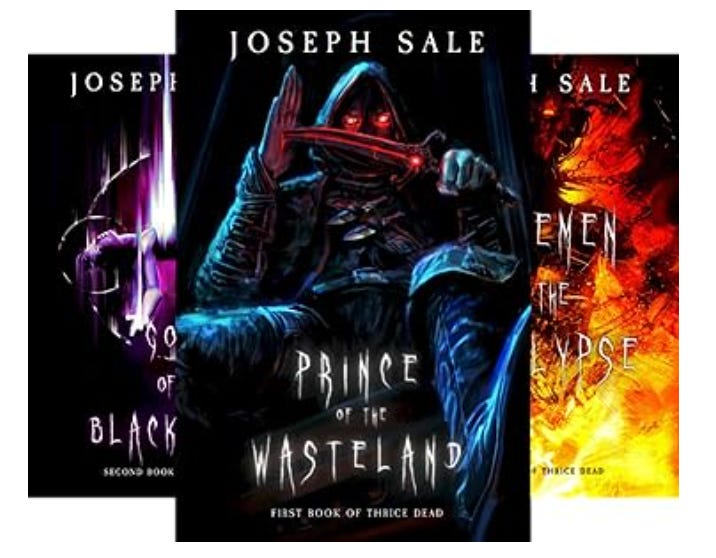
If you like horror, especially the kind that subverts and blends genres, then you might be interested in my epic, six-part horror-fantasy series The Book of Thrice Dead.
The Book of Thrice Dead is a multiverse apocalypse epic that follows three legendary anti-heroes: the serial killer Craig Smiley, the mad weapons-scientist Dr. Monaghan, and the dark prophet known as The Prince. Spread across the ravaged multiverse, these three titans must ultimately join forces to face an evil greater than themselves that will bring about an end not just to one universe but to all.
Lezlie Smith of The Nerdy Narrative described the series like this:
“The range of emotions I felt through this series was insane. I have been asked so many times over the years about a book or series that I considered life changing and I never had an answer...until today. This is the most beautiful story that began with the world getting destroyed, but the end was only the beginning… I'm upset that I can't find adequate words for the sheer brilliance of it.”
Comments
Nothing yet. Say the first thing.
Sign in to join the conversation.