

“In order to arrive at what you are not,
You must go through the way in which you are not.”
—T.S. Eliot
What if it’s not the fire that destroys us, but the weight of what we carry into the flames?
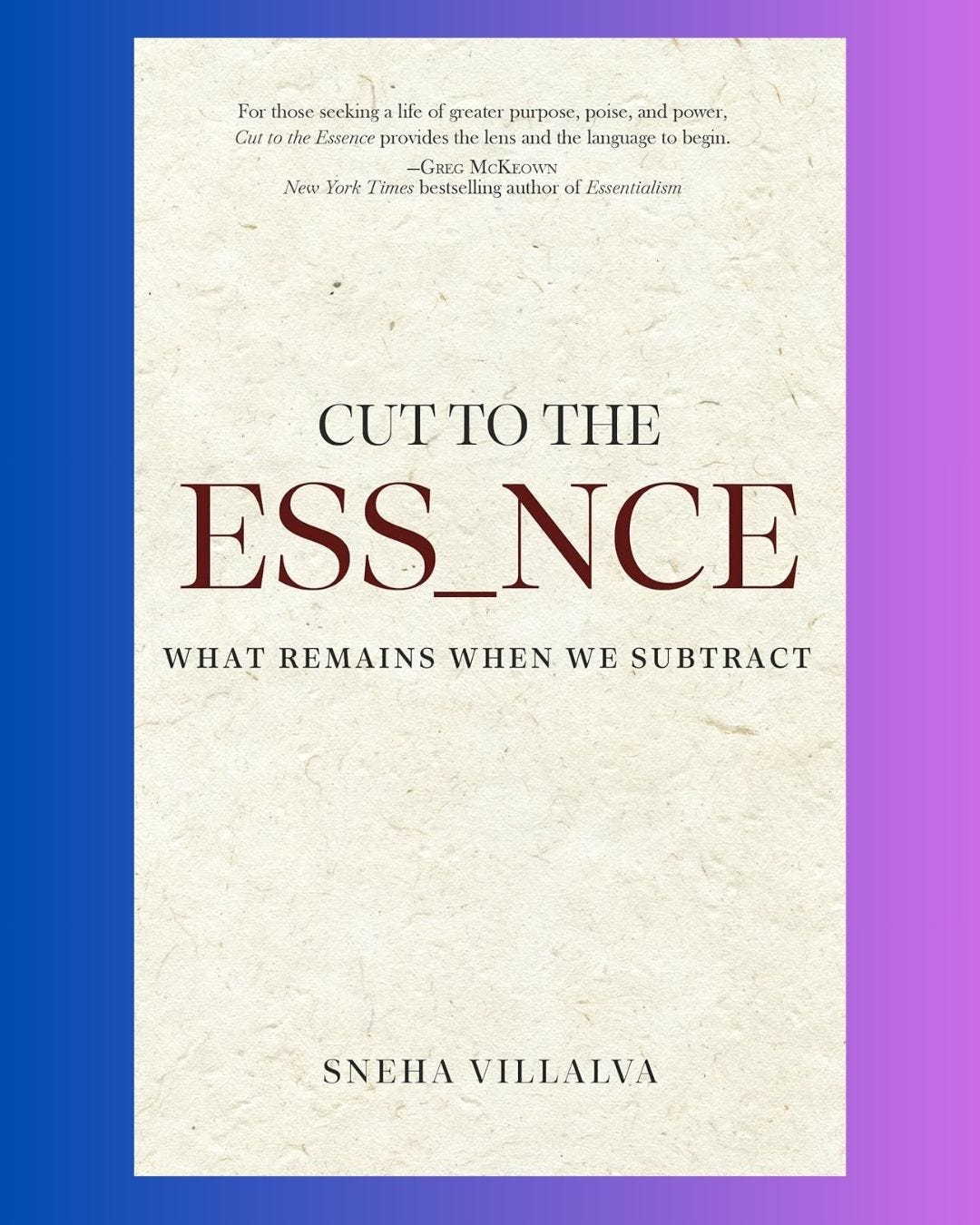
Enjoy this exclusive excerpt of Chapter 2 of Cut to the Essence
I stepped into my friend’s parents’ kitchen—and I nearly suffocated. Every bit of counter space, table space, floor space, windowsill space—everything was overflowing with stuff. Piles of paper and old mail. Dishes, cutlery, serving ware. Sealed and opened packages of snacks. Fruit lying askew, emitting the slightly sour smell of fermentation.
My vision blurred. There was simply no breathing room. Only the slimmest streaks of light broke through the blinds. Even the plants were choking. Their leaves and branches were stunted, resigned to a furled life.
I felt both claustrophobia and empathy. After all, I was just as imperfect and prone to messiness.
My friend’s parents’ kitchen didn’t elicit condemnation. Nor did it make me ponder material minimalism. Life is messy. Possessions accumulate. In the broader scheme of things, that is okay. Ultimately, there is no U-Haul hitched to our hearse.
But there is a lingering aroma of our intention, and what struck me in the chaos of that kitchen was the smell of excess. The slow rot spoke of too much time on the counter—simply because there was too much. Excess led to overripeness, expired purpose, the loss of essence. My lesson from that fruit:
Addition, without intention, spoils our best attempts at significance.
True confession. My husband Erwin and I do not cook much. Let me amend: I do not cook much. He is an early riser, usually wide awake by 4 a.m. So, suffice it to say that he makes his own breakfast. Four to five fried eggs in one go is normal for him, despite the chicken and egg crises of 2024 and 2025 (the chicken, in fact, came first) and the reality that, as I like to remind him, we are not millionaires. Our days of a thirty-six-egg frittata are behind us (true story).
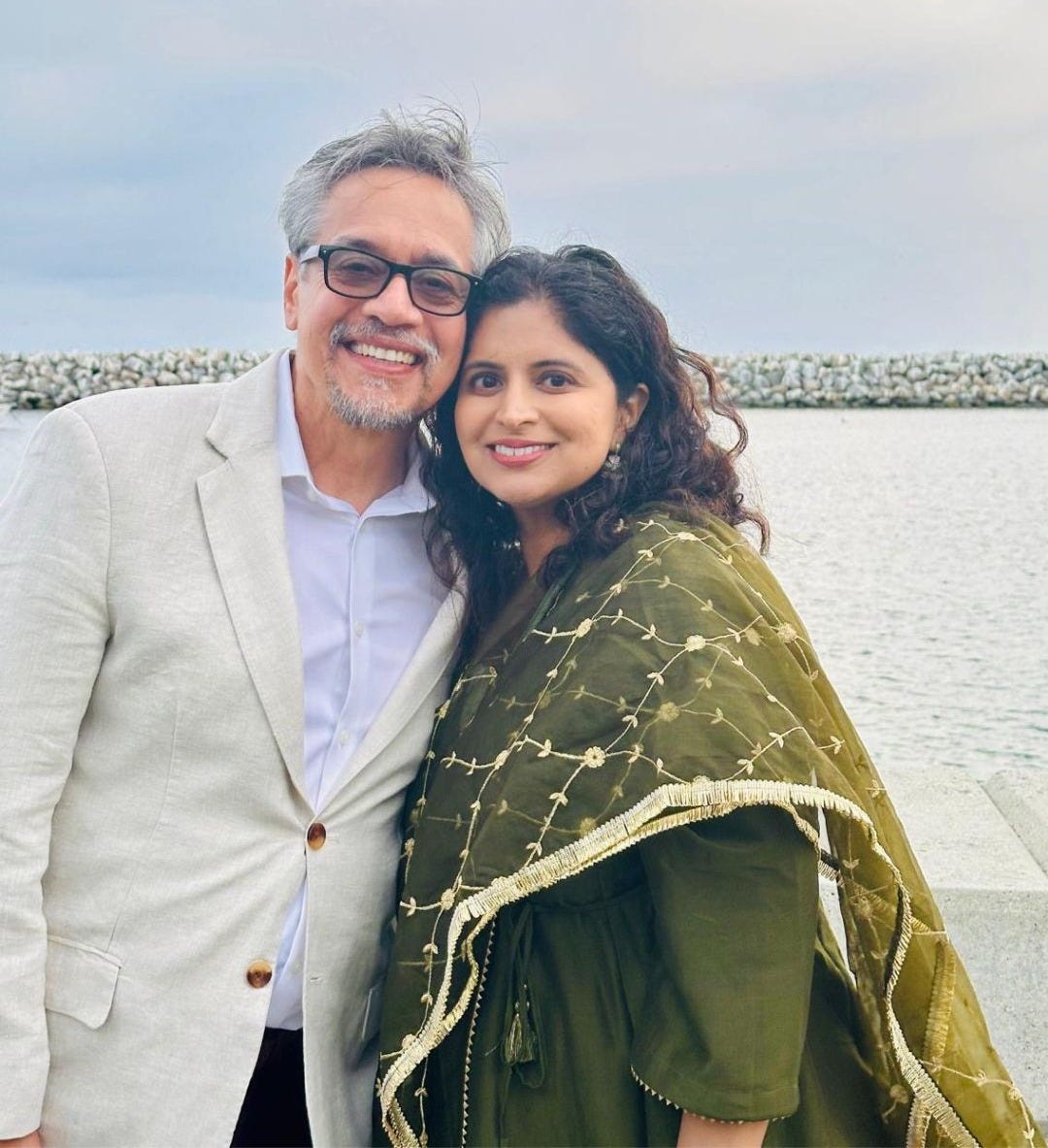
Erwin is Ecuadorian American and I am Indian American. Between us we have one Latina mother and one South Asian mother. Which means that, more often than not, they send us copious amounts of food and beverage. They stock our fridge better than we do. Hibiscus cinnamon tea, pork belly stew, chole, chicken curry, strawberry mousse, or chocolate banana bread. But inevitably, despite our best intentions, the food goes bad. The eggs are never wasted, but everything else—don’t tell our moms!—finds its final resting place in the trashcan rather than our bellies. We simply do not have the capacity to eat everything before spoilage sets in. Even the foods we adore, made by the mothers we love. More is less in our refrigerator, too. Even the best forms of abundance have a shelf life, and I have struggled with that reality.
I was raised in a home where we were regularly—and rightfully—reminded that we came from a country where every crumb counted. When I was five, my paternal grandmother came to stay with us to assist my mom after my sister was born. To understand my grandmother, you should know she was a teacher, principal, and later, inspectress of 102 schools. Every connotation that the word “inspectress” conjures is true in this example. She didn’t miss a thing.
Her inspectress eye certainly caught me when I stuffed a slice of Kraft Singles American cheese in the trashcan after one bite (even at five, I could discern the difference between cheese and “cheese product”). Obviously it belonged in the waste basket. But Ammachi was having none of it. Or rather, I was having all of it. She made me take the cheese out of the trash and eat it, telling me that children in India would fight for it. I responded with perfect five-year-old logic:
“Let’s send it to them, then.”
There was no need for Ammachi to say anything. Her eyes flashed instructions.
I devoured it.
I’ve never touched Kraft Singles again.
The paradigm of “waste not” is undoubtedly the right one. It was a valuable lesson from childhood. Yet, sometimes “throw out” is the only viable option, as my grown-up fridge will testify.
Our mothers’ intentions are pure, and our gratitude runs deep. They ensure we are well-cared for and well-fed. Their capacity for love is boundless. But both our fridge and bellies have limits. We’ve heard, “waste not, want not.” Yet, what if this is also true: “get more, lose more”?
When I toss out food, there is an underlying guilt. Many of us also feel guilty when shedding what doesn’t serve us, and by extension what doesn’t ultimately serve those around us. When we take on responsibilities or carry expectations that are not ours to shoulder, we not only lose energy and time, but also lose the ability to be our best selves and give our best to others. We miss opportunities to use the gifts we already have. We delay fulfilling desires nurtured for a lifetime. We neglect that purpose we were created for and lose our essence.
Over the last few years, I gained a mentor in Sam Cawthorn. He’s an internationally renowned professional speaker and bestselling author from Australia. Sam has trained thousands of leaders to become speakers of influence.
On a Zoom call, I asked him plainly, “How do I get to where you are?” This wasn’t a question about fame. It was about footprint. How do I occupy the space allotted to me on this planet and leave a mark so that others can follow? His response?
“Be faithful with the small.”
If I want to inspire others to action, I have to do those tiny yet mighty daily acts, even when no one is looking. Holy habits, if you will. A workout regimen begins with lacing up your shoes. A clean office starts with sorting through ever-increasing piles of paperwork on our desks. A keynote speaker is formed by running their lines in front of a mirror. I must lead myself before I can influence others.
That means practicing speaking long before I get an audience; wrestling with my computer keyboard in solitude in order to write a book; singing for half an hour on the treadmill to strengthen my voice (and my heart). Praying, whether I feel like it or not. Faithfulness is the subtle art of showing up.
Let me offer another confession. Flossing is not my strong suit. I am a social flosser at best. My bedtime routine already takes a minimum of 25 minutes. Tacking on an extra minute of flossing exhausts my tolerance most nights. This is no secret. I don’t lie to my dental hygienist. The truth is always revealed in the cleaning. But the last time I saw her she offered me a “faithful with the small” strategy.
“Begin by flossing twice a week.”
“What?” I exclaimed.
I’d never been given dental advice like that. Usually, you’re told to floss at least once a day.
She gave a shrug.
“Start there. Soon, it will become a habit. It will feel easier, and you’ll find yourself motivated to do it more often.”
Science supports even less effort than she suggests. Behavioral scientist BJ Fogg discovered that people who start by flossing just one tooth a day maintain the habit longer than people who start by flossing all their teeth. And it’s not because they have more flossing thread. It’s because one is better than none. It’s the opposite of all or nothing—it’s one and everything.
As James Clear writes in Atomic Habits, “All big things come from small beginnings. The seed of every habit is a single, tiny decision.”
Winning with a single, tiny, holy habit—because keeping one’s teeth becomes an increasingly sacred quest as you age—adds up to big gains.
The principle of subtraction is grounded just as much in what we do as it is in what we don’t do. Subtraction can be a formation even more than an elimination.
We may start as much as we stop.
The paradox of subtraction: Doing less helps you do more.
It’s not just formative. It’s liberating.
The operating principle of the concept of “grace” is that our best efforts don’t help us arrive at our destination. Instead, surrender is the vehicle. Surrender to the reality that spinning our wheels only digs us into a deeper rut. But when we stop, when we realize more isn’t more, but less is more—less striving, less earning, less working, less pleasing—when we focus on the single thing, not everything, we arrive. The weight of more lightens. And so we must subtract.
In summing up the philosophy of the 13th-14th century Christian mystic Meister Eckhart: God is not discovered in the soul through addition, but through a process of subtraction.
Subtraction is not just practical. It is spiritual.
The desert mothers and fathers chose the path of radical asceticism. While it’s not something most of us practice (or find practical) today—sitting on a pillar in the wilderness like Simeon the Elder is not something many of us can or want to replicate—this path has signposts of truth that we have ignored in the hustle and bustle of the twenty-first century. But this ancient wisdom still has echoes of resonance in this age.
Digital detox or a smartphone sabbath, a sustained fast from social media or doom scrolling, can clear the mind and sweep the spirit clean. In 2025, NPR reported a study where people agreed to block the internet from their smartphones for just two weeks. Turns out, 91 percent felt better after the break.
“What we found,” said Adrian Ward, a psychologist at the University of Texas at Austin, “was that people had better mental health, better subjective well-being and better sustained attention.”
One surprising finding was that the decrease in depressive symptoms matched—or even exceeded—reductions documented in studies of people taking antidepressants.
Now, this is not a call for us to hand over our phones or leap backwards in time to Luddite leanings. Nor am I condoning tossing out necessary medications. But it is a case for reclaiming attentiveness and directing our focus to our highest priorities rather than our lowest common denominator distractions. It’s a reminder that clarity helps us define the essentials and embrace what brings us energy.
The participants in the NPR study didn’t just stop obsessively picking up their smartphones, they started adding healthy behaviors. They stepped outdoors and enjoyed nature, they spent time socializing, making real-time and real-place human connections, they poured effort into their hobbies and interests, they slept more (and better). They didn’t just eliminate, they expanded. Mindful subtraction led to abundance by forging stronger connections to nature, other people, and themselves.
This contemporary form of asceticism is not withdrawal, it is with-ness. Living aligned with the best aspects of our existence.
Sacred subtraction shifts our focus from screens to sunsets. By reclaiming time and creating space, we allow light to break in.
But why are we afraid of making space for the light? Perhaps it’s the fear of what it will reveal.
The weight of more is heavy. Yet we persist in piling it on.
More titles. More toys. More activities. More accolades. More followers. More likes.
More of our identity is wrapped up in what we accomplish and acquire. It’s tied to how we appear and how we’re admired.
In the pursuit of self-improvement, achievement, and material wealth, we become bent over with guilt from unmet goals. We’re wiped out by physical burnout and teeter on the edge of financial bankruptcy. We can’t stand straight. We can’t sleep. We can’t save. All because we believe we are not enough. And truthfully, on our own, we are not. It’s pure fiction that we can carry it all.
As Leidy Klotz writes in Subtract: The Untapped Science of Less, “The pinnacle of mental subtraction is when we remove ideas that are no longer correct, or that never were in the first place.”
The illusion that we can shoulder all the expectations this world places upon us—that we can do all, be all, have all—is not a dream to fulfill. It is a living, waking nightmare.
We add because we fear that if we do less, we are less. But our aim should not be to get more done, but to get the right things done. The goal is not efficiency. It is essentialism, to borrow a phrase from author Greg McKeown.
As he writes in his book, Essentialism: The Disciplined Pursuit of Less, “It is about making the wisest possible investment of your time and energy in order to operate at our highest point of contribution by doing only what is essential.”
Wisdom requires restraint. It recognizes our limited reserves. Despite our striving, it acknowledges that our value lies not in what we do, but in who we are. Are we at peace in our spirits? In our bodies? In our relationships? In our work? In our play?
What if our highest contributions come from what we give up rather than what we gather? Rather than adding to piles sitting unattended on our mental and emotional countertops, what if we released the excess and held on only to what was of utmost importance?
That is the definition of the word “essence”—the basic or most important idea or quality of something. Etymologically, in ancient Greek philosophy, it was what it was to be. Not do.
That “being” suggests an emptying—and an opening. When we release the weight of more, lightness and light can enter. Letting go of excess invites us to return to the core of our existence.
So, let’s lay aside every weight. The extras slow us down. Simplicity wins in this race.
The fires we are fighting might be extinguished with a single, deep exhale.
“ . . . if only we tasted our own essence from birth
knew the transformations to come
were all part of the becoming—that we had the imprint all along.”
—Kai Coggin ”Essence”
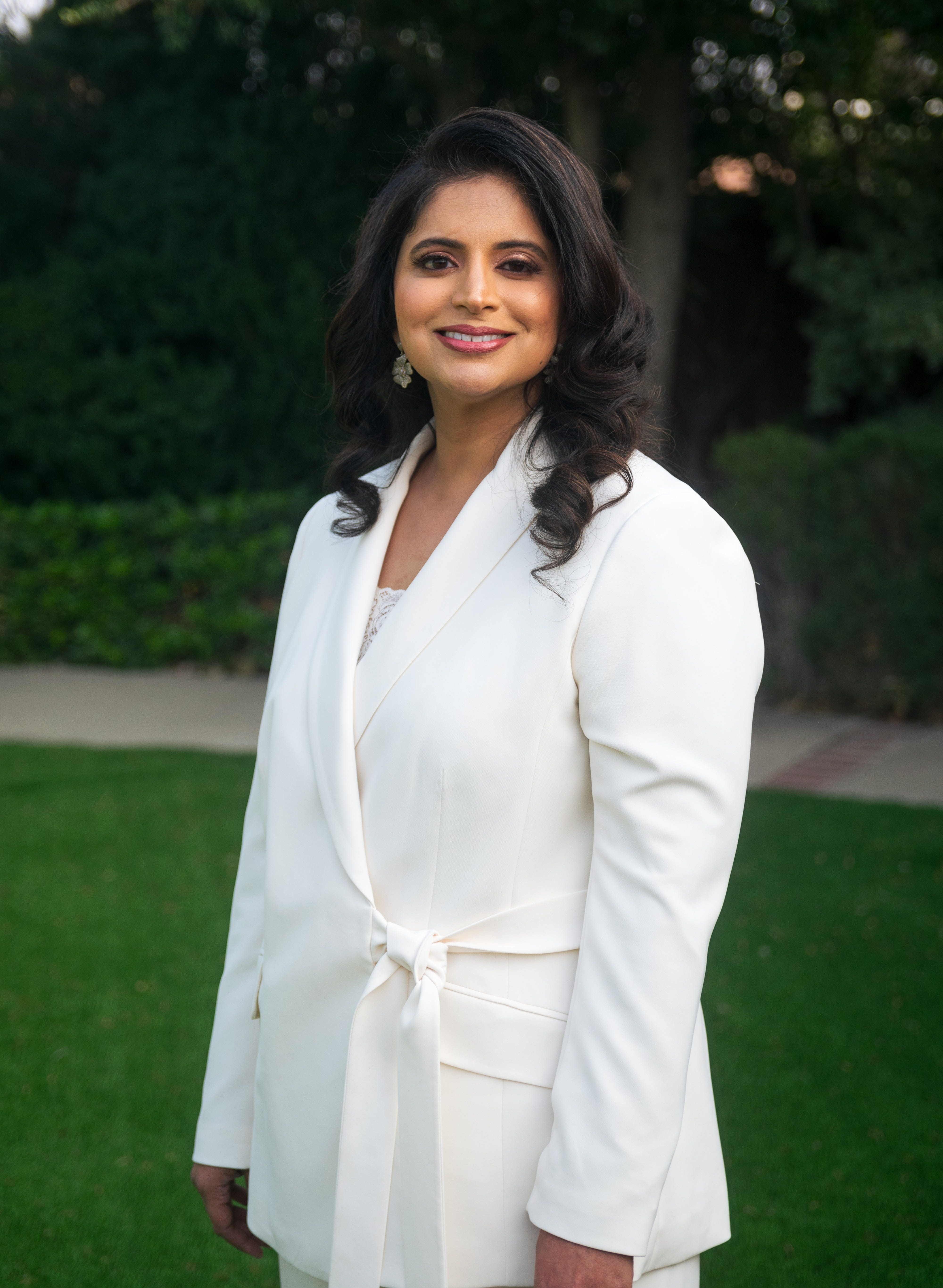
Sneha Villalva served as the executive speechwriter for the UCLA chancellor and two Pomona College presidents. She previously worked as a journalist with The Press-Enterprise in Southern California.
A TEDx speaker and the author of Cut to the Essence: What Remains When We Subtract, she lives in Los Angeles with her favorite (and only) husband and a steady supply of extra-dark chocolate.
Connect with Sneha on LinkedIn, Instagram, and YouTube. Sign up for newsletter at www.snehav.com/subscribe.
This book excerpt was first published here on the-midst.com.


Essentialism: The Disciplined Pursuit of Less by Greg McKeown is like a manual for the Stretched Too Thin. If you’ve ever felt guilty about wanting to do it all but can’t, the Essentialist way of life is for you. You’ll realize that it’s impossible to do everything and do it well, and that’s AOK.
A do-everything mindset is tough to unlearn — especially if you’re a woman, a DIYer, or an ambitious person who’s drunk the Work Harder Not Smarter kool-aid (I’m all of the above). I’m here to tell you that Essentialism is possible, if you’re patient enough to take small steps.
In true Essentialist spirit, I’ve summarized some of the top takeaways from the 246-page book, either directly in McKeown’s words or edited slightly for actionability. Think of this as a curated refresher to revisit whenever you’ve fallen back into the NonEssentialist trap.
Tip: Note the nuances between focusing on the present and preparing for the future.
The relentless pursuit of less but better.
A different way — a simpler way — of doing everything. Essentialism becomes a lifestyle as opposed to something you do occasionally.
Essentialism is not about how to get more things done; it’s about how to get the right things done.
Essentialism is about making the wisest possible investment of your time and energy in order to operate at our highest point of contribution by doing only what is essential.
As McKeown explains, becoming an Essentialist is a long process, but the benefits are endless.
“If one’s life is simple, contentment has to come. Simplicity is extremely important for happiness.” — The Dalai Lama
Life as an Essentialist is a life of meaning—a life that really matters.
Once you give yourself permission to stop trying to do it all, to stop saying yes to everyone, you can make your highest contribution toward the things that really matter.
Some things are so much more important — the effort in finding those things is worth it.
Essentialists invest the time they have saved into creating a system for removing obstacles and making execution as easy as possible.
When other people are saying yes, you’ll find yourself saying no. When other people are doing, you will find yourself thinking. When other people are speaking, you’ll find yourself listening. When other people are in the spotlight, vying for attention, you’ll find yourself waiting on the sidelines until it’s time to shine. (page 232 of Essentialism)
Am I investing in the right activities?
What would happen if I could figure out the one thing I could do that would make the highest contribution?

Justina Blakeney will join me in a conversation about how she’s grown The Jungalow from a one-person creative to an international design brand and beyond.
Justina will sign copies of GROW: Pathways to Passion, Purpose & Peace (available for purchase at the event).
Bring your business cards or promo cards! We’re setting up a display table for everyone to share info about their projects and services.
Stay tuned for a soon-to-be-announced panel of more inspiring women founders and creators.
$55 includes light refreshments
We’re curating this event to inspire and bring together founders and creators over 40, one of the fastest growing segments of entrepreneurs in the United States.
Comments
Nothing yet. Say the first thing.
Sign in to join the conversation.