
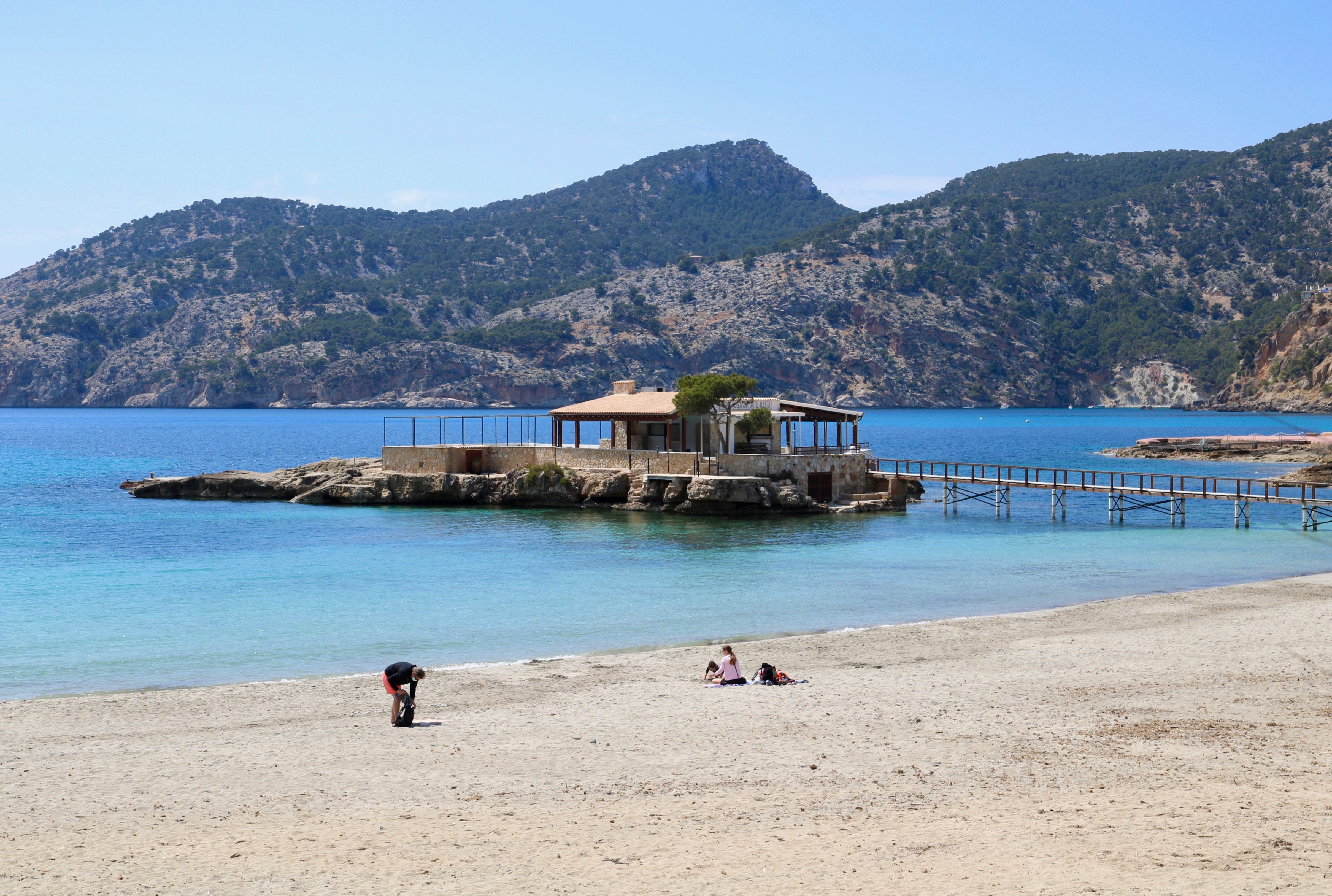
This island doesn’t take a season off. Go to the beach in July and you’ll find the whole shoreline claimed by noon: umbrellas in every shade, the white streak of sunscreen not yet rubbed in, the clink of cold cervezas, bocadillos wrapped in paper going soft in the heat. Go back in January and the crowd is thinner but it’s still there, a handful of jackets zipped to the chin, a thermos steaming in the wind, pages turning in a paperback held with cold fingers.
Different months, different costumes. But sit close enough and you’ll notice the one thing that doesn’t change. Summer or winter, everyone’s barefoot. Toes pressed into warm sand in July, into cold grains in January, while the rest of them stays dressed for whatever the day demands.
I do it myself, all year. There’s something about warm sand under my feet that brings on relaxation almost immediately, before I’ve even decided to relax. The salty air has its own pull too, the smell of it, the sound of the waves arriving and leaving and arriving again, that horizon that never quite resolves into an edge.
I couldn’t tell you exactly why it works on me the way it does. Maybe it’s a childhood memory sitting somewhere underneath the adult one. Maybe it’s older than that, something closer to an old human habit of standing at the edge of something enormous and feeling, for a while, like your problems are the right size again.
There’s a word for the physical part of what’s happening, though it doesn’t cover the rest. Earthing. Grounding. The practice of letting your bare feet meet grass, sand, soil, stone, instead of rubber and foam. It sounds almost too simple to matter. But simple isn’t the same as small.
Modern shoes do a lot of work your feet used to do themselves. They cushion, support, and correct. Over time, that support becomes a kind of outsourcing. The small stabilizing muscles in your feet and ankles stop doing their job because they don’t have to.
Walking barefoot puts that job back where it belongs. Your arch, your toes, the muscles that hold your ankle steady, all of it wakes up again. People who spend more time barefoot tend to have better balance and fewer of the rolled ankles and arch problems that creep in with age.
Posture follows the same logic. Take away the elevated heel and the rigid sole, and your spine, hips, and knees find their own natural line again. A lot of the chronic tension people carry starts at the feet and works its way up.
Here’s what surprised me most when I started paying attention to this. The benefits aren’t only physical.
Your feet are dense with nerve endings, more than almost anywhere else on your body. When they touch the earth directly, something in the nervous system settles. Some research suggests grounding may help regulate cortisol and support better sleep, as if the body remembers a rhythm it had before we spent our days sealed off in rubber soles and concrete.
I notice it most at the end of the day, sand still warm, light going soft over the water. It does something a shower or a cup of tea doesn’t quite reach. Nothing dramatic. More like a small return to scale, a reminder that the day is over and the sea is still there, doing what it was doing before you arrived and what it’ll keep doing after you leave.
Here’s the strange part. Just as your mind starts to slow down at the beach, your body often picks up the pace. A long walk along the shoreline, a swim, a ball tossed back and forth with friends, none of it feels like effort in the moment.
Then you get home and you’re wiped out, more than a day at your desk would leave you. For years I just chalked that up to sun and fresh air. But there’s a real explanation, and it has a name: beach hangover.
Your body works harder at the beach than it lets on. It’s managing its own temperature against sun and water, sweating, dealing with direct UV exposure, repairing the small cellular damage that comes with it, and constantly adjusting to the instability of sand or waves underfoot, even when you think you’re just lounging. All of that draws on real energy. The tiredness isn’t a sign something went wrong. It’s a sign your body did a full day’s work while your mind thought it was doing nothing at all.
This isn’t about turning your feet into a project either. Nobody needs a barefoot regimen with rules and tracking. It’s closer to what those winter beachgoers are doing without naming it, and the summer ones too, book in one hand, tea or lemonade in the other, feet buried in the sand the whole time: a few minutes, most days, ground under you.
A stretch of grass before your morning coffee works just as well if the sea isn’t nearby; the earth doesn’t ask for an ocean view to do its part.
Even a few mindful minutes on a safe floor indoors, on days when weather or terrain makes the outdoors impractical. None of it requires equipment, time you don’t have, or a philosophy. It only asks you to take your shoes off and notice what’s already under you.
I think that’s part of why it’s stayed with me. So much of what gets sold as longevity these days comes with a protocol attached. This one comes with the opposite: less between you and the ground, not more.
Do you walk barefoot, ever, or has it fallen out of your life the way it has for most of us?
No posts
Comments
Nothing yet. Say the first thing.
Sign in to join the conversation.