
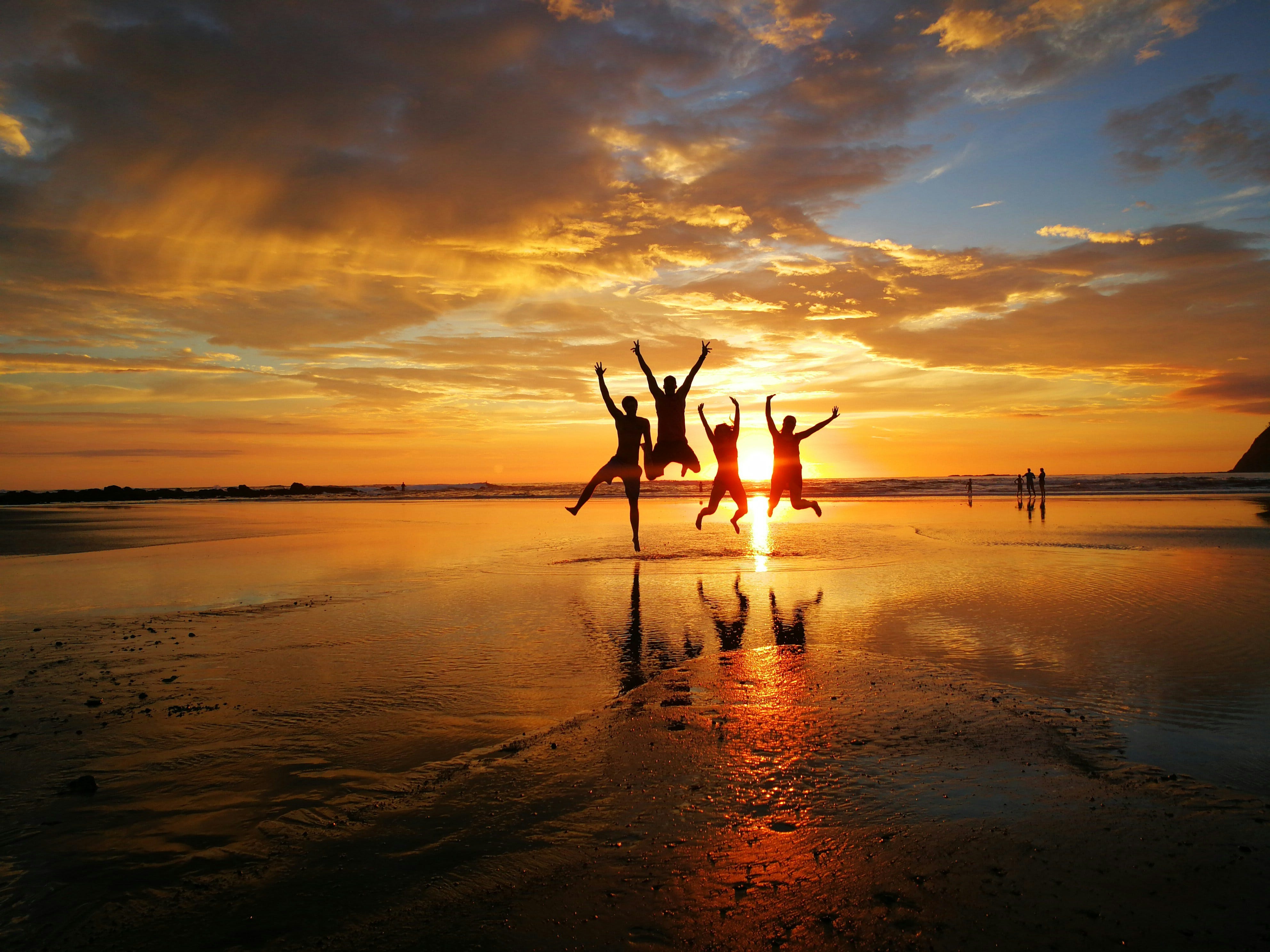
Full disclosure, my body has always had opinions about which hand gets to do what. I write with my right hand and do nearly everything else with my left, which means any new physical task starts with a small negotiation between my two hands before either one commits. Last week on the beach, a frisbee landed at my feet, trailing two kids who couldn’t have been older than eight. I picked it up and threw it back immediately, right hand, out of habit, no negotiation at all.
The frisbee landed nowhere near where it thought it was going. One of the kids laughed so hard she sat straight down in the sand. I laughed too, switched to my left without thinking, tried again, and got something closer to an actual arc.
Nobody asked me to join. I just hadn't done anything like that in longer than I could name, and my body seemed a lot more willing to fumble its way through than my mind was. We spent the whole afternoon out there, my own family teasing me about my sporty intentions, wishing out loud they’d caught it on camera, and me laughing right along with them.
You know the feeling, even if you’d never call it a loss. Somewhere between the mortgage, the second child and the promotion, being silly stopped being a thing you did and became a thing other people did, the ones with less at stake. You got responsible instead. Competent. The kind of person a room can rely on, which is its own quiet compliment, except somewhere along the way it also became the only thing you knew how to be in public.
Play does something for the body that discipline never quite manages. People who study the nervous system will tell you that laughter and nonsense move something in us that structured exercise can’t reach on its own; not the calm of a good walk, but a looser, quicker kind of release, the sort that comes from being surprised by your own reaction. This is not a minor thing to lose in a long life. You cannot schedule spontaneity. You can only leave room for it.
Which is exactly what the wellness world gets wrong when it tries to sell play back to you. Structured recreational activity. Adult tumbling classes with a syllabus. A retreat where joy has an agenda and a hashtag. The moment silliness needs a plan, it stops being silly and becomes one more thing to optimize before bed, one more box that proves you’re doing wellness correctly.
Real play doesn’t have a point. That’s the whole point of it. I was never afraid to be silly, and I can still laugh at myself as much as I love laughing with people who share that kind of humor; the ones who see the bright side of things without taking life too seriously, unashamed to show their weaker side too.
What actually gets lost isn’t the fun. It’s the willingness to look foolish in front of people, which is a small, specific kind of courage most of us quietly retire sometime in our thirties. I think of the older men at village weddings who dance badly and without a flicker of self-consciousness, arms out, completely unconcerned with how it looks from the next table. Nobody taught them that. They just never agreed to stop.
When did you start needing a reason to be ridiculous. You don’t need a plan for this either. Pick one thing this week that has no purpose and mildly risks your dignity; a bad dance in the kitchen, a game with rules you make up as you go, a joke that only lands with one person and makes you laugh too hard anyway. It won’t lower your blood pressure or show up on a wearable. It’ll do something else, something none of those measure. No photo. No caption. Nothing to show for it afterward except that you did it.
By the way, I still don’t know which hand is better at frisbee, but that’s not really the point.
No posts
Comments
Nothing yet. Say the first thing.
Sign in to join the conversation.