
Trump rolled out the red carpet and applauded Vladimir Putin in Alaska recently...an appalling spectacle of a US president fawning over a murderous dictator on a US air base. Trump met privately with Putin... resulting in zero concessions towards a ceasefire in Ukraine. After that meeting the Trump team looked rattled...cancelling a planned dinner between officials on both sides... suggesting Putin delivered a message to Trump they definitely weren't expecting…likely a threat to embarrass him with ‘kompromat’.
At the same time, Russia was mocking Trump by unleashing yet another swarm of drone and missile attacks on Ukrainian civilians.
It was no surprise that a contingent of worried European leaders arrived in Washington a few days later to support Ukrainian president Zelenskyy as he met with Trump who’s fixated on getting a Nobel Peace prize.
A few days later... Putin bombed an American-owned manufacturing plant in western Ukraine knowing Trump will do nothing in return. Trump continues to waffle on whether the US will provide security backup for the 'coalition of the willing' (which includes Canada) to protect Ukraine against future attacks by Russia.
In an Oval office media scrum Trump claimed he didn't like that attack but knew what he was going to do in a 'couple of weeks'. He's been 'two weeks' away from making any move to pressure Putin to stop attacking Ukraine for 8 months now.
It's crystal clear that the US is no longer a reliable NATO partner.
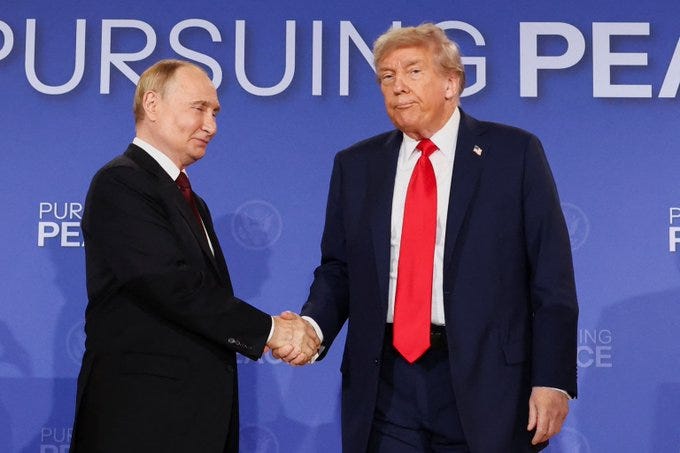
As American president Donald Trump continues down his path of authoritarian rule, Prime Minister Mark Carney is strengthening Canada's sovereign security by reaching out to our European allies and trade partners. It's impossible to ignore the elephant next door… so Canada must thread the needle between maintaining a stable trade and security relationship with a mercurial Trump while diversifying where possible with our more reliable allies across the Atlantic and the Pacific.
The warming Arctic is a critical area of focus and a new fleet of icebreakers and submarines are crucial to Canada's northern defence strategy.
Procurement for polar class icebreakers is already in progress under the 'Ice Pact' a joint agreement between Canada, Finland and the US (signed in 2024 under President Biden).
At Seaspan’s shipyards in North Vancouver, bound on one side by ocean and the other by mountains, teams have started cutting steel for a 520ft polar-class icebreaker that will operate in temperatures near -50C (-58F). The company says the project is expected to take at least five years to complete and cost C$3.15bn ($2.32bn).
When finished, the heavy icebreaker will be the centrepiece of Canada’s recently announced national shipbuilding strategy that looks to further entrench its presence in the Arctic – and distance itself from decades of delay, bureaucratic fumbling and broken promises.
Canada’s federal government has also commissioned another company, Quebec’s Davie shipyards, to build its own icebreaker, framing the decision as one that reflects the gravity of the moment: large icebreakers, incredibly slow to produce, are needed fast.
In 2024, Davie purchased a shipyard in Helsinki. And in mid-June, the company also purchased a shipyard in the US, part of an effort to bring future production down south and to comply with restrictive American legislation that prohibits foreign companies from building ships.
“If we were building two icebreakers and two shipyards, that’s the surest way to make it inefficiently,” said Huebert. “The coast guard is going to have to train on two different ships. And for the next 50 years, there will be little commonality in repairs and parts. If you asked me what is the most expensive and inefficient way of building more than one vessel, just look to Canada and its icebreakers.”
Internally, Canada’s historic inability to marshal the resources to build a new ship has become both a running joke and embarrassment. But the recently signed Ice Pact, a tripartite agreement between the Finland, Canada and the United States, could shift global production as Canada looks to revive its shipbuilding industry.
Finland has already built 80% of the world’s ice-capable ships operating in frigid waters. But the deal, announced during the Nato summit in Washington, will see as many as 90 icebreaker ships produced in the coming years, by the three countries. Both Seaspan and Davie hope to be a supplier to the US Coast Guard in coming years if they can successfully produce a heavy icebreaker.
Davie said that construction of its polar-class vessel would begin this August with a fixed delivery date of 2030, a timescale which reflected the urgency of delivering Arctic-ready ships in the face of growing challenges in the High North.
PM Carney has spent the last few days in Europe, reiterating support for Ukraine with president Zelenskyy in Kyiv as well as meeting with German Chancellor Friedrich Merz to discuss trade and security partnerships. Germany's ThyssenKrupp Marine Systems is one of two preferred bidders for Canada's submarine procurement and Carney is touring the TKMS shipyard while he's there.
Canada is looking to buy 12 conventionally powered submarines.
Germany and Norway became involved several years ago in a joint venture to construct the Type 212CD, which is based on the well-established German Type 212A design.
Storebo, Norway's program director of submarines, said the 212CD (CD refers to common design) was designed for operations in all oceans, notably the Arctic.
It was a necessity because Norway is an Arctic country. With its air-independent propulsion system, the diesel electric boat can stay submerged for more than three weeks, Storebo added.
The initial $8.1-billion (5.5-billion euro) order was for six 212CDs — two for Germany and four for Norway. Each country is now planning to build more, bringing the total order up to 12 boats.
The German Navy will receive its first 212CD in 2028 while Norway is expected to be in the water the following year.
The TKMS pitch also involves a plan to construct a submarine maintenance facility in Canada, creating jobs for Canadians — an important condition the Liberal government has repeatedly underlined.
Burkhard, who praised the cost savings for Germany and Norway in terms of supply and maintenance, said if Canada were to join the program it's possible the first Canadian boat could arrive in the 2032-33 timeframe.
Canada's vast land mass surrounded by three oceans is a huge undertaking for national security. Add to that our relatively small population and you start to realize the challenges we face in this new political landscape. Several months ago PM Carney announced a partnership with Australia to provide state of the art radar systems to replace our aging NORAD installations from the cold war era.
Alongside our outdated detection infrastructure Canada also needs to replace our aging fleet of CF-18 fighter jets. Several years ago Canada signed on to a joint procurement agreement with several other countries for the US F-35 Lighting fighter jet. Canada planned to purchase 88 aircraft with 16 to be delivered in 2026. PM Carney ordered a review of this deal which may lead Canada to consider cancelling the the remaining 72 aircraft and replacing them with another option.
Last week Mélanie Joly, Canada’s Minister of Industry met with Swedish officials to discuss security partnerships including touring Saab's JAS 39 Gripen aircraft plant. Saab has proposed a partnership where the Gripen could be assembled and maintained in Canada transferring the expertise and licensing of intellectual property.
Canada and Sweden have pledged to deepen cooperation across aerospace, defense, and advanced technologies.
The joint announcement was made on August 20, 2025, by Mélanie Joly, Canada’s Minister of Industry, and Stephen Fuhr, Canada’s Secretary of State for Defense Procurement, alongside Sweden’s Deputy Prime Minister and Minister for Energy, Business and Industry, Ebba Busch, and Defense Minister Pål Jonson.
The ministers framed the partnership as a “strategic” alignment in the face of shifting geopolitical dynamics in Europe and the Arctic, highlighting defense industry collaboration, particularly in aerospace, as a key priority.
The agreement underscores opportunities for joint research, technology development, and industrial partnerships.
Joly is expected to meet with Saab during her visit to Sweden, signaling continued interest in the Swedish manufacturer despite Canada’s 2022 decision to acquire the F-35 Lightning II instead of the JAS 39 Gripen. Saab, which lost out to Lockheed Martin in Canada’s Future Fighter Capability Project, had pledged to assemble and support its Gripen E-series jets in Canada if selected.
The company has also partnered with Bombardier on GlobalEye surveillance aircraft and has expressed interest in offering it for Canada’s Airborne Early Warning and Control program.
“Bombardier welcomes the joint announcement between Canada and Sweden to deepen aerospace, defence and industrial collaboration,” Bombardier said in a statement. “As a company with a proud legacy of innovation, we recognize international collaboration as a powerful catalyst for advancing aerospace excellence.”
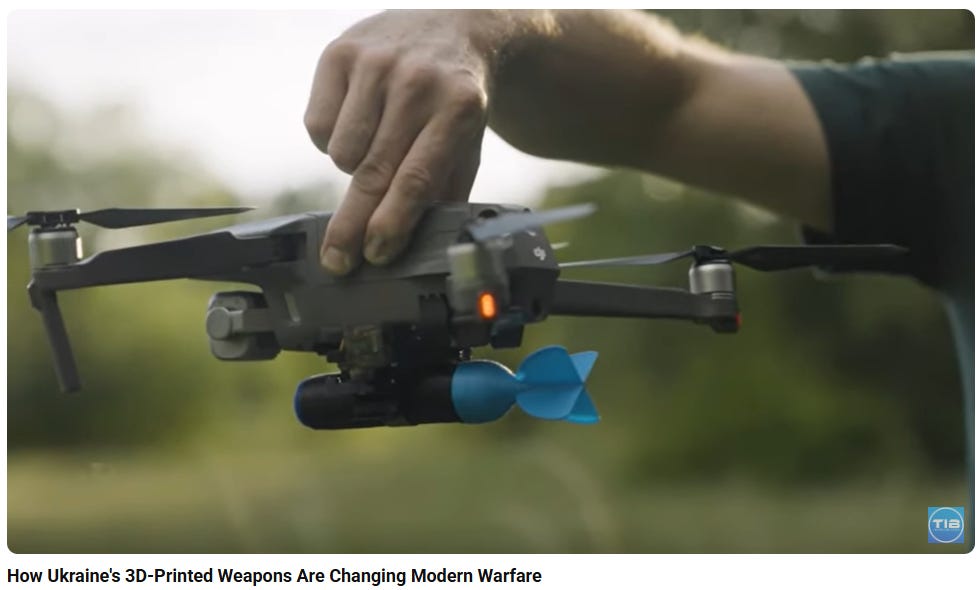
The war in Ukraine has led to a radical change in the way modern wars are fought. Inexpensive 3D-printed drones have been a game-changer for Ukraine...rapid innovation and testing in real time has enabled Ukraine to attack Russian infrastructure deep inside Russia...taking the war home for the Russian people to see. They've destroyed dozens of Russian planes and damaged oil refineries, rail lines and other critical infrastructure. Drones costing a few hundred or thousands have taken out sophisticated Russian radar systems that cost up to $40 million that cannot currently be replaced due to sanctions and materials shortages. Ukraine’s drones are severely impacting Russia’s gas infrastructure causing prices to spike for Russian consumers.
Canada is taking advantage of what Ukraine has learned and is investing in Canada's drone industry for our security at home as well as Canada's contribution to Ukraine's own security efforts.
Like militaries around the world, the Canadian Armed Forces saw the Ukraine conflict transform from what was largely an artillery war just 18 months ago into a nightmarish contest between buzzing machines and the operators who guide them.
"It's revolutionizing a part of the battle space," says Royal Canadian Air Force Lt.-Col. Chris Labbé, who heads the forces' Joint Counter Uncrewed Aircraft Systems Office. "You'll see different scholars or analysts talk now about the 'air littoral' — really the space between the ground and 1,000 metres in the air, maybe above that."
That space used to be dominated by helicopters, said Labbé. But the Nagorno-Karabakh war, and then the war in Ukraine, have accelerated advances in drone warfare.
The Canadian military is determined to keep pace with that change, he said.
A cottage arms industry
Nearly everything about smaller drones represents a change in direction in military thinking and industrial production. For decades, procurement has trended toward ever higher prices and longer timelines. The F-35, for example, is a weapons system so complicated and expensive that multiple countries had to buy in and invest in advance.
Drones don't need giant factories with sophisticated production lines. Instead, said Tom Barton of Janes Defence in London, Ukraine has decentralized production into small workshops.
"Some of the ways that guys in their garages are actually streamlining 3D printing and turning out quantities of these UAVs, you wouldn't have thought was imaginable up to now," Barton said.
Investors are on board with Prime Minister Carney's plan to ramp up Canada's military spending...
As Canada starts pouring money into its military, investors have been pouring money into Ontario’s Volatus Aerospace to help get its drones on the Canadian Forces’ shopping list.
“What’s happened since November of last year is what’s changed the face of the company,” said CEO Glen Lynch, in an interview with The Logic. U.S. President Donald Trump has forced countries—not just Canada, but definitely Canada—to confront their economic and security dependence on the United States, he said.
The combination of that realization, and the advent of major drone warfare between Ukraine and Russia, make for what Lynch hopes will be a golden moment for a Canadian drone company.
Volatus is leaning into “a changing geopolitical backdrop and Canada’s historic commitment to higher defence spending,” the company said in announcing its latest quarterly results last week.
Investors seem to see the same opportunity: Volatus, publicly traded since a reverse takeover a few years ago, has seen its share price soar even as it has sold blocks of new shares to private buyers to bring in millions of dollars at a time. The company has raised nearly $26 million since May.
After decades of under investment PM Carney recently announced a pay raise for CAF personnel to bolster recruitment and retention. All the new investment in modern equipment doesn't mean a thing if we don't have the personnel to train and deploy to meet whatever challenges arise. This is a long overdue recognition of the people we rely on to keep us safe in the face of a new and less secure future.
Prime Minister Mark Carney has announced pay hikes for military personnel, ranging from 20 per cent for the lower ranks to an eight per cent boost for senior officers.
The total cost for the various elements of the new compensation and benefits package announced Friday will be $2 billion annually.
With the 20 per cent boost, the starting salary for a private in the regular force will increase from $3,614 a month or $43,368 annually to $4,337 a month or $52,044 annually. Reserve military personnel would get a 13 per cent boost.
Military personnel above that basic rate, up to the rank of lieutenant colonel, will see a 13 per cent increase in pay, according to documents provided by the Canadian Forces. That would apply to both regular and reserve forces.
Colonels and generals, both regular and reserve forces, will receive an eight per cent pay hike.
The Canadian Forces has been dealing with challenges in recruiting personnel as well as keeping experienced staff in the ranks. Job dissatisfaction, poor compensation and repeated moves to new locations across the country have been cited in past military reports as the top reasons that Canadian Forces personnel leave. A lack of housing has also been identified.
Canadian Forces Chief Warrant Officer Bob McCann, who advises the chief of the defence staff, highlighted a warning on April 23, 2024 in which he appealed for military leaders to change how they dealt with lower ranks. He said personnel weren’t just quitting because they were being moved to locations they did not want to be.
“A lot of our members leave this organization not necessarily because they are not going where they want to be,” he explained to the audience of officers during a virtual town hall. “They leave because of toxic leadership or bad leadership. This is one aspect that we need to address if we are going to support our members better as they serve.”
While Trump is focused on replicating Putin’s authoritarian police state at home… sending the National Guard into Democratic US cities under the guise of fighting crime…Prime Minister Carney is going about the business of protecting Canada’s sovereignty by solidifying relationships with our partners abroad.
No posts
Comments
Nothing yet. Say the first thing.
Sign in to join the conversation.