
Last week I was scrolling through Facebook and saw this really beautiful post from a friend who also moved abroad, sharing that their furniture from home had finally arrived. And when I tell you I had a good cry, I mean I had a GOOD cry. I was also jealous. Like genuinely, deeply jealous, in a way that surprised me because I haven’t felt that kind of homesickness in a while.
We’ve been here long enough now that our life in Spain actually feels like our life. We have routines and favorite places and people we care about. We know how to get around, and the city doesn’t feel like the crazy circular maze it did when we first arrived. There is so much about the life we’re building here that I love, and I know how incredibly fortunate we are to have been able to make this move. But seeing my friend’s furniture arrive cracked something open in me that I don’t think I realized was still sitting there. I wanted that. I wanted a little bit of home to arrive, too.
I haven’t really shared much about where we’re living right now, but for the last eleven months we’ve been living in a furnished short-term Airbnb rental. We made that decision because when we got here we needed something that already had everything. We needed beds and a couch and dishes and a table and all the basic things you need to function because we were still trying to get back on our feet and figure out what exactly this new life was going to look like.
And the place has been good to us. It gave us somewhere to land when we desperately needed somewhere to live, and I am grateful for that. But it isn’t ours. None of the furniture is ours, none of the artwork is ours, and there are travel posters everywhere, which at this point feels almost comically appropriate for a family that has spent the last year trying to convince ourselves that we aren’t just passing through.
The truth is, we didn’t plan this move with the kind of care that I see a lot of other people put into international moves. We left the United States quickly, and I’ve been pretty honest that there were ways we did this irresponsibly, financially and logistically. We just felt like we needed to go for a multitude of reasons, and so we made the decision to leave and trusted that we would figure out the rest once we got here.
In so many ways, I feel like we’ve done immigration backwards. We got here first and then started figuring out how to stay. We figured out housing and paperwork and banking and school and doctors and transportation and all the million little things you don’t realize make up your life until suddenly you have to rebuild all of them somewhere else. Slowly we created routines and traditions and found the places we like to eat and the routes we like to walk, and somewhere along the way this unfamiliar place really did start becoming our life.
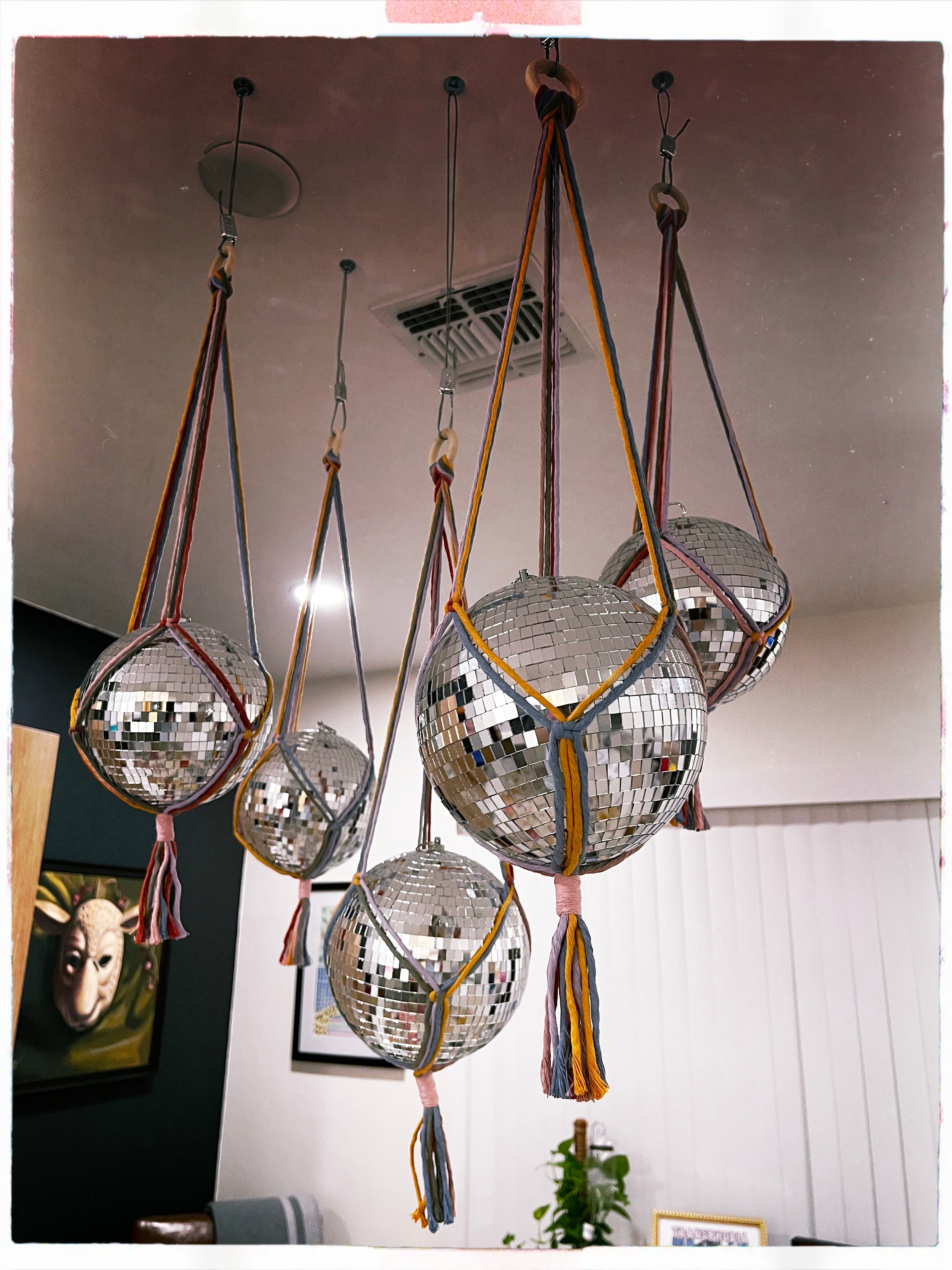
But almost everything that made our old house feel like our home stayed behind, and the other day, of all things, I could not stop thinking about my disco balls.
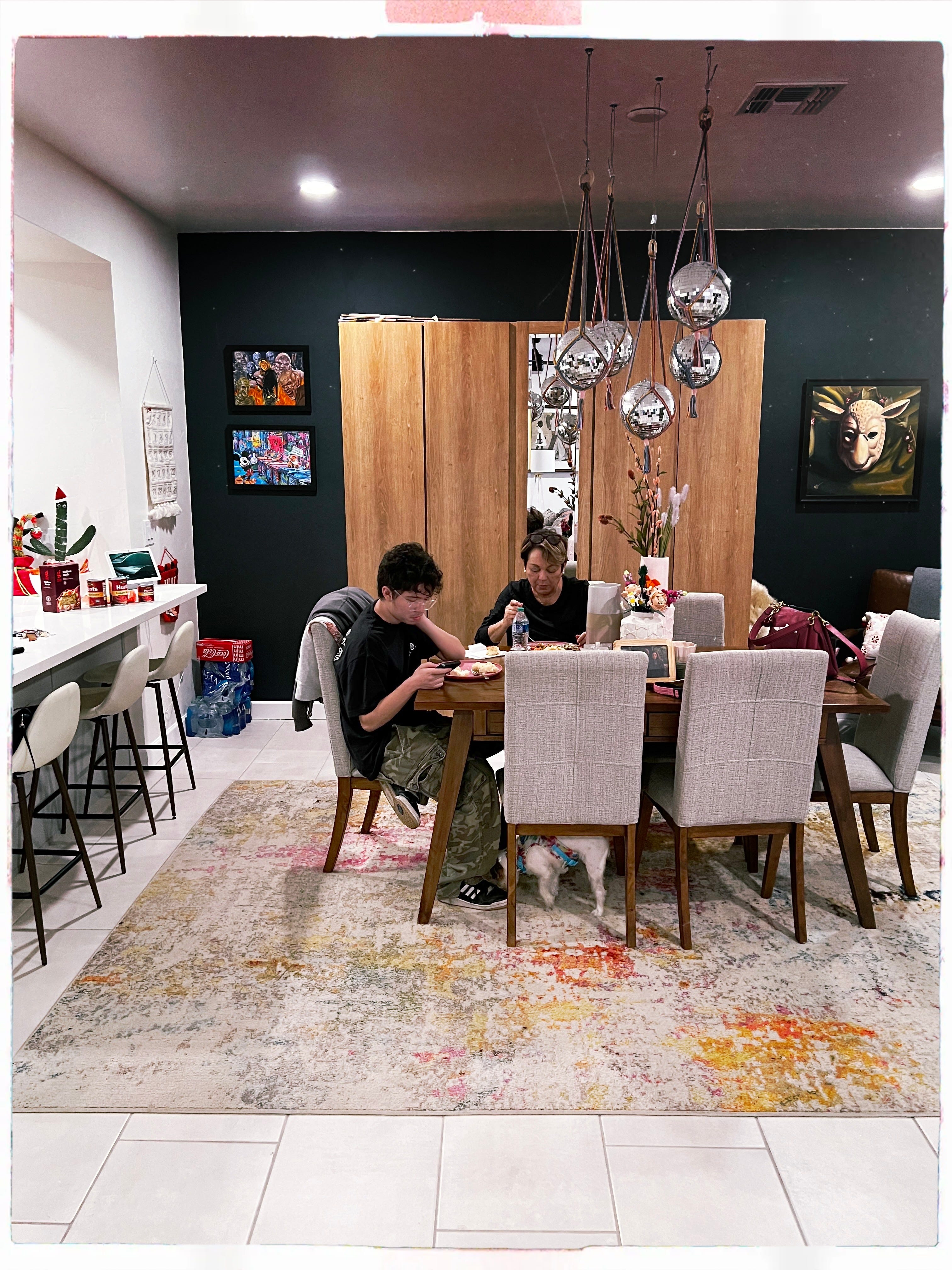
Above our dining room table back home, I had created this disco-ball chandelier out of these beautiful macramé pieces I had found with disco balls hanging from them. I clustered them together above the table, and it was a little ridiculous and very me, and I loved it so much. We had artwork everywhere and things we had collected over years of marriage and raising Daniel and just living our lives. None of it was particularly important on its own, but together those things made our home look and feel like us.
Most of it is sitting in storage now, and suddenly I wanted all of it. I wanted my artwork and my things and my weird little decorations and, yes, I really wanted my disco balls.
I know how silly that can sound because these are just things, and I am deeply aware of how lucky we are in so many other ways. We were able to leave. We had somewhere safe to land. We have built a beautiful life here, and we still have the home we loved back in the United States that we’re trying to rent while we figure out what comes next. I can hold all of that gratitude and still admit that sometimes this is really hard, because gratitude doesn’t make grief disappear.
And the more I sat with it, the more I realized I wasn’t really crying about furniture anyway. I think I was crying about the impermanence of it all, and about how long we have been living in this strange space between one life and another.
There are two rocking chairs on the patio of our house back home, and José and I used to sit outside in them in the evenings and look at the stars. There was nothing particularly remarkable about those evenings. They were just ours. Somewhere along the way, though, I had created this whole future in my head where José and I would be old and still sitting in those chairs, rocking outside under that same Arizona sky. I really thought we would grow old there.
I think that is one of the things I’ve had the hardest time explaining about immigration and leaving a place you once thought would be your forever home. You’re not only leaving a house or a city or even people you love. Sometimes you’re leaving an entire future you had quietly imagined for yourself without realizing how attached you had become to it.
I’ve talked to so many other immigrants and people who have moved countries who describe some version of this same feeling, this strange sense of existing between worlds. There is the place you came from and the place where you live now, but there is also this third place that only exists in your imagination: the life you thought you were going to have if everything had continued the way you expected it to.
And I think that is the life I’ve been grieving in ways I didn’t always understand. I miss the house, of course, but sometimes what I really miss is the version of our future where leaving never became necessary. I miss the assumption that José and I would grow old there, that Daniel would come home and visit us there, that holidays and birthdays and ordinary Sunday afternoons would continue unfolding in rooms that had already held so much of our family’s story.
At some point, though, we had to reconcile ourselves with the fact that the life we imagined there didn’t feel possible anymore. That doesn’t mean there wasn’t still beauty there or that we don’t love the people and places we left behind. It just means that circumstances changed, our family changed, the world around us changed, and we had to make a decision about what kind of future we wanted to make possible for our child and for ourselves.
The more I think about why seeing my friend’s furniture affected me so deeply, though, I think there is something underneath even the longing for home and some sense of permanence. More than anything, I think I just want to know that everything is going to be okay.
Isn’t that what we’re doing when we build a life in the first place? We make a home and fill it with things we love. We build careers and friendships and communities. We fall in love and raise children, all with this quiet hope that the life we’re building will be a good one. We love and care for our children with the hope that they will grow up and have good lives, that they will be free from harm, that they will get to become whoever they are meant to become. We want that for the people we love, too.
Maybe there is this little promise we make to ourselves when we’re building a life that if we love each other and work hard and take care of the people around us, somehow everything will be okay.
For years, though, living through the onslaught of anti-trans legislation back home made our life feel like it could be upended at any moment. Every legislative session brought another round of bills. Every election carried the possibility that someone who had decided targeting trans people was politically useful could gain more power. A bad bill could pass and suddenly something about Daniel’s life, or our family’s life, that had felt settled wasn’t settled anymore.
Year after year, we lived with that uncertainty. We were constantly waiting to see what someone else might decide our child was allowed to do, where he was allowed to exist, and what kind of future he was allowed to have. I think that kind of uncertainty does something to you after a while, especially as a parent, because the thing you want more than anything is to be able to tell your child, You’re going to be okay.
Leaving our home and moving abroad was the thing I never wanted to have to do. And yet eventually we did it because the uncertainty became its own kind of answer. We couldn’t control what would happen politically, but we could make a decision about what we were willing to keep asking our family to live through.
Maybe that is why feeling some level of permanence matters so much to me now. Maybe when I say I want my furniture or my artwork or my disco balls, what I’m really saying is that I want roots again. I want to believe we can put something on a wall and leave it there. I want to imagine José and me sitting in rocking chairs somewhere when we’re old and believe, even for a moment, that nothing is going to come along and take that imagined future away from us again.
Of course, immigration doesn’t come with those kinds of guarantees either. There are still steps ahead of us. We will have to renew our visas in a few years and trust that everything works out all over again. I don’t know if we’ll ever move back to the United States. I don’t know what future elections will bring or whether the people we love who are raising trans children back home will continue to have the freedom and safety their families deserve. There are so many things I simply cannot know.
And I think that’s the thing I’m finally naming. I want someone to tell me, with certainty, that it’s all going to be okay.
But nobody can really promise me that.
After I had my cry, my dad reminded me of something I think I needed to hear. He reminded me that we moved for Daniel, and Daniel is free and thriving. Sometimes I need someone to bring me back to something that simple because when I look at my son now, building his life and dreaming about his future and moving through the world with a freedom I wanted so desperately for him, I know we made the right decision.
I would make it again. I would leave the house and the artwork and the rocking chairs and every single disco ball if that was what it took to give him the opportunity to build a life where he could simply be himself. My dad wasn’t promising me the future or telling me that nothing hard would happen again. He was reminding me to look at what all of those impossible decisions had made possible right now.
And then he reminded me that the rest will come.
I think that is the part I’m learning to trust now. We spent so much of the first year just getting here and getting settled and making sure Daniel was okay that maybe I haven’t fully allowed myself to imagine what José’s and my life will look like beyond that. Daniel is beginning his own life now, and at the same time José and I are having to imagine ours again.
Come January, we’re going to start looking for another place, and this time we’re hoping for something long-term. I want something that isn’t an Airbnb. I want to choose the couch and hang José’s artwork on the walls and decide what goes above the dining room table. I want books and photographs and weird things we’ve collected to slowly accumulate again until one day I look around and realize the space has become evidence of the people who live there.
Maybe we’ll eventually ship some of our things over, and maybe we’ll realize that some things belong to the life we had and we’ll start over with others. Maybe those rocking chairs will stay under the Arizona sky, and José and I will eventually find two different chairs here in Spain where we can sit together when we’re old. I don’t know yet, and maybe part of what I’m learning is that I don’t have to know.
I think this is what being between worlds looks like sometimes. I can love the life we’re building here while still grieving the one I thought I would have there. I can know that leaving was the right decision and still wish it hadn’t become necessary. I can be grateful for everything we have gained and still cry because I miss the home I spent years filling with things and memories and imagined futures. None of those things contradict each other. They are all part of this experience.
And to the families of trans youth who are making these difficult decisions right now, trying to figure out whether to leave a state, leave a community, or maybe even leave the country, I want you to know that I understand how heavy all of this is. The things that make up a life can seem so trivial when we say them out loud: the house, the rocking chairs, the artwork, your favorite coffee shop, the neighbor you wave to every morning, the route you drive without thinking, the table where you’ve celebrated birthdays, the tree you planted and thought you’d watch grow, the people who know your child and have watched them grow up.
It can feel almost silly to name those things when you’re weighing them against your child’s safety and freedom because, of course, we will choose our children. We will choose them every single time. But I want you to know that I understand that it is so much more than the things. Those things represent the life you spent years building around them.
What you’re contemplating is the dismantling of a life you built with love and, in many cases, a future you thought you understood. You can understand why leaving may be necessary while also being heartbroken by everything that decision asks you to leave behind. There was love in the life you built there, too.
I think that’s something I wish we talked about more when we talk about families relocating for their trans children. We talk about safety and laws and schools and healthcare and all the practical reasons families make these decisions, and those things absolutely matter. But there is also the deeply human part of leaving: packing up or storing away the physical evidence of a life, saying goodbye to the ordinary rituals that made a place yours, and letting go of a future you had imagined there.
If you’re in that place right now, I understand. Those things that feel too small to mourn aren’t small at all. They’re pieces of a life you loved. And underneath all of those decisions, I imagine many of you are asking the same question I still find myself asking: Is everything going to be okay?
I wish I could answer that for you. I wish I could answer it for myself.
Maybe reconciliation isn’t about finally becoming okay with everything we left behind or reaching some magical point where I know for certain what happens next. Maybe it’s accepting that the life I thought I was going to have mattered to me while slowly allowing myself to become curious about the life I can build now. I don’t want to spend forever looking backward at the future that didn’t happen, but I also don’t want to pretend that letting go of it is easy.
And maybe everything being okay doesn’t mean that nothing will ever upend our lives again. Maybe it means trusting that if life does, somehow we will keep making a life on the other side of it. We’ve already done that once.
For now, I’m trying to trust my dad when he says the rest will come. We didn’t get to build the perfect new home and then carefully move our life into it. We got our child somewhere he could be free first, and now we get to figure out what home looks like around that freedom.
I think someday José and I will have our rocking chairs again, even if they’re different chairs under a different sky. We’ll have walls covered in his artwork and a table surrounded by the people we love, and slowly this life will accumulate its own objects and memories and ordinary little rituals until it doesn’t feel like the new life anymore. It will just feel like ours.
I don’t know if that’s the same thing as knowing everything is going to be okay. Maybe it’s the closest any of us ever get: loving the life in front of us, building what we can, and trusting that the rest will come.
And hopefully, somewhere above that table, I’ll have my damn disco balls.
No posts
Comments
Nothing yet. Say the first thing.
Sign in to join the conversation.