
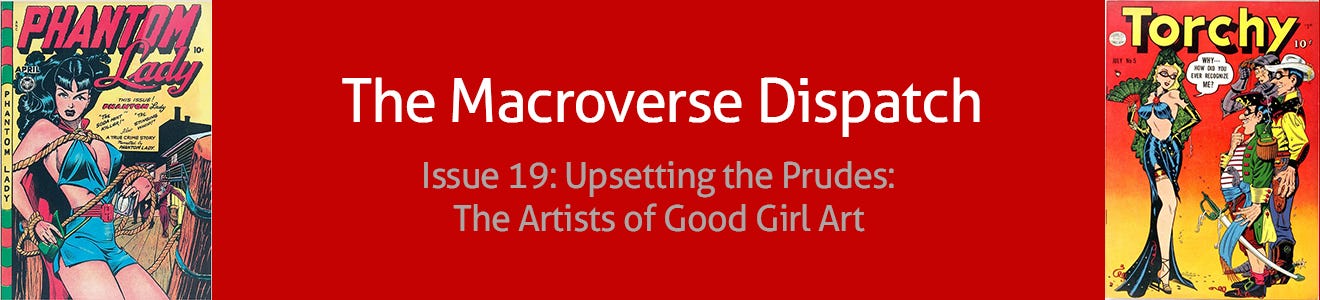
Welcome back to the Macroverse Dispatch Episode 19. This week we’re diving into Good Girl Art, a genre whose name is, as we’ve noted before, one of the great euphemisms in publishing history. “Good Girl” has nothing to do with the moral character of the women depicted… it refers instead to the quality of the artwork depicting them. The women in question were sometimes damsels in distress, but just as frequently gun molls or temptresses, with the occasional crime-fighting vigilante (whose costume left remarkably little to the imagination) thrown in for good measure.
Science fiction author Richard A Lupoff described Good Girl art as “A cover illustration depicting an attractive young woman, usually in skimpy or form-fitting clothing, and designed for erotic stimulation.” The term itself was coined in the early 1970s by comics dealer David T. Alexander, who used it in his mail-order catalogues to flag covers with attractive women from Fiction House and other publishers. Before that, it didn’t have a name… it was just comics (albeit with particularly scantily clad women).
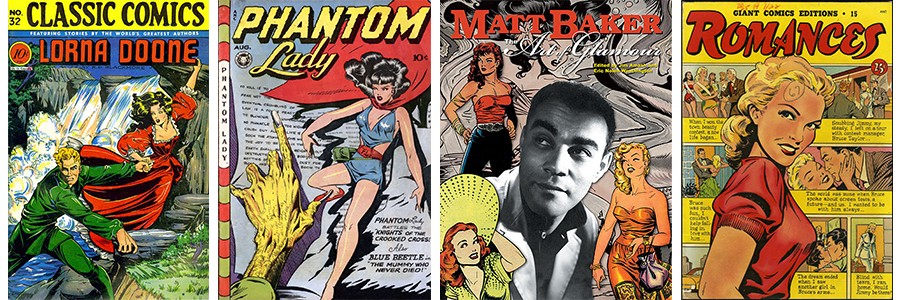
We’ve touched on Matt Baker before in these pages, but he deserves his own moment.
Baker was one of the few African Americans working as an artist during the Golden Age of Comics, in an industry that was overwhelmingly white. He also happened to be gay, so the amount of prejudice and obstacles he had to overcome boggles the mind. He attended Cooper Union in New York - one of the most prestigious art schools in the country - and brought a genuine technical sophistication to work that the industry largely treated as disposable product. He produced over a thousand pages of comics work across his career, much of it for Fiction House, Fox Comics, and Quality Comics, and his specialty was drawing women with a compositional intelligence and fluid line work that set him apart from his contemporaries.
His most famous work was Phantom Lady. The character had started life at Quality Comics in 1941 as a fairly conventional costumed crime-fighter. When Fox Comics acquired the title, Baker redesigned the costume substantially, making it more dynamic, more revealing, and basically more of everything the genre’s audience was there for. His cover for Phantom Lady #17 became famous for all the wrong reasons when Fredric Wertham used it as Exhibit A in Seduction of the Innocent, his 1954 attack on comics. The cover - Phantom Lady bound with a rope, expression somewhere between distress and defiance - became shorthand for everything the moral panic wanted to eliminate.
The irony that the cover was drawn by a Black gay man who worked in an industry that barely acknowledged he existed is the kind of detail that tends to get lost in the simple narrative. Baker’s sexuality wasn’t publicly documented until 2012, when TwoMorrows Publishing released a comprehensive biography. He died of heart failure in 1959, aged 38, without receiving the recognition that came posthumously. His work is now among the most sought-after in Golden Age collecting.
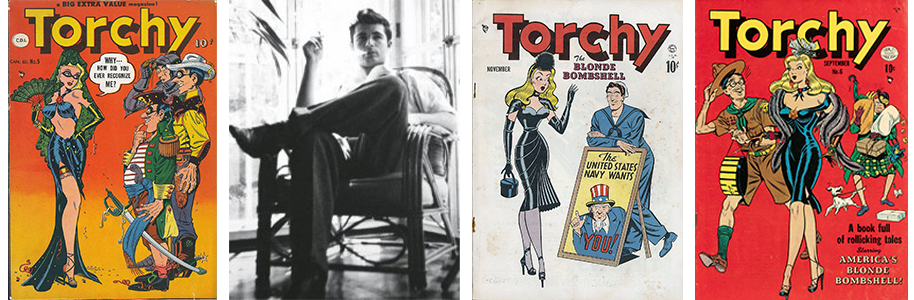
If Baker was the most technically accomplished artist in Good Girl Art, Bill Ward was its most committed one. Ward attended the Pratt Institute in Brooklyn, worked as an assistant to comics artist Jack Binder, then moved to Quality Comics where he spent the early 1940s on mainstream superhero fare, before being drafted in 1944.
His real contribution to the genre came in 1946, when he created the character Torchy as a backup feature in Quality Comics’ Doll Man. While serving in the army during World War II, Ward was commissioned to create a comic strip for the base newspaper to boost morale. The statuesque blonde he created later evolved into Torchy Todd, who got her own six-issue title from 1949 to 1950. She was cheerful, resourceful, frequently underdressed, and had a remarkable talent for finding herself in situations that required her to be all three simultaneously.
What set Ward apart technically was his use of the conté crayon. Imagine an innocent but stunning young woman boasting wildly exaggerated Barbie-like proportions poured into a wisp of lingerie or a clingy cocktail dress, adorned in diamond necklaces and opera-length gloves, perched on top of a pair of dangerously high stiletto heels, and you’ve got the recipe for the quintessential Bill Ward glamour girl. The line work was impeccable, and his women existed in a hermetically sealed world somewhere between comedy and titillation.
After the Code arrived and effectively ended the genre in its existing form, Ward pivoted to magazine cartooning. His work appeared in Humorama digests throughout the late 1950s and into the 1960s, sharing pages with photos of Bettie Page, Tina Louise, and Julie Newmar. He also worked for Cracked magazine and contributed to various men’s adventure publications until late in his career. He died in 1998, aged 79. Fantagraphics published a collected edition of his pin-up work in 2023 that remains a remarkable object… and the line work holds up completely.
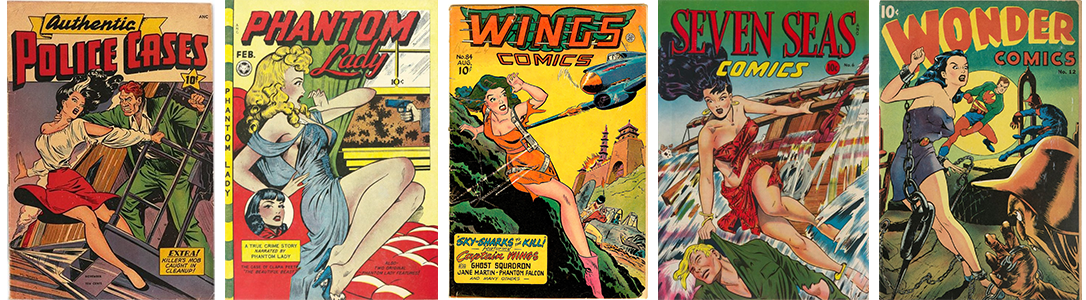
Good Girl Art was not a niche. Its popularity peaked in the 1940s and 1950s as the style gained favour with young men, particularly US servicemen, for whom comics served as an opportunity to “girl watch”. Beyond that, though, this was a mass market phenomenon… Fiction House built its entire publishing strategy around it, and publishers like Fox Comics existed almost entirely to supply it.
Fiction House’s titles are the best archive of the genre in full flight: Planet Comics, Jumbo Comics, Fight Comics, Jungle Comics… all of them featuring extraordinary cover art that has aged in ways the contents definitely haven’t. The covers were produced by a rotating stable of artists of whom Baker and Ward were the most accomplished, but also included Bob Lubbers, Bob Powell, and others whose work repays attention.
The science fiction pulps provided a parallel venue, with the two main creators of Good Girl Art for science fiction magazine covers being Earle K. Bergey (Startling Stories, Thrilling Wonder Stories) and Harold W. McCauley (Imagination, Fantastic Adventures). Their women floated through alien landscapes in outfits that suggested interplanetary travel had done nothing to improve fabric availability.
The Comics Code ended the genre with a single clause: “females shall be drawn realistically without exaggeration of any physical qualities.” Fiction House published its last issue in 1954, and by then Fox Comics had already ceased operations. The genre didn’t die so much as it got absorbed… the superhero books that dominated the Code era inheriting the visual vocabulary while stripping out the explicit purpose, which somehow manages to be both a gain and a loss.
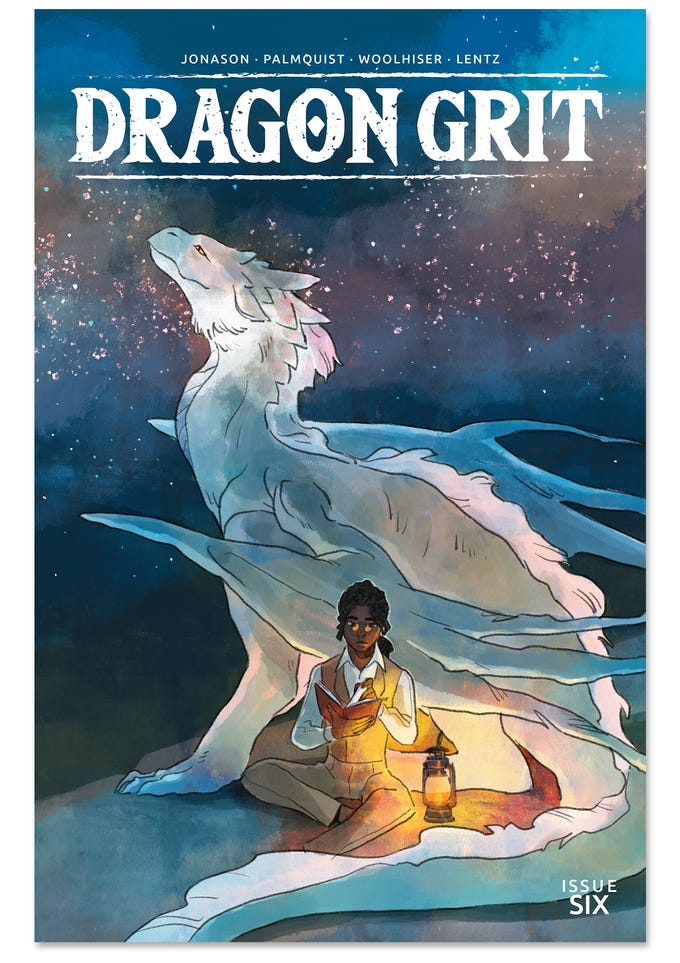
Dragon riding cowboys (and cowgirls)? Oh yes…
Issue 6 of the ongoing series, written by Caleb Palmquist, who has a long track record writing fantasy comics, and this one looks like a blast!
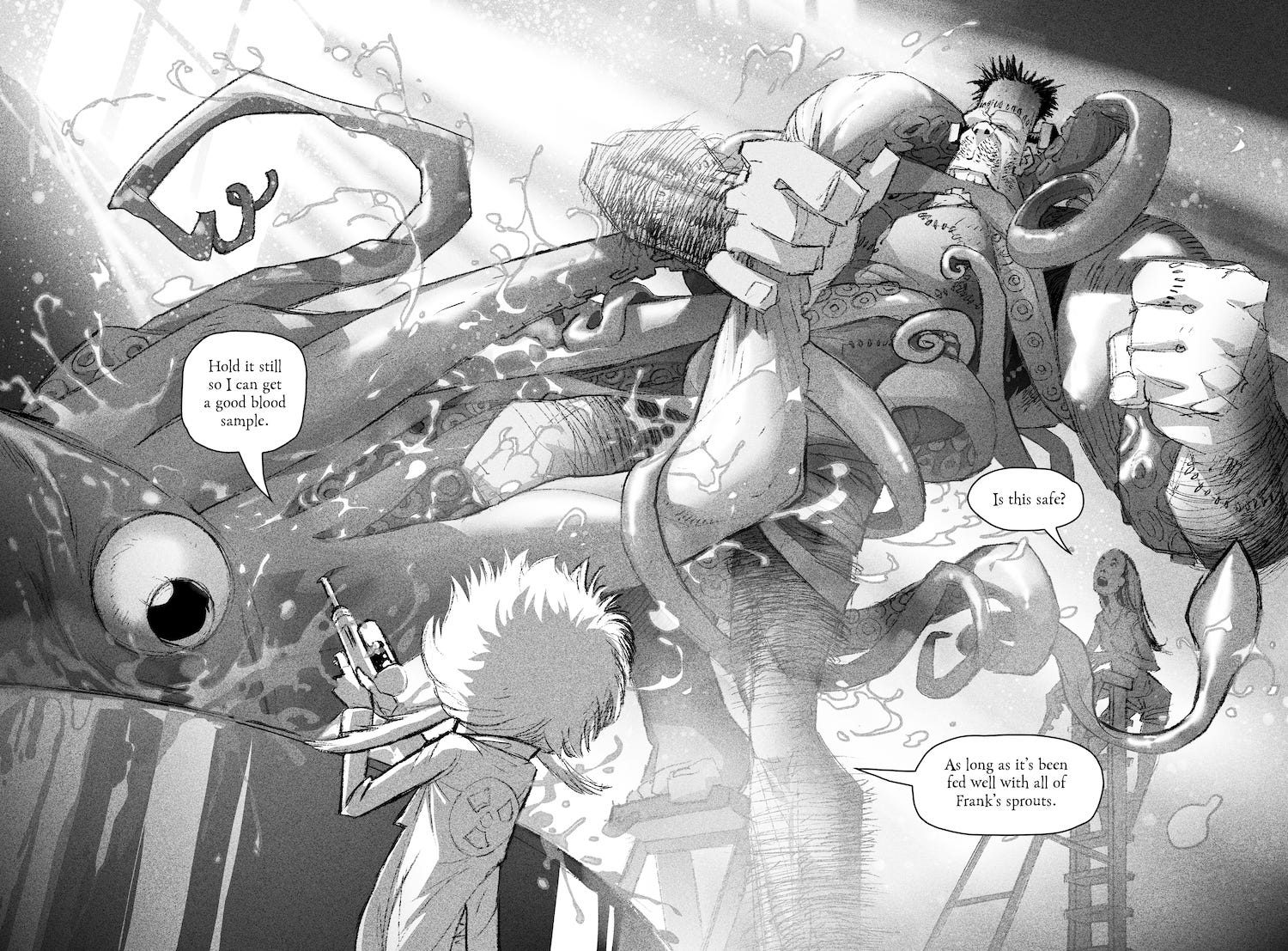
As we put the finishing touches on Volume 2 of Phobos, we wanted to revisit Volume 1 with all it’s delightful mayhem, madness, and multi-armed Frankenstein’s monsters…
That’s it for this week!
Have a great weekend, and look forward to returning to a more normal schedule next week…
Until then
KBO
Adam and Team Macroverse
No posts
Comments
Nothing yet. Say the first thing.
Sign in to join the conversation.