
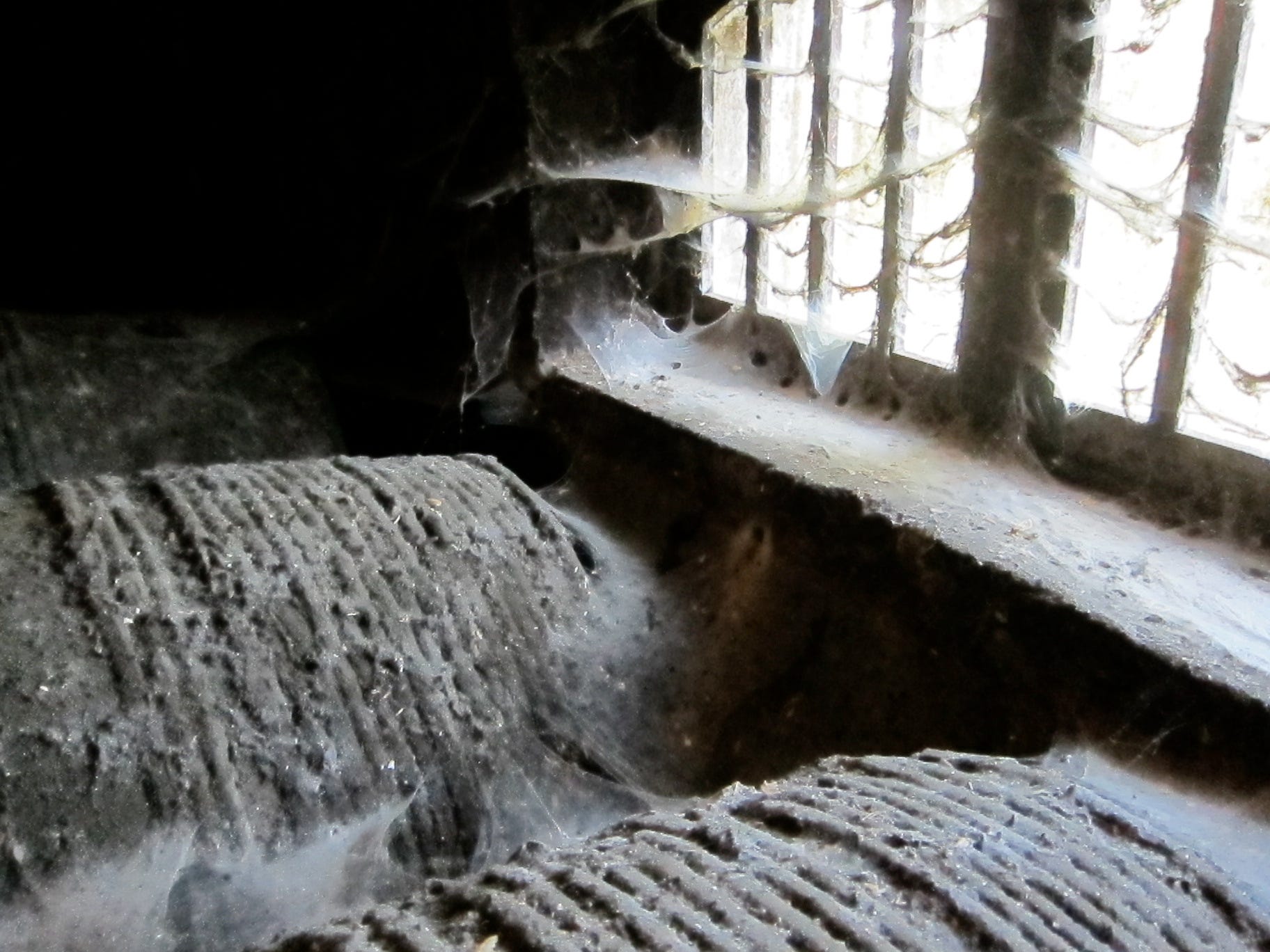
My first encounter with spirit spiders was fifteen years ago in France. I was with a group being shown through the Rémy Martin aging cellars, Domaine de Merpins, outside the town of Cognac. About 140,000 barrels are aging here, spread among 29 different aging cellars, each with slightly different conditions.
When you tour a lot of spirits warehouses, they tend to blur together in your mind over time — they become one long, dimly lit row of casks stacked atop one another, extending into some infinite distance. But one cellar stuck out here — it was filled with the most ancient casks, and everything was layered in cobwebs. These weren’t thin, delicate thistledown webs. They were thick and dense as cheesecloth, coating casks and windows and the rafters above. There seemed to be enough to weave a livery for a king’s guard.
The cellar master warned us: don’t touch any of the webs. The spiders must be left undisturbed. And he gave a reason — pest control. Spiders weren’t the pests. They were the solution to the pests. The real problem was woodworms, moths, and other creatures with a habit of burrowing into the oak barrels, leading to leakage. The spiders had created all-natural sticky insect traps. And anyway, resistance was futile: the webs would just reappear if you cleaned them out.
I haven’t been able to find any entomological research confirming that spiders play palace guard in the castles of cognac. But it makes sense, so I’m fully willing to subscribe to this explanation.
This past June, I had the good fortune to visit the port aging warehouse owned by Niepoort in Porto, Portugal, with three wine writers — my thanks to Clive Pursehouse for arranging the visit. (Sidenote: if possible, always travel with knowledgeable wine writers. You don’t need to know anything about wine, yet a delicious bottle always appears on the table at every meal.)
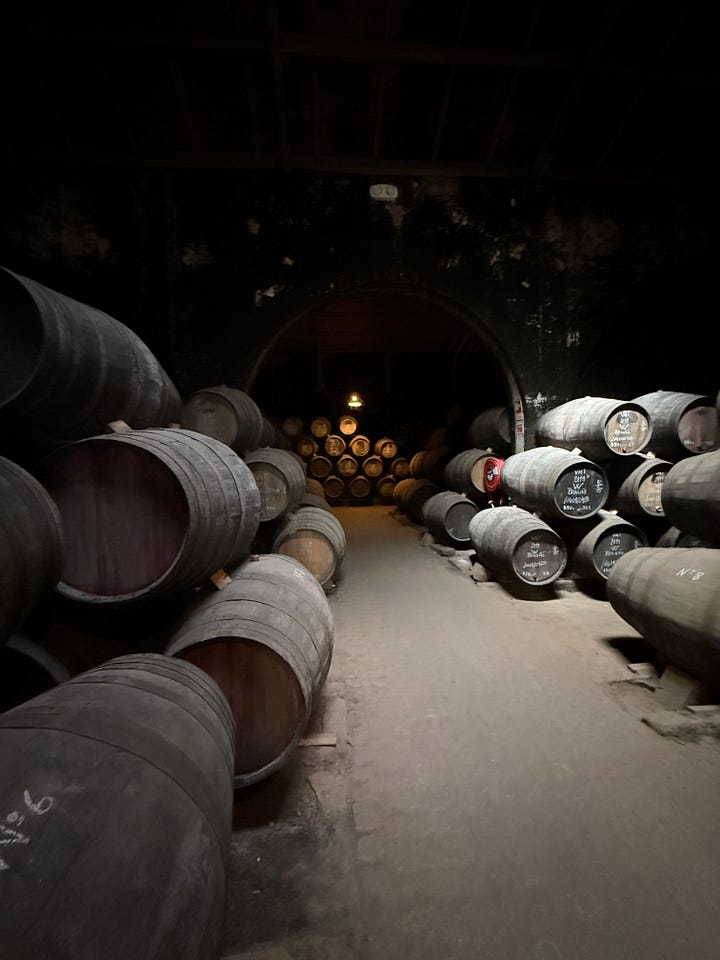
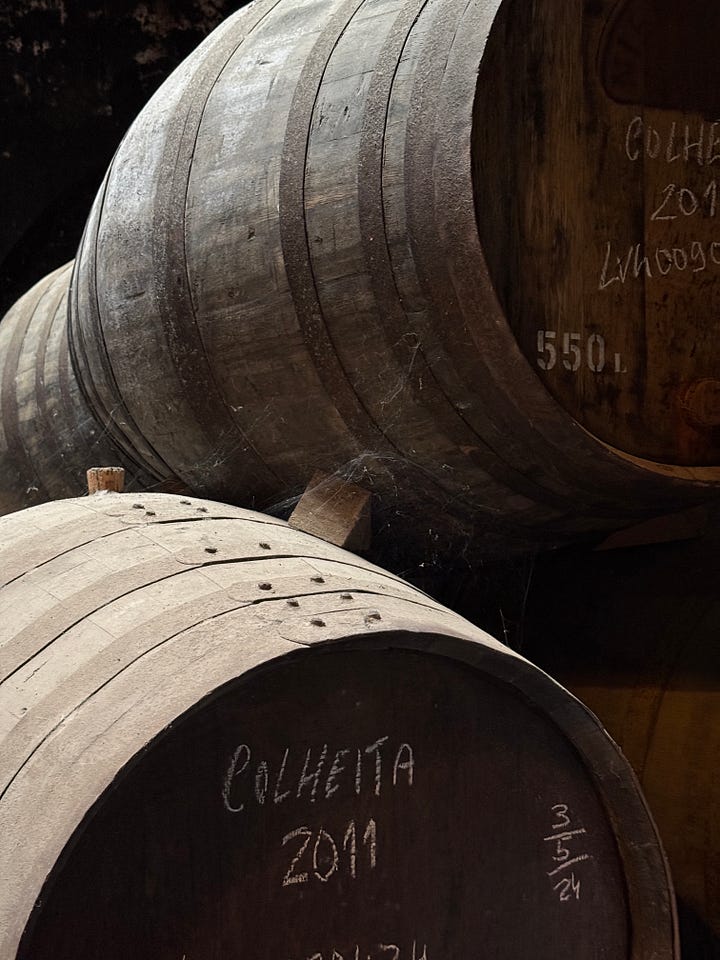
The Niepoort warehouse is absurdly cinematic — dim and musty, with long rows of aging casks that extend into infinity like an optical illusion. The building first opened in 1842, and Niepoorts have run it for six generations, with the seventh recently born. The sounds of the busy street are instantly muffled by casks and history the moment you set foot inside; the air fragrant is with deeply aging port.
It’s one of more than a dozen port warehouses on the Vila Nova de Gaia side of the river, just across from Porto proper. Many of these have been repurposed and modernized as visitor centers designed for high-volume tourism. Niepoort has not.
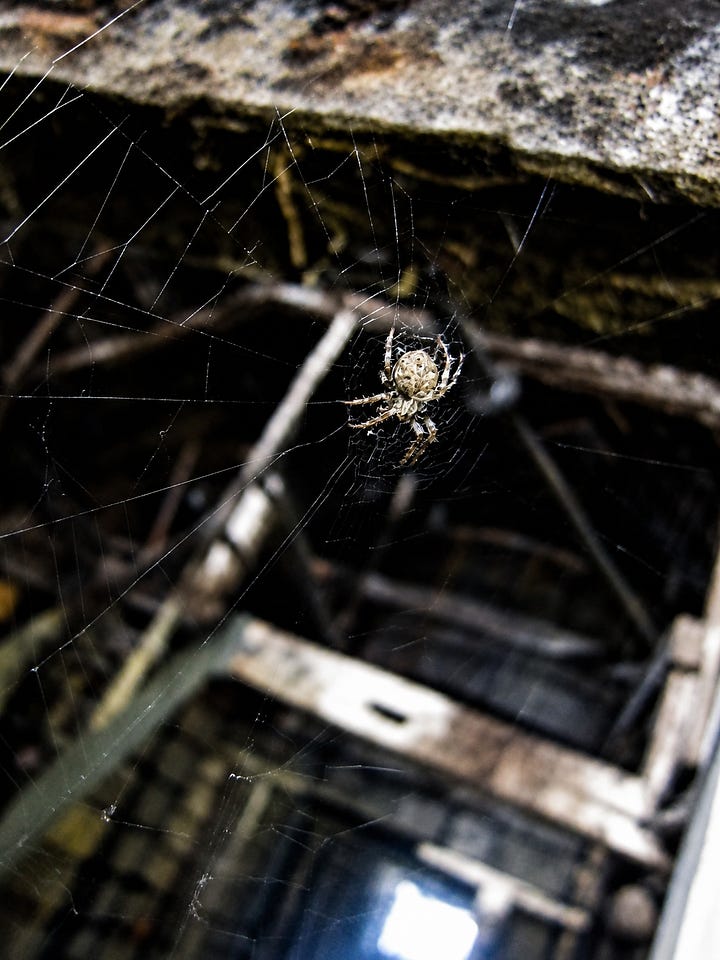
As seems fitting for a 184-year-old warehouse, the place is also lousy with spiders and webs. As we walked down the main nave, we could see gossamer webs connecting barrels up high, and caught the occasional glimpse of an arachnid scrambling for the shadows. Lara Lopes, an affable soul who took time off from managing Niepoort’s wine club to show us around and answer a billion questions, warned us: “Don’t touch the spiders.” It wasn’t because they were toxic or off their meds and liable to be savage. It was because they were longtime residents, involved in the aging process. We were to be respectful.
I would have chalked up these spider encounters to puffed-up distillery lore — filed it next to “angel’s share” in the category of marketing poetry. But I’ve noticed spiders are a persistent motif on other distillery and warehouse visits, and I’ve never detected a self-knowing smirk when they come up. Spiders seem to hold a strange and genuine place of reverence among producers of delicious beverages.
You’ve probably heard about distillery cats — Brad Thomas Parsons published a whole book about them. (Role: rodent control, mostly.) But distillery spiders?
In 2016, I visited several rum distilleries in Jamaica, including venerable Hampden Estate. At the time they weren’t doing much aging on-site — nearly everything was exported to Europe for blending into other rums, with the higher-ester rums also used in candies and perfumes. (They’ve since started aging and releasing their own rums.) The sugar estate dates to 1743; the distillery, still in use today, to sometime in the late 19th century.
Hampden was acquired in 2009 by prominent Jamaican businessman Lawrence F. C. Hussey, who wasn’t actually interested in the distillery so much as the sugar farm that came with it. He called on his granddaughter, Christelle Harris, then an actress in Hollywood, to come home and help run the place. Harris’s first instinct was that the distillery needed a few hundred thousand dollars to bring it into the modern age — but a listening tour of the distillery’s longtime European clients talked her out of it. Don’t change a thing, they told her. Modernize it, and you ruin the flavor.
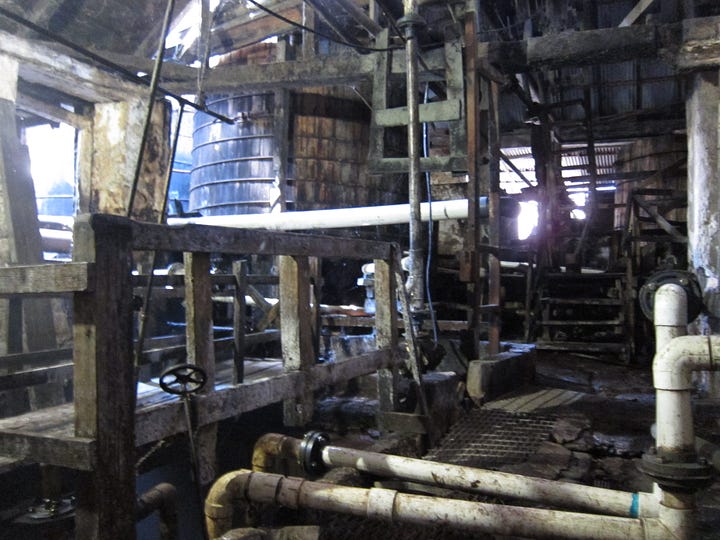
Hampden’s distillery is not a place the FDA or OSHA would look kindly upon. There are gaps in the floor and holes in the roof. You step over hot pipes and around clanging machinery to get through it. It has a serious Tim Burton vibe.
And it has spiders. Here, as elsewhere, we were told to leave them alone — they helped ensure the distinctive flavor of the rum.
This isn’t spider-flavored rum, though it’s inconceivable that spiders haven’t inadvertently made their way into a fermenting tank now and then. Rather, the spiders are part of a broader ecosystem within the ancient distillery — bacteria, mold, and other microscopic life that finds its way into the dunder and muck and fermentation tanks, all of it contributing to a complex flavor. Take the same recipe for Hampden Rum and make it in a new distillery, all gleaming copper and stainless steel, and it would not taste like Hampden Rum.
So the spiders stay.
It turns out the importance of spiders isn’t so much the arachnids themselves — although their role as pest control in aging warehouses is real enough. It’s that they’re markers of an ecosystem, guardians ensuring the microscopic elements that add to a spirit’s flavor go unmolested.
Spiders may be the least loved of household visitors. But for lovers of fine spirits and wine, they’re the custodians and keepers of quality.
Do not, I repeat, touch the spiders.
Note: If you’re ever in Porto, I highly recommend a tour of the Niepoort warehouse. Tours are limited to 24 people per day and cost around $50 — this includes sips of things delicious and a glimpse into a Grand Canyon of history. More information here.
No posts
Comments
Nothing yet. Say the first thing.
Sign in to join the conversation.