
If you prefer, listen to the audio from the opening of the Library Company, September 27, 2025, in Carlton Landing.
0:00
-17:15
Let’s begin our story on July 1, 1731. A group of men gathered in Philadelphia, devoted to the ideas of the day. Once a week, in the evenings, they met to discuss the great questions of their age. This was the kind of gathering that foreshadowed the American Revolution, following the Scientific Revolution, which had turned the leading minds of the day toward human progress, knowledge, and the development of society.
But these men were not philosophers or theologians. They were craftsmen—surveyors, glaziers, printers—and most famously, Benjamin Franklin. The group, known as the Junto or the Leather Apron Club, realized that although each owned a few books, if they pooled their collections, together they might form one of the finest libraries in the New World. So they did.
They chartered the Library Company of Philadelphia, the first subscription library in the world and the first public library in the United States. In their charter, they wrote:
“None appears better adapted to that important end than a public library. An institution of this kind is so generous and extensive in its nature that it affords instruction on the most easy terms to all who are desirous of improvement. The opulent friend to learning may be furnished with authors not generally found in private collections, and the genius that might languish and be discouraged for want of proper opportunities may have access to many volumes containing the experience of past ages and the present time.”
They had already discovered what we might call the “Amazon problem.” When you buy all your books online, you only find what you already know to look for. The beauty of a library—whether arranged by the Dewey Decimal system or the Library of Congress classification—is that when you find one book you like, you also discover others on the shelf, curated and vetted by the library, waiting to surprise you.
“When men thus possess the means of being acquainted with the arts and sciences,” the founders wrote, “it may justly be expected that important inquiries will be prosecuted and the good of society increased.” It would be hard to improve on that vision for our own town.
The Library Company of Philadelphia became a model for communities across America—and it is the model we’ve followed in founding the Library Company of Carlton Landing.
The Democracy of Knowledge
There is something profoundly American about the public library. You may have heard it called the “democracy of knowledge”: the belief that if anyone wishes to better themselves, they should have the resources to do so.
For most of history, libraries were the preserve of kings, scholars, or private collectors. The concept of a library open to everyone is relatively recent, dating back only two hundred years. Today, if your town has a public library, you are part of the tiniest fraction of people in human history with such access.
Franklin, who dropped out of school at the age of ten, read his way into becoming one of the leading statesmen, scientists, authors, philosophers, journalists, and entrepreneurs of his day. His extraordinary life still inspires people across every part of American life. Charlie Munger, the architect of Berkshire Hathaway with Warren Buffett, kept a bust of Franklin on his desk. Davy Crockett died at the Alamo with Franklin’s autobiography in his jacket pocket.
Thomas Jefferson also understood the power of books. When the British burned the Library of Congress in the War of 1812, Jefferson sold his personal library of 6,487 volumes to Congress, insisting that lawmakers must have access to the world’s knowledge. If you’ve been to Washington, you know the most impressive, beautiful building in our capital is not the Capitol itself or the White House but the Library of Congress, still preserving Jefferson’s original collection and now housing a copy of every book ever printed.
Libraries have shaped leaders throughout history. Harry Truman, the only twentieth-century president without a college degree, kept Plutarch’s Lives on his desk in the White House. Winston Churchill, who never attended Oxford or Cambridge, read voraciously as a young soldier in India—Gibbon, Macaulay, Plato, Darwin, Smith—and quoted them throughout his career as the statesman who saved the twentieth century.
My own love of reading began in an unlikely place: a fraternity house at Oklahoma State University. We were required to complete two hours of study each day. Because I worked through college, my only option was from five to seven in the morning. Sitting alone in the study room, I began, for the first time, to actually read the books assigned. I discovered that nothing is more enjoyable than exploring the history of the world and coming face-to-face with great thinkers.
C. S. Lewis once wrote that the joy of reading old books is that you can grapple with minds you could never otherwise meet. That discovery changed me, and I have been an avid reader ever since.
Libraries Through the Ages
The most famous library in history is the Library of Alexandria, tragically destroyed, setting human knowledge back by centuries. Yet it was modeled after Aristotle’s library in Athens, housed at his Lyceum. When his students carried the idea to Egypt, Ptolemy II founded the Museon—the “Temple of the Muses”—where learning, reading, art, and music inspired all who entered.
Libraries, however, are not only lofty temples of knowledge. They are also refuges for pleasure, wonder, and rest. To open a book, to flip through pages or illustrations, is to enter another world. The phrase “reading for pleasure” requires some nuance. Reading is not a shallow pleasure. It’s not like the short-lived pleasures of endless scrolling, or the dopamine hit of seeing a like on social media. The pleasure of reading is deep and demanding. Great art requires something of us: attention, patience, and quiet. Books challenge us to think, to lengthen our attention span, and to inhabit the space of our own minds.
Sadly, reading is in decline. Forty years ago, more than half of teenagers read for pleasure on any given day. Today, only 14 percent do. It is no surprise that reading comprehension is also suffering. Deep literacy is one of the most important skills a student can develop during their time in school. In fact, the abilities to read, think critically, synthesize, examine opposing perspectives, and consider an argument too big to hold in your head all at once are more important than the content students learn. When they leave school, they should have the tools in place to learn anything. Reading is the cornerstone.
In fact, the single strongest predictor of student success is not wealth, school, or location. It is whether parents read aloud to their children. Reading is the bedrock for growing into the people we want to be.
A Vision for Our Town
That is why we founded the Library Company of Carlton Landing: to give our children and community a different future. We want them to delight in the wonder of books, to find joy in a beautiful space, and to come face to face with the greatest minds in history just steps from home.
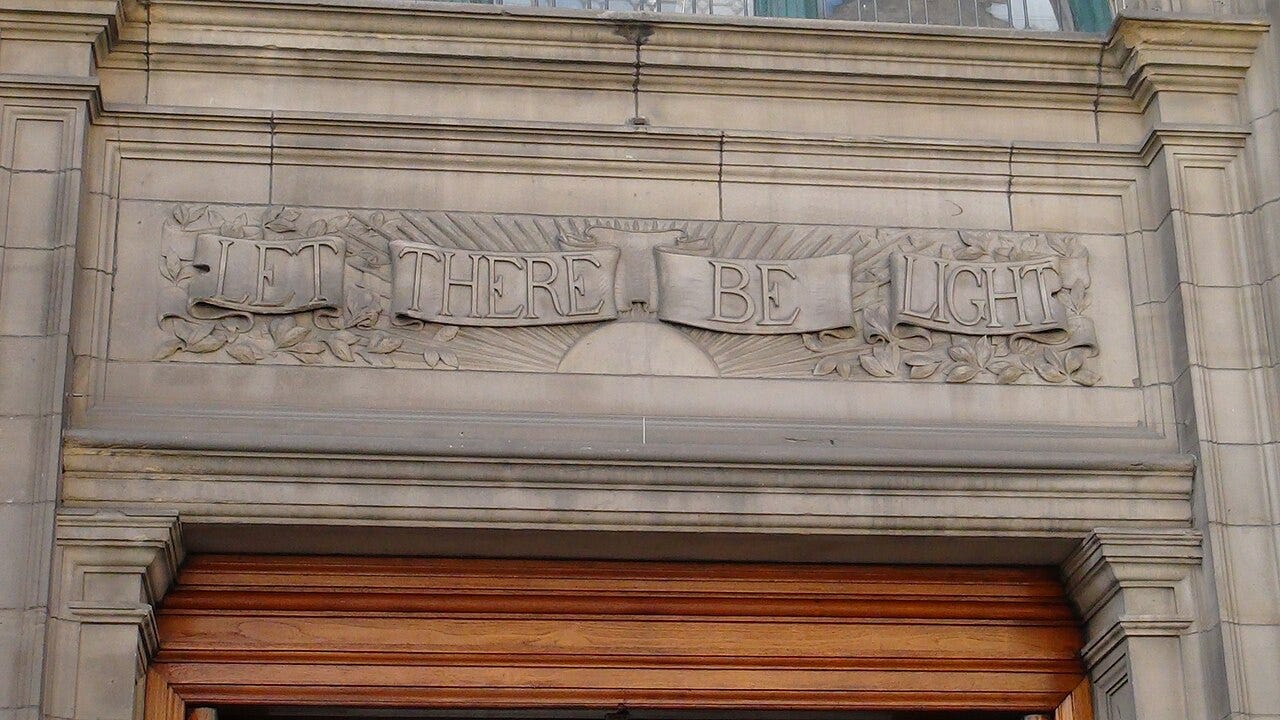
By 1920—less than 150 years after Franklin’s first library—there were 3,500 libraries in the United States, nearly half of them founded by one man: Andrew Carnegie. Carnegie, who funded more libraries than anyone in history, inscribed his motto above their doors: Fiat lux—“Let there be light.” His vision still inspires our own. Libraries are lighthouses in their communities.
I’ll leave you with a final story. A boy in rural Illinois, with only one year of formal schooling, had access to a small-town library. After losing his first political race, he decided to pursue a career in law. Unable to attend school, he read his way into the profession, devouring every book in a local attorney’s private library—including Franklin’s Autobiography. Two years later, he passed the bar. He would go on not only to practice law but to become our sixteenth, and perhaps greatest, president: Abraham Lincoln.
And that is why every town needs a library.
No posts
Comments
Nothing yet. Say the first thing.
Sign in to join the conversation.