
People needed material to work with: ambiguity to debate, stories to spread, friction to react to – Geese, an NYC rock band, exemplify this story…
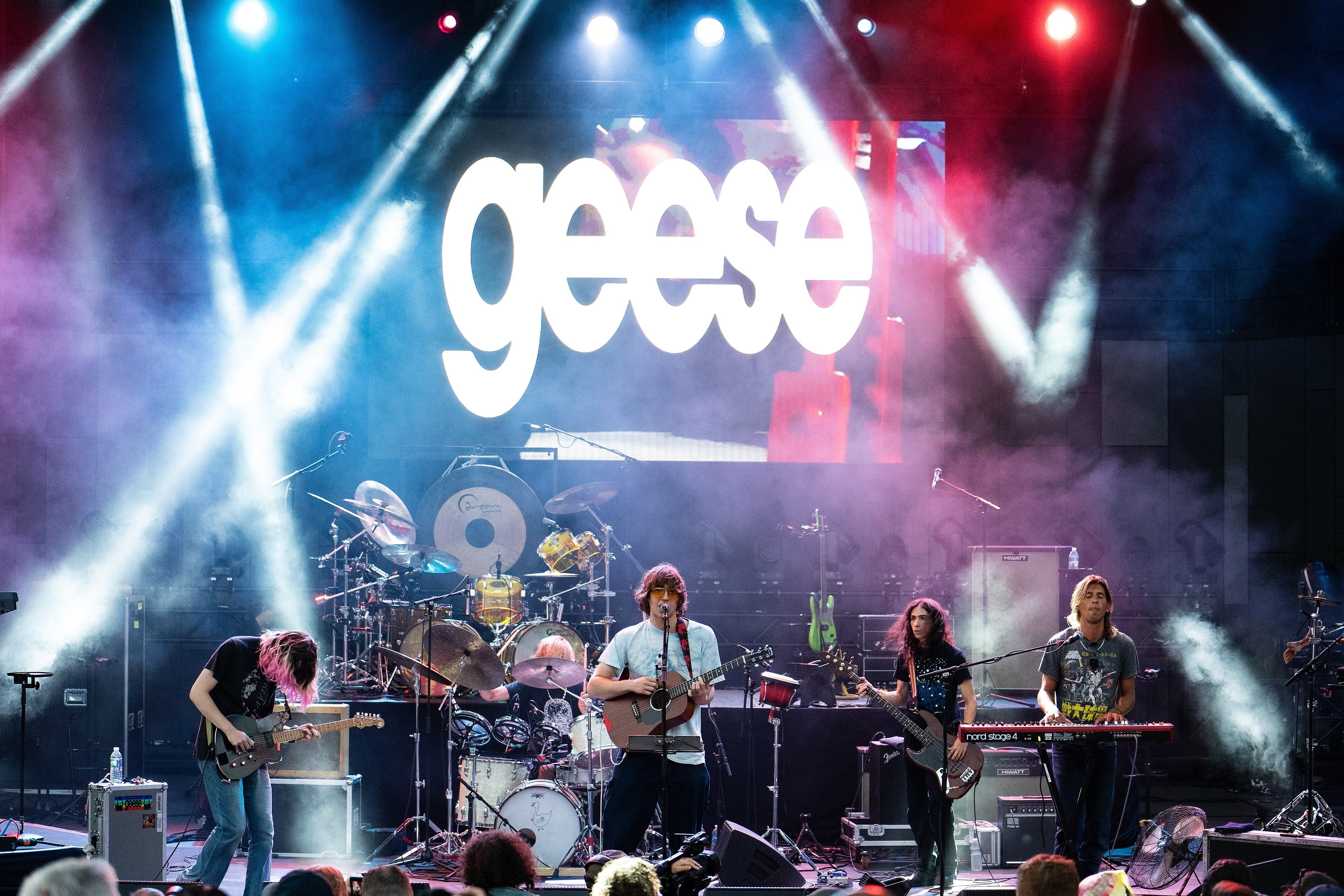
Question one: Have you heard of the band Geese? If yes, go to question two. If no, look up Geese, get lost in the rabbit hole, then go to question 2.
Question 2: Do you think they are:
Genuinely brilliant
Algorithmically amplified
Cleverly manufactured
Accidentally mythologised
Some other slightly muso possibly over-analysed response
Dunno
Don’t worry if your answer is none, some or all. The wider world doesn’t seem to know either.
But AI does.
If you answered no and didn’t follow the white rabbit, here’s a quick précis. Over the last year or so, the New York band has become the centre of one of those very online arguments that only make sense in 2026.
Depending on which corner of the internet you land in, Geese are either the most exciting rock band in America or an elaborate psy-op conducted by people who understand digital culture slightly too well.
There are Reddit threads dissecting their rise. Thinkpieces about whether their popularity feels “real”. Endless debate about irony, authenticity and manipulation. At one point, the discourse around the band became almost bigger than the band itself.
So get out your Flying V and follow the Geese.
Whether deliberately or instinctively, Geese seem to understand something the marketing industry still largely doesn’t: in an AI-mediated world, narrative matters more than messaging.
Not polished messaging. Not “brand purpose”. Narrative in the messier sense. Density. Texture. Signals. Contradiction. Conversation. Enough cultural material for humans, and more importantly, machines to build meaning from.
The advertising industry, meanwhile, has spent the last two years talking about AI almost entirely in operational terms. Faster outputs. Lower costs. More efficiency. Entire conference stages dedicated to shaving seconds off workflows no normal person ever cared about in the first place.
People are no longer just discovering brands through search, advertising or even websites. Increasingly, they encounter brands through AI-generated summaries, recommendations and conversational interfaces.
I’ve been using a phrase The Generative Moment of Truth (first there was FMOT [first], then ZMOT [zero], now GMOT) to explain this. Maybe it should be The Geese Moment of Truth.
Because generative AI does not behave like search.
Search was the engine of the car. Useful, necessary, functional. Generative AI is becoming the feeling of the drive. The shape of the machine, the sound of the engine, the thing customers actually remember.
They synthesise. They interpret. They collapse thousands of fragmented signals into a coherent narrative and hand that narrative back to the user as though it were objective truth.
Which means your brand is no longer simply what you say it is. It is what the machine thinks it is. And that changes almost everything.
The algorithm doesn’t care about your manifesto. Large language models are trained not just on official brand communications, but on the wider web: reviews, interviews, Reddit threads, product descriptions, creator commentary, Wikipedia pages, forum arguments, transcripts and metadata. They are less interested in your campaign manifesto than the totality of what exists around you culturally.
Because what AI systems reward is not necessarily scale. It is coherence. Geese, intentionally or otherwise, created coherence. You can disagree with the tactics. Plenty do. But they understood the task. They generated enough intrigue, ambiguity and participation for the internet to continuously reinterpret them and keep creating narratives. Every argument about whether
Geese were “real” simply reinforced the existence of Geese as a cultural object worth discussing. The mythology became distribution. Community as infrastructure This is why Reddit suddenly matters so much.
Not because marketers have rediscovered “community”, but because the machines have. Reddit is now one of the most commonly cited sources in AI-generated answers. OpenAI and Google have both signed licensing agreements with the platform because its conversations help models sound more human, more grounded, more opinionated. Reddit isn’t just influencing people anymore. It’s influencing the systems influencing people.
That should probably concern anyone still treating comms, SEO and brand strategy as separate disciplines. And before marketers dismiss this as something unique to music culture, it is worth remembering that branding has always worked like this. The strongest brands were never the ones with the cleanest PowerPoint slides. They were the ones surrounded by stories.
Harley-Davidson. Supreme. Liquid Death. Patagonia. Glossier. Entire worlds built not just from advertising, but from accumulated signals people could participate in, argue about and extend themselves.
The difference now is that machines are participating too. Which means b(r)ands suddenly have two audiences: humans and models. That sounds dystopian until you realise it is mostly a question of clarity.
Most corporate websites today are astonishingly vague. They talk in abstractions because abstractions are what corporate language rewards. “Transforming possibilities.” “Unlocking growth.” “Driving innovation.” Entire homepages that say almost nothing at all.
Humans learned to ignore this language years ago. Machines struggle with it too.
If your own website cannot clearly explain who you help, what problem you solve, how you solve it and why anybody should care, an LLM will simply infer the story from elsewhere. Sometimes kindly. Sometimes not.
Distinctiveness suddenly matters more, not less.
Not because AI loves creativity in any sentimental sense, but because difference creates interpretability. Clear signals survive compression better than generic ones.
Which brings us back to Geese. The band or their dark overlords or their clever AI consultant or record label (no one really knows) understood that attention in the modern internet is generated through participation, not broadcast. People needed material to work with. Ambiguity to debate. Stories to spread. Friction to react to.
That is increasingly true for brands too.
The winners in the next era of marketing probably will not be the companies producing the most AI content. They will be the ones producing the richest ecosystems of meaning around themselves.
Which is awkward news for an industry still trying to automate its way out of having anything interesting to say.
This article was written by Jon Williams, CEO & Founder of The Liberty Guild. It first appeared on WARC (June 2026) - https://www.warc.com/en/article/what-geese-can-teach-us-about-ai-1fb2c92a9ac041dabcef134799c5b0f5 1/3.
No posts
Comments
Nothing yet. Say the first thing.
Sign in to join the conversation.