
The time has been more than potent, not just with the beamformers, but also setting up new ventures far away from sound. Now that days got shorter again, I’m back to watermelons.
Michael Wagner, for those who don’t know one of the leading educators on all things spatial audio, interviewed me recently on his famous podcast.
We talked not just the watermelons, but also where the industry is, and where it goes. hope you’ll enjoy it as much as I did enjoy the conversation.
Around July, the first unit of Svarog24, a 24 beamforming spherical array has been completed and despite a few minor quirks to iron out, proves to work above expectations.
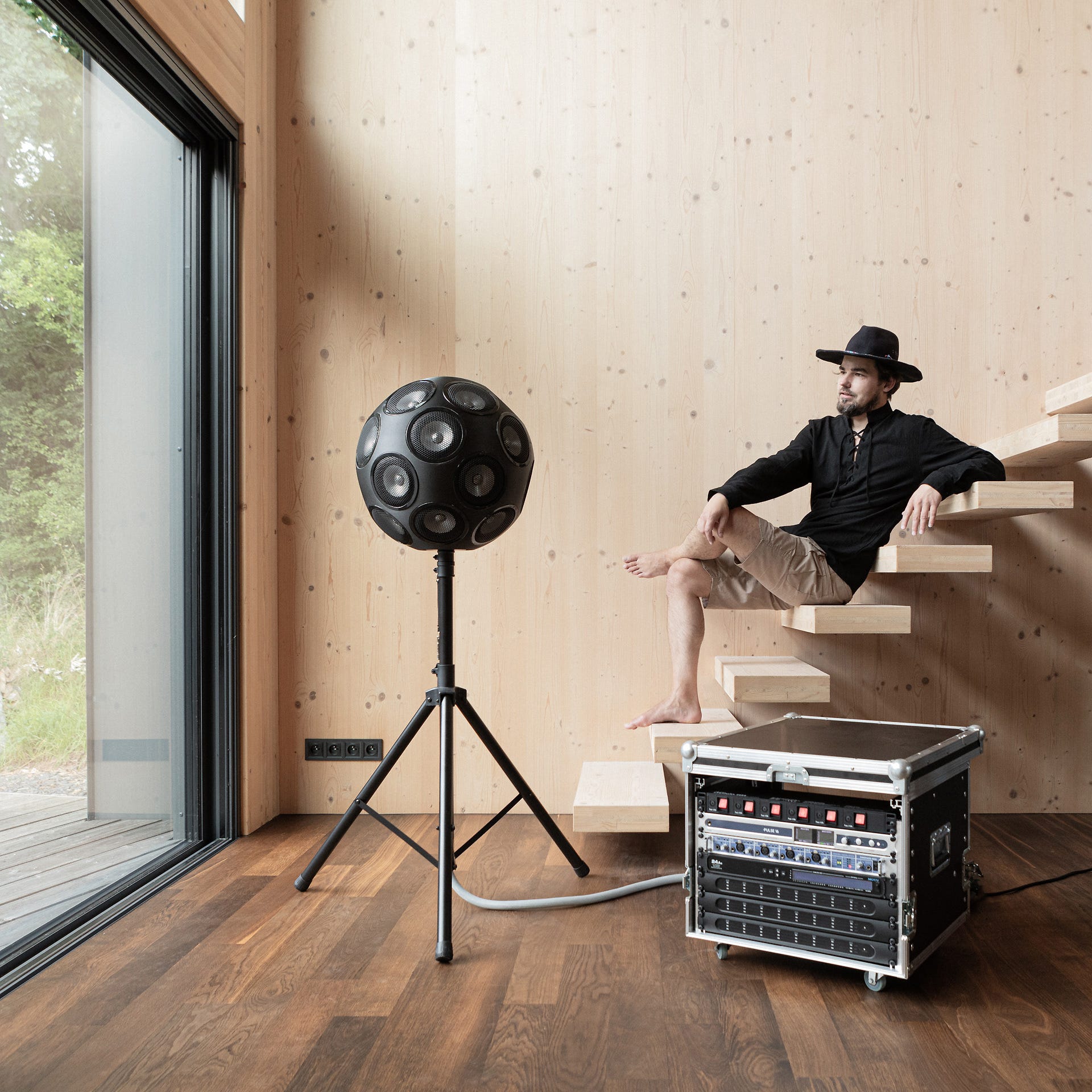
Why Svarog24? We’re not building a single instrument. An entire family has been designed with parametric design approach, and it spans between a 16-channel 2.5” driver units, all the way to beefy 24-channel 6.5” Perun24. With that in mind, Svarog24 is the flagship model — not the most potent one, but the most representative one for the higher end of the range, featuring an elegant 6-6-6-6 driver layout, providing the most even distribution of speakers on the sphere, and a set of “sweet spot” 6” drivers.
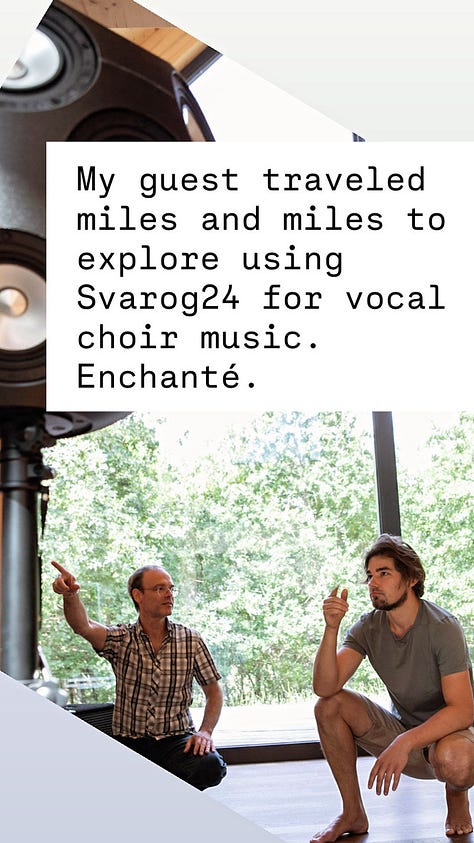
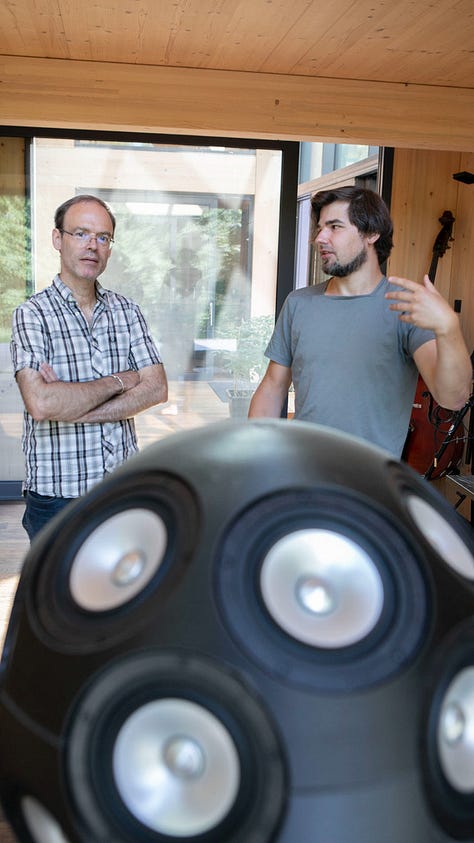
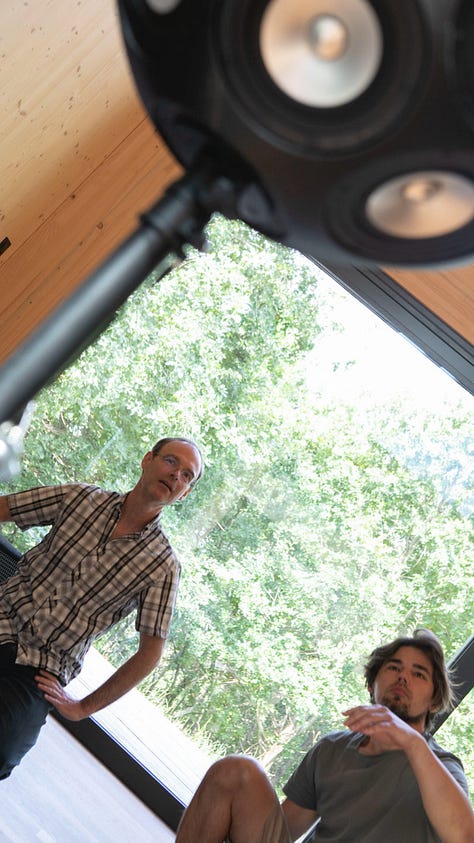
Following initial tests, including several guests visiting me for sessions, we’re open to collaborations and early adopters with the first units ready to be built to order.
Testing low frequencies with Mikołaj Tchorzewski’s ambisonic/beamforming composition adapted for Svarog24.
In this place I could not forget to mention more than generous, continued support from IEM’s Franz Zotter, the ingenious mind, without whose work this project would not have been possible.
Staying on the higher-end of the family, the biggest member, Perun24 is currently being built. It is expected to surpass Svarog24’s potency and resolution, as it features also 24 drivers, but in a 4-8-8-4 configuration, increasing theoretical horizontal precision, and providing higher SPLs with 6.5” full-range drivers.

With the upper-end of the family covered, we also tackled the lower end — more portable instruments with smaller footprint.
This development starts with “The Rebel” — an evolution of Stefan Riedel’s “393”. What’s changed?
We retained the main idea — it is still a compact footprint Ø24cm 16-channel personal beamformer, aimed to be as affordable as it is portable.
We redesigned the enclosure, not just in shape, but primarily with respect to manufacturing process. While original FDM PLA is great for DIY’ers, we wanted to achieve higher rigidity, sleeker production-ready look and feel and better acoustic performance. The redesign aimed at getting rid of some of quite ugly resonances I found in the original design.
The cabling has changed — instead of 4 Speak-on connectors, we now have a single, multi-channel connector providing fully discrete wiring of all channels in a compact form factor. It’s the same connector as we use in the bigger units.
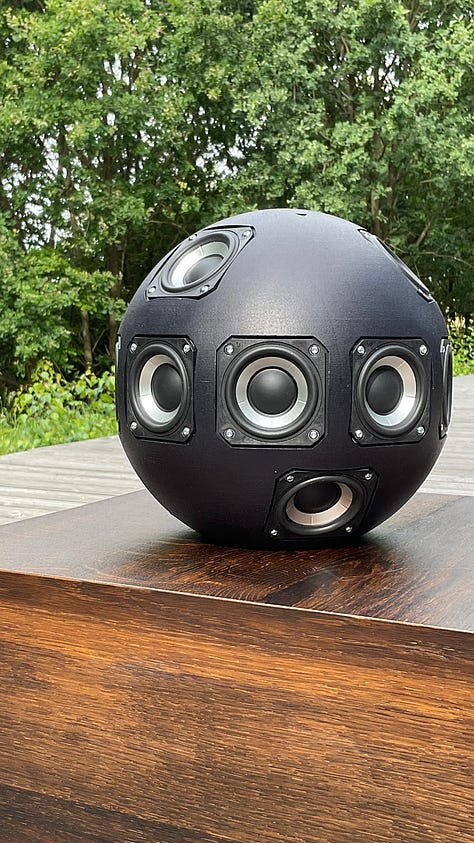
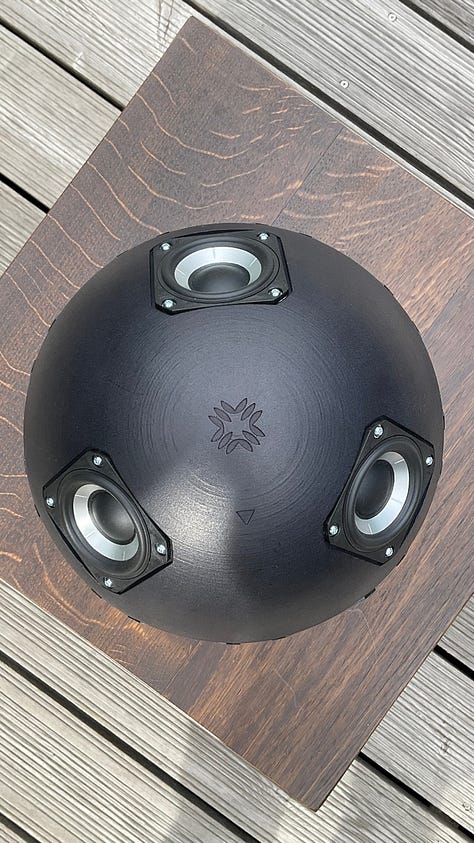
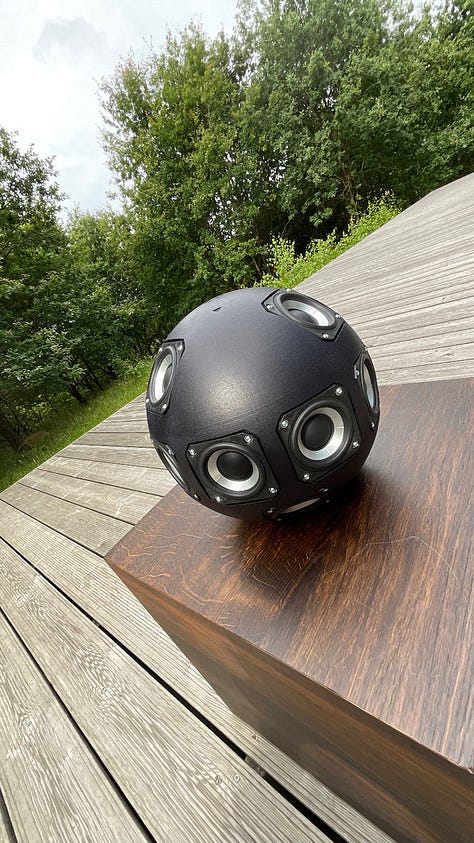
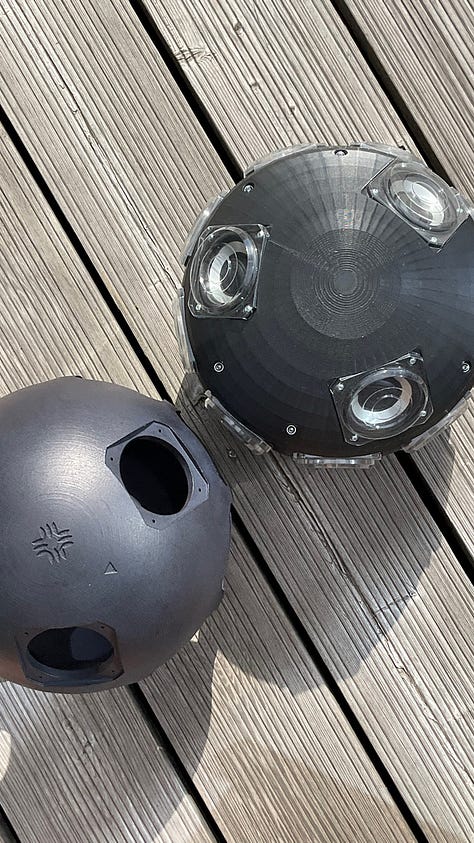
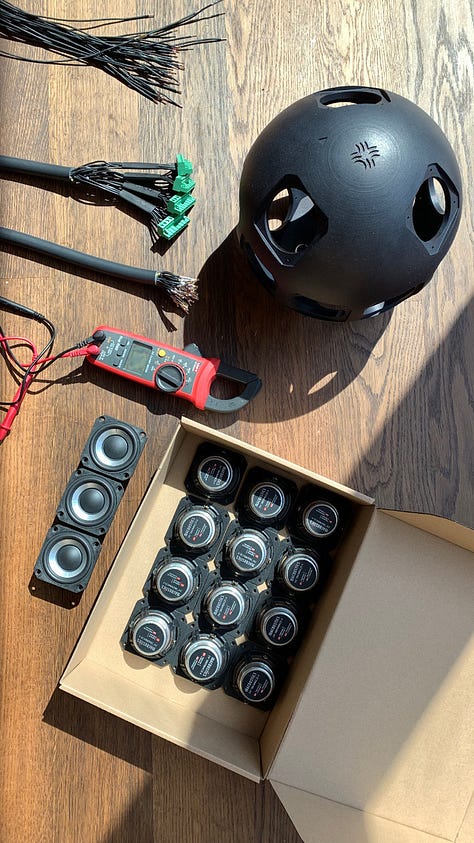
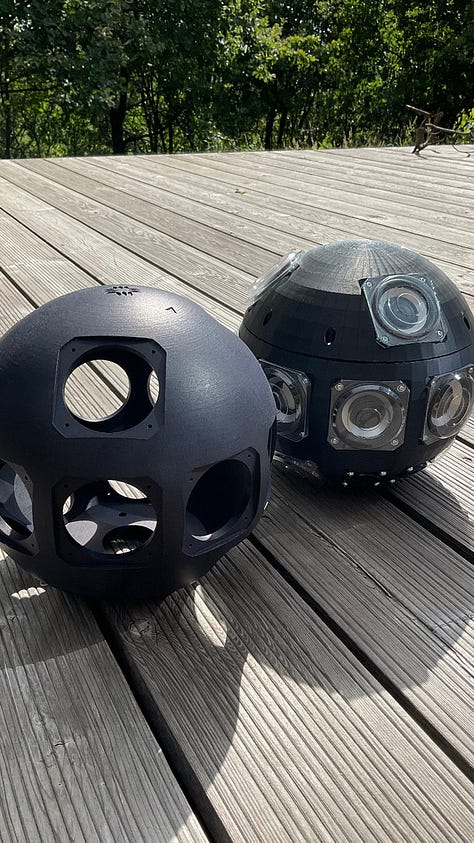
On the amplification setup, The Rebel makes use of the same approach we devised for the entire family - a custom amp rack making use of compact and affordable 8-channel amp units, just two of them instead of three.
That said, “The Rebel” is a ready for small-scale production and we are open to orders.
We’re on the mission to break access barriers to spatial sound instruments and support independent artists. Besides the general affordability-focused approach, we introduced a flagship pricing policy towards independent artists.
All non-institutional personal-artist instrument purchases will be subsidized by Slovox with a 20% of the value of the instrument (as compared to institutional list price).
We’re open to early adopters, collaborations and putting our instruments to work. Whether you’re a sound artist interested in spatial sound, run installations or research, please reach out to us for collaborations.
There’s also a bigger project brewing — a development of wooden domes designed around the purpose of spatial sound integration. So… Stay tuned.
Patrick
Comments
Nothing yet. Say the first thing.
Sign in to join the conversation.