
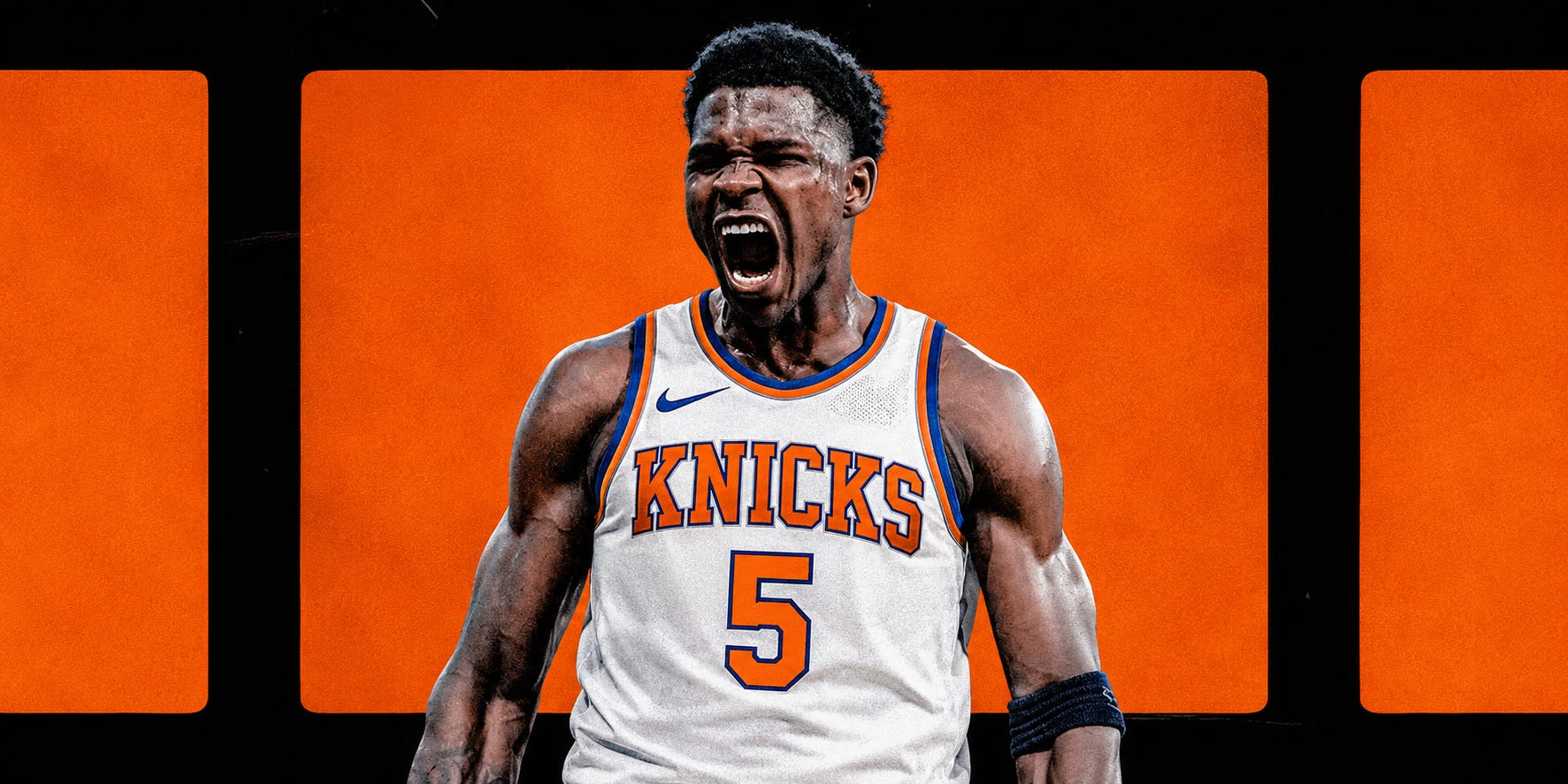
The short version: The New York Knicks won the 2026 NBA championship, beating the San Antonio Spurs 4-1 for their first title since 1973. With Josh Hart at 31 and on an expiring window, Mikal Bridges on a tradable $33.5 million salary, and control of their own first-round picks in 2030, 2032, and 2033, New York has real ammunition for one more star. The five most plausible targets are Anthony Edwards, Paolo Banchero, Anthony Davis, Luka Doncic, and Zach LaVine.
For 53 damn years, every Knicks conversation about the future carried a note of pleading underneath it. Not anymore.
New York closed out San Antonio in five games in June to win the franchise’s first championship since 1973, erasing double-digit deficits in all five games of the series along the way. Jalen Brunson dropped 45 in the clincher and took home the Bill Russell Trophy as Finals MVP. Brunson, Mikal Bridges, and Josh Hart became the first trio to win an NCAA title and an NBA title together. Mike Brown, hired 12 months earlier to drag the offense into the modern era, got a ring in year one. His group jumped from 34.1 3-point attempts per game to more than 40 while climbing into the top five in offensive rating.
So the ledger’s settled. Everything from here is icing on the cake.
Which makes this the right moment to think two and three years out without sounding like a desperate fan base in withdrawal. The 2026-27 payroll sits at roughly $217.9 million across 13 players, with Karl-Anthony Towns at $57.1 million, OG Anunoby at $42.5 million, Brunson at $37.7 million, and Bridges at $33.5 million. Hart, now 31, is guaranteed $20.9 million, with a second year remaining. Bridges signed a four-year, $150 million extension in August 2025 that runs through a 2029-30 player option, a contract structure that matches salary in a star trade.
The draft capital is thinner than these fantasy scenarios require, but every year, another future first becomes tradeable. So keep that in mind. Brooklyn holds New York’s first-round picks in 2027, 2029, and 2031 from the 2024 Bridges deal. The Knicks control their own in 2030, 2032, and 2033, plus a deep stack of second-rounders acquired from Phoenix, Dallas, Philadelphia, Sacramento, and Washington. Tyler Kolek, Mohamed Diawara, and Miles McBride are the young salary fillers.
Here are five names worth tracking, in rough order of plausibility, from least to most realistic.
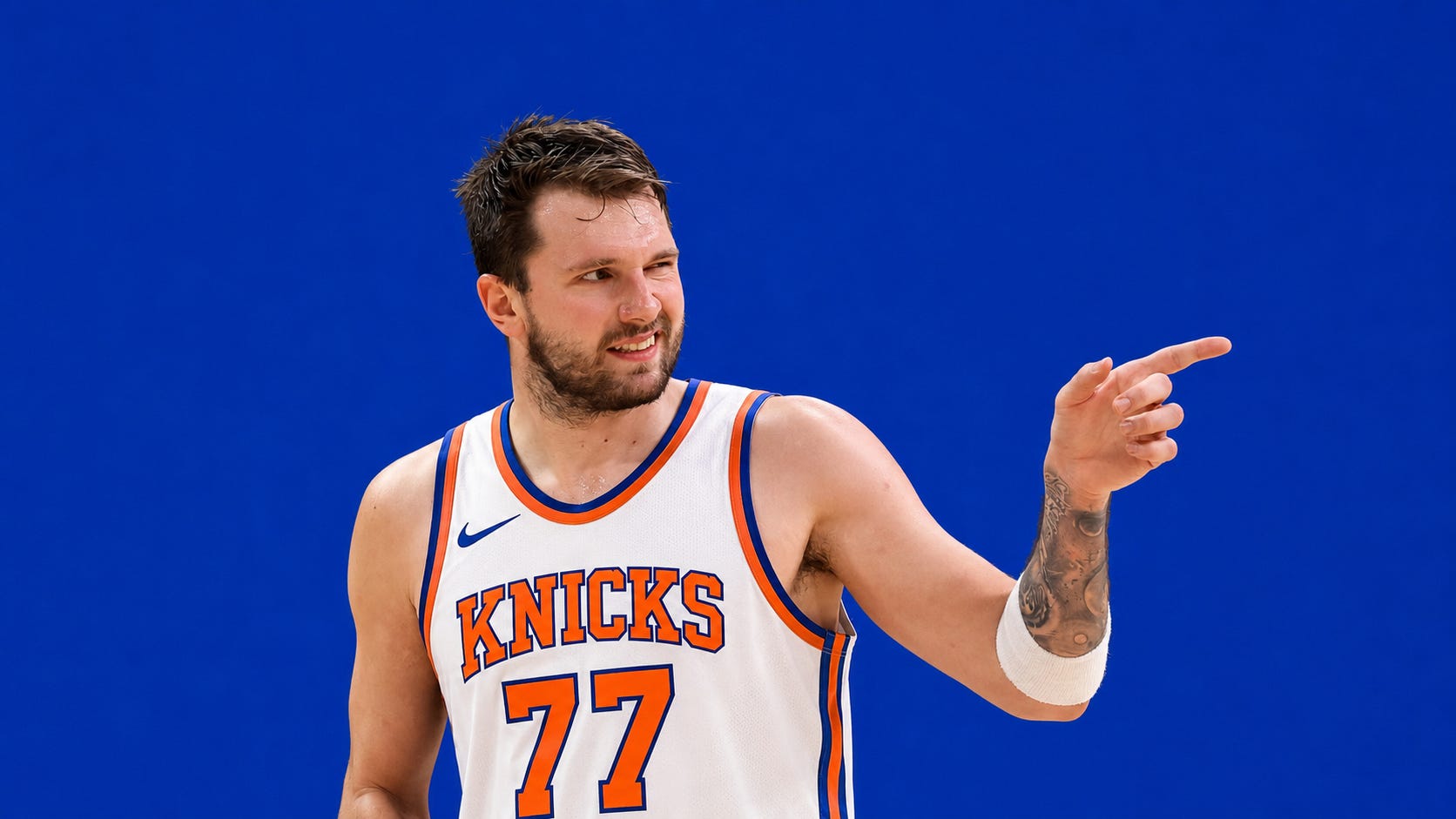
The stats: Doncic won the 2025-26 scoring title at 33.5 points per game in 64 games, adding 7.7 rebounds, 8.3 assists, and 1.6 steals while shooting 47.6% overall and 36.6% on a league-leading 10.8 attempts from 3. His career line sits at 29.2 points, 8.5 rebounds, and 8.2 assists. The Lakers were swept by Oklahoma City in the second round.
The fit: Doncic is the Delay offense personified. Give him the ball above the break in 5-out spacing, and the Pistol, Horns Twist and Double Drag actions become unguardable. Everyone is built around forcing a single tagger to make an impossible choice on a roll. Obviously, Brunson and Doncic are both high-usage, ball-dominant, undersized guards who get hunted. The counterargument is that Brunson has already proven he can play off the catch, and that two elite pick-and-roll creators in Towns and Anunoby, with spacing, is hell on the court.
Strengths: The best half-court engine in basketball. His pull-up gravity warps coverages before the screen arrives.
Weaknesses: Point-of-attack defense, conditioning, and a hamstring that ended his 2026 regular season. Pairing him with Brunson means two defenders opponents will hunt every possession.
The logic: Doncic holds a $57.7 million player option for 2028-29 and becomes eligible for a projected five-year, $417 million deal that summer. He signed the three-year, $165 million extension specifically to reach that window. If Los Angeles has not gotten past the second round by then, 2028 becomes a crossroads. The mechanics would almost certainly require a sign-and-trade rather than cap space. It’s the longest shot on this list.
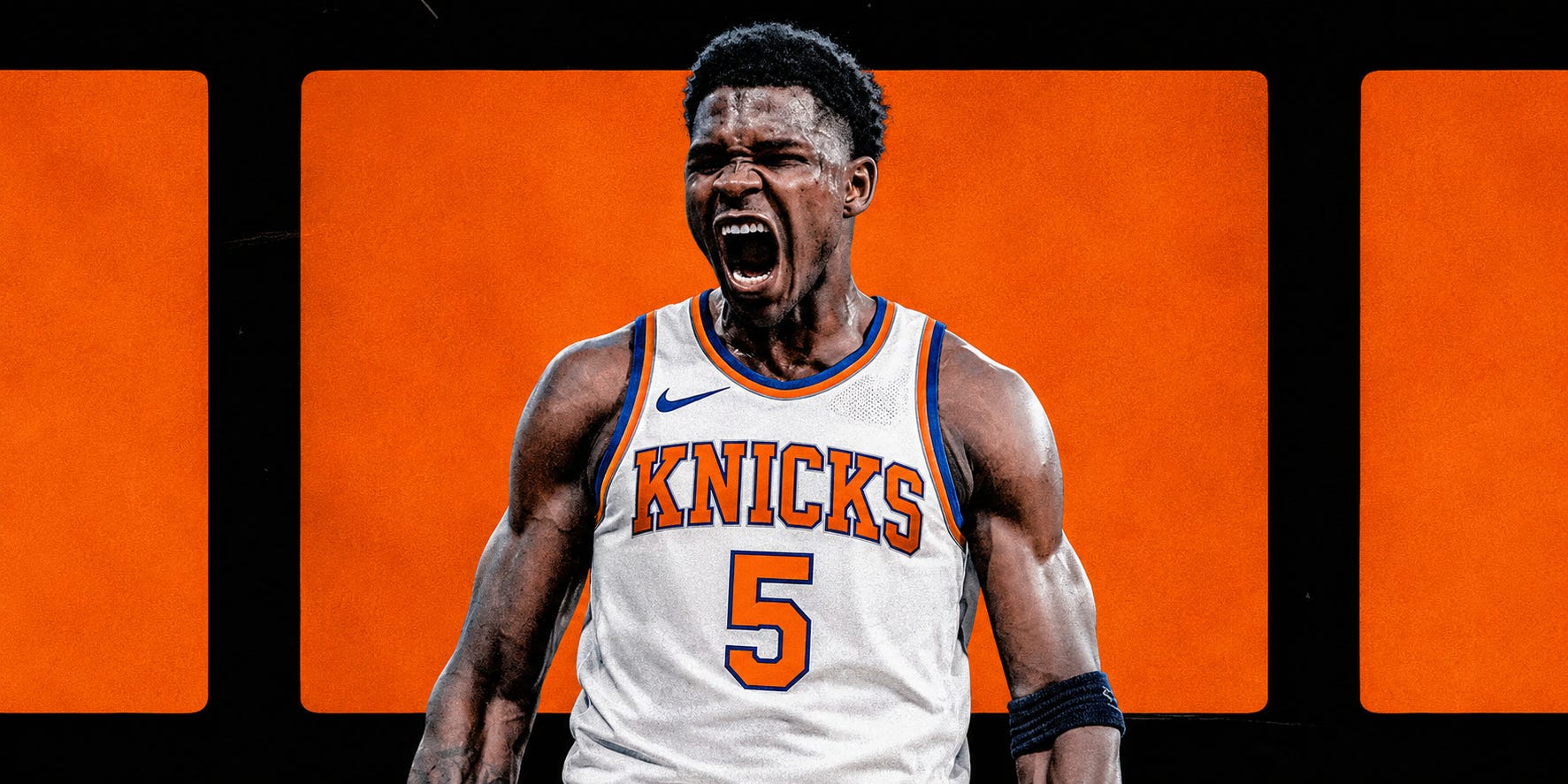
The stats: Edwards has averaged 24.6 points, 5.2 rebounds and 4.1 assists across 442 regular-season games in six seasons. In 2025-26, he posted career highs of 28.8 points on 48.9% shooting and 39.8% from 3, adding 5.0 rebounds, 3.7 assists, and 1.4 steals. He crossed 10,000 career points in January at age 24.
The fit: Brown’s playbook was built for a downhill guard who can punish a closeout. The 5-out offense drops the ball to a big above the break, sends a wing on a 45 cut to clear the driving gap, then hands it back to the primary creator with a runway. Edwards in that action, with Towns popping and Anunoby spacing a corner, would be nightmare fuel for our opps. The empty ball-screen progressions and stuff we run out of the 4-out 1-in sets are just as deadly from the slot. Edwards doesn’t need to be a hub. Just a live dribble. He would cook. Brunson has shown he can go off-ball in our championship run. Where before I had doubts, two ball-dominant guards could exist in New York. That worry is gone. Plus, Edwards shooting is insane. It would work.
Strengths: Elite rim pressure, the best transition athlete a Knicks team would employ in decades, and shot-making volume that’s becoming efficient. He would also give Brown a wing defender who can switch across three positions when he’s locked in.
Weaknesses: His playmaking flattened out, dipping to 3.7 assists as Minnesota asked him to do more scoring. He played 61 games after topping 72 in each of his first five seasons, falling short of the 65-game rule and costing himself supermax eligibility. Defensive effort still fluctuates.
The logic: Edwards is under contract through 2028-29 at $48.9 million, $52.3 million, and $55.6 million, and hits free agency at 27. Minnesota traded Julius Randle, acquired LaMelo Ball, and is openly planning a monster extension offer for the summer of 2027. If the Wolves keep losing in the second round, the reunion with Towns could happen. They spent four seasons together in Minnesota, and Towns has been the loudest voice in Edwards’ corner since his rookie year.
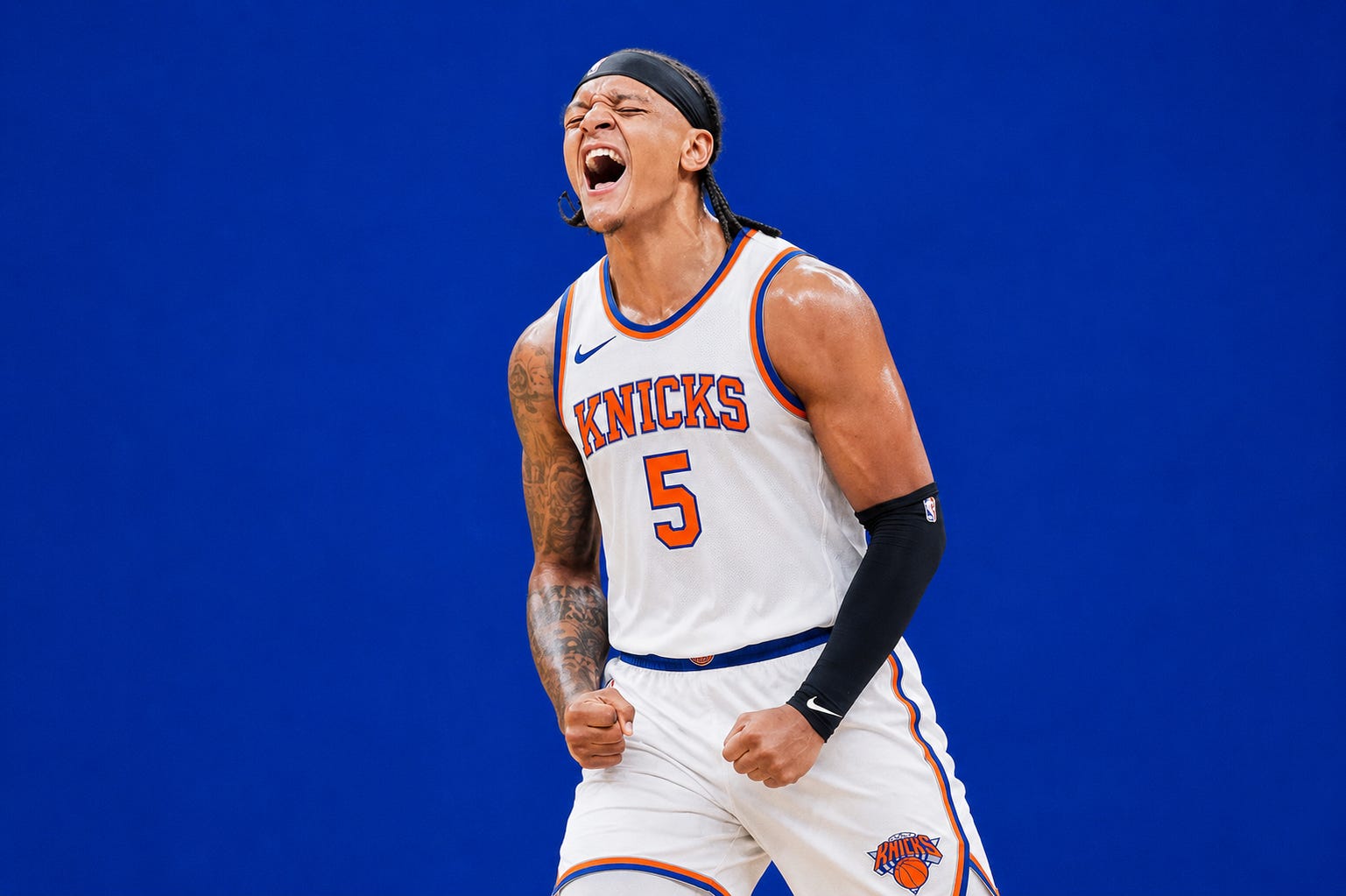
The stats: Banchero played 72 games in 2025-26 and averaged 22.2 points, 8.4 rebounds, and 5.2 assists while shooting a career-best 45.9% from the field and 30.5% from 3. In the first round, he went for 26.3 points, 9.0 rebounds, and 6.3 assists, including 38 points in a Game 7 loss as Orlando coughed up a 3-1 lead to Detroit.
The fit: The Knicks’ pinch post package is the answer to Banchero’s biggest problem. Half of the 4-out 1-in offense runs through an elbow catch, and the reads out of it, all designed for a big who can pass and drive rather than shoot. Brown’s offense manufactures post position with a pin-down, and Banchero becomes a mismatch hunter surrounded by shooting instead of clogging the lane. Orlando ranked 27th in team 3-point percentage at 34.3%. New York would surround him with shooters.
Strengths: He draws fouls at an elite rate, creates his own shot at 6-foot-10, and has three straight postseasons of raising his level. His passing has grown every year.
Weaknesses: The jumper. Shooting 30 percent from deep is a playoff liability, and it’s the reason the Banchero and Franz Wagner pairing hasn’t worked. Neither stretches a defense. Both need the ball at the same spots, and defenses have learned to wall off the paint against them.
The logic: Banchero signed a five-year, $239 million rookie max that can reach $287 million with award triggers, including a rare player option in 2030-31. Give it two more seasons. If Orlando still has not reached a conference finals with both, General Manager Jeff Weltman has to break the pair up. Bridges plus second-round capital plus a young wing is a real starting point, and Banchero grew up idolizing forwards who took over playoff games in big markets.
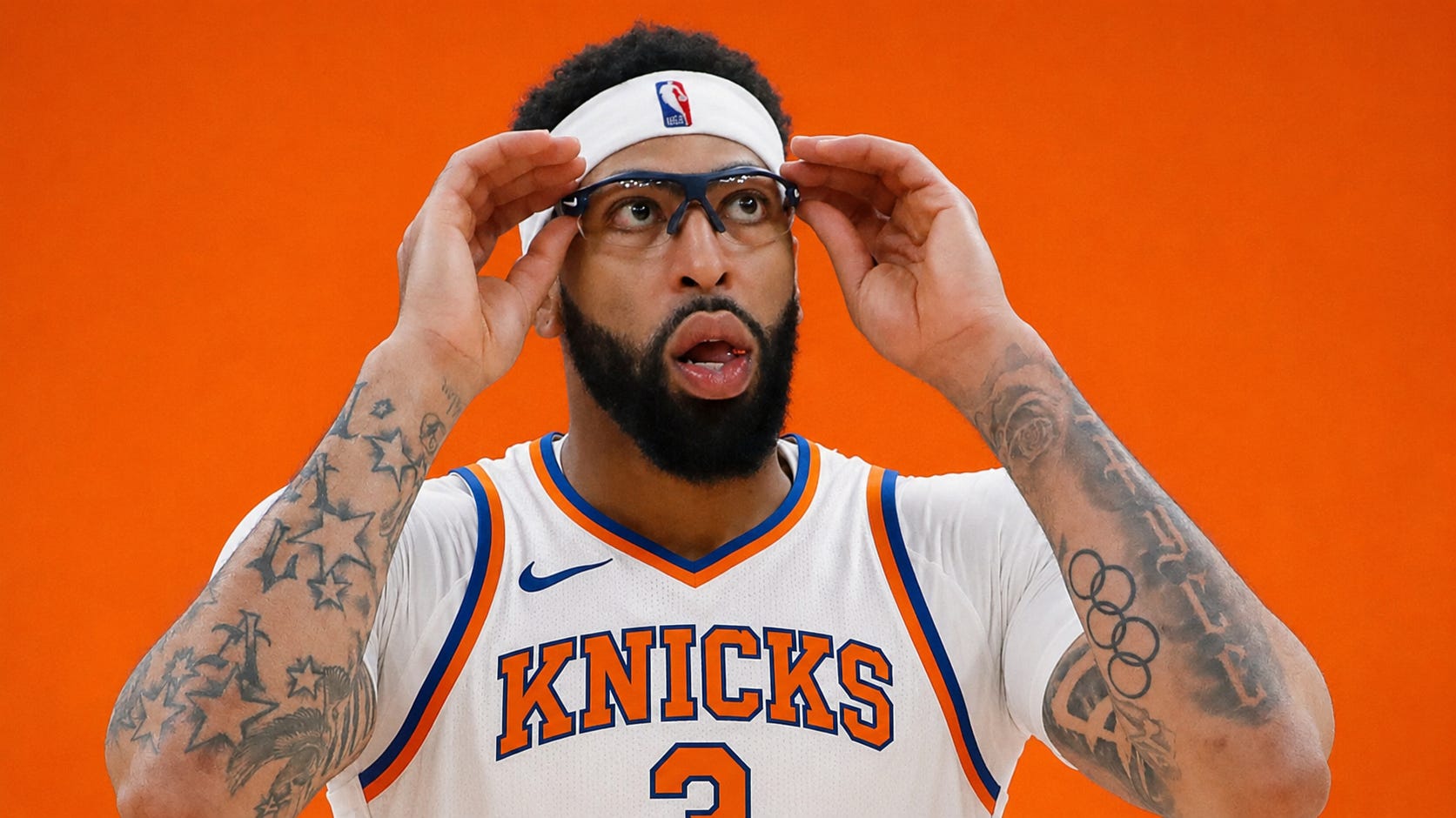
The stats: A 10-time All-Star and 2020 champion, Davis appeared in 20 games for Dallas in 2025-26 and averaged 20.4 points, 11.1 rebounds, 2.8 assists, and 1.7 blocks before a February trade to Washington. He missed the rest of the year with hand and groin injuries.
The fit: Possibly the most useful idea. Brown’s system already leans on double-big looks, and the playbook is written for a post threat who forces rotations. Davis, next to Towns, lets Towns play the 4 in a 4-out 1-in alignment, where he‘s a devastating pinch post passer and pop threat. Davis, alone with the bench unit, can anchor the offense. He’s also the drop-coverage rim protector the Knicks need to replace Mitchell Robinson.
Strengths: Still one of the best defensive bigs alive when available. That’s a hell of a hypothetical these days. Scores in the post, catches lobs, passes out of the short roll, and defends both actions in a pick and roll.
Weaknesses: Availability, full stop. He has cleared 56 games twice in eight years. He’s no longer a floor spacer, which complicates minutes with Towns at the 5.
The logic: Davis is owed $58.5 million in 2026-27 with a $62.8 million player option for 2027-28, then becomes an unrestricted free agent at 35 with more than $500 million in career earnings banked. He’s made it clear he wants stability and a long-term deal, and by 2028, the market for a 35-year-old center with his medical file will not offer one. A two-year deal at the mid-level to be the second-best big on a champion is a rational landing spot.
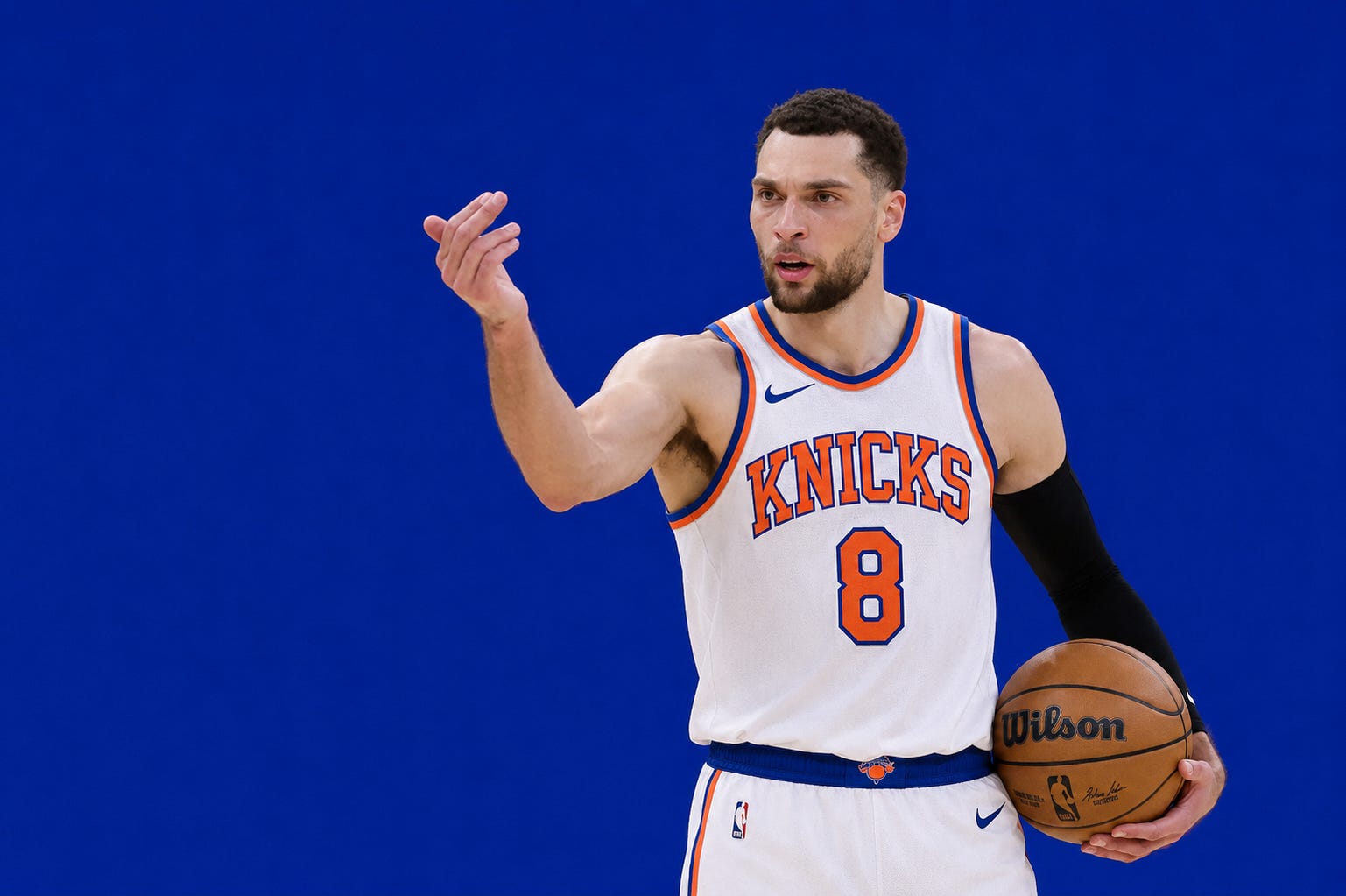
The stats: LaVine averaged 19.2 points, 2.8 rebounds, and 2.3 assists in 39 games last season while shooting 39% from 3 before season-ending hand surgery in February. Sacramento finished 22-60. In his first 32 games as a King in 2024-25, he averaged 22.4 points on 51.1% shooting and 44.6% from deep.
The fit: Brown’s off-ball machinery is loaded with pin-downs, Zoom actions, and Floppy sets that have gone underused because no one on the roster can run them at an All-Star level. LaVine does. The Knicks’ out-of-bounds sideline package would give him five clean looks per game. He also gives the second unit a legitimate self-creator when Brunson rests, which was the one hole the Knicks papered over during the title run.
Strengths: One of the most efficient high-volume shooters in the league, comfortable off movement or off the bounce, and still an above-the-rim finisher at 31.
Weaknesses: He has never been a plus defender, his availability has slipped, and he has appeared in four career playoff games. Asking him to guard playoff wings in a series is risky.
The logic: LaVine opted into the final year of his five-year, $215.2 million contract at $49 million and hits free agency in the summer of 2027 at 32. Sacramento reportedly told him his role ain’t guaranteed. The market won’t offer him a starting salary anywhere near the number he’s used to. A veteran on a taxpayer mid-level, chasing the ring he has never come close to, playing next to Brunson in front of a Garden crowd, would be a movie.
Anthony Edwards, Minnesota Timberwolves. Averaged 28.8 points on 48.9% shooting and 39.8% from 3 in 2025-26. Under contract through 2028-29 at $48.9 million, $52.3 million and $55.6 million, then hits free agency at 27. The Karl-Anthony Towns reunion is the hook. Best combination of realism and star power on this list.
Paolo Banchero, Orlando Magic. Averaged 22.2 points, 8.4 rebounds and 5.2 assists but shot 30.5% from 3. Signed through 2030-31 on a five-year, $239 million rookie max with a player option. Becomes available only if Orlando concludes the Banchero and Franz Wagner pairing cannot get out of the East.
Anthony Davis, Washington Wizards. Owed $58.5 million in 2026-27 with a $62.8 million player option for 2027-28, then unrestricted at 35. The least glamorous and most useful name here, as a backup 5 or a frontcourt partner for Towns on a mid-level deal.
Luka Doncic, Los Angeles Lakers. Won the 2025-26 scoring title at 33.5 points per game. Holds a $57.7 million player option for 2028-29 and becomes eligible for a projected five-year, $417 million deal that summer. Would almost certainly require a sign-and-trade. The longest shot and the biggest swing.
Zach LaVine, Sacramento Kings. Averaged 19.2 points on 39% from 3 in 39 games before hand surgery. Opted into $49 million for 2026-27 and reaches free agency in 2027 at 32, when no team will match that number. The likeliest of the five to actually sign.
Did the Knicks win the 2026 NBA championship? Yes. New York beat the San Antonio Spurs 4-1 in the 2026 NBA Finals for its first championship since 1973 and third overall. Jalen Brunson scored 45 points in the Game 5 clincher and won Finals MVP. The Knicks erased double-digit deficits in all five games of the series.
What draft picks do the Knicks have to trade? Brooklyn holds New York’s first-round picks in 2027, 2029 and 2031 from the 2024 Mikal Bridges trade. The Knicks control their own firsts in 2030, 2032 and 2033, plus a deep stack of second-rounders acquired from Phoenix, Dallas, Philadelphia, Sacramento and Washington.
Could the Knicks trade for Anthony Edwards? Not immediately. Edwards is signed through 2028-29 and Minnesota is planning a large extension offer for the summer of 2027. The realistic path opens if the Timberwolves keep losing in the second round and Edwards approaches unrestricted free agency at 27 without signing that extension.
Why would Paolo Banchero become available? Because he and Franz Wagner have overlapping skill sets and neither stretches the floor. Banchero shot 30.5% from 3 last season and Orlando ranked 27th in team 3-point percentage. If the Magic still have not reached a conference finals in two years, breaking up the pair becomes the obvious move.
When does Anthony Davis become a free agent? Davis holds a $62.8 million player option for 2027-28. If he picks it up, he reaches unrestricted free agency in the summer of 2028 at age 35, when his injury history makes a large multi-year offer unlikely and a mid-level contract with a contender becomes rational.
Can the Knicks sign Luka Doncic in 2028? Only through a sign-and-trade in almost any realistic scenario. Doncic holds a $57.7 million player option for 2028-29 and becomes eligible for a projected five-year, $417 million contract. New York’s committed salary makes creating outright cap space for a max deal extremely difficult.
How much money do the Knicks have committed for 2026-27? Roughly $217.9 million across 13 players. Karl-Anthony Towns leads at $57.1 million, followed by OG Anunoby at $42.5 million, Jalen Brunson at $37.7 million, Mikal Bridges at $33.5 million and Josh Hart at $20.9 million.
Who is the Knicks head coach? Mike Brown, hired in the summer of 2025 to replace Tom Thibodeau. He won a championship in his first season, lifting New York into the top five in offensive rating while raising the team’s 3-point attempts from 34.1 per game to more than 40.
No posts
Comments
Nothing yet. Say the first thing.
Sign in to join the conversation.