
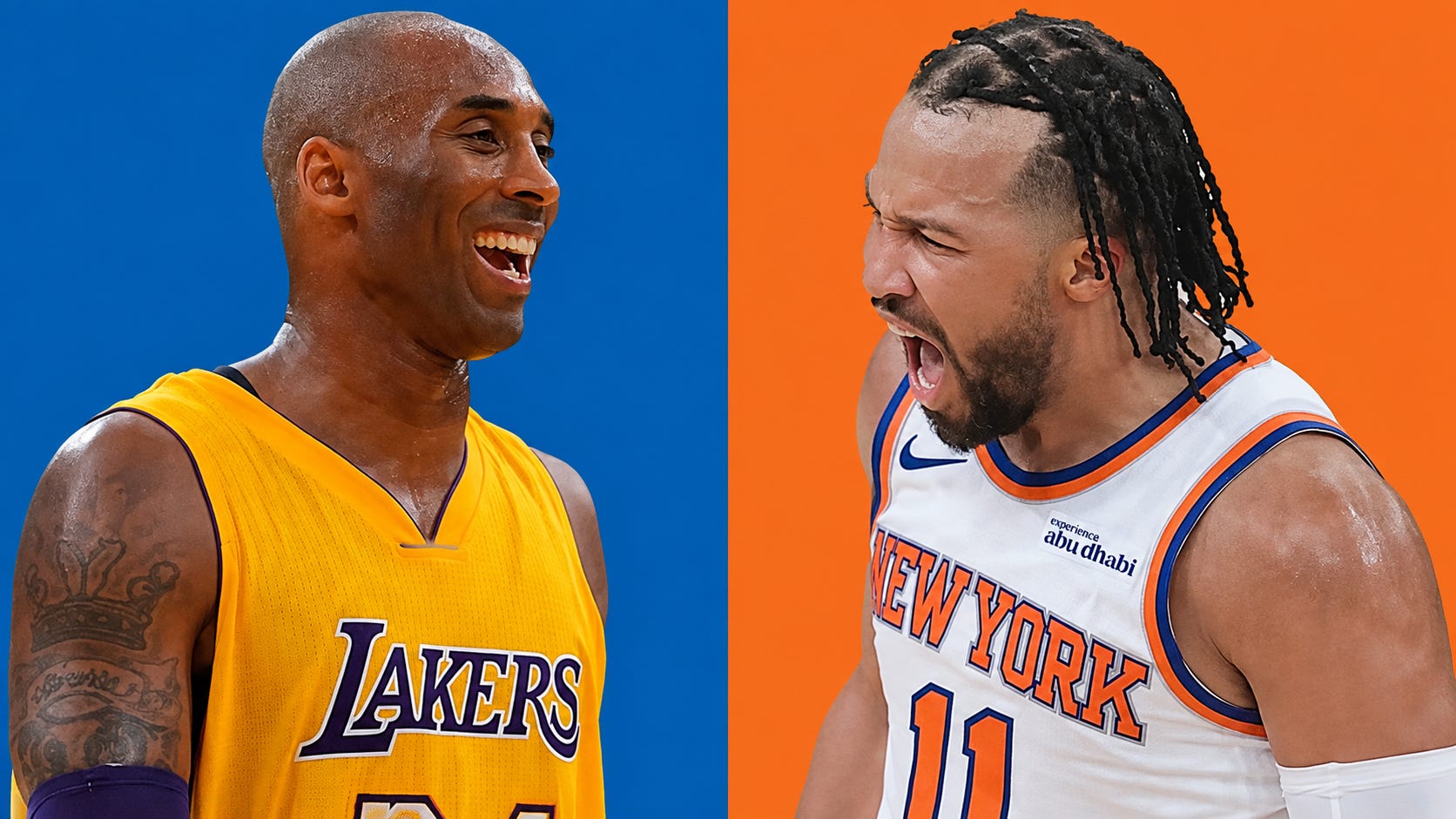
Jalen Brunson’s 2026 NBA championship run with the New York Knicks mirrors Kobe Bryant’s career arc in specific, documented ways. Both players had NBA journeyman fathers, Rick Brunson and Joe Bryant, whose career instability shaped an obsessive, fundamentals-first approach to the game. Both had to learn to defer offensive control to a dominant teammate, Karl-Anthony Towns for Brunson and Shaquille O’Neal and later Pau Gasol for Bryant, before reaching a championship level. Brunson played off-ball for most of the 2025-26 season, conserving energy that fueled a historic Finals performance against the San Antonio Spurs: 32.6 points per game and 45 points in the closeout Game 5, making him the fourth player ever to score 45-plus in a Finals-clinching win. Brunson has publicly credited “Mamba mentality” as an influence and echoed Bryant’s refusal to celebrate mid-series, and analysts have also linked their footwork and fundamentals-based scoring styles.
Take a deep breath, Beloved. We are at the point of our epic Knicks story to make bold, narrative-smashing claims. Jalen Brunson is the next Kobe Bryant. Yes, he is the next iteration of that stone-cold killer, first embodied by Dr. J, then Michael Jordan, to Kobe Bryant, and now, our big head, Brunson. The connection lives in something Brunson had to learn the hard way. The same lesson that took Jordan and Bryant years to accept: greatness in this league requires trusting other people with the ball.
Brunson’s refusal to celebrate ain’t an act, either. He recently opened up on the "Things No One Tells You" podcast about the exact moment he moved past the championship high. It lined up perfectly with the Bryant parallel. "You have to find your own way to flip the switch and figure out what's next," Brunson said. "I'll truly say, when I had surgery was when it clicked for me that it's time to move on." He underwent hand surgery after playing through the injury for most of the Finals. Instead of using the recovery as a reason to rest, he treated it like a trigger to start the next title run. "It probably was before, but when you're still trying to accomplish more, the quicker you can move on, the quicker you can continue to get better and not be satisfied," he added.

Tommy Beer@TommyBeer
Jalen Brunson says he moved on from celebration mode right after his surgery and is now focused on preparing for next season and trying to lead the Knicks to another championship
1:12 AM · Aug 13, 2026 · 42.7K Views
21 Replies · 82 Reposts · 1.21K Likes
Both Bryant and Brunson grew up watching their fathers survive on the margins of professional basketball, and that instability shaped how each son approached the game once he made it.
Joe Bryant played eight seasons in the NBA before bouncing overseas to Italy, chasing a paycheck and a role that American basketball never gave him. Kobe spent his childhood in Italian gyms, absorbing the European version built on footwork and fundamentals rather than raw athleticism. Makes sense, since that’s what his father’s career exposed him to. Joe never became a star, and Kobe watched that reality up close.
Rick Brunson lived a similar career arc. He spent nine years bouncing between NBA rosters on non-guaranteed contracts, never securing the kind of stability that let him relax. He suited up for eight different franchises, signing 10-day deals and fighting for roster spots deep into his 30s. Rick knew one bad stretch could end his income. Jalen grew up amid that uncertainty, training under a father who treated every rep like boot camp. Rick knew firsthand how quickly a career could end. As I’ve written, Jalen was taught to imagine a defender guarding him even in an empty gym because his father had learned the cost of failure.
"Everything You Do Has to Be Legit"
·
Jul 9
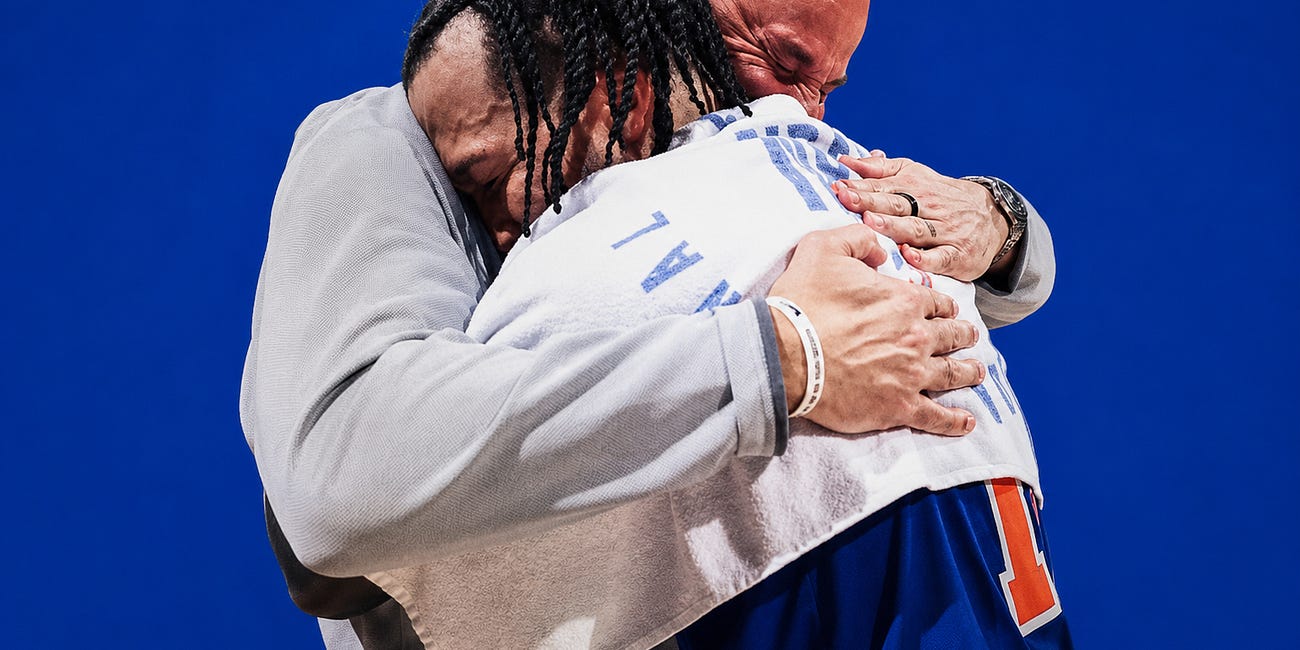
Summary: Jalen Brunson led the New York Knicks to their first NBA championship in 53 years, closing out the 2026 NBA Finals against the San Antonio Spurs with his father, assistant coach Rick Brunson, standing beside him. Rick raised his son with a demanding, sometimes harsh parenting style, and his own record includes documented legal and professional …
Neither son wanted his father’s outcome. Both turned that fear into fuel. Kobe became obsessive about footwork because his father lacked the polish to stick. Brunson became obsessed with craft after watching his father get cut again and again and again. The result in both cases was a player who trusted nothing but the work, which became a problem once each man reached a locker room full of other talented players who needed the ball too.
That obsession showed up early for Brunson, too. He won two national championships at Villanova, leaving college as the best player in the sport. NBA teams still questioned his size and his ceiling. He fell to the second round of the draft, a slight that mirrored how scouts underestimated Bryant’s readiness for the league out of high school. Both players carried that doubt with them for years, using it as fuel to bust everyone’s ass.
NBA analysts have pointed to Brunson’s footwork as the clearest technical link between him and Bryant. Brunson respects his pivot foot on every move, jabbing right and shooting off one clean pivot rather than taking extra steps, as many modern guards do. That discipline traces directly back to Bryant’s own foundation in fundamentals, the product of growing up in Italian gyms where footwork mattered more than athleticism.
Shorter than Bryant, without the same length or wingspan, Brunson still generates the same fadeaways, the same probing drives that end in mid-range pull-ups, the same footwork precision that lets him separate from bigger, longer defenders. It’s craft over gift. The same model on which Bryant built his career. Brunson and Bryant built scoring arsenals from angles and hesitation moves. That style ages well since it depends on repetition. That’s why Bryant remained deadly into his late 30s and why Brunson, at 6’ 2, has been able to score on defenders with far greater size and length.
Ain’t that right, Wemby?
Jordan’s transformation is well documented. He won scoring titles for years before he won a championship, and Phil Jackson spent seasons convincing him that Scottie Pippen, Horace Grant, and later Toni Kukoc needed shots for the offense to reach the championship ceiling. Jordan resisted at first. He had carried Chicago through years of first-round exits by doing everything himself, and letting go of that control felt like losing an edge. Once he accepted the triangle offense and let his teammates operate within it, the championships followed. Six to be exact. Pippen became a devastating secondary playmaker, Grant cleaned up the glass, Kukoc stretched the floor, and Jordan closed every big game. But he did so with fresher legs, because his teammates had done the work of keeping him fourth-quarter fresh.
Bryant’s version came later and harder. Early in his career, Bryant clashed with Shaquille O’Neal over shots and shares of the offense, and the Lakers only became unbeatable once Bryant accepted that funneling the ball through Shaq in the post was the championship blueprint. Even when it meant fewer touches. That partnership produced three straight titles, but it also fractured under the weight of two dominant egos who never trusted each other. His second act produced two more titles without Shaq. And it required an even tougher adjustment: trusting Pau Gasol, Lamar Odom, and a cast of role players to make winning plays instead of trying to grind out every possession himself. That version of Bryant was calmer, more efficient, and, by his own admission, happier.
Brunson went through his own version of this process this season. It was so low-key that most fans missed it. Until the Finals made it impossible to ignore.
Karl-Anthony Towns arrived in New York as an offensive engine capable of operating from the post, the elbow, or above the arc. Under Tom Thibodeau, he was relegated to mostly post-ups and face-up shots. Although he did work as a hub at times. In the playoffs, under Mike Brown, the Knicks made a deliberate choice to build large stretches of their offense around him rather than around Brunson.
The idea was something KAT had pitched all season. For most of the regular season and into the early rounds of the playoffs, Brunson played off the ball more than at any point in his career since his Dallas-era, spotting up, relocating, letting Towns initiate pinch-post possessions, and reading the floor.
Brunson had spent years with the Mavericks behind Luka Dončić. In his first two Knicks seasons did nearly everything himself. The same way Jordan carried Chicago and the same way Bryant carried the Lakers alongside and after Shaq. Handing the offense to Towns for stretches of the season meant Brunson conserved energy he would’ve burned initiating pick-and-rolls on every single possession. It also meant the Knicks built a deeper, more dynamic attack that didn’t collapse when defenses keyed on Brunson. Opposing playoff coaches couldn’t load up on one action and dare the rest of the roster to beat them, because Towns forced switches and rotations that opened driving lanes for everyone else on the floor.
The trust extended to the whole squad. Josh Hart, Mikal Bridges, and OG Anunoby need touches and shots to stay engaged, and Brunson understood that. A Finals-caliber team can’t run through one dude for 48 minutes a night across an 82-game season plus four playoff rounds. So, he deferred. This was the next chapter of his hero's journey.
He started to move without the ball. He let other players like Anunoby and even Jose Alvarado carry stretches of games he could’ve dominated individually. Hart’s rebounding and hustle plays, Bridges’ two-way versatility, and Anunoby’s perimeter defense all thrived because Brunson stopped trying to be the engine for everything. His willingness to share the load built a locker room that trusted him completely by the time the postseason arrived.
Then the Finals arrived, and Brunson flipped the switch the same way Jordan and Bryant always did when everything’s on the line.
Against the San Antonio Spurs, Head Coach Mitch Johnson began to figure out the KAT hub offense. So Brunson took over. He scored 32.6 points per game in the series, closed Game 5 with 45 points on the road, and became just the fourth player in NBA history to score 45 or more in a Finals clinching win, joining Giannis Antetokounmpo, Bob Pettit, and yes, Jordan. I broke it down in my article on why Brunson is the best-player-in-the-NBA. He posted 14 fourth-quarter points in a single Finals game and finished the series with the highest fourth-quarter scoring average in the play-by-play era, ahead of Allen Iverson and Jordan.
What made this different from a typical Brunson takeover was the fuel in his legs. He didn’t try to do everything himself for three playoff rounds, bleeding energy on every possession. Towns had absorbed that burden for long stretches, and Brunson arrived in San Antonio fresher than he would’ve been under the old "everything runs through me" approach he used in Dallas and in his early Knicks seasons. That reserve showed up in the fourth quarter, when he attacked switches and read coverages. He made shot after shot against a Spurs defense that had schemed the hell out of him for three quarters. San Antonio sent multiple bodies at him on nearly every possession, even the unanimous Defensive Player of the Year, Victor Wembanyama. Brunson found a way to get his shot off. A byproduct of trusting his teammates.
Bryant learned the same lesson two decades before, once he trusted Gasol and Odom. The trust did not soften him. It set him up to close harder when the games mattered most, because he had not spent 82 games grinding himself down trying to do it all alone.
Brunson has spoken directly about the Bryant connection. “I think the way I carry myself and way I do things, it’s a credit to how I was raised by my parents,” Brunson said. “But also part of their philosophy steeps into the Mamba mentality as well. So there’s a connectivity there. I do my best to stay present in the moment and do everything I can to make sure my mind is right. Be mentally and physically ready every day. Trusting my work. It’s what’s gotten me here.”
“Trusting” does double duty. Brunson trusts his own preparation, the same obsessive footwork and film study that Bryant built his game around. He also trusts the work of his teammates, the same acceptance that made Jordan’s Bulls and Bryant’s Lakers into dynasties instead of talented teams that never “got over the hump.”
Brunson’s approach to the Finals echoed Bryant almost word for word. There’s a famous Bryant clip from the 2009 Finals, up 2-0 on Orlando, when a reporter asked why he wasn’t smiling. “What’s there to be happy about? Job’s not finished,” Bryant said. “Job finished? I don’t think so.”
Brunson recreated that exact posture up 2-0 on San Antonio this June, telling reporters, “In my mind there’s nothing really to celebrate yet. There’s still a lot of work to be done,” as covered in the New York Post’s Finals coverage. He refused to take promotional photos with the Larry O’Brien Trophy before the series ended, the same refusal to celebrate early that defined Bryant’s championship runs.
Jordan needed the triangle offense and years of playoff heartbreak before he trusted his teammates enough to win. Bryant needed a fallout with Shaq, three lost seasons afterward, and a young core led by Gasol before he learned the same lesson twice. Brunson compressed that arc into a single season, deferring to Towns for four playoff rounds, then reclaiming full control when the Finals demanded it.
These lessons connect all three players. That willingness to let go of control when the team needs it, paired with the instinct to seize control when the chip is on the line. Brunson learned that balance from a father who never got the chance to master it himself, and this June, he proved he learned the lesson.
The Knicks had waited more than half a century for this moment, and Brunson delivered it the same way MJ and Kobe once did.
Our wildest imaginations can’t fathom what comes next.
Is Jalen Brunson actually being compared to Kobe Bryant, or is this just hype?
The comparison is grounded in specific, documented parallels: family background, in-season tactical evolution, Finals performance data, and Brunson’s own public comments referencing “Mamba mentality.”
What did Brunson do in the 2026 NBA Finals?
He averaged 32.6 points per game against the Spurs and scored 45 points in the Game 5 clincher, joining Michael Jordan, Giannis Antetokounmpo, and Bob Pettit as the only players to score 45+ in a Finals-clinching win.
How does Karl-Anthony Towns fit into the Kobe comparison?
Towns operated as the Knicks’ offensive hub for much of the season, allowing Brunson to play off-ball and conserve energy, similar to how Bryant deferred to Shaquille O’Neal and later Pau Gasol during the Lakers’ championship runs.
Did Brunson’s father play in the NBA?
Yes. Rick Brunson played nine NBA seasons largely on non-guaranteed contracts, an instability that shaped Jalen’s disciplined training approach, paralleling Kobe Bryant’s father Joe Bryant’s own journeyman career.
Did Brunson say anything directly about Kobe Bryant?
Yes. Brunson has publicly credited his parents’ philosophy as connected to “Mamba mentality” and echoed Bryant’s exact refusal to celebrate a series lead before it’s finished.
Shared family background: Rick Brunson and Joe Bryant were both journeyman NBA players whose career instability fueled their sons’ obsessive work ethic.
Tactical evolution: Brunson deferred to Karl-Anthony Towns as an offensive hub for most of the season, similar to Bryant’s deference to Shaquille O’Neal and later Pau Gasol.
Finals explosion: Brunson averaged 32.6 points per game against the Spurs and scored 45 points in the Game 5 clincher, becoming the fourth player in NBA history to score 45-plus in a Finals-clinching win.
Direct quotes: Brunson has referenced “Mamba mentality” himself and echoed Bryant’s exact “job’s not finished” mindset up 2-0 in the Finals.
Style parallels: Analysts point to matching pivot-foot discipline and fundamentals-based scoring as the technical link between the two players.
No posts
Comments
Nothing yet. Say the first thing.
Sign in to join the conversation.