
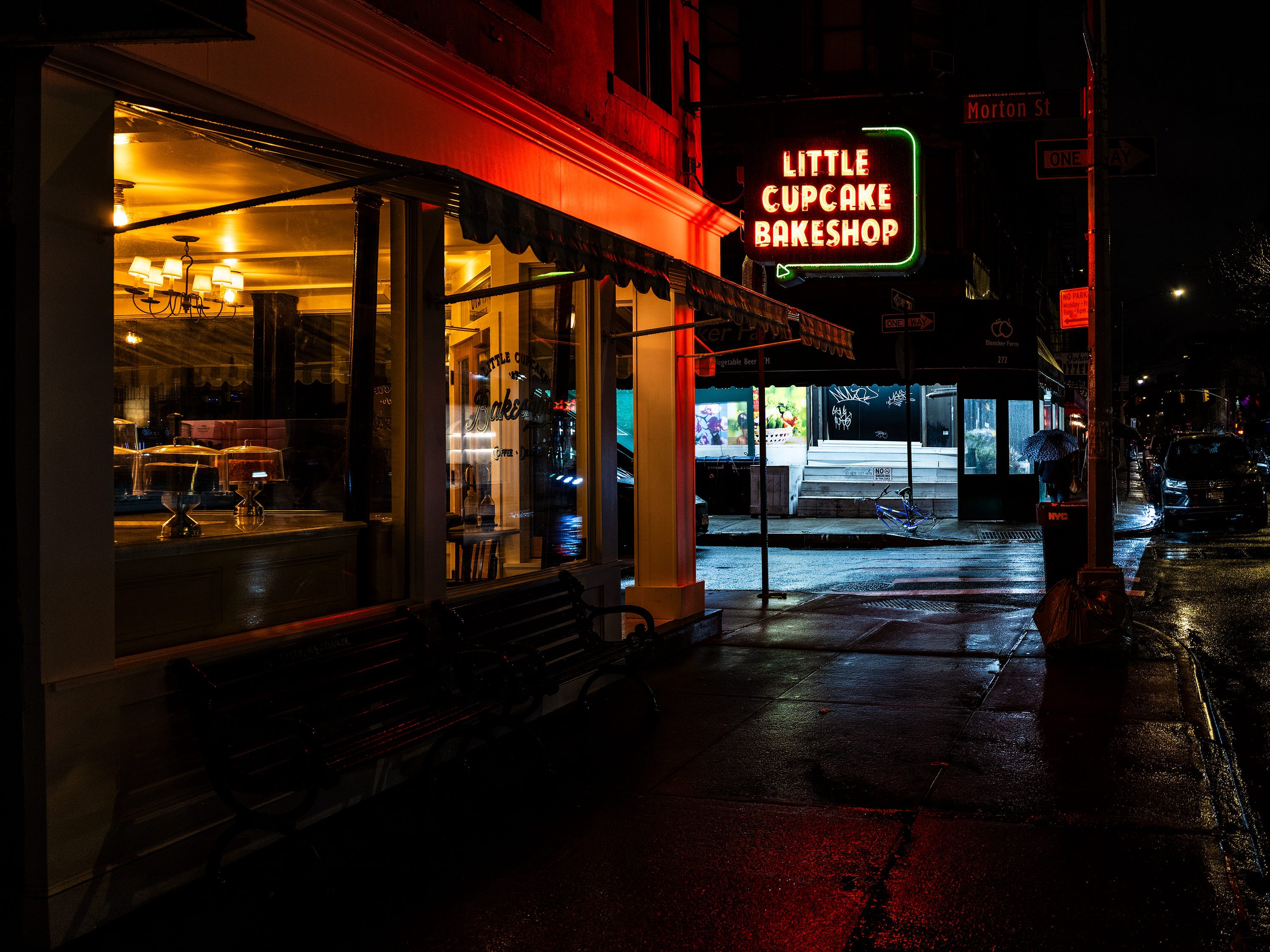
I have a theory about travel.
The best cities aren’t necessarily the ones with the most famous landmarks. They aren’t always the prettiest. They aren’t necessarily the cities with the best restaurants, the oldest buildings, the biggest museums or the most things to do.
And they certainly aren’t always the easiest.
The best cities are the ones that make you want to wander.
You know the feeling.
You have a reservation at 7:30, but it’s only 5:45 and you’re three neighborhoods away. You could take an Uber. You could look at the map. You could head straight there.
Instead, you turn down a street you’ve never seen before.
You walk into a little shop.
You hear music coming from somewhere.
You smell something incredible coming from a restaurant.
You pass a building and wonder what happened there 100 years ago.
You stop for a drink.
And suddenly your carefully planned itinerary has become completely irrelevant.
That’s what I’m looking for in a city.
When I think about the best cities in America for a traveler, I find myself weighing five things: food, things to see and do, history, ease of getting around, and vibe.
Not necessarily equally.
Because some cities are almost impossible to get around but are worth every minute of frustration. Some have incredible history but aren’t particularly exciting. Some have phenomenal food. Some are just... fun.
And some have that intangible thing that makes you want to come back.
So this isn’t a scientific ranking. There is no algorithm. No tourism board helped me. And I’m sure plenty of people will have strong opinions about the cities I left off this list.
That’s okay.
These are my ten.
The ten American cities I’d happily visit again.
The ten cities where I think the wandering is at least as good as the destination.
There is no real way around it.
New York is number one.
It isn’t necessarily because New York is the best at any single thing. It’s because it is almost impossibly good at everything at once.
Food? Come on.
You could spend a lifetime eating in New York and still barely scratch the surface. Pizza. Bagels. Chinese food. Italian. Indian. Jewish delis. Korean barbecue. Fine dining. Street food. Neighborhood restaurants that have been around for generations and tiny places that opened six months ago and are already impossible to get into.
And then there’s everything else.
The museums. Broadway. Central Park. The High Line. The Statue of Liberty. Yankee Stadium. Madison Square Garden. The Empire State Building. The neighborhoods. The architecture.
But the best part of New York might be something you don’t buy a ticket for.
Walking.
Walking through SoHo. The Village. Chinatown. Harlem. Brooklyn. The Upper West Side. The Lower East Side.
You can walk five blocks and feel like you’ve entered another city.
New York has more history, more culture, more food, more people and more stories packed into its streets than almost anywhere in America.
It can also be exhausting.
Expensive. Loud. Crowded. Impatient.
And I love it.
Because New York doesn’t really ask you to visit.
It asks you to participate.
I think Washington, D.C. is one of the most underrated travel cities in America.
And maybe that’s because people think they already know what D.C. is.
The White House. The Capitol. The monuments. Politics.
Check. Check. Check.
But spend a few days actually wandering around Washington and it becomes something much more interesting.
First, there’s the history.
Not just American history in the abstract, but history that happened right where you’re standing.
Then there are the museums. The Smithsonian alone can keep you occupied for days, and many of the country’s greatest cultural institutions are clustered together in a way that makes D.C. unusually easy to explore.
And then there’s the food.
D.C. has become a legitimately great food city, with an incredible mix of cultures and cuisines reflecting the city itself.
The neighborhoods are worth exploring, too. Georgetown. Dupont Circle. Adams Morgan. Capitol Hill. Shaw.
And unlike many major American cities, D.C. is remarkably walkable in the places you most want to visit. The Metro makes it even easier.
But there’s something else about D.C.
The city has weight.
You can be walking down the street, look up, and realize you’re standing next to a building you’ve seen in history books your entire life.
That’s a pretty remarkable feeling.
New Orleans doesn’t feel like another American city.
That’s part of the magic.
It feels like New Orleans.
The architecture. The music. The food. The humidity. The French and Spanish influences. The cemeteries. The streetcars. The balconies. The bars. The people.
And, of course, the food.
Gumbo. Jambalaya. Po’ boys. Crawfish. Beignets. Oysters. Red beans and rice.
New Orleans doesn’t just have good food. It has food culture.
The same is true of music.
You don’t have to schedule a concert. Music is simply part of the landscape.
And history is everywhere. Some of it beautiful. Some of it painful. Some of it complicated. All of it important.
New Orleans is also a city that rewards aimlessness.
You can have a perfectly good day with no real plan.
Walk.
Eat.
Listen.
Have a drink.
Walk some more.
Find another bar with live music.
Eat again.
That’s a pretty good definition of a vacation.
New Orleans isn’t polished in the way some cities try to be.
It doesn’t need to be.
It has character instead.
Nashville has changed dramatically over the years, but it hasn’t lost the thing that made it special in the first place.
Music.
You can feel it.
Of course, there’s Broadway, where the honky-tonks compete for attention and live music pours out of every doorway.
But Nashville’s musical identity goes much deeper than that.
The Grand Ole Opry. Ryman Auditorium. Music Row. The Bluebird Cafe. The history of country music and the people who built it.
And then there’s the food.
Hot chicken has become practically synonymous with Nashville, but the city’s restaurant scene has expanded well beyond that.
Barbecue. Southern cooking. Upscale restaurants. Breweries. Coffee shops.
Nashville also has something that makes a city especially enjoyable for a visitor:
energy.
It feels young. Creative. Social. A little chaotic.
You can spend the afternoon exploring neighborhoods, eat a great dinner, listen to someone you’ve never heard of play a song you’ll remember, and end the night somewhere you hadn’t planned to go.
That’s a pretty good city.
Charleston is almost unfairly beautiful.
The architecture. The historic homes. The cobblestone streets. The churches. The waterfront.
You can walk around Charleston and feel like you’ve wandered into another century.
And that’s the point.
Charleston’s history is one of its greatest assets—but also something that deserves to be approached honestly. The city’s beauty and its complicated history exist side by side. The story includes wealth, slavery, war, commerce, immigration, resilience and enormous cultural influence.
That history is part of what makes Charleston worth visiting.
Then there’s the food.
Charleston has become one of America’s great food destinations, particularly if you love Southern food and the Lowcountry traditions that make the region unique.
And unlike some larger cities, Charleston doesn’t require you to conquer a transportation system to enjoy it.
It’s a city for walking.
Slowly.
That’s important.
Charleston isn’t a city I want to rush through.
It’s a city I want to sit in.
Have a long lunch.
Walk around.
Find a little bar.
Have dinner.
Walk again.
Miami feels like someone took America, the Caribbean, Latin America, Art Deco, nightlife, beaches, high finance, Cuban culture and an unreasonable amount of sunshine and put them all in one place.
It is vibrant.
It is complicated.
It is occasionally ridiculous.
And it is incredibly fun.
Miami is also one of those cities where the food tells you everything you need to know about the place.
Cuban food. Haitian food. Colombian. Peruvian. Venezuelan. Seafood. High-end restaurants. Little neighborhood places where the best thing on the menu might be something you’ve never heard of.
And then there’s the visual identity.
South Beach.
Ocean Drive.
The Art Deco buildings.
Little Havana.
Wynwood.
Brickell.
The water.
Miami has a very different relationship with the idea of a city than New York or Chicago.
It’s less about grand civic institutions and more about energy, culture, nightlife and the collision of different worlds.
Miami can be hard to navigate. Traffic is real. The city is sprawling.
But that doesn’t diminish the experience.
Because Miami has something you can’t manufacture.
Vibe.
Lots and lots of vibe.
Austin has always had a little bit of a rebellious streak.
Keep Austin Weird.
Live music.
Food trucks.
Barbecue.
Tacos.
Lakes.
Trails.
The University of Texas.
And a population that seems perpetually interested in making something new.
Austin’s appeal is partly that it doesn’t feel like a conventional major American city.
It’s outdoorsy and urban.
Casual and ambitious.
Traditional and experimental.
You can eat incredible barbecue for lunch, go swimming or hiking in the afternoon, catch live music at night and finish with tacos.
That’s a pretty compelling day.
Austin has also become a fascinating example of how cities evolve.
The old Austin hasn’t disappeared, but a very different Austin has emerged alongside it.
Some people love that.
Some people miss what came before.
Both reactions are understandable.
But for a traveler, the result is a city with a lot of energy.
And energy is one of the things I value most when I travel.
San Diego might be the easiest city on this list to simply enjoy.
There are cities that demand your attention.
San Diego doesn’t.
It just makes you happy.
The weather helps.
So does the ocean.
The beaches. Balboa Park. The San Diego Zoo. The harbor. Coronado. La Jolla. Little Italy.
You can build a perfectly good San Diego itinerary without ever feeling like you’re working very hard.
And then there’s the food.
San Diego’s proximity to Mexico isn’t just a geographic fact. It’s part of the city’s identity.
Tacos and Mexican food are foundational here, and the craft beer scene has become legendary in its own right.
San Diego is also a city where getting around can be relatively painless if you choose your neighborhoods wisely.
And maybe that’s the real appeal.
San Diego doesn’t make you prove that you deserve to have a good time.
It simply gives you sunshine, ocean air and a taco and says:
Relax.
Chicago might be the biggest omission from the top five that I still can’t bring myself to leave out.
Because Chicago is a great American city.
Period.
Well, maybe not period. Chicago IS a great American City, despite its horribly designed train system. The inability to travel diagonally makes the city hard to navigate and explore.
However, the architecture alone is enough reason to visit.
Walk along the river. Look up. Take an architecture tour. Wander downtown.
Then there’s the lake.
Lake Michigan gives Chicago a sense of openness that few major cities can match.
And the food.
Deep dish, obviously.
But if you think Chicago’s food scene begins and ends with deep dish pizza, you are missing the point.
Italian beef. Chicago dogs. Steakhouses. Polish food. Mexican food. Asian food. Fine dining. Neighborhood institutions.
Chicago is also a city of neighborhoods, which makes it ideal for wandering.
And there’s a particular satisfaction to Chicago that comes from being in a huge city that somehow feels more manageable than New York.
It’s big.
It’s sophisticated.
It’s historic.
It’s beautiful.
And it doesn’t always demand that you know exactly where you’re going.
Sometimes that’s the best way to experience a city.
Okay.
I know.
Vegas?
Yes.
And I don’t even need you to agree with me.
Because Las Vegas is one of the strangest cities in America, and I think that’s precisely why it belongs on the list.
Vegas is an experiment.
How much spectacle can you fit into one place?
How many restaurants?
How many shows?
How many lights?
How many architectural ideas from around the world can you borrow, exaggerate and put next to one another?
Venice is here.
Paris is there.
New York is over there.
And somewhere in between is a giant pyramid.
It’s absurd.
But the absurdity is the point.
And the food has become legitimately exceptional. The entertainment is world-class. There are incredible hotels. Great pools. Shows. Sports. Museums. Golf. And, of course, the Strip itself.
Then there is the Las Vegas outside the Strip.
Red Rock Canyon.
Downtown.
The surrounding desert.
The city is more than casinos.
But even if you never leave the Strip, there’s something fascinating about experiencing a place that was essentially designed to make you say, “Wait... what?”
Vegas isn’t necessarily authentic.
It’s not trying to be.
It’s theatrical.
It’s excessive.
It’s occasionally ridiculous.
And it is unforgettable.
Sometimes that’s enough.
Here’s the problem with making a list like this.
There are too many great American cities.
Boston has history.
San Francisco has character.
Philadelphia has food and history and a personality all its own.
Seattle has natural beauty and culture.
Savannah is gorgeous.
Minneapolis is underrated.
Los Angeles is enormous and endlessly fascinating.
San Antonio has a terrific sense of place.
Denver has the outdoors.
Portland has its own thing going on.
And there are plenty more.
So this isn’t a declaration that these ten cities are objectively better than all of those.
It’s simply my list.
And I think there’s a reason these ten ended up together.
They each give you something to wander into.
Maybe that’s what I actually like about travel.
Not the checklist.
Not seeing the famous thing because you’re supposed to see the famous thing.
Not taking a picture in front of the landmark and moving on.
I like cities that give you permission to get a little lost.
Cities with neighborhoods.
Cities with history.
Cities with food that tells a story.
Cities where you can walk down one street and discover something you didn’t know existed.
Cities where the best part of the day wasn’t necessarily the thing you planned.
Because that’s the funny thing about travel.
We spend so much time planning where we’re going to go.
Where we’re going to stay.
Where we’re going to eat.
What we’re going to see.
And then, if we’re lucky, the city gives us something we didn’t plan for.
A conversation.
A restaurant.
A street.
A song.
A building.
A view.
A little moment that wasn’t in the guidebook.
That’s why these are my ten.
Not because they are perfect.
Not because they are objectively the best.
But because each one has a personality.
And when I’m traveling, that’s what I’m really looking for.
I want to feel the place.
I want to eat what the place eats.
I want to understand a little of what happened there.
I want to see what people do for fun.
I want to wander without knowing exactly where I’m going.
And every once in a while, I want to look at the clock and realize I completely missed the plan.
Because maybe the best travel experiences aren’t the ones where we see everything we came to see.
Maybe they’re the ones where we discover something we weren’t looking for.
And that’s why I keep coming back to cities.
They’re full of things worth finding.
No posts
Comments
Nothing yet. Say the first thing.
Sign in to join the conversation.