
Most networking advice is garbage.
Collect business cards. Send follow-up emails. “Add value” through LinkedIn comments. Optimize your elevator pitch. The whole thing feels like a sales funnel with a human face.
After years of trying building professional relationships as a VP of Engineering and now as a fractional CTO and C-level coach, I’ve learned something different. The most valuable connections in my career didn’t come from networking events. They came from showing up, repeatedly, in the same places with the same people, doing real work together.
I’ve distilled this into a framework I call TIPP: Time, Interactions, People, Places.
Last year, I sat across from a founder at a coffee shop in Milan. He was frustrated.
“I’ve been networking for eighteen months,” he said. “Meetups, conferences, LinkedIn outreach. I’ve met hundreds of people. I can’t point to a single relationship that’s actually helped my business.”
“Walk me through your process,” I said.
“I go to events. I introduce myself. I follow up within 24 hours with a personalized message. I offer to help with whatever they need. Then nothing.”
“How many times have you actually worked on something with any of these people?”
He paused. “What do you mean?”
“Collaborated. Solved a problem together. Spent more than an hour in the same room working toward a shared goal.”
He thought about it. “Maybe twice? Three times?”
“Out of hundreds of connections.”
“Yes.”
There was his answer. He’d been treating networking as a numbers game, optimizing for first impressions and follow-through efficiency. But relationships aren’t efficiency problems. They’re investment problems. And he wasn’t investing. He was sampling.
This is the gap that TIPP addresses. Not how to meet more people, but how to build relationships that actually matter.
The first element of TIPP is Time. Not “quality time” in the corporate retreat sense. Quantity of time.
This is the hardest element for ambitious professionals to accept. We’ve internalized that time is our scarcest resource. Every hour should be optimized. Every meeting should have an agenda. Every conversation should have a purpose.
But trust doesn’t work that way. Trust builds through repeated exposure. Through the accumulation of small moments that add up to something larger. Through being present when nothing particularly important is happening.
I’ll give you an example. Three years ago, I met Marco (fake name) at a product leadership dinner in Hamburg. We exchanged LinkedIn connections. A few months later, we were both at the same conference. We had coffee. Nothing strategic. We talked about our kids, our frustrations with enterprise software, a book we’d both recently read.
Six months after that, I was in Hamburg again. I texted him: “In town Tuesday. Dinner?”
We had dinner. We talked about his challenges with a new role he’d taken. I shared some things I’d learned the hard way. No agenda. No pitch. Just two people who’d spent enough time together to have a real conversation.
A year later, he called me.
“I have a situation,” he said. “We’re spinning out a division. The board wants external validation on our technical architecture before they approve the funding. I need someone who understands enterprise systems but isn’t trying to sell us anything. I thought of you.”
That engagement led to two more. It became a very valuable consulting relationships. But it only happened because we’d logged time together. Dinners. Coffees. Conversations with no immediate purpose. The relationship had room to develop because neither of us was optimizing for immediate value.
There’s research behind this. Social psychologists have studied the formation of close relationships, and the findings are consistent: proximity and frequency matter more than intensity. You’re more likely to become friends with someone you see regularly in low-stakes contexts than someone you meet once in an intense environment.
This makes evolutionary sense. Our brains evolved to trust people we see repeatedly. Someone who shows up again and again, in different contexts, over extended time, signals reliability. They’re not going anywhere. They’re part of the landscape. You could love or hate them, but in any case you will build a relantionship.
In professional contexts, this means the relationship you build over twelve lunches across two years is stronger than the one built during a single three-day conference, even if the conference felt more meaningful in the moment.
You can’t shortcut time. You have to spend it. And spending time means not doing something else. It means accepting that some of your hours won’t be “productive” in any measurable sense.
I block time every week for relationship maintenance with no agenda attached. Recurring dinners with people I want to stay connected to. Long phone calls that wander. Showing up at the same places even when I’m not sure it’s worth it. Most of this time produces nothing tangible. But the compound effect over years is enormous.
The second element is Interactions. Real ones.
By interaction, I don’t mean conversations. Conversations are easy. You can have dozens of conversations with someone and still not know them at all. What I mean is collaboration that reveals how someone thinks. Working on a problem together. Making decisions under uncertainty. Watching how they handle disagreement, pressure, or failure.
Years ago, I was working with a senior engineer named Sara (another fake name, I am becoming good at it) on a particularly nasty integration issue. We’d been at it for six hours. Nothing was working. The deadline was the next morning.
Around 2 AM, I suggested we try a hack. A workaround that would get us through the demo but create technical debt we’d pay for later.
Sara looked at me. “That’s a terrible idea.”
“I know. But we’re out of time.”
“We’re not out of time. We have six more hours. Let’s think about what we’re actually trying to accomplish here.”
She walked to the whiteboard and started drawing the system architecture from scratch. Not the code we’d written, but the problem we were trying to solve. Within thirty minutes, we’d found the issue. A misunderstanding in how we’d modeled the data relationships. The fix took twenty minutes.
I learned more about Sara in that debugging session than I had in six months of working in the same organization. I learned that she doesn’t panic under pressure. That she cares more about doing things right than looking good. That she thinks in systems, not patches. That she’ll push back on senior colleagues when she thinks they’re wrong.
That’s what real interaction reveals. Not someone’s curated professional persona, but how they actually operate when things get hard.
The challenge is that most professional contexts don’t create these opportunities naturally. Meetings have agendas. Networking events have small talk. Conferences have presentations. None of these reveal how someone thinks under pressure.
You have to create the conditions intentionally. Here are approaches that work:
Work on something together. Not “offer to help” in the vague LinkedIn sense. Identify a specific problem and spend real hours on it. A founder I know cements relationships by inviting potential advisors to participate in actual strategy sessions, not to give advice, but to wrestle with the problem alongside the team.
Engage with their broader world. Every person exists in a context. They have other projects, other relationships, other interests. Engaging with that context, meeting their colleagues, attending events they care about, reading things they’ve written, creates touchpoints that go beyond the surface.
Have uncomfortable conversations. One of my tests for relationship depth is whether we can disagree productively. If every conversation is pleasant agreement, we don’t actually know each other yet. The relationships that matter can survive, even strengthen, through friction.
A mentor told me once: “You don’t know someone until you’ve seen them lose.” He meant it literally. Watch how someone handles a pitch that doesn’t land, a project that fails, a decision that turns out wrong. That’s when the performance breaks down and you see who they actually are.
Interactions also mean engaging with someone’s network, not instrumentally, but as a natural extension of the relationship.
I pay attention to who someone else knows and respects. When they introduce me to others, I treat those introductions as seriously as direct relationships. When I can create connections between people who should know each other, I do.
This isn’t about “networking through other people.” It’s about recognizing that individuals exist within webs of relationships, and engaging with the web is part of engaging with the person.
The third element is People.
This sounds obvious, but it isn’t. Most networking treats people instrumentally. Who can introduce you to whom. Who has budget authority. Who’s hiring. The person becomes a means to an end, a node in a graph to be traversed efficiently.
TIPP inverts this. The person is the end. Their perspective. Their diversity of thought. Their particular way of being in the world. You build relationships with individuals, respecting who they actually are rather than optimizing for who might be useful to you.
Early in my career at Arduino, I met Tom Igoe at a company dinner. Tom is one of Arduino’s founders, a professor at NYU’s Interactive Telecommunications Program, and one of the people who shaped the maker movement. I had no idea who he was.
We ended up seated near each other. He spent most of the evening talking with me. Asking questions about my work. Listening to my answers. Treating my opinions as worth considering.
I was nobody. An engineer just beginning to figure out management. No track record. No influence. No network worth mentioning. Tom knew all of this. He paid attention anyway.
What struck me was the follow-through. After that dinner, he remembered me. When we crossed paths at events or company gatherings, he asked for updates on what I was working on. Not polite small talk. Genuine curiosity about the progress we were making.
Years later, when I was leading the development of Arduino IDE 2.0, I reached out to Tom for feedback on our approach. His response came quickly. Specific. Substantive. The kind of feedback that changes how you think about a problem.
That product shipped. I sometimes wonder if it would have taken the shape it did without that dinner years earlier. Without the relationship that formed because someone with nothing to gain spent time with someone who had nothing to offer.
Neither of us was networking that night. We were just getting to know each other.
That’s the difference. Networking is about you. Knowing people is about them. When you’re networking, you’re calculating value. When you’re trying to know someone, you’re just curious about who they are.
But People also means groups. Communities that form around shared interests. Clusters of individuals who keep showing up in the same places, who know each other, who build relationships with each other.
The math here is interesting. A recommendation from one person carries some weight. A recommendation from three people who all know each other carries substantially more. Not three times more. Something closer to exponential.
Why? Because interconnected recommendations are harder to manufacture. If three people who know each other and who know you all vouch for you, you’re not just someone who made a good impression once. You’re someone who’s demonstrated consistency across multiple contexts over time.
I’ve noticed that my best professional opportunities came from groups, not individuals. A board seat that came from three separate recommendations from people who’d worked with me in different contexts. A consulting engagement that started because two people mentioned my name in the same meeting. An investment opportunity that emerged because I’d built trust across a cluster of founders who talked to each other.
This is why isolated networking doesn’t work. One-off connections don’t compound. Connected relationships do.
Some of this happens naturally if you spend enough time in the same places with the same people. But you can also cultivate it deliberately.
I host small dinners periodically, eight to ten people, mixed backgrounds, no agenda. The explicit purpose is for people to meet each other, not to meet me. Over time, connections form between participants. Some become collaborators. Some become friends. The group develops its own gravity.
This isn’t about positioning yourself as a connector or a hub. It’s about recognizing that relationships are richer when they exist within communities rather than in isolation. A network of interconnected relationships is more valuable than the same number of isolated relationships.
The fourth element is Places. Physical locations where relationships can form.
This might seem obvious, but most people don’t think carefully about venue selection. They go to conferences because that’s what professionals do. They attend networking events because that’s where networking happens. They take meetings at coffee shops because coffee shops are convenient.
But physical space shapes interaction more than we realize. The same two people will have completely different conversations in a fluorescent-lit conference room versus a comfortable bar. The presence of other people, the ambient noise, the quality of the seating, the food and drink, all of it influences what kinds of connection are possible.
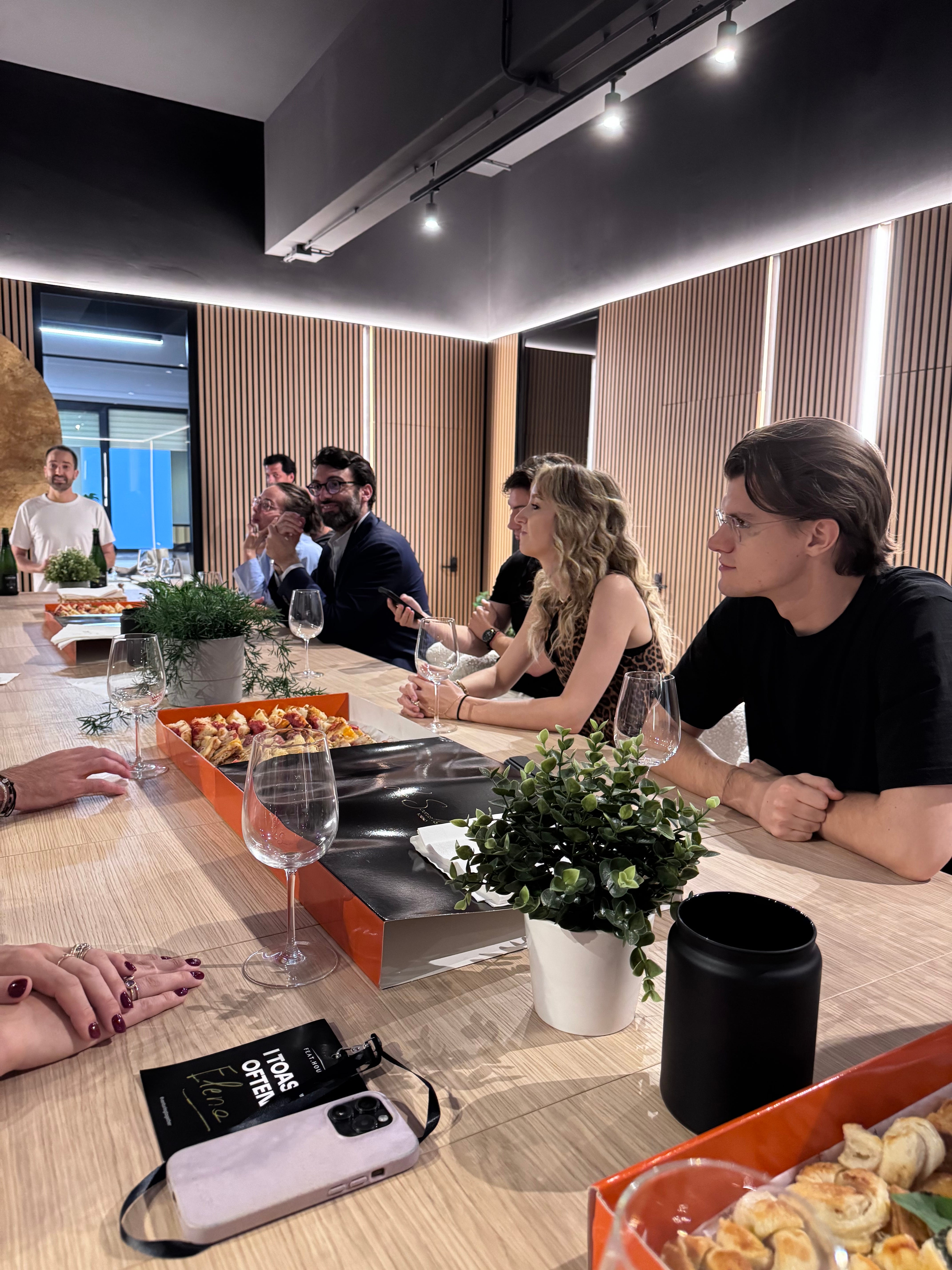
The places that enable real connection share certain characteristics:
They’re designed for lingering, not throughput. Conference halls with rows of chairs facing a stage don’t create connection. Neither do networking events with nametags and forced mingling. Those environments optimize for moving people through efficiently. Real connection requires space that invites you to stay.
They mix different types of people. Homogeneous environments produce homogeneous conversations. The best relationship-building spaces attract people from different industries, different backgrounds, different stages of their careers. The diversity itself creates value.
They have entrepreneurial energy. Something about being around people who are building things creates conditions for meaningful conversation. Maybe it’s the shared context of risk and ambition. Maybe it’s the absence of corporate caution. Whatever the mechanism, entrepreneurial environments tend to produce better interactions.
They engage multiple senses. Sounds strange, but it’s true. Spaces with good food, interesting design, comfortable furniture, pleasant sounds create conditions where people relax their professional personas. The sensory experience opens something in the mind.
Let me tell you about some specific places that have been important in my own network development.
AWS re:Invent in Las Vegas was one of the first conferences where I experienced the power of place. Not the sessions, which were fine but forgettable. The hallway conversations. The impromptu dinners organized via Twitter. The late-night discussions at casino bars where the normal rules of professional interaction were suspended. The sheer density of people working on similar problems created collision opportunities that wouldn’t exist anywhere else.
Maker Faire, both in San Francisco and in Torino, had a different quality. Less polished than AWS, more experimental. People were there because they were genuinely curious, not because they were checking a professional development box. The conversations went deeper faster because the filtering mechanism, showing up at Maker Faire, selected for a certain kind of person.
Italian Tech Week this year demonstrated what a well-designed event can accomplish. The programming was solid, but more importantly, the spaces between sessions were designed for interaction. Comfortable areas for conversation. Good coffee. Enough time between events that you weren’t rushing from one thing to the next.
More recently, I’ve found Feat.House to be the best example of what I’m describing. Calling it a “business club” undersells it. It’s a space for cultural experimentation and collision between people who wouldn’t otherwise meet.
The membership is intentionally diverse. Founders and investors, yes, but also artists, academics, journalists, technologists. The physical space is designed for different modes of interaction: quiet areas for focused conversation, social areas for serendipitous encounter, event spaces for larger gatherings.
What makes it work is the combination of curation and openness. There’s enough shared context that strangers can have substantive conversations immediately. But there’s enough diversity that those conversations go unexpected places.
I’ve formed more valuable connections at Feat.House in two years than in a decade of traditional networking. Not because I’m networking more, but because the space itself enables different kinds of interaction.
I’m always looking for places like this. Physical environments that enable real connection. When I find one, I keep showing up. The repeated presence compounds over time, as I become a familiar face rather than a visitor.
The implication is that venue selection deserves strategic attention. Don’t default to conferences because that’s what professionals do. Think about what kinds of interactions you’re trying to create and find spaces that enable those interactions. Then make those spaces part of your regular rotation.
Here’s what TIPP looks like operationally:
Time: Block regular hours for relationship building with no agenda attached. I maintain a list of people I want to stay connected to and ensure I’m spending time with them on a recurring basis. Quarterly dinners. Monthly calls. Annual trips to cities where my network clusters. The calendar holds space for relationships the same way it holds space for client work.
Interactions: Find ways to work alongside people, not just talk to them. When someone asks for advice, I try to shift toward collaboration. “Let’s work on that problem together for an hour” rather than “Here’s what I think you should do.” I join projects as a participant, not just an advisor. I create situations where I can see how people think, not just what they say.
People: I treat every person as an end, not a means. I stay curious about individuals regardless of their strategic value. I invest in group dynamics by introducing people who should know each other and hosting gatherings where my network can interconnect. I take referrals seriously, treating introductions as extensions of existing relationships.
Places: I’ve identified three to four venues that enable real connection and made them part of my regular routine. I attend conferences selectively, prioritizing those with strong hallway cultures over those with impressive speaker lineups. I pay attention to physical space and avoid environments that optimize for throughput over connection.
TIPP is not fast. This is a multi-year strategy, not a quarter-by-quarter growth hack.
I’ve been practicing this approach for nearly a decade now. In the early years, the returns were invisible. Time spent with no apparent outcome. Relationships that hadn’t yet proved valuable. A network that existed but didn’t seem to do anything.
Around year three, things started to shift. Introductions came unsolicited. Opportunities appeared from connections I’d almost forgotten. My reputation preceded me into rooms I hadn’t entered yet.
By year seven, the compound effect was undeniable. Most of my consulting work comes from the network now. Advisory opportunities, board seats, investment access, all of it flows from relationships built through TIPP.
The relationships built this way have a different quality than transactional connections. They survive job changes and geographic moves. They generate unexpected opportunities that couldn’t be planned for. They become the foundation for everything else in professional life.
The alternative is a contact list full of people who vaguely remember meeting you. I tried that approach for years. It doesn’t compound.
I want to close with a conversation I had recently with a young product manager who asked me how I’d built my network.
“I go to all the events,” she said. “I follow up religiously. But everything feels so transactional. How do you build relationships that actually mean something?”
“Stop trying to network,” I said. “Start trying to know people.”
“What’s the difference?”
“Networking is about you. Knowing people is about them. When you’re networking, you’re always calculating value. When you’re trying to know someone, you’re just curious about who they are.”
“That sounds nice,” she said, “but how does it actually help your career?”
“It doesn’t help your career,” I said. “It becomes your career. The work I do now exists because of the relationships I’ve built. Not despite them. Not in addition to them. Because of them.”
She looked skeptical. I don’t blame her. It takes time to see how this works. But she’ll learn the same thing I did: professional relationships are not a means to an end. They’re the foundation everything else builds on.
TIPP is simply a reminder of what that foundation requires. Time spent. Real interaction. Respect for individuals. Spaces that enable connection.
Your network is not a resource to be optimized. It’s a garden to be tended. The TIPP framework is a reminder of what gardening requires: time, attention, care for individual plants, and soil that makes growth possible.
Start tending.
Tom DeMarco’s “Peopleware” on the human side of software development and why relationships matter: https://www.goodreads.com/book/show/67825.Peopleware
Feat.House and the concept of modern business clubs: https://feat.house/
Tom Igoe and his human approach to everything, including electronics
Ciao,
Luca
No posts
Comments
Nothing yet. Say the first thing.
Sign in to join the conversation.