
There’s a mythology in business culture: move fast, close quickly, optimize for velocity. We’re told that every interaction must convert, every meeting must yield immediate ROI, every relationship must monetize within a quarter.
This is nonsense.
The most valuable relationships I’ve built, the ones that altered my consulting practice and opened doors I didn’t know existed, took years to mature. Not months. Years.
I’m not advocating for slowness. I’m advocating for efficacy. And efficacy sometimes looks slow in a world addicted to speed metrics.
The initial brief was clean: help a scaleup understand the OKRs. Thre months, defined deliverables, straightforward consulting (mostly teaching) engagement. I showed up for the kickoff workshop ready to talk about objectives, key results, and quarterly planning cycles.
By the second week, I knew we had a different problem entirely.
During a coffee break, one of the founders vented about how their engineering and product teams couldn’t align on priorities. Over lunch, another leader mentioned that nobody was clear on who made final decisions. In the hallways, I overheard team members expressing confusion about the company’s actual strategy. The OKR problem wasn’t the disease, it was just a symptom. They had deeper issues with organizational structure, decision-making authority, and strategic clarity.
I could have done two things: deliver the OKR workshops as contracted and walk away with a clean invoice, or tell them what they actually needed to hear.
I chose honesty. “Your OKR framework isn’t going to solve this. You’ve got foundational challenges that need addressing first.”
Most consultants would have upsold aggressively at that moment. Instead, I suggested we slow down. We completed the initial engagement, but I proposed we stay in touch, no contract expansion, no pressure, just periodic check-ins to see how things evolved.
Every six to eight weeks, we’d meet. Sometimes it was coffee at their office. Sometimes a video call squeezed between their board meetings. Sometimes just a quick message exchange about something I’d seen that might help them. I shared articles, introduced them to people in my network who’d solved similar problems, offered observations about patterns I was noticing. No invoice. No formal engagement. Just presence.
During these conversations, something shifted. The founders started testing ideas with me before taking them to their team. They’d ask, “Does this make sense?” or “Have you seen this work elsewhere?” I wasn’t selling, I was thinking alongside them. And in turn, I was learning how they thought, what kept them up at night, what constraints shaped their decisions, what ambitions drove their choices.
One founder was deeply analytical, needing data and case studies before making moves. The other was intuitive, wanting to feel the rightness of a decision. Understanding this dynamic took months of observation. You can’t learn that from a kickoff deck or a discovery workshop. You learn it by being present over time, watching how people respond to setbacks, seeing what excites them, noticing what they return to again and again in conversation.
Around month nine, they mentioned they were ready to tackle the deeper organizational work. But here’s what mattered: they didn’t ask me to send a proposal. They said, “We’d like you to help us with this. What does that look like?”
The negotiation took one conversation. No competitive bids. No lengthy proposal process. No justification of rates or approach. We already had a year of shared context. They knew what I could do. I knew what they needed. The trust was already built.
What followed was a three-year partnership that reshaped their entire organizational structure. We didn’t just implement OKRs, we redesigned their decision-making frameworks, clarified strategic priorities, and built alignment mechanisms across the company while scaling the team. The work was ten times more impactful than the original three-month engagement could ever have been.
But none of it would have happened if I’d pushed for the upsell in week two, or if I’d disappeared after the initial contract ended, or if I’d treated those monthly check-ins as transactional stepping stones to a bigger deal.
The patience wasn’t a tactic. It was a recognition that the best partnerships can’t be rushed, that trust compounds slowly, and that sometimes the most valuable thing you can do is simply stay present while clarity emerges.
I completed a consultation years ago with a CEO. Good work, mutual respect, then we went our separate ways. Over the years, we’d bump into each other: conferences, mutual connections, LinkedIn interactions. No agenda, no ask, just interest in each other’s evolution.
Then, after several years of these touchpoints, we reconnected at the right moment. Both of us had grown, our contexts had shifted, and a new collaboration made sense. The negotiation took one conversation. Why? Because we’d spent years building credibility and understanding, even when there was no transaction on the table.
Here’s the thing about “random” encounters: they’re not truly random. Think of Antony Gormley’s Quantum Cloud, that 30-meter steel sculpture in London. From a distance, it looks like chaos: thousands of steel bars radiating outward in seemingly random directions. But at its core is a human figure, and every seemingly chaotic element was placed using a computer algorithm starting from that central form.
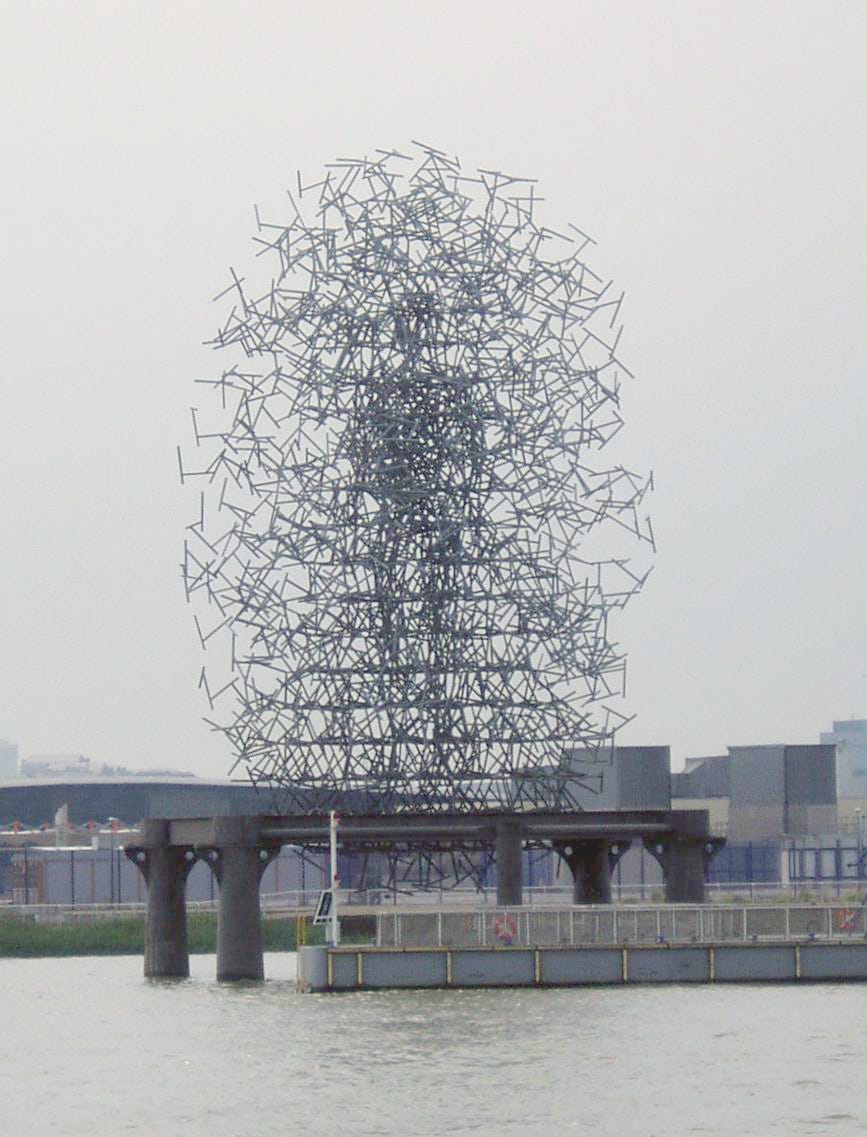
Your professional network works the same way. Those “random” conference encounters, those “chance” introductions, those “coincidental” reconnections—they’re not accidents. They’re the natural expansion of our network, each connection radiating outward from relationships we have already built. The pattern looks random, but it’s actually algorithmic: each person you help connects you to others, each conversation opens new paths, each touchpoint creates possibilities for future encounters.
The randomness is an illusion. What looks like luck is actually the visible manifestation of years of consistent presence and genuine engagement.
Cristina Lasagni introduced me to the 7-11-4 rule from marketing psychology: on average, a customer needs seven hours of interaction across eleven touchpoints in four locations before they buy.
This framework reveals something about us. We don’t make commitments, whether buying a product or choosing a business partner, based only on one interaction. We make them based on multiple evidence of reliability, competence, and alignment.
I’ve been applying this principle to relationship-building for years. Those monthly check-ins? Touchpoints. Conference conversations? Different locations. Shared insights over time? Accumulated hours of value demonstration.
The theory gave me language for what I’d been experiencing: meaningful relationships require volume, variety, and time.
Most of the time, it feels like nothing is happening. You’re showing up, you’re being helpful, you’re staying connected, and... crickets.
Then something shifts. A single event. A gathering. One new connection who bridges two networks.
Suddenly, every relationship you’ve been nurturing activates simultaneously. In the past few weeks, I closed a new contract, expanded my network at Italian Tech Week, and found myself embedded in Feat.house, a business club in Turin opening doors I couldn’t have anticipated (kudos to Fabio Sferruzzi for managing it).
This isn’t luck. It’s the compound interest of relationship capital reaching critical mass.
People, places, time, interactions. That's how we build relationships.
I’ve doubled down on something that yields no immediate return: making introductions between people in my network who should know each other. I ask for nothing. I expect nothing. I see the connection and facilitate it.
The result? When I need something: an advice, an introduction, a resource, people in my network help me, often before I ask.
Yesterday, Renato Pannella (event maker and founder of Lead) created an opportunity for me without prompting. Why? Because I’d spent months being useful to people in his orbit, with zero expectation of reciprocity. Of course I am going to reciprocally make him a favor as soon as the opportunity arise.
You can’t hack this. You can’t growth-hack generosity. You can’t optimize your way into professional relationships.
If you’re building a consulting practice, scaling a professional services firm, or simply trying to create meaningful business relationships, here’s what works:
Show up consistently. Not aggressively. Not with a pitch. Just present, helpful, and genuinely interested.
Measure in years, not quarters. The most valuable relationships I have took 1-3 years to fully develop. That’s not slow, that’s strategic.
Create value before extracting it. Make introductions. Share insights. Be useful without an invoice.
Stay patient during the dormant periods. Most relationships will seem inactive for long stretches. That’s not failure, that’s the natural rhythm of professional connection.
Recognize that speed and efficacy are not synonyms. Fast is a velocity metric. Effective is an outcome metric. Don’t confuse them. I repeat it also in every OKR course I teach.
Patient relationship cultivation feels inefficient. It doesn’t optimize well for quarterly reporting. It can’t be automated. It doesn’t scale through software.
But for those of us building sustainable, high-value consulting practices or professional services firms, it’s the a big thing that actually works.
The companies that thrive long-term aren’t the ones chasing every lead with aggressive tactics. They’re the ones building networks of trust, competence, and mutual value that compound over time.
So yes, sometimes the best strategy is to keep showing up, keep being useful, and accept that the harvest might be years away.
But when it comes? It comes all at once, and it’s worth every patient moment you invested.
Google’s 7-11-4 Rule Explained - Research on customer buying behavior and touchpoints
The Neuroscience of Trust - Paul Zak’s research on trust-building in professional settings
Building something valuable? Stop rushing. Start cultivating.
Ciao,
Luca
No posts
Comments
Nothing yet. Say the first thing.
Sign in to join the conversation.