
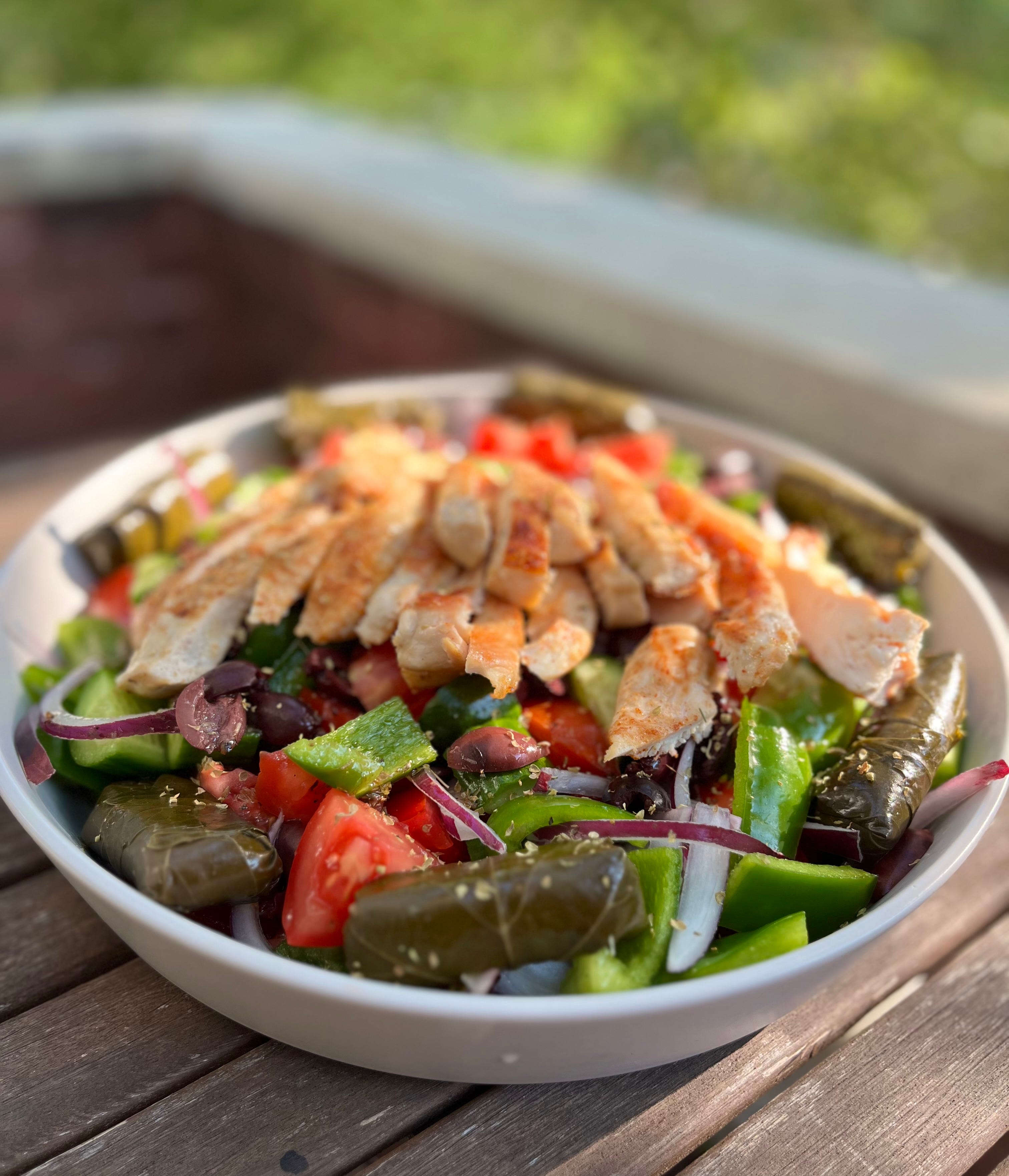
I have said it here before, and I will say it again: Greek salad is one of my desert island foods. Add some grilled chicken, and I don’t need anything else. Ever. My craving for Greek salad is perennial, but it peaks during the summer months. A Grilled Chicken Greek Salad + a chilled glass of white wine + a book on our teeny tiny Brooklyn terrace = bliss. Granted, that bliss will almost certainly be interrupted within 5 minutes by someone yelling “Mama!” but it’s nice while it lasts.
I grew up eating Greek salads in the many vinyl-upholstered diner booths found across suburban Chicago. Owned by Greek immigrant families, the diner menus read like novels with one chapter devoted to Greek specialities: spanakopita, moussaka, souvlaki, avgolemono soup, and my beloved Greek salad.
Eating the salad, which is filled with a jumble of snappy cucumbers, crisp green bell peppers, juicy tomato, thinly sliced red onion, and briny kalamata olives, and is often capped with sharp feta cheese and a couple of stuffed grape leaves, feels like taking part in a grand, age-old culinary tradition. But like so many dishes that feel like they’ve been around since the dawn of time, but are shockingly recent inventions, Greek Salad is not even a century old. (For even more fascinating examples of this phenomenon, read Anya Von Bremzen’s book, National Dish: Around the World in Search of Food, History, and the Meaning of Home.)
In Cookbook of the Jews of Greece by Nicholas Stavroulakis he writes: “How truly traditional is Elleniki Salata (Greek Salad)? It is difficult to say more than that over the last twenty years or so, it has become a universal adjunct to almost any meal among both Christian and Jews in Greece.”
Stavroulakis’ cookbook was published in 1986, which means Greek salad first emerged in the 1960s. A predecessor of the Greek salad, called horiatiki or “village salad,” dates back further, though not earlier than 1815 when tomato plants were first introduced to Greece. Horiatiki was primarily eaten by rural farmers and peasants. Greek-Jewish families served it as part of their Shabbat morning spread.
It was here, in the Greek-American diner, that the salad took on its modern form.
As Priya Krishna writes in Taste:
“Beginning in the 1960s, Greeks became dominant in the diner business, following the passage of the 1965 Immigration and Nationality Act, which ended the national quota system that restricted the flow of immigrants into American cities. At a time when far-right military juntas had taken over Greece, immigration from that country surged, and Greek-owned diners appeared up and down the Eastern seaboard, from New York and New Jersey down to Florida.
The earliest Greek diners offered horiatiki, a standard accompaniment to Greek meals comprising tomatoes, olives, cucumbers, onions, and feta drizzled with oil and vinegar. To better suit an American audience, many diner owners started adding iceberg lettuce and tossing everything together with the oil and vinegar, like a dressing.”
Raise your hand if you’re surprised that one of the best, and most classic salads in American cuisine was introduced by immigrants. (My hand is not raised) While the majority of the Greek salads I continue to enjoy at Greek diners in New York City contain Romaine or iceberg lettuce, my take on Grilled Chicken Greek Salad below is lettuce-free to reflect its village-style origins. I promise that the tender grilled chicken mingling with crisp and juicy vegetables and dressed with red wine vinegar, olive oil, and dried oregano that forms a pool of drinkable liquid gold at the bottom of the bowl is more than enough.
Make it tonight! Make it all summer long! Make it for your 4th of July party to celebrate all of the gifts that immigrant communities—Jewish and not, historic and contemporary—contribute to our gorgeous, collective whole.
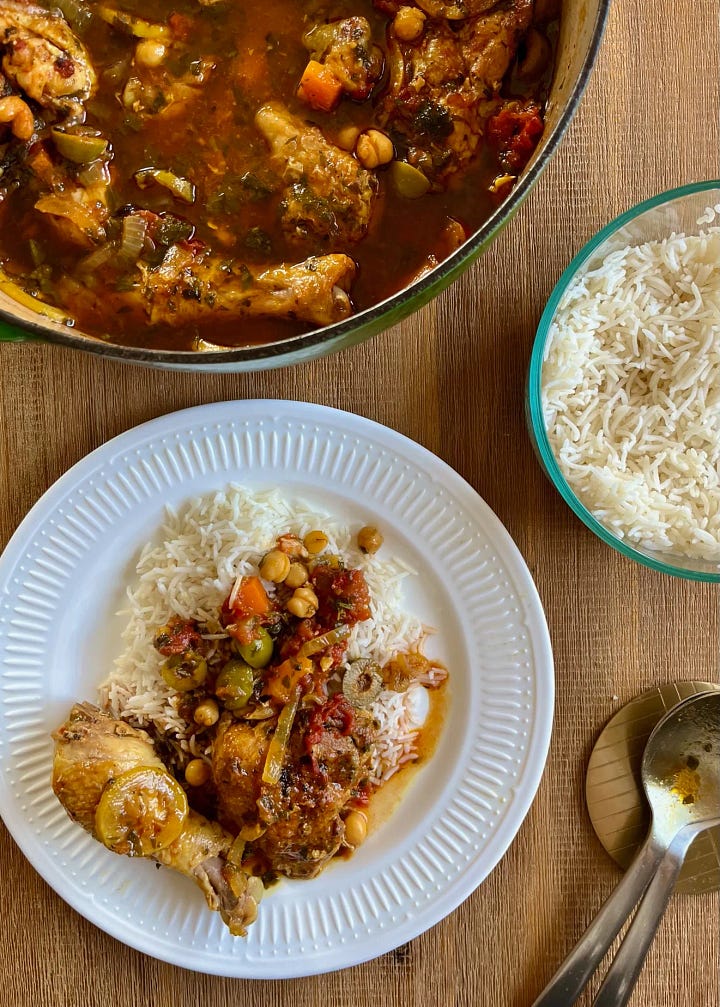
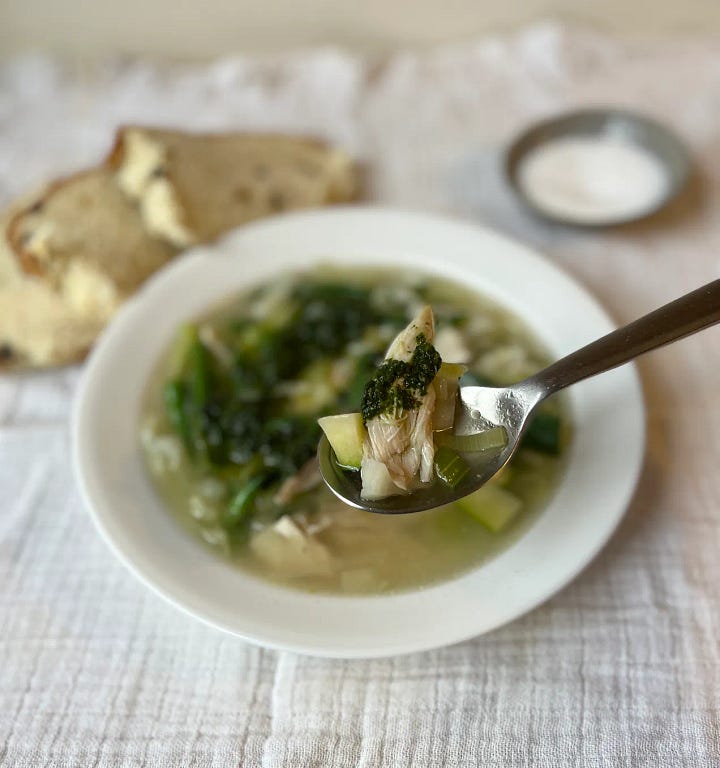
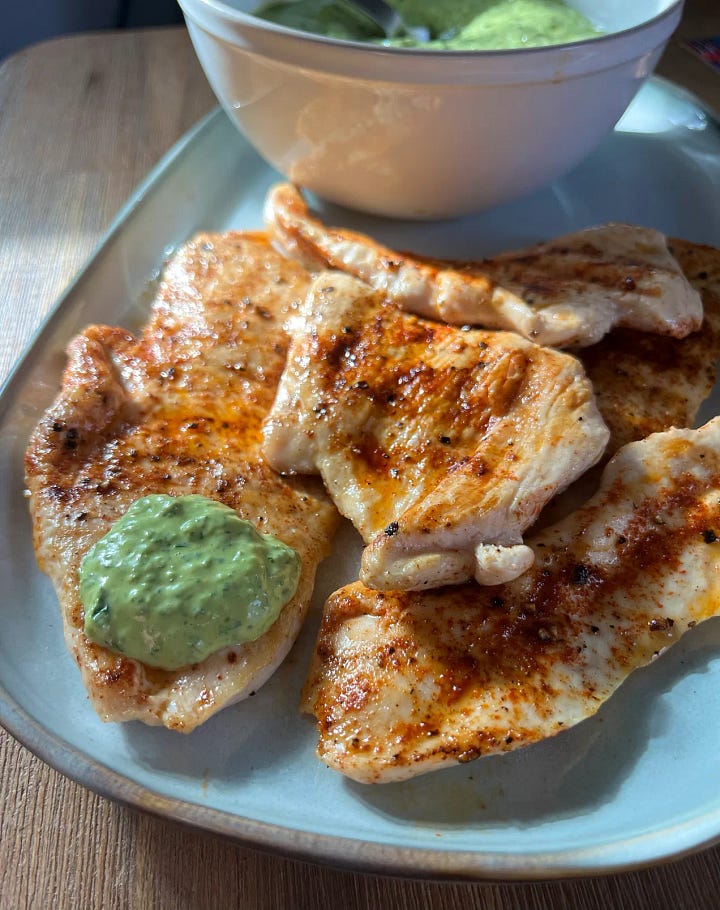
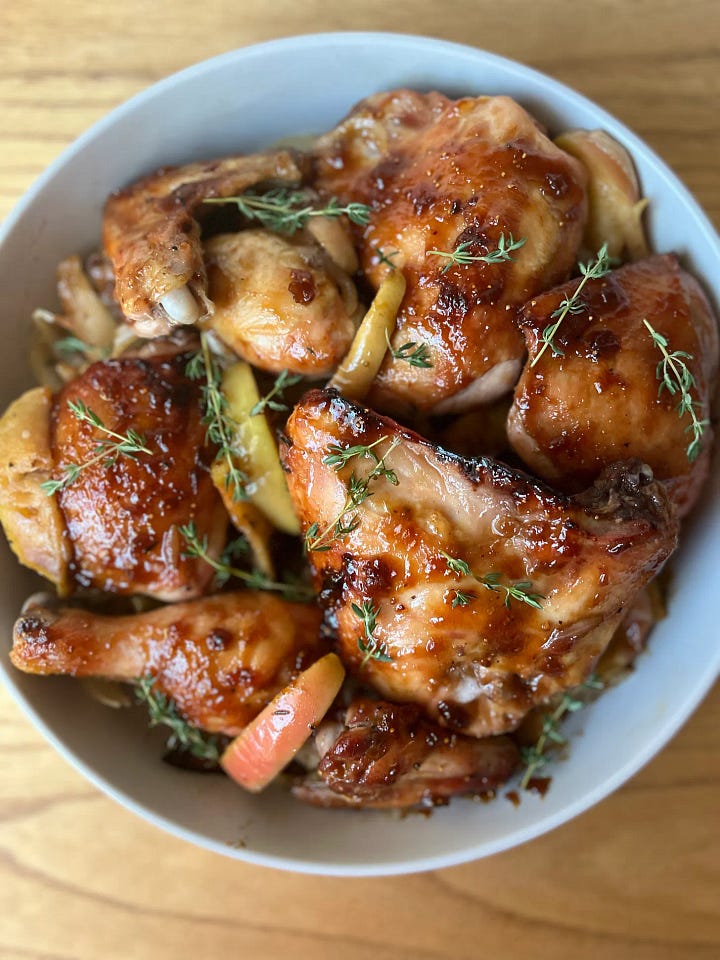
Bird is the word with these delicious chicken recipes from The Jewish Table archive.
Fig-Glazed Chicken with Apples
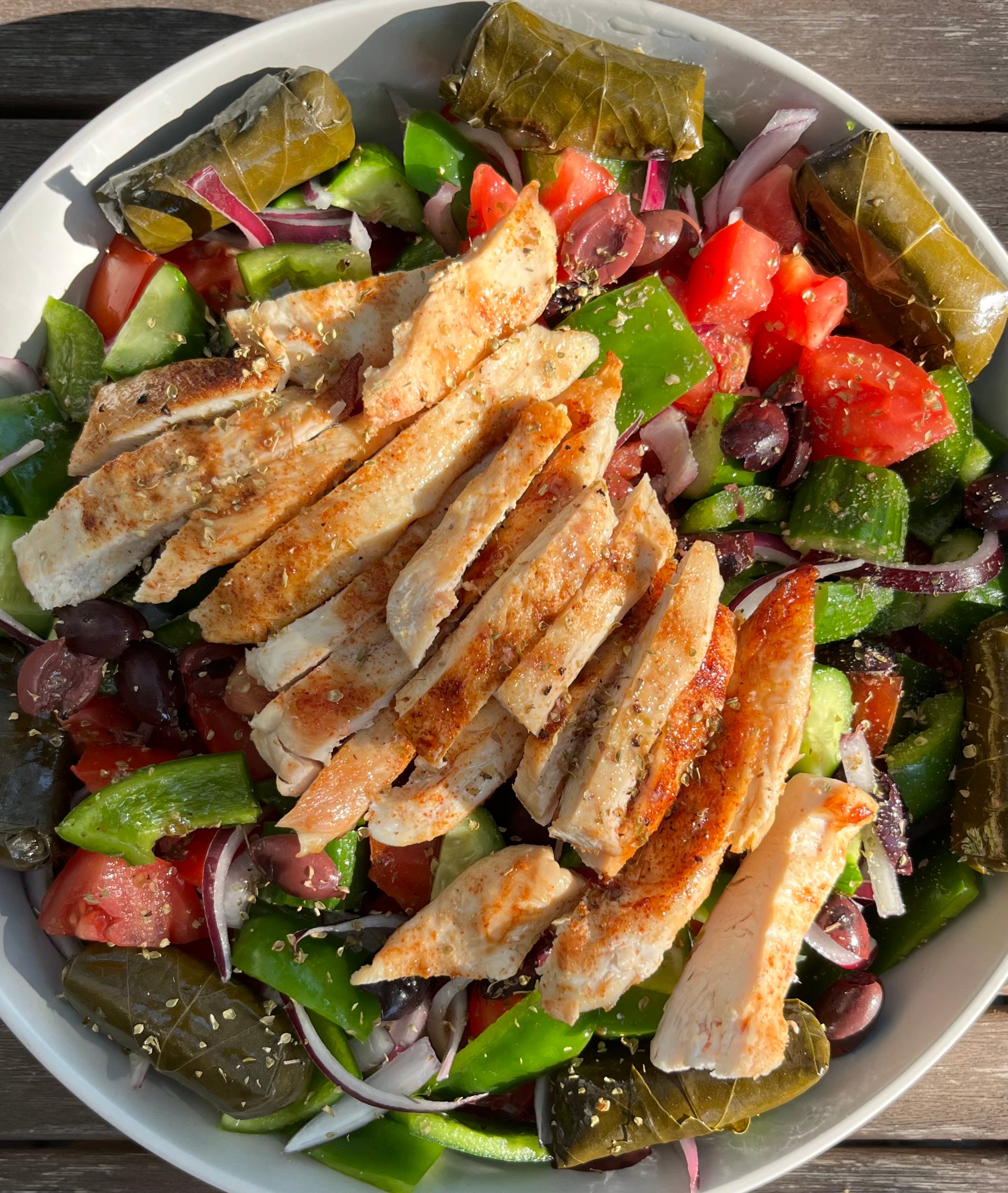
For a vegetarian version of this salad, grill planks of tofu instead of the chicken and add a few slabs of feta cheese. And if you’d like to include fresh herbs (especially if your garden is overflowing with them right now), chopped fresh parsley, basil, dill, or oregano would all make lovely additions.
Serves 4
1/3 cup (80 ml) extra-virgin olive oil
1/4 cup (60 ml) red wine vinegar
1 medium garlic clove, minced or grated
1 teaspoon dried oregano, plus more for serving
1 teaspoon kosher salt, plus more as needed
1/4 teaspoon freshly ground black pepper, plus more for serving
4 medium ripe tomatoes (cook’s choice, but use the best quality you can find), cut into 1-inch pieces
3 Persian cucumbers, cut into 1-inch pieces
2 medium green bell peppers, cored, seeded, and cut into 1-inch pieces
Half a small red onion, very thinly sliced
A generous handful of kalamata olives, pitted and halved
4 boneless, skinless chicken breasts, (6 to 8 ounces each)
Garlic powder, paprika, kosher salt, freshly ground black pepper for sprinkling
Sunflower oil (or another neutral-flavored oil), for grilling
1 14-oz (400 g) can stuffed grape leaves, optional (If you’re feeling extra, you can make your own using my dolmades recipe in Modern Jewish Cooking)
Make the dressing: Whisk together the olive oil, red wine vinegar, garlic, dried oregano, salt, and pepper together in a medium bowl until emulsified. Taste and add more salt, if needed. Set aside until ready to serve.
Make the salad: Combine the tomatoes, cucumbers, bell pepper, red onion, and olives in a wide, shallow serving bowl. Set aside until ready to serve. (Refrigerate if desired, it helps keep everything perky.)
Grill the Chicken: Preheat an outdoor grill (or indoor grill pan) over medium-high heat. Place the chicken breasts on a cutting board, and cover with a layer of parchment paper. Using a meat mallet or rolling pin, gently pound the chicken breasts to an even thickness, about 1/2-inch thick. Sprinkle each chicken breast on both sides with a little garlic powder, paprika, salt, and black pepper.
Brush the pan or grates with a tablespoon or two of oil. Working in batches if necessary, lay down the chicken pieces. Cover and let cook, undisturbed, until grill marks form, 4 to 5 minutes. Flip the chicken with tongs and allow to continue cooking, uncovered, until the chicken is cooked through (about 160˚F/71˚C on a digital thermometer), another 4 to 5 minutes. Do not overcook the chicken, or it will be dry.
Transfer the grilled chicken to a cutting board and let rest for 5 minutes then slice into strips.
Assemble the dish: Drizzle the desired amount of dressing over the salad (you might not use all of it. Covered leftovers keep in the fridge for up to 2 weeks) and gently toss to combine. Arrange the grape leaves, if using, around the sides of the serving bowl and lay the grilled chicken slices over top. Sprinkle with a little more oregano and black pepper and serve immediately.
No posts
Comments
Nothing yet. Say the first thing.
Sign in to join the conversation.