
This week’s recipe is just for paid subscribers. So are the Zucchini Honey Cake, Romanian Summer Stew and most of the recipes in the The Jewish Table archive. Don’t miss out on any of this deliciousness. Upgrade to a paid subscription below. Thank you, as always, for your support. xo
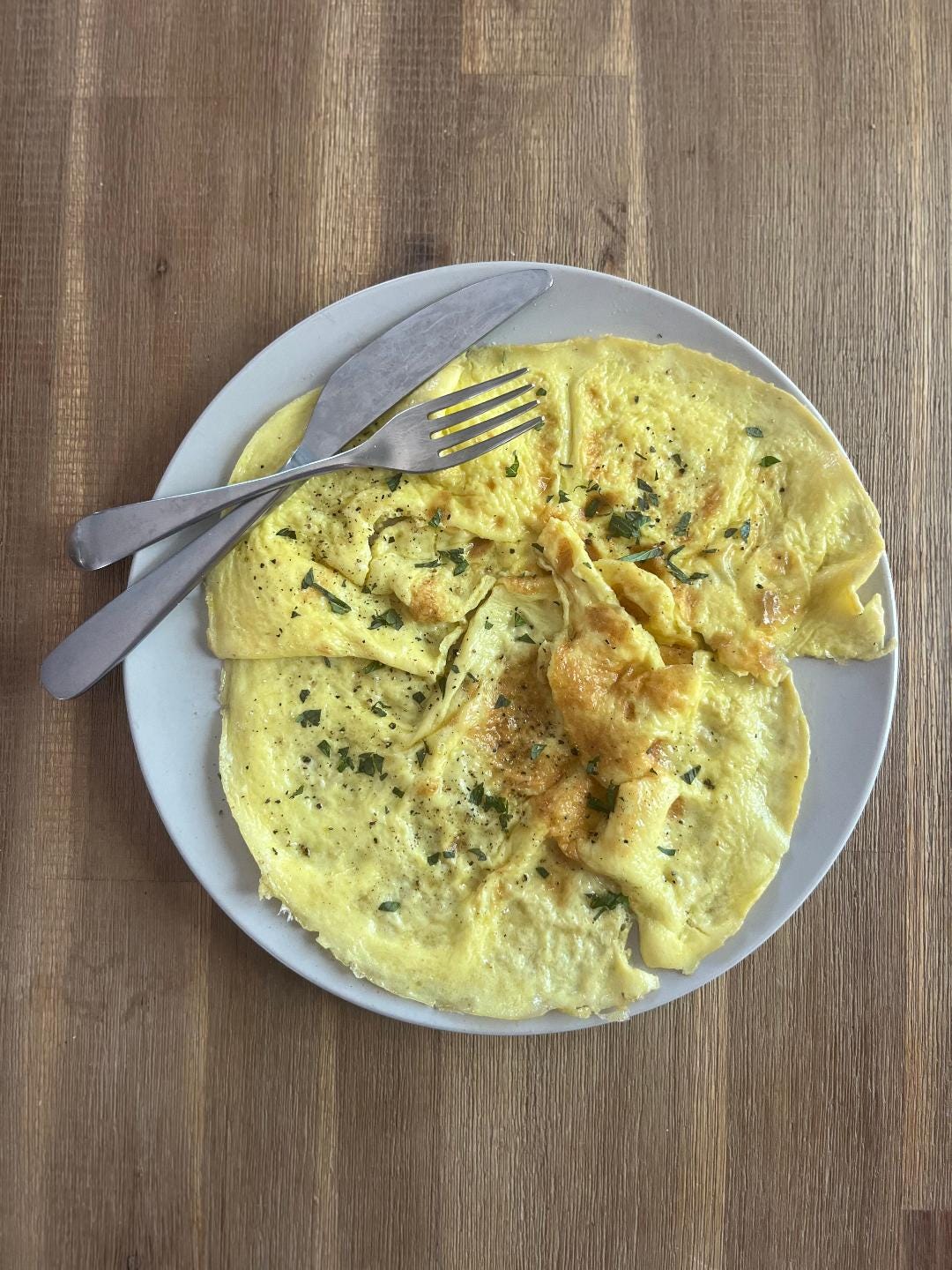
Sometimes an omelet is just an omelet. Sometimes it’s a finekuchen. A few weeks ago, The Jewish Table reader, Nicole Garelick, reached out to me to share the following story:
“Every summer weekend growing up, I shared a home with my grandparents on the Saint Croix River in Minnesota. It was there that my Grandma Eileen used to don a bejeweled dressing gown and gold lamé slippers to make my twin sister and me feinkuchens — thin, three-egg omelets made with milk and an embarrassing amount of butter. Would you be interested in running a short recipe like this in your newsletter?”
Gold lamé AND an embarrassment of butter? Consider my curiosity piqued. I had also heard the word finekuchen before, but never in the context of an omelet, so that only added to my intrigue.
I asked Garelick, who is a Chicago-based comedy writer with a funny and poignant Substack called The Performance Plan, to send me her family’s finekuchen recipe. Making it, I was smitten by how the browned butter added depth and decadence to an otherwise ordinary omelet. You could certainly use less butter if you’d like. A spray of avocado oil would technically do the trick too. But sometimes it feels nice to live a little, ya know?
Nicole took the time to chat with me about her spitfire of a grandmother (who would’ve turned 98 this month) and her family’s Jewish-Midwestern heritage. We also speculated about how an omelet might have gotten the name “kuchen” (which typically refers to cakes, not savory egg dishes).
You can find our conversation below, but first, welcome to:
My interaction with Nicole got me thinking that so many of us have unique family recipes—either classic dishes done a little differently, or recipes that have mostly been lost to history, but still exist on our family’s tables or collective memory. The Jewish Table Community Recipe Box gives us a chance to share those dishes (and the people and memories associated with them) with one another.
If you’re a paid subscriber of The Jewish Table and have a recipe you’d like to share, please message or email me with a short description, and I might feature it in a future newsletter!
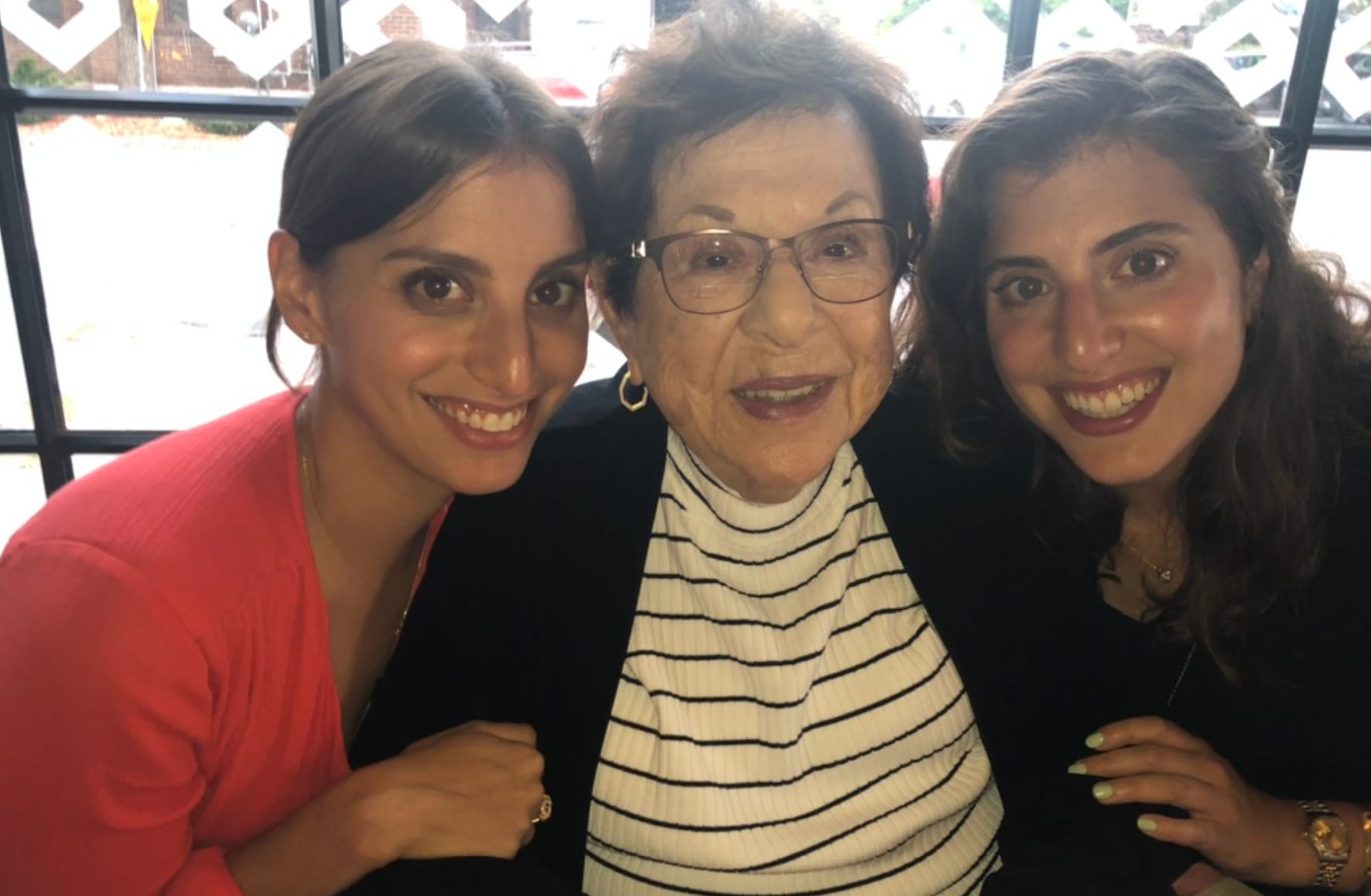
Tell me more about your grandma Eileen.
She was maybe 4 foot 7, but larger than life. She was the local Hadassah chapter president and Sisterhood president, a huge cook and baker—all self taught. She was a woman who had a hard life. She lost a son at 2 years old, had two rounds of breast cancer young, and got hit by a car. But she was the happiest, most sprightly person you’d ever met with a silly sense of humor. And she was made out of wrought iron.
My mom died suddenly when I was 22, and I’ll never forget when we had to go tell my grandma. She came into the room and we told her what happened. She said, “Girls, I need two minutes for myself and then I will be there for you.” And she was. She was special in more ways than one.
What kinds of things did she like to cook and bake?
She loved to bake any and all bundt cakes—a chocolate zucchini bundt, a strawberry rhubarb bundt, a lemony poppy seed bundt. Anything you could bundt, she did. I have all of her fancy bundt pans now and they have incredible intricate patterns. In the summer she made borscht and gazpacho. Her borscht had spinach in it, and everyone would end up with spinach in their teeth.
She cooked for me and my sister with so much care, always with a doily under everything. She served meals on china plates with sterling silver flatware. These days when I’m eating eggs standing up in the kitchen, I can hear her reprimanding me. She wanted meals to be mindful and beautiful and intentional.
When would she make you finekuchen?
We shared a house with my grandparents in the summer on Lakeland Shores, Minnesota, and finekuchen were one of her specialities. I remember her calling out from the kitchen, “Who wants a finekuchen?” I’ll never forget the first time I brought a boyfriend home with me. He was from Los Angeles and grew up in a very LA Jewish family. My grandma told him, “I really like you, I’m going to put some extra butter on top of your finekuchen.” My boyfriend said he thought it was way too much butter, and my grandfather said we’d have to break up. And we did!
And what about the dish’s name? I’ve never heard omelets called finekuchen before.
My grandparents grew up in Yiddish-speaking homes, but they would sometimes call things words that weren’t quite right. My grandma always called omelets finekuchen. I usually think of finekuchen as sweet German cakes with apples and sour cream. Like coffee cakes or crepe cakes. But for her, it was eggs. And if she was making eggs, she was making finekuchen.
[NOTE: Thanks to reader Daniel Boyarin who sent me this link after this newsletter published, which shares more about the possible origin of the word finekuchen as both a pancake and a savory egg dish.]
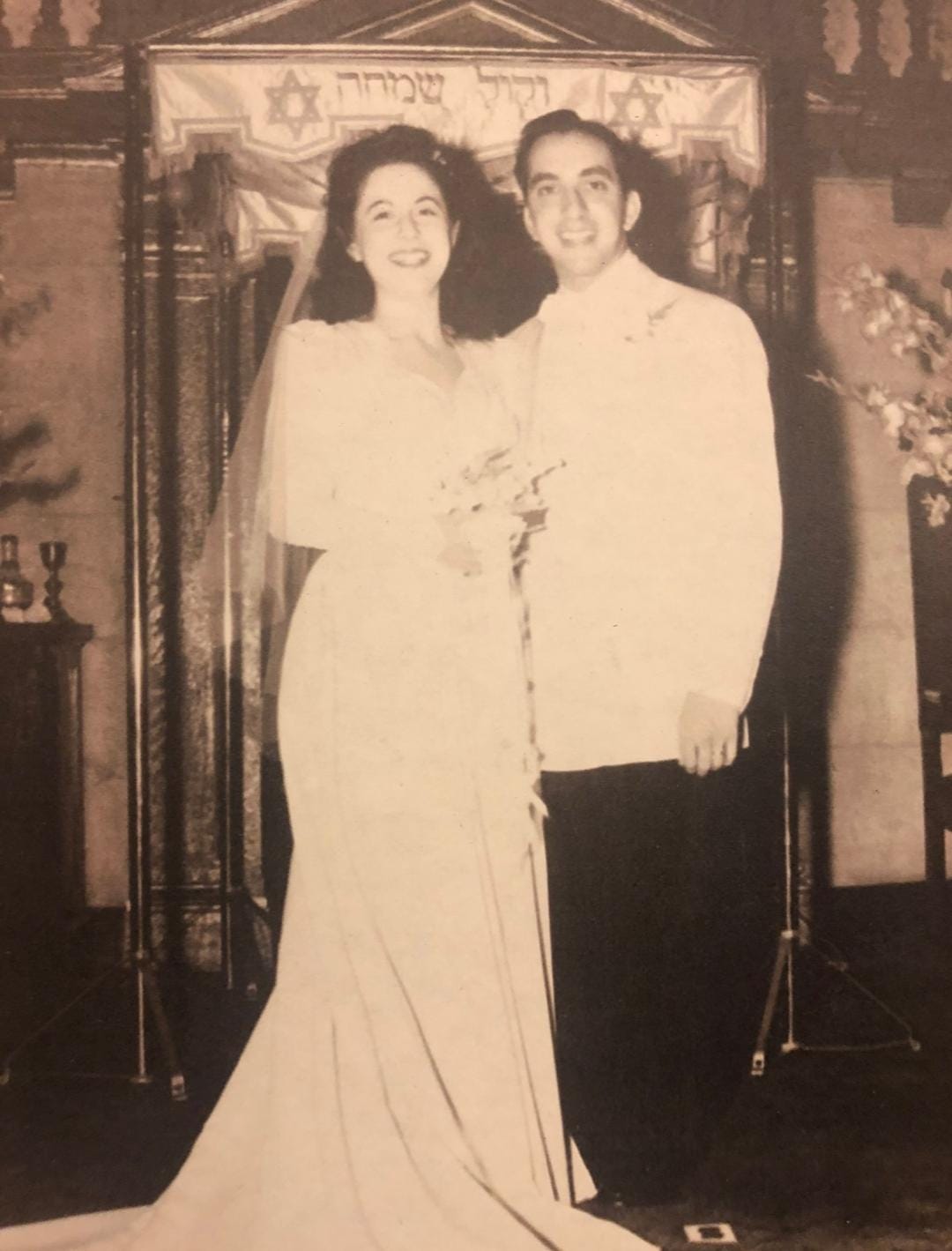
Nicole told me that her grandmother cooked her finekuchen until the outside was super dark and crispy, but I prefer a gentler, barely-there sear. You can try it both ways and see which you prefer. Grandma Eileen served finekuchen with toasted challah, butter and jam. “It was always a single serving,” Nicole said. “She would fold it in half so you had the omelet on one side of the plate and toast on the other. She would usually serve this with cantaloupe too—her favorite.”
For a more modern approach, you can dress the omelet up however you’d like: a sprinkle of chopped dill or parsley, a generous crack of black pepper, a drizzle of chili crisp—follow your heart.
Serves 1, generously
Comments
Nothing yet. Say the first thing.
Sign in to join the conversation.