
I didn’t ask them for a demo.
I asked them for a working dark romance studio.
Same brief. Same worksheet. Same skills. Same rules: decisions first, author as creative director, heat that includes the hard stuff when *you* check the boxes, hard limits that don’t get negotiated away, hybrid wizard plus interview mode, real demo content, export that doesn’t make you cry.
Claude Code got it.
Grok Build got it.
As of early August 2026, what came back was not “two versions of the same app.” It was two products that solved different halves of the same problem.
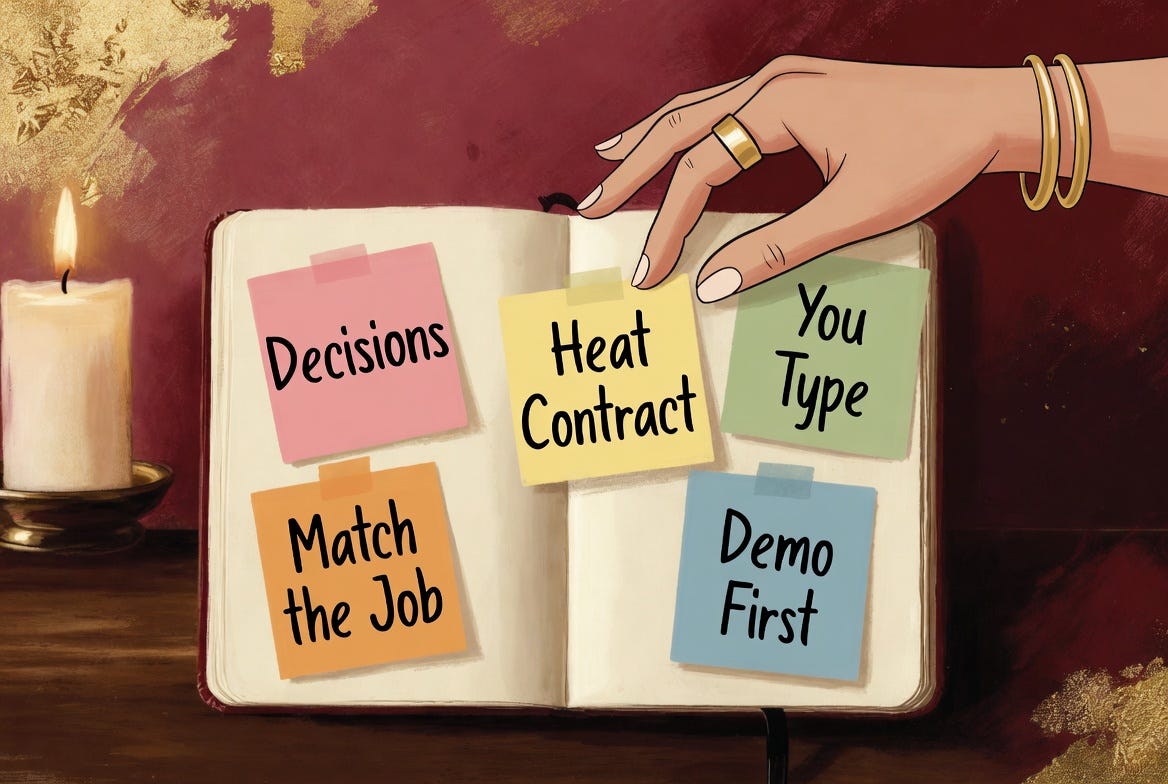
I wanted a tool that forces the decisions authors skip because they’re itchy.
Subgenre. Tropes. Cast. Stakes. Heat level. Dynamic. Elements — including dubcon and CNC when the story calls for it. Hard limits written down before a single chapter gets drafted. Then planning, codex, outline, manuscript you can type inside, edits you can accept or reject, and export that doesn’t dump you into a blank Google Doc with no warnings page.
Most AI “writing tools” start with *generate chapter one*. That’s how you get a soft book with a soft spine and a soft ending.
I wanted the opposite.
This one lives on my machine.
Local studio. Double-click a launcher. Browser opens to localhost. Demo book: His Dark Obsession. Rooms with actual names — Dossier, Interrogation, Architecture, Writing Room, Editing Bay, Gallery.
It doesn’t pretend to be a web product for a community link. It pretends to be a writing room you own.
The AI bridge runs through a Claude subscription on the machine. No separate API key meter for every chapter. The methodology files from the planner, ghostwriter, and editing system sit inside the project. Pen-name config is a folder you can swap. Moxie Savage ships as the default heat engine.
And heat is not a slider with a heart emoji on it.
In the Dossier, there’s a section that behaves like a contract: heat level, dominant dynamic, element checklist, hard limits as required text. Downstream drafting is supposed to honor that. There’s a heat map on the outline. There’s a heat check in the manuscript. The Moxie guidelines are in the kitchen — tension starts early, explicit later, her agency stays even when the situation is dark.
If you want the deep kitchen — the one that assumes you’re going to *write* the heat under contract on a machine you control — this is the build that went there.
This one is the door other people can walk through.
Browser product. Live preview while it was being built. Demo book: Blood Vow. Decision Lab first. Lock before you get to draft. Planning, codex, outline, draft studio, edit desk, export with cover prompt and trigger warnings.
When the conversation shifted to “this has to go to beta testers without emptying my API credits,” the product posture changed on purpose.
Hosted ghostwriting went hard-off for the community beta. The Collaborator became: copy a brief for your AI, paste prose back. Heat and hard limits ride in the brief. Author still leads. Members don’t get to burn the house meter drafting Chapter 12 of someone else’s book.
That is not a smaller version of Velvet & Vice. That is a different job.
Claude’s build optimizes for depth on one author’s machine.
Grok’s build optimizes for a product other authors can open without installing a local studio and logging into Claude CLI.
Same prompt does not mean same environment.
Claude Code lives in the terminal / local coding loop. It plans, embeds methodology, wires a file tree under `projects/<book>/`, and assumes you will run the server and own the Claude bridge.
Grok Build lives in an app-builder sandbox with a live preview. It ships something you can click while it’s still being shaped, then keeps iterating in product terms instead of “open localhost and tell me if it works.”
So when people say “I gave them the same prompt,” what they often mean is “I typed the same paragraph into two chat boxes.” What we did was closer to: same creative brief, two agent harnesses, two deployment realities.
The handoff is not “Claude’s files into Grok” or the reverse. The handoff is decisions.
Both tools make you lock the dark romance decisions — including heat — before the manuscript becomes the center of gravity. That was the load-bearing requirement. Everything else is architecture.
If you only remember one thing from this experiment, make it this:
Heat is a contract, not a filter.
Level. Dynamic. Elements. Hard limits.
Dubcon and CNC are not “on by default.” They’re checkboxes the author owns. If it isn’t in the book, say that on purpose too. Hard limits are not optional flavor text. They’re the line the AI is not allowed to cross when you’re tired and the prompt is sloppy.
Claude’s build goes deep on writing heat under a pen-name calibration (Moxie at 5/5 is not subtle).
Grok’s build goes deep on deciding heat and shipping those constraints into every external brief so community use doesn’t turn into free unlimited ghostwriting on someone else’s bill.
Both are serious. Soft tools skip this section.
I am not here to crown a winner so you can screenshot a ranking table.
Velvet & Vice is what you want when you’re on a deadline with a Claude sub and a folder full of methodology you already trust.
Ink & Ruin is what you want when you’re trying to put a decision-first dark romance workflow in front of authors who will never open a terminal.
Same prompt. Two correct answers for two jobs.
If your takeaway is “Grok is better” or “Claude is better,” you watched the wrong thing. The useful takeaway is: the agent harness and the deployment target change the product even when the brief doesn’t.
And for dark romance specifically: if your AI workflow doesn’t force a heat contract before Chapter 1, you’re still guessing.
Hit me with questions. If you’re in the beta cohort, open the demo books and tell me where the heat section felt clear, where it felt soft, and whether you’d trust either tool with a real manuscript — not a vibes draft.
If you found this helpful, don’t keep it to yourself — share it with a fellow writer who needs it.
Not subscribed yet? Join the community of writers getting weekly craft insights, storytelling strategies, and creative tools delivered straight to your inbox.
Want to go deeper? Visit www.theinvisiblepen.com — your home for writing resources, courses, coaching, and the tools you need to craft better stories.
Ready to connect with other writers? Join The Invisible Pen Skool community — where we dive even further into craft, share feedback, and grow together as storytellers.
Comments
Nothing yet. Say the first thing.
Sign in to join the conversation.