
I Rarely Wake Up Dreaming (Isabelle Stever):
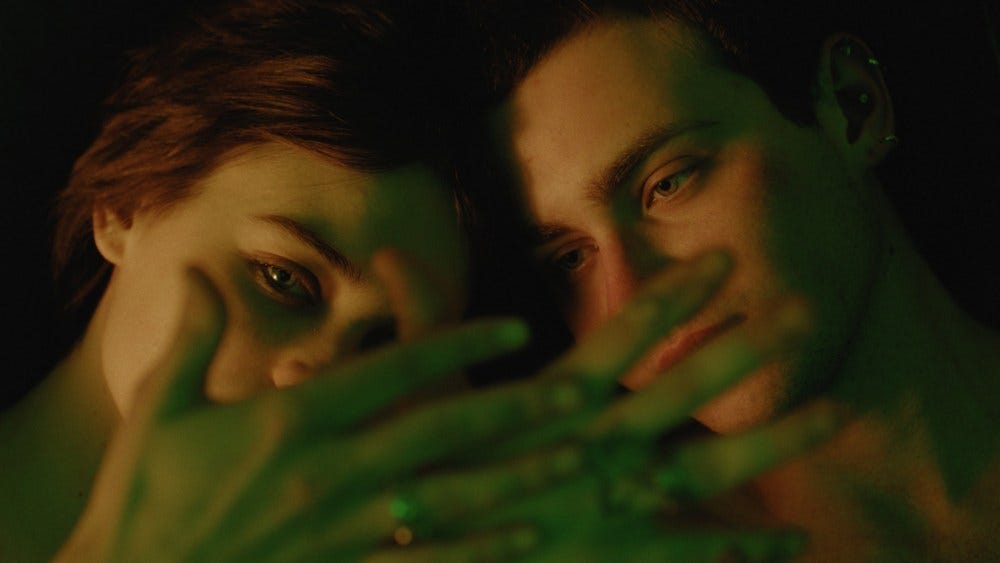
Written by Isabelle Stever’s partner Anna Melikova and loosely based on the experiences of Melikova’s friends, I Rarely Wake Up Dreaming observes the struggle of a queer couple in the process of redefining their relation as one of them begins their FtM gender transition. Oleh’s personal exploration of their identity collides with the onset of the Ukrainian War, and the heightened societal expectations towards men in wartime.
When we first meet Olya and Oleh, we see them in a lover’s quarrel from a window outside of their apartment. The argument’s subject matter - a draft notice Oleh receives after obtaining their Male government identification - sets up the film’s tensions between the private and the public. The official acknowledgment of Oleh’s gender creates a variety of practical problems for the couple. The most pressing issue concerns their attempt to flee the country. Under a government mandate that men ages 18-60 are banned from crossing the border, Oleh is stopped by the military despite his draft exemption on account of his gender dysphoria, categorized in his documentation as a mental disorder.
This is timely, charged subject matter that Stever very impressively navigates, presenting the material so subtly and matter-of-factly that the characters in the film register as specific individuals before stand-ins of a wider community. Narrative information is mostly intuited through understated, formally precise sequences. It takes nearly 20 minutes before Oleh’s transition is explicitly mentioned, referred to up until that point through an offscreen comment about a new passport and Olya stating her ambivalence towards being in a heterosexual relationship. It could also be possible to miss, for example, the fact that Oleh was born in Russia and moved to Ukraine due to the country’s comparatively progressive stance towards LGBTQ rights.
We only get a brief glimpse of the couple’s queer community at a house party early in the film, and the relaxed, hangout nature of this scene (which reminded me a bit of Loktev’s My Undesirable Friends), clearly populated with non-professional actors, hovers over the nervy, more narratively-inflected scenes that follow. Throughout the film, Stever does a remarkable job at simply observing the different projections placed upon Oleh and the various ways he naturally masks or expresses himself depending on the social setting. To Olya’s conservative parents, he’s a cis man, to the border personnel, his transgender identity is front and center. While buying groceries, it’s Oleh’s use of Russian that creates conflict. As for the relationship, there are a number of genuinely uncomfortable, and borderline problematic conversations approached without judgment, namely Olya’s suggestion that Oleh might de-transition for the couple’s safe passage to the EU. I Rarely Wake Up Dreaming may be straightforward, but it’s made with real skill, sidestepping all of the festival tropes suggested by its logline (Euro miserablism or Sundance Indie, take your pick). It’s one of the highlights of the year thus far.
September Afternoon (Nicolaas Schmidt):
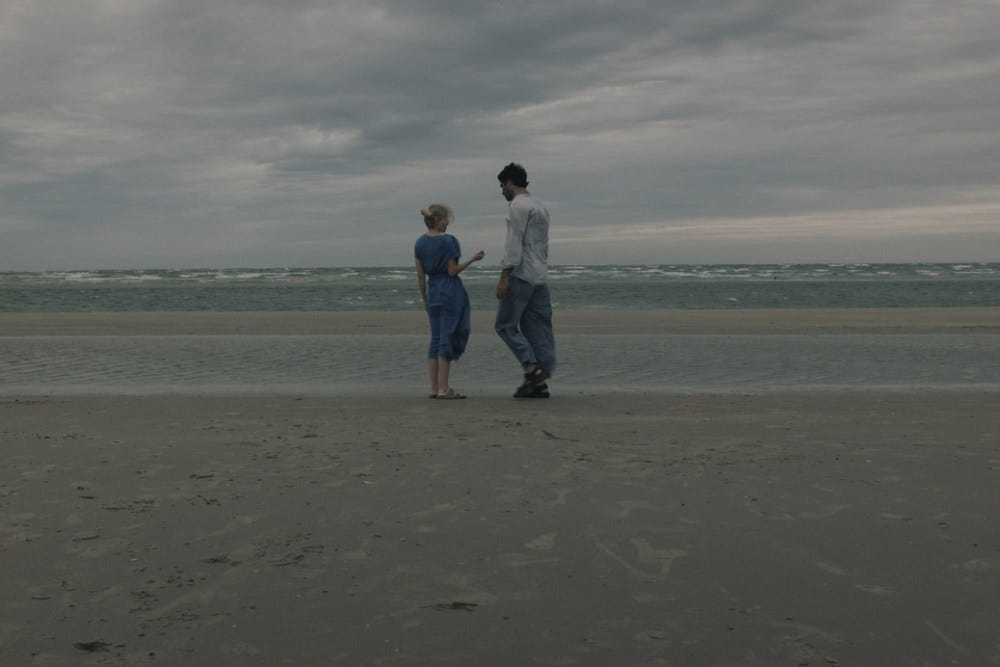
Nicolaas Schmidt’s (FIRST TIME) hotly-anticipated feature debut, September Afternoon could be described as a case of expectation vs reality, opening with a caricature-esque montage of beach vacations, almost like a consumerist nightmare made of archival materials, before settling into the hilariously perverse “narrative” of a family going to the beach on a windy September day. This process is delivered with complete detachment. We see, in painstaking long takes, actions such as the packing of a bag or the preparation of a tent, stretched to inhuman lengths where we feel like we’re watching beachgoing performance art as opposed to the real thing. September Afternoon is almost post-apocalyptic in its depiction of these windswept zombies, and when Schmidt accents his static rigor with Wavelength-esque zooms, he’s further extricating these characters from their environments.
Schmidt’s most jarring formal choice is in the sound. Though all of his films are dialogue-free, none features as grating a musical choice as this one - a looping Empire of the Sun excerpt that steadily increases in volume. As the music incessantly repeats, it’s interesting to see how the film shifts from underscoring the character’s delusion, to adhering to the fantasy of the opening sequence (especially in Schmidt’s beautiful shots of landscape), and back again. It’s an incredibly thought-provoking choice, and one that adds a level of black humor to the film, but not one that feels totally successful.
In September Afternoon’s final moments, the film takes a swerve towards the supernatural. I still don’t really know what to do with this turn, but the randomness of it is certainly coherent with the film’s “comic catastrophe”. I found the film maddening and exciting in equal measure.
September Afternoon and I Rarely Wake Up Dreaming premiered at the Locarno Film Festival.
Comments
Nothing yet. Say the first thing.
Sign in to join the conversation.